Picking Trailing Arbutus

16-year-old Helena Muffly wrote exactly 100 years ago today: 

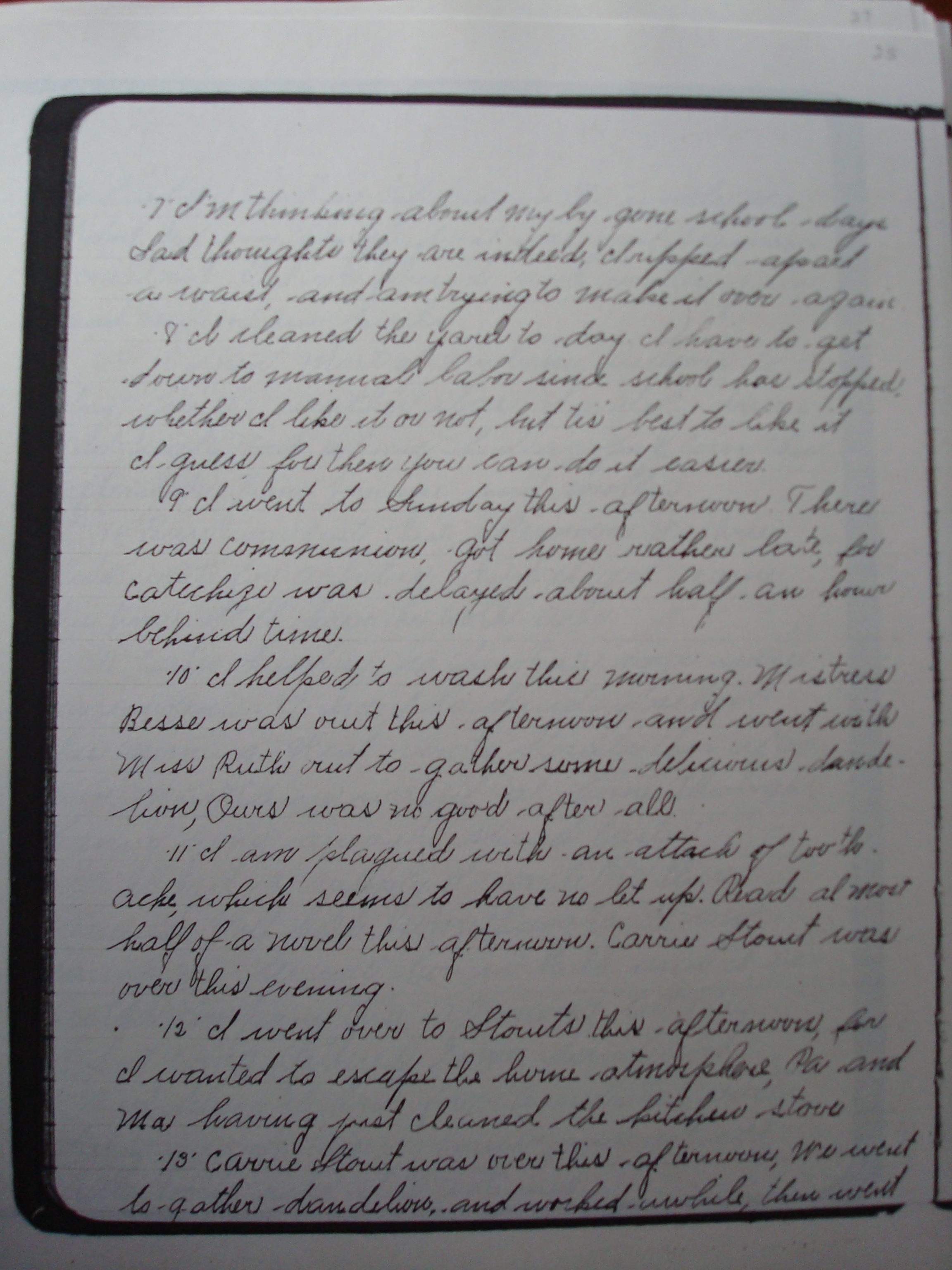
Saturday, April 15, 1911:  Besse was out this afternoon. We three kids went for arbutus and I got some this time. Still have a toothache.

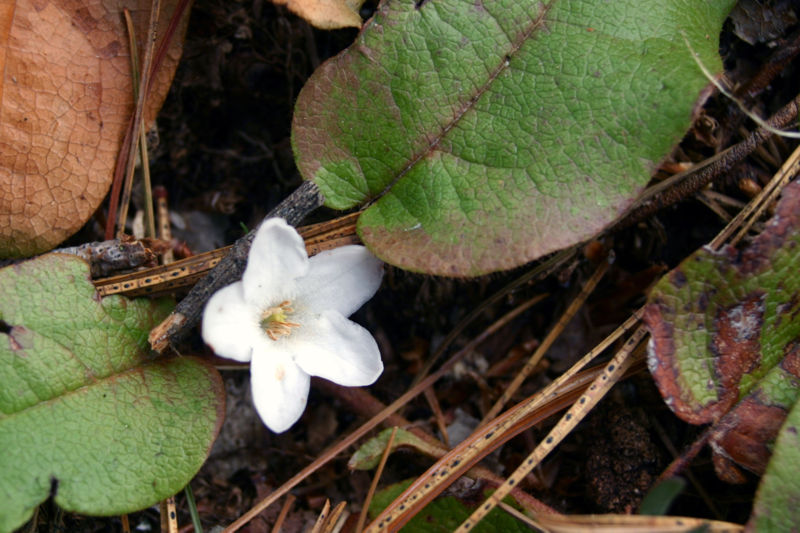
Trailing Arbutus (Mayflower)

 Her middle-aged granddaughter’s comments 100 years later:

It sounds like a fun day for three sisters—Grandma, Ruth and their married sister Besse. The trailing arbutus must have just started blooming since Grandma had been unable to find any two days earlier.

Trailing arbutus are also called mayflowers. I found a description online about  what it was like to pick them:

I have such crisp memories of picking wild mayflowers with my brother. Scrounging around on the sun-splashed forest floor, moving decaying leaves with our bare hands to find a delicately scented flower smaller than a dime.

Trailing arbutus are not easy to find; their flowers tend to hide under the leaves. It takes quite a few flowers to make even a small bunch, but they were worth it.

Brenda Visser

Grandma first mentioned the toothache in the diary four days ago on April 11.

Coloring Easter Eggs with Onion Skins

16-year-old Helena Muffly wrote exactly 100 years ago today:

Friday, April 14, 1911: I spent most of my time indoors today for the weather was decidedly dreary and ugly. Had a time hiding pop corn this afternoon from Jimmie and Mother.

Her middle-aged granddaughter’s comments 100 years later:

Grandma seems focused on hiding pop corn from her 6-year-old brother Jimmie and her mother. Why?? Was there a shortage of pop corn? Had Grandma popped it—and she wanted to enjoy it herself? . . . .

A hundred years ago on this date it would have been Good Friday. I wonder if the family was making any preparations for Easter. The April 1, 1911 issue of Ladies Home Journal provided suggestions for dyeing Easter eggs:

Easter Egg Dye

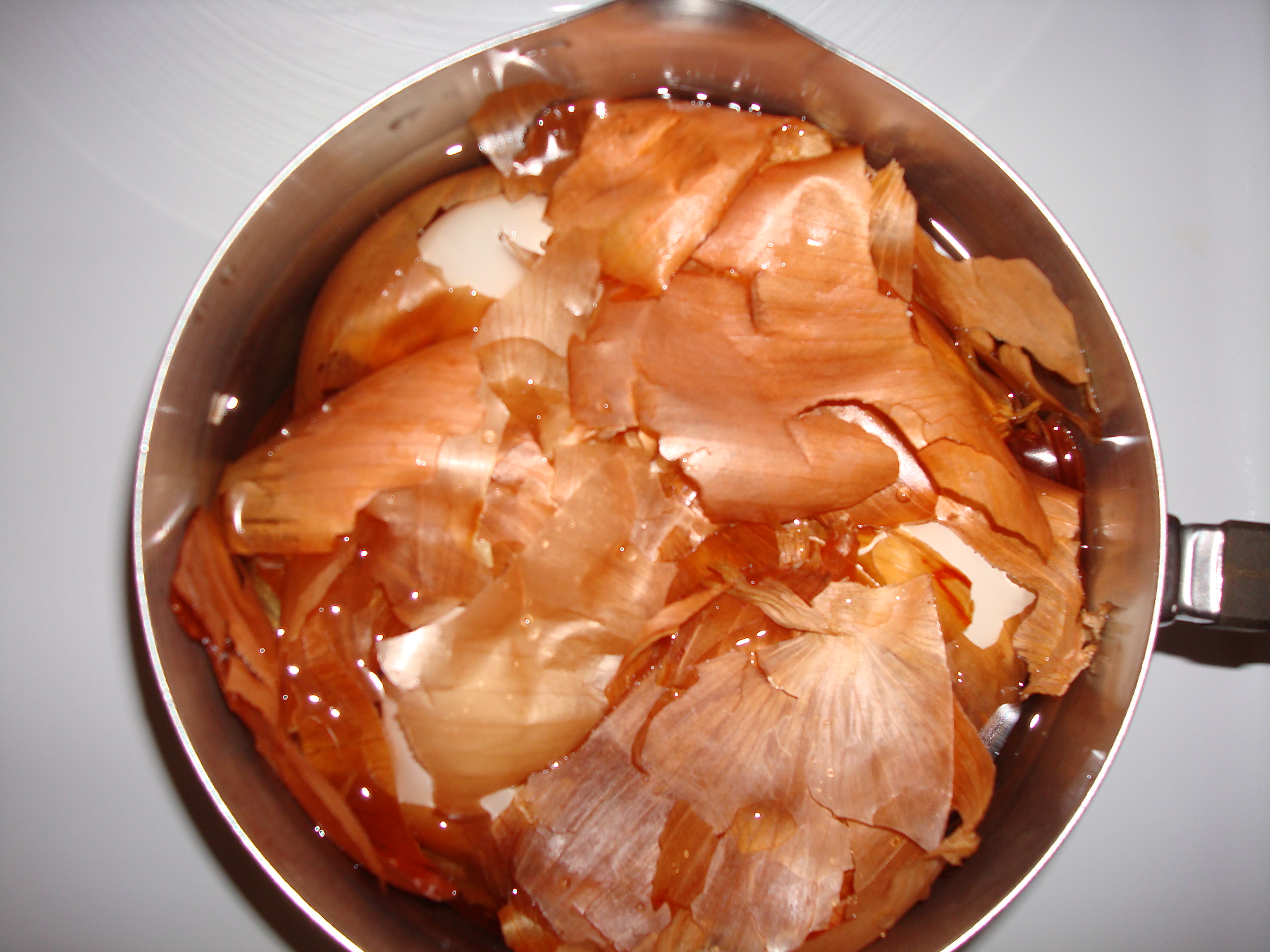
A harmless dye for Easter eggs is made by boiling the eggs with onion skins. Put the eggs on to boil in cold water, with enough onion skins to cover them. Boil till the eggs are hard. They will come out in pretty shades of brown and red. Polish them with a soft flannel cloth. Two cupfuls of onion skins will color eight or ten eggs.

I used white eggs and the outer skins from yellow onions to test these directions. The eggs were easy to color–and the dyed eggs are a pretty reddish-brown. I’m amazed how the skins of yellow onions produce a dye that is so red.

Trailing Arbutus and More Dandelion

16-year-old Helena Muffly wrote exactly 100 years ago today:

Thursday, April 13, 1911: Carrie Stout was over this afternoon. We went to gather dandelions, and worked awhile, then went to hunt for trailing arbutus in the woods. We didn’t get any though for it was just beginning to come out. But we found some wintergreen and mountain pinks.

Her middle-aged granddaughter’s comments 100 years later:

It sounds like Grandma and her friend Carrie had a pleasant afternoon. I can remember often seeing trailing arbutus in the woods in the spring—but hadn’t realized that people apparently picked them years ago. The flowers seem so small.

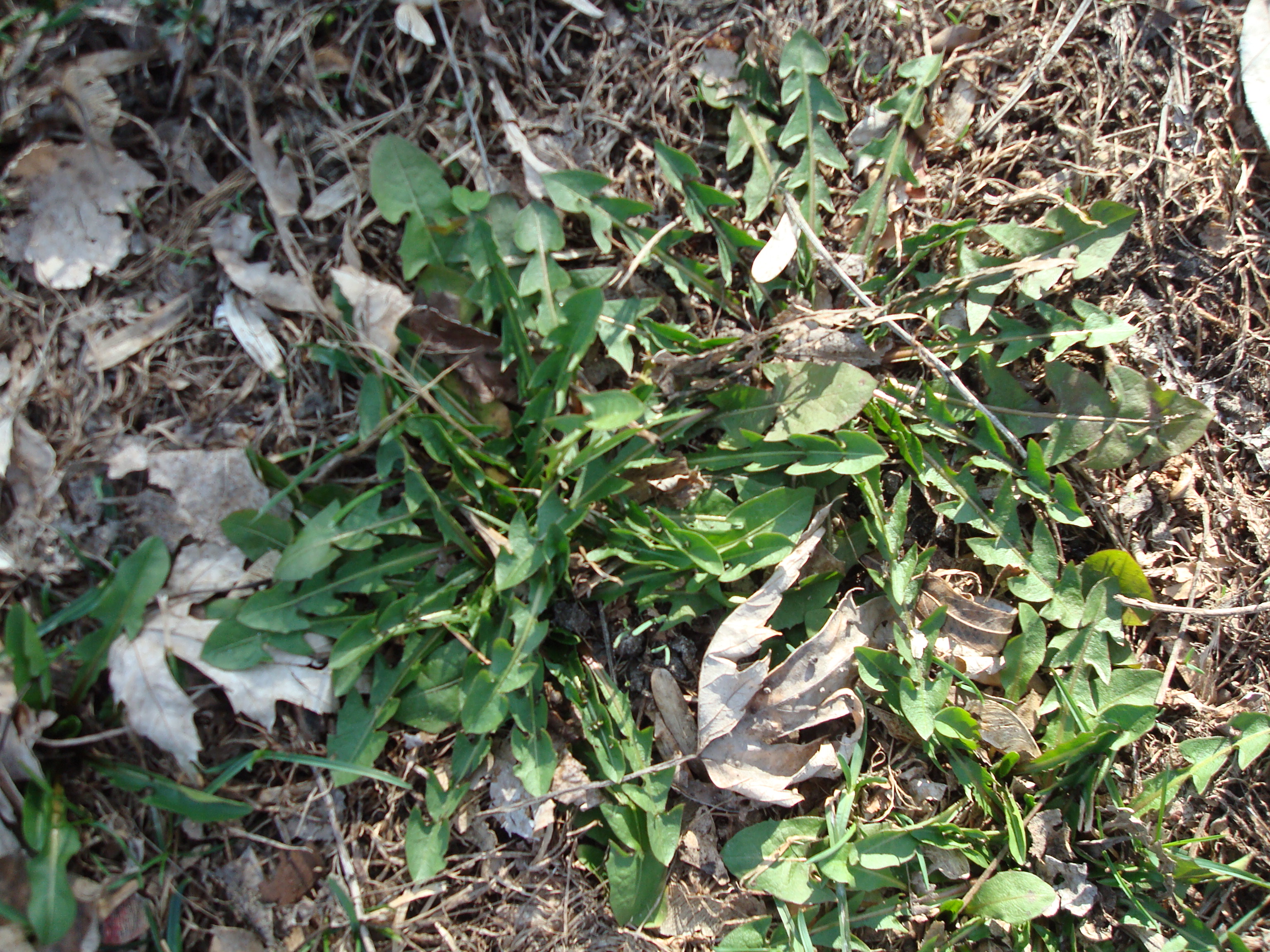
Dandelion plants

This is the second time this week that Grandma mentioned gathering dandelions in the diary. I can remember relatives gathering dandelions when I was a child. Dandelions are best for eating  early in the spring before they bloom. The more mature the plants, the more bitter the taste.

There is a great Utube video by a 94-year-old woman named Clara about how to gather and clean dandelion. The video is awesome and very accurately shows how to gather and prepare dandelions for eating.

The dandelion video  is part of a series of videos called Great Depression Cooking with Clara. The video is about a time period somewhat after this diary—but I doubt if the way dandelions are collected and cleaned has changed very much over the years.

Cleaning the Stove

16-year-old Helena Muffly wrote exactly 100 years ago today:

Wednesday, April 12, 1911: I went over to Stout’s this afternoon, for I want to escape the home atmosphere, Pa and Ma having just cleaned the kitchen stove.

Her middle-aged granddaughter’s comments 100 years later:

Grandma probably was referring to the smoky soot and ash which has been dispersed into the air as a result of cleaning the stove pipe.

Some of you know much more about wood  and coal stoves than I do, but my understanding is that stove pipes need to be cleaned once a year to get rid of the build-up of soot and creosote. A hundred years ago today it probably was a nice warm spring day, so Grandma’s parents decided to let the fire go out and clean the stove—Sounds like the perfect time for Grandma to decide to go visit her friend Carrie Stout.

Book Reviews: Ethan Frome and The Rosary

16-year-old Helena Muffly wrote exactly 100 years ago today:

Tuesday, April 11, 1911: I am plagued with an attack of toothache, which seems to have no let up. Read almost half of a novel this afternoon. Carrie Stout was over this evening.

Her middle-aged granddaughter’s comments 100 years later:

Wikepedia has the Publisher’s Weekly list of best selling novels in the US in 1911 and Goodreads has a list of  books published in 1911 that are still popular. The lists are very different—many of the bestsellers were written by authors I’ve never heard of –and some of the books that have stood the test of time were sleepers a hundred years ago.

Recently I’ve read one book from each list:

1911 best seller: The Rosary by Florence Barclay

1911 book that has stood the test of time: Ethan Frome by Edith Wharton

Edith Wharton explores the confines of social norms in Ethan Frome, while Florence Barclay in The Rosary examines the role of physical perfection/imperfection in the development of love.

Ethan Frome is set in rural New England in the middle of a dismal winter, while The Rosary is about the upper class in England and much of the story takes place during the summer. Both books are love stories—though The Rosary is about an improbable couple that successfully navigate lots of obstacles (some of which they bring upon themselves), while Ethan Frome is about star-crossed lovers and ends in tragedy.

Improbable accidents occur in both novels—a sledding accident in Ethan Frome and a hunting accident in The Rosary—which  may or may not work to move the plot forward.

Ethan Frome

Most of the story is told during a very long flashback. This book is about a man who was stuck in a loveless marriage to a woman who was a semi-invalid. His wife’s cousin, Mattie, comes to help—and Ethan really falls for her. From the dreariness of the setting to the hopes of the star-crossed lovers, it is obvious from the first page that there is not going to be a happy ending to this story. But I absolutely loved this book and couldn’t put it down. Edith Wharton knows how to tell a story that made me want to turn each page—and I read the entire book in one afternoon.

The Rosary

The Rosary is about Garth, a famous artist, who is the most eligible bachelor in his social circle. All of the woman are chasing him, but he falls in love with Jane, who is the plainest woman in the group (Is this where Plain Jane comes from?). Garth asks Jane to marry him, but she turns him down because she thinks that he feels sorry for her. Then Garth is blinded when he is shot while trying to protect a rabbit from hunters. (I’m amazed that in a pre-PETA era that there was this level of interest in protecting little animals from hunters.)

After the accident Jane wants to tell Garth that she’ll marry him, but knows that he won’t marry her because he’d think that she now feels sorry for him. So she pretends to be a nurse and gets a job caring for the blinded artist.

Garth falls in love with his nurse, but Jane realizes that she can’t tell who she really is since she lied to him and thinks it would anger him if he knew she’d lied.

After lots of twists and turns Garth finds out the truth, and still wants to marry Jane. They marry and live happily ever after.

If Grandma happened to read one of these books I’d guess that it would have been The Rosary. I can imagine a teen who worried about her looks reading and enjoying this book. The targeted reader age is probably somewhat older for Ethan Frome even though it is set in a rural area that Grandma may have been able to relate to.

Creamed Dandelion Recipe

16-year-old Helena Muffly wrote exactly 100 years ago today:

Monday, April 10, 1911: I helped to wash this morning. Mistress Besse was out this afternoon and went with Miss Ruth out to gather some delicious dandelion. Ours was no good after all.

Her middle-aged granddaughter’s comments 100 years later:

Dandelion! Grandma’s diary entry reflects that excitement that fresh dandelion generated.

Dandelion, endive, and other bitter greens used to be considered a spring tonic. People traditionally had a very limited selection of foods during the late winter months, and they really looked forward to eating fresh greens in the spring.

When I was a child we often ate creamed dandelion served over mashed potatoes in the spring. I remember older relatives saying that they felt healthier after eating spring greens.

I seldom make creamed dandelion, but often make creamed endive.  Endive tastes similar to dandelion, but it isn’t quite as bitter.

CREAMED DANDELION (ENDIVE)

4 cups dandelion (or endive)

3 slices bacon, chopped

1 1/2 tablespoons flour

1 heaping tablespoon sugar

2  tablespoons vinegar

1 cup milk

Mashed potatoes, if desired

Wash dandelion and tear into pieces; set aside.

Cut bacon into pieces and fry until crisp in a large skillet. Stir in flour, sugar, and vinegar. Gradually stir in milk; heat until bubbly using medium heat. Reduce heat to low; stir in dandelion and cover for 1 minute. Remove lid and stir until wilted. Delicious when served over mashed potatoes.

Church Activities

16-year-old Helena Muffly wrote exactly 100 years ago today:

Sunday, April 9, 1911: I went to Sunday school this afternoon. There was communion. Got home rather late for catechize was delayed about half an hour behind time.

Her middle-aged granddaughter’s comments 100 years later:

Based upon this entry it sounds like Grandma participated in three distinct activities at church—Sunday school, a catechism class that was preparing her to join the church, and the mention of communion suggests that she also attended the main church service. I’m surprised that Sunday school was held in the afternoon. Maybe there were several churches in the parish and the minister rode the circuit between them, with some services being held in the afternoon.