Butchering, Sausage, and the Light Plant

Saturday, April 22, 1911: Missing entry (Diary resumes on April 28.)

Her middle-aged granddaughter’s comments 100 years later:

Since Grandma didn’t write a diary entry today I’m going to share a couple of my Uncle Carl’s favorite memories of his mother:

After we had butchered a couple of hogs for our meat supply to last about 6 months in the future, a large amount of sausage needed to be canned in glass jars.  The sausage was fully cooked before it was put into the jars.  How do you think that a sandwich made of fresh home-made bread and that sausage tasted after walking home from school 2 miles away?  She was a good cook in addition to being a good Mother!

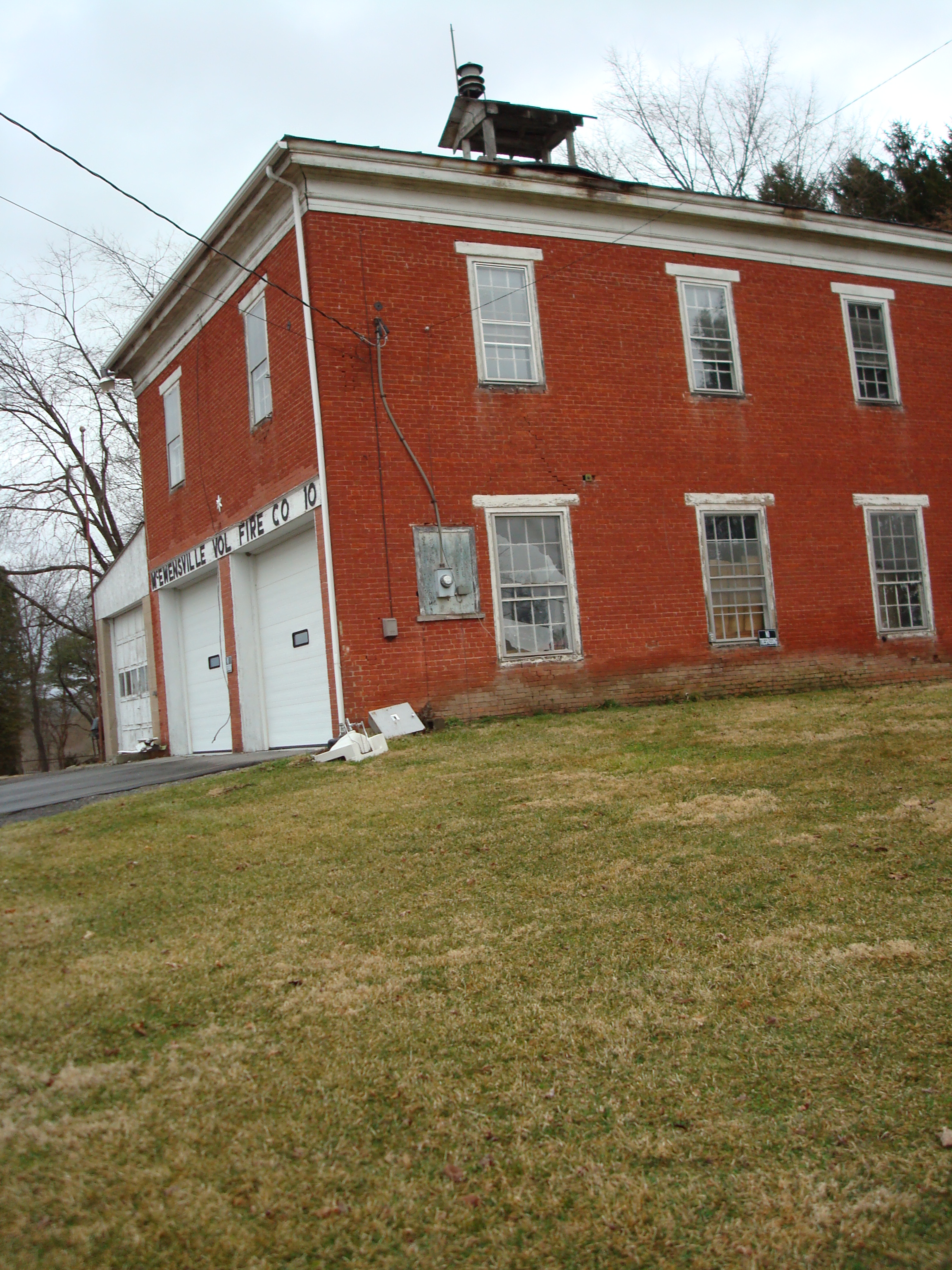
Building that once housed the McEwensville School. It was a 1-8 school when Carl attended it. (When Grandma was a student, the building housed both elementary and high school grades.)
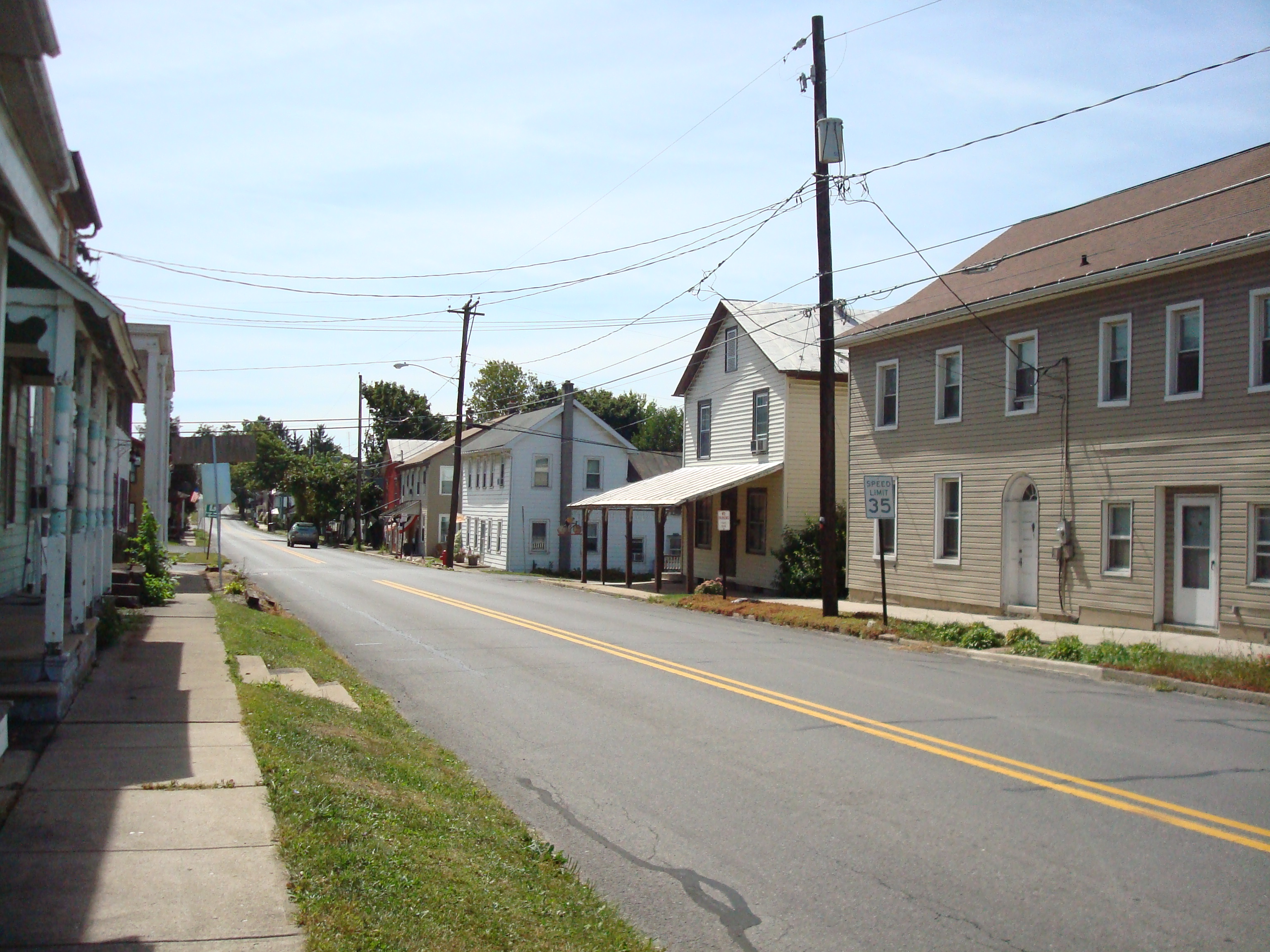
Recent photo of Main Street, McEwensville. When Carl was a child he would have walked past these houses on his way home from school.

When I was a child there were no freezers (or bathrooms) at this time.  NO PPL electric either, although we had a 32 volt light plant with storage batteries. This gave us light which was good while light plant was running.  As the lights got dimmer at night, you just went to bed. Mom had an electric clothes washer, but it drew so much electric that the light plant had to be running while washing.  When PPL came there was electric stove, a good washer, refrigerator, running water, and soon a bathroom. Life was better!

Carl Swartz

“Whispering to Myself”

Friday, April 21, 1911: Missing entry (Diary resumes on April 28.)

Her middle-aged granddaughter’s comments 100 years later:

Since Grandma didn’t write any diary entries for the next several days I’m going to share other relatives’ memories of her.

Today my father Harold Swartz is going to tell you his favorite memory of his mother:

Her sincerity and concern when one of her children was hurt. I could tell by her face and expressions that it hurt her more than it hurt me, even though I was the one who was hurt.

When I was about 10 years old a barbed fence was put across a path that went across a field to keep the cows in. I forgot about the fence and was running. I ran into it and cut my face from my mouth to my ear. When my mother saw me, I knew it hurt her more than it hurt me. My parents took me to the doctor. The doctor said I could whisper to myself because it was open between my mouth and my ear. He stitched it up. I don’t have any scars.

Harold Swartz

The barbed wire fences (as well as the electric ones) are long gone, but there are still small remnants from fences. If you look carefully at this stump, you can see a white insulator where a fence was once attached.Back when there were fences, it probably was a tree rather than a stump. (To better see the insulator, click on the photo for a larger view.)

Genealogy–The Maternal Side

Thursday, April 20, 1911: Missing entry (Diary resumes on April 28.)

Her middle-aged granddaughter’s comments 100 years later:

Since Grandma didn’t write anything in her diary again today, I’d like to tell you a little more about her family.

Grandma’s parents were Albert Muffly and Phoebe (Derr) Muffly. Yesterday’s post followed the paternal line back to Switzerland.

Today I’d like to give some information about the maternal line.

My cousin (and one of Helena’s grandchildren) Alice Chepiga compiled this information for her son. Like me, she really enjoys digging into our family history:

 I had so much fun last summer putting these documents together. My Mom had a box with lots of papers. It was a challenge separating the documents to see how our family was related to our ancestors.

Alice Chepiga

Here’s what Alice found:

John Wilson (1726) married Phoebe Dawson, daughter of Thomas and Elizabeth Dawson from Karsborough, Yorkshire, England.

John and Phoebe had eight children including Hannah was born in England in 1763.

John and Phoebe immigrated to America in August 1764.

Philip Opp (1759 born in Germany) marries Hannah Wilson in 1787.

In 1786, John and Mary Opp sold land to their son Philip 250 acres near Muncy, PA.

They had five children including one daughter, Mary (1796) and Philip Opp – father of Colonel Milton Opp – Civil War.

Mary Opp marries Christopher Derr in 1818. Christopher’s father emigrated from Germany in 1771.

They have ten children including John Derr (1823). John Derr married Sarah Houseknecht. They have a daughter Phoebe who marries Albert Muffly.

One of Phoebe’s children is a daughter, Helen(a) Muffly.

(See a photo of John and Sarah Derr’s family in the posting titled Grandma’s Parents.)

A note regarding yesterday’s post on the genealogy of Muffly side of the family: Bill Dietrich sent me additional information from the 1850 census about  the 4th generation. I’ve updated yesterday’s post, and added several children to the list for Samual Muffly (April 21, 1797-July 1, 1873) and Anna Maria Kleppinger.

I’m at Least 0.4% Swiss!!

Wednesday, April 19, 1911: Missing entry (Diary resumes on April 28.)

Her middle-aged granddaughter’s comments 100 years later:

I believe that there are only two spots during the entire four-year diary where  Grandma failed to write a daily entry—one place was in January 1911 near the very beginning of the diary; the other spot is here.

I will use these days to provide additional background information about Grandma. Today, I’d like to share some genealogical information about the Muffly family.

It looks like the Muffly family originally came over from Switzerland. I recently contacted Rootsweb—Northumberland County to try to find out more about the Muffly family. Bill Dietrich responded. He had traced the Muffly paternal line back to Bern Switzerland. Bill-thank you!

I organized the information by generation.

My cousin Stu Kurtz provided some additional details based upon census data  that  he found on the Church of Latter Day Saints’ FamilySearch site.

The Muffly Family in the United States

Generation 1

Nickolas Muffly (1707-1786). Immigrated from Bern Switzerland to Northampton County Pennsylvania; later moved to Centre County, Pennsylvania and eventually died in Centre County (At that time Centre County was part of Northumberland County.)

Generation 2

Peter Muffly (1739-1816) and Catherine Regina Wannemacher (1744-1831). Peter was born in Northampton County, Pennsylvania; later moved to Centre County, Pennsylvania (which was part of Northumberland County)

Generation 3

Heinrick Muffly (February 15, 1772 – February 4, 1853) and Julia Marie Walker (1774-1861).  Heinrick moved from Centre County, Pennsylvania to Montour County Pennsylvania (which was also part of Northumberland County at that time).

Generation 4

Samual Muffly (April 21, 1797-July 1, 1873) and Anna Maria Kleppinger (1795-1868). Samual lived in Montour County Pennsylvania.

Children:

Samuel K. (December 14, 1827-1896)

Catherine, born circa 1830 (20 years old in 1850 census)

Maria, born circa 1832 (18 years old in 1850 census)

George, born circa 1835 (15 years old in 1850 census)

Stephen, born circa 1837 (13 years old in 1850 census)

James W. (1842-1860)

Generation 5

Samuel K. Muffly (December 14, 1827-1896) and Charlette Treon (1827-1905). Samuel K. was born and died in Montour County, Pennsylvania.

Children:

Anna Maria (1852- )

Mentures (1854- )

Mary Eve (1855- 1912)

Albert James (1857-1949)

Oscar L (1860-1919)

Emma (1862- )

Elizabeth (1864- )

Samuel (1865- )

Asher (1869- )

Essie (1872- )

George (1874- )

Note: Stu looked at census data and found many of the names in this generation in  the 1870 census—but he did not find Mentures. Mentures apparently died young.  Stu says that according to an online dictionary menture means “intellect” or “mind” in Latin. In the 1800s Latin was commonly taught in schools, so maybe a version of  the word was used as a name.

Generation 6

Albert James Muffly (November 23, 1857- 1949) and Phoebe Jane Derr (1862-1941). Albert was born in Montour County; As an adult lived in Northumberland County.

Children: Bessie F. (1888-1981),

Ruth E. (1892-1977)

Helen(a) Mae (March 21, 1895-November 26, 1980)

James A. (August 30, 1905 – July 14, 1988)

Please note that this list may be revised. We’re still double checking some of the information—but I wanted to share what I had.

My son asked what proportion of my ancestry was Swiss. Well, nine generations ago I had 256 great-great-great-great-great-great grandparents. At least 1 of them came from Switzerland, so I’m at least 1 / 256th Swiss—in other words, I’m at least 0.4% Swiss.
Old-Time “Cure” for Toothache

16-year-old Helena Muffly wrote exactly 100 years ago today: 

Tuesday, April 18, 1911:  I believe I have forgotten what I really did today. It was so much and yet so little. Toothache still continues.

Her middle-aged granddaughter’s comments 100 years later:

I want to yell at Grandma’s parents and tell them to get their daughter to a dentist. NOW! For the past week or so, Grandma has complained about her tooth (see April 11 and 15). Maybe people didn’t go to dentists as quickly a hundred years ago—

According to The Compendium of Everyday Wants (1908):

TOOTHACHE—The most complete and speedy cure for toothache is to pour a few drops of compound tincture of benzoin on cotton and press it into the cavity of the tooth.

No Weeds in the Yard, and Dandelion for Dinner!

16-year-old Helena Muffly wrote exactly 100 years ago today: 

Sunday, April 17, 1911: I got a supply of novelettes this morning. Will have something to do now during my leisure hours. Ruth and I expected company this afternoon, but they didn’t come. Gathered some dandelions. 

Her middle-aged granddaughter’s comments 100 years later:

This is the third time in less than 8 days that Grandma gathered dandelions (see the April 10 and 13 posts). In today’s world it is easy to get most any fresh fruit or vegetable we desire whenever we want them throughout the year, and it is difficult  to imagine how excited people once were when dandelions and other bitter greens became available in the spring. Throughout the winter months the family would have been eating vegetable that had been stored since the previous fall (potatoes, squash, parsnips, etc.). These greens were the first new fresh vegetables since the previous fall.

—–

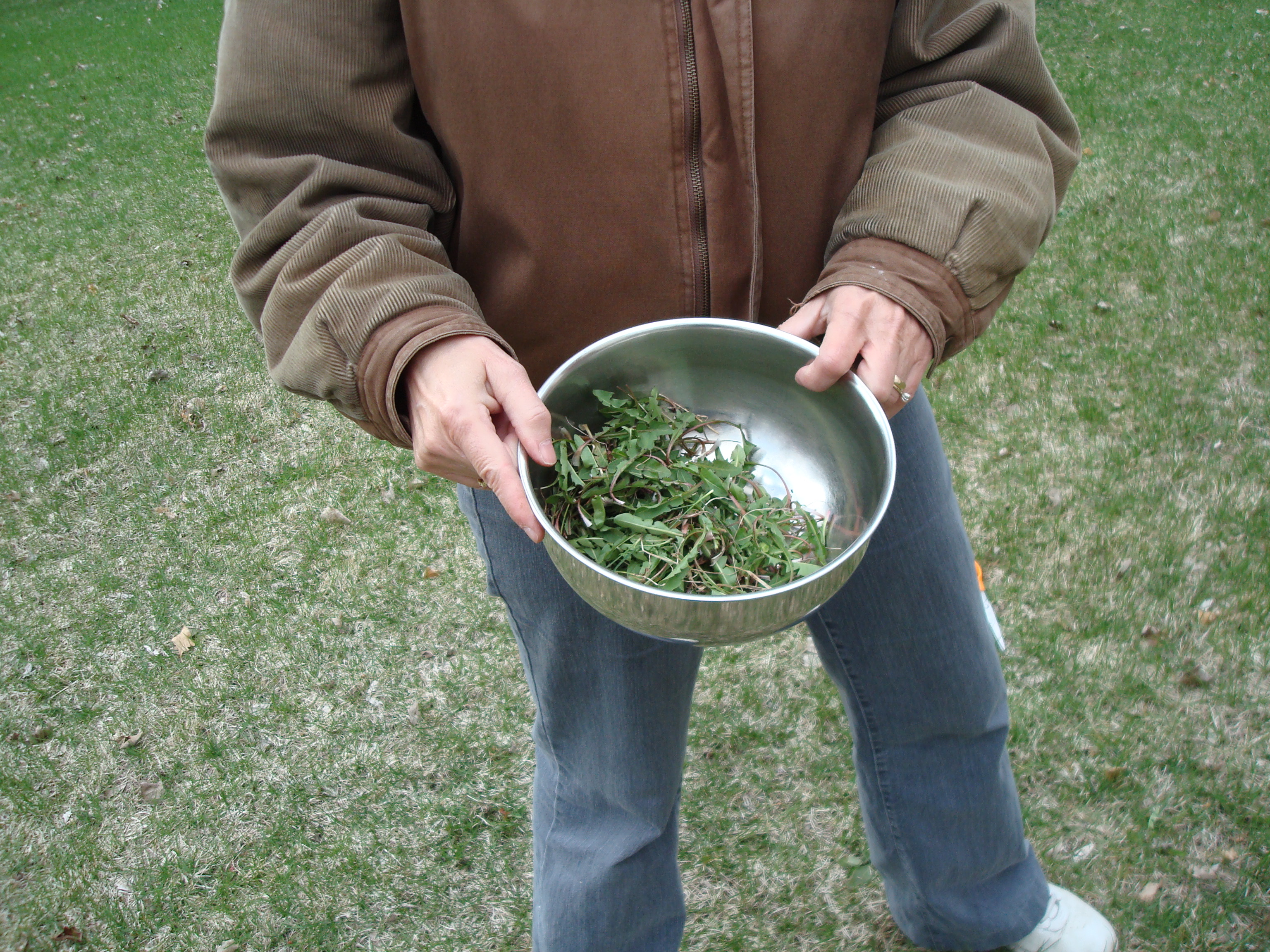
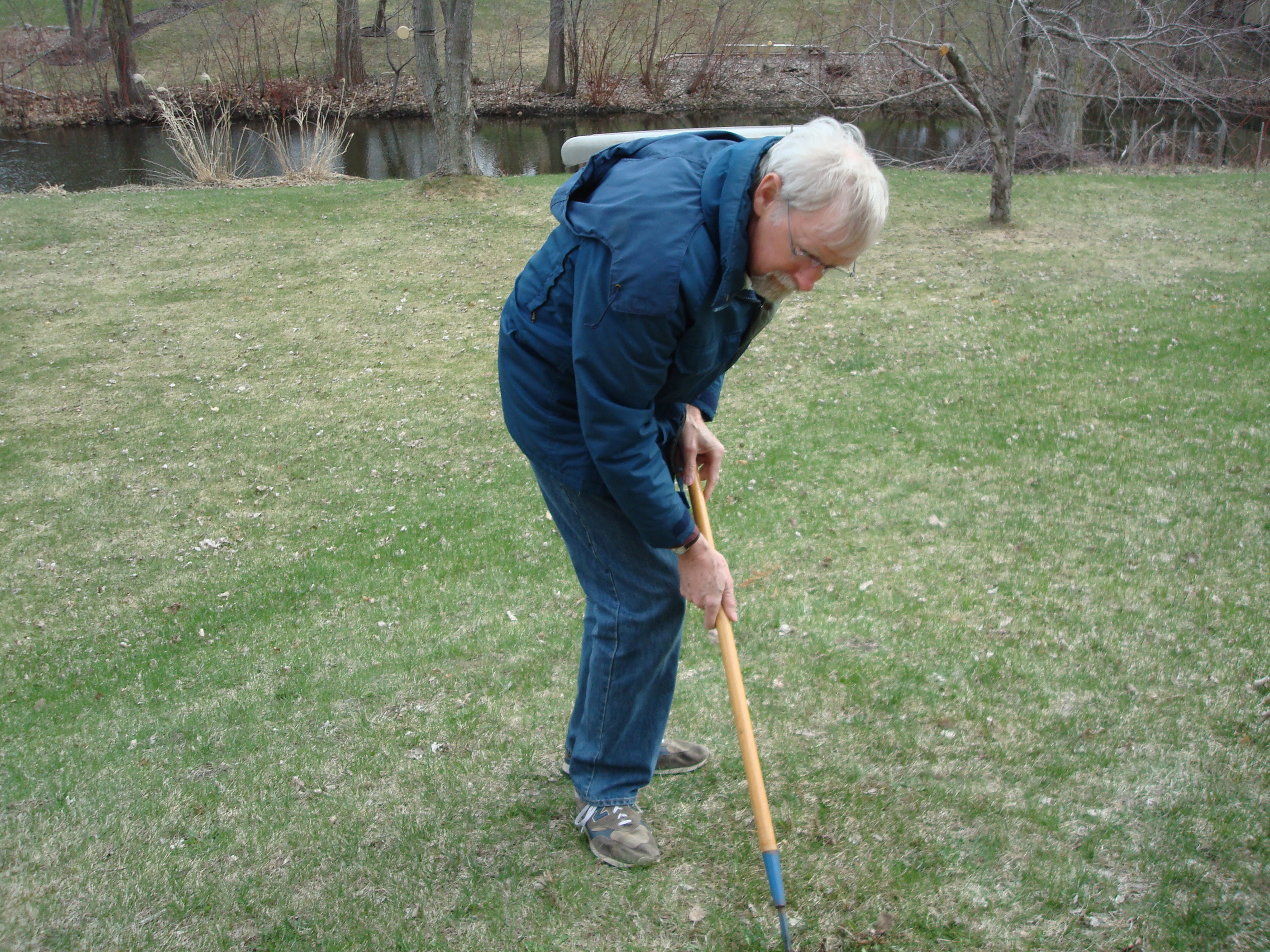
Husband Bill said that I’d been talking about how awesome dandelions were all week—and that I should make myself useful and help dig the dandelions out of the yard. We spent some quality time together, enjoyed a spring day, had dandelion for dinner, and the yard looks great!

Easter and Goldenrod Eggs

16-year-old Helena Muffly wrote exactly 100 years ago today: 

Sunday, April 16, 1911:  Easter Sunday, no chocolate eggs were in evidence. I went to Sunday school this morning. Went over to Stout’s this afternoon. Miss Carrie wasn’t at home though, having gone away to spend Easter.

 Her middle-aged granddaughter’s comments 100 years later:

It sounds like Grandma’s family didn’t celebrate Easter in 1911—though other families in the area apparently participated in extended family gatherings since Grandma’s friend Carrie had gone away to spend Easter.

Grandma’s maternal grandparents lived in Turbotville, and her mother, Phoebe Derr Muffly, had 7 siblings—many of whom lived within 15 miles of the Muffly farm. It is somewhat surprising that the extended family didn’t gather to celebrate Easter.

—–

I had lots of fun experimenting with dying eggs using onion skins two days ago—now I have lots of hard-boiled eggs that need to be used.

Goldenrod Eggs are an old-fashioned traditional Easter food.

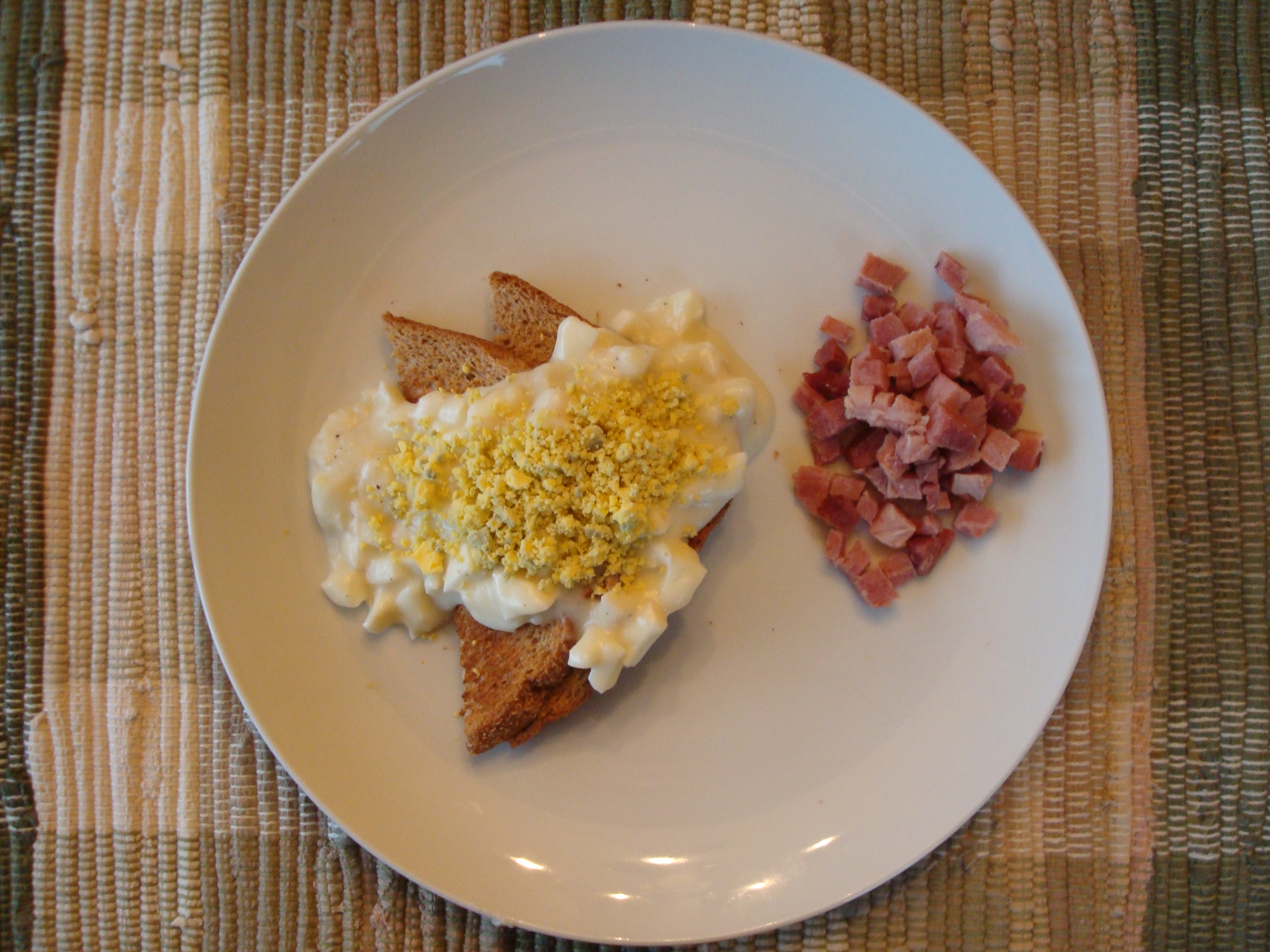
Goldenrod Eggs with Chopped Ham

Goldenrod Eggs

6 slices buttered toast

6 hard-cooked eggs

2 cups white sauce*

1/4  teaspoon salt

few grains cayenne

1/8 teaspoon pepper

Remove shells from eggs; chop whites finely; add to White Sauce. Press yolks through a sieve and add seasonings. Pour White Sauce over toast arranged on a platter, and garnish with yolks of eggs.

This dish may be very attractively arranged by placing spoonfuls of finely chopped ham around the toast.

*White Sauce

4 tablespoons butter

4 tablespoons flour

2 cups milk

1/4 teaspoon salt

few grains cayenne

1/4 teaspoon pepper

Melt butter, add flour, seasonings and liquid. Stir until the boiling point is reached. Boil two minutes, beating constantly.

Lowney’s Cook Book (1907)