16-year-old Helena Muffly wrote exactly 100 years ago today:
Saturday, April 8, 1911: I cleaned the yard today. I have to get down to manual labor since school has stopped, whether I like it or not, but tis best to like it. I guess for then you can do it easier.
Recent photo of home Grandma lived in when she was writing this diary. She would have been cleaning this yard.
16-year-old Helena Muffly wrote exactly 100 years ago today:
Friday, April 7, 1911: I’m thinking about my by-gone school days. Sad thoughts they are indeed. I ripped apart a waist, and am trying to make it over again.
Her middle-aged granddaughter’s comments 100 years later:
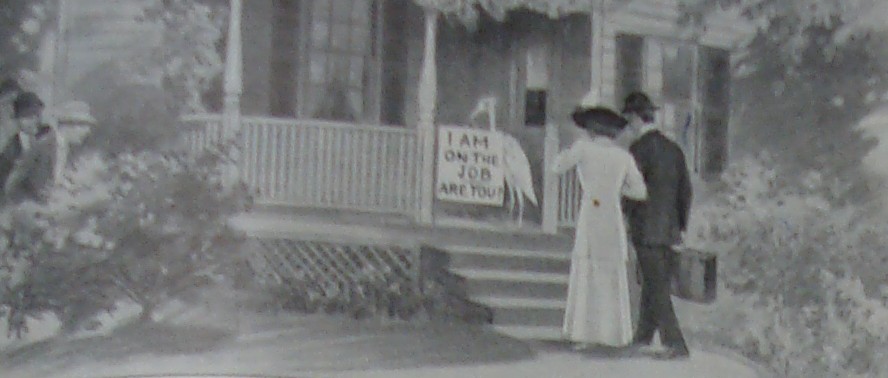
Drawing in April 15, 1911 issue of Ladies Home Journal. The sign the stork is holding says, "I am on the job. Are you?"
It sounds like Grandma was feeling a bit of post-event sadness. School was finished for the summer (Whew, won’t kids like to get out of school this early now?), and all of the big events of yesterday were all over. I wonder it anyone pulled any pranks on the wedding couple yesterday?
According to the January 1, 1911 issue of Ladies Home Journal:
Merrily go on the antics of the vulgar and the ill-bred at weddings. The houses of the newly-married are covered with signs,; the throwing of rice injured not fewer than sixteen couples last autumn; carriages are labeled with offensive signs; modest young brides are presented at their wedding feasts with a stork bearing a baby with an attached sign: ‘Not yet, of course, but soon’; trunks are bedecked with suggestive inscriptions—in short, marriage is made a farce.
And parents stand idly by, saying complacently: “Oh, it’s all innocent fun—let the young people have their nonsense!” And these same parents go back to their evening lamps and read about and deplore the tendency to unhappy marriages: they see no connection between the laxity of the marriage tie and a laxity of the sacredness that should surround two persons at the very outset of the founding of a home!
————-
I’m amazed that Grandma knew how to ‘make over’ a waist (an old term for a shirt or blouse). Maybe she was changing the neckline . . . or making the fit a bit snugger . . . or changing the sleeve style or length.
If I ever took the seams out of one of my shirt I’d be totally clueless how to proceed to end up with a wearable, updated shirt.
It’s funny how disposable clothes have become. A hundred years, clothing was costly and people really tried to get as much wear out of each outfit as possible by making over outfits so that old clothes would still look stylish.
16-year-old Helena Muffly wrote exactly 100 years ago today:
Thursday, April 6, 1911: A warm spring day today it was. We had our second annual picnic out on the school ground. Oh my what fun we had. This afternoon I helped to carry flowers to the church. Alas the afternoon soon passed. When I got home, I had to hurry and get my work done in time to go to the commencement. I had to take my Mamma along, so that impeded my progress somewhat. After commencement came the wedding of Edith and Harry. It was the first one I was ever present at. Well, I guess about all I anticipated was realized. I can hardly believe I can only see him so seldom now even if the distance is short when I used to see him so often.
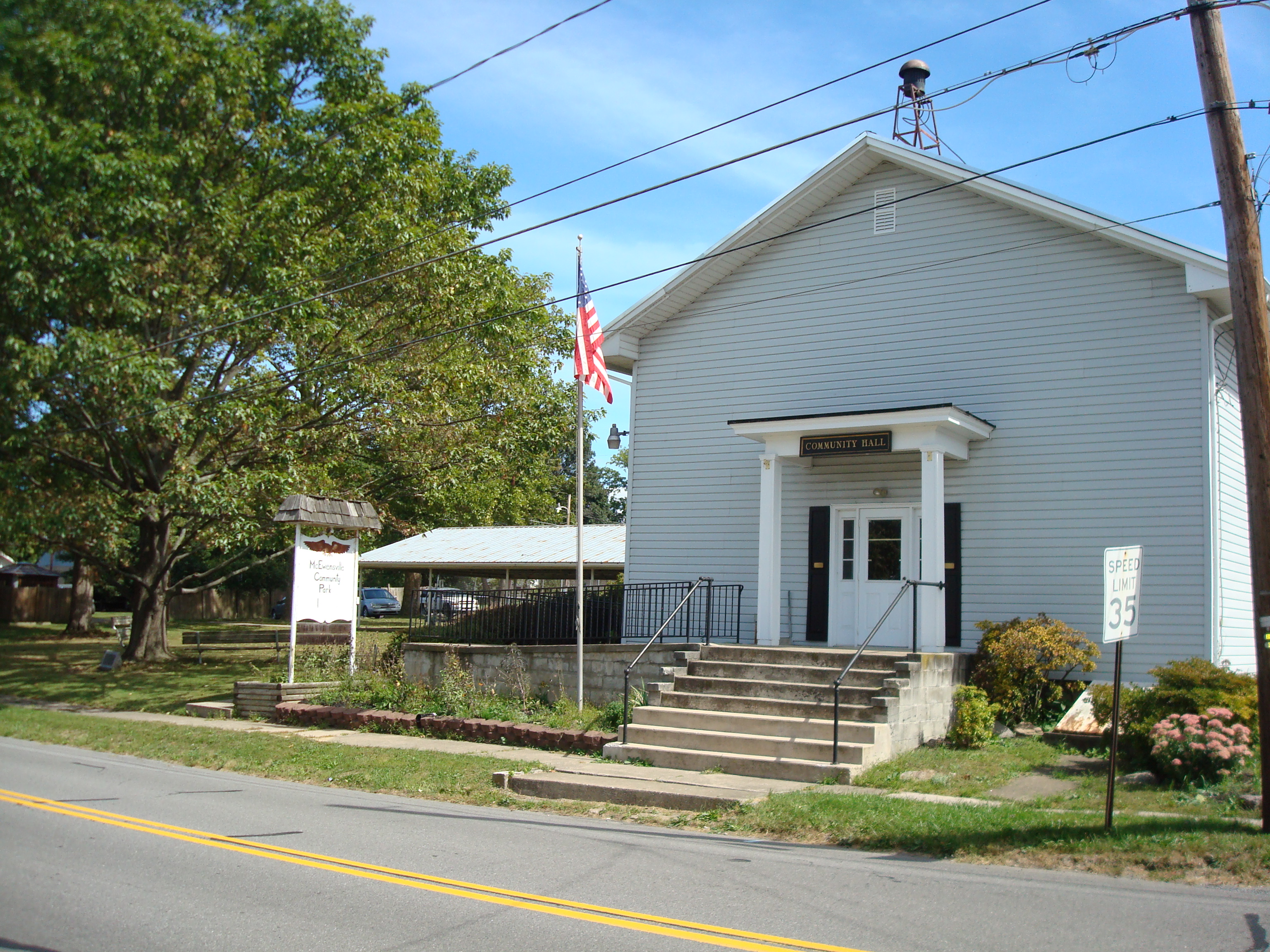
2010 photo of McEwensville Community Hall. The community hall has a stage that probably was the site of the graduation.
Her middle-aged granddaughter’s comments 100 years later:
Whew, what a day! The last day of school, the annual school picnic (I wonder if people liked Grandma’s fudge.), Grandma’s sister’s high school graduation ceremony. . . .and A WEDDING (with farm chores somehow squeezed in between the picnic and the graduation ceremony).
It sounds like Grandma’s friend Edith graduated from high school and then a few minutes later got married. I’m amazed how compressed these two activities were. Was there a break, with people perhaps moving from the Community Hall to a church?
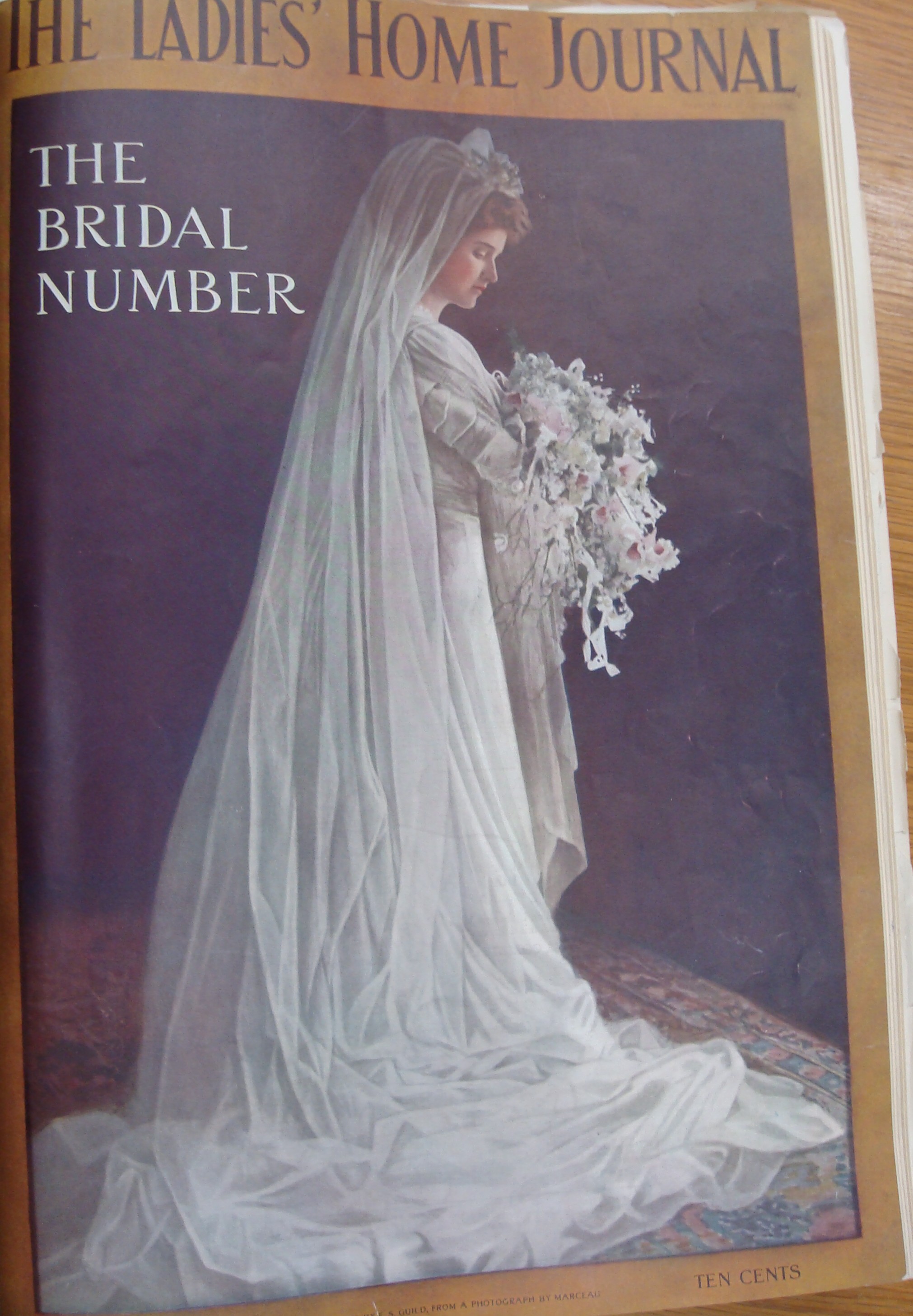
Cover of Ladies Home Journal, April 15, 1911
Did Edith change into a wedding gown following the graduation ceremony—or did she just wear the same clothes that she’d wore at graduation?
And, what did Grandma mean when she wrote, “I can hardly believe I can only see him so seldom now even if the distance is short when I used to see him so often”? It sounds like she had a crush on someone at school. Who? One of the graduating seniors? . . .a classmate?
There’s a lot of information in today’s diary entry.
Another. . . hmm . . . I wonder why . .
Grandma’s older sister Besse was married prior to the time that Grandma kept this diary. But Grandma says that Edith’s wedding was the first wedding she’d ever attended. I wonder why Grandma hadn’t attend her sister’s wedding. Might Besse have eloped?
16-year-old Helena Muffly wrote exactly 100 years ago today:
Wednesday, April 5, 1911: But now I have changed my opinion. I believe I will have a good time tomorrow. I assisted my sister in making chocolate fudge tonight.
Her middle-aged granddaughter’s comments 100 years later:
I found two recipes for chocolate fudge in a 1911 cookbook:
Fudge
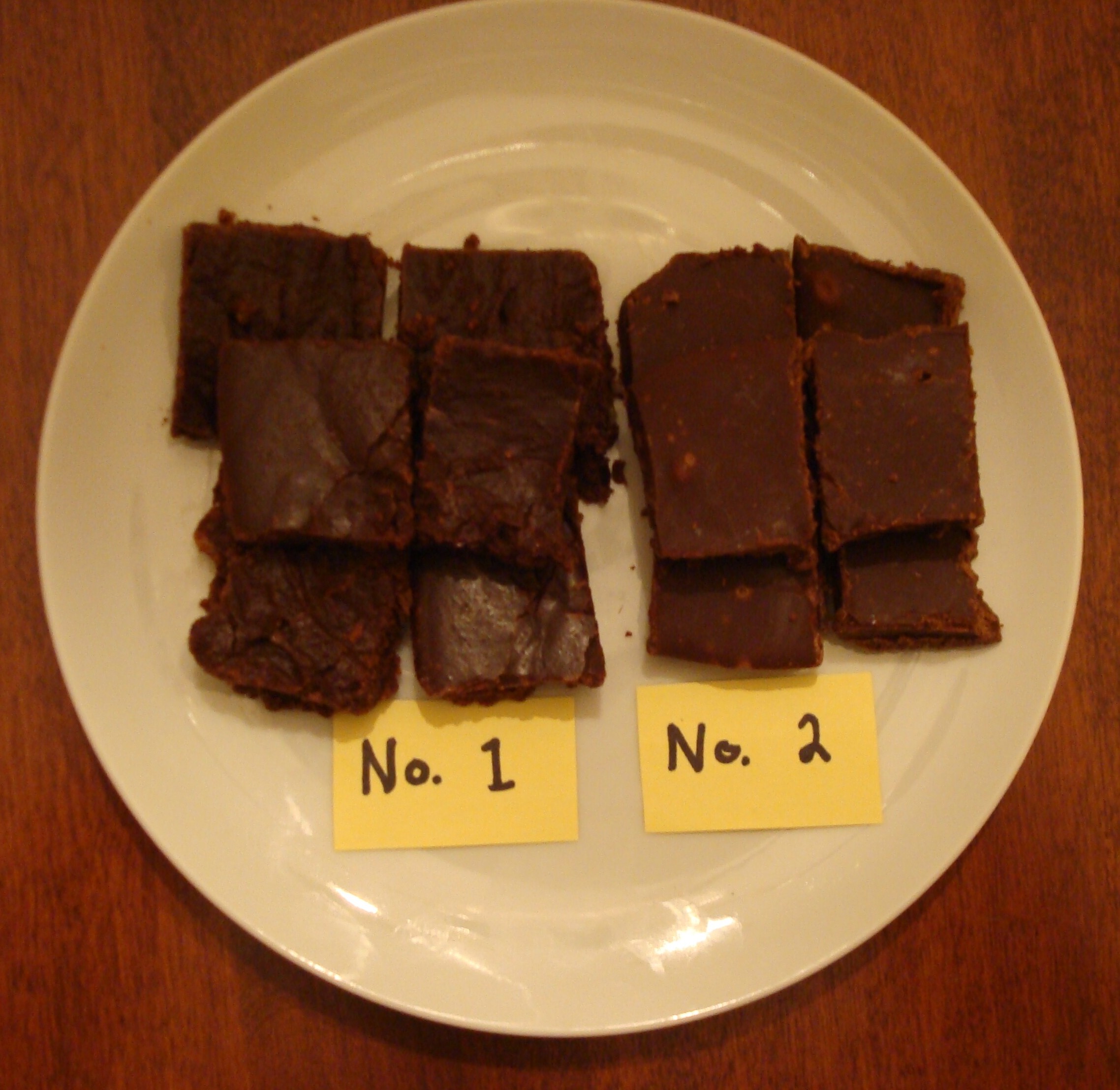
Chocolate Fudge, No. 1—Three cups sugar; one cup cream or rich milk; one-half cake of chocolate and piece of butter the size of an egg. Boil slowly until grains form on the edge of the kettle. Add a tablespoon of vanilla and beat vigorously for a few minutes. Pour into a buttered pan and mark off in squares.
Chocolate Fudge, No. 2—Two cups brown sugar; one-half cup of butter; one-half cup of milk; one-fourth cup of molasses. Boil ten minutes. Then add two squares of chocolate and boil three minutes longer. Beat until thick, adding a teaspoon of vanilla.
The Butterick Cook Book: With Special Chapters About Casserole and Fireless Cooking (1911) by Helena Judson
I decided to make both recipes—and then have a taste-testing to see which was better. First I ‘translated’ the recipes into modern terms. For recipe No. 1, I guessed that a cake of chocolate was 1/2 pound of unsweetened chocolate and that the recipe therefore was calling for 1/4 pound of chocolate (4-one ounce squares).
I decided to use 1/4 cup of butter for ‘butter the size of an egg’. I used heavy whipping cream for the cream or rich milk.
And, I decided that ‘beating’ within the context of 1911 probably meant stirring rapidly with a spoon.
Before pouring each mixture into a buttered pan to cool, I divided the mixtures into half and added chopped walnuts to one half.
After the fudge hardened I conducted a taste test with readily available people (in other words, with my husband).
Both recipes made acceptable fudge—though Recipe No. 1 tasted more like the fudge we typically eat today. Recipe No. 2 had interesting complex undertones from the molasses—which seemed a bit strong in the plain fudge, but when we compared the fudges that contained the walnuts—the molasses really complemented the taste of the walnuts.
If any of you are hungry for some old-fashioned sweets, I’d encourage you to try these recipes.—And, let me know if you translated these recipes for modern cooking differently than I did, and whether you preferred recipe No. 1 or No. 2.
16-year-old Helena Muffly wrote exactly 100 years ago today:
Tuesday, April 4, 1911:Not very much for today. It still continues to be so chilly and so dreary. To increase these conditions it had to rain this afternoon. I have to write about the weather, when I have nothing else to write. I don’t believe Thursday is going to be the beautiful day I want it to be!
Her middle-aged granddaughter’s comments 100 years later:
Grandma was hoping for nice weather on Thursday because it would be the last day of school. The commencement ceremony for her sister and other seniors at McEwensville High School will also take place that day.
——-
McEwensville in the Early 1900s. Source: Watsontown, McEwensville, and Delaware Township: A Real Photo Postcard History. (Used with Permission)
Today I’d like to tell you about the best source of information about McEwensville and the surrounding area that I’ve found:
Watsontown, McEwensville, and Delaware Township: A Real Photo Postcard History by Robert Swope Jr. (2006; Publisher: Heritage Trails, PO Box 184, New Hope VA 24469; phone: 540-363-4537).
They say that a picture is worth a thousand words—and this book is a wonderful example of the power of photos. I keep my copy on a shelf next to the reclining chair in my den. Often I flop into the chair after a long day and find myself reaching for this book—even though I’ve previously looked at every page many times before. The photos pull me back to the simpler days a hundred years ago and I feel like I can almost sense what it was like in McEwensville when Grandma was writing this diary.
This book contains lots of post cards from the early 20th century and is absolutely the best resource that I’ve found on the McEwenville of Grandma’s day. There are descriptive captions for all of the post cards in the book, and it also contains an interesting and informative history of McEwensville.
In the early 1900s real picture post cards were very popular. Back then people were very interested in sharing the sites and activities of their towns with others.
This blog has given me the opportunity to meet via technology many wonderful people. One such person is Robert Swope Jr., the author of this book. I contacted Bob and he very generously allowed me to reproduce a few photos from the book. Most of them are on the Setting page. (I updated the page last night—so if you haven’t looked at it recently be sure to check it out.)
I would encourage anyone who is interested in what McEwensville was like in the early part of the 20th century to read this book. I purchased my copy at the Packwood Museum Gift Shop in Lewisburg. It is also available at other stores in central Pennsylvania.
The book can also be purchased by calling the phone number listed above or from Bob’s Ebay store. Just go to Ebay and search using the word “McEwensville”. The listing for the book will pop up.
16-year-old Helena Muffly wrote exactly 100 years ago today:
Monday, April 3, 1911: One day is passed of the dreaded three, and they will soon be over, for we are having our final exams now. I’m so anxious about what I will make, fraid it won’t be any too high, and sincerely hope it will not be the opposite.
Her middle-aged granddaughter’s comments 100 years later:
A few minutes ago my college-aged daughter called and asked what I was doing. I said that I getting ready to write about Grandma’s final exams.
16-year-old Helena Muffly wrote exactly 100 years ago today:
Sunday, April 2, 1911: I went to Sunday school this morning. It was kind of lonesome this afternoon. Ruth and I went up to church this evening to hear the baccalaureate sermon.
Her middle-aged granddaughter’s comments 100 years later:
The school year is winding down—and the baccalaureate service for the senior class (of which Grandma’s sister Ruth was a member) at McEwensville High School occurred on this Sunday before graduation.
Since there were three churches (Baptist, Lutheran, Reformed) in McEwensville in 1911, I’m not sure where the baccalaureate service was held. The Baptist church building is long gone, but the buildings that housed Messiah Lutheran and St. John’s Reformed still exist.
2010 photo of St. John's United Church of Christ Church (In Grandma's day it was St. John's Reformed Church.)2010 photo of the building that once housed Messiah Lutheran Church. It is now an antique shop.