I am intrigued by this 1921 advertisement. The 1920’s were a time of rapid change, and schools were becoming larger with some even having school lunch rooms or cafeterias. However, I’m uncertain that it can be considered progress when more and more school lunch rooms were selling Lowney’s Almond Milk Chocolate Bars.
I always enjoy Waldorf Salad, so was intrigued by recipe for Apple and Celery Salad in a hundred-year-old cookbook. It seemed very similar to Waldorf Salad – but with fewer ingredients (just apples and celery). I wondered, would I miss the nuts and raisins in the typical Waldorf Salad?
The verdict- Apple and Celery Salad was nice, but I prefer Waldorf Salad with the added crunchiness and sweetness of the nuts and raisins.
Here’s the original recipe:
Source: The New Cookery (1921) by Lenna Frances Cooper
I went with the mayonnaise option when I made this recipe, and I did not garnish with lettuce. (Exactly how do you garnish with lettuce?) I also did not peel the apples. To be totally honest, I somehow failed to notice that the apples were supposed to be peeled until I started writing this post. When I made this recipe, I was in a hurry and just glanced at the recipe, and thought that this would be an easy recipe because it was Waldorf Salad minus half the ingredients. I should have read it more carefully. The salad would be different (and less colorful) if the apples had been peeled.
And I also failed to notice that I was supposed to marinate the apple pieces in lemon juice – but we ate the salad soon after I made it, so the apples didn’t discolor. (I think that coating them with mayonnaise also slows discoloration).
I used just enough mayonnaise to coat the celery and apple pieces (about 1/2 – 2/3 cup). I previously made the Golden Salad Dressing recipe that is listed in this recipe when I made another recipe from this cookbook: Pineapple and Strawberry Salad with Golden Dressing. Golden Salad Dressing recipe can be found in that post.
I’m now realizing that I barely made the original recipe for Apple and Celery Salad – and am fascinated that I somehow failed to do so many things quite right with such a simple recipe. I guess it’s a lesson learned about carefully reading directions even for the easiest recipes. That said, the recipe turned out well, so the updated recipe for modern cooks is based on how I made it..
Here’s what a 1921 cookbook had to say about how to substitute various sweets for sugar in recipes:
As substitutes for sugar for cooking purposes, corn sirup, molasses, glucose, maple sugar and sirup, and also honey come in for their share of usefulness. The question arises in the mind of many a housewife as to how much of these diluted sugars should be substituted in customary recipes. For this reason, the following facts may be of interest.
Corn sirup and maple sirup are not so sweet as sugar, and when used to replace it, should be increased from one half to two thirds. For instance, if a recipe calls for 1 cup of sugar, use as substitute 1 1/2 to 1/2/3 cups of sirup. In this case, allowance must be made for the increase in liquid. Every cup of sirup furnishes 1/4 cup of liquid; there for every cup of sirup that is substituted for sugar, reduce the original amount of liquid in the recipe 1/4 cup. Unless such allowance is made for the liquid that the sirup adds, an extra amount of flour is needed to obtain the necessary thickness to the batter, and a poor product is likely to result.
In using molasses and brown sugar, no change need to be made so far as amounts for sweetening purposes are concerned, because what these lack in sweetness is largely made up in flavor. However, the same allowance must be made for the liquid as when sirup is used. Glucose is best when used with part sugar, say 1/3 sugar to 2/3 glucose by measure. When used thus, it is suitable for canning purposes, also for making of sauces, etc.
Honey, one of the most staple sweetenings in the world, and probably the longest used, as not been in very common use for cooking purposes. Its sweetening power is about the same as that of sugar, and it should be used in the same proportions as white sugar, except that one fourth less of liquid should be used in a recipe with honey than with sugar. Honey is best adapted for table use; and for this purpose, it had better replace white sugar entirely.
The Science of Food and Cookery (1921) by H. S. Anderson
The substitution amounts probably haven’t changed across the years – but the spelling has. “Sirup” is now often spelled “syrup,” and “sweetenings” are now “sweeteners.” There sugar substitution recommendations in the old cookbook for both “corn sirup” and “glucose.” I’ve always thought that corn syrup and glucose were the same thing, but apparently they are different.
I’d never heard of Baked Bananas, so was intrigued when I flipped through a hundred-year-old cookbook and saw not one, but two, recipes for Baked Bananas. The first recipe involved peeling the banana, adding several ingredients and then baking. The second recipe just called for baking the banana in the skin. Over the years, I’ve learned that the easiest and simplest recipes are sometimes the best, so I decided to go with the second recipe.
The Baked Banana was sweet, creamy, and soft – and a nice change of pace from just peeling and eating a banana.
Here’s the original recipe:
Source: The Boston Cooking-School Cook Book (1921 Edition)
Preheat oven to 350° F. Put bananas in shallow pan or baking dish; cover. Place in oven and bake until the skin is very dark (almost black). Remove from oven, and let cool slightly; then remove the pulp from the skins and place in serving dish. Sprinkle with sugar.
Both a hundred years ago and now, there were recommendations for distributing calories across nutrient groups.
Here are the 1921 recommendations:
An ideal distribution of the calories is one-tenth protein, three-tenths fat and six-tenths carbohydrate. In a dietary of 2400 calories this would be 240 protein, 720 fat, and 1440 carbohydrate.
The New Cookery (1921) by Lenna Frances Cooper
And, here are the 2021 recommendations (Actually they were published in 2015, but they are the most current recommendations.):
The Dietary Guidelines for Americans (USDA, 2015) recommend that an adult’s total daily calories come from the following:
45–65 percent carbohydrates
10–30 percent protein
20–35 percent fat
Some nutritionists recommend a ratio of 40 percent carbohydrates, 30 percent protein, and 30 percent fat as a good target for healthy weight loss.
A 1,500 calorie diet with 40 percent carbohydrates translates to 600 calories per day from carbs. Using a ratio of 4 calories per gram (g) of carbs, a person on this diet would need to eat 150 g of carbohydrates per day.
This 1,500 calorie diet would also include 450 calories or 112 g of protein, and 450 calories or 50 g of fat per day.
As the days get shorter and the evenings cooler, I find that I crave comfort foods. So when I saw a hundred-year-old recipe for Chicken à la Crème, I decided to give it a try. Chicken, sliced mushrooms, and chopped red pepper are embedded in a rich, creamy sauce that is served over toast.
This recipe is a keeper. I’ll definitely make Chicken à la Crème again. It is quick and easy to make, and very tasty.
Here’s the original recipe:
Source: Lowney’s Cook Book (1921 Edition)
Is Chicken à la Crème another name for Chicken à la King? A few years ago I made a recipe for Chicken à la King that was similar to this one. Both recipes called for chicken and mushrooms. This recipe called for red pepper; Chicken à la King called for green pepper as well as for a small amount of onion. For this recipe, the sauce was a white sauce; the sauce for Chicken à la King was made using cream, chicken broth, and lemon juice.
Here’s the Chicken à la Crème recipe updated for modern cooks:
Melt the butter in a saucepan. Stir the flour into the butter; stir in salt and pepper. While stirring constantly, slowly pour in milk and bring to a boil over medium heat. Stir in the chicken, mushrooms, and red pepper. Bring back to a boil; remove from heat. Serve over toast.
I often make boiled potatoes. I think that they are out of style and considered old-fashioned; but, to be totally honest, I enjoy meals that feature meat and boiled potatoes. A hundred years ago boiled potatoes were more popular than they are now. Here are some 1921 tips for cooking potatoes:
The method used in cooking potatoes has much to do with the food value. Baking or boiling “in their jackets” saves the food value. Peeling and then boiling causes some loss of the mineral matter and protein, since these foodstuffs are found just under the skin of the potato and may be lost when it is pared, unless very thin peelings are removed.
Potatoes, to be cooked, should be put in boiling water, not in cold, as soaking peeled potatoes in cold water draws out the starch and also causes a loss of protein and mineral matter. Potatoes should never soak in cold water after they are peeled, if all of the food value is to be saved. If they are old and withered, they should be freshened by soaking before the skin is removed. Potatoes should be removed from the boiling water as soon as they are done.
Baked potatoes, when done, should have the skin broken or pierced with a fork to all the escape of the steam, which would cause the potato to be soggy.
Elementary Home Economics (1921) by Mary Lockwood Matthews
I just realized that I don’t follow these directions. I generally peel potatoes before boiling them – and I put them in cold water which I then heat. For holidays, such as Thanksgiving, when I make a lot of boiled potatoes to mash for mashed potatoes, I’ll peel the potatoes several hours ahead of time, and let them sit in cold water until it is time to cook them. Probably many of the nutrients are probably lost . . sigh.
And, when I make baked potatoes, I pierce the potatoes with the point of a sharp knife prior to baking – to allow steam to escape and keep the potatoes from exploding – rather than waiting until they removed from the oven.



 Here’s what a 1921 cookbook had to say about how to substitute various sweets for sugar in recipes:
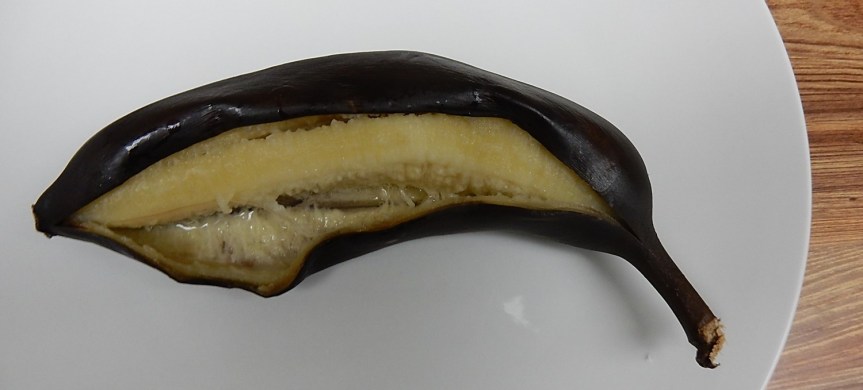 I’d never heard of Baked Bananas, so was intrigued when I flipped through a hundred-year-old cookbook and saw not one, but two, recipes for Baked Bananas. The first recipe involved peeling the banana, adding several ingredients and then baking. The second recipe just called for baking the banana in the skin. Over the years, I’ve learned that the easiest and simplest recipes are sometimes the best, so I decided to go with the second recipe.
 Here’s the original recipe: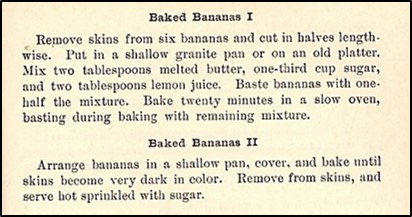
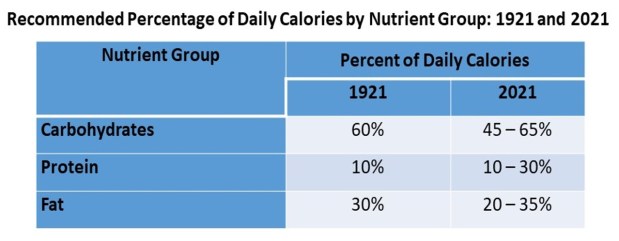 Both a hundred years ago and now, there were recommendations for distributing calories across nutrient groups.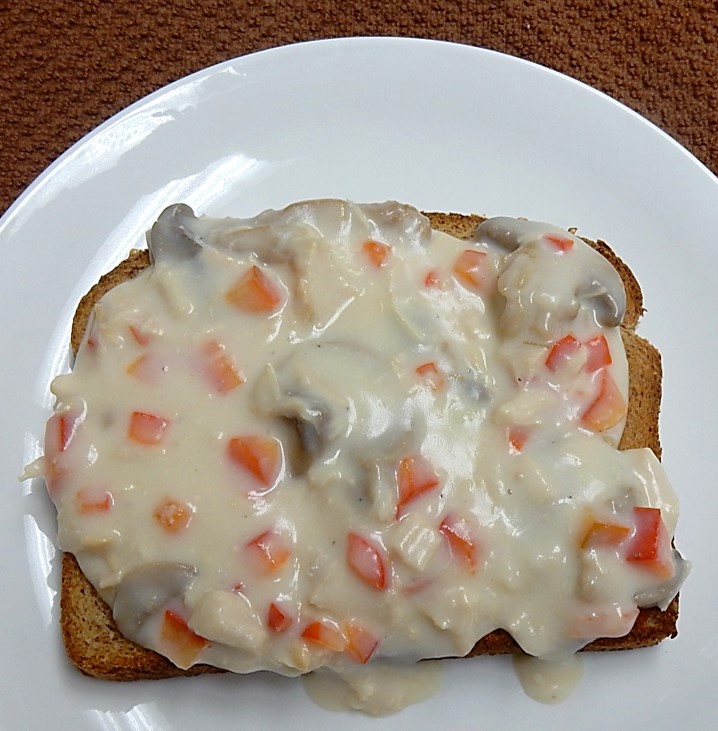

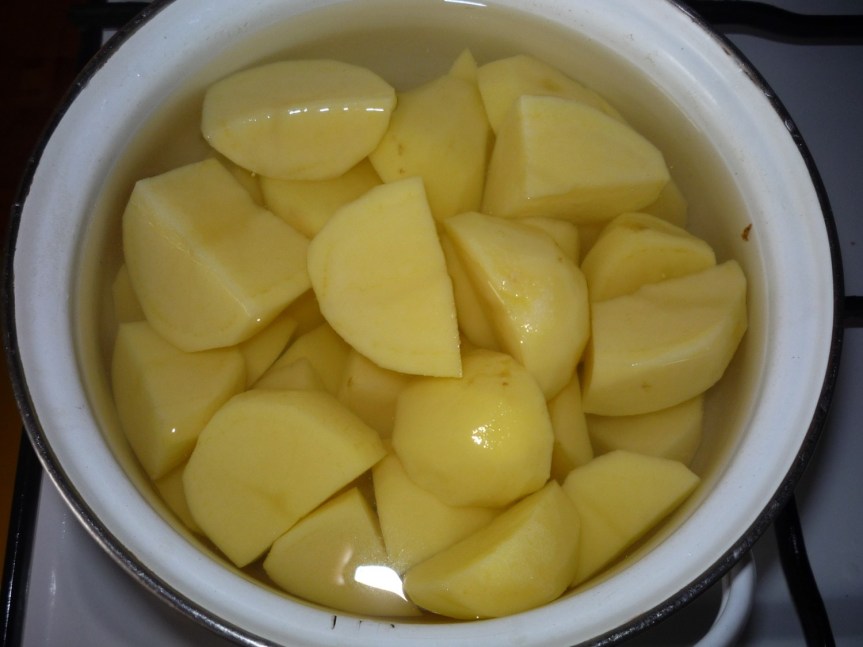 I often make boiled potatoes. I think that they are out of style and considered old-fashioned; but, to be totally honest, I enjoy meals that feature meat and boiled potatoes. A hundred years ago boiled potatoes were more popular than they are now. Here are some 1921 tips for cooking potatoes: