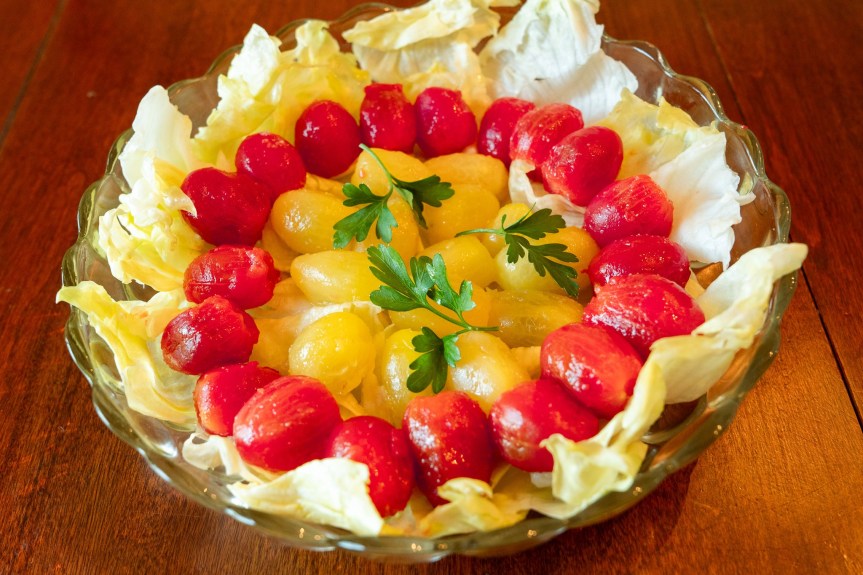
Old-Fashioned Novel Tomato Salad (Cherry Tomato Salad)

Cherry tomatoes are colorful, vibrant, and zesty. So, when I saw a hundred-year-old recipe for a cherry tomato salad, I decided to give it a try.

Novel Tomato Salad (Cherry Tomato Salad) made an attractive presentation, and was tasty. Yellow and red cherry tomatoes are arranged on a bed of lettuce and then topped with a vinaigrette-style dressing.

The recipe called for peeling the cherry tomatoes. A hundred-years-ago tomatoes were often peeled, but, since they are almost never peeled today, I considered skipping that step. However, in the end, I decided to follow the old recipe’s instructions, and peeled the tomatoes. The peeling was a little tedious– but after peeling the first 2 or 3 tomatoes, I got the hang of it, and the rest went quickly.

The salad made a nice presentation and was tasty. The peeling of the tomatoes affected both the look of the salad and the texture. The peeled cherry tomatoes were soft and juicy without the usual firmness of the skins. The tomatoes looked lovely arranged in the bowl, but had a soft, textured look rather then their usual shiny waxy skin. Also, the peeled cherry tomatoes soaked up more of the dressing which added additional flavor.

Here’s the original recipe:
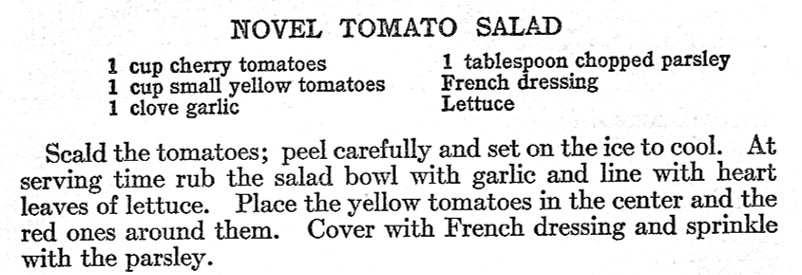
Recipe for Novel Tomato Salad (Cherry Tomato Salad)
Source: The New Winston Cook Book of Guaranteed Recipes (1926)

When I arranged the cherry tomatoes, in order to make a circle of red cherry tomatoes around the yellow ones, I needed more red tomatoes than yellow ones. When I updated the recipe, I increased the amount of red tomatoes to 1 1/2 cups, but this is a very flexible recipe, and the the number of cherry tomatoes needed of each color will vary greatly based on the size of the bowl and size of the tomatoes.

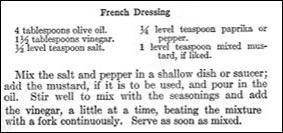
I’ve made several recipes this year which called for French Dressing. As I’ve previously indicated, a hundred years ago, French Dressing was a vinaigrette dressing, and quite different from the commercial, orange-colored French dressing that is common today. Here is the French Dressing recipe in the cookbook which contained the Novel Tomato Salad (Cherry Tomato Salad) recipe:
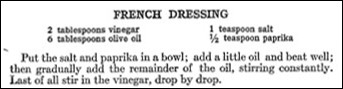
Recipe for French Dressing
Source: The New Winston Cook Book of Guaranteed Recipes (1926)

I halved the recipe when I made it. I’ve previously posted this same French Dressing recipe as part of the recipes for Green Bean Salad (with Nasturtiums) and Cottage Cheese and Tomato Salad.

Here’s the recipe updated for modern cooks:

Novel Tomato Salad (Cherry Tomato Salad)

  • Servings: 4 - 5
  • Difficulty: moderate
  • Print

water

1 1/2 cups red cherry tomatoes

1 cup yellow cherry tomatoes

French Dressing

heart leaves of iceberg lettuce (or use the leaves of another type of lettuce)

1 clove garlic

parsley, for garnish

Step 1. Put water in a saucepan and bring to a boil. Put a few tomatoes at a time into the boiling water, scald for 15-30 seconds. Remove from water and peel the loosened skins from the tomatoes.

Step 2. Put the peeled tomatoes in the French dressing (see recipe below).  Put tomatoes in refrigerator to chill and marinate for at least 30 minutes.

Step 3. Peel garlic and cut in half, then rub serving bowl with the garlic.

Step 4. Line bowl with lettuce, then put the peeled yellow tomatoes in the center and the red tomatoes around the yellow ones. If desired, sprinkle with additional French dressing.

Step 5. Garnish with springs of parsley.

French Dressing (Vinaigrette  Dressing)

1/2 teaspoon salt

1/4 teaspoon paprika

3 tablespoons olive oil

1 tablespoon vinegar

Step 1. Put the salt and paprika in a small bowl.

Step 2. Gradually add the olive oil while stirring constantly.

Step 3. Then slowly add the vinegar, a small amount at a time, while continuing to stir.
http://www.ahundredyearsago.com

Green Bean Salad (with Nasturtiums)

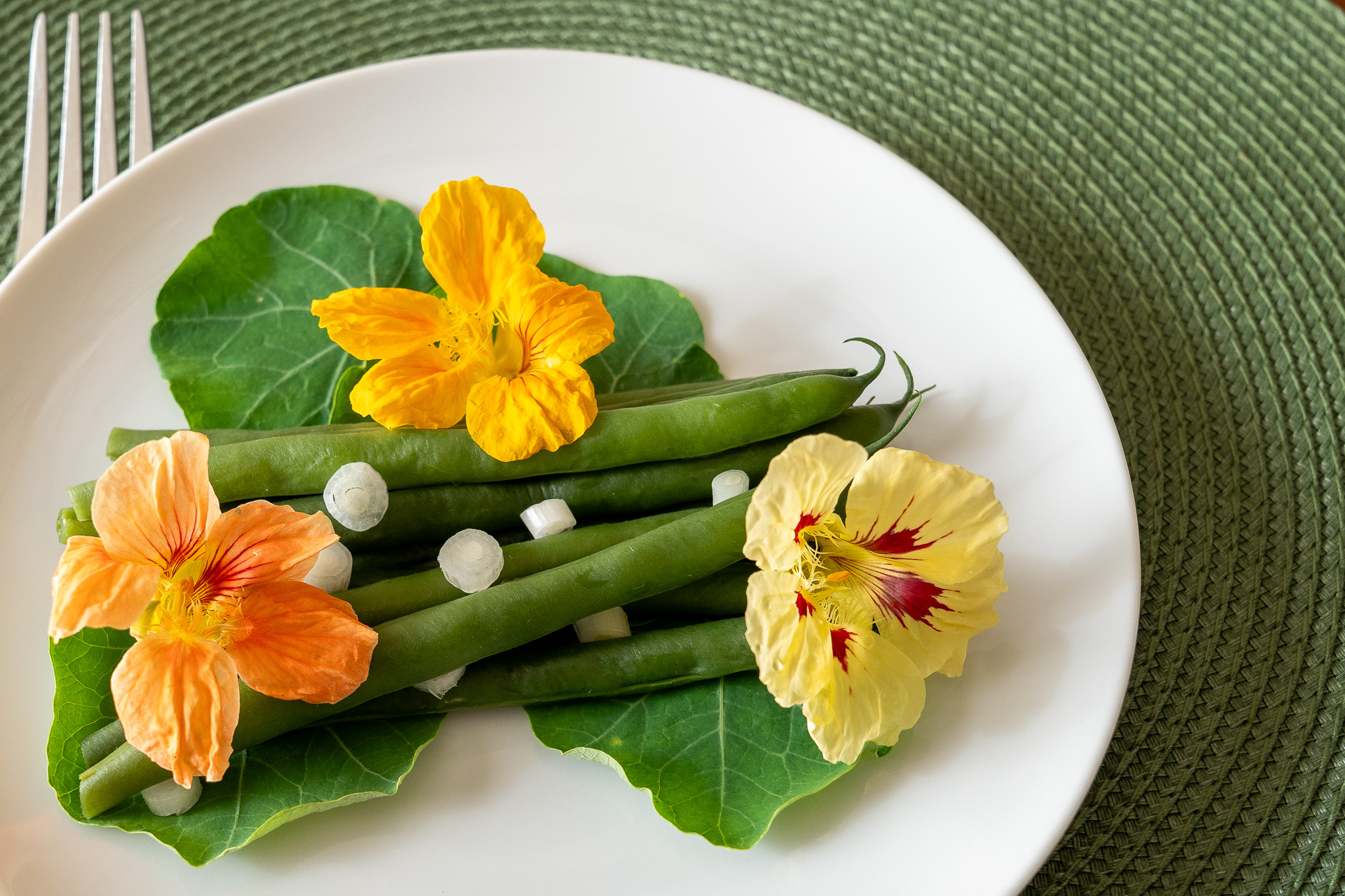
Green Bean Nasturtium Salad

Cooking with edible flowers is a fun and playful way to change a mundane dish into a  really special, beautiful dish that is a work of art.

I planted nasturtiums this year for the first time in many years. The reason I planted them is because I saw a recipe in a hundred-year-old cookbook for a green bean salad that called for nasturtiums. I’ve been anxiously waiting for the nasturtiums to bloom,  and, finally, they are blooming and I was able to make the recipe.

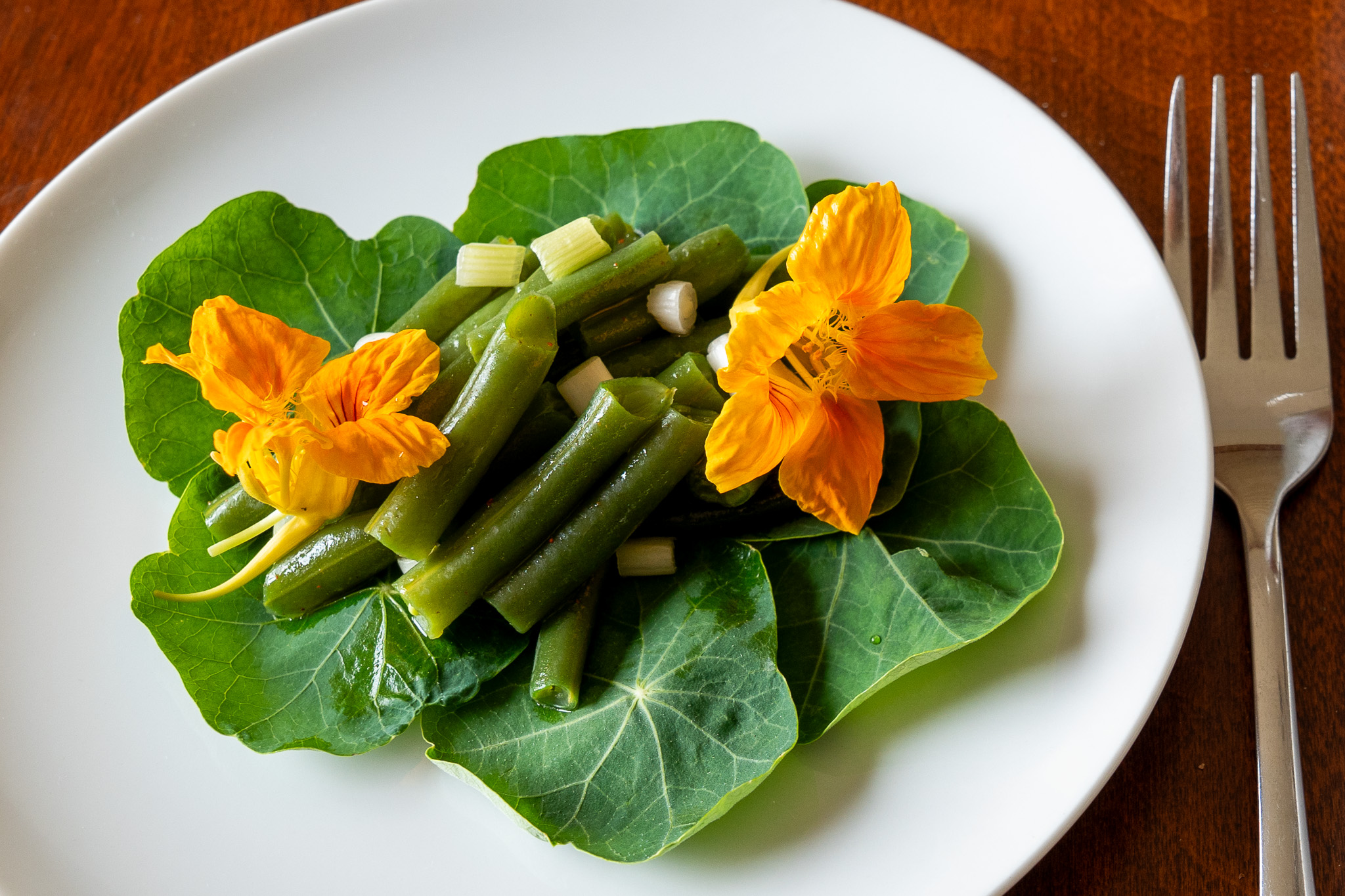
The Green Bean Salad (with Nasturtiums) was easy to make and tasty, and made a lovely presentation. The green beans are arranged on top of nasturtium leaves. Green onion slices are then sprinkled on top of the green beans, and the salad is garnished with nasturtium flowers. The green beans were lightly coated with a lovely vinaigrette dressing, and the nasturtium leaves have a nuanced sweetness, and mild peppery kick.

I made this salad twice. The first time I snapped the beans into short pieces, which is how I think cooks a hundred years ago would have made the salad. It looked lovely, but then I thought about how green beans often are left whole today, and decided to also make it that way. The salad with the unsnapped beans also looked great, and had a more modern look. (As you can see, I was having fun with this recipe.)

String Bean Salad with nastartiums

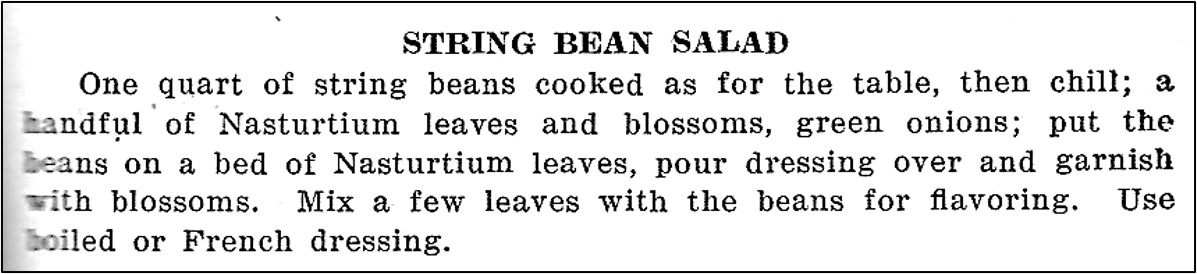
Here is the original recipe:

String Bean Salad (with Nasturtiums)
Source: Methodist Ladies Aid Cook Book: 1926 (Culbertson, Nebraska)

The original recipe was called String Bean Salad. Today we often refer to string beans as green beans (and they generally don’t even have strings anymore), so when I updated the recipe, I called it Green Bean Salad. I also included “with nasturtiums” in the recipe title since that is a unique part of this recipe.

I individually plated each serving, but the salad could be put in a serving bowl.

The old recipe called for serving the salad with French Dressing. A hundred years ago, French Dressing was a vinaigrette dressing, and quite different from the commercial, orange-colored French dressing that is common today. There was no recipe for French Dressing in the cookbook that contained the salad recipe, so I used a French Dressing recipe that was  in another 1926 cookbook:

Recipe for French Dressing
Source: The New Winston Cook Book of Guaranteed Recipes (1926)

The French Dressing made more dressing than I needed so I halved the recipe.

Here’s the recipe updated for modern cooks:

Green Bean Salad (with Nasturtiums)

  • Servings: 3-4
  • Difficulty: easy
  • Print

1 quart (about 1 pound) green beans

4 small green onions, thinly sliced

approximately 1 cup nasturtium leaves

nasturtium flowers (for garnish)

Step 1. Trim green beans. If desired, snap the beans (or they can be left whole). Lightly steam or boil the beans for about 5 minutes, then chill until cold.

Step 2. Pour French Dressing over the beans (see recipe below), and gently stir to coat beans with the dressing. (If desired, mix a few nasturtium leaves with the beans).  If there is excess dressing on the beans, drain the beans to remove it.

Step 3. Arrange nasturtium leaves on individual serving plates (or they can be arranged in a serving bowl). Top with the green beans that have been coated with French Dressing.

Step 4. Sprinkle the sliced green onions over the green beans.

Step 5. Garnish with nasturtium flowers.

French Dressing (Vinaigrette  Dressing)

1/2 teaspoon salt

1/4 teaspoon paprika

3 tablespoons olive oil

1 tablespoon vinegar

Step 1. Put the salt and paprika in a small bowl.

Step 2. Gradually add the olive oil while stirring constantly.

Step 3. Then slowly add the vinegar, a small amount at a time, while continuing to stir.
http://www.ahundredyearsago.com

Old-Fashioned Macaroni Chicken Salad

Macaroni Chicken Salad in bowl

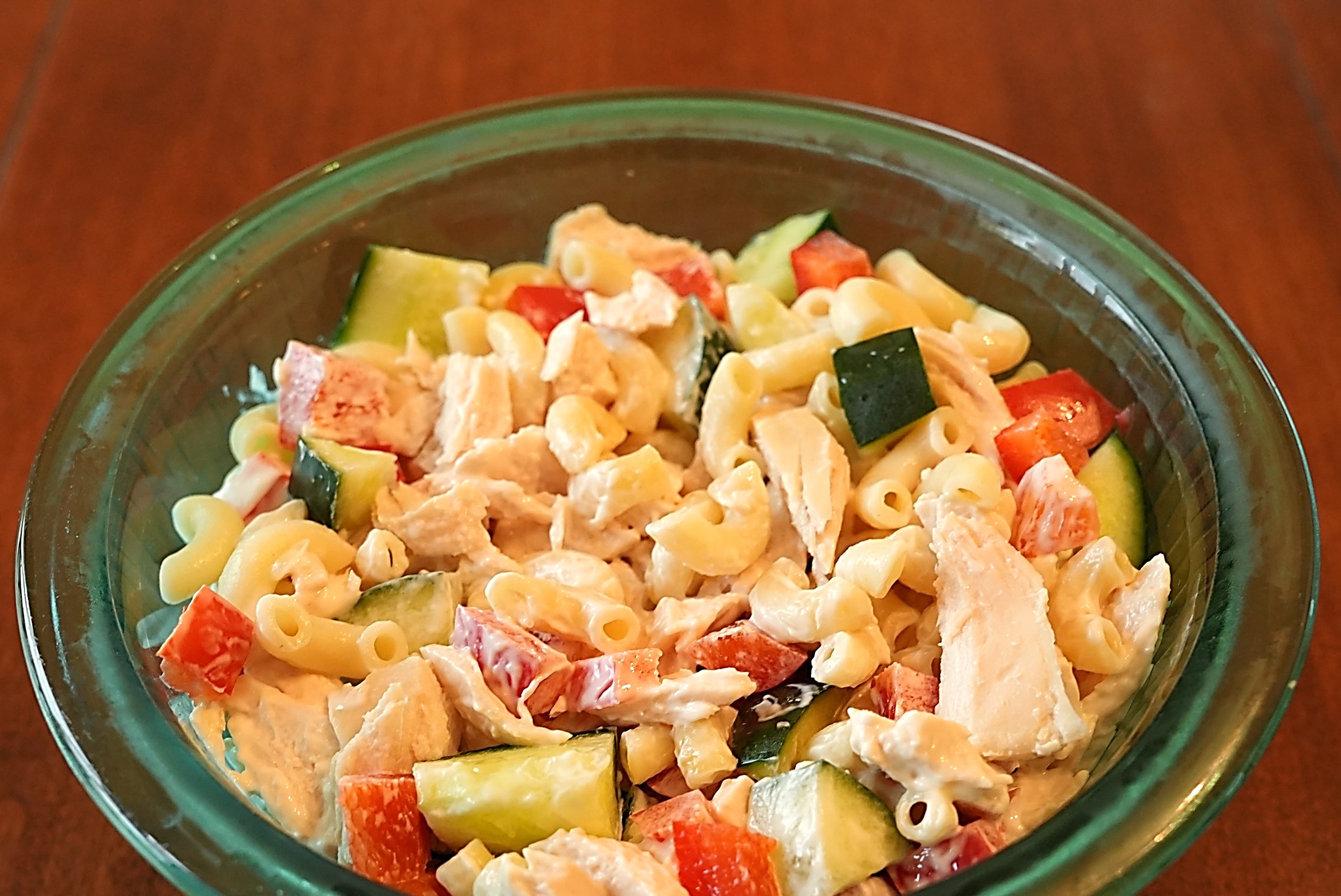
The season for picnics, reunions, grilling outside, and potlucks is upon us. It is also the season for old-fashioned pasta salads. A hundred-year-old issue of Ladies Home Journal contained a recipe of Macaroni Chicken Salad, and I decided to give it a try.

The Macaroni Chicken Salad differed from many modern pasta salads in that it contained no celery or onion. Instead, the recipe called for a cucumber, as well as for two chopped pimentos (which I interpreted to mean red peppers), in a mayonnaise dressing.

The salad was creamy, colorful, and flavorful. The chopped cucumber added a refreshing crunch, with the chicken providing a slightly savory protein. It would be a perfect side dish at a pot luck or other gathering. It is also lovely as a light lunch or dinner main dish.

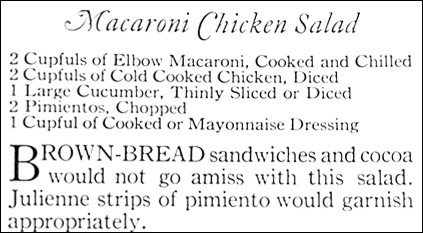
Here is the original recipe:

Macaroni Chicken Salad Recipe
Source: Ladies Home Journal (April, 1926)

The original recipe called for one cup of mayonnaise. If this much mayonnaise was used, the salad components would be thickly coated. I wanted a lighter dressing, so used ½ cup of mayonnaise.

I used a boneless chicken breast when making this recipe – though other parts of the chicken (or left-over rotisserie chicken) would also work well. If the water was not salted when making the macaroni (or if the diced chicken did not contain salt), a little salt might enhance the flavor.

I chopped an unpeeled cucumber rather than slicing it.

My sense is that red peppers were smaller a hundred years ago than what they are today, so I used just one red pepper.

I ignored the serving suggestions. I ate this salad for lunch, and it was sufficiently substantive without the addition of brown bread sandwiches. The salad was colorful with just the chopped red pepper and cucumbers, so I did not garnish with julienne strips of red pepper.

Here’s the recipe updated for modern cooks:

Macaroni Chicken Salad

  • Servings: 6 - 8
  • Difficulty: easy
  • Print

2 cups cold, cooked macaroni (approximately ¾ cup uncooked macaroni)

2 cups cold cooked chicken, coarsely chopped or shredded

1 cucumber, chopped or thinly sliced (about 2 cups)

1 medium red pepper

½ cup mayonnaise

½ teaspoon salt (optional)

Put the macaroni, chicken, cucumber, and red pepper in a bowl; stir gently to mix. Add mayonnaise (and, if desired, salt); stir gently to coat the other ingredients.

http://www.ahundredyearsago.com

Old-Fashioned Carrot and Celery Salad

Carrot and Celery Salad in dish

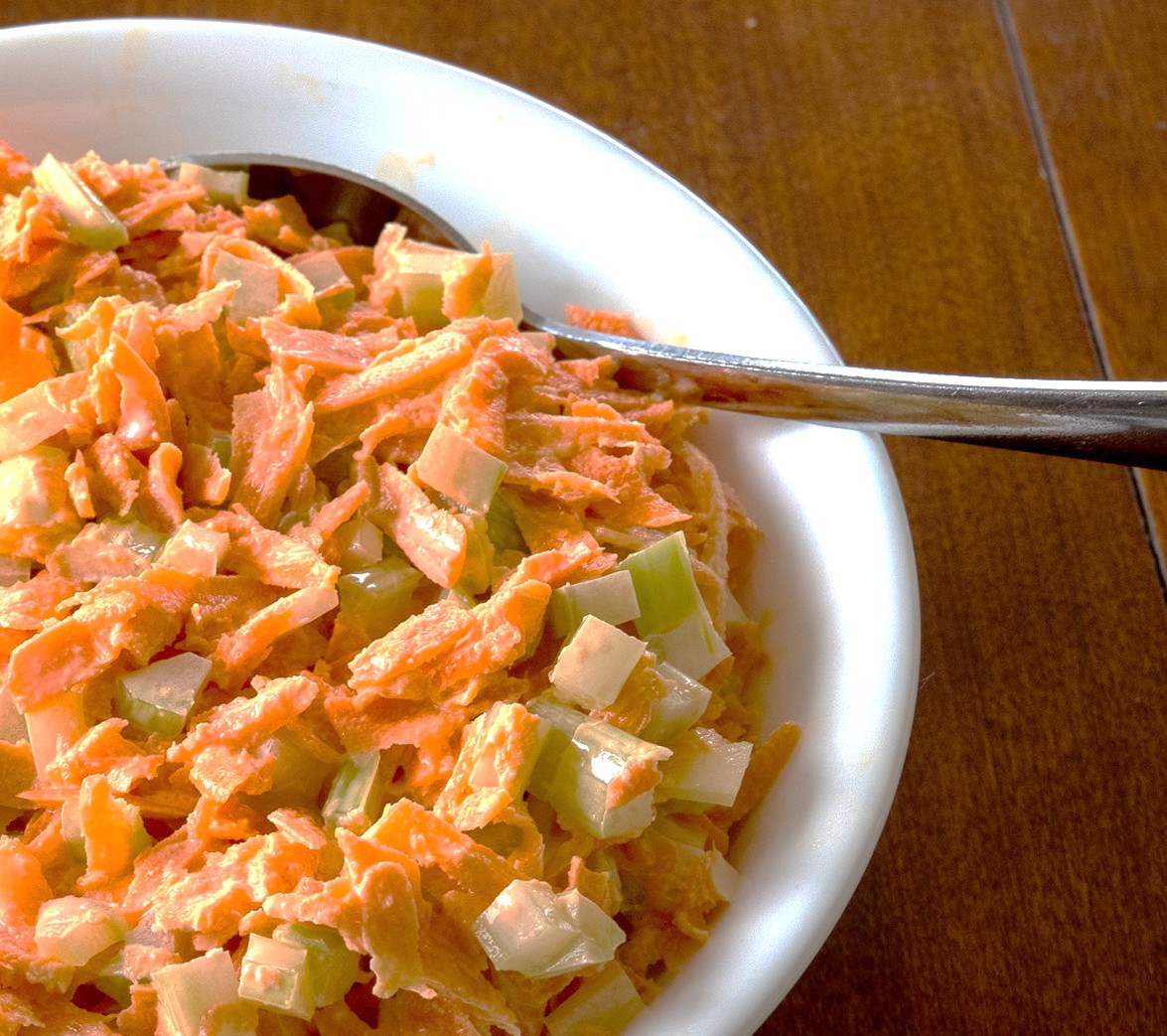
Occasionally, a hundred-year-old recipe brings back vivid memories. I recently came across a recipe in a 1926 cookbook for a Carrot and Celery Salad. Suddenly long forgotten memories flowed back. Easter dinner and other family gatherings were often held at my parents’ home, and my mother generally served a Carrot Salad. When my brother and I were in elementary school, we assisted in preparing the big meal. Mom always found fun, but easy tasks for us. A favorite kid task was to grate carrots for Carrot Salad.

For some reason, I can’t remember much about those Carrot Salads. I don’t know what the other ingredients were or what they tasted like. I just know that it was fun grating carrots.

In any case, when I saw the old recipe for a Carrot Salad that contained carrots and celery, I immediately knew that I wanted to make it, and I’m glad I did. The Carrot and Celery Salad was quick and easy to make. It only contained three ingredients: grated carrots, chopped celery, and a little mayonnaise to bind everything together.

This salad is a winner. The slight sweetness of the carrots combined with the crunchiness of the celery, and the rich, tanginess of the mayonnaise was delightful.

Here’s the original recipe:

Carrot Salad Recipe
Source: Pennsylvania State Grange Cook Book (1926)

I decided to put the salad in a bowl rather than on lettuce leaves. The recipe does not provide any details about the salad dressing. The same cookbook also contained another recipe for “Carrot Salads” which suggests that mayonnaise should be used as the salad dressing, so I went with that when updating this recipe. Here is the old Carrot Salads recipe:

Recipe for Carrot Salads
Source: Pennsylvania State Grange Cook Book (1926)

Here’s the recipe updated for modern cooks:

Carrot and Celery Salad

  • Servings: 4 - 6
  • Difficulty: easy
  • Print

2 cups grated carrot

1 cup celery, chopped

1/4 mayonnaise

Put all ingredients in bowl; stir to combine, then put in serving dish.

http://www.ahundredyearsago.com

Old-Fashioned Cottage Cheese and Tomato Salad

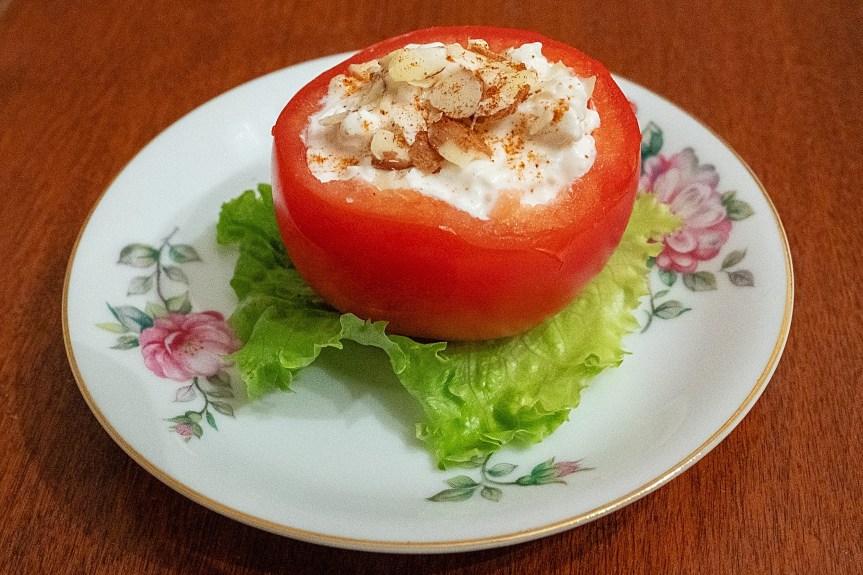
Sometimes I get in a rut when making salads, and basically make the same lettuce salad almost daily. It was time to look for some “new” salads, so I started browsing through my hundred-year-old cookbooks and came across a recipe for Cheese and Tomato Salad, or to be more specific, Cottage Cheese and Tomato Salad.

Medium tomatoes are stuffed with a cottage cheese, paprika, and chopped almond mixture; and, served with a vinaigrette dressing. The salad was lovely, with the sweet, slightly acidic taste of the tomatoes balancing nicely with the mild, salty, tanginess of the cottage cheese. The chopped almonds added a nice, crunchy texture.

Here is the original recipe:

Recipe for (Cottage) Cheese and Tomato Salad
Source: Westminster Cook Book 1926 (Cherokee, Iowa)

I decided to stuff three tomatoes, so, in the updated ingredients list, I included amounts needed to stuff that many tomatoes. A hundred-years-ago tomatoes were often peeled, but today they are seldom peeled, so I did not peel them when I made the recipe. Since cottage cheese (as well as the French Dressing) already contains salt, I did not add additional salt to the stuffing mixture.

The old recipe called for serving the salad with French Dressing. A hundred years ago, French Dressing was a vinaigrette dressing, and quite different from the commercial, orange-colored French dressing that is common today. There was no recipe for French Dressing in the cookbook that contained the salad recipe, so I found a French Dressing recipe in another cookbook:

Recipe for French Dressing
Source: The New Winston Cook Book of Guaranteed Recipes (1926)

This recipe makes more French dressing than needed for three stuffed tomatoes, so I halved the recipe.

Here’s the recipe updated for modern cooks:

Cottage Cheese and Tomato Salad

  • Servings: 3
  • Difficulty: moderate
  • Print

3 medium tomatoes (Select tomatoes that are nicely shaped and that will be level when placed on a plate.)

1/2 cup cottage cheese

1/8 teaspoon paprika (plus additional paprika to garnish, if desired)

2 tablespoons almonds, chopped (plus additional chopped almonds to garnish, if desired)

lettuce leaves, if desired

Step 1. Cut the top of the tomatoes and then scoop out the pulp in the center. (Be sure to leave the shell of the tomato.) Turn tomato upside down on a plate to drain out any remaining liquid.

Step 2. Make the filling for the tomatoes by putting the cottage cheese, paprika, and almonds in a small bowl; stir until mixed.

Step 3. Stuff the tomatoes with the filling.  If desired, sprinkle additional paprika and chopped almonds on top. The stuffed tomatoes may be served on lettuce leaves and with French Dressing (recipe below).

French Dressing (Vinaigrette  Dressing)

1/2 teaspoon salt

1/4 teaspoon paprika

3 tablespoons olive oil

1 tablespoon vinegar

Step 1. Put the salt and paprika in a small bowl.

Step 2. Gradually add the olive oil while stirring constantly.

Step 3. Then slowly add the vinegar, a small amount at a time, while continuing to stir.
http://www.ahundredyearsago.com

Old-Fashioned Harlequin Salad

The iconic novel jazz age novel, The Great Gatsby, was published in 1925. Here’s a description of the foods served at one of Gatsby’s parties:

On buffet tables, garnished with glistening hors­ d’œuvres, spiced baked hams crowded against salads of harlequin designs and pastry pigs and turkeys be­witched to a dark gold. In the main hall a bar with a real brass rail was set up, and stocked with gins and liquors and with cordials so long forgotten that most of his female guests were too young to know one from an­other (Chapter 3).

There apparently were a variety of salads that had “harlequin designs.” I knew that “harlequin” can mean a masked comic character who wears bright clothes, but I was uncertain of the meaning of the word in this context, so I looked it up. According the Cambridge Dictionary, another definition of harlequin is, “fancifully varied in color, decoration, etc.”

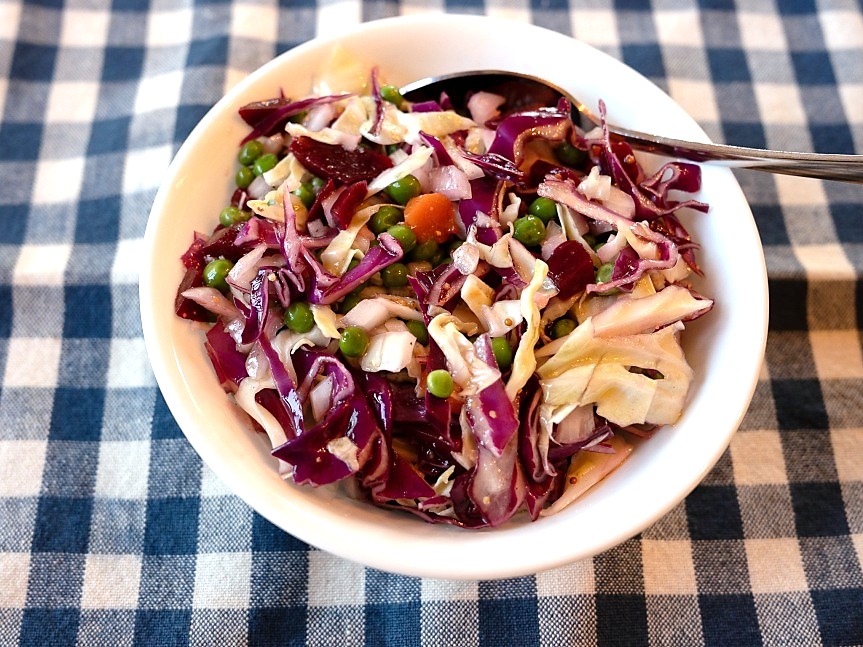
“Salads of harlequin designs” sounds beautiful, so when I came across a recipe in a hundred-year-old cookbook for Harlequin Salad, I just had to give it a try. The tasty, colorful, vibrant salad contained shredded red and green cabbage, chopped beets and carrots, peas, and onion in a vinaigrette dressing.

Here’s the original recipe:

Harlequin Salad recipe
Source: Rumford Complete Cookbook (1925)

The recipe called for French peas. I assumed this referred to green peas. It also called for white cabbage. I assume this is another name for the typical green cabbage.

I mixed all the ingredients together since the recipe said that “the effect is better if they are mixed,” though I’m intrigued by the possibility of creating an incredible harlequin design by arranging in “heaps.”

Here is the recipe for French Dressing that was in the same cookbook that contained the Harlequin Salad recipe:

French Dressing Recipe
Source: Rumford Complete Cook Book (1925)

Both the salad recipe and the salad dressing recipe called for salt and pepper (or paprika). I only put the seasonings in the dressing, and used 1/8 teaspoon of pepper and 1/8 teaspoon of paprika (as well as 1/3 teaspoon salt).

And, here’s the recipe updated for modern cooks:

Harlequin Salad

  • Servings: 5-7
  • Difficulty: moderate
  • Print

1 cup red cabbage, finely shredded

1 cup green cabbage, finely shredded

1 cup onions, chopped

1 cup green peas (I used frozen peas that had been thawed.)

1/2 cup cooked beets, coarsely chopped (cool before layering in jar)

1/2 cup cooked carrots, coarsely chopped (cool before layering in jar)

dressing (see below)

Put all ingredients (except dressing) in a bowl and lightly toss to mix. Gently stir in the dressing, then chill for at least an hour.

Dressing

1/3 teaspoon salt

1/8 teaspoon pepper

1/8 teaspoon paprika

1 teaspoon prepared mustard

4 tablespoons olive oil

1 1/2 tablespoons vinegar

Put the salt, pepper, paprika, and mustard in a small bowl; stir to combine. Add the olive oil and stir until mixed. Slowly add the vinegar, a little at a time, while stirring continuously with a fork.

http://www.ahundredyearsago.com

Old-Fashioned String Bean Salad (Green Bean and Radish Salad)

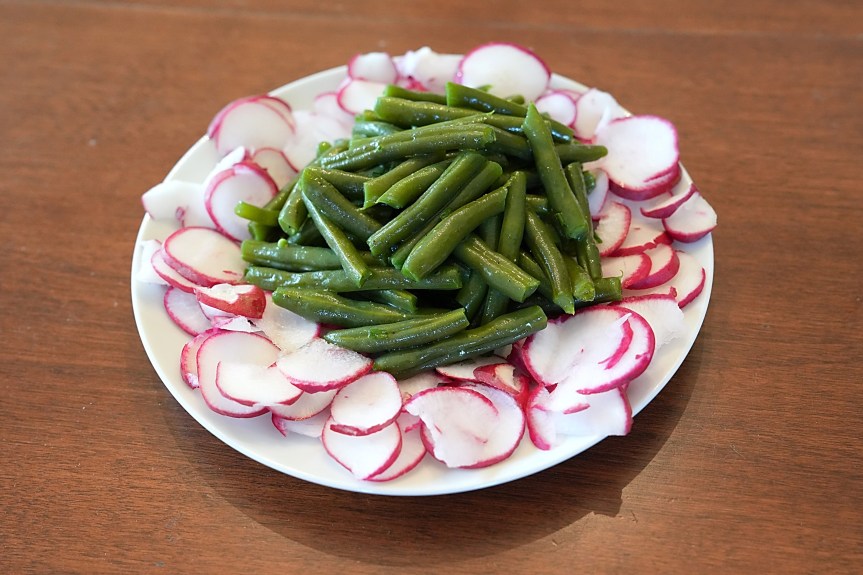
I bought some lovely green beans at the farmers’ market. When I got home, I started looking through my hundred-year-old cookbooks for a good green bean recipe. I found a recipe for String Bean Salad and decided to give it a try. It was different from any string bean salad recipe I had ever previously seen. The String Bean Salad basically was cold cooked green beans coated with a vinaigrette dressing, and then piled in the center of a plate with thinly sliced radishes arranged in a circle around the beans.

The String Bean Salad (or, as I prefer to call this dish, the Green Bean and Radish Salad) made a lovely, attractive presentation. The light and tangy vinaigrette dressing on the beans worked well with the crisp and slightly peppery sliced radishes to create a delightful, flavorful salad.

Here’s the original recipe:

Recipe for String Bean Salad
Home Makers’ Cooking School Cook Book (1925)

I used green beans when I made this recipe.  I thinly sliced 5 medium radishes (about 1 cup sliced radishes).

And, here is the recipe in the same cookbook for French Dressing:

Recipe for French Dressing
Source: Home Makers’ Cooking School Cook Book (1925)

Since the String Bean Salad recipe only called for two cups of beans, I decided that the French Dressing recipe would make more dressing than I needed, so I halved it. For the oil, I used olive oil; and, for the vinegar, I used apple cider vinegar.

Over the years, I’ve made several hundred-year-old French Dressing recipes. All are very different from the modern bright orange French Dressing that is sold in stores today. This old French Dressing recipe is basically a vinaigrette dressing. When I updated the recipe, I called the dressing a vinaigrette since it seemed like a more accurate description.

Here’s the recipe updated for modern cooks:

String Bean Salad (Green Bean and Radish Salad)

  • Servings: 3 - 4
  • Difficulty: easy
  • Print

2 cups cold cooked green beans (Before cooking, remove ends from beans and break into bite-sized pieces.)

1 teaspoon chopped chives or onion (I used chives.)

Vinaigrette Dressing (See recipe below.)

1 cup thinly sliced radishes (4 – 5 medium radishes)

Put the green beans and chopped chives or onion in a bowl; add the Vinaigrette Dressing, then gently toss to coat the beans with the dressing. Put the beans in the center of a plate and arrange the radishes in a circle around the beans.

Vinaigrette Dressing

2 tablespoons olive oil

1 tablespoon apple cider vinegar

1/4 teaspoon salt

1/8 teaspoon pepper

Put all the ingredients in a small bowl, stir quickly to combine using a  small whisk or fork.

http://www.ahundredyearsago.com