Green Bean Salad (with Nasturtiums)

Green Bean Nasturtium Salad

Cooking with edible flowers is a fun and playful way to change a mundane dish into a  really special, beautiful dish that is a work of art.

I planted nasturtiums this year for the first time in many years. The reason I planted them is because I saw a recipe in a hundred-year-old cookbook for a green bean salad that called for nasturtiums. I’ve been anxiously waiting for the nasturtiums to bloom,  and, finally, they are blooming and I was able to make the recipe.

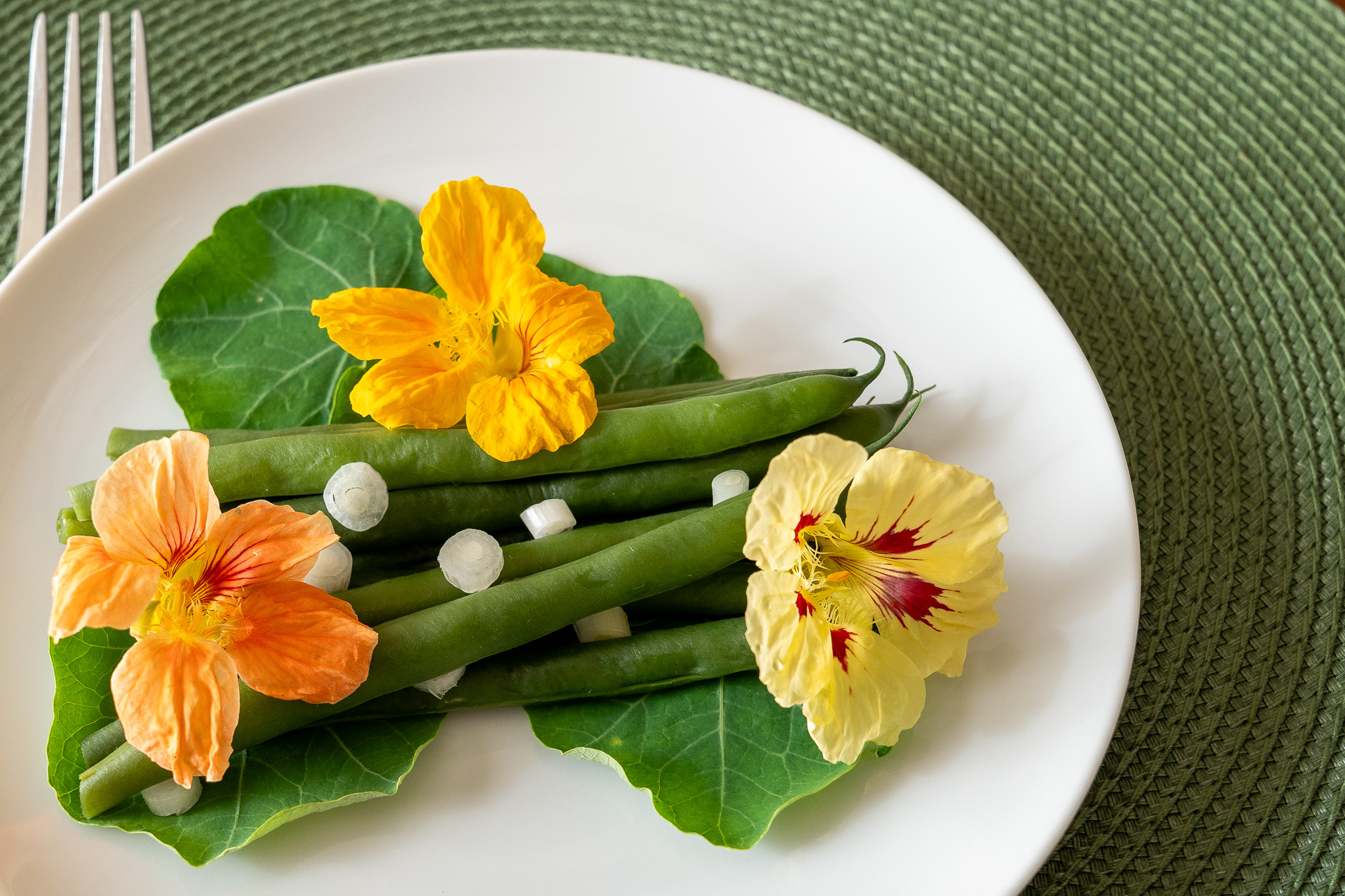
The Green Bean Salad (with Nasturtiums) was easy to make and tasty, and made a lovely presentation. The green beans are arranged on top of nasturtium leaves. Green onion slices are then sprinkled on top of the green beans, and the salad is garnished with nasturtium flowers. The green beans were lightly coated with a lovely vinaigrette dressing, and the nasturtium leaves have a nuanced sweetness, and mild peppery kick.

I made this salad twice. The first time I snapped the beans into short pieces, which is how I think cooks a hundred years ago would have made the salad. It looked lovely, but then I thought about how green beans often are left whole today, and decided to also make it that way. The salad with the unsnapped beans also looked great, and had a more modern look. (As you can see, I was having fun with this recipe.)
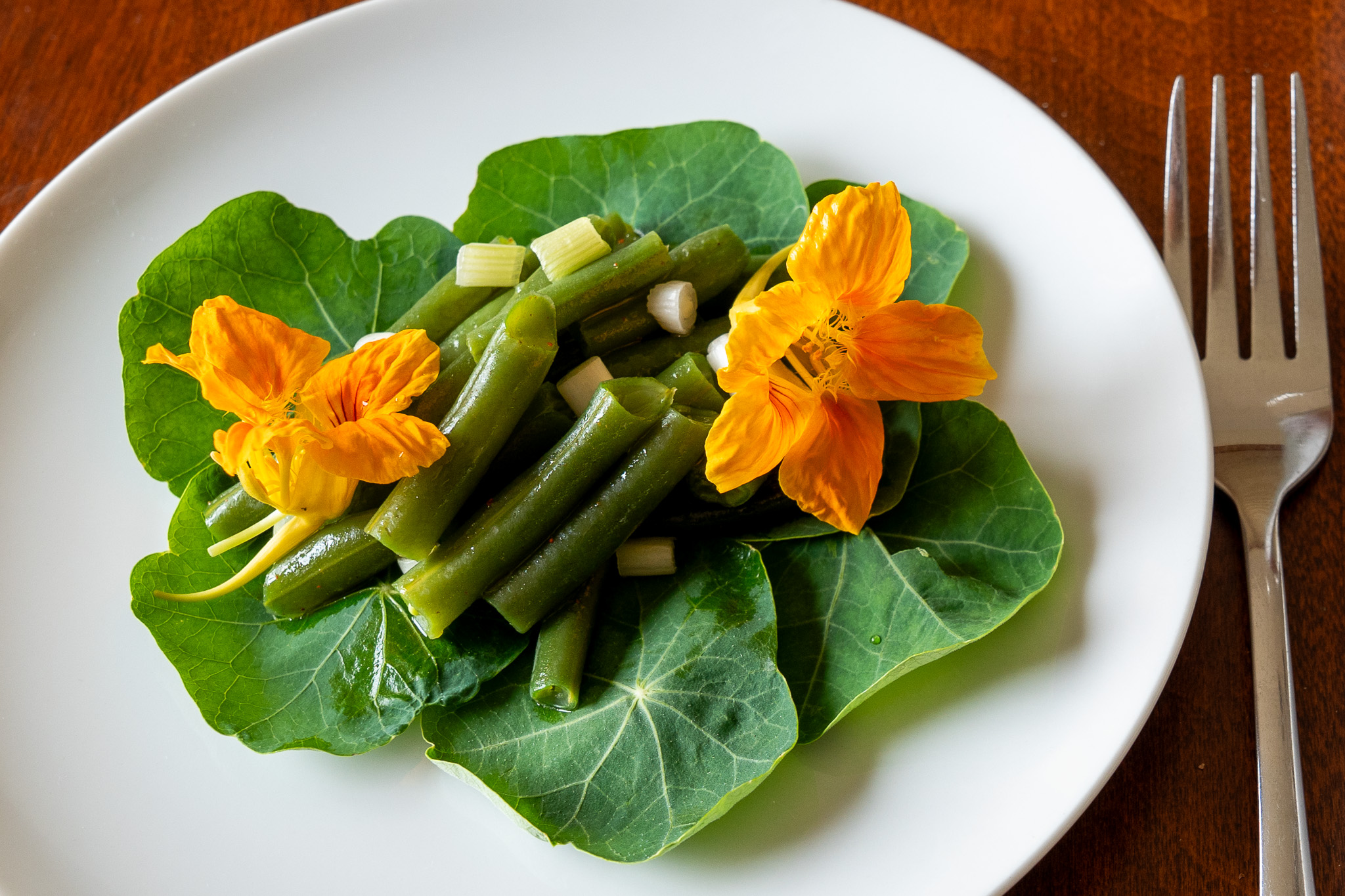
String Bean Salad with nastartiums

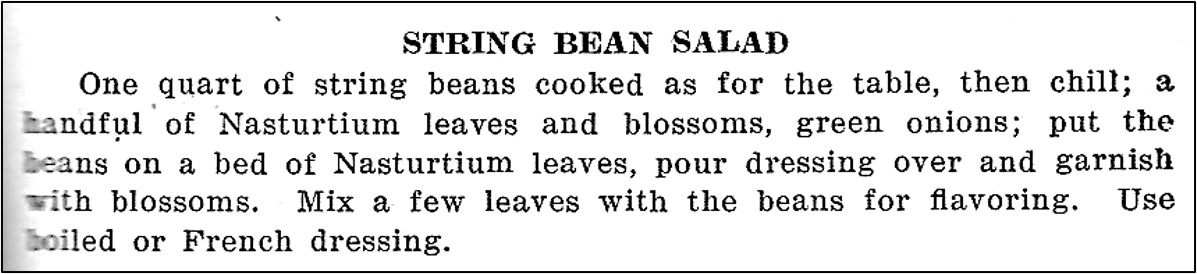
Here is the original recipe:

String Bean Salad (with Nasturtiums)
Source: Methodist Ladies Aid Cook Book: 1926 (Culbertson, Nebraska)

The original recipe was called String Bean Salad. Today we often refer to string beans as green beans (and they generally don’t even have strings anymore), so when I updated the recipe, I called it Green Bean Salad. I also included “with nasturtiums” in the recipe title since that is a unique part of this recipe.

I individually plated each serving, but the salad could be put in a serving bowl.

The old recipe called for serving the salad with French Dressing. A hundred years ago, French Dressing was a vinaigrette dressing, and quite different from the commercial, orange-colored French dressing that is common today. There was no recipe for French Dressing in the cookbook that contained the salad recipe, so I used a French Dressing recipe that was  in another 1926 cookbook:
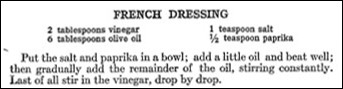
Recipe for French Dressing
Source: The New Winston Cook Book of Guaranteed Recipes (1926)

The French Dressing made more dressing than I needed so I halved the recipe.

Here’s the recipe updated for modern cooks:

Green Bean Salad (with Nasturtiums)

  • Servings: 3-4
  • Difficulty: easy
  • Print

1 quart (about 1 pound) green beans

4 small green onions, thinly sliced

approximately 1 cup nasturtium leaves

nasturtium flowers (for garnish)

Step 1. Trim green beans. If desired, snap the beans (or they can be left whole). Lightly steam or boil the beans for about 5 minutes, then chill until cold.

Step 2. Pour French Dressing over the beans (see recipe below), and gently stir to coat beans with the dressing. (If desired, mix a few nasturtium leaves with the beans).  If there is excess dressing on the beans, drain the beans to remove it.

Step 3. Arrange nasturtium leaves on individual serving plates (or they can be arranged in a serving bowl). Top with the green beans that have been coated with French Dressing.

Step 4. Sprinkle the sliced green onions over the green beans.

Step 5. Garnish with nasturtium flowers.

French Dressing (Vinaigrette  Dressing)

1/2 teaspoon salt

1/4 teaspoon paprika

3 tablespoons olive oil

1 tablespoon vinegar

Step 1. Put the salt and paprika in a small bowl.

Step 2. Gradually add the olive oil while stirring constantly.

Step 3. Then slowly add the vinegar, a small amount at a time, while continuing to stir.
http://www.ahundredyearsago.com

Old-Fashioned String Bean Salad (Green Bean and Radish Salad)

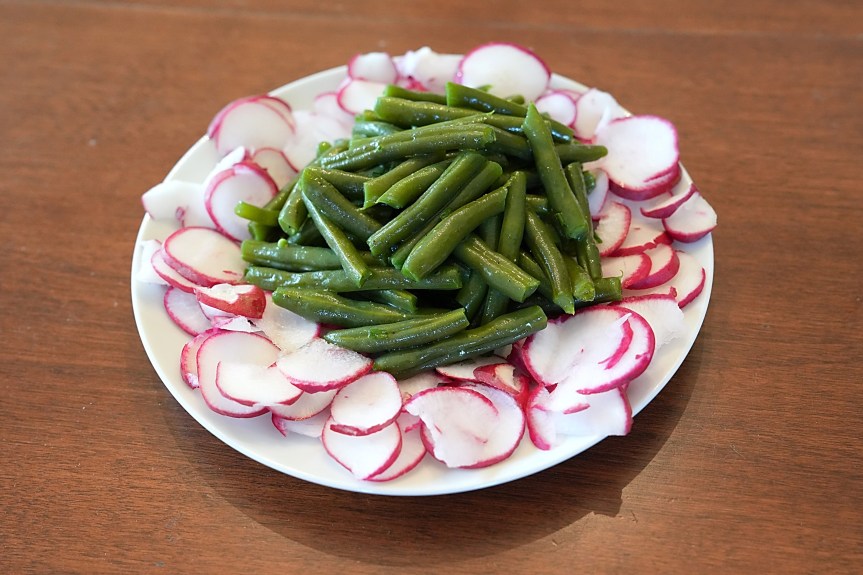
I bought some lovely green beans at the farmers’ market. When I got home, I started looking through my hundred-year-old cookbooks for a good green bean recipe. I found a recipe for String Bean Salad and decided to give it a try. It was different from any string bean salad recipe I had ever previously seen. The String Bean Salad basically was cold cooked green beans coated with a vinaigrette dressing, and then piled in the center of a plate with thinly sliced radishes arranged in a circle around the beans.

The String Bean Salad (or, as I prefer to call this dish, the Green Bean and Radish Salad) made a lovely, attractive presentation. The light and tangy vinaigrette dressing on the beans worked well with the crisp and slightly peppery sliced radishes to create a delightful, flavorful salad.

Here’s the original recipe:

Recipe for String Bean Salad
Home Makers’ Cooking School Cook Book (1925)

I used green beans when I made this recipe.  I thinly sliced 5 medium radishes (about 1 cup sliced radishes).

And, here is the recipe in the same cookbook for French Dressing:

Recipe for French Dressing
Source: Home Makers’ Cooking School Cook Book (1925)

Since the String Bean Salad recipe only called for two cups of beans, I decided that the French Dressing recipe would make more dressing than I needed, so I halved it. For the oil, I used olive oil; and, for the vinegar, I used apple cider vinegar.

Over the years, I’ve made several hundred-year-old French Dressing recipes. All are very different from the modern bright orange French Dressing that is sold in stores today. This old French Dressing recipe is basically a vinaigrette dressing. When I updated the recipe, I called the dressing a vinaigrette since it seemed like a more accurate description.

Here’s the recipe updated for modern cooks:

String Bean Salad (Green Bean and Radish Salad)

  • Servings: 3 - 4
  • Difficulty: easy
  • Print

2 cups cold cooked green beans (Before cooking, remove ends from beans and break into bite-sized pieces.)

1 teaspoon chopped chives or onion (I used chives.)

Vinaigrette Dressing (See recipe below.)

1 cup thinly sliced radishes (4 – 5 medium radishes)

Put the green beans and chopped chives or onion in a bowl; add the Vinaigrette Dressing, then gently toss to coat the beans with the dressing. Put the beans in the center of a plate and arrange the radishes in a circle around the beans.

Vinaigrette Dressing

2 tablespoons olive oil

1 tablespoon apple cider vinegar

1/4 teaspoon salt

1/8 teaspoon pepper

Put all the ingredients in a small bowl, stir quickly to combine using a  small whisk or fork.

http://www.ahundredyearsago.com

Hundred-Year-Old String Bean Recipe


string beans

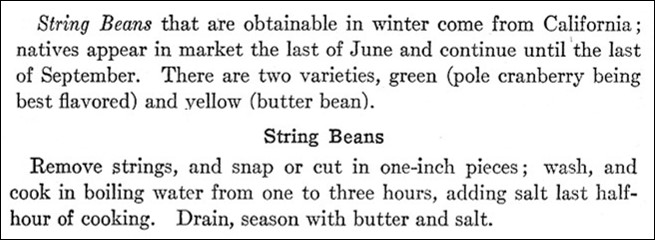
Sometimes the most basic ways of preparing a simple food changes over the course of a hundred years. String beans are a good example. Here’s what it says in a hundred-year-old cookbook:

Recipe for string beans
Source: Boston Cooking-School Cook Book (1923)

The old recipe calls for boiling the string beans 1-3 hours!! And, for breaking or cutting them into 1-inch pieces. Today, many people leave them whole. (I normally break string beans into 2 -3 inch pieces, but if preparing a meal for my children or grandchildren I would definitely leave them whole.) The old recipe also calls for removing the strings from the beans – which many string beans no longer have. (I guess that technically they may not be string beans.)

When I made the recipe I did cut the string beans into 1-inch pieces, but I couldn’t bring myself to cook the beans for 1-3 hours, and in the updated recipe say to boil them for 10-15 minutes – though I did provide information about cooking longer, if desired.

Here’s the recipe updated for modern cooks:

String Beans

  • Servings: 2 - 3
  • Difficulty: easy
  • Print

1 pound string beans

water

1 teaspoon salt

1 tablespoon butter

Trim the ends of the beans, and then cut or break the beans into one-inch pieces. Wash and put in a saucepan. Cover with water; add salt.  Bring to a boil using high heat; then reduce heat and cook 10-15 minutes. Drain, then add butter. Let the butter melt, stir gently, then serve. (If desired, cook longer for a softer consistency.  This will result in string beans that are prepared more similarly to how it was done a hundred years ago. A 1923 cookbook calls for cooking the beans 1-3 hours.)

http://www.ahundredyearsago.com