Old-fashioned Sugar Taffy Recipe

16-year-old Helena Muffly wrote exactly 100 years ago today: 

Saturday, December 9, 1911:  Was exceedingly busy this forenoon. Rufus went to Milton this morning so you see I had all the odd jobs to put in something like order but how long it will stay that way can soon be estimated. Ruthie treated us to candy this evening.

Her middle-aged granddaughter’s comments 100 years later:

I wonder what kind of candy Grandma’s sister Ruth made. Taffy is a popular old-time candy.

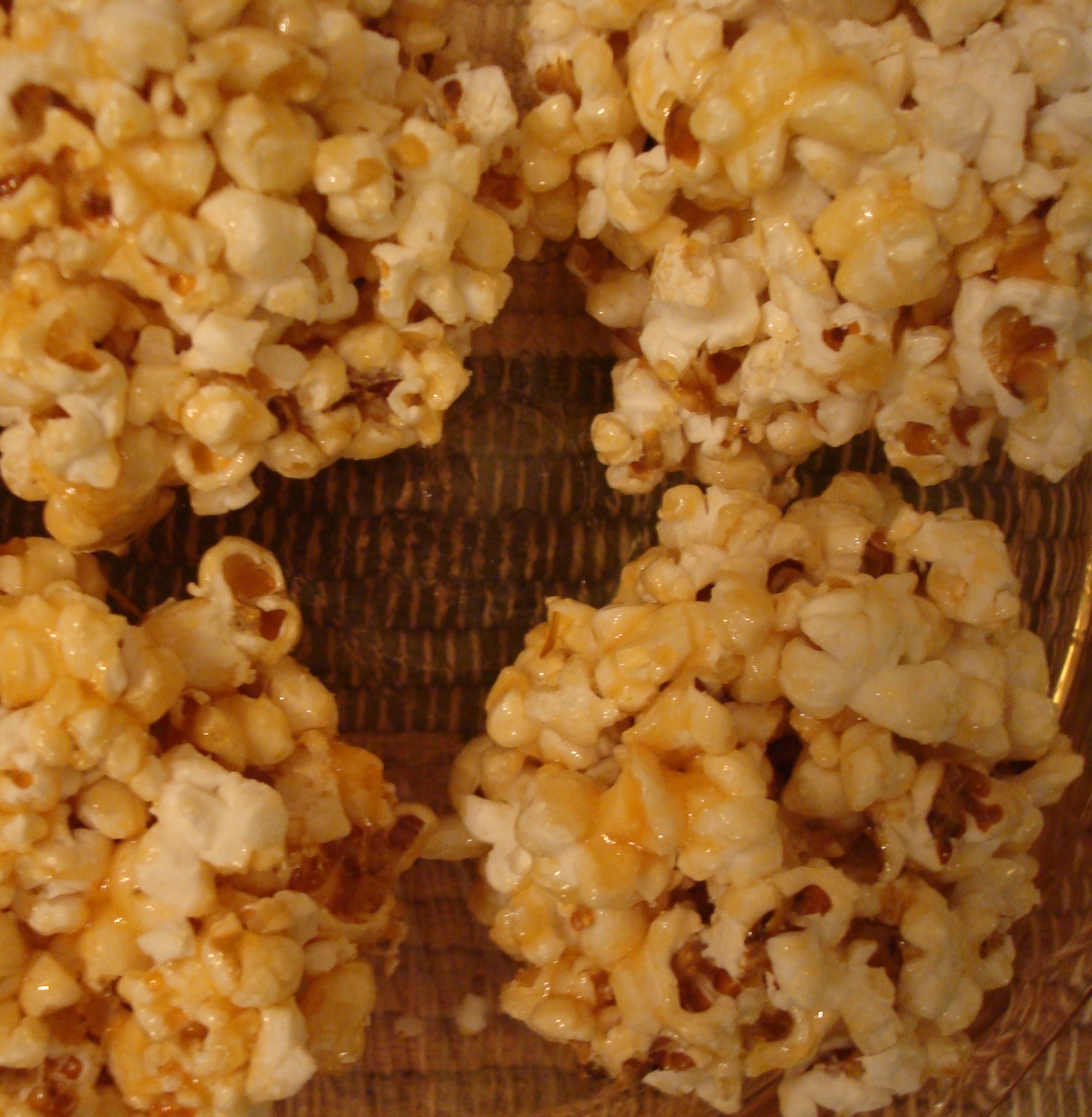
My daughter and I recently made some taffy using an old Pennsylvania recipe from the early 20th century.

This is an excellent taffy recipe—and I really like that it doesn’t use corn syrup.  The taffy was wonderfully creamy and smooth, and it has a nice flavor.  It was almost too good–our family ate the entire bowl of candy in one week-end. (I’m trying very hard not to think about the calories.)

Making taffy is a fun family activity. I bet the old-time taffy pulls at parties were a blast.

But be sure to leave enough time. It probably took us close to two hours from start to finish. Don’t try to rush the process—or you may burn it or end up with taffy that doesn’t have the right consistency.

Sugar Taffy

One pound [2 cups] white sugar, one cup water, on-half teaspoonful cream of tartar, one-half teaspoonful vanilla, butter size of a hickory nut. Boil until hard in water. When cool, pull.

Lycoming Valley Cook Book, Ladies of Trout Run M.E. Church  (1907)—1992 reprint of book

We combined all of the ingredients except the vanilla; and, assumed that butter the size of a hickory nut was about 1 tablespoon of butter.

We cooked over low heat, stirring until mixture began to boil, then we cooked, without stirring until the boiling mixture reached the hardboil stage.

And, we assumed that “boil until hard in water” meant to boil until the syrup reached the hardball stage.

The hardball stage is when a small amount of the syrup is dropped into cold water. If it can be gathered together to form a hard ball (though malleable when pressed), it is at the right stage—or just use a candy thermometer (255 – 265 degrees F).We removed from the heat and stirred in the vanilla. We divided the thick syrup into several parts and added additional flavoring (cinnamon oil, strawberry flavoring)  to some of it. (We didn’t do it, but you may also want to add some food coloring so that you’ll be able to tell which pieces of candy have which flavor.)

We put in buttered dish; then waited a few minutes until it was cool enough to handle.

We then buttered our hands and pulled the candy until it became creamy and glossy (about 5 minutes). We formed ropes of candy on a piece of waxed paper; then cut with a knife that we periodically dipped in hot water.

Finally we wrapped the individual pieces in squares of waxed paper.

Craft Idea: Make an Old-Fashioned Paper Christmas Tree

16-year-old Helena Muffly wrote exactly 100 years ago today: 

Friday, December 8, 1911: Had such a vexatious time with Jimmie. He fell down in the mud at noon and he was covered from top to toe, but I succeeded in making a slight improvement on him. Then coming home he lost one of his rubbers and I had to go back after it.

Her middle-aged granddaughter’s comments 100 years later:

The primary school was on the first floor of the McEwensville School building–and the high school was on the second floor. Grandma’s 6-year-old brother Jimmie was a first grader at the school. I suppose someone came upstairs and got her when Jimmie got muddy.

Little brothers can be a pain sometimes—but Grandma probably also sometimes did fun things with Jimmie. Maybe Grandma helped Jimmie make Christmas crafts.

Here are directions to make a paper Christmas tree.

Fold two sheets of green construction paper together and cut out 2 Christmas trees.

Unfold the trees and staple together on the fold. (A hundred years ago, they may have sewed the trees together on the fold.)

Cut “decorations” out of the old Christmas cards and glue on the tree. Glue the small buttons on the tree to make ornaments (Don’t use too many or the tree might get top-heavy and not stand properly.)

Stand the tree up, and use a small piece of decorative cord or other bric-a-brac to make a garland.

(An aside–One thing that I really like about the old days is how people routinely re-purposed items that were around the house to make decorations.)

Hundred-Year-Old Christmas Gift Suggestion: Nightgowns and Robes

16-year-old Helena Muffly wrote exactly 100 years ago today: 

Thursday, December 7, 1911: Really there’s nothing to write about except that which isn’t worth writing about.

Her middle-aged granddaughter’s comments 100 years later:

Since Grandma didn’t write much today, I’ll share some more pictures from the December 1911 issue of Ladies Home Journal. It’s apparently been a tradition for many years to give sleep wear as a Christmas gift.

There's even misletoe in the woman's hand!

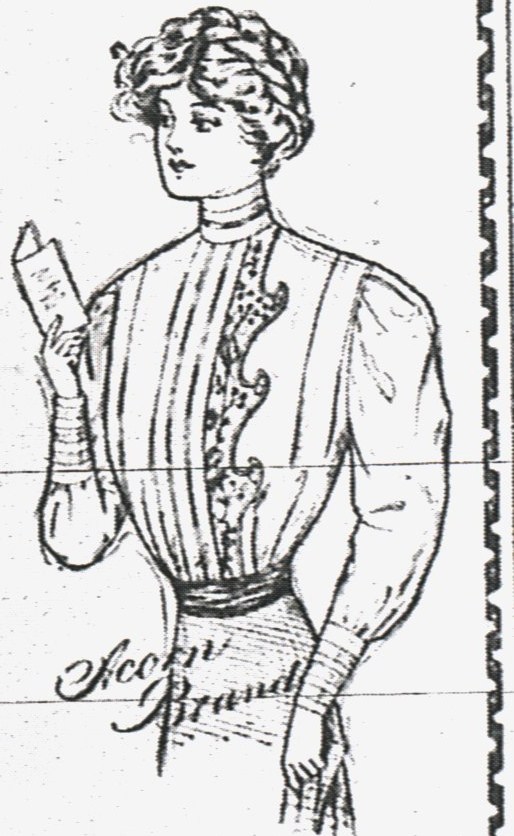
There were two articles in the magazine that showed pictures of nightgowns and robes that readers could buy patterns to make. One article was called,  “What Should I Make My Friends?” and the other was titled, “The Christmas Negligee—Suitable for the Young Girl as Well as the Matron”

In every woman’s wardrobe there is a place for useful negligees, and surely no more adaptable gift could be found for the comfort-loving woman . . .

1911 Advertisements for Christmas Gifts

16-year-old Helena Muffly wrote exactly 100 years ago today: 

Wednesday, December 6, 1911: Have my part of the dialogue well under way. You may think I’m smart, but I haven’t much to say. I’m commencing to get streaks of thinking what I’ll buy for Xmas presents. My pocketbook is limited so I’ll have to make a careful list beforehand.

Maybe Grandma thought about buying bracelets for her sisters. (Ad Source: A portion of a Merry Mason Company  advertisement in The Youth’s Companion, December 7, 1911)

Her middle-aged granddaughter’s comments 100 years later:

Grandma was memorizing a dialogue for a school “entertainment” that was to be held before the Christmas break.

Let’s see—Grandma probably needed to buy gifts for at least seven people: her mother, her father, her sister Ruth, her little brother Jimmie, her married sister Besse, her brother-in-law Curt, and her best friend Carrie Stout.  Whew, I can see how that it could be expensive.

How about slippers for brother-in-law Curt? (Ad source: Ladies Home Journal, December, 1911)

In many ways the young woman who wrote the diary seems very different from the elderly grandmother that I remember—but this is one place where I can really recognize my grandmother. She always worried about money and I can picture her carefully planning what she would purchase before she went shopping.

And, maybe a glass candle holder for Mother? (Ad source: Ladies Home Journal, December, 1911)

Old Recipe for Mulled Fig Juice (Ginger Cordial)

16-year-old Helena Muffly wrote exactly 100 years ago today: 

Tuesday, December 5, 1911:  We are going to have an entertainment on the fifteenth, the Friday before vacation, and I’m to take part in a dialogue of no great length. Such bewildering problems as we are having in Algebra is enough to turn your head.

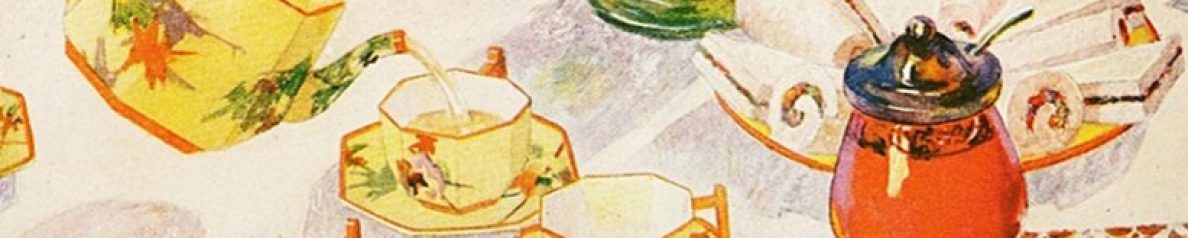
tea cup

Her middle-aged granddaughter’s comments 100 years later:

Apparently the students were going to put to put on a small Christmas play on the 15th –or at least say the parts of various characters. [An aside—When I think of a dialogue I think of the Abbott and Costello dialogue about the baseball players—Who’s on first, What’s on second, I don’t know’s on third—though it’s from a later time period.]

Maybe Grandma took a break from the bewildering algebra problems to make a calming hot drink.

I found an awesome recipe for Mulled Fig Juice (Ginger Cordial) while browsing through the December 1911 issue of Good Housekeeping magazine.

Mulled Fig Juice reminded me a little of Mulled Cider, but the taste is more nuanced and complex. I’d highly recommend it for holiday parties—or for a great hot drink after sledding or cross-country skiing.

Mulled Fig Juice (Ginger Cordial)

1/2 pound figs (I used mission figs.)

1/2 teaspoon allspice

Dash of ginger

1/4 teaspoon cinnamon

1/4 teaspoon cloves

water

3 pints ginger ale (about 1 1/2 liters)

1 teaspoon corn starch dissolved in a small amount of water

Peel from an orange (for garnish)

Stew slowly together the figs, allspice, ginger, cinnamon, cloves, and sufficient water to cover the other ingredients. When the figs are tender remove from heat and pour through a strainer.  (The stewed figs taste good, and can be saved and eaten separately.)

Return the juice to the saucepan. Add the ginger ale; and return to the heat; when hot stir in the corn starch dissolved in water. Continue stirring until it comes to a boil; reduce heat. Serve in small cups; garnish with orange peel.  [I used a vegetable peeler to remove some zest from an orange  in long wide strips, I removed any pith, and then julienned the zest into long narrow strips.]

Adapted from “Hot Drinks for the Holiday Season”, Good Housekeeping, December 1911

Hundred-Year-Old Alarm Clock Ad

16-year-old Helena Muffly wrote exactly 100 years ago today: 

Monday, December 4, 1911: Pa took us to school this morning. Such a time as I had waiting on him, but we got there in plenty of time. You see our old clock was the cause of it all, being over half an hr. fast.   

Her middle-aged granddaughter’s comments 100 years later:

Maybe the family needed to get a Big Ben clock for Christmas. The December 15, 1911 issue of Kimball’s’ Dairy Farmer magazine had an alarm clock advertisement.

The ad text says:

Big Ben

Merry Christmas! Here is Big Ben.

May he wish you many of them!

Don’t waste a minute of this merry day. Have the presents ready Christmas eve. Hang each stocking up. Arrange the presents that won’t go inside in little piles around each stocking.

Then when all have gone to sleep, sneak into each bedroom a joy-faced Big Ben.

He’ll ring the merriest Christmas bell you have ever heard and get the family down to see the presents bright and early so the whole day will be yours to fully enjoy.

Big Ben is a gift worth the giving, for he is a clock that lasts and serves you daily year after year.

He is not merely an alarm clock—he’s an efficient timepiece—to get you up or to tell you the time all day—a clock for bedroom, parlor, library or hall.

Big Ben stands seven inches tall. He’s massive, well poised, triple plated. His face is frank, open, easy to read—his keys large, strong, easy to wind.

He calls you every day at any time you say, steadily for ten minutes, or at repeated intervals for fifteen.

He is sold by jewelers only—the price is $2.50 anywhere.

If you cannot find him at your jeweler’s, a money order sent to his designers, Westclox, La Salle, Illinois, will bring him to you express charges paid.

Had to Walk Home in the Snow

16-year-old Helena Muffly wrote exactly 100 years ago today: 

Sunday, December 3, 1911: Went to Sunday School this afternoon. Coming home it was snowing and I was rather dubious as to whether my new hat would take it all right or not, but it did.

Source: National Climatic Data Center

Her middle-aged granddaughter’s comments 100 years later:

It sounds like a blustery winter day. I found the weather data for December, 1911 for Williamsport, Pennsylvania on the National Climatic Data Center website.

Williamsport is about 20 miles northwest of McEwensville. According to the observation sheet, on December 3, 1911 the high was 46 degrees and the low was 31. It also indicated that there was a trace of snow  and that the wind was coming from the southwest.

The sheet said that there was 3 inches of snow on the ground—which seems somewhat surprising because the previous day’s entry did not indicate any snow on the ground.

Williamsport is across a mountain from McEwensville—so maybe the weather wasn’t as bad there as it was where Grandma was walking. But I wouldn’t expect there to be major differences in the weather between the two towns (and in general I think that it would be a little warmer in McEwenville).

I suppose that it really was just a raw day with some snow flurries—but that the mile or so walk between the church in McEwensville and the Muffly farm was pretty miserable (especially if you were worried that your new hat might get ruined).