Easter and Goldenrod Eggs

16-year-old Helena Muffly wrote exactly 100 years ago today: 

Sunday, April 16, 1911:  Easter Sunday, no chocolate eggs were in evidence. I went to Sunday school this morning. Went over to Stout’s this afternoon. Miss Carrie wasn’t at home though, having gone away to spend Easter.

 Her middle-aged granddaughter’s comments 100 years later:

It sounds like Grandma’s family didn’t celebrate Easter in 1911—though other families in the area apparently participated in extended family gatherings since Grandma’s friend Carries had gone away to spend Easter.

Grandma’s maternal grandparents lived in Turbotville, and her mother, Phoebe Derr Muffly, had 7 siblings—many of whom lived within 15 miles of the Muffly farm. It is somewhat surprising that the extended family didn’t gather to celebrate Easter.

—–

I had lots of fun experimenting with dying eggs using onion skins two days ago—now I have lots of hard-boiled eggs that need to be used.

Goldenrod Eggs are an old-fashioned traditional Easter food.
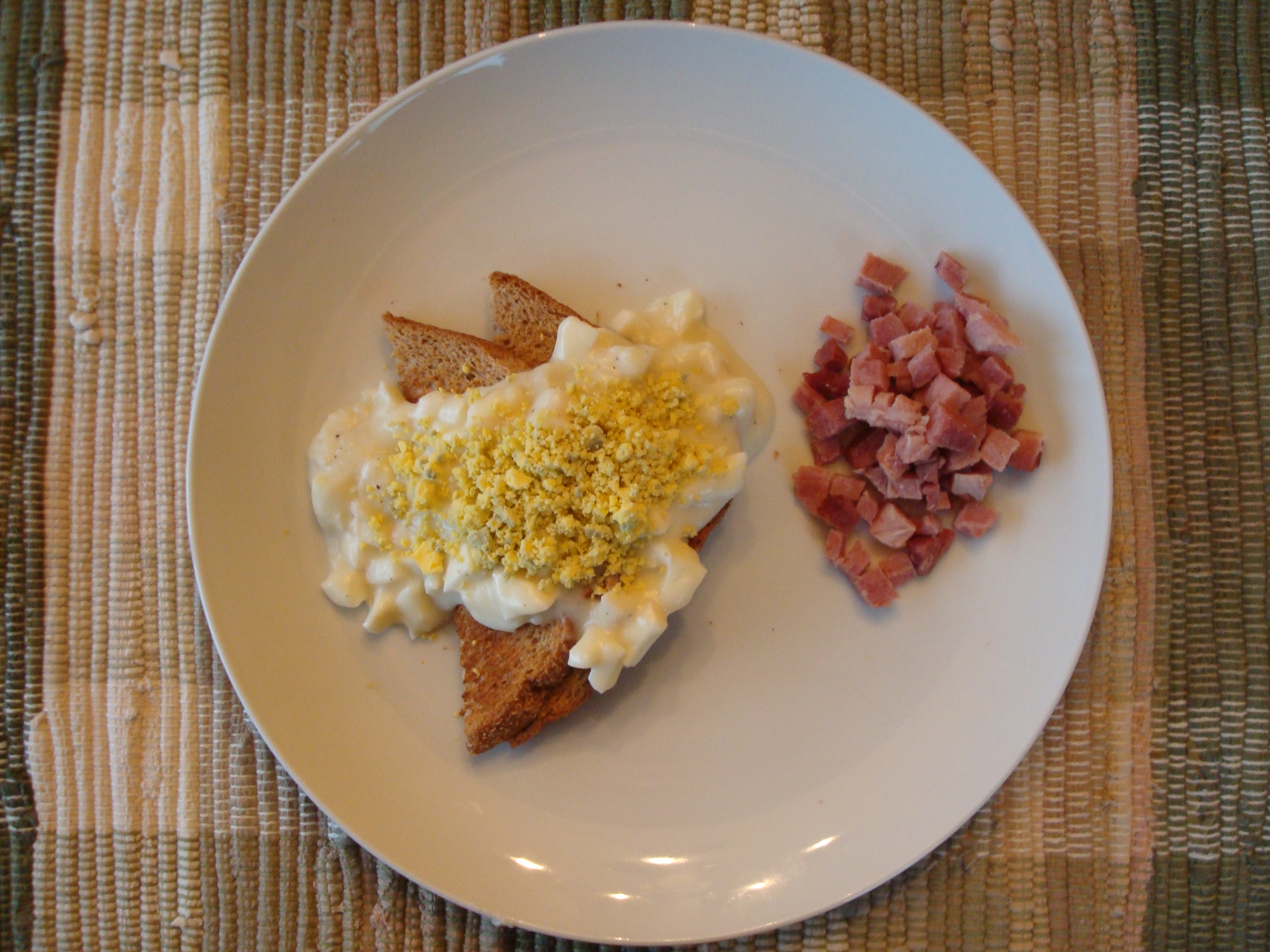
Goldenrod Eggs with Chopped Ham

Goldenrod Eggs

6 slices buttered toast

6 hard-cooked eggs

2 cups white sauce*

1/4  teaspoon salt

few grains cayenne

1/8 teaspoon pepper

Remove shells from eggs; chop whites finely; add to White Sauce. Press yolks through a sieve and add seasonings. Pour White Sauce over toast arranged on a platter, and garnish with yolks of eggs.

This dish may be very attractively arranged by placing spoonfuls of finely chopped ham around the toast.

*White Sauce

4 tablespoons butter

4 tablespoons flour

2 cups milk

1/4 teaspoon salt

few grains cayenne

1/4 teaspoon pepper

Melt butter, add flour, seasonings and liquid. Stir until the boiling point is reached. Boil two minutes, beating constantly.

Lowney’s Cook Book (1907)
Trailing Arbutus and More Dandelion

16-year-old Helena Muffly wrote exactly 100 years ago today:

Thursday, April 13, 1911: Carrie Stout was over this afternoon. We went to gather dandelions, and worked awhile, then went to hunt for trailing arbutus in the woods. We didn’t get any though for it was just beginning to come out. But we found some wintergreen and mountain pinks.

Her middle-aged granddaughter’s comments 100 years later:

It sounds like Grandma and her friend Carrie had a pleasant afternoon. I can remember often seeing trailing arbutus in the woods in the spring—but hadn’t realized that people apparently picked them years ago. The flowers seem so small.

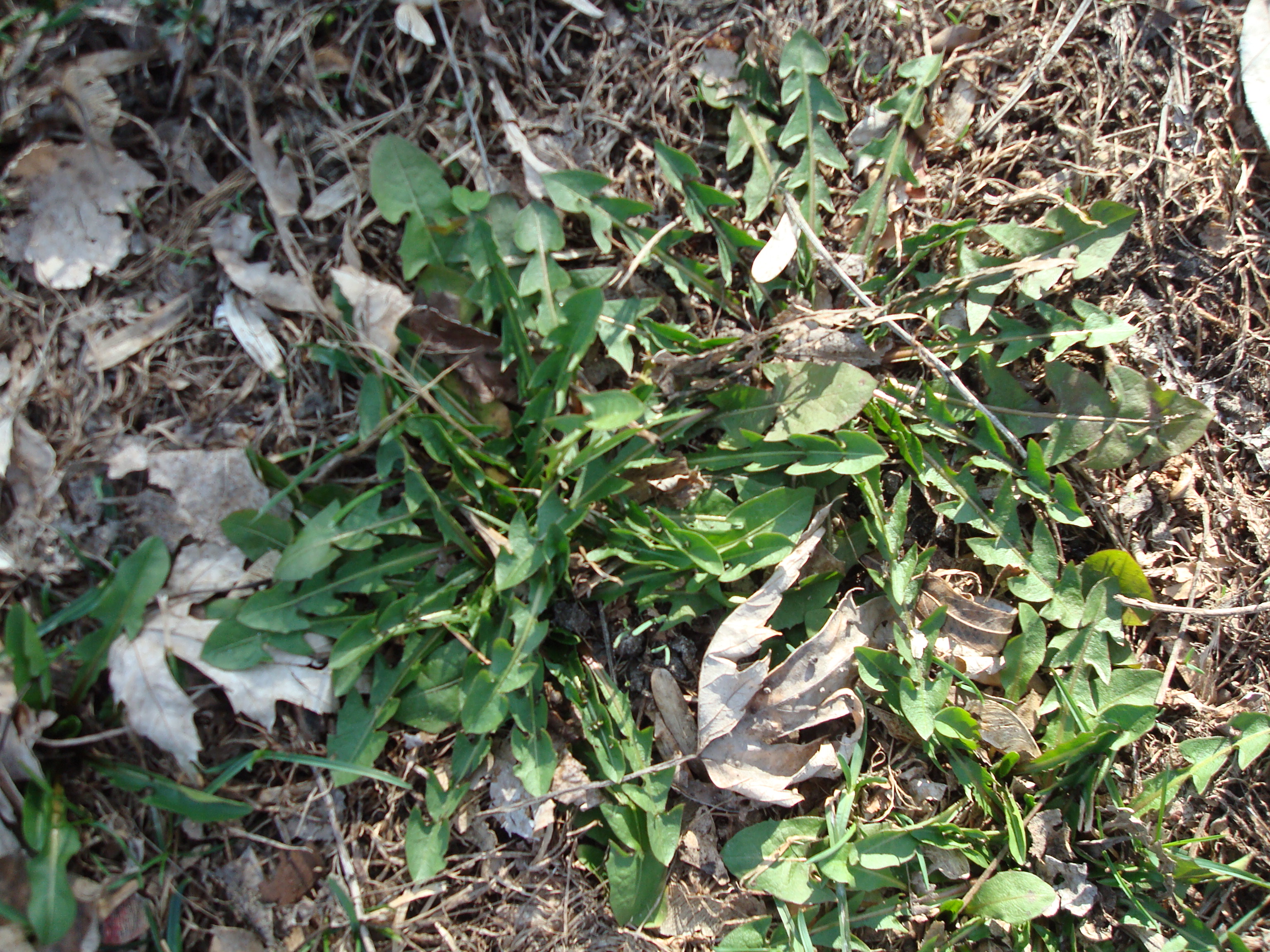
Dandelion plants

This is the second time this week that Grandma mentioned gathering dandelions in the diary. I can remember relatives gathering dandelions when I was a child. Dandelions are best for eating  early in the spring before they bloom. The more mature the plants, the more bitter the taste.

There is a great Utube video by a 94-year-old woman named Clara about how to gather and clean dandelion. The video is awesome and very accurately shows how to gather and prepare dandelions for eating.

The dandelion video  is part of a series of videos called Great Depression Cooking with Clara. The video is about a time period somewhat after this diary—but I doubt if the way dandelions are collected and cleaned has changed very much over the years.

Creamed Dandelion Recipe

16-year-old Helena Muffly wrote exactly 100 years ago today:

Monday, April 10, 1911: I helped to wash this morning. Mistress Besse was out this afternoon and went with Miss Ruth out to gather some delicious dandelion. Ours was no good after all.

Her middle-aged granddaughter’s comments 100 years later:

Dandelion! Grandma’s diary entry reflects that excitement that fresh dandelion generated.

Dandelion, endive, and other bitter greens used to be considered a spring tonic. People traditionally had a very limited selection of foods during the late winter months, and they really looked forward to eating fresh greens in the spring.

When I was a child we often ate creamed dandelion served over mashed potatoes in the spring. I remember older relatives saying that they felt healthier after eating spring greens.

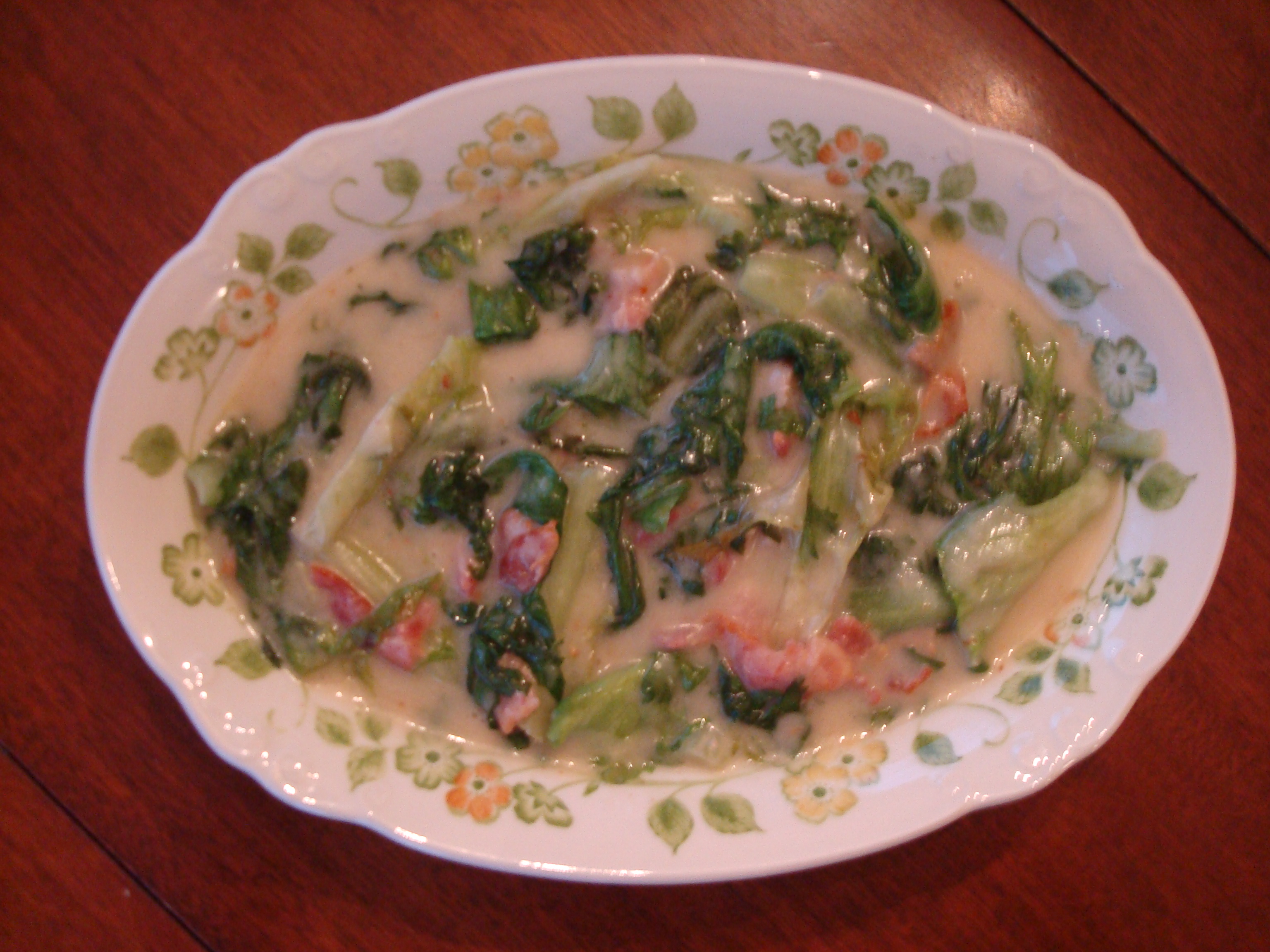
I seldom make creamed dandelion, but often make creamed endive.  Endive tastes similar to dandelion, but it isn’t quite as bitter.

CREAMED DANDELION (ENDIVE)

4 cups dandelion (or endive)

3 slices bacon, chopped

1 1/2 tablespoons flour

1 heaping tablespoon sugar

2  tablespoons vinegar

1 cup milk

Mashed potatoes, if desired

Wash dandelion and tear into pieces; set aside.

Cut bacon into pieces and fry until crisp in a large skillet. Stir in flour, sugar, and vinegar. Gradually stir in milk; heat until bubbly using medium heat. Reduce heat to low; stir in dandelion and cover for 1 minute. Remove lid and stir until wilted. Delicious when served over mashed potatoes.

1911 Chocolate Fudge Recipes

16-year-old Helena Muffly wrote exactly 100 years ago today:

Wednesday, April 5, 1911: But now I have changed my opinion. I believe I will have a good time tomorrow. I assisted my sister in making chocolate fudge tonight.

Her middle-aged granddaughter’s comments 100 years later:

I found two recipes for chocolate fudge in a 1911 cookbook:

Fudge

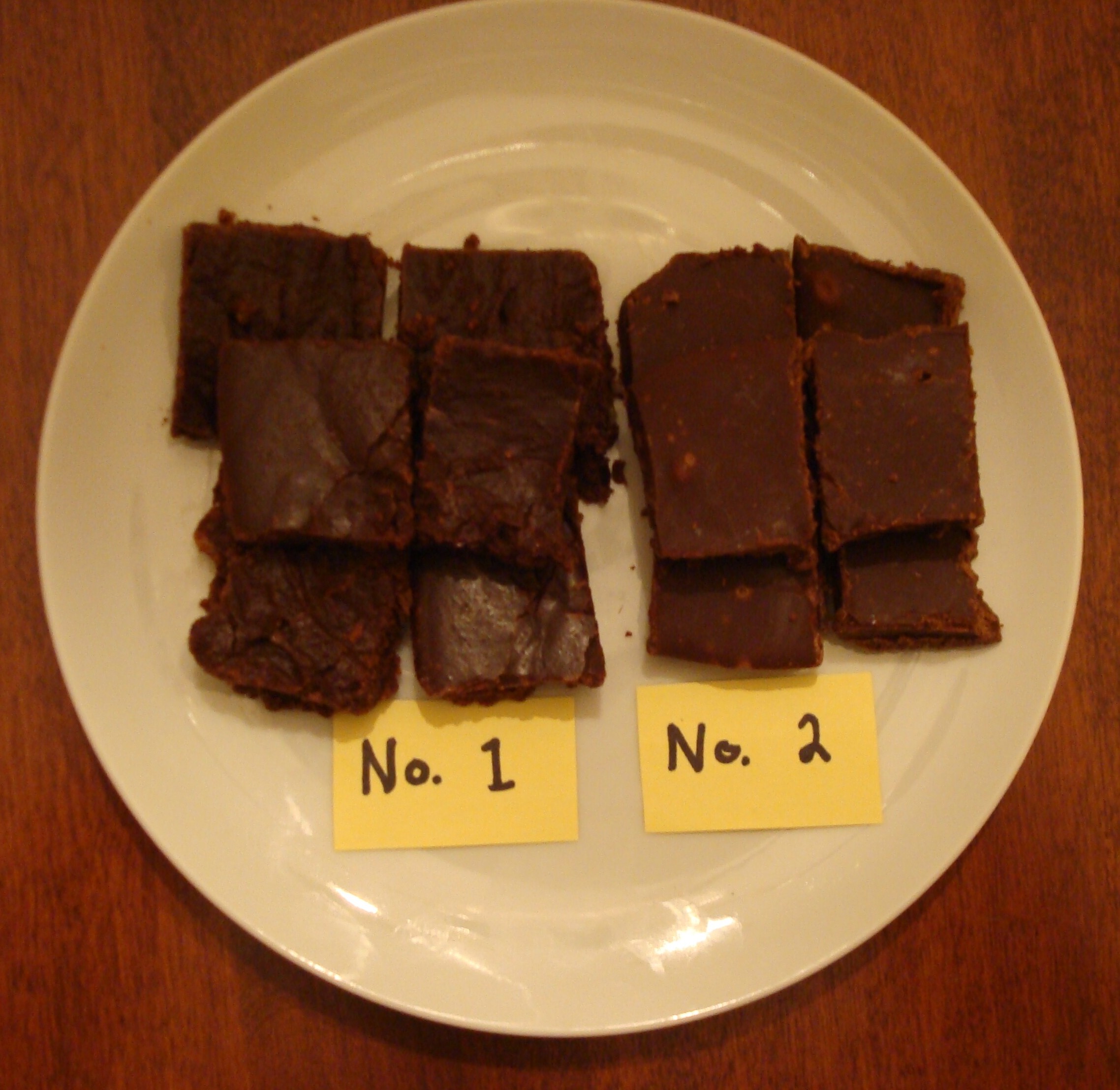
Chocolate Fudge, No. 1—Three cups sugar; one cup cream or rich milk; one-half cake of chocolate and piece of butter the size of an egg. Boil slowly until grains form on the edge of the kettle. Add a tablespoon of vanilla and beat vigorously for a few minutes. Pour into a buttered pan and mark off in squares.

Chocolate Fudge, No. 2—Two cups brown sugar; one-half cup of butter; one-half cup of milk; one-fourth cup of molasses. Boil ten minutes. Then add two squares of chocolate and boil three minutes longer. Beat until thick, adding a teaspoon of vanilla.

The Butterick Cook Book: With Special Chapters About Casserole and Fireless Cooking (1911) by Helena Judson

I decided to make both recipes—and then have a taste-testing to see which was better. First I ‘translated’ the recipes into modern terms. For recipe No. 1, I guessed that a cake of chocolate was 1/2 pound of unsweetened chocolate and that the recipe therefore was calling for 1/4 pound of chocolate (4-one ounce squares).

I decided to use 1/4 cup of butter for ‘butter the size of an egg’. I used heavy whipping cream for the cream or rich milk.

And, I decided that ‘beating’ within the context of 1911 probably meant stirring rapidly with a spoon.

Before pouring each mixture into a buttered pan to cool, I divided the mixtures into half and added chopped walnuts to one half.

After the fudge hardened I conducted a taste test with readily available people (in other words, with my husband).

Both recipes made acceptable fudge—though Recipe No. 1 tasted more like the fudge we typically eat today. Recipe No. 2 had interesting complex undertones from the molasses—which seemed a bit strong in the plain fudge, but when we compared the fudges that contained the walnuts—the molasses really complemented the taste of the walnuts.

If any of you are hungry for some old-fashioned sweets, I’d encourage you to try these recipes.—And, let me know if you translated these recipes for modern cooking differently than I did, and whether you preferred recipe No. 1 or No. 2.

Old-time Chocolate and Fruit Ice Cream Recipes

15-year-old Helena Muffly wrote exactly 100 years ago today: 

Sunday, February 26, 1911: I went to Sunday school this afternoon and staid for church and catechize. The walking was extremely bad, but still I went. We had chocolate ice cream for supper. We all rather like it, so we have it occasionally which is about once in a week.

Her middle-aged granddaughter’s comments 100 years later:

I’m amazing how often the Muffly family had ice cream. This is the fifth time they’ve made it since the diary began on January 1–ice cream was previously mentioned on January 22, February 8 (and it was banana ice cream on the 8th! I’m amazed that bananas were available in rural Pennsylvania), February 12, and  February 23.

A century ago ice cream freezers were the new-fangled thing—and with the ready availability of ice during the winter months, ice cream made the perfect dainty winter dessert. (A hundred years ago, young people preferred lighter foods which they called dainty foods.)

I found directions for making ice cream in an old cookbook that was published in 1911.

Chocolate Ice Cream—Use the vanilla recipe, adding four ounces of grated chocolate to the milk before scalding and using a couple ounces more sugar than for the vanilla cream.

Vanilla Ice Cream—Add to one egg slightly beaten one sup of sugar, one tablespoon of flour, and a speck of salt. Pour on one pint of scalding milk and cook for twenty-five minutes in a double boiler. When cool, add vanilla and one pint of thin cream.

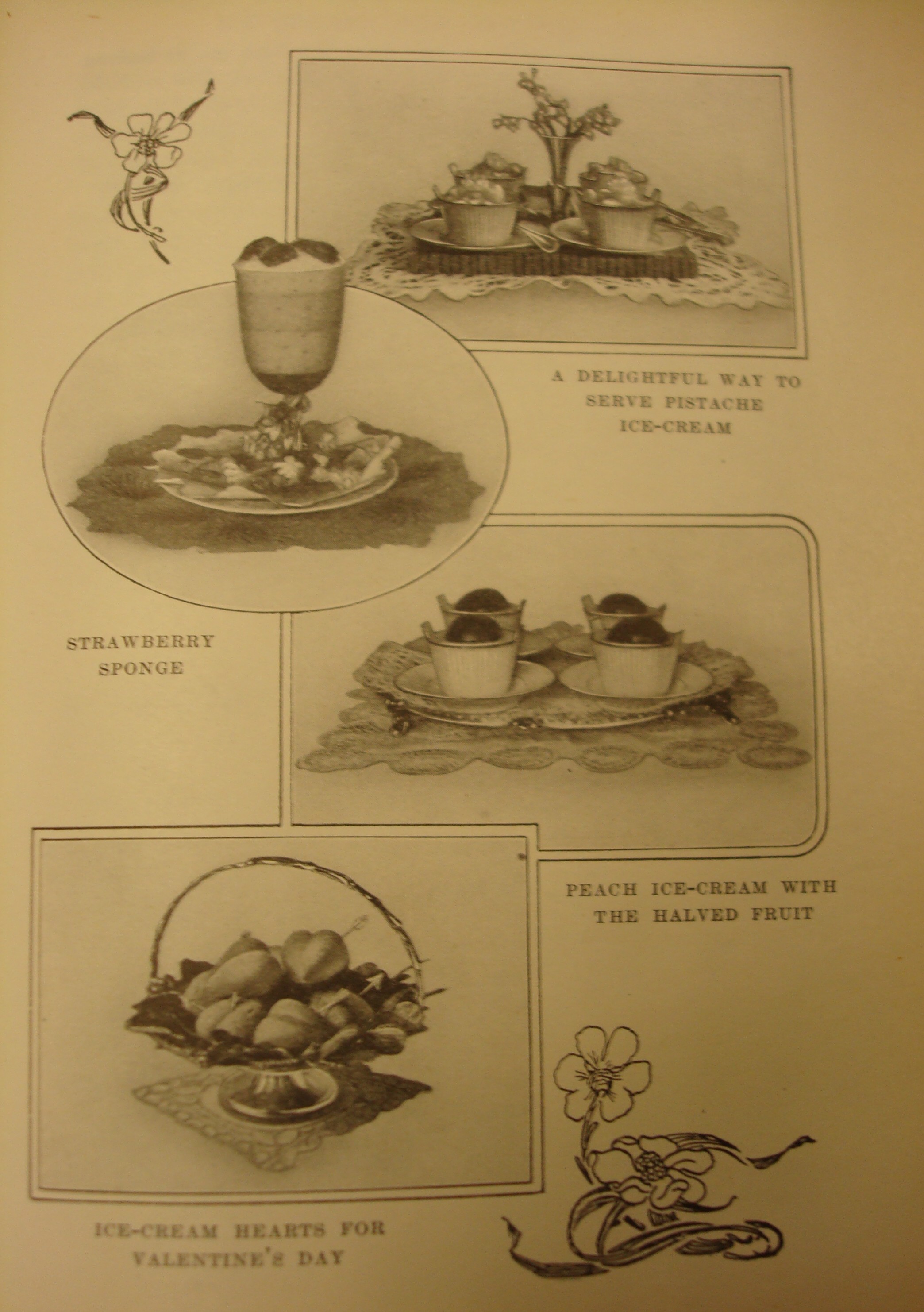
Fresh Fruit Ice Creams—Prepare fruit by sprinkling sugar. Let it stand one hour, press through a sieve, and stir into ice cream when the cream is frozen to a mush. All fruit ice creams are made in substantially the same way, but where seed fruits, such as currants, are used, the carefully strained juice only must be added. This can be put in the freezer with the cream and not reserved until later, as in the case of the mashed fruits. Grated pineapple, with the addition of a little lemon juice, makes a particularly fine fruit cream.

The Butterick Cook Book (1911)

For detailed directions from the 1911 cookbook see the Vanilla Ice Cream posting.

Old-time Vanilla Ice Cream Recipes

15-year-old Helena wrote a hundred years ago today:

Sunday, February 12, 1911. Pa and Ma went away today and we had the house to ourselves while they were gone. Of course we had a fine dinner for my sister is an excellent cook, or rather she thinks she is. Any way we had dinner. Ice cream consisted of part of it. I had to turn the freezer, which I soon tired of. (I usually tire of anything I don’t like.) Any how I froze that cream so hard that it all crumbled up in big chunks. That surely was a result of labor. Rachel Oakes was a guest for dinner. I went to Sunday school church and catechize this afternoon. By the time I got home, the afternoon was almost over.

 Her middle-aged granddaughter’s comments 100 years later:

 I found directions for making ice cream in an old cookbook that was published in 1911.

 Vanilla Ice Cream, No. 1—Sweeten one quart of thin cream with three-fourths cup of sugar, flavor with one and one-half tablespoons of vanilla extract and freeze.

Vanilla Ice Cream, No. 2—Add to one egg slightly beaten, one cup of sugar, one tablespoon of flour, and a speck of salt. Pour on one pint of scalding milk and cook for twenty-five minutes in a double boiler. When cool, add vanilla and one pint of thin cream.

In freezing cream and ices, good general rules to be observed are: Be lavish with the salt and have the ice pounded quite fine, thereby involving less labor in turning the freezer and securing a smooth velvety cream. The quickest and best way to pound the ice is to put it in a stout burlap bag, tie up the mouth, and pound it vigorously with a flat-headed hammer or mallet. Snow may be used instead of ice; if this does not freeze steadily, add one cup of water to it. Have the ice and salt already packed around the can before the mixture is put in. Be sure that the latter is quite cold before it is placed in the can and do not begin freezing by turning rapidly and lagging toward the end of the process. Instead turn slowly at the beginning and increase the speed as the mixture thickens. Be very careful that there is no possible chance of the salt or water getting into the can, but do not pour off the water unless it gets too high; when a little may be turned off.

Allow three measures of ice to one measure of salt; if a larger proportionate quantity of salt be used the freezing will take place in a shorter time, but the mixture will have a granular texture.

Never fill a freezer more than three-fourths full, as the mixture gains in bulk as it freezes.

When it is desired to have the cream in blocks or cakes a special mold will be needed. The mold should be set in ice and salt while the cream is being frozen, and when the beater or mixer is removed, the cream should be packed into the mold as quickly as possible. It should be pressed down firmly and smoothly and a piece of stout muslin or buttered paper laid over it before the mold cover is put on. The mold is then packed in ice and salt and kept for a few hours until the cream is ready for use.

The Butterick Cook Book (1911)

Based upon the directions above, it appears that Grandma probably started turning the handle quickly at the beginning and then much slower as it thickened—which is exactly the opposite from what she should have done.

(An old-fashioned ice cream freezer is shown in the January 22 posting.)

A Rotten Apple Spoils the Barrel

15-year-old Helena wrote a hundred years ago today:

Saturday, February 11, 1911. Got up about eight o’clock this morning. Did quite a lot of work this forenoon. Carrie Stout was over a while this afternoon. Nearly all my Saturdays are alike.  

 Her middle-aged granddaughter’s comments 100 years later:

As I read this diary I want to constantly remind the 15-year-old who wrote it to write about day-to-day activities and routines. For example, I wonder what my future grandmother and her family did on Saturday mornings in the middle of the winter.

Maybe the family sorted through the bins of apples stored in the basement and discarded apples that were starting to spoil. If there were only small bad spots on some of the apples, they probably were put into a pan and brought up to the kitchen for immediate use. 

Or maybe the family sorted potatoes—and selected the damaged or spouted ones to eat first. If there were lots of spouting potatoes the sprouts would have been broken off and then put back into storage. Back then carefully curing, storing, and spouting extended the storage life–whereas today potatoes are often treated with chemicals to minimize sprouting.

Today we talk about local foods being freshest—but in the old days there was also a competing notion that the food that would spoil first should be used first. This particularly played out during the winter months. The practice of saving the most desirable specimens helped ensure that there would be sufficient food for the entire winter.

For example, let’s say that there were 10 winter squash put into storage. A month later someone went to get a squash and noticed that one had a small bad spot on it—whereas the one sitting next to it still looked as perfect as the day it was harvested. The one with the imperfections would be selected—and the bad spot would be cut out of it before using—because that one won’t last as long into the winter as the perfect one.

That said, a hundred years ago people also weren’t afraid to throw out food if it did spoil. More food would be put into storage than could possibly be eaten and it was anticipated that a certain percentage of it would spoil.

I have a friend who won’t shop at farmers’ markets because the bunches, trays, and baskets of produce sold at them provide more produce than her family can eat before it spoils. I always tell her to enjoy the fresh food—and not to worry if she ends up throwing some away—but the waste bothers her and she’d prefer to buy processed foods  and supermarket produce that are less likely to decay.

That said— in Grandma’s day meals were planned to use available foods and whenever possible food was used—or given to a neighbor who could use it.