Old-fashioned Kale with Corned Beef

This rustic, easy-to-make, hundred- year-old Corned Beef with Kale recipe is perfect for St.Patrick Day, and would hit the spot on any brisk March day.

The recipe called for whole kale leaves, and suggests a presentation that features them. I used Lacinato Kale (also known as Dinosaur Kale). It retained its shape when cooked, and its sweet nuttiness worked well with the flavorful corned beef.

Here’s the original recipe:

Source: The Housewife’s Cook Book (Lilla Frich, 1917)

And, here’s the recipe updated for modern cooks:

Corned Beef with Kale

  • Servings: 5 -7
  • Difficulty: easy
  • Print

2-3 pounds corned beef with spice packet

1 bunch kale (about 1 pound)

water

butter, melted (optional)

Put corned beef in a large pot and cover with water. Add spice packet that came with it. Cover and bring to a boil using high heat; reduce heat and simmer 50 minutes per pound or until tender.  Remove from water and let rest for 10 minutes; then thinly slice.

About 45 minutes before the corned beef will be ready to serve, wash and trim kale to remove the bottom portion of the stem and leaves. Gently tie into bunches using cooking twine. Put into a large pot and cover with water. Bring to a boil using high heat. then reduce heat and simmer for 30 minutes.  Remove from water. Untie and, if desired, drizzle with melted butter.

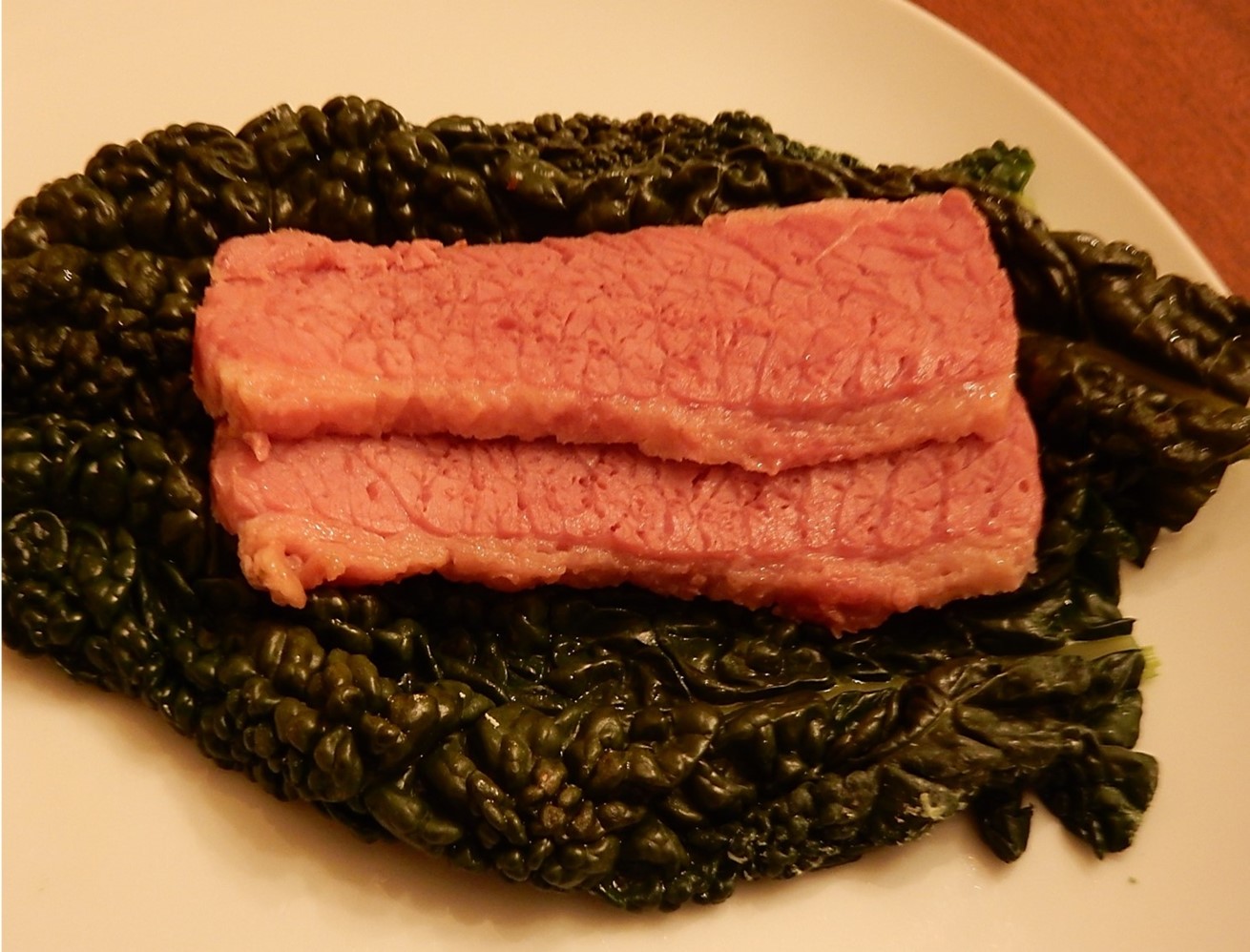
To serve: Put kale leaves on plate, and top with the sliced corned beef.

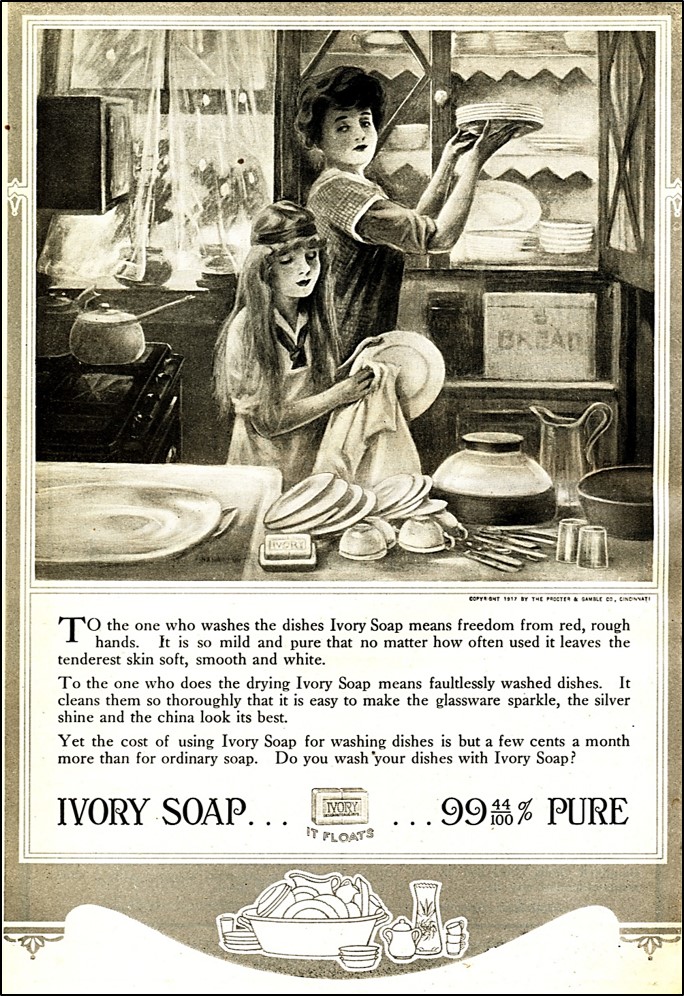
1918 Ivory Soap Advertisement

Source: American Cookery (February, 1918)

Based on this hundred-year-old advertisement, it looks like people used bar soap to wash dishes. According to Hunker, dishwashing detergents were invented during World War I and only came into common use during the mid-1900’s:

Soap was used for cleaning until 1916, when there was a shortage of fats needed to produce it during World War I. Because there was still a need for a cleaning product, synthetic versions were invented, which are now known as detergents.

There was also a movement towards using detergents because there was a need for a cleaning agent that did not leave behind a residue as soap did, especially on fabric. Upon their appearance, detergents became common products for cleaning dishes and clothing. While many people still used regular soap, by 1953 most households were using detergents.

Old-fashioned Date and Apple Salad

Simple, tasty, attractive salads are the best. I recently found a hundred-year-old recipe that fits the bill. Date and Apple Salad has a light lemon and oil dressing. The apples and dates are cut into “match-stick” pieces which makes a lovely presentation; and the tart, crunchiness of the apples combines beautifully with the sweet, chewy dates. This recipe is a keeper.

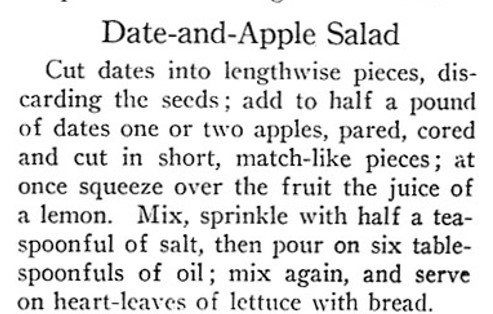
Here is the original recipe:sh

Source: American Cookery (January, 1918)

And, here’s the recipe updated for modern cooks:

Date and Apple Salad

  • Servings: 4 - 5
  • Difficulty: easy
  • Print

8 ounces pitted dates

2 apples

juice from  1 lemon

1/2 teaspoon salt

2 tablespoons vegetable oil (I used olive oil.)

lettuce leaves, optional

Cut dates into lengthwise into “match-stick” pieces, and put into a bowl. Peel and core apples, then cut into match-stick pieces. Dip apple pieces in lemon juice, then place in the bowl with the dates. Add salt and oil; then gently toss.  If desired, serve on lettuce leaves.

The hundred-year-old recipe called for six tablespoons of oil. This seemed excessive, so I used two tablespoons of oil.

American Cream with Chocolate-Flavored Whipped Cream

I recently had a delightful molded pudding at a very nice restaurant. It was a little firmer, and jiggled a little more, than traditional puddings–and I wondered how it was made.

Then I saw a recipe in an advertisement in a hundred-year-old magazine for American Cream that looked like it might make a dessert similar to the one I’d eaten in the restaurant, so I  gave it a try.

The American Cream was all that I’d hoped it would be. It was creamy with  just hint of sweetness. And, when topped with Chocolate-flavored Whipped Cream, it was almost decadent.

When I served this dessert, guests enjoyed the American Cream; they absolutely raved about the Chocolate-Flavored Whipped Cream.

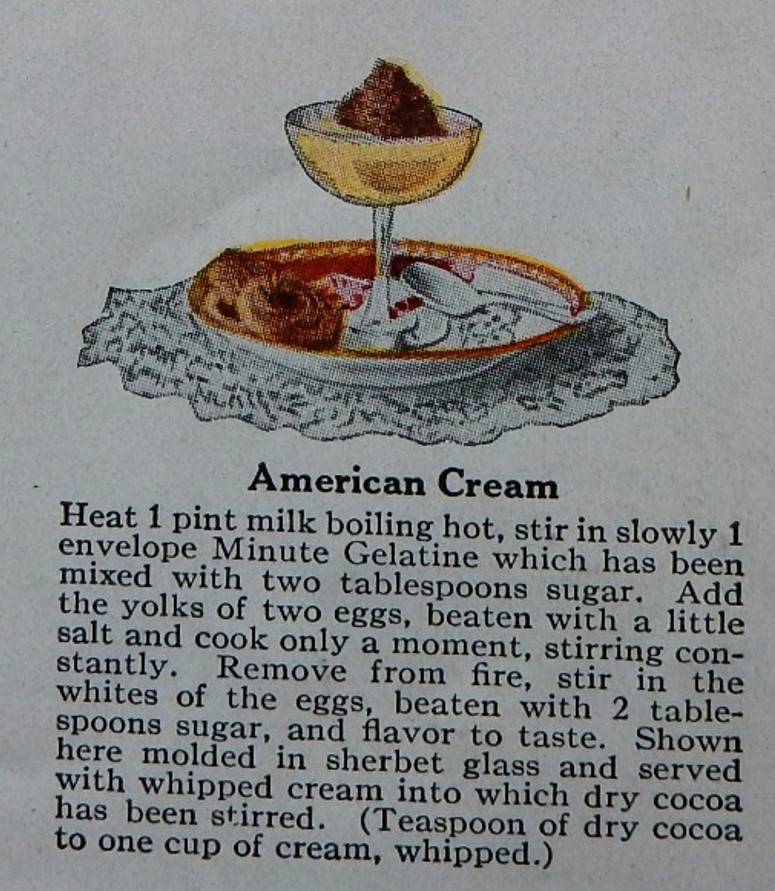
Here’s the original recipe:

Source: Ladies Home Journal (May, 1916)
Source: Minute Gelatine advertisement in Ladies Home Journal (May, 1916)

And, here’s the recipe updated for modern cooks:

American Cream with Chocolate Whipped Cream

  • Servings: 4 - 5
  • Difficulty: moderate
  • Print

Pudding

2 eggs, separated

1/4 cup milk + 1 3/4 cups milk

1 envelop unflavored gelatin

2 tablespoons sugar + 2 tablespoons sugar

1/8 teaspoon salt

1/2 teaspoon vanilla

Chocolate-flavored Whipped Cream

1/2 cup heavy whipping cream

2 tablespoons confectioners sugar

1/2 – 1 teaspoon cocoa

Whisk egg yolks until smooth,  add salt. Set aside.

Put 1/4 cup milk in a small dish. Sprinkle gelatin and sugar evenly over the cold milk and allow the gelatin to absorb the milk. Set aside.

Put egg whites in a small bowl, and beat until stiff peaks form. Set aside.

Heat the 1 3/4 cups milk in a saucepan using medium heat until it comes to a boil. Quickly stir in gelatin and sugar mixture; then add the egg yolks while stirring constantly. As soon as it returns to a boil remove from heat, and immediately fold in the beaten egg whites. Stir in the salt and vanilla. If not smooth, press the mixture through a sieve. Put in a serving bowl, or spoon into individual serving cups or glasses.  Chill for at least 3 hours in the refrigerator. Serve with Chocolate-flavored Whipped Cream.

Chocolate-flavored Whipped Cream: Place the whipping cream in a bowl and beat until stiff peaks form. Add confectioners sugar and cocoa, and continue beating until thoroughly mixed.

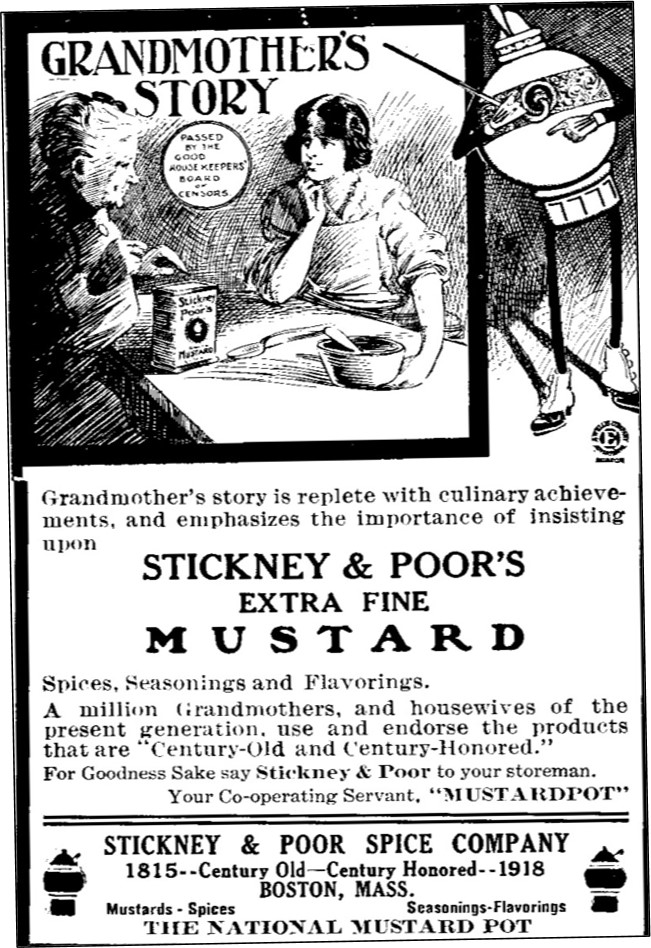
1918 Stickney and Poor’s Mustard Advertisement

Source: American Cookery (February, 1918)

Did you know that branded dry mustard has existed for at least two centuries? I didn’t until I saw this advertisement for Stickney & Poor’s Mustard in an 1918 issue of American Cookery which said that the brand had already been around for a century. Who would have guessed?

I’m befuddled by ad’s graphics and text.  What the heck is the thing that looks like a Christmas ornament on ice skates?

Mining Camp Cornmeal Pancakes

I’ve eaten stacks of pancakes with  bacon on the side for years  .  . . boring.  So I was thrilled to find a hundred-year-old recipe for Mining Camp Cornmeal Pancakes.

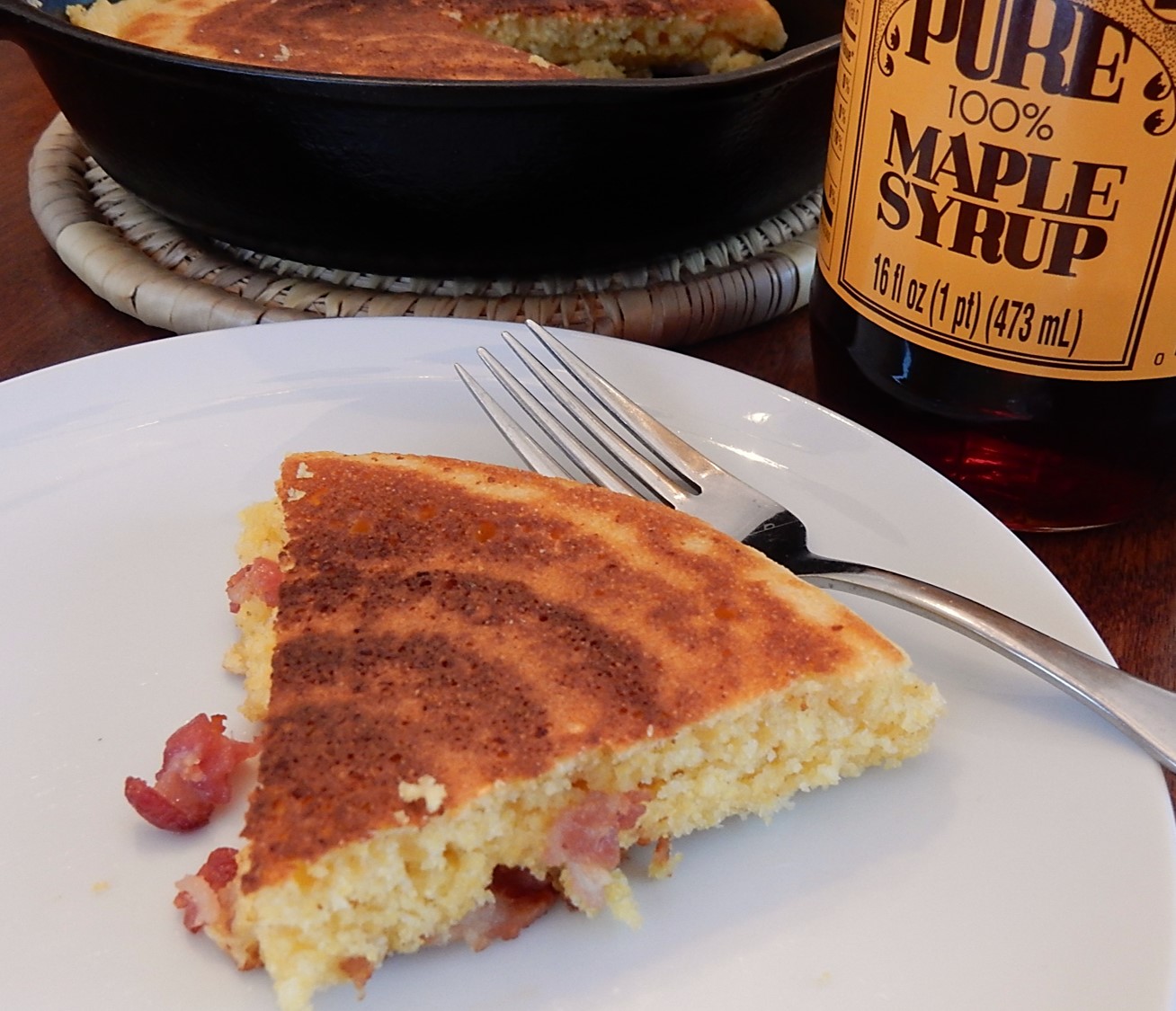
The hearty giant pancakes embedded with bits of bacon are cooked in a skillet, and are cut into triangles to serve.  The pancakes were a delightful taste treat that took me back in time to the days of hungry hard-working gold and silver miners in remote locations.

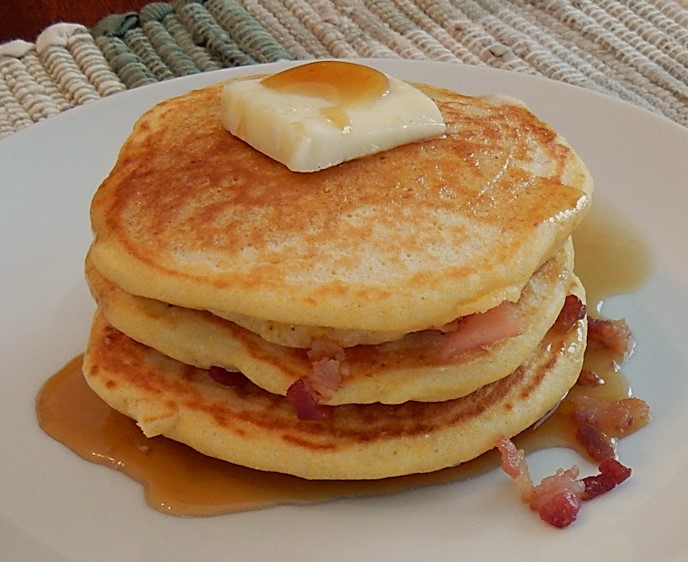
The old recipe also indicated that, if preferred, smaller, more typically-sized pancakes could be cooked on a griddle.

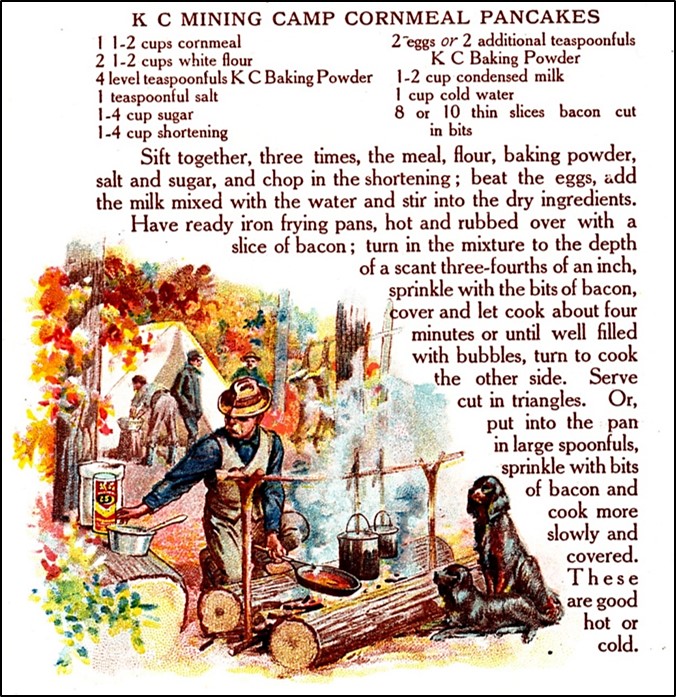
Here’s the original recipe:

Source: The Cook’s Book which is a KC Baking Powder promotional cookbook (1911)

And, here’s the recipe updated for modern cooks:

Mining Camp Cornmeal Pancakes

  • Servings: 5 - 7
  • Difficulty: easy
  • Print

8 thin slices bacon cut into small 1/4 inch pieces

1 1/2 cups cornmeal

2 1/2 cups all purpose flour

3 teaspoons baking powder

1/4 cup sugar

1/4 cup shortening

2 eggs

2  cups milk

Put the bacon  pieces in a skillet, and cook over medium heat until the bacon just begins to crisp; stir occasionally while cooking. Remove from heat and set aside. Reserve a small amount of the bacon fat to grease skillet.

In the meantime,  put cornmeal, flour, baking powder, sugar, shortening, eggs, and milk in a mixing bowl; beat until combined.

Option 1 – Large Pancakes that are Cut into Triangles: Generously grease a skillet with bacon fat. (I used a 6 inch, cast iron skillet). Heat skillet until hot using medium heat, then spoon 3/4 inch of the batter into the pan, sprinkle with the cooked bits of bacon.  Reduce heat to medium low, cover and cook for about  3-4 minutes or until the batter is bubbly; then turn the pancake over and cook the other side. Remove from heat, and cut into triangles. Cook additional pancakes until all the batter is used.

Option 2 – Regular-sized (3 – 4 inch)  Pancakes: Heat a greased griddle until hot; then spoon or pour approximately 1/4 cup batter onto griddle for each pancake. Sprinkle bits of cooked bacon on the top of each pancake. Cook until the batter is bubbly, then flip pancake and cook the other side.

I made several ingredient adjustments when I made this recipe.  The old recipe called for 1 teaspoon salt. I didn’t use any since the bacon was salty. The old recipe also called for the use of condensed milk and water. In the mining camp far from town, it made sense to use canned condensed milk – but since I had regular milk in my refrigerator, I used substituted it for the condensed milk and water. Additionally, the batter seemed very thick, so I used a little more milk than the combined amount of condensed milk and water called for in the old recipe.