Old-fashioned Coleslaw Recipe

Some foods memories are associated specific events. Others are much more scattered. For me, Coleslaw is one of those food where I have scattered memories – some wonderful; others not so great.

I have rich memories of eating Coleslaw at family reunions, at church potlucks, and at home. Some renditions had a light vinegar dressing; others had rich mayonnaise dressings. Occasionally the coleslaw had a hint of pepper or contained celery seed. And, sometimes there were additional ingredients – chopped onion, apple, or green and red pepper.

But I also associate coleslaw with fast food joints – often with a runny mayonnaise-based dressing.

Suffice it to say that I have mixed feelings about Coleslaw. But, I had a cabbage in the refrigerator so when I saw a hundred-year-old recipe for Coleslaw in a home economics textbook I decided to give it a try. The Coleslaw dressing had a very mild flavor with just a hint of sugar and vinegar, which allowed the flavor of the cabbage itself to shine. That said, I prefer Coleslaw dressings with a more pronounced sweet-sour flavor, so I probably won’t make this recipe again.

recipe for cole slaw
Source: School and Home Cooking by Carlotta C. Greer (1920)

This process for making this recipe is similar to the method used to make custard. I got this recipe from a home economics textbook. The author seeks to build upon skills learned in previous lessons. So she often referred back to previous recipes that used similar processes – in this case to a recipe for soft custard. I previously posted the hundred-year-old soft custard recipe.

Here’s the recipe updated for modern cooks:

Coleslaw

  • Servings: 5-6
  • Difficulty: moderate
  • Print

3 cups shredded/grated cabbage

1 egg or 2 egg yolks (I used a whole egg.)

1/2 teaspoon salt

1/2 teaspoon dry mustard

dash cayenne (red) pepper

1 teaspoon sugar

1/2 cup milk

2 teaspoon butter, melted

1/4 cup apple cider vinegar

Put egg (or egg yolks), salt, mustard, cayenne (red) pepper, and sugar in a small mixing bowl; beat until combined. Set aside.

Put the milk in a heavy sauce pan (use a double boiler if available); then heat using medium heat. Stir constantly until the milk just barely begins to bubble, then remove from the heat.

Place a small amount (approximately 1 – 2 tablespoons) of hot milk into bowl with the egg mixture, stir quickly. Add this mixture to the hot milk and stir. (This helps prevent the egg from coagulating when the egg is introduced to the hot liquid.)  Return to stove and cook, using medium heat while stirring constantly until the mixture just begins to thicken or coat a spoon. Remove from heat; stir in butter and vinegar Strain and then pour over the shredded cabbage. Chill at least 3 hours before serving. Stir before serving.

http://www.ahundredyearsago.com

Do You Waste Food At Your House? A 1920 Perspective

sliced turkey, mashed potatoes and other leftoversAccording to the United States Department of Agriculture, in 2010 there was 218.9 pounds of food waste per person in the United States. Food waste has been an issue for at least a hundred years. This is what it said in the introduction of a 1920 cookbook which contained recipes that used left-overs:

Can you truthfully say that there is no waste in food in your home? 

It has been reiterated many times that a French family could live on what an American family throws away. Is that true in your case?

True thrift and economy in cooking means planning so that nothing is wasted and all foods whether freshly cooked or reserved at another meal are tasty and appetizing. 

The whims of fancy and capricious appetite require forethought and careful  planning in order to keep a varied and tempting menu and at the same time utilize all left-over food. 

Source: The Cook Book of Left-Overs (1920) by The More Nurses in Training Movement – Illinois Ladies

Dandy Stuffed Eggs (Stuffed Eggs with Dandelion)

Stuffed Egg on Dandelion

HAPPY EASTER

I love to browse through hundred-year-old cookbooks. Sometimes I flip through cookbooks looking for an inspiration about what to make; other times I’m looking for a certain type of recipe. Today, since I had hard-boiled Easter eggs, I knew that I wanted to make a recipe that called for hard-boiled eggs. I found several recipes which were candidates for this post, and then I read the ingredient list for Dandy Stuffed Eggs and saw that it called for dandelion greens. I immediately knew that I’d found the recipe that I was going to make for today’s post. .

I have memories of my grandfather foraging dandelion for my mother to prepare;  and each year I carry-on the tradition. Maybe it is my imagination but eating dandelion always seems to restore my energy after a long winter. My mother always called dandelion greens her spring tonic.

Back in the days before modern supermarkets with produce sections filled with fresh fruits and vegetables year round, nutrient-rich dandelion was one of the first greens available in the spring, and people craved them. Dandelion greens contain lots of vitamins and minerals including vitamin A, folate, vitamin K, calcium, and potassium.

The Dandy Stuffed Eggs were wonderful The eggs are stuffed with a dandelion, bacon, onion, and vinegar mixture  The stuffed eggs are served hot on top of a bed of wilted dandelion.

Here’s the original recipe:

Recipe for Dandy Stuffed Eggs
Source: Good Housekeeping’s Book of Recipes and Household Discoveries (1920)

One teaspoon of salt seemed like a lot, so when I made the recipe I only used half as much.

Here’s the recipe updated for modern cooks:

Dandy Stuffed Eggs (Stuffed Eggs with Dandelion)

  • Servings: 12 stuffed egg halves
  • Difficulty: moderate
  • Print

6 hard-boiled eggs

1 pound dandelion greens (spinach, beet greens, or chard may be substituted for the dandelion greens)

1 small onion, finely chopped (about 4 tablespoons chopped onion)

1 slice fried bacon or salt pork, chopped

1/2 teaspoon salt

2 tablespoons vinegar

If desired, sugar and additional vinegar

Preheat oven to 375° F. Thoroughly wash dandelion greens, then take about 1/2 cup of the greens (reserve the remaining greens) and put in a small skillet.  (No additional water is needed, since the dandelion greens should have some water clinging to it.) Using medium heat, wilt the greens while stirring constantly (about 1-2 minutes). Remove from heat and chop the wilted greens.

In the meantime, cut the eggs in half and remove the yolks and put in a bowl; then mash the yolks using a fork. Add the chopped wilted dandelion greens, onion, bacon, salt, and vinegar. Stir to combine; then stuff the egg whites with the egg yolk mixture.

Put the stuffed eggs in a baking dish. Cover and put in oven until the stuffed eggs are hot (about 15 minutes).

In the meantime, put the remaining dandelion greens in the skillet. Using medium heat, wilt slightly while stirring constantly. If desired, sprinkle with sugar and add a splash of vinegar. Remove from heat.

To serve, put wilted dandelion greens on serving plate or bowl. Place the stuffed eggs on top of the greens.

http://www.ahundredyearsago.com

Hundred-Year-Old Advice for Cooking by Temperature

Casserole dished filled with food
Source: Good Housekeeping (April, 1920)

When I cook foods in the oven, the first thing that I think about is: What temperature should I use?

Modern recipes indicate the temperature setting. A hundred years ago, recipes might say that a “medium” oven or a “hot” oven should be used, but the exact temperature was left up to the cook.  .

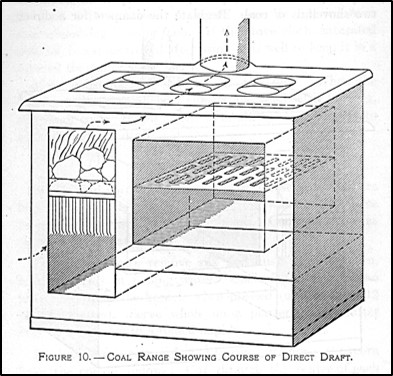
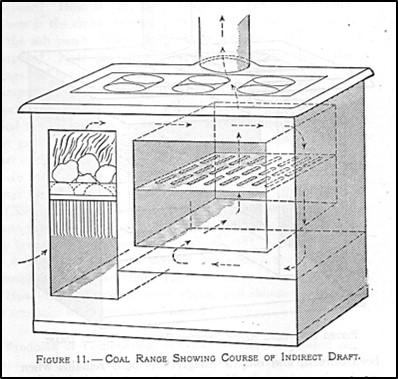
In 1920, many cooks still used wood or coal stoves which had their own unique challenges when it came to maintaining a constant temperature; but, more modern electric and gas stoves were becoming more common – though they may not yet have had a temperature control. However, cooking thermometers were available.

But, a hundred years ago the idea of regulating the oven temperature was still a new concept, and home economists were trying to figure out the best temperature to use when making various foods. For example, home economists at the Good Housekeeping Institute, which was affiliated with Good Housekeeping magazine, did experiments to compare how foods turned out when different oven temperatures were used. Here are some excerpts:

We Cook by Temperature. Do You?

From time to time this department has published articles on the cooking of foods by temperature. In our testing work here in the Institute, we have used these findings constantly, and each time become more and more enthusiastic over the uniformity and perfection of the results. We realize more each time the great importance which the correct temperature bears to the production of good cookery results. 

Just a word in regard to the use of a thermometer in baking. The thermometer should be placed as near the center of the oven as is convenient, and on the shelf, if possible, where the bulk of the baking is to be done. If your range has a very even distribution of heat, this precaution will not be so necessary. If several dishes are to be placed in the oven at one time, it is advisable to try the pans in the oven before it is heated so that the thermometer in a position which will best suit the necessary arrangement. The thermometer should be placed in the oven while it is cold, preferably and thus allowed to heat gradually as the oven heats. 

The experiments made to determine the best temperature for the baking of scalloped dishes proved most interesting. It is necessary that this kind of dish shall look well, because it is intended to be served at the table in the dish in which it is baked. So it was appearance that we looked for at first in determining the best temperature. But much to our surprise, we found a marked difference in the flavor as well, even though the dish was made in exactly the same way, when cooked at different temperatures. For the comparative test to determine the baking temperature for scalloped dishes, Delmonico Potatoes were made. Into a greased baking-dish were placed alternately layers of diced, cooked potatoes, and well-seasoned cheese sauce. The top of the dish was covered with thin slices of cheese. Dishes prepared thus were baked at 350° F., 400° F., 450° F., and 500° F. Another dish was placed at the very bottom of the broiler oven of a gas range and allowed to brown beneath the broiler flame.

The time required for browning at the different temperatures varied. At 350° F., twenty-seven minutes did not produce a very satisfactory brown, and the sauce “bubbled” badly, giving the dish a very unsightly appearance. Twenty minutes at 400° F. gave slightly better results, and fifteen minutes at 450° F. showed still greater improvement in appearance and flavor, but the dish cooked at 500° F. for twelve minutes proved without a doubt that this was the very best temperature of all. The sauce bubbled very slightly about the edges but did not give so unsightly an appearance to the dish as the lower temperatures had produced. The browning was good, but the perfection in seasoning and taste was the biggest determining factor. It was, indeed, supreme. The flavors seemed to be perfectly and thoroughly blended.

The dish baked beneath the broiler flame required only ten minutes for the browning. The result was very pretty to look at, because no bubbling had taken place, and the browning was even and delicate, but the flavors were not at all blended, so this method was immediately ruled out as not at all desirable. 

Good Housekeeping (April, 1920)

Old-fashioned Hot Cross Buns

Hot Cross Buns on plate

Hot Cross Buns are a traditional Easter bread. Historically these sweet, spicy buns with lots of embedded currants (or raisins) were a treat as Lent came to a close, and dietary restrictions ended. Bakers have been making Hot Cross Buns for at least a hundred years, and probably much longer. There’s even an old Mother Goose nursery rhyme about them:

Hot-cross buns!
Hot-cross buns!
One a penny, two a penny,
Hot-cross buns!
If you have no daughters,
Give them to your sons;
One a penny, two a penny,
Hot-cross buns!

Hot Cross Buns are obviously a food that has had a special place in the hearts of people for many years. So when I came across a recipe for Hot Cross Buns in a 1920 magazine, I decided to give it a try.

Most modern Hot Cross Bun recipes call for either making the cross on top of the buns with icing after they are baked, or making a cross using a flour and water paste prior to baking. The old recipe instead called for scoring the dough with a knife prior to baking to create the crosses on the balls of dough.

Here’s the original recipe:

Recipe of Hot Cross Buns
Source: American Cookery (March, 1920)

The old recipe called for using a compressed yeast cake; I used an envelope of active dry yeast.

The buns were made by first creating a “sponge” with the milk, yeast, sugar, and a little of the flour. This was allowed to rise; then the additional flour and additional ingredients were added before kneading. The dough was then shaped into balls, and the balls of dough were allowed to rise before baking. When I made this recipe, the sponge rose nicely; the balls of dough, not so well. Perhaps I did not place the dough in a warm enough spot – or maybe the ratio of yeast to flour wasn’t quite right, or maybe there was some other issue.

The verdict: The buns were tasty, but not as light as most modern Hot Cross Buns. This may be because of the problems I had with getting the dough to rise properly. If I made Hot Cross Buns again, I’d probably just go with a more modern recipe.

Here’s the recipe updated for modern cooks:

Hot Cross Buns

  • Servings: 15 - 20 buns
  • Difficulty: moderate
  • Print

1 cup warm milk (108-110° F)

1 envelope active dry yeast

1/2 cup sugar

1 cup flour + 2 cups flour (scant) (Either all-purpose flour or bread flour may be used)

2 teaspoons ground nutmeg (or 1 whole nutmeg, grated)

1/2 teaspoon salt

1/4 cup butter, softened

1/2 cup currants (raisins may be substituted for currants)

1/8 cup citron (optional) (I didn’t use citron.)

1 egg, beaten (1/4 cup water may be substituted for the egg) (I used an egg.)

1 tablespoon sugar + additional sugar to sprinkle on top

In a large bowl dissolve the yeast and sugar in the warm milk; add flour and beat until smooth. Cover, and then let this “sponge” rise in a warm place until doubled in size (about 1 hour).

In the meantime, in another bowl, combine the remaining 2 cups flour (scant), nutmeg, and salt. Add butter, and stir to combine. Then add the sponge and stir to combine. Place on a floured surface and knead until smooth (about 5 minutes). Near the end of the kneading process, sprinkle currants on the bread dough- about one-fourth at a time – and knead into the dough.

Break off pieces of the dough, each about half the size of an egg, and roll into balls; flatten to about 1/2 inch thick. Put the balls in a greased baking pan(s) (2 9-inch round pans or 1 9 X 13″ rectangular pan). The flattened balls should be about 1/2-inch apart. Cover with a towel and let rise in a warm spot until doubled in size (about 1 hour). Then use a knife to score a cross on the top of each ball of dough.

In a small bowl stir together the beaten egg and 1 tablespoon sugar; then brush the mixture on top of the unbaked buns. Sprinkle with additional sugar.

Preheat oven to 350° F.  Put the baking pan(s) with the buns in oven, and bake 30 minutes (or until lightly browned).

http://www.ahundredyearsago.com

Measuring Cake Quality

Score Card for Cakes
Source: School and Home Cooking (1920) by Carlotta C. Greer

Some cakes look better than others, and some cakes taste better than others – but the best cakes are the ones that are both attractive and tasty.

Specific criteria can be used to judge cake quality. A hundred years ago was the heyday of local fairs. Almost every community – both large and small – held an annual fair where people could showcase their baked and canned goods, farm produce, and livestock. Women (and it usually was women in 1920) enjoyed competing to see who made the best cake. A blue ribbon and maybe a small amount of prize money were the official rewards – but the real reward was the bragging rights.  Score cards that listed various criteria such as flavor, lightness, and appearance – and the maximum score for each criteria – were often used to judge the quality of cakes.

In addition to formal judging of cakes, cakes are regularly informally judged by the individual who baked them and the people who eat them. Is this a good cake? Why isn’t it as tasty as some other cakes? . . .

And, when a cake isn’t perfect, a good cook often tries to figure out exactly what went wrong, so that the next cake is better. Here is some hundred-year-old advice for troubleshooting cake problems:

The Quality of Cake

Desirable cake is tender and light, but of fine grain. The quantity of eggs, sugar, fat, and moisture affects these qualities. Too much sugar makes a cake of coarse grain and of waxy or tough texture. On the other hand, a cake containing too little sugar is not as fine grained as one having “just enough.”

A cake in which there is too much fat is crisp or crumbly, – i.e., it will not hold its shape. Too little fat may make it tough in texture. Generally, the more fat a cake contains the smaller the quantity of moisture needed.

Many eggs without a proportionate quantity of fat and sugar produce a tough cake. The toughness occasioned by eggs, may be offset, of course, by the tenderness produced by fat. It is a most interesting study to compare cake recipes. Some are well proportioned, others could be greatly improved by variations in the quantity of ingredients.

The flavor of a cake is largely affected by the proportion of ingredients in a cake. For the sake of economy, however, certain ingredients, especially fat and eggs, must be decreased even though texture, grain, and flavor are sacrificed. The matter of wholesomeness must also be taken into consideration.

School and Home Cooking (1920) by Carlotta C. Greer

Old-fashioned Braised Carrots

Braised Carrots in Serving DishSome old rules of thumb and beliefs about nutrition are true. For example, my mother always told me to eat carrots so that I could see better at night. She was right. It’s true that carrots contain lots of Vitamin A which may make it easier to see in the dark.

Carrots are also a good source of Vitamin C and Vitamin K; and, they are high in fiber, and low in calories.

The bottom line is that carrots are a very nutritious vegetable. But, except for nibbling on the occasional raw carrot, I seldom eat them. So when I came across a hundred-year-old recipe for Braised Carrots, I decided that it was time to try a carrot recipe.

The Braised Carrots, when made using beef broth, taste and have a texture similar to carrots in a beef stew. It makes a nice vegetable side dish. The carrots are cut lengthwise into long strips which makes for a nice, somewhat unique, presentation.

Here’s the original recipe:

Recipe for Braised Carrots
Good Housekeeping’s Book of Recipes and Household Discoveries (1920)

Here’s the recipe updated for modern cooks:

Braised Carrots

  • Servings: 3 - 4
  • Difficulty: moderate
  • Print

water

6 carrots

2 tablespoons butter

1 cup stock or water (I used beef broth.)

Fill a Dutch oven half full with water. Put on stove and bring to a boil using high heat.

In the meantime, wash and peel (or scrape) the carrots; then quarter lengthwise. Put carrots in the boiling water and cover. Remove from heat. Let sit until the water has cooled (about 45 minutes). Drain.

Preheat oven to 375° F. In the meantime, on the top of the stove, melt butter in an oven-proof skillet using medium heat. Gently put carrots in the skillet and cook for about 10 minutes. May be gently turned once or twice. (The carrots were difficult to turn without breaking, and they didn’t really seem to need to be turned, so I did not turn most of them. They did not brown, but became more tender). Add stock or water, and put in oven for a half hour. Remove from oven, and put in serving dish. Spoon some of the liquid over the carrots.

http://www.ahundredyearsago.com