Old-fashioned Mashed Summer Squash


Mashed Summer Squash in dish

Squash, squash everywhere – zucchini, yellow crookneck squash, yellow straightneck squash, pattypan squash. What should I do with all of them?

A hundred years ago people had similar concerns. This is what an article said about summer squash in a 1922 magazine:

 Summer Squash

Is summer squash one of your favorite vegetables, or do you consider it a rather tasteless thing, to be used as Hobson’s choice, but not to be hailed with joy? . . .

Few vegetables repay so amply for the small amount of garden-plot, fertilizer, and cultivation they require. They bear heavily though the season, and do not, like so many vegetables, require to be cooked immediately after picking in order catch the finest flavor. They are delicious when properly seasoned. They are also amongst the easiest vegetable to prepare for cooking.

American Cookery (August/September, 1922)

The article also includes a recipe for Mashed Summer Squash. I seasoned the squash with butter and celery salt, and it made a delightful side. dish.

Here’s the original recipe:

Recipe for Mashed Summer Squash
Source: American Cookery (August/September, 1922)

This recipe has so many options and permutations that I didn’t know where to began: Boil the squash or steam it; Season with salt or celery salt; peel the squash or don’t.

In the end. I cut the squash into chunks, but didn’t peel, and I used a Foley mill to mash (and remove the squash skin and seeds). The resulting mashed squash was very juicy, so I then partially strained the mashed squash.

Here’s how I made the recipe:

Mashed Summer Squash

  • Servings: 3 - 4
  • Difficulty: moderate
  • Print

5 cups, diced or sliced summer squash

1/2 teaspoons celery salt

1/8 pepper

1 tablespoon butter

Put squash in saucepan, cover with water, and bring to a boil using high heat. Reduce heat and simmer until tender (about 5-7 minutes). Remove from heat and drain.  Press through a strainer or sieve. (I used a Foley mill.)

If the mashed squash is too juicy, partially strain until squash is the desired consistency. Then put in a dish and serve.

http://www.ahundredyearsago.com

1922 Wagner Cast Aluminum Preserving Kettle Advertisement

Wagner Ware Preserving Kettle Advertisement
Source: American Cookery (June/July, 1922)

As canning season swings into full gear, I’m taking inventory of my canning equipment and supplies, and figuring out what I may need to purchase. The pan I use when making jams and jellies doesn’t have a very thick bottom, and I’ve occasionally scorched jams and jellies – especially when making old recipes that don’t call for pectin and require a lot of boiling to thicken the mixture. So I found this hundred-year-old advertisement for a Wagner Cast Aluminum Preserving Kettle intriguing. I think that I need a modern version of this kettle with it’s thick bottom and sides.

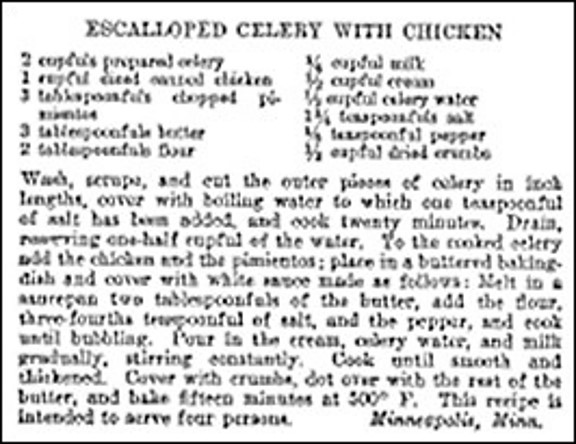
Escalloped Celery with Chicken

Escalloped Celery with Chicken

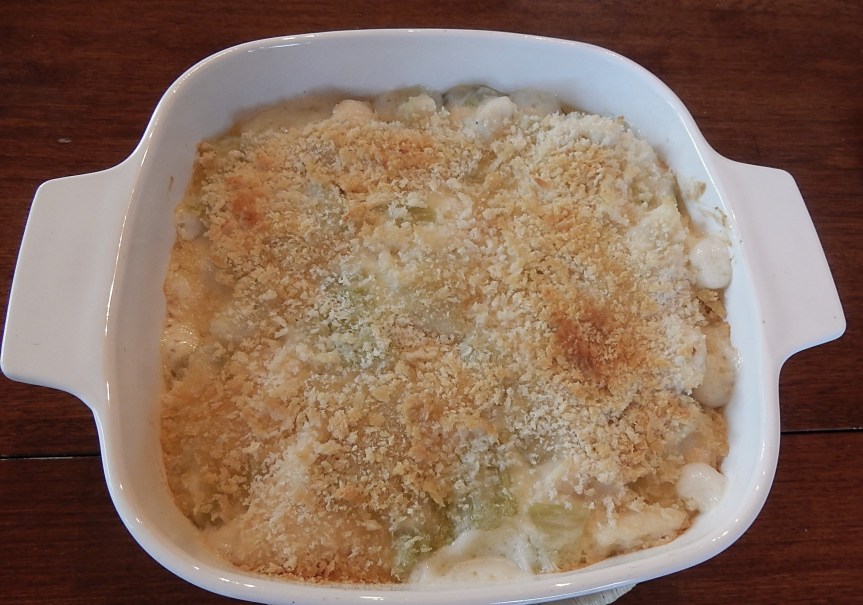
I don’t see many recipes for casseroles when browsing through hundred-year-old cookbooks. There are a few casserole recipes in 1922 cookbooks, but they didn’t become really popular until the mid-20th century. In any case, I was intrigued by a casserole recipe that I found in a hundred-year-old cookbook for Escalloped Celery with Chicken, and decided to give it a try.

Though I made this recipe from scratch, the Escalloped Celery with Chicken brought back vague memories of creamed chicken and celery dishes I ate as a child that were made using cream of celery soup. In any case, I enjoyed this dish. It was tasty and made a  nice casserole.

Here’s the original recipe:

Recipe for Escalloped Celery with Chicken
Source: Good Housekeeping’s Book of Recipes and Household Discoveries (1922)

I used a little less salt than was called for in the original recipe. It called for boiling the celery in water with 1 teaspoon salt, plus an additional 3/4 teaspoon salt in the sauce. I decided that an additional 1/2 teaspoon would be plenty – and the recipe tasted fine. I also thought that 500° F. seemed very high – so I baked at 425° F. until the bread crumbs were lightly browned and it was hot and bubbly (about 15 minutes). The recipe says it serves four. In my opinion, if this is served as the main dish, that it is a little skimpy for four, so I listed it as 3-4.

Here’s the recipe updated for modern cooks:

Escalloped Celery with Chicken

  • Servings: 3-4
  • Difficulty: moderate
  • Print

2 cups celery, diced into 1 inch pieces

water

1 teaspoon salt + 1/2 teaspoon salt

1 cup diced cooked chicken

3 tablespoons pimento, diced

2 tablespoons butter + 1 tablespoon butter

2 tablespoons flour

1/4 cup milk

1/2 cup heavy cream

1/2 cup celery water (reserved when celery is drained after cooking)

1/8 teaspoon pepper

1/2 cup fine dry plain bread crumbs

Put diced celery in a saucepan. cover with water and add 1 teaspoon salt. Bring to a boil using high heat, then reduce heat and simmer until the celery is tender (about 10-15 minutes). Drain and reserve 1/2 cup of the celery water.

In the meantime, preheat oven to 425° F. In a skillet, using medium heat, melt 2 tablespoons butter; then stir in the flour. Gradually, add the milk, cream, and celery water while stirring constantly. Continue stirring until the white sauce thickens. Stir in 1/2 teaspoon salt and the pepper. Add the cooked celery and diced chicken. and stir to combine.  Put in a 1-quart baking dish. Sprinkle with the bread crumbs and using 1 tablespoon of butter, dot with small pieces of butter. Put in oven and bake until hot and bubbly, and the bread crumbs are lightly browned.

http://www.ahundredyearsago.com


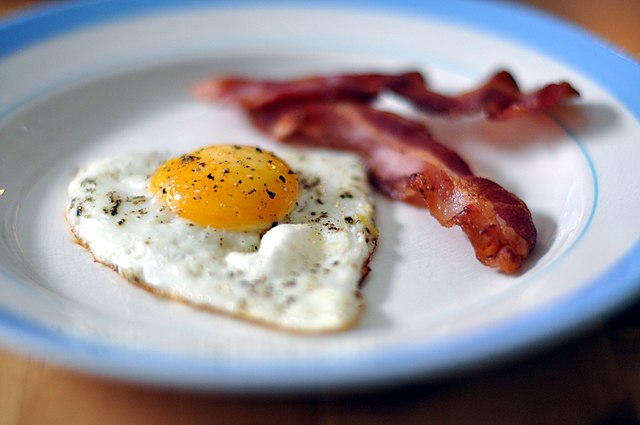
Breakfast – One of the Important Events of the Day

bacon and eggs

A hundred-year-old cookbook emphasized the importance of breakfast. Here are a few excerpts:

Breakfast – One of the Important Events of the Day

Breakfast in most homes is, without doubt, the simplest meal of the day and the one requiring the least thought and effort in preparation. But when we consider the fact that breakfast is also the first meal of the day and is the one that should furnish the necessary food principles to the body to aid it in starting and carrying on the work for the day, we can readily understand the importance of this meal and why it is necessary to begin the day with proper food. 

The right kind of food, properly prepared, keeps the body in a healthful condition. And a healthy body is able to resist and throw off disease; an undernourished body is very susceptible to germs and will not recover from a severe illness so readily as one that is properly nourished and kept in a resistant condition.

Many persons consider breakfast of so little importance that they omit this meal entirely. This seems a mistake, for in the morning the stomach is practically empty and, in order “to start the day right,” some food should be taken unless for some good reason a physician has advised otherwise.

Again, breakfasts are often eaten very hurriedly, which is wrong. In order to receive the greatest benefit from the food, it should be thoroughly broken up in the mouth so that the digestive juices may begin their action. If food is not broken up before entering the stomach it must done there and this means a strain on that organ. Overwork will gradually cause it to weaken; so in time the stomach will not be able to perform its functions properly.

It may seem difficult to get the variety in our breakfast menus that the large number of luncheon and dinner dishes afford, because there is a limited number of so-called typical breakfast dishes. But there is an endless variety of methods of preparing these different foods, so that there is really no need of monotony at this meal.

Mrs. DeGraf’s Cook Book (1922)

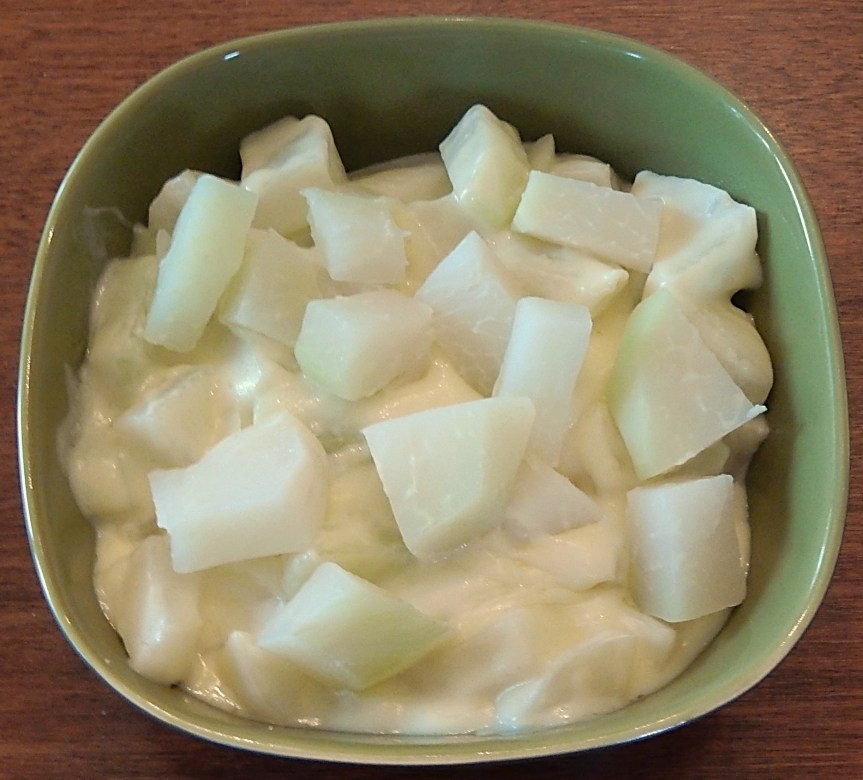
Kohlrabi with Golden Sauce

Kohlrabi with Golden Sauce in Dish

Kohlrabi has an unique look – it’s round and bulbous with lots of trimmed stems at the farmer’s market. It’s a vegetable that always looks interesting, yet I seldom buy it because I’m not quite sure what to do with it. So I was thrilled when I noticed a recipe for Kohlrabi with Golden Sauce in a hundred-year-old cookbook.

The Kohlrabi with Golden Sauce was a lovely creamed vegetable dish. Kohlrabi is a member of the cabbage family, and it was slightly peppery with sweet undertones. The Golden Sauce was basically a white sauce plus an egg yolk.

Recipe for Kohlrabi with Golden Sause
Source: Good Housekeeping’s Book of Menus, Recipes, and Household Discoveries (1922)

Here’s the recipe updated for modern cooks:

Kohlrabi with Golden Sauce

  • Servings: 3 - 4
  • Difficulty: moderate
  • Print

2 cups diced kohlrabi (1/2 inch cubes)

2 tablespoons butter + 2 tablespoons butter

2 tablespoons flour

1 cup milk

1 egg yolk, beaten

Put diced kohlrabi in a saucepan and cover with water. Put on burner, and bring to a boil using high heat; reduce heat and simmer until tender (about 20 minutes). Remove from heat and drain.  Add 2 tablespoons of butter to the pan with the hot cooked kohlrabi and cover.

In the meantime, in another pan, using medium heat, melt 2 tablespoons butter; then stir in the flour. Gradually, add the milk while stirring constantly. Continue stirring until the white sauce thickens. Put a tablespoons of the thickened white sauce in the bowl with the beaten egg yolk; stir immediately. Then add the egg yolk mixture to the white sauce, stir to thoroughly combine. Remove from heat.

Remove lid from pan with cooked kohlrabi, and gently stir to coat kohlrabi with the melted butter. Put in serving dish. Pour the golden white sauce over the kohlrabi.

http://www.ahundredyearsago.com

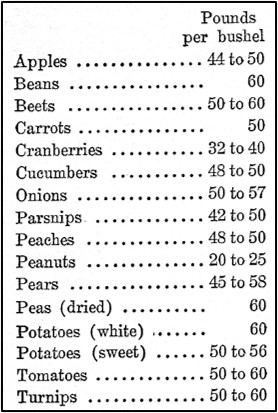
Pound to Bushel Conversion Chart for Fruits and Vegetables

Fruit and vegetable conversions - pounds to bushels
Source: Good Housekeeping’s Book of Menus, Recipes, and Household Discoveries (1922)

Ever wonder how many pounds of various fruits and vegetables are in a bushel? Apparently this was considered important for cooks to know a hundred years ago because it was on page 10 of the 1922 edition of the Good Housekeeping cookbook.

Now that I think about it, when was the last time I bought a bushel of anything? . . . . hmm, maybe I bought a bushel of apples 3 or 4 years ago.

Old-Fashioned Peach Salad (Dessert)

Peach Salad

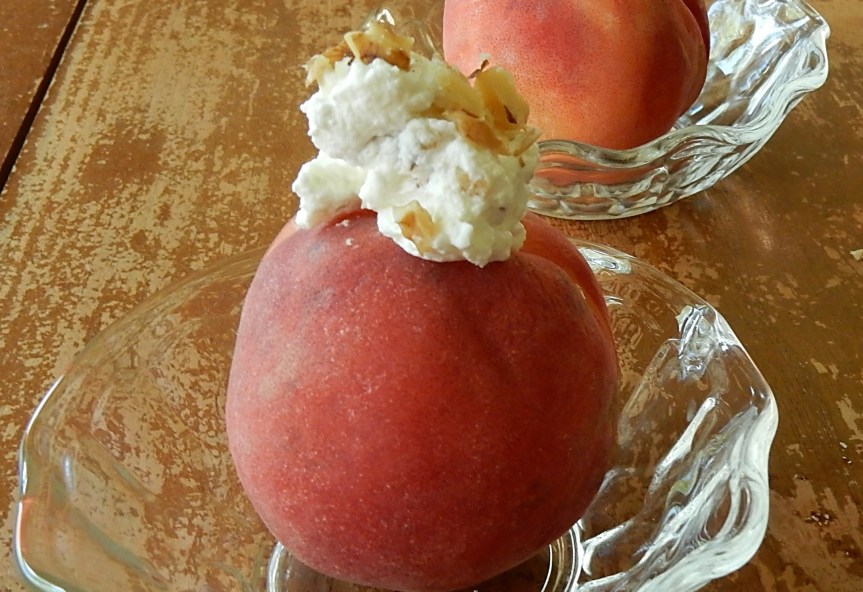
I had some peaches so searched through my hundred-year-old cookbooks for a recipe that called for them, and found a winner. The recipe was called Peach Salad – though I actually would consider it a dessert rather than a salad.

This recipe is easy to make and tasty. The peaches are halved and the cavities filled with a whipped cream and chopped walnut mixture. The peaches are then put back together and topped with additional whipped cream and nuts. The Peach Salad makes a perfect dessert on a hot summer day.

When I served the Peach Salad, I provided both a fork and a knife. The peach could then be cut into several pieces, which made it easier to eat.

Here’s the original recipe:

Peach Salad Recipe
Source: Cement City Cook Book (1922) published by the First Baptist Church, Alpena, Michigan

I did not list “preserved peaches” as an option for this recipe. In my opinion, fresh peaches are the way to go. The old recipe call for “nuts.” I used walnuts.

And, I can’t quite picture this recipe with a candied fruit garnish, so when I updated the recipe I did not include the option of garnishing with candied fruit.. (I’m not even sure where to buy candied fruit in the summer. It seems more like an ingredient that I see in December when people are doing Christmas baking.)

Here’s the recipe updated for modern cooks:

Peach Salad (Dessert)

  • Servings: 4
  • Difficulty: easy
  • Print

4 peaches

1/2 cup heavy whipping cream

2 tablespoons confectioners sugar

2 tablespoons walnuts, chopped + additional chopped walnuts for garnish

Place the whipping cream in a bowl and beat until stiff peaks form. Add confectioners sugar, and continue beating until thoroughly mixed. Stir in 2 tablespoons chopped walnuts.

Cut each peach in half and remove stone.  Place whipped cream and chopped nut mixture in the cavities and put the peaches back together. Top with additional whipped cream mixture. Garnish with additional chopped nuts.

http://www.ahundredyearsago.com