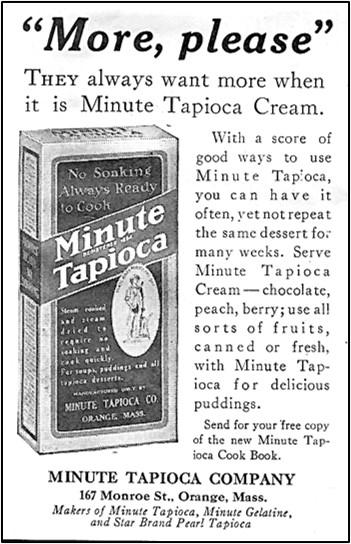
Tapioca pudding is one of those classic comfort foods, so I guess it should be no surprise that Minute Tapioca has been around for a least a hundred years.

Tapioca pudding is one of those classic comfort foods, so I guess it should be no surprise that Minute Tapioca has been around for a least a hundred years.
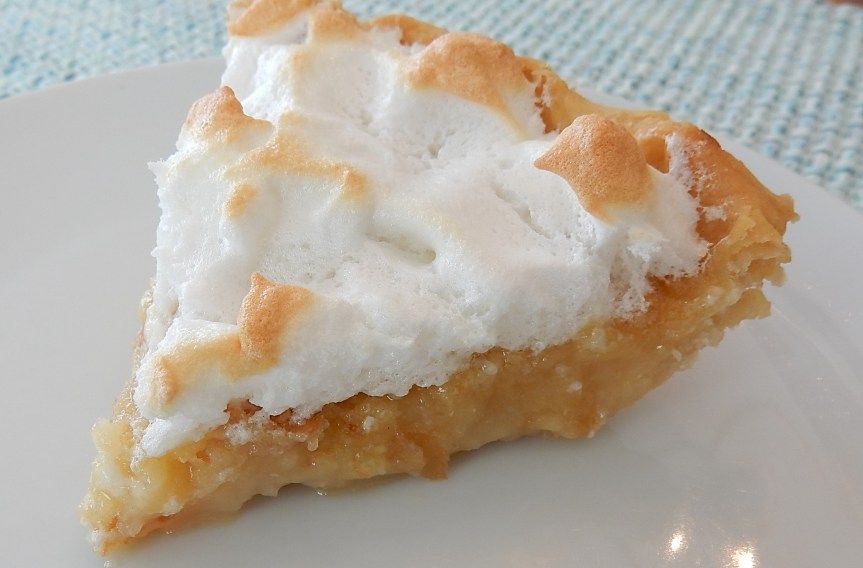 When browsing through a hundred-year-old cookbook, I came across a recipe for Lemon Crumb Pie.
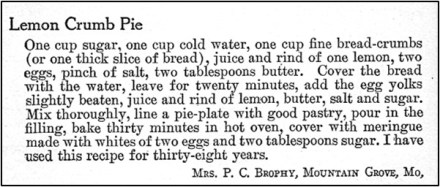
I was intrigued by the statement that the recipe author has used this recipe for 38 years. Even though all recipes I make for this blog are old, this one seemed particularly old-fashioned and called for using bread soaked in water to help thicken the pie filling.
The pie turned out well, and is very similar to Lemon Meringue Pie. I never would have guessed that there was bread in the baked pie. There’s something to be said for recipes that have been made (and maybe refined) over the course of 38 years .
Here’s the recipe updated for modern cooks:
1 slice bread torn into small pieces (about 1 cup)
1 cup water
1 cup sugar
Juice from 1 lemon
Grated rind of 1 lemon
2 egg yolks
dash salt
2 tablespoons butter, melted
1 8-inch (small) pie shell
Meringue
2 egg whites
2 tablespoons sugar
Preheat oven to 425° F. Put bread pieces and water in a mixing bowl and let soak for 20 minutes. Then add sugar, lemon juice, grated lemon rind, egg yolks, salt, and melted butter; beat until combined. Pour mixture into pie shell and bake until the mixture is hot and bubbly and thickened (about 30 – 35 minutes). Watch pie closely because the filling will easily boil over.
To prepare the meringue, put the egg whites into a mixing bowl. Beat until stiff peaks form, then beat in the sugar. Spoon the meringue onto the top of the baked pie, and then swirl. Bake in the oven for approximately 8-10 minutes or until the meringue is a light brown.
 Similarly to now, people worried about their weight a hundred years ago. A 1923 cookbook, The Calorie Cook Book, contains lots of menus and recipes for people who wanted to lose weight. The book contained menus for a week for each season of the year. Here is the Sunday Spring Reducing Menu.
 A full-page advertisement in a 1923 issue of Ladies Home Journal for Kraft Cheese piqued my interest. It contained a recipe for Spinach Timbales. From time to time I see timbale recipes in hundred-year-old magazines and cookbooks. Timbales back then were creamy vegetable or meat mixtures that were put into individual molds and baked.
The advertisement made the claim that Spinach Timbales were tasty and so nutritious they could be considered a prescription. With a claim like that – and, an attention-grabbing image of the timbales – I decided this was a must-try recipe.
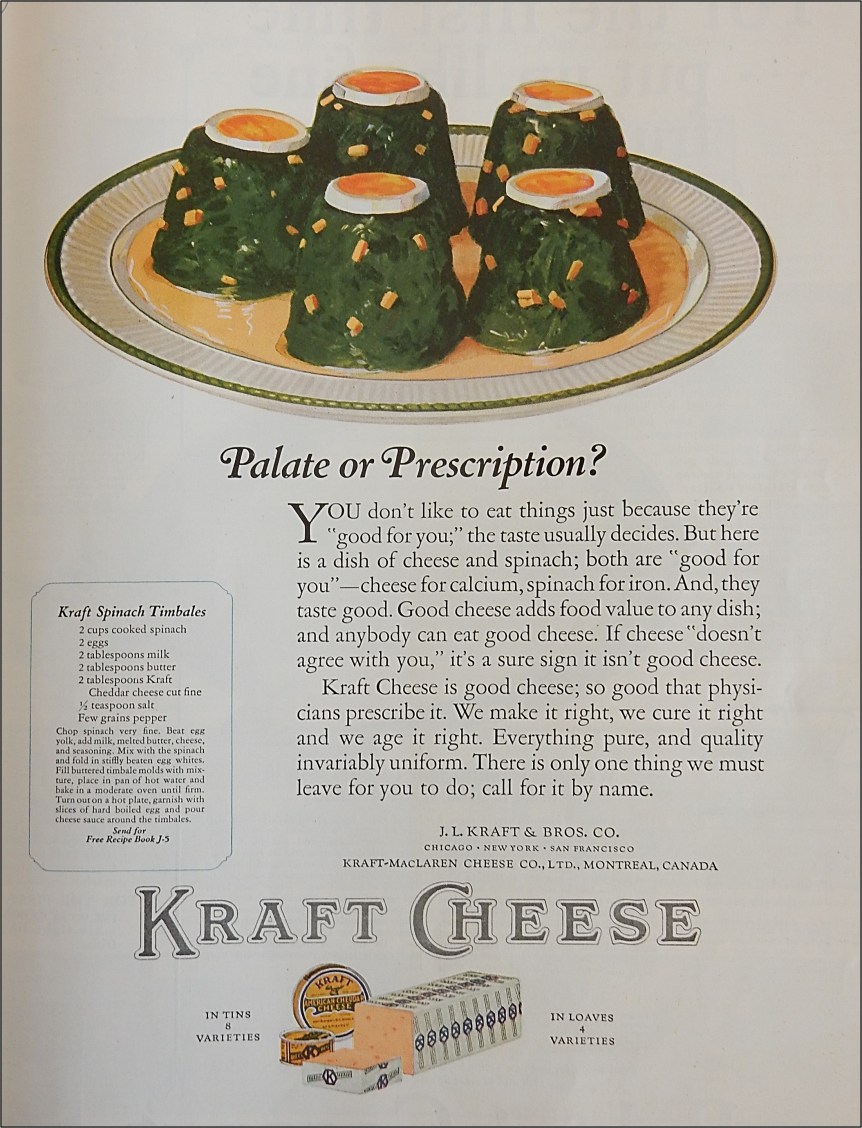
My Spinach Timbales didn’t look like the ones in the old advertisement, though I tend to think that they were more visually appealing than the ones in the old drawing (but I could be prejudiced since I made them). The Timbales were tasty, and reminded me a little of Spinach Souffle.
I used custard cups as the mold when I made this recipe since I don’t have timbale molds. I’m actually not even sure what a timbale mold is — though based on the drawing in the advertisement, I think that it may be narrower and higher than a custard cup.
I finely chopped the cheddar cheese when I made this recipe to try to get a similar look to the drawing – though the cheese melted when I baked the timbales and didn’t stay as small chunks, so shredded or grated cheese would work just fine.
The old recipe didn’t include a recipe for the cheese sauce, so to make it, I just made a white sauce and added cheese to it.
Here’s the recipe updated for modern cooks:
2 cups cooked spinach, chopped (I used 2 cups frozen spinach that I briefly cooked.)
2 eggs, separated
2 tablespoons milk
2 tablespoons butter, melted
1/2 teaspoons salt
dash pepper
2 tablespoons cheddar cheese, shredded, grated, or cut fine
cheese sauce (see below)
1 hard-boiled egg, sliced
Preheat oven to 375° F. Put egg yolks, milk, butter, salt, and pepper into a mixing bowl; beat until combined. Stir in the cheddar cheese and spinach.
In the meantime, put the egg whites in another bowl and beat until soft peaks form.
Fold the beaten egg whites into the spinach and cheese mixture. Spoon into greased custard cups. Place the custard cups in a pan with hot water that comes to about an inch below the top of the cups. Bake for 30 – 40 minutes or until a knife inserted in center of the mixture comes out clean.
Remove Spinach Timbales from custard cups after baking.
To serve: Spoon some of the cheese sauce onto plate. Set timbales in the cheese sauce. Top each timbale with an slice of the hard-boiled egg.
Cheese Sauce
2 tablespoons butter
2 tablespoons flour
1/4 teaspoon salt
dash pepper
1 cup milk
1 cup cheddar cheese, grated
In a saucepan , melt butter using medium heat; then stir in the flour, salt, and pepper. Gradually, add the milk while stirring constantly. Add cheese, and continue stirring until the cheese melts and the sauce thickens.

A hundred-year-old home economics textbook had a short section on planning meals:
The Planning of Meals
“What will we have for dinner?” Nearly every day in the year the average home hears this question. Sometimes the query comes very close to the meal hour and means that time is too short to prepare certain foods. This haste frequently means a hurried telephone call or a trip to the nearest store and the purchase of such materials as can be made ready very quickly for the approaching meal. This method is costly in time, energy, money and disposition, and should give place to a better plan. In a very smoothly running household there is a more or less definite and regular time for giving thought to the food question, resulting in a written meal plan and the making of order lists. Meals should be planned at least one day in advance, and very frequently it is advantageous to plan for several days. This results in better food, in less confusion, worry and waste, in lessened work, in a smaller cost, and in greater satisfaction to all persons in the household.
Economics of the Family by C.W. Taber and Ruth A. Wardall (1923)
I’m intrigued by the concerns and suggestions. In some ways the advice seems on the mark and in other ways it feels very dated. We don’t call the store to order groceries. (I actually was surprised that the textbook authors apparently expected most families to have telephones in 1923.) But we do plan menus, shop for ingredients, and try to keep the cost of food down.

When I make a pie, I often have left-over scraps of pastry dough, so I was intrigued by a hundred-year-old recipe for Nut Pastry Rolls. These rolls are made by rolling out pastry dough (and it works fine to re-roll left-over pastry dough scraps), cutting it into rectangles, then spreading with jelly and sprinkling with chopped pecans, and rolling like a jelly roll and baking.
The Nut Pastry Rolls turned out well, looked attractive, and were tasty.
Here’s the original recipe:

“Paste” is an archaic term for pastry dough that was commonly used in recipe books a hundred years ago.
When I updated the recipe, I listed ingredient amounts for making approximately 10 rolls – though this is an extremely flexible recipe and the amounts can be adjusted based on the number made.
Here’s the recipe updated for modern cooks:
pie pastry for a 1-shell pie (or use scraps of pastry dough left-over after making a pie crust)
1/4 cup jelly (I used currant jelly.)
1/3 cup pecans, chopped
Preheat oven to 425° F. Roll pie pastry into a rectangle 1/8-inch thick. Cut into 3 X 5 inch rectangles. Spread jelly on the rectangles, then sprinkle with the chopped pecans. Roll each piece as for a jelly roll, then place seam side down on a baking sheet. Bake for approximately 12-15 minutes (or until lightly browned).
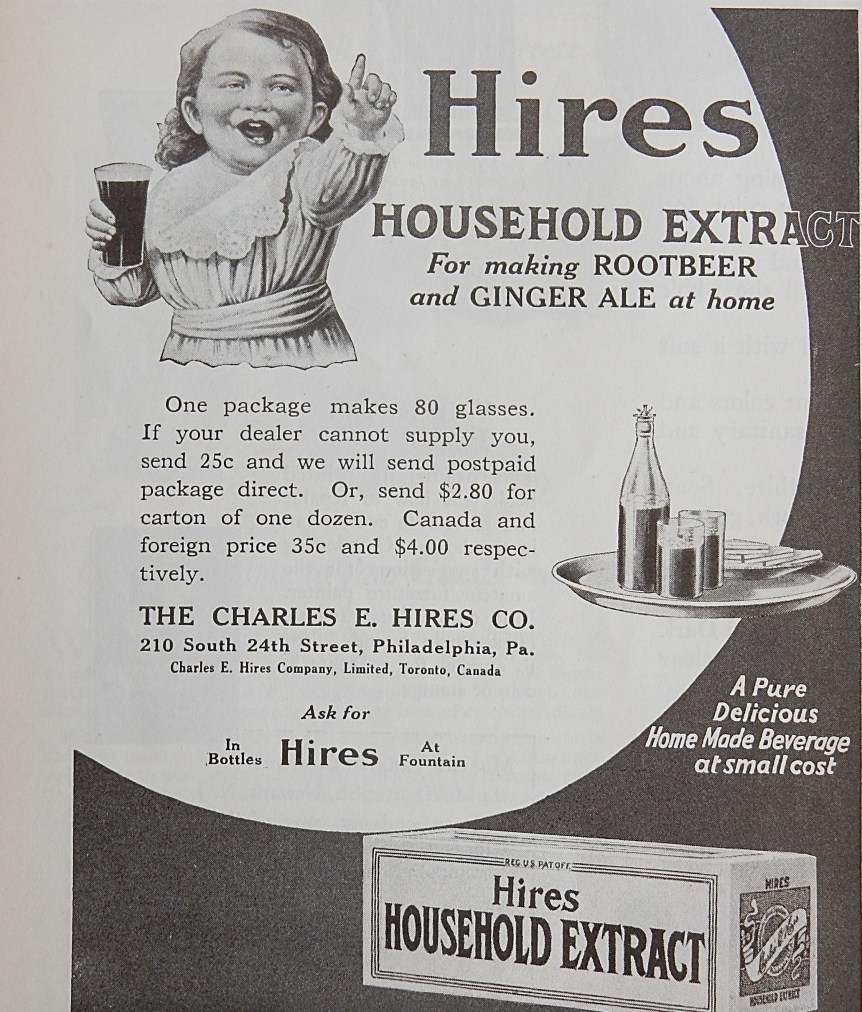
This hundred-year-old advertisement makes it sound very economical to make homemade root beer. I wonder how much a bottle of commercially manufactured root beer cost back then.
