Reusing Cloth Calendars

15-year-old Helena wrote a hundred years ago today:

Sunday, January 29, 1911. I wondered around aimlessly today doing this and doing that, just to while the time away.

Her middle-aged granddaughter’s comments 100 years later:

Since not much happened a hundred years ago on this date—let’s fast forward to another January day 52 years later–probably a very routine day from Grandma’s perspective, but a day that I still remember.
In January 1963 Grandma would have been 68 years old. I was 7 and often visited her in her cozy bungalow on a neighboring farm. Cloth dish towels with calendars printed on them were the fad at the time, and Grandma always had a cloth calendar hanging decoratively in her kitchen. The calendar towel had a dowel running through the top hem and a string attached to the ends of the dowels, and it hung from a nail that was pounded into the wall.

I noticed that the calendar said 1957. I was old enough to know that the year was 1963. I asked Grandma why she had an old calendar.

She replied, “Calendars repeat themselves every so often.”   She walked over to the closet  at the far end of the kitchen, opened the door, and showed me a stack of cloth calendars. On top of the folded stack was a sheet of paper with Grandma’s handwriting on it. It indicated which years were the same. For example, one row on the page may have said 1958, 1969 which indicated that the 1958 calendar could be reused in 1969.

She pulled out calendars and explained how some patterns repeated with regularity—whereas due to the vagaries of leap year–other calendar patterns seldom repeated. It was so complicated that I could barely follow her explanation—but trying to understand calendar quirks consumed my mental energy for the next several days. I looked at calendars, drew calendars, asked questions about leap year. . .

Today it’s easy to find out when calendar years repeat with a quick internet search—it was a much harder task back then. But, looking back, Grandma’s explanation that day partially frames how I think about her.  She was smart, and obviously enjoyed the challenge of keeping track of calendars and years.

Grandma was also always very frugal and reusing old calendars seemed to fit her. I wonder if the 15-year-old in the diary would have been as frugal—or if the Great Depression and other events in the intervening years made her thriftier.

Directions for Making an Old-Fashioned Scarf

15-year-old Helena wrote a hundred years ago today:

Saturday, January 28, 1911. I puttered around, and did some work today. Although Ruth says, “I don’t do anything,” but as for earning my salt, I guess I earn as much as she does.

Her middle-aged granddaughter’s comments 100 years later:

I wonder what Grandma was doing while she was puttering around. . . .Maybe she made a scarf.

Scarves—then like now—were a stylish fad. The January 15, 1911 issue of Ladies Home Journal  had directions in an article titled How You Can Make the New Scarfs:

In the center of the page above is shown one of the satin scarfs which are worn with tailored suits on days too mild for heavy fur. The right side is of black satin and the underside of white. It usually measures about eighteen inches in width, and two yards to two yards and a half in length. In narrow silk just this quantity would be required. The ends are drawn in and finished with silk tassels formed of stuffed oval shapes of satin, hung from cords.

For evening nothing could be more charming than the scarf shown on the center figure on the right. It is made of dotted gauze in a delicate mauve, lined with pale pink chiffon, the ends finished with hemstitching and caught with a narrow band of mink fur. It may be made of different materials in this way. Two-tone chiffon would be lovely—a cornflower blue, for instance, lined with pale pink with a band of white swansdown or marabou confining the fullness across the lower part of the front about twelve inches from the hem.

Ladies Home Journal  (January 15, 1911)

It’s amazing how styles—and terminology—change (or don’t change) over time. In case you care, the definitions of swansdown and marabou are below:

Swansdown—(1) the soft downy feathers of the swan often used as trimming on article of dress; (2) a heavy cotton flannel that has a thick nap on the face and is made with sateen weave.

Marabou—(1) a soft fluffy material prepared from turkey feathers or the coverts of marabous and used especially for trimming women’s hats or clothes. (2)  a large dark gray African stork.

Merriam-Webster Online Dictionary

Thin Ice!

15-year-old Helena wrote a hundred years ago today:

Friday, January 27, 1911. Went to school this morning and about the first thing I heard was our teacher breaking through the ice, while skating last night. We had visitors at school this afternoon. Guess I’ll stop now.

Her middle-aged granddaughter’s comments 100 years later:

Whew, it’s lucky that her teacher Jakie apparently wasn’t hurt in the skating accident.  I guess the creek wasn’t frozen solid enough for safe skating.

It amazed me how informally Grandma referred to her teacher as Jakie in previous diary entries—and this entry also suggests that Jakie may have been a very young teacher who hung out with the students.

Is It Safe for Skating?

15-year-old Helena wrote a hundred years ago today:

Thursday, January 26, 1911. Walked home from school with some girls who were going skating. I staid up later than usual tonight to get my lessons out. Did it because I had to. They weren’t hard, but they took some thinking.

Her middle-aged granddaughter’s comments 100 years later:

Everyone’s life falls into a routine with one day being much like the next. For Grandma there was the repetitive routine of walking the mile and a half of so to and from school each day. Some days the road was snowy–others it was muddy. She’s probably wearing a coat and long skirt. And her shoes are probably encased in the new rubbers  (low rubber boots that are pulled on over shoes)  that she mentioned on the 19th.  

The walk probably seemed long—and cold. Having other girls accompany her home apparently was a nice change in routine. This post continues to suggest that some of the best skating in the area was on  the creek near the Muffly farm.

I’m surprised that the creek was frozen enough to skate on. Rain and mud are mentioned several times in the January diary entries. For example, on January 24—just two days before this entry— Grandma wrote, “It’s getting so terribly muddy.”

Did Grandma join the others and skate?—or did she just continue on home? Maybe she needed to milk the cows or do other farm chores –though she has not mentioned that she does any farm chores so far in the diary.

Direct Election of Senators and Other Boring (or Not So Boring) Topics

15-year-old Helena wrote a hundred years ago today:

Wednesday, January 25, 1911. Oh what did I do today? About the same things as I do on other days. I’m sure it wasn’t so very much. Just the same old routine with no breaks.

Local Front Page News  a 100 Years Ago:

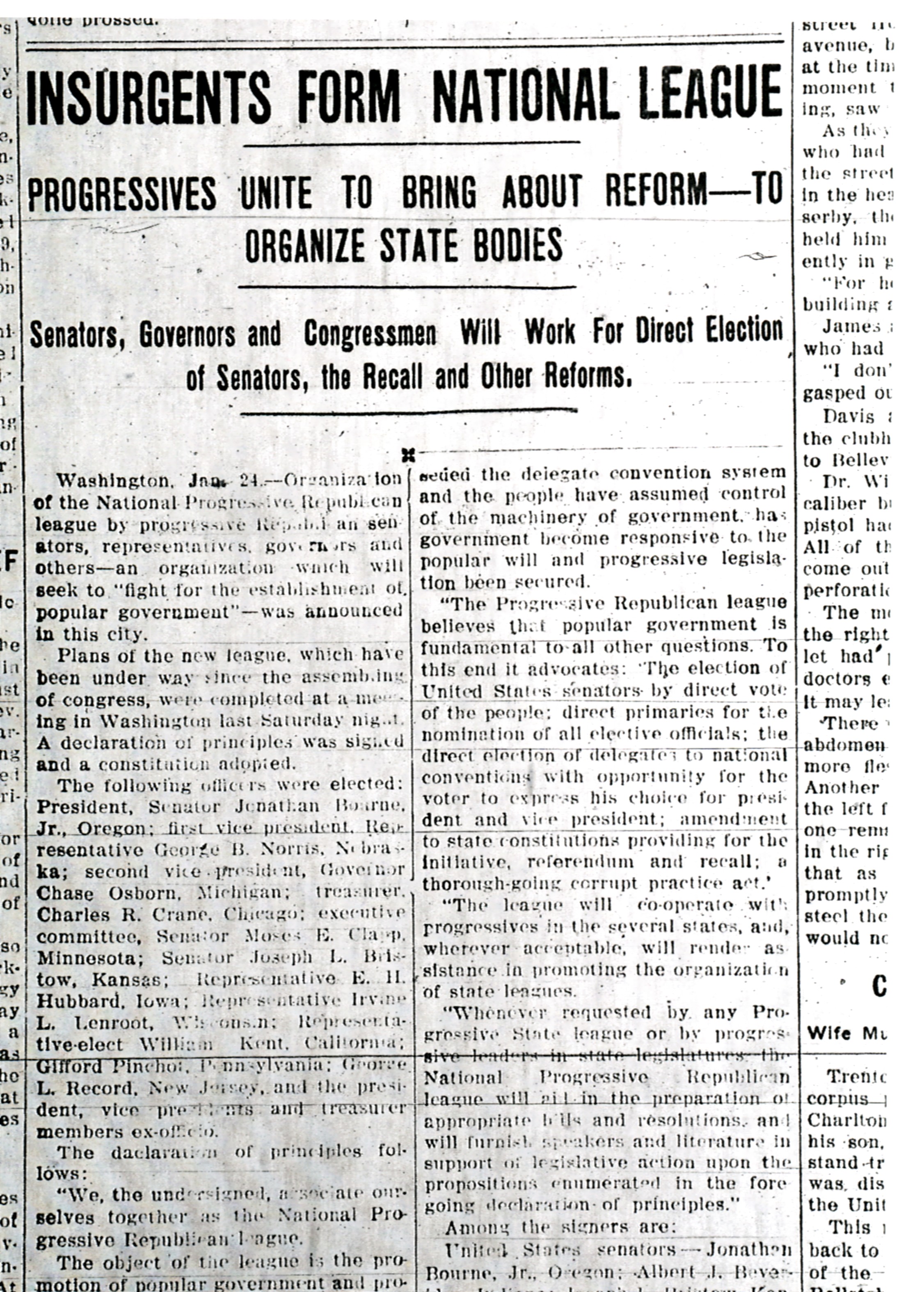
INSURGENTS FORM NATIONAL LEAGUE

PROGRESSIVES UNITE TO BRING ABOUT REFORM–TO ORGANIZE STATE BODIES

Senators, Governors and Congressmen Will Work For Direct Election of Senators, the Recall and Other Reforms

Milton Evening Standard, January 24, 1911


Her middle-aged granddaughter’s comments 100 years later:

My gut feeling is that if my 15-year-old grandmother read this headline that she yawned, and moved on to the next article. Hey, she was already yawning from boredom—why would articles about complex national issues pique the interest of a rural teen? But maybe, just maybe,  her teacher at McEwensville High School pulled topics of national importance into his lessons–and she might have had a basic understanding of the issue.

A hundred years ago US senators were not elected by popular vote. Instead they were elected by state legislators. In 1911 muckrakers argued that the system led to corruption and that industrialists and robber barons had undue influence in selecting senators.  (The 17th Amendment, which was adopted in 1913, instituted the direct election of senators.)  

Many social issues and governance issues were bubbling in the public conscience in 1911. Two other amendments were also adopted during the 1910s–the 16th in 1913 (it gave the federal government the right to collect income taxes) and the 19th in 1919 (prohibition). And, in 1920 the 20th amendment gave women the right to vote. I can picture high school students debating the pros and cons of prohibition and women’s suffrage.  Did Grandma take a stand on either issue?

Mud!

15-year-old Helena wrote a hundred years ago today:

Tuesday, January 24, 1911. It’s getting so terrible muddy. Wish it would snow. I love to take sleigh rides. Don’t get many though. I feel rather sleepy just now. Will soon be asleep.

Her middle-aged granddaughter’s comments 100 years later:

I tend to think that winter weather was historically very harsh in central Pennsylvania.  But the diary entries indicate that many days were above freezing during January 1911. In more recent years the temperature typically is below freezing at night but above freezing during the daylight hours. And, there are almost constant freezing and thawing cycles. I suppose the weather patterns were similar  in 1911.

 Mud was a huge problem a hundred years ago. The roads both in McEwensville, as well as in the outlying rural areas, were not yet paved in 1911. According to George Wesner in his History of McEwensville , there was even a boardwalk that went from McEwensville  across Warrior Run Creek to a train station which was about half a mile north of town.

 The route was muddy at times and dusty at times . . .To alleviate the situation an elevated boardwalk was built from the station to the old bridge (which crossed the creek at right angles not diagonally) and from there parallel with the highway to the borough line.

George Wesner

The McEwensville railroad station is long gone, but this photo was taken near the location of the old station and looks toward town. It's difficult to envision where the boardwalk once was.

Buckwheat Pancakes (Griddle Cakes)

15-year-old Helena wrote a hundred years ago today:

Monday, January 23, 1911. Here’s Monday, another school day. It’s so hard to get up awful early, when you feel nice and sleepy.

Her middle-aged grand-daughter’s comments 100 years later:

Sometimes I wish that Grandma provided more detail when she wrote. For example, I wonder what Grandma ate for breakfast.  I imagine that it was similar to what I ate two generations later when I was growing up on another farm near McEwensville—but I might be totally wrong.

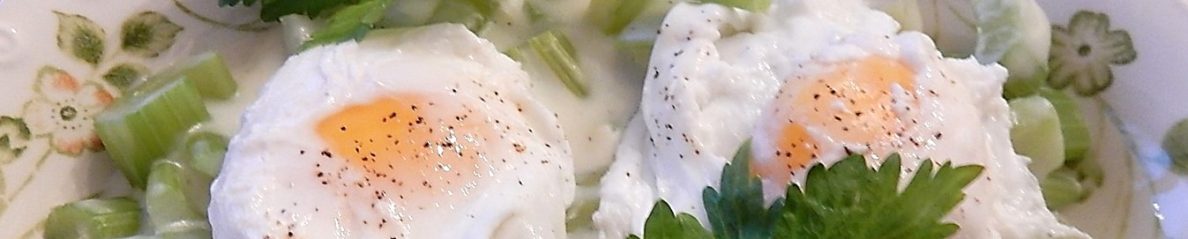
Buckwheat Griddle Cakes with Current Conserve

In January we generally ate pancakes (griddle cakes) for breakfast. We often ate pancakes made from a mix, but occasionally had the more traditional buckwheat griddle cakes that I envision would have been eaten when Grandma was young.  After the pancakes were cooked I’d put maple syrup or jam on mine—but my father always put old-fashioned liverwurst on his. We only had pancakes when liverwurst was available, and that was only during the winter months when my family or a neighbor butchered a hog.

___________________

I love to go to flea markets in central Pennsylvania with my father—

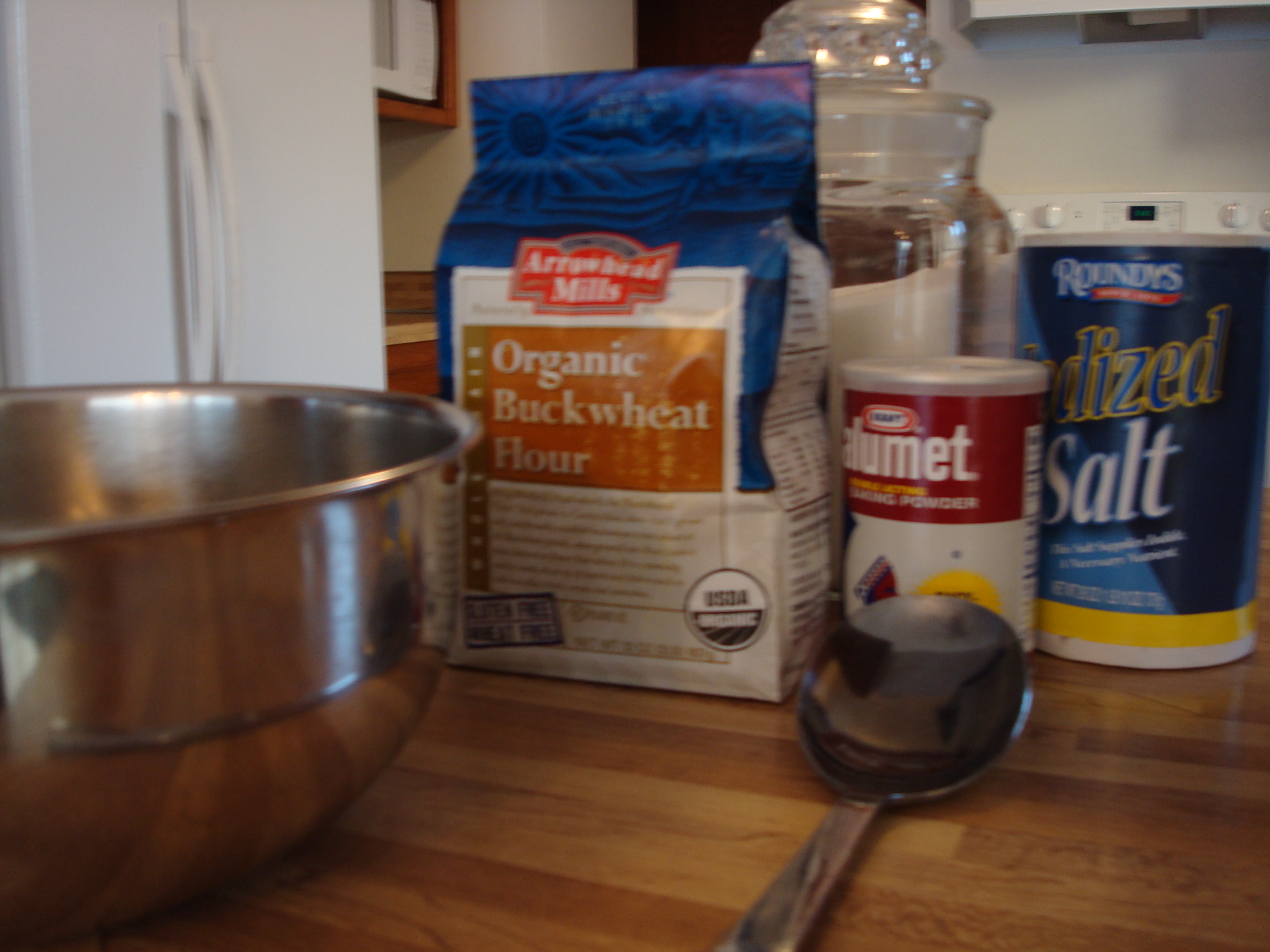
One find was a promotional cookbook published by KC Baking Powder in 1911 that contains a recipe for Buckwheat Griddle Cakes. I decided to make the recipe to see if they were like the buckwheat cakes I remembered.

 KC Buckwheat Griddle Cakes

1 cup buckwheat flour

1 tablespoonful sugar

3 level teaspoons baking powder

1 ¼ cups cold water

1/3 teaspoonsful salt

Sift together, three times, the flour, sugar, salt, and baking powder*; stir the water in all at once and bake immediately on a hot well-oiled griddle. Buckwheat flour calls for a generous measure of baking powder. Part milk may be used to mix the cakes but water give quite as good results.

 The Cook’s Book: KC Baking Powder (1911)

*I just stirred the ingredients together and didn’t sift anything. I’m not sure why old-time cookbook authors were obsessed with sifting.

 I was surprised how few ingredients there were, but from looking through the cookbook I realized that most recipes a hundred years ago had very few ingredients. I guess that since people cooked from scratch every day that they gravitated toward simple recipes.

After I’d cooked the griddle cakes—I poured some maple syrup on them and took a bite. They were very good though the robust taste of the buckwheat was a prominent undertone.

I then remembered that I had a jar of homemade current conserve  that a friend of my daughter’s had given me. (An aside–I think that it’s really cool how some young people care enough about what they eat to revive traditional cooking and food preservation).  I spooned a little conserve on the griddle cakes and took a bite—and the taste was awesome. The tartness of the conserve wonderfully complemented the robustness of the griddle cakes—and I almost felt like I had drifted back to Grandma’s day.