16-year-old Helena Muffly wrote exactly 100 years ago today:
Saturday, November 11, 1911: Mater and I went to Milton this morning on a shopping tour. As soon as we got there we went into several cars in which they had many curious things from California on exhibition. A shark was one of these, only he happened to be dead. An ostrich mounted, a live alligator and some monkeys. We each got a souvenir. Mine is some kind of pampas grass. After seeing all this we commenced shopping or mother’s rather since she was getting things for me. I got a chocolate colored coat trimmed with contrasting material, a brown hat with a blue and green feather, simply cute, a skirt for school and kid gloves. Have I not cause to be thankful?
Source: Ladies Home Journal (Sept. 1911)
Her middle-aged granddaughter’s comments 100 years later:
It sounds like train cars had been converted into a traveling museum and animal farm.
I bet that Grandma looked awesome in her new coat, skirt, and gloves. The September and October, 1911 issues of Ladies Home Journal showed the latest coat styles.
Source: Ladies Home Journal (Sept. 1911)Source: Ladies Home Journal (Oct. 1911)
16-year-old Helena Muffly wrote exactly 100 years ago today:
Friday, November 10, 1911: Must begin to study harder if I ever want to graduate. Teacher gave out our reports and also gave quite a lecture about our marks also this afternoon. Ruthie expected a friend this evening and made chocolate fudge, but she didn’t come but the fudge however was not wasted.
Cocoa FudgeCocoa Fudge with Black Walnuts
Her middle-aged granddaughter’s comments 100 years later:
Rough day at school!–Good thing Grandma’s sister Ruth made fudge! Chocolate is a wonderful comfort food. 🙂
I found an excellent central Pennsylvania fudge recipe that is more than 100 years old in the Lycoming Valley Cook Book by the Ladies of Trout Run M.E. Church (1907).*
Cocoa Fudge
One-fourth cup of milk, one and one-half tablespoonfuls butter, one and one-fourth cups powdered sugar, nine tablespoonsful cocoa, a pinch of salt, one-half teaspoonful vanilla. Put the butter and milk in a sauce-pan, and when the butter has melted, add the sugar, cocoa and salt. Stir until dissolved, then cook, stirring occasionally, until it strings, which will be about eight minutes. Remove from stove, set in a pan of cold water, add the vanilla, then beat gently. The instant it begins to thicken, pour into a buttered pan. When hard, cut in squares. Great care must be taken not to beat it much, because, if beaten too thick, it cannot be poured into the pan.
Grace Harbor, Trout Run, Pa.
I stirred black walnuts—see yesterday’s post— into some of the fudge before I put it in the pan. The resulting fudge was awesome and brought back memories of fudge I ate many years ago when I was a small child.
Black walnuts have a wonderfully intense flavor that co-mingled beautifully with the rich cocoa flavor in the fudge.
My Cook’s Notes About How I Interpreted the Recipe:
I assumed that “strings” meant ,when I lifted my stirring spoon above the pan and then tipped it so that the chocolate mixture could flow back into the pan, that a “string” of chocolate went from the spoon to the pan. It did not take 8 minutes for the mixture to reach this stage—it probably was more like 5 minutes.
The mixture started to thicken only a few seconds after I set the sauce pan in cold water and began to stir.
After the fudge hardened, I had a little difficult getting it out of the pan, so I set the pan in hot water for a couple minutes. It when came right out and was easy to cut into squares.
I was surprised how little fudge this recipe made. I put it in a small 5 inch by 5 inch casserole dish that I usually use for left-overs. Families were larger a hundred years ago than they are now—so I would have thought that the recipe would make a large quantity rather than a tiny amount. Maybe cooks typically tripled or quadrupled the recipe.
Last spring I did another post on old fudge recipes—one even used molasses as in ingredient. Click her to see 1911 Chocolate Fudge Recipes.
* I got the recipe out of a 1992 reprint of the 1907 book. Kwik-Kopy Printing, Williamsport PA published the reprint.
16-year-old Helena Muffly wrote exactly 100 years ago today:
Thursday, November 9, 1911: Nothing to write.
Her middle-aged granddaughter’s comments 100 years later:
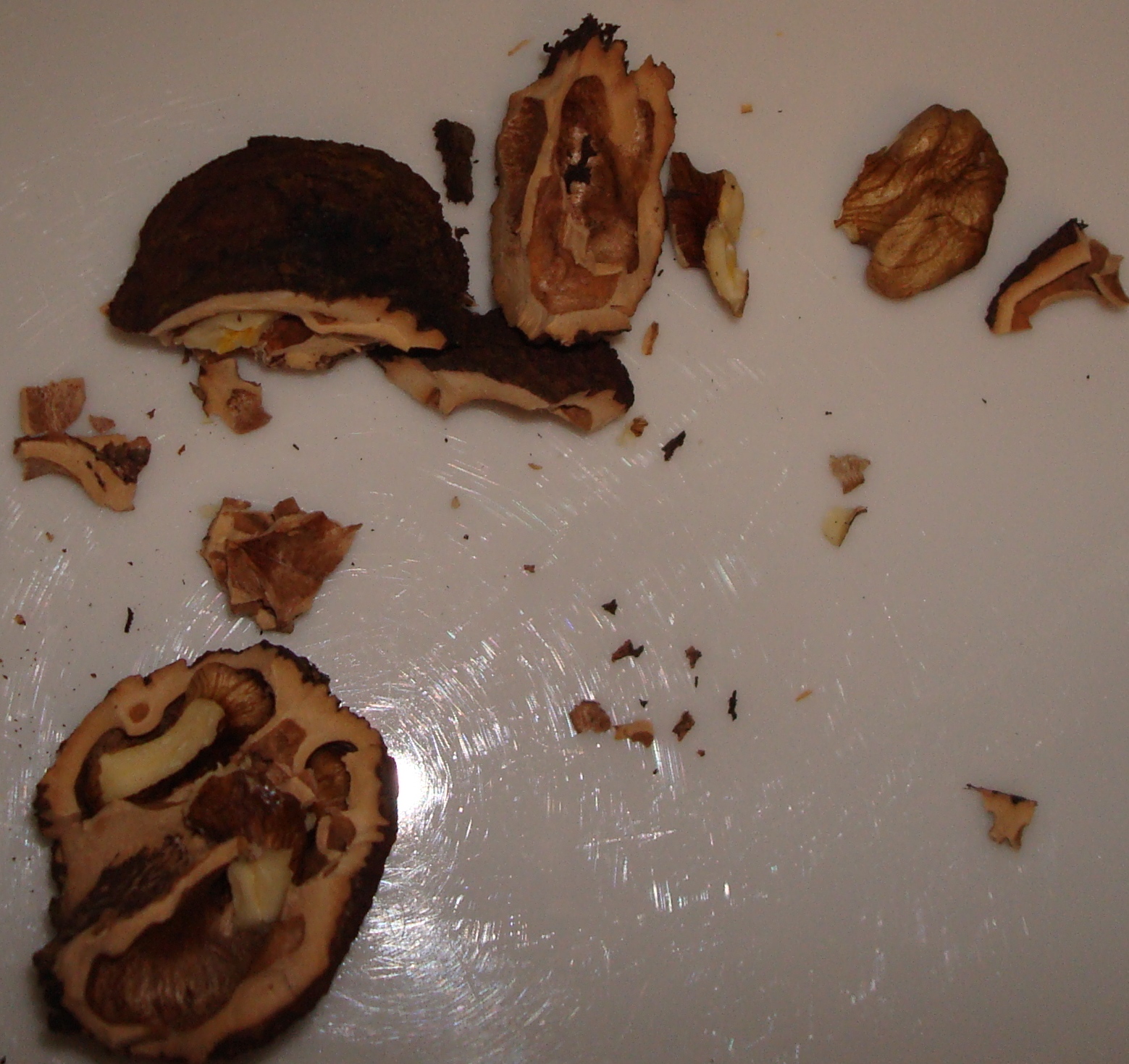
A few weeks ago Grandma mentioned hulling walnuts. At that time I gathered some black walnuts and hulled them. I then spread them out to dry. My husband I have now cracked some of them and taken the nut meats out.
We put them into a vice to crack them–and had problems with the walnuts flying all over the garage.
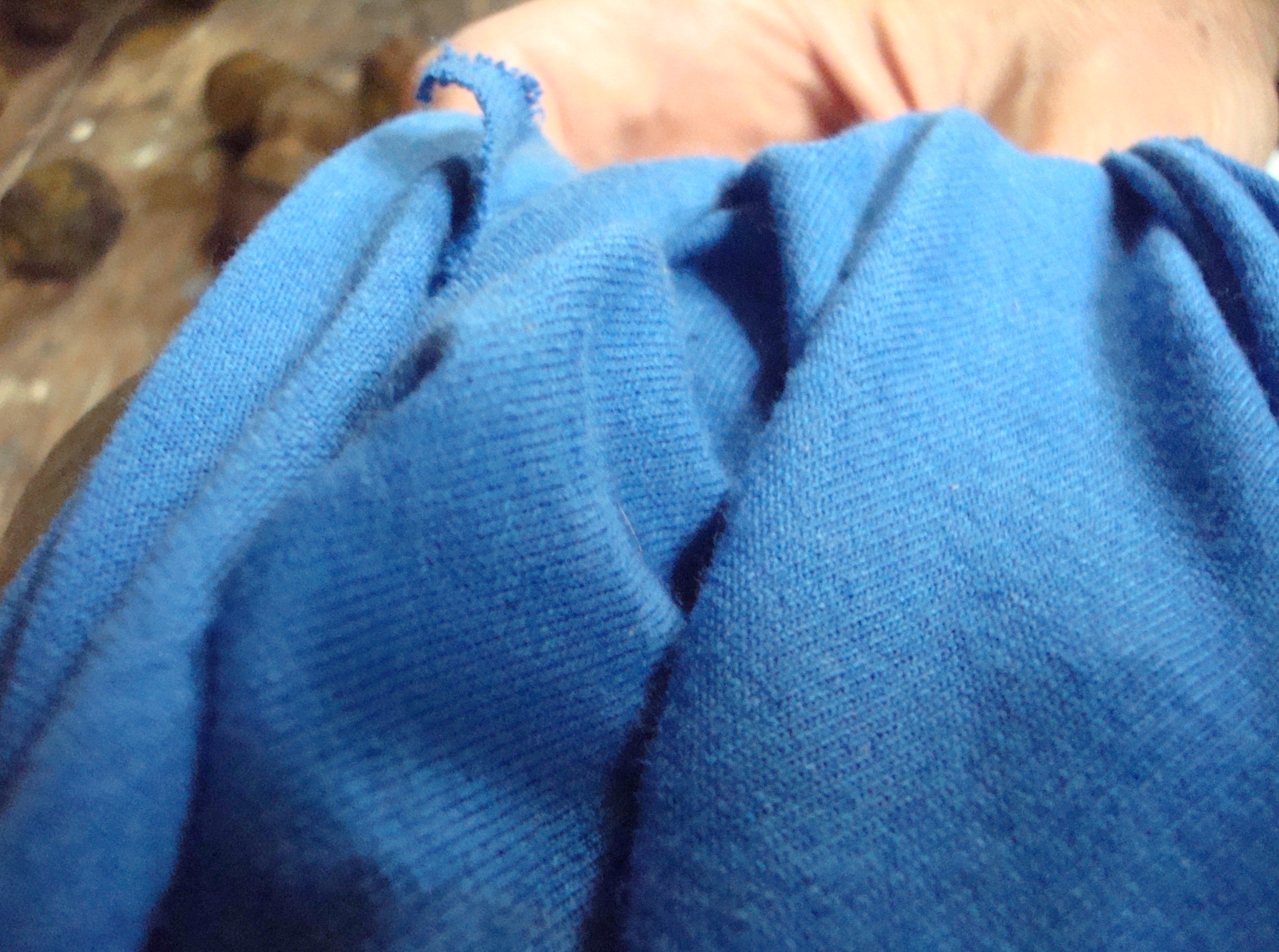
We then covered the walnuts with a piece of cloth before cracking. This worked really well at containing everything. Once the shell was cracked it was easy to get the nuts out.
The walnuts tasted great–just like I’d remembered from my childhood. The flavor is more intense than grocery store walnuts–but it is really good.
16-year-old Helena Muffly wrote exactly 100 years ago today:
Wednesday, November 8, 1911: Such stinkers in Algebra as we are having at present is enough to make your head giddy. Of all my six studies Algebra is just about the hardest, excluding geometry, which we commenced to take up several days ago, and General History, which we begin tomorrow. Ma and Ruth are out tonight but I staid in.
Her middle-aged granddaughter’s comments 100 years later:
I wonder what Grandma was going to study in General History.
Think of all the historic events that seem like they happened very, very long ago—but which had not yet occurred a hundred years ago.
Grandma WAS NOT studying the history of:
World War I (It began in 1914 after the assassination of Archduke Ferdinand of Austria.)
The Soviet Union (The Russian Revolution of 1917 ended the Russian Empire. The Soviet Union was founded in 1922.)
Prohibition (The 18th amendment which addressed prohibition was ratified in 1919.)
Women’s suffrage (The 19th amendment which gave women the right to vote was ratified on 1920.)
How New Mexico or Arizona–or for that matter Alaska or Hawaii–had become states (New Mexico and Arizona entered the Union in 1912; Hawaii and Alaska entered the union in 1959.)
The presidency of Woodrow Wilson (He would be elected in 1912 and take office in 1913.)
Radio (The first scheduled radio broadcasting was in 1916.)
The Panama Canal (It opened in 1914—though Grandma probably read newspaper articles about the building of the canal.)
The personal income tax (The 16th amendment which allowed the personal income tax was ratified in 1913.)
Insulin (Insulin was discovered in 1922.)
The direct election of senators by voters (Prior to the 17th amendment being ratified in 1913 senators were selected by state legislators.)
16-year-old Helena Muffly wrote exactly 100 years ago today:
Tuesday, November 7, 1911: I’ve concluded it’s easier to lose things than it is to find them. The other day six one cent stamps disappeared, and now today I lost two collar pins, which I have no hopes of ever recovering them again.
Collar Pins (Photo Source: The Youth's Companion, December 7, 1911)
Her middle-aged granddaughter’s comments 100 years later:
Young people misplace things, too!
I know that Grandma was frustrated, but this entry makes me smile. Sometimes I worry that I misplace things because I’m getting older. This entry reminds me that we all—young, middle-aged, and old– lose items.
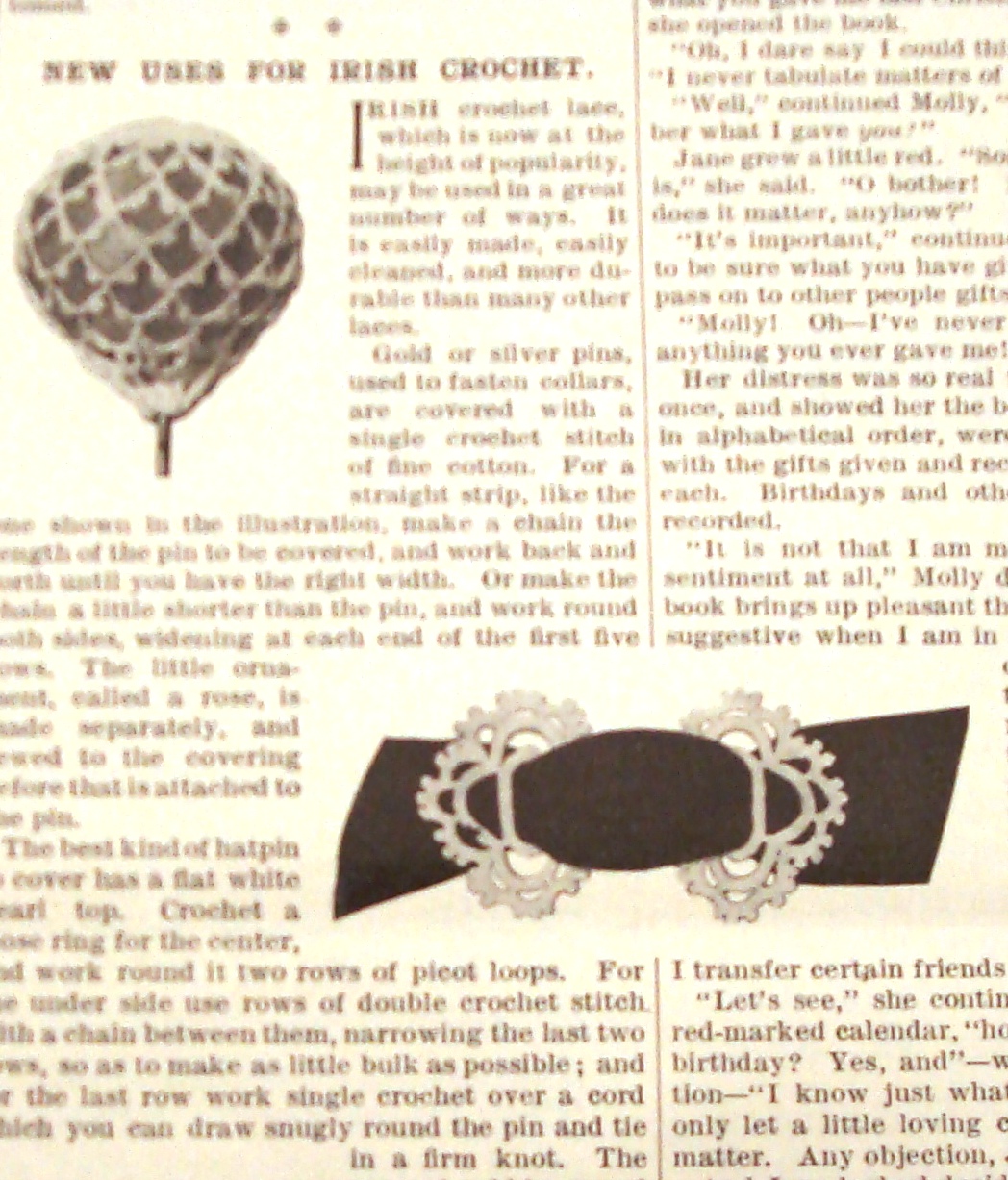
I’m not exactly sure what collar pins were—but they apparently were the rage in 1911. There were directions for making crocheted collar pins in the December 7, 1911 issue of The Youth’s Companion.
New Uses for Irish Crochet
. . . Gold or silver pins used to fasten collars are covered with a single crochet stitch of fine cotton. For a straight strip like the one shown in the illustration, make a chain the length of the pin to be covered, and work back and forth until you have the right width. . .
An effective ornament for the neck or for the meeting-point of a Dutch collar is shown in the illustration. This is made in single crochet stitch of coarse cotton; a fine needle is used in order to keep the work as close as possible. Two parts are made; the pattern chosen here is in the form of a square, with loops round each side of the square. These loops are made of the picot stitch. The parts are joined on three picot loops at the back and a strip of black velvet ribbon six inches long by one and one-half inches wide is passed through the opening in the design.
Sometimes I’m amazed at the serendipitous way I find materials for this blog. I’d looked ahead and knew a diary entry that mentioned collar pins was coming up. Since I didn’t know what they were. I googled “collar pins” but had little luck.
I’d pretty much given up on finding anything about collar pins when I was flipping through 1911 issues of TheYouth’s Companions a few days ago because Grandma had written about getting a subscription. Suddenly an article on Irish crochet that contained the words collar pins jumped out at me–and I had the material for this post.
16-year-old Helena Muffly wrote exactly 100 years ago today:
Monday, November 6, 1911: It rained nearly all day and I had no rubbers along at school and Pa didn’t come for me either. I didn’t like the idea of walking home, but there was no alternative. Such a day of tribulations as it was, also had a time with the cows getting them to go where I wanted them to go. Have a cold now.
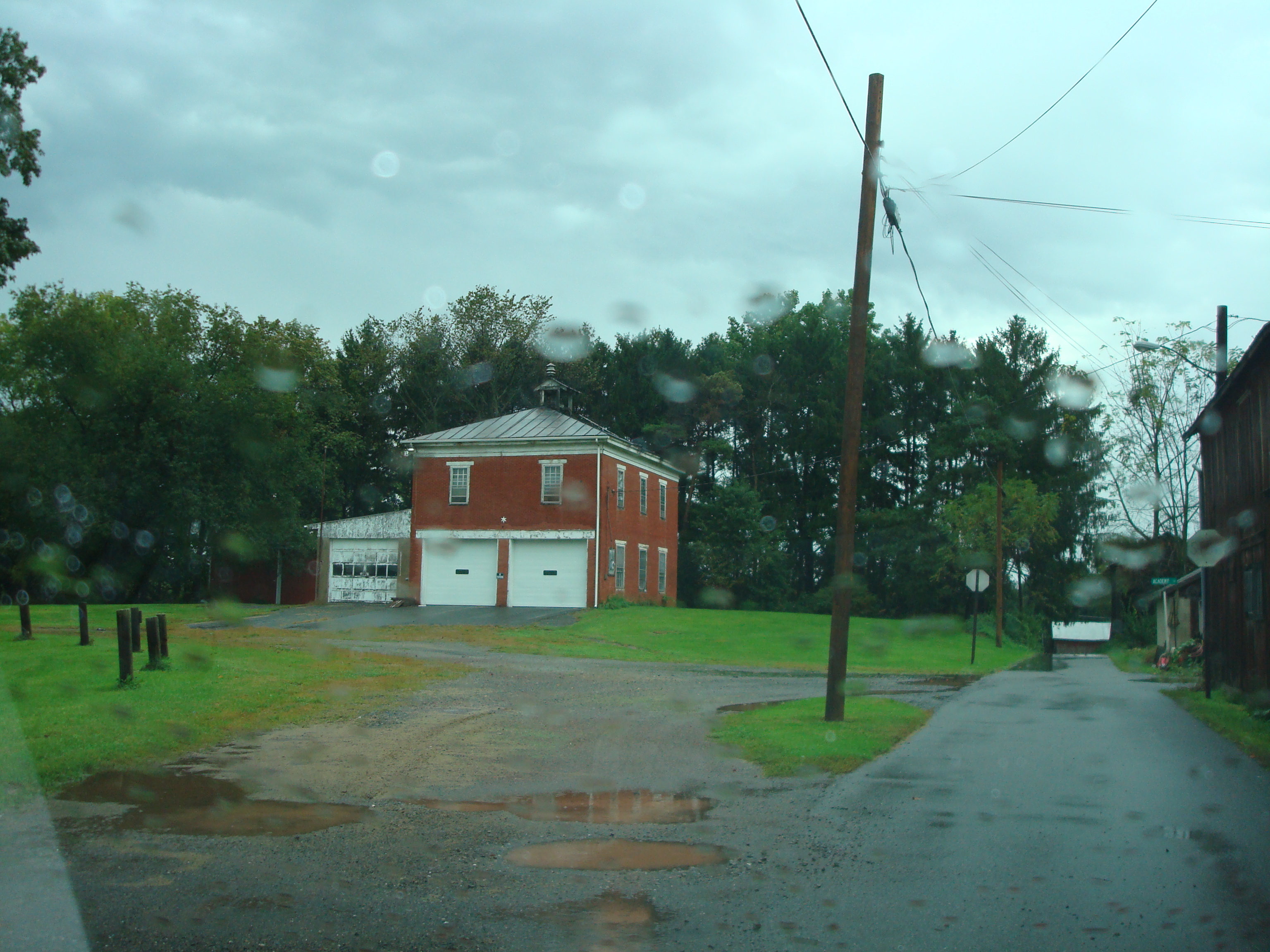
Recent rainy day at the building that once housed the McEwensville School.
Her middle-aged granddaughter’s comments 100 years later:
Yuck— It sounds like Grandma had a rough day. First she got soaked coming walking home from school; then she had to deal with contrary cows. By the time she wrote this diary entry—probably in the evening—she was sick.
I wonder how Grandma treated her cold symptoms. Here are some old-time central Pennsylvania remedies:
Cough syrup: Mix together 1 tablespoon each of whiskey, glycerin, honey, lemon. Give 1/2 teaspoon for young ‘ums, 1 teaspoon for adults.
For sore throat: Take equal parts of honey and vinegar, gargle often.
For sore throat: Gargle with warm salt water several times a day. DO NOT swallow the salt water!
These old remedies are from a cookbook that was published by the bicentennial committee of a town about 20 miles from McEwensville, and are probably similar to the remedies that Grandma might have used.
16-year-old Helena Muffly wrote exactly 100 years ago today:
Sunday, November 5, 1911: It was simply fine today. Went to Sunday School this afternoon. Carrie walked along home with me. I mean over here.
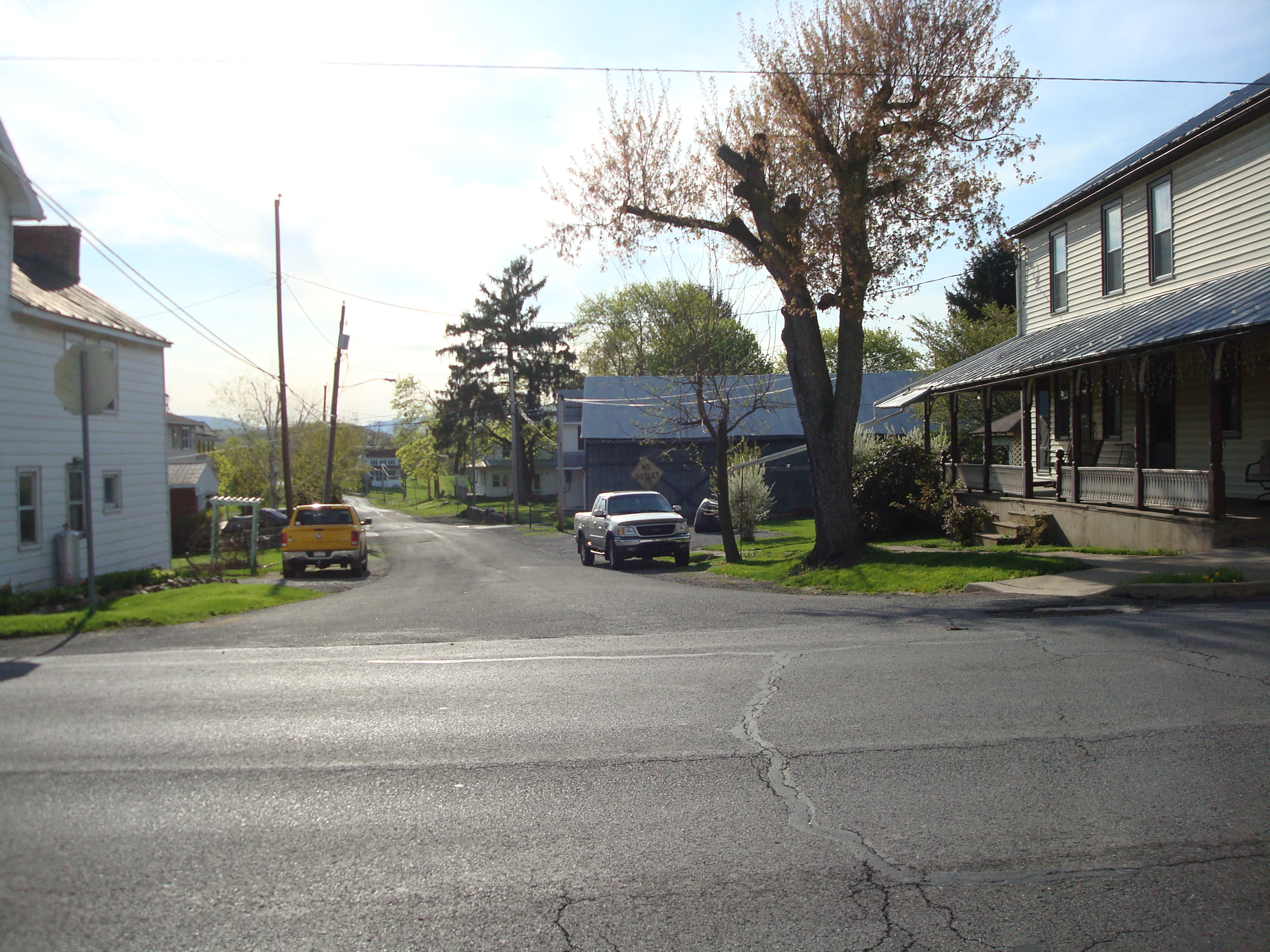
Grandma and Carrie would have walked down this road after Sunday School to get to the Muffly farm.
Her middle-aged granddaughter’s comments 100 years later:
It sounds like Grandma and her friend Carrie Stout enjoyed a nice fall day.
Every Sunday Grandma wrote in her diary that she went to Sunday School or church. Occasionally she mentioned that her sister Ruth went to Sunday School—but I don’t think that she ever mentioned her parents or 6-year-old brother Jimmie going. Didn’t they attend? . . . or did Grandma just not happen to mention them?
According to the March 23, 1911 issue of The Youth’s Companion magazine women were more likely to attend church than men:
Careful compilation of statistics shows that seventy per cent of the audience both in church and theater are women. The only places where men are in the majority, apparently, are the offices and workshops—and even there the preponderance is not what it once was.
An aside–I always enjoy finding statements like this in old magazines, but I often wonder where the statistics came from. Maybe I’m cynical—but I can’t help wondering if the author merely went to a church service and a play, counted the number of males and females, and then calculated a percentage.