16-year-old Helena Muffly wrote exactly 100 years ago today:
Saturday, November 18, 1911: Didn’t so much of anything today, except to be exceedingly lazy.
Her middle-aged granddaughter’s comments 100 years later:
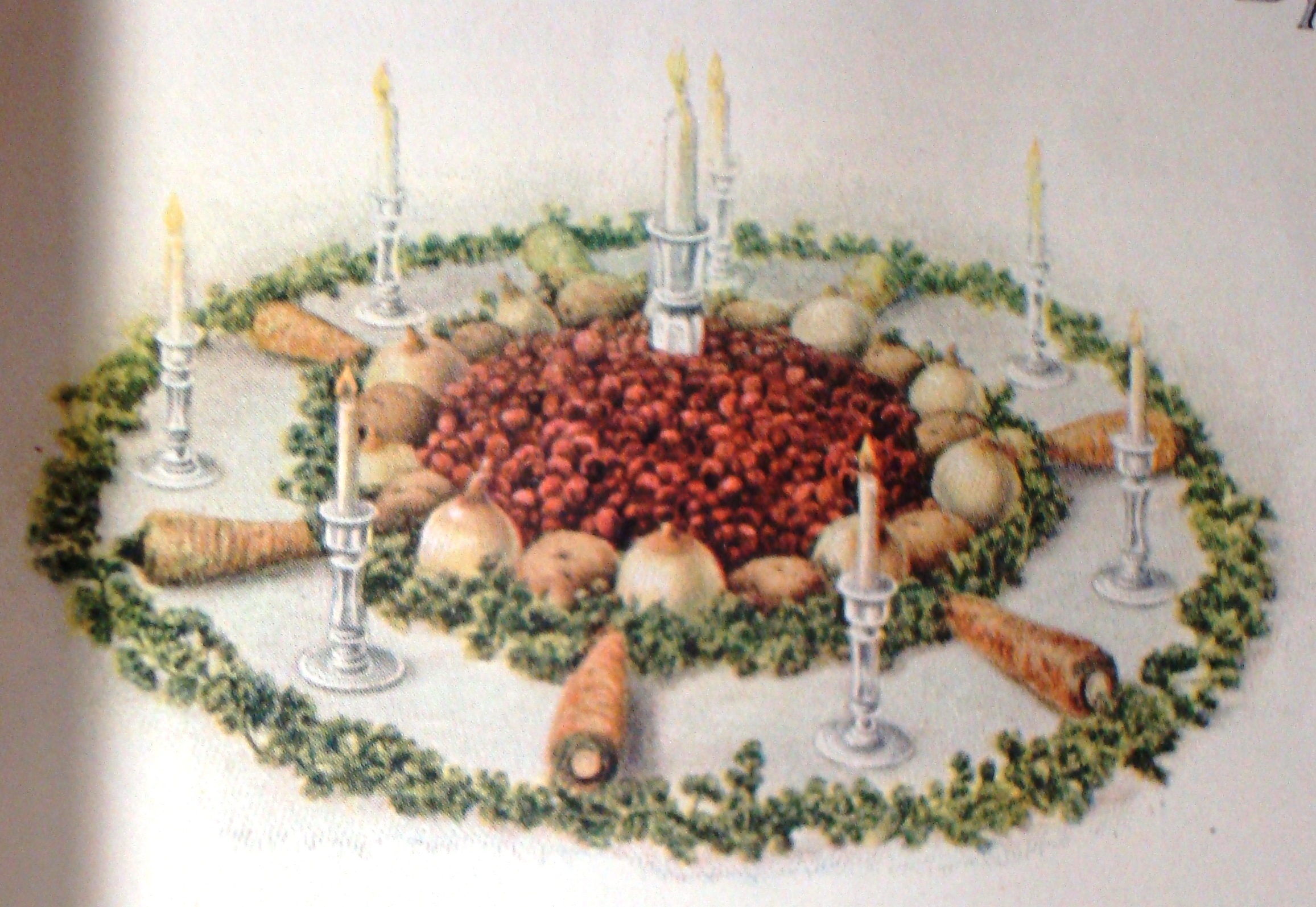
Maybe Grandma spent a quiet Saturday reading magazines. The November 1911 issue of Ladies Home Journal had some great pictures of Thanksgiving vegetable centerpieces.
Centerpiece made with squash, carrots, celery with leaves, tomatoes, parsley, cranberries, and evergreen cuttingsCenterpiece made with carrots, cranberries, potatoes, onions with brown skin partially removed, and candlesCenterpiece made with onions with brown skin removed, popcorn, parsley, and candlesCenterpiece made with pumpkin, carrots, tomatoes, evergreen cuttings, and candles
16-year-old Helena Muffly wrote exactly 100 years ago today:
Friday, November 17, 1911:Another girl and I made our teacher feel cross for awhile this afternoon. He had drawn a picture of a ring and beneath it we wrote “my diamond.” Now he gives some of us credit for snooping at everything he has on his desk.
Did the paper look like this?
Her middle-aged granddaughter’s comments 100 years later:
This is one of my favorite diary entries. Grandma must have been a hoot when she was young.
This entry also makes me wish that I knew more about her teacher. I know that the teacher’s name was Howard Northrop—but little else. In most diary entries he seems like the stereotypical teacher—gives hard tests, puts Grandma on the spot sometimes when she isn’t paying attention, etc.
In this post her teacher seems really human—How old was he? Was he cute? Did he have a girlfriend? Was he thinking of asking her to marry him? If so, how did it all work out?
16-year-old Helena Muffly wrote exactly 100 years ago today:
Thursday, November 16, 1911: Nothing important.
Her middle-aged granddaughter’s comments 100 years later:
Since Grandma didn’t write much a hundred years ago today I’m going to go off on a tangent –
My husband and I recently were out in the country and saw a farmer selling pumpkins, squash and other produce from a far. There were two large hubbard squash on the wagon. I immediately knew that I had to have one of them.
The farmer was surprised when I purchased it. He said that few people bought hubbard squash anymore. He said that the previous year he’d sold none—and my purchase was his first hubbard squash sale this year.
He continued, “Old people buy them once in a while. Young people think they are some type of big gourd.”
(I hope he wasn’t insinuating that I’m old. Middle aged: yes; old: no)
Are hubbard squash really an almost archaic food? . . .a food from Grandma’s day that people seldom eat now?
Here’s my favorite hubbard squash recipe. It’s probably not a hundred-year-old recipe—but it’s a good way to use an old-time squash.
This soup is excellent, and I make it several times every Fall.
Preheat oven to 400 degrees. To get squash pulp, cut hubbard squash in half; remove seeds and membranes. Unless the squash is very small, only 1/2 of squash (or even less) will be needed to get 3 cups of pulp. [An aside: The squash in the photo is very large–and I needed to use less than a quarter of it to get 3 cups]. Put squash on a cookie sheet, cut side up. Bake the squash for 45-60 minutes or until tender. The squash meat will start to become dark. This is okay. Scrape squash out of the shell, and measure 3 cups of squash for use in this recipe.
Put olive oil in large pot. Heat using medium heat and then add celery, onion, and garlic; cook until tender. Add chicken broth, squash, ham hocks, honey, and thyme. Simmer for 45 minutes. Pull the ham hock out and dice any meat. Return meat to soup; cool slightly Puree soup in a blender until smooth. Return to pan, and add cream and milk. Reheat soup, then serve.
16-year-old Helena Muffly wrote exactly 100 years ago today:
Wednesday, November 15, 1911: There was a fire near Watsontown about noon or a little afterwards. Four of the boys took the afternoon off and hurried away to find out the happenings. Tomorrow they have some work to do. I wouldn’t like to be they, for part of what they have to do is rather difficult.
Her middle-aged granddaughter’s comments 100 years later:
A hundred years ago devastating fires occurred much more frequently than they do today. Fire codes often were non-existent—and when they did exist they were less stringent than today.
Many homes and businesses were heated with wood or coal stoves, and if the chimneys weren’t cleaned properly, creosote could build up and catch fire. And, when a fire occurred, it took longer for firefighters to arrive on the scene—and the firefighting equipment they used had many limitations.
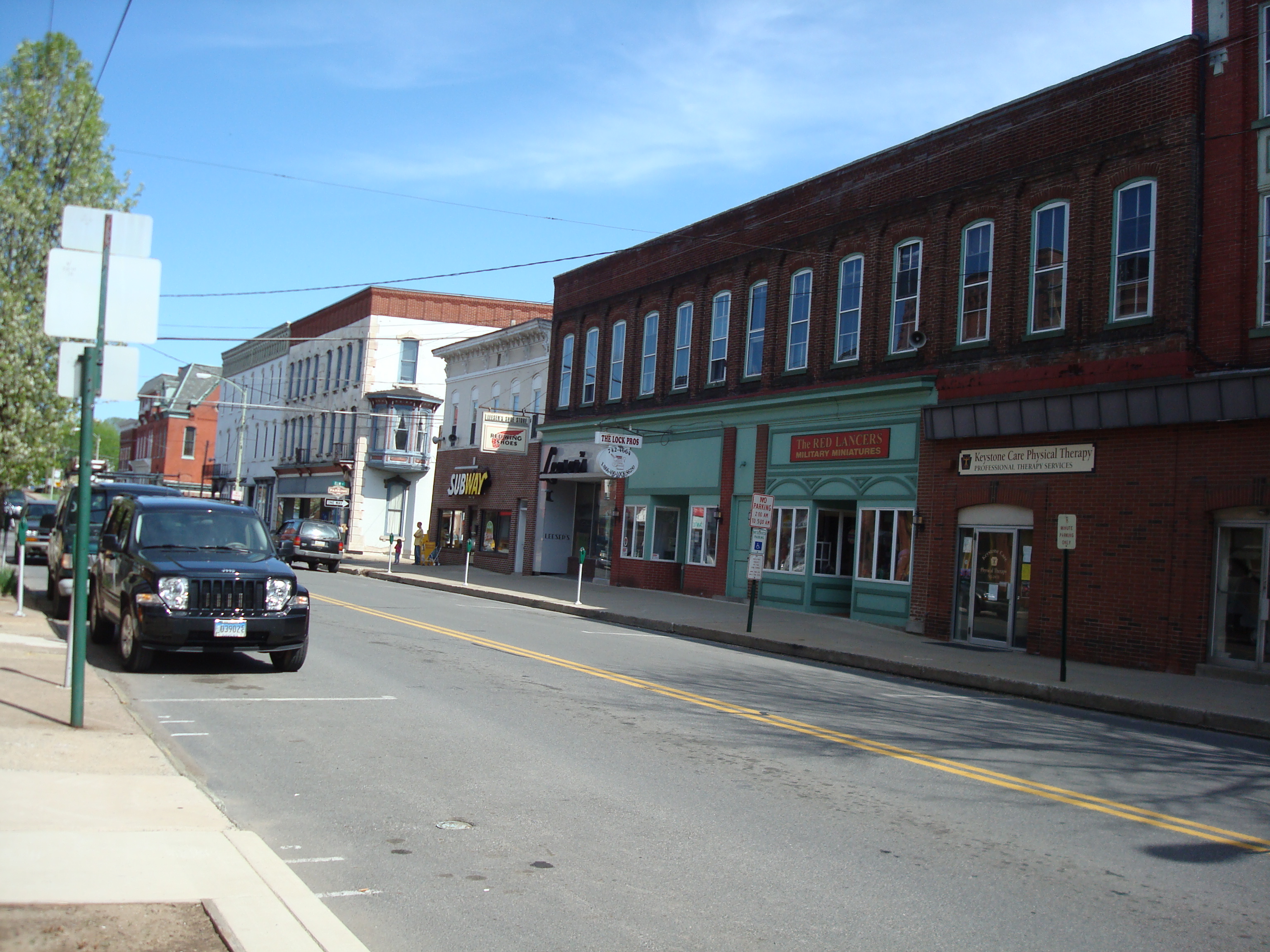
"New" buildings in downtown Milton. These buildings were built after the Great Milton Fire of 1880.
People in towns and cities across the US had memories of “Great Fires.” For example, in the diary Grandma often mentioned shopping in nearby Milton. There had been a horrible fire that burned most of Milton on May 14, 1880, so when Grandma went shopping she would have been going into “modern” buildings that were only about 30 years old. Her parents and other adults would have remembered the fire–and probably told stories about its devastation.
George Venios in Chronicles and Legends of Milton described the Great Milton Fire:
At fifteen minutes before twelve o’clock the steam whistles at the Milton Car Works began to sound frantically but since it was so near to the noon lunch hour, few noticed the importance of the distress signal. A man on horseback charged down Broadway screaming over and over from the top of his lungs for all to hear–“FIRE! — FIRE AT THE CAR WORKS!” . . .
The fire spread rapidly . . . Buildings were crashing and burning like kindling. . .
In less than four hours, almost all of Milton was decimated. Nearly 125 acres burned, consuming 625 buildings . . . Over 3,000 people were left homeless.
So many disastrous fires occurred across the U.S. a hundred years ago, that there was even discussion of creating another holiday called Fire Prevention Day. According to the November 11, 1911 issue of The Youth’s Companion magazine:
Fire-Prevention Day
Shall we give ourselves another holiday? The suggestion is made that we take October 9th, the date of the great Chicago fire, and, in spite of its nearness to Columbus day, observe it as Fire-Prevention Day.
That course is urged by Governor Hadley of Missouri, prompted, perhaps, by the burning last winter of the Capitol at Jefferson City with many priceless records. It was urged also by the National Fire Marshals’ Association in convention in Albany, New York, where also the state Capitol was recently damaged by fire. . .
If a day could be given to cleaning up waste places, to inspecting danger spots, to punishing those who violate the building laws, to having fire-drills in schools and factories, to installing and testing fire-fighting devices, and in general, to stimulating a keener sense of the waste of fire, it would be so valuable a holiday that it might well be made monthly, rather than yearly.
But would another holiday, whatever its name, be so usefully employed?
It’s awesome that there was interest in creating a holiday that would be dedicated to the public good a hundred years ago.
Fire Prevention Day never became a national holiday, but the idea eventually later morphed into Fire Prevention Week. In 1925, President Calvin Coolidge proclaimed the first Fire Prevention Week.
Now the National Fire Protection Association sponsors National Protection Week each year. It is held during the week that contains October 9 (the date of the Great Chicago Fire). During that week schools often have activities about fire prevention, the media publishes safety tips, fire stations hold open houses, and so on.
16-year-old Helena Muffly wrote exactly 100 years ago today:
Tuesday, November 14, 1911: The first snow of winter fell today to the depth of an inch or more. James and I got a ride to school this morning. It seems I don’t get as many rides this year as I did last.
1911 = blue line; 2011 = red line
Her middle-aged granddaughter’s comments 100 years later:
This diary entry got me searching for historic weather data. I found daily data for 1911 and 2011 for Williamsport Pennsylvania which is located about 20 miles northwest of McEwensville on the National Climatic Data Center website.
I wondered if it had been warmer or cooler in 1911 than in 2011. So I found the average daily temperature for the first day of each month for both years.
I discovered that the average daily temperature was higher in 1911 than in 2011 for 6 months of the year; and it was lower for 5. (I could make the comparison for only 11 months, since I don’t have December 2011 data.)
The National Climatic Data Center at the U.S. Dept. of Commerce is an awesome source for historic weather data at individual weather stations across the US. The data go back to the late 1800s for many locations.
Click here find the original handwritten data sheets for individual weather stations.
Click here for more recent data for individual stations.
I started searching for weather data to learn about the November 14, 1911 snowstorm that Grandma mentioned in her diary. I was surprised to discover that it did not snow on November 14, 1911 in Williamsport. The storm must have been very localized.
16-year-old Helena Muffly wrote exactly 100 years ago today:
Monday, November 13, 1911: A veritable winter day. Gee whiz! But it is cold. I wore my heavy green dress to school, which was oh so comfortable. Rachel was down this evening and Rufus served us with pop corn.
Her middle-aged granddaughter’s comments 100 years later:
I found this drawing of a green school dress in the September 1911 issue of Ladies Home Journal. I wonder if Grandma’s heavy green dress was similar to it.
A hundred years ago Ladies Home Journal readers could order patterns so that they could make the clothes featured in the magazine:
Patterns for the designs shown on this page can be supplied at fifteen cents for each number, post-free. The amount of material required for the various sizes is printed on the pattern envelopes. Order from your nearest dealer in patterns: or by mail giving number of pattern, bust measure, and age, and including the price to the Pattern Department, The Ladies’ Home Journal, Philadelphia.
Note where readers were directed to send their pattern order. It’s hard to believe that a hundred years ago just putting Philadelphia down as the address would get a letter to the right place.
Rachel and Rufus
In this post Grandma refers to her sister Ruth as Rufus. Rachel was their friend Rachel Oakes. She was the primary teacher at McEwensville.
16-year-old Helena Muffly wrote exactly 100 years ago today:
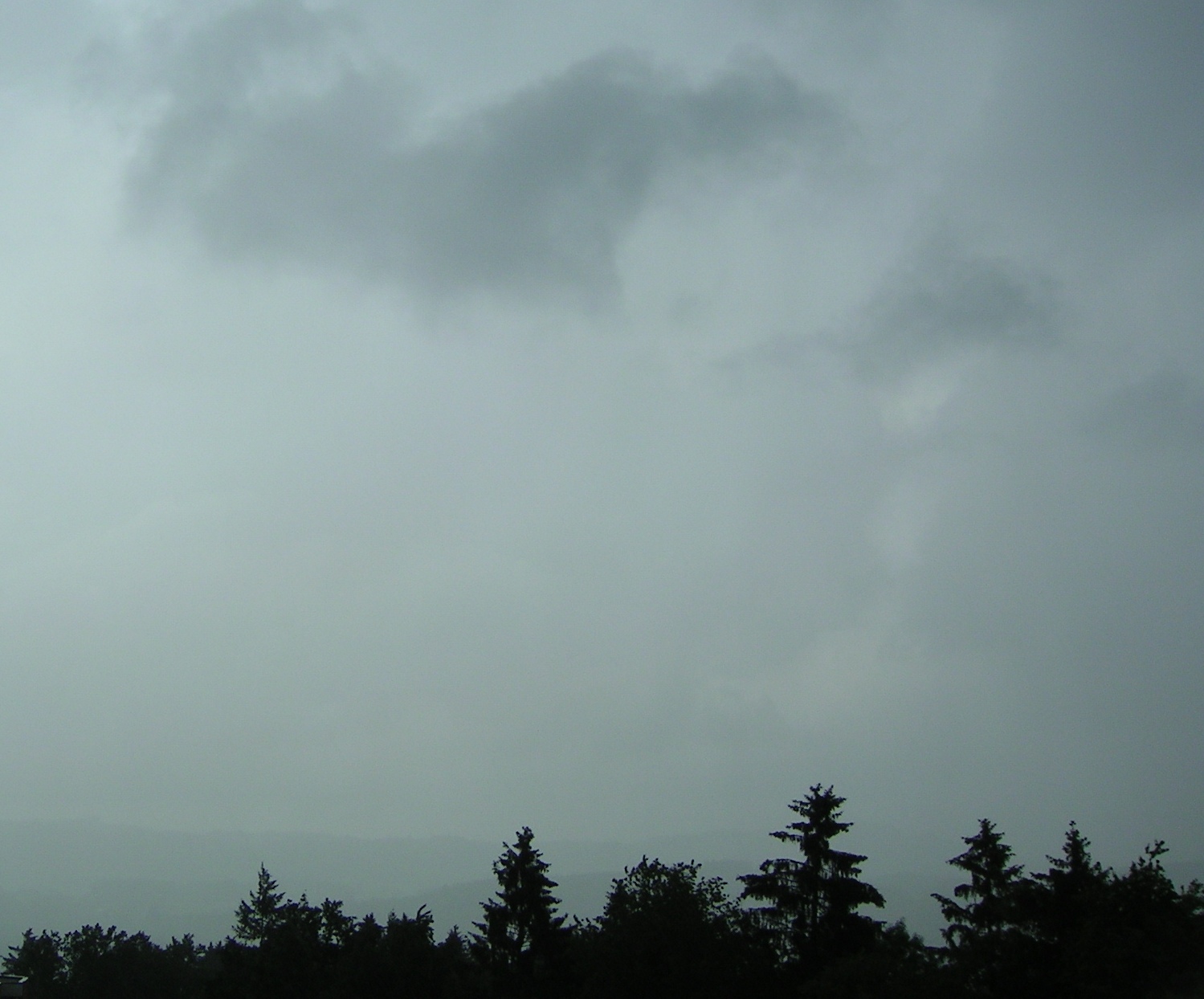
Sunday, November 12, 1911: Went to Sunday School this morning. Our Sunday School teacher is sick. This afternoon I gave Caroline a visit. But such a day to go calling. It rained and blew and hailed.
Photo source: Wikimedia Commons
Her middle-aged granddaughter’s comments 100 years later:
Brrr. . . . the weather sounds dreadful.
Caroline refers to Grandma’s friend Carrie Stout. She lived on a farm midway between the Muffly farm and McEwensville.
Friends, then as now, played an important role in adolescents’ lives. Here’s what a book published in 1911 had to say:
The boy seeks his chum and the girl her bosom friend into whose sympathetic ears hopes, fears, dreams, ambitions, and secrets are poured.
Boy and Girl (1911) by Emma Virginia Fish
I wonder what dreams, hopes, and ambitions Grandma shared with Carrie. And, if—as the years passed– Grandma fulfilled her dreams, or if they were dashed or forgotten.