Threshing and Old-time Pickled Cabbage (Pepper Hash) Recipe

16-year-old Helena Muffly wrote exactly 100 years ago today: 

Wednesday, September 13 , 1911: Was in such terrible trepidation this morning, lest I would have to miss school and help Ma with the work, but Besse came to my relief. So glad I was. I missed those stacks and stacks of dishes for dinner, but have to confront them tonight.

Her middle-aged granddaughter’s comments 100 years later:

Besse was Grandma’s married sister who lived nearby. The previous day Grandma wrote that the threshers were at the farm.  All the farmers in the community probably were at the Muffly farm helping with the threshing. And, I bet that all the hard work made them very hungry.

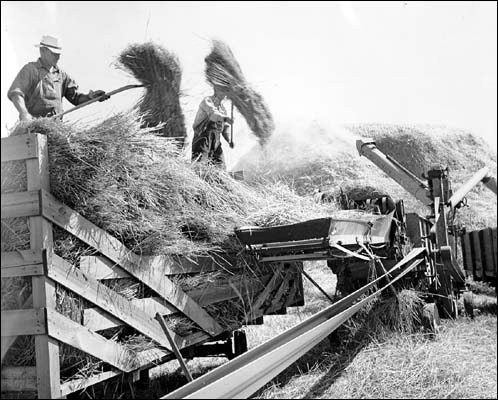
Early 20th century photos of steam-operated threshing machine. Photo was taken in the midwest, so the machine in the photo was probably a little larger than what would have been used in central Pennsylvania. (Photo source: Library of Congress, Fred Hultstrand and F.A. Pazandak Collections)

I’m on a roll remembering traditional Pennsylvania sweet and sour foods that might have been served to the threshers. Yesterday I wrote about spiced crab apples.  Another fall sweet and sour food is pickled cabbage (pepper hash).

Pickled Cabbage (Pepper Hash)

1 medium head cabbage, shredded (approximately 4 cups)

1 green bell pepper (green mango), coarsely chopped

1 red  bell pepper (red mango),  coarsely chopped

1/2 cup vinegar

1/2 cup sugar

1/2 teaspoon salt (optional)

Mix all ingredients together and let  stand at least 1 hour. This salad may be kept covered and refrigerated for several weeks. Drain before serving.

I got this recipe from my sister-in-law, Linda— and she says that she got it from her mother.  It is a very typical old-fashioned central Pennsylvania dish.

This recipe is very adaptable and can easily be made in larger or smaller quantities. Just use equal proportions of vinegar and sugar to make as much dressing as needed.

Linda says that the original recipe called for green and red mangos rather than green and red bell peppers. Traditionally people in central Pennsylvania and other parts of Appalachia referred to bell peppers as mangos. Of course, the mango fruit doesn’t grow in Pennsylvania, and until recent improvements in transportation the tropical  fruit wasn’t sold there, so there never was any confusion.
Old Spiced Crab Apple (Pickled Crab Apple) Recipe

16-year-old Helena Muffly wrote exactly 100 years ago today: 

Tuesday, September 12, 1911:   Had to run around town this morning and accomplished some errands. Have to sleep with Rufus tonight as the threshers are here.

Her middle-aged granddaughter’s comments 100 years later:

Rufus refers to Grandma’s sister Ruth. The wheat and oats would have been harvested in last July. It would have been tied into shocks and left to dry in the field. Now a threshing machine would separate the grain from the straw.

The threshing machine would have been a huge steam operated contraption –and lots of labor was required.  The owner of the machine would take it from farm to farm —and all of the farmers in the neighborhood would help.

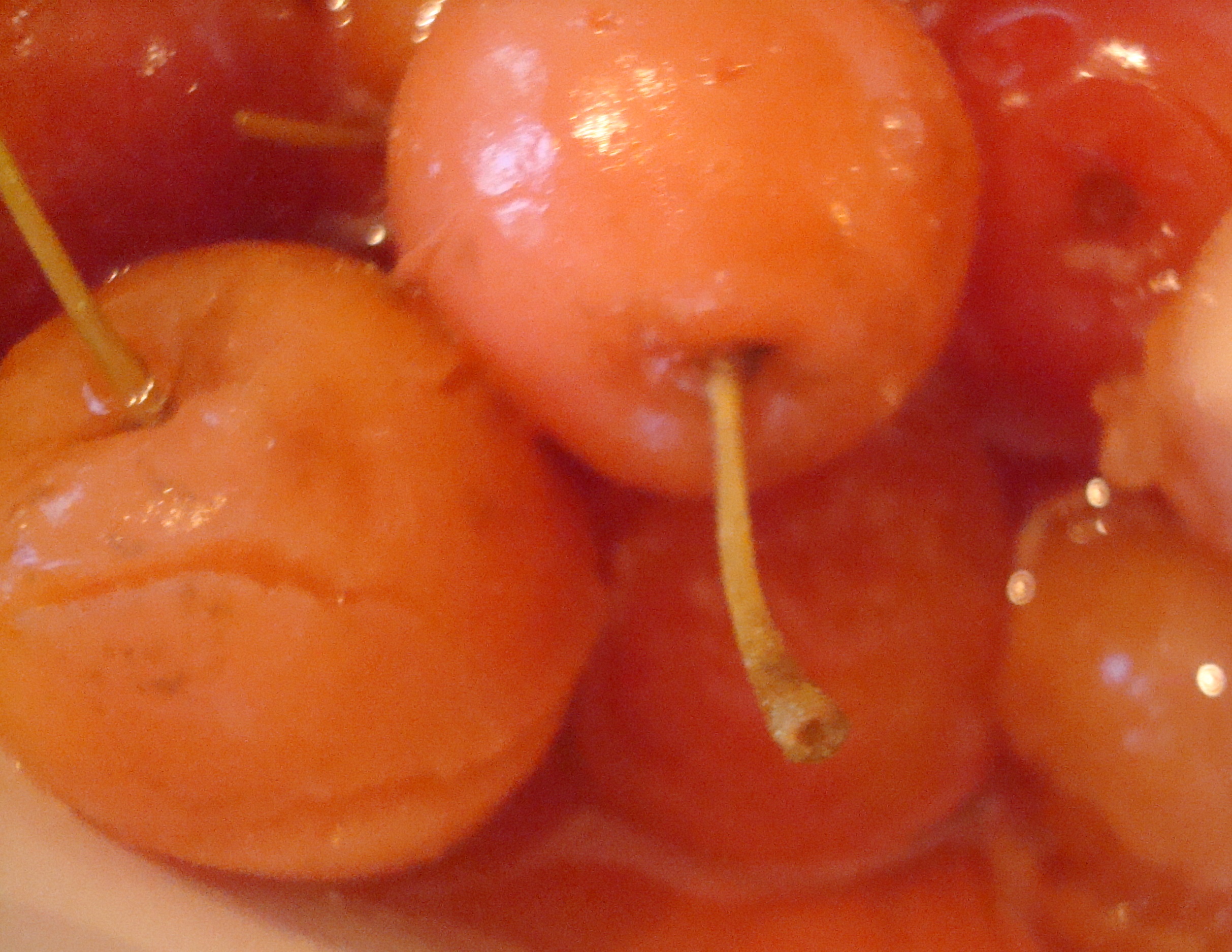
Lots of food would have been needed to feed the men. People in central Pennsylvania used to say that a meal should have seven sweets and seven sours.  I wonder if the Muffly women made Spiced Crab Apples for one of the sours to feed the threshers.

Here’s the old recipe that I use to make spiced crab apples. In the old days a large amount of spiced crab apples would have been prepared—and some would have been canned. I’ve adapted the recipe to make a smaller amount—and just store them in the refrigerator rather than canning them.

Spiced Crab Apples (Pickled Crab Apples)

2 pounds crab apples

1 3/4 cup apple cider vinegar

1 1/2 cup water

3 cups sugar

1 1/2 teaspoons whole cloves

2 sticks cinnamon

1 piece fresh or dried ginger (approximately 1/2 inch cube)

Wash crab apples, and remove blossom ends; do not remove stems. Prick each crab apple with a fork several to prevent apple from breaking apart while cooking.

Stir vinegar, water, sugar, and spices together in a large saucepan. Bring to a slow boil. Add prepared crab apples and simmer for 15 minutes.  Remove from heat and put the mixture into a large glass bowl. Refrigerate overnight.  Remove spices from syrup.

The crab apples will keep in the refrigerator for several weeks.

My husband really likes this recipe. He says that it tastes just like Spiced Crab Apples that his Aunt Gertrude made when he was a child–and that they bring back wonderful memories of sitting in her kitchen eating them.

Lynne and Jim–Thank you for the crab apples!

Old-Time Cucumbers and Onions Recipe

16-year-old Helena Muffly wrote exactly 100 years ago today: 

Tuesday, August 15, 1911: Went to Watsontown this afternoon to get some nick-knacks to take to the picnic. Makes me to mad Carrie isn’t going after all our planning. I have a presentiment that perhaps no one will be there except its originator, but the morrow alone can tell.

Her middle-aged granddaughter’s comments 100 years later:

What could nick-knacks for a picnic have been? . . . Crepe paper? . . . paper nut cups? Neither of these items seems exactly like a nick-knack or right for a picnic, and they may not have even existed a hundred years ago.

Why isn’t Grandma’s friend Carrie Stout going to come? Carrie had been involved in the planning since the very beginning. Did Grandma and Carrie have a disagreement? Was Carrie grounded for some reason?

I wonder if Grandma had begun to makes foods for the picnic. An excellent old-time food for a picnic in August is Cucumbers and Onions.

Cucumbers and Onions

1 cup apple cider vinegar

1 cup sugar

1 cup water

1/2 teaspoon salt (optional)

2 cups cucumbers, peeled and thinly sliced

1 cup onion, sliced

Stir together the vinegar, sugar, and water in a large bowl. Add cucumber and onion; gently stir to coat vegetables with liquid. Cover and refrigerate for 24 hours before serving.

Yield: 4 to 6 servings

This is one of my favorite old recipes. I frequently make Cucumbers and Onions during the late summer and early fall. The vinegar, sugar, and water are in a 1:1:1 proportion—and, depending upon how many cucumbers and onions I have, I will vary the amount of syrup that I mix up. The liquid should almost cover the vegetables. (Many old recipes are based on easy to remember proportions and were never written down.)

It is okay if there is a layer or so of the sliced cucumbers and onions above the liquid because after a few hours the amount of liquid will increase as some of the liquid comes out of the vegetables.

Old-fashioned Pickled Beets and Eggs

16-year-old Helena Muffly wrote exactly 100 years ago today: 

Monday, August 7, 1911: I wound up my driving this afternoon, and I’m not sorry either. Carrie was over this evening. We did some planning for that picnic, which we wish to have some time next week if we can.

Pickled Beets and Eggs at the 2011 McEwensville Community Picnic

Her middle-aged granddaughter’s comments 100 years later:

Grandma began driving horses five days ago. As discussed in the August 2 entry, she probably was operating a horse-drawn roller that leveled the plowed ground in preparation for planting winter wheat.

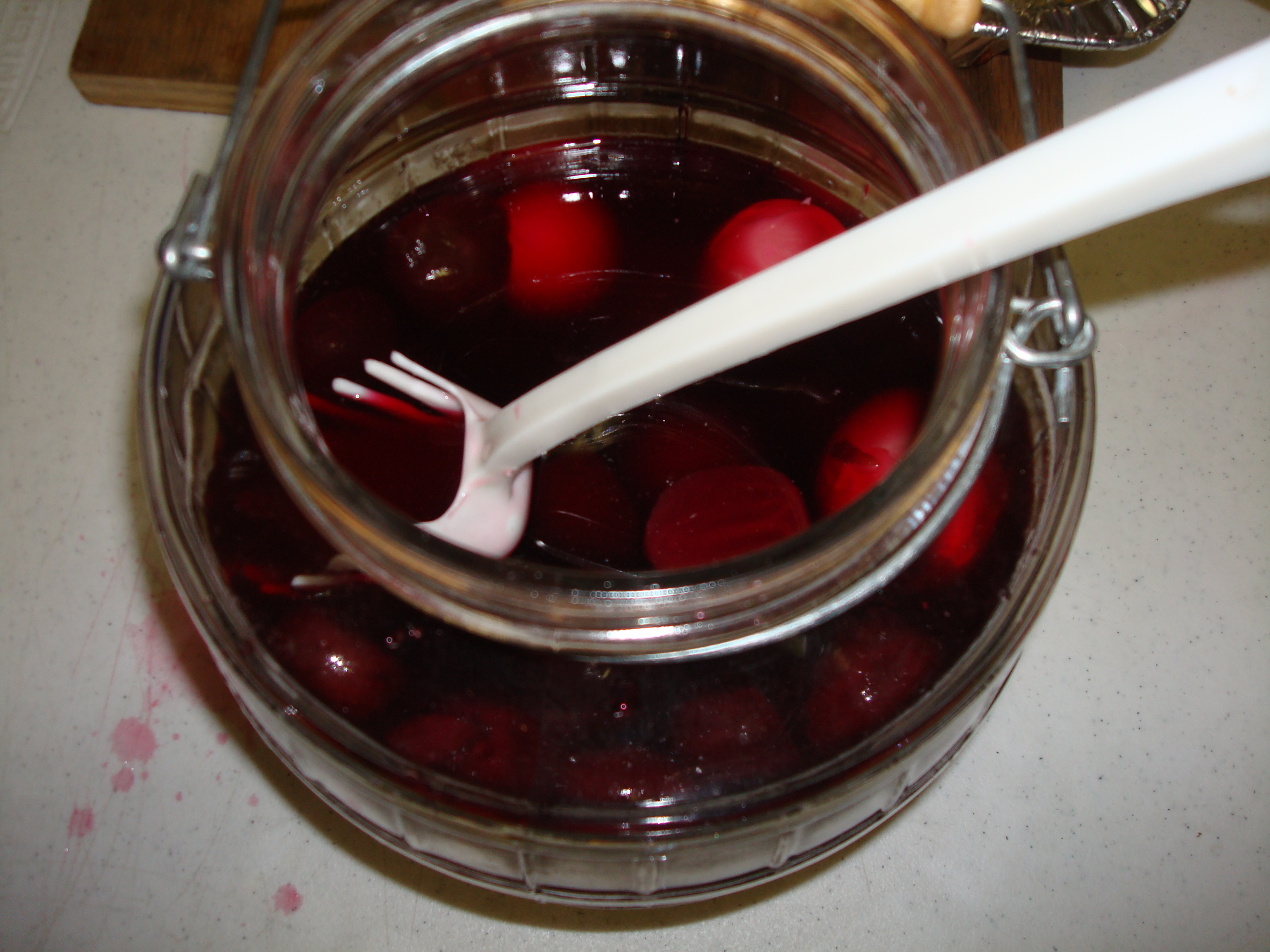
As Grandma planned for the picnic, she may have thought about foods that she could take.  Beets are in season, so a hundred years ago Grandma may have thought about taking Pickled Beets and Eggs to the upcoming picnic. Here’s an old recipe that I use to make pickled beets and eggs.

Pickled Beets and Eggs

2 cups apple cider vinegar

1 cup  reserved  beet water from cooking beets

1 1/3 cup sugar

1 piece stick cinnamon

2 cups cooked beets, sliced (leave beets whole if small)*

12 hard-cooked eggs, peeled

Combine vinegar, beet water, sugar, and piece of stick cinnamon in a large saucepan. Bring to a boil. Stir until sugar is dissolved then remove from heat.

Put sliced beets and hard-boiled eggs in a glass jar or other container. Pour cooked liquid over the beets and eggs.  Chill overnight to marinate. (For darker eggs, chill for several days before serving.).

*Peel beets before cooking (or canned beets may be used–though that’s probably less authentic).

Old Tomato Rarebit Recipe

16-year-old Helena Muffly wrote exactly 100 years ago today: 

Monday, July 17, 1911: It rained real hard this morning. I don’t know whether that kept me from doing anything of any account or something else—any way it isn’t here to read.Her middle-aged granddaughter’s comments 100 years later:

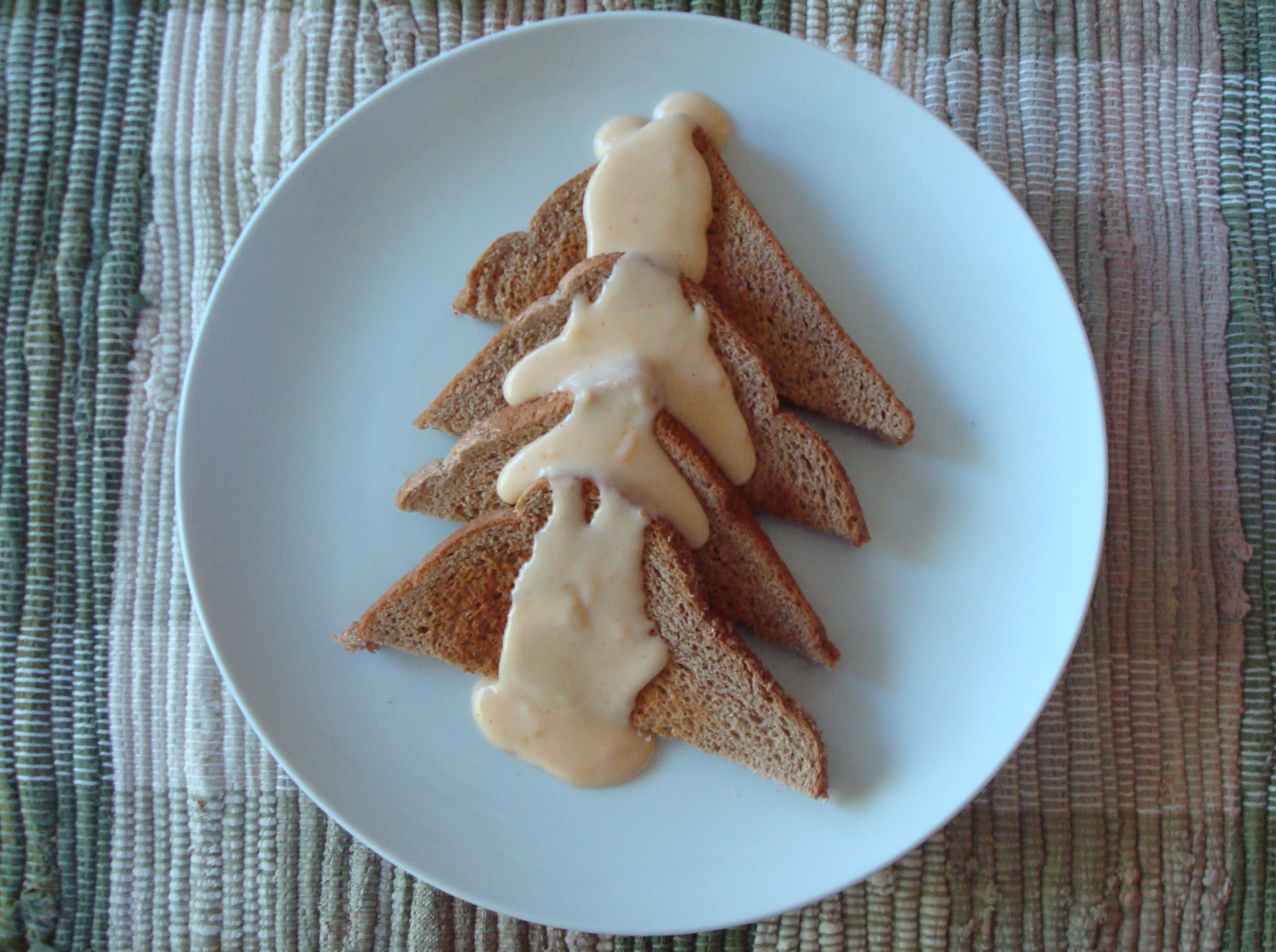
Since Grandma didn’t have much to say a hundred years ago today, I flipped through the July 1911 issue of Good Housekeeping magazine. It contained a recipe for Tomato Rarebit.  A rarebit is a cheese sauce that is served over toast or other similar foods.  I like Welsh Rarebit so thought that I’d give this recipe a try.

Tomato Rarebit

Cook one tablespoon chopped onion in one tablespoon butter five minutes. Add one cup tomatoes, cook two minutes, and strain. In a saucepan, or the blazer of the chafing dish, melt two tablespoons butter, add two tablespoons flour, and three-fourths of a cup of thin cream. Cook until thickened, then add two cups cheese cut in dice or thinly shaved, the tomato, and one-half teaspoon each mustard and salt, and one-fourth teaspoon paprika. Stir until cheese is melted and the mixture is smooth. Serve on toast or heated crackers.

The Tomato Rarebit had a zestier taste than Welsh Rarebit, and was excellent.  The recipe is a keeper.

Beet and Pepper Salad Recipe

16-year-old Helena Muffly wrote exactly 100 years ago today: 

Friday, July 14, 1911: The entries for this month look, as if they won’t require much space. Can’t help it though.

Her middle-aged granddaughter’s comments 100 years later:

Since Grandma didn’t have much to say a hundred years ago today, I flipped through the July 1911 issue of Good Housekeeping magazine. It included sample menus.

The Friday menu is below:

An asterisk meant that the magazine contained the recipe.  For the Friday dinner menu, the included recipe was for Beet and Pepper Salad:

Beet and Pepper Salad

Thinly slice four small boiled beets. Remove the seeds from and parboil two green peppers five minutes, then cut in strips. When very cold serve in nests of lettuce with a French dressing made as follows: Mix together four tablespoons olive oil, one tablespoon vinegar, one teaspoon tarragon vinegar, one teaspoon salt, one-fourth teaspoon paprika, one-eighth teaspoon pepper, and if liked one teaspoon finely chopped onion or shallots.

Old-fashioned Cherry Pudding Recipe

16-year-old Helena Muffly wrote exactly 100 years ago today: 

Monday, June 26, 1911:  Felt so terrible this morning, so did Ruth. Picked cherries nearly all afternoon! There were sour ones, so there was no danger of spoiling my hands to any considerable extent.

Her middle-aged granddaughter’s comments 100 years later:

How did the Muffly family use the sour cherries? In pies? . . . jam?. . . fruit compote? . . . cherry pudding?

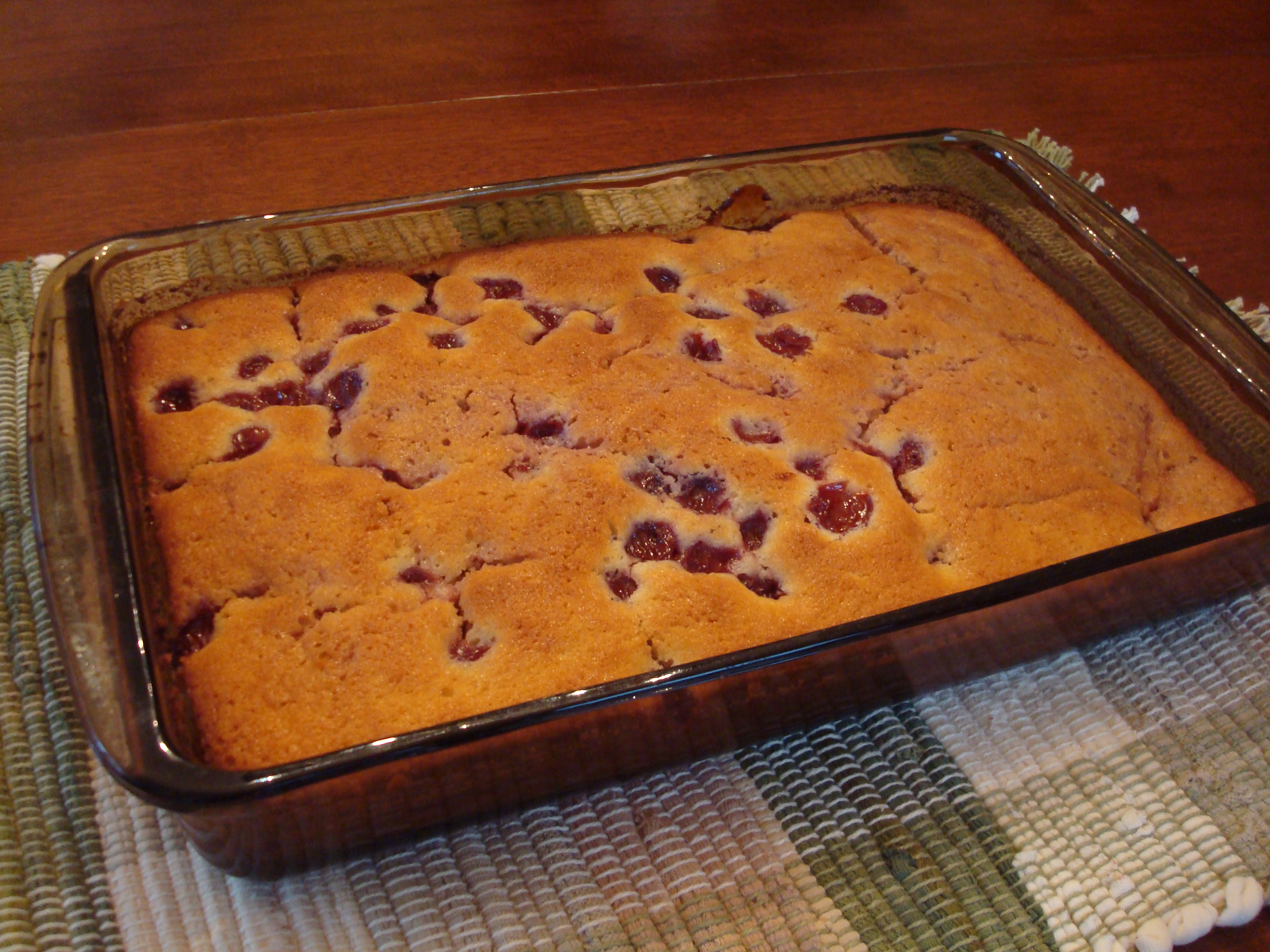
I can remember cherry pudding tasting awesome on hot summer evenings after a hard day of making hay.  Here’s the old family recipe that I use to  make Cherry Pudding.

Cherry Pudding

1/2 cup butter, melted

1 cup sugar

1 1/2 teaspoon baking powder

1/4 teaspoon salt

1 egg

1 cup milk

1 1/2 cups all-purpose flour

1 teaspoon vanilla

3/4 cup sugar

2 1/2 cups pitted sour cherries*

1/2 cup water

Preheat oven to 350 degrees. Put into a mixing bowl: butter, sugar, baking powder, salt, egg, milk, flour, and vanilla; beat until smooth. Pour into a 7 1/2  X  12  X  2 inch rectangular casserole dish, or similarly sized dish.

Make sauce by heating the 3/4 cup of sugar, cherries (including any juice), and water. Bring to a boil; then pour the cherry sauce over the batter.  Place in oven and bake for 35 to 45 minutes, or until pudding just begins to shrink from sides of dish, and the top is golden brown. When baked, cherries and sauce will be on the bottom. Serve warm. If desired, may be served with milk.

*Frozen or canned cherries may be used. Do not drain frozen or canned cherries; and include juice when measuring cherries. It works okay to use a 1 pound can of cherries—there just will be somewhat fewer cherries in the dish than if fresh or frozen cherries were used. Reduce amount of sugar, if using cherries canned or frozen in sugar syrup.