How to Make Popcorn in a Frying Pan

16-year-old Helena Muffly wrote exactly 100 years ago today: 

Saturday, November 25, 1911: Just exactly one month yet. I must begin to be good and oh so nice. I was terrible busy this forenoon. This afternoon I studied a bit and popped some popcorn. My first attempt resulted in half or about a third of the contents jumping out of the pan, but the next time I was more successful.

Her middle-aged granddaughter’s comments 100 years later:

Hmm, I wonder how the popping corn managed to jump out of the pan.  People used to pop corn in a heavy frying pan, but they generally put a cover on the pan.

To make popcorn heat vegetable oil in a heavy frying pan until it is hot. Use a medium heat or flame.

Put some popcorn in the pan.  (Use about 1/3 cup for an average sized pan.) Cover pan.

Hold about ½ inch above the burner and shake the pan. You don’t need to shake it rapidly; it’s okay to shake the pan relatively slowly.

Shake until the corn stops popping, and then remove from the heat and open lid.

1911 Thanksgiving Vegetable Centerpieces

16-year-old Helena Muffly wrote exactly 100 years ago today: 

Saturday, November 18, 1911: Didn’t so much of anything today, except to be exceedingly lazy.

Her middle-aged granddaughter’s comments 100 years later:

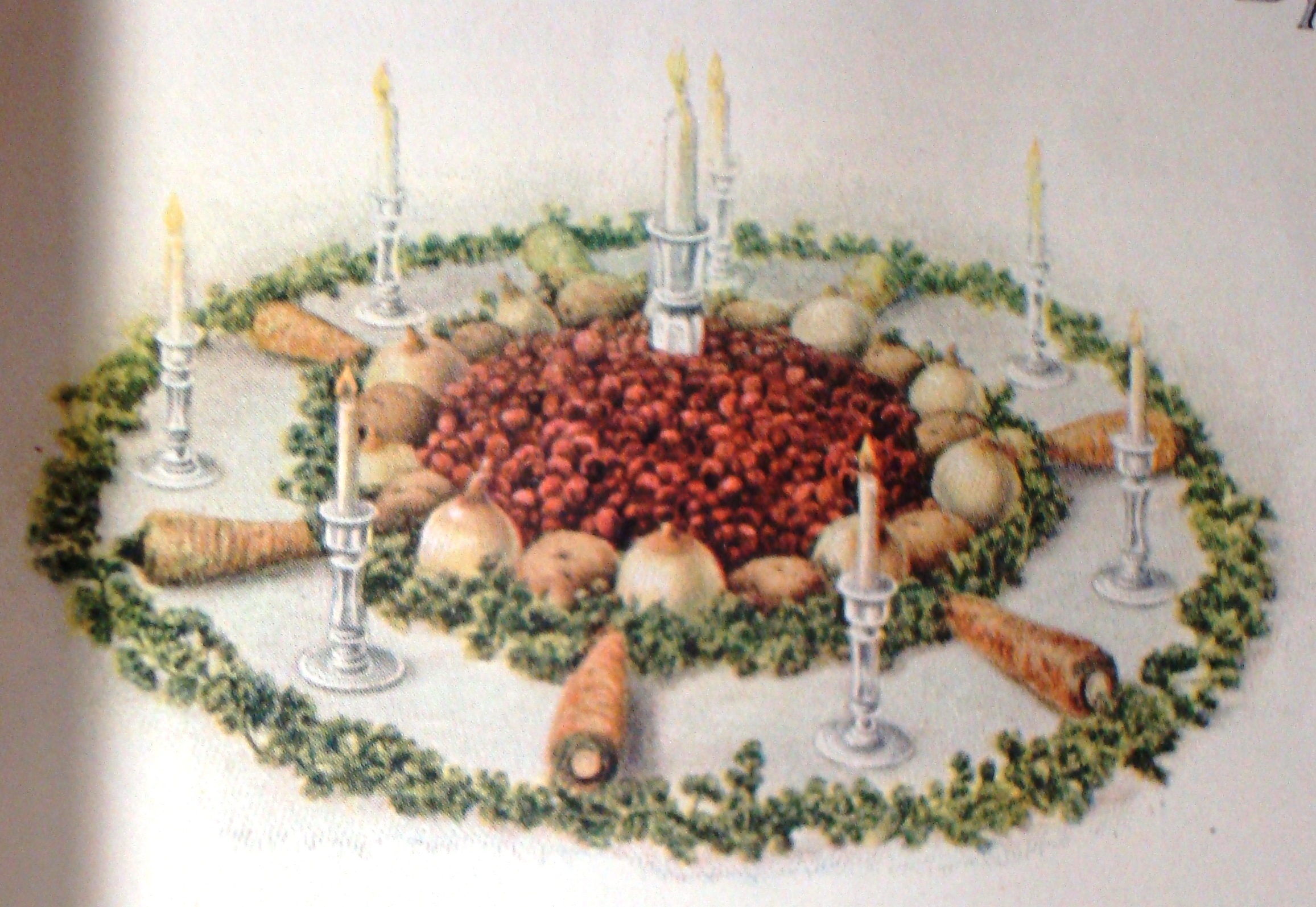
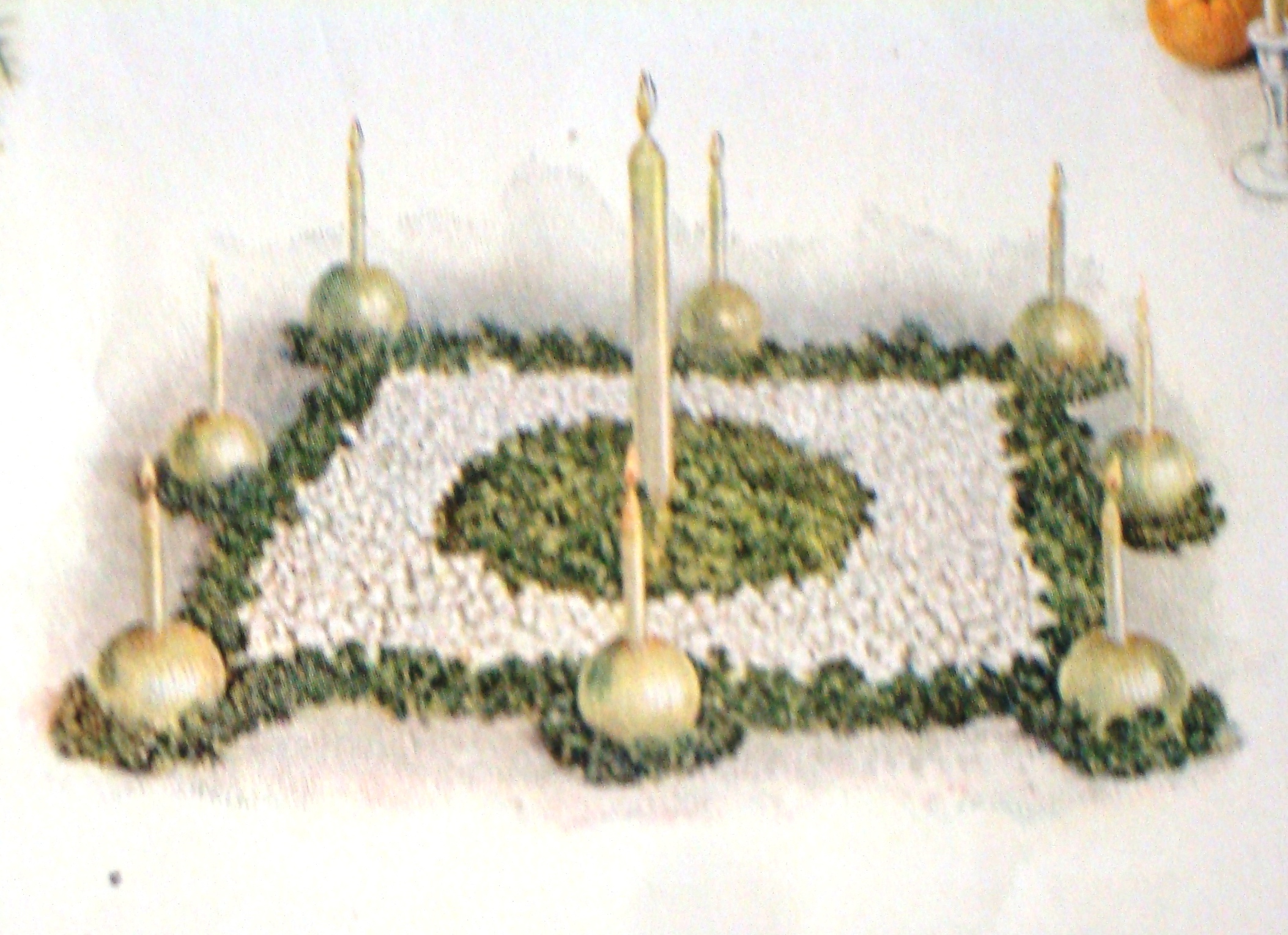
Maybe Grandma spent a quiet Saturday reading magazines. The November 1911 issue of Ladies Home Journal had some great pictures of Thanksgiving vegetable centerpieces.

Centerpiece made with squash, carrots, celery with leaves, tomatoes, parsley, cranberries, and evergreen cuttings
Centerpiece made with carrots, cranberries, potatoes, onions with brown skin partially removed, and candles
Centerpiece made with onions with brown skin removed, popcorn, parsley, and candles
Centerpiece made with pumpkin, carrots, tomatoes, evergreen cuttings, and candles

Hubbard Squash Soup Recipe

16-year-old Helena Muffly wrote exactly 100 years ago today: 

Thursday, November 16, 1911: Nothing important.

Her middle-aged granddaughter’s comments 100 years later:

Since Grandma didn’t write much a hundred years ago today I’m going to go off on a tangent –

My husband and I recently were out in the country and saw a farmer selling pumpkins, squash and other produce from a far. There were two large hubbard squash on the wagon. I immediately knew that I had to have one of them.

The farmer was surprised when I purchased it. He said that few people bought hubbard squash anymore.  He said that the previous year he’d sold none—and my purchase was his first hubbard squash sale this year.

He continued, “Old people buy them once in a while. Young people think they are some type of big gourd.”

(I hope he wasn’t insinuating that I’m old. Middle aged: yes; old: no)

Are hubbard squash really an almost archaic food?  . . .a food from Grandma’s day that people seldom eat now?

Here’s my favorite hubbard squash recipe.  It’s probably not a hundred-year-old recipe—but it’s a good way to use an old-time squash.

This soup is excellent, and I make it several times every Fall.

Hubbard Squash Soup

3 cups hubbard squash pulp (approx. 1/2 hubbard squash)

2 tablespoons olive oil

1 large onion, diced

6 cloves garlic, finely diced

2 stalks celery, chopped

5 cups chicken broth

2 ham hocks

1 tablespoons honey

3/4 teaspoon thyme

2 cups heavy cream

2 cups milk

Preheat oven to 400 degrees. To get squash pulp, cut hubbard squash in half; remove seeds and membranes. Unless the squash is very small, only 1/2 of squash (or even less) will be needed to get 3 cups of pulp. [An aside: The squash in the photo is very large–and I needed to use less than a quarter of it to get 3 cups]. Put squash on a cookie sheet, cut side up.  Bake the squash for 45-60 minutes or until tender. The squash meat will start to become dark. This is okay.  Scrape squash out of the shell, and measure 3 cups of squash for use in this recipe.

Put olive oil in large pot. Heat using medium heat and then add celery, onion, and garlic; cook until tender. Add chicken broth, squash, ham hocks, honey, and thyme. Simmer for 45 minutes. Pull the ham hock out and dice any meat. Return meat to soup; cool slightly Puree soup in a blender until smooth.  Return to pan, and add cream and milk. Reheat soup, then serve.

Yield: 9 servings

Old Cocoa Fudge Recipe

16-year-old Helena Muffly wrote exactly 100 years ago today: 

Friday, November 10, 1911: Must begin to study harder if I ever want to graduate. Teacher gave out our reports and also gave quite a lecture about our marks also this afternoon. Ruthie expected a friend this evening and made chocolate fudge, but she didn’t come but the fudge however was not wasted.

Cocoa Fudge
Cocoa Fudge with Black Walnuts

 Her middle-aged granddaughter’s comments 100 years later:

Rough day at school!–Good thing Grandma’s sister Ruth made fudge!  Chocolate is a wonderful comfort food.  🙂

I found an excellent central Pennsylvania fudge recipe that is more than 100 years old in the Lycoming Valley Cook Book by the Ladies of Trout Run M.E. Church (1907).*

Cocoa Fudge

One-fourth cup of milk, one and one-half tablespoonfuls butter, one and one-fourth cups powdered sugar, nine tablespoonsful cocoa, a pinch of salt, one-half teaspoonful vanilla. Put the butter and milk in a sauce-pan, and when the butter has melted, add the sugar, cocoa and salt. Stir until dissolved, then cook, stirring occasionally, until it strings, which will be about eight minutes. Remove from stove, set in a pan of cold water, add the vanilla, then beat gently. The instant it begins to thicken, pour into a buttered pan. When hard, cut in squares. Great care must be taken not to beat it much, because, if beaten too thick, it cannot be poured into the pan.

Grace Harbor, Trout Run, Pa.

I stirred black walnuts—see yesterday’s post— into some of the fudge before I put it in the pan. The resulting fudge was awesome and brought back memories of fudge I ate many years ago when I was a small child.

Black walnuts have a wonderfully intense flavor that co-mingled beautifully with the rich cocoa flavor in the fudge.

My Cook’s Notes About How I Interpreted the Recipe:

  • I assumed that “strings” meant ,when I lifted my stirring spoon above the pan and then tipped it so that the chocolate mixture could flow back into the pan, that a “string” of chocolate went from the spoon to the pan.  It did not take 8 minutes for the mixture to reach this stage—it probably was more like 5 minutes.
  • The mixture started to thicken only a few seconds after I set the sauce pan in cold water and began to stir.
  • After the fudge hardened, I had a little difficult getting it out of the pan, so I set the pan in hot water for a couple minutes. It when came right out and was easy to cut into squares.
  • I was surprised how little fudge this recipe made.  I put it in a small 5 inch by 5 inch casserole dish that I usually use for left-overs.  Families were larger a hundred years ago than they are now—so I would have thought that the recipe would make a large quantity rather than a tiny amount. Maybe cooks typically tripled or quadrupled the recipe.

Last spring I did another post on old fudge recipes—one even used molasses as in ingredient. Click her to see 1911 Chocolate Fudge Recipes.

* I got the recipe out of a 1992 reprint of the  1907 book.  Kwik-Kopy Printing, Williamsport PA published the reprint.

How to Crack Black Walnuts

16-year-old Helena Muffly wrote exactly 100 years ago today: 

Thursday, November 9, 1911: Nothing to write.

Her middle-aged granddaughter’s comments 100 years later:

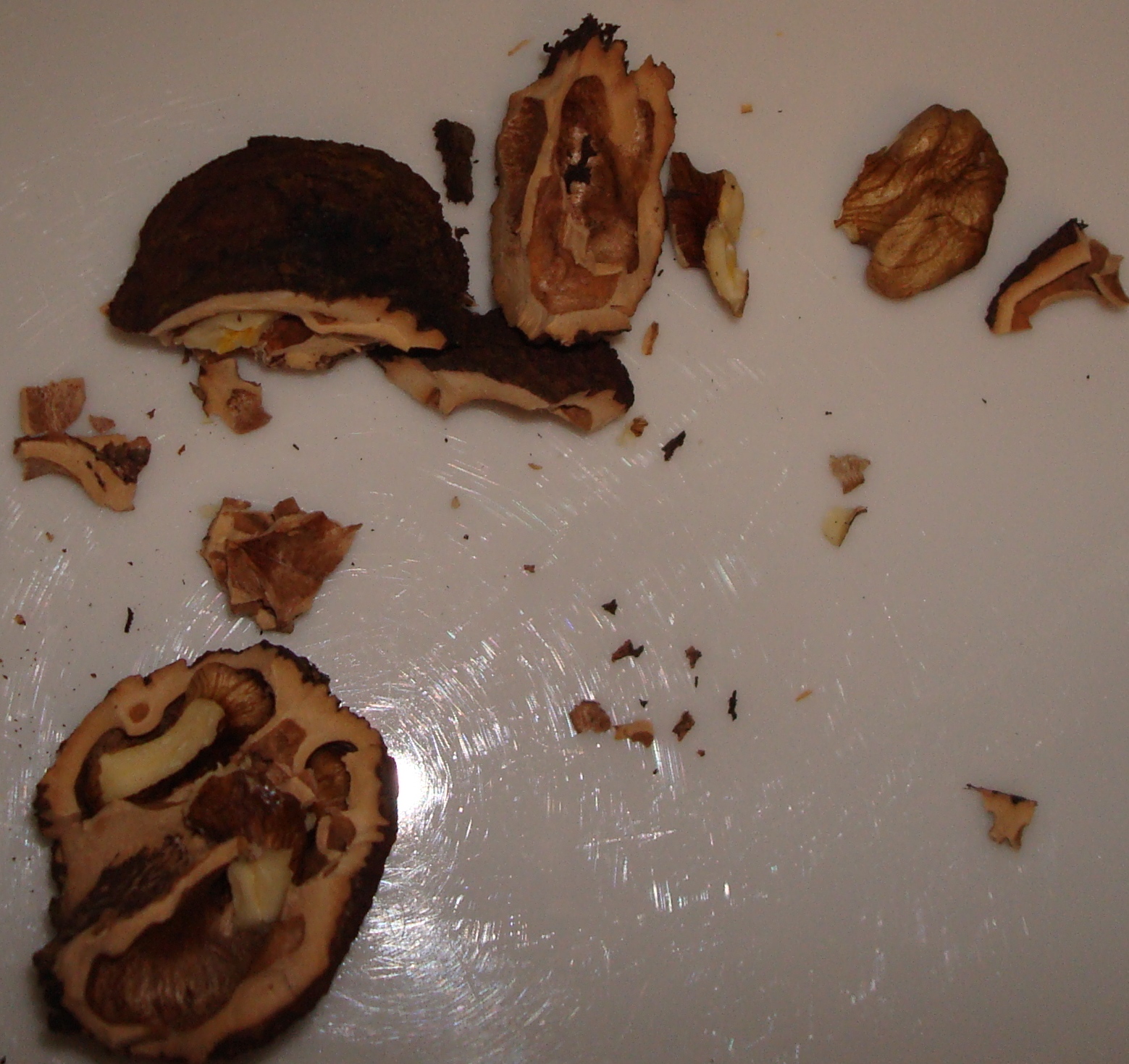
A few weeks ago Grandma mentioned hulling walnuts. At that time I gathered some black walnuts and hulled them. I then spread them out to dry. My husband I have now cracked some of them and taken the nut meats out.

We put them into a vice to crack them–and had problems with the walnuts flying all over the garage.

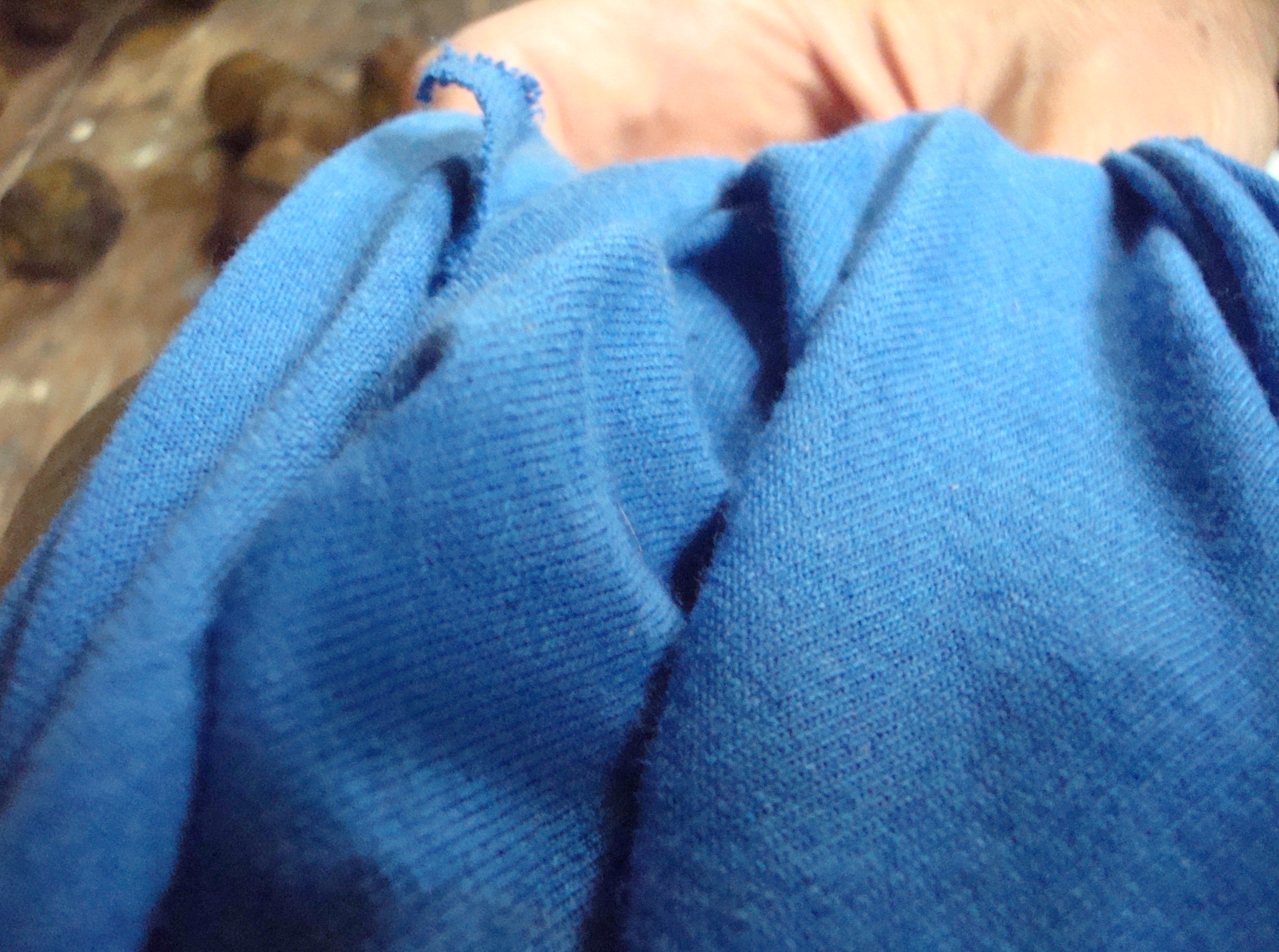
We then covered the walnuts with a piece of cloth before cracking. This worked really well at containing everything. Once the shell was cracked it was easy to get the nuts out.

The walnuts tasted great–just like I’d remembered from my childhood. The flavor is more intense than grocery store walnuts–but it is really good.

Traditional Apple Betty Recipe

16-year-old Helena Muffly wrote exactly 100 years ago today: 

Thursday, October 19, 1911: That’s all.
Her middle-aged granddaughter’s comments 100 years later:

Since Grandma didn’t write anything of substance a hundred years ago today, I’m going to share another very old recipe.

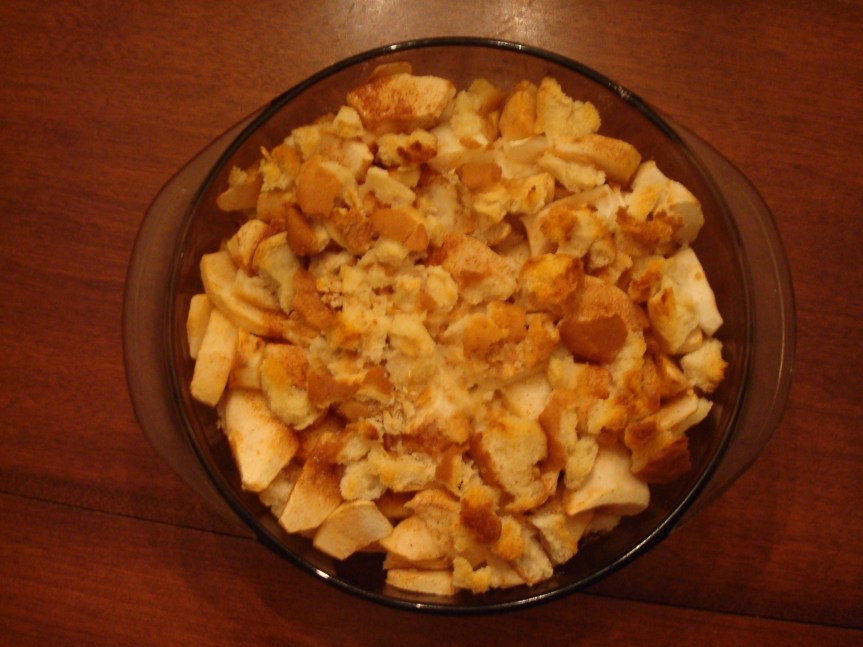
We often ate Apple Betty during the fall and winter when I was a child. It always seemed very old-fashioned and I’d guess that Grandma ate similar dishes when she was young.

When I was small, we’d save bread crusts and tear them into small pieces. We’d put the torn bread into an open canister to dry. Whenever we got enough for Apple Betty, we’d make it.

Farmers always had lots of apples in those days from their orchards, and I guess this was a way to use both the apples and the leftover bread crusts.

We’d eat Apple Betty as a side dish during the main meal–though it could be eaten as a dessert. After I got older. I guess our family felt more prosperous and we generally threw bread crusts out—and we no longer made this recipe.

 Apple Betty

2 cups coarse dry bread crumbs

4 cups, sliced, peeled tart apples (5 to 7 medium apples)

1/2 cup sugar

1/4 teaspoon cinnamon

1/4 teaspoon salt

3 tablespoons lemon juice (1 lemon)

1/4 cup water

2 tablespoons butter

Preheat oven to 350 degrees. Put 1/3 of the bread crumbs into the bottom of a buttered 6 to 8 cup casserole dish, then cover with half of the apples. Mix the sugar, cinnamon, and salt together, and sprinkle half the mixture over the apples. Add another layer of bread crumbs and another of apples, and sprinkle with the rest of the sugar mixture. Top with remaining crumbs, pour lemon juice and water all over, and dot with butter. Cover and bake for 25 minutes.

Yield: 6 to 8 servings

When I recently made this recipe, rather than sitting the bread crumbs out to dry, I tore several slices of fresh  bread into pieces and put them on a cookie sheet. I then dried the very coarse crumbs for about one-half  hour in a 175 degree oven.

My husband Bill said that the Apple Betty reminded him of bread pudding—though the bread is definitely drier with this recipe than is typical of a bread pudding.

The dish can be eaten either hot or cold.  I prefer it hot, but Bill ate cold left-over Apple Betty and in no time it was gone. This historic recipe is a keeper.

Old Fried Winter Squash Recipe

16-year-old Helena Muffly wrote exactly 100 years ago today: 

Tuesday, October 17, 1911: Not so very much to write about. It is raining tonight.

Her middle-aged granddaughter’s comments 100 years later:

On days when Grandma wrote little, I often wish that she’d somehow known that someone would be reading the diary a hundred years later who wanted to know more about the mundane, routine aspects of her life—like what did her family eat for supper on a rainy evening in October?

Since she didn’t tell us what they ate, I’ll take a guess–

When I was growing up we often ate fried winter squash during the fall and winter. My sense is that this is a very traditional Pennsylvania food that Grandma would have eaten when she was young:

Fried Winter Squash

3/4  pound winter squash (butternut, hubbard, etc.), peeled and thinly sliced (approximate)

Lard or other shortening

salt and pepper

Melt shortening in skillet. It should be about 1/4 inch deep. Put 1 layer of squash in pan. Cook for about 5 minutes; turn squash with a fork. Cook  another 5 – 8 minutes; or until squash is tender. Remove squash from pan and drain on paper towels. Put on serving plate. Sprinkle with salt and pepper; serve immediately.

Yield: 2 servings

My husband and I really enjoy this recipe. It is very simple—and it really brings out the wonderful taste of the squash. The amounts are very flexible for this recipe. I usually slice enough squash to cover the bottom of the skillet.

In Grandma’s day they would have fried the squash in lard, but shortening works just fine.

I use butternut squash when I make this recipe—but butternut squash (somewhat surprisingly to me, since it’s so ubiquitous today) was not widely available until the 1940s. A hundred years ago, they probably used hubbard squash, Long Island cheese squash (this is a white squash that looks sort of like a pumpkin), or other traditional variety.