Rhubarb Pudding Recipe

17-year-old Helena Muffly wrote exactly 100 years ago today: 

Thursday, April 25, 1912: I am beginning to worry about final exams. I’m afraid that I may get left in some of my studies. But I hope that it won’t happen that way.

Her middle-aged granddaughter’s comments 100 years later:

It sounds like Grandma was at the procrastination stage—she knew that she needed to study, but hadn’t gotten beyond worrying.

When I procrastinate, I think of other things that MUST be done—like cooking.

Here’s an old Rhubarb Pudding recipe that I found in the April 1912 issue of Good Housekeeping magazine.

Rhubarb Pudding

Sift together two cupfuls of flour, a pinch of salt, spices as desired, two teaspoonfuls of baking powder and half a cupful of sugar. Stir in one egg beaten with half a cupful of milk and two tablespoonfuls of butter; add two cupfuls of rhubarb, cut into small pieces (use the pink part with the skin left on), bake twenty minutes and serve with a sauce.

The only spice that I used was 1/2 teaspoon of nutmeg. The batter was extremely thick. I baked the Rhubarb Pudding in a 375 degree oven. It took about 40 minutes for the top to brown lightly. (Maybe I should have used a higher temperature.)

The Rhubarb Pudding was quite good. It was a pleasant mixture of sweet and tart tastes, and had the texture of shortcake.

I served the Rhubarb Pudding with Vanilla Sauce.

Vanilla Sauce

1/2 cup sugar

1 tablespoon cornstarch

dash salt

1 cup boiling water

2 tablespoons butter

1 teaspoon vanilla

dash nutmeg

Mix sugar, cornstarch, and salt in sauce pan. Add boiling water; and boil until thick and clear. Continue simmering over low heat, while stirring for 20 minutes. Stir in the butter, vanilla, and nutmeg. Can be refrigerated and reheated.

Rhubarb is one of my favorite Spring foods. Here are the links to past posts that included Rhubarb Recipes:

Stewed Rhubarb (Rhubarb Sauce)

Rhubarb Sponge Pie

Ranking Old-fashioned Candy Recipes

17-year-old Helena Muffly wrote exactly 100 years ago today: 

Thursday, March 28, 1912:Nothing really of great importance. Now that Ruth is at home I don’t have to do as much in the morning as I was accustomed to doing. Ruth made some fudge this evening. It was Jimmie’s earnest desire.

Sugar Taffy

Her middle-aged granddaughter’s comments 100 years later:

Whew, I’m amazed how often fudge or other candies are mentioned in the diary.

Over the past 15 months, I’ve made 7 different candy recipes. Below I rank them from my personal favorite to my least favorite—and provide links to the post that contains the recipe.

1. Sugar Taffy—This recipe turned out fantastically and tastes much better than modern taffy. My family ate all of the taffy within a day or so.

Cocoa Fudge

2. Cocoa Fudge—This fudge recipe was excellent—however, the recipe only made a small amount of fudge. I’d double (or triple or quadruple) the recipe if I made it again.

3. Chocolate Fudge- No. 1—This is also a very good fudge recipe. I had a difficult time deciding whether to rank Cocoa Fudge or this one higher.

4. Butterscotch— Old-fashioned butterscotch isn’t anything like the artificially-colored orange butterscotch disks that they make today. Instead it is rather it is similar to Werthers Original Candy.

5. Chocolate Fudge No. 2—This fudge contains molasses and has a very old-fashioned taste, but I  loved the complex undertones. I especially liked it when I added walnuts.

6. Sour Cream Fudge—This is a light-colored fudge that does not contain any chocolate. It had a good taste although I had to cook it a very long time (over an hour) and even then it seemed a bit soft.

7. Coffee Candy—This candy  had a great taste, but I didn’t get something quite right because it crumbled. A reader suggested that it might make a good ice cream topping.

Old-fashioned Potato Cakes

16-year-old Helena Muffly wrote exactly 100 years ago today: 

Wednesday, March 13, 1912:  Nothing of much account did I do today.

Her middle-aged granddaughter’s comments 100 years later:

Since Grandma didn’t write much a hundred years ago today, I’m going to give you another old recipe. This one is for Potato Cakes, and it’s a great way to use left-over mashed potatoes.

When I was a child we frequently ate Potato Cakes. My memory is that they were a very traditional Pennsylvania food—and I can picture Grandma eating them when she was a teen.

I hadn’t made Potato Cakes in years until I decided to make them for this post. I don’t have a written recipe—but this is how I made them.

Old-Fashioned Potato Cakes

left-over mashed potatoes

shortening or lard

After the meal where the mashed potatoes were served, take the left-over potatoes, shape into flat patties and press firmly. Put on a plate, cover and refrigerate. Will keep for several days.

When ready to make the Potato Cakes, melt enough shortening in a heavy frying pan to cover the pan to a depth of about 1/8 inch. Slip the patties into the hot shortening. Fry until golden brown; flip and fry on the other side. Remove from pan and drain on paper towels. Serve immediately.

The amounts are very flexible. When I made the mashed potatoes, I made more than I typically would—and then I just used all of the left-over potatoes to make the potato cakes.

The Potato Cakes turned out great. My husband and I enjoyed eating them, and I’m planning to make them again in the near future.

Oreo Cookies Are a Hundred Years Old

16-year-old Helena Muffly wrote exactly 100 years ago today: 

Thursday, March 7, 1912:  Unimportant, soon forgotten. That’s all I can think of now.

Photo Source: Wikipedia

Her middle-aged granddaughter’s comments 100 years later:

Since Grandma didn’t write very much a hundred years ago today, I’m going to go off on a tangent and get on my soapbox–

Oreo cookies were first made in March 1912.  I’ve seen several stories about the anniversary in the press.

New York Times

Reuters 

Wow, I never would have guessed that Oreos were a hundred years old.  Part of me thinks it’s awesome that this cookie has been around so long—and that Grandma probably enjoyed them as a teen.

However, another part of me is sad that processed foods like Oreos were available a hundred years ago. I want to believe that people ate wholesome, homemade, locally produced foods a hundred years ago—when the reality is that by 1912 the world was rapidly industrializing and “modern” foods were readily available.

Comparison of Hundred-Year Old and Modern Recipes for Devils Food Cake

16-year-old Helena Muffly wrote exactly 100 years ago today: 

Tuesday, February 27, 1912:  Quite uneventful. Ruth went up to Oakes this evening, but I staid at home and studied my lessons.

Devil's Food Cake (Hundred-Year-Old Recipe)

Her middle-aged granddaughter’s comments 100 years later:

Since this diary entry is self-explanatory, I’m going to go off on a tangent.

I recently bought a 1912 cookbook off EBay. My daughter glanced through it and noticed that the devils food cake recipe seemed very different from today’s recipes.

So we decided to compare a devils food cake made with a modern recipe with one made using a hundred year old recipe.

In the early 1900s angel food cakes and devils food cakes were seen as the polar opposites—one was white and light; the other dark and heavy.

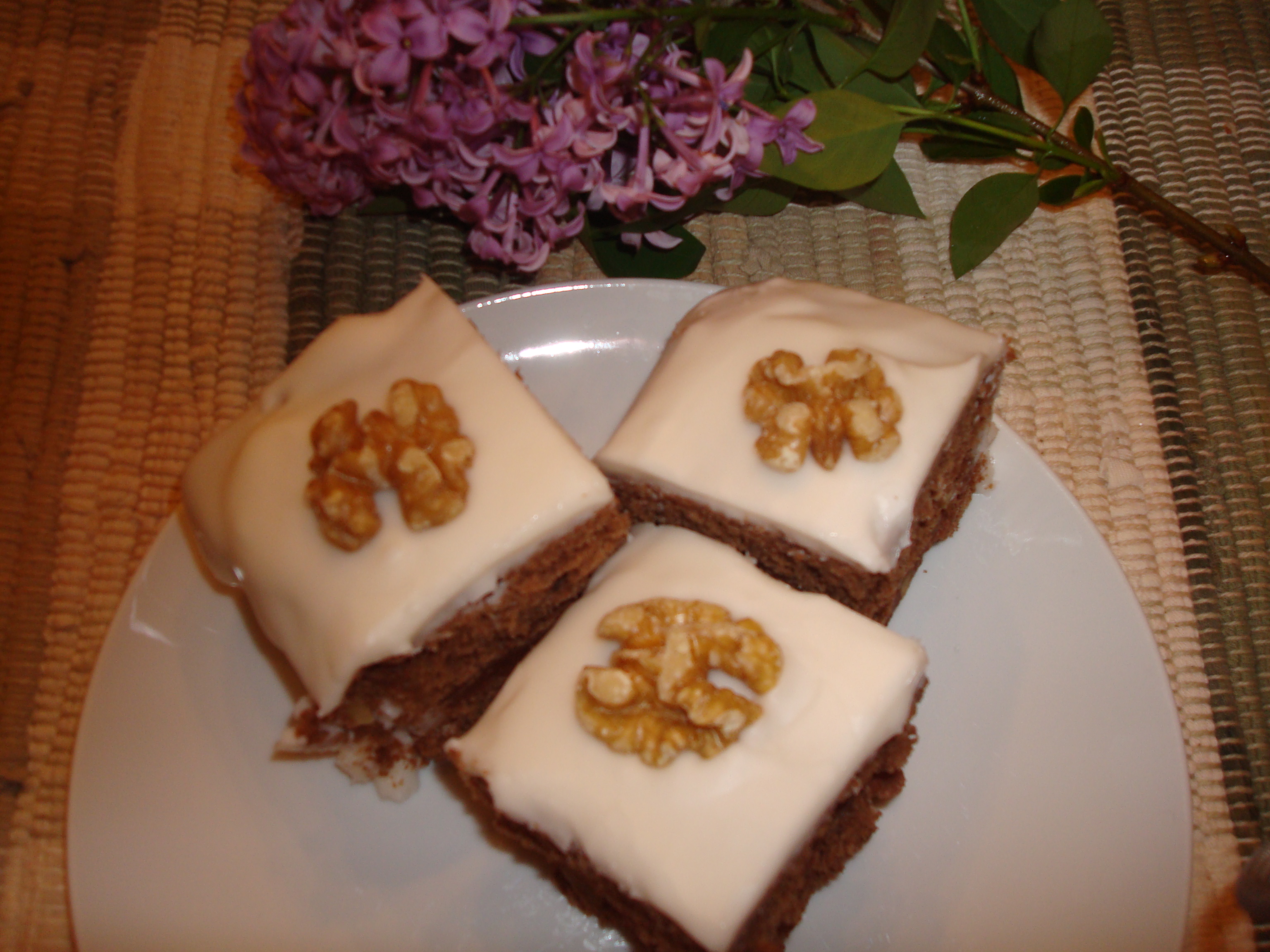
The cake made with the hundred year old recipe was a dense chocolate spice cake. The recipe called for mashed potatoes (mashed potatoes ?!?!), cinnamon, nutmeg and nuts.  It reminded us of gingerbread–though ginger was not an ingredient. I’ve never eaten anything exactly like it—but the cake was very good and I’d make it again.

100 Year-Old-Recipe

Calumet Devil’s Food Cake (Chocolate Spice Cake)

2 cups flour

2 level teaspoons Calumet (or any other brand) baking powder

2 level teaspoons cinnamon

1/2 teaspoon nutmeg

1 3/4 cups granulated sugar

1/2 cup milk

3/4 cup butter

2 eggs

1 cup warm mashed potatoes

2 squares unsweetened chocolate

1 cup chopped nuts

Preheat oven to 350 degrees. Grease and flour baking pan, 13 X 9 X 2 inches. Melt butter and chocolate. Combine with all of the other ingredients except nuts. Beat until well-blended.  Stir in nuts.

Pour into pan. Bake approximately 45-50 minutes or until pick comes out clean.

Adapted from the recipe in Calumet Baking Powder Reliable Recipes (1912)

The modern devils food cake recipe that my daughter made was from my Betty Crocker Cookbook. The recipe called for red food coloring—but otherwise seemed similar to other modern chocolate cake recipes. The cake was awesome.

Devils Food Cake

1 3/4 cups all-purpose flour

1 cup granulated sugar

1/2 cup brown sugar (packed)

1 1/2 teaspoons soda

3/4 teaspoon salt

1 1/4 cups buttermilk

1/2 cup shortening

2 eggs

2 ounces melted unsweetened chocolate (cool)

1 teaspoon vanilla

1/2 teaspoon red food color

Heat oven to 350 degrees. Grease and flour baking pan, 13x9x2 inches, or two 9-inch or three 8-inch round layer pans. Measure all ingredients into large mixer bowl. Blend 1/2 minute on low-speed, scraping bowl constantly. Beat 3 minutes high-speed, scraping bowl occasionally. Pour into pan(s).

Bake oblong about 40 minutes, layers 30-35 minutes or until wooden pick inserted in center comes out clean. Cool.

(Recipe suggests using chocolate or cream cheese frosting.)

Sour Cream Fudge

16-year-old Helena Muffly wrote exactly 100 years ago today: 

Thursday, February 15, 1912:  I believe I have forgotten what I did today. Nothing unusual any way.Her middle-aged granddaughter’s comments 100 years later:

Since Grandma didn’t write much today, I’ll give you an old-time candy recipe for Sour Cream Fudge.

Sour Cream Fudge

1 cup sugar

1 cup brown sugar

3/4 cup sour cream

1 1/4 cups butter

1 teaspoon vanilla

1 cup chopped walnuts

Combine sugar and sour cream.  Stir while heating over a low temperature until the sugar is dissolved.  Add butter and continue stirring until it is melted. Quit stirring and bring to a slow boil. Continue boiling until candy reaches the soft ball stage (235-240 degrees F.). Remove from heat, beating it while it cools. Add vanilla and nuts. Pour into greased pan.

Sour Cream Fudge has a rich, buttery flavor.

Patience is key to successfully making Sour Cream Fudge. I was surprised how long I needed to cook this candy.  It takes a long time to reach the soft ball stage—I think that it took more than an hour.

Honey Popcorn Balls Recipe

16-year-old Helena Muffly wrote exactly 100 years ago today: 

Monday, January 29, 1912:  It is hard to study when you don’t feel like it. Don’t know what will become of myself if I don’t get aroused pretty soon.

Her middle-aged granddaughter’s comments 100 years later:

Perhaps Grandma made a snack while she was trying to motivate herself to study.

Popcorn was a very popular winter snack a hundred years ago. A few weeks ago I made old-fashioned Caramel Popcorn.  I enjoyed it so much, that I decided to make another old-time popcorn snack—Honey Popcorn Balls.

Honey Popcorn Balls

approximately 1 1/2 quarts popped popcorn

1/2 cup honey

1/2 cup sugar

1/3 cup water

2 tablespoons butter

1/4 teaspoon salt

Put popped corn in a large bowl and set aside. Cook honey, sugar, water, and butter to a medium-crack stage (280 degrees).  Remove from heat and stir in salt; pour over the corn and stir with a spoon to coat the kernels.

Grease hands with butter. Firmly press coated popcorn into balls.  Lay balls on waxed paper until cool. If the balls will be stored, wrap in waxed paper.

These popcorn balls have an awesome rich honey flavor. (They are nothing like the horrid, stale popcorn balls that I occasionally see in stores.)

I used some alfalfa honey that I got at an Amish market to make these balls—but any honey will work.  I love the flavor of the light alfalfa honey, but think it would also be fun to experiment and make them again with a darker honey.  Maybe next week. . . .