Source: Boston Cooking-School Cook Book, 1923 editon
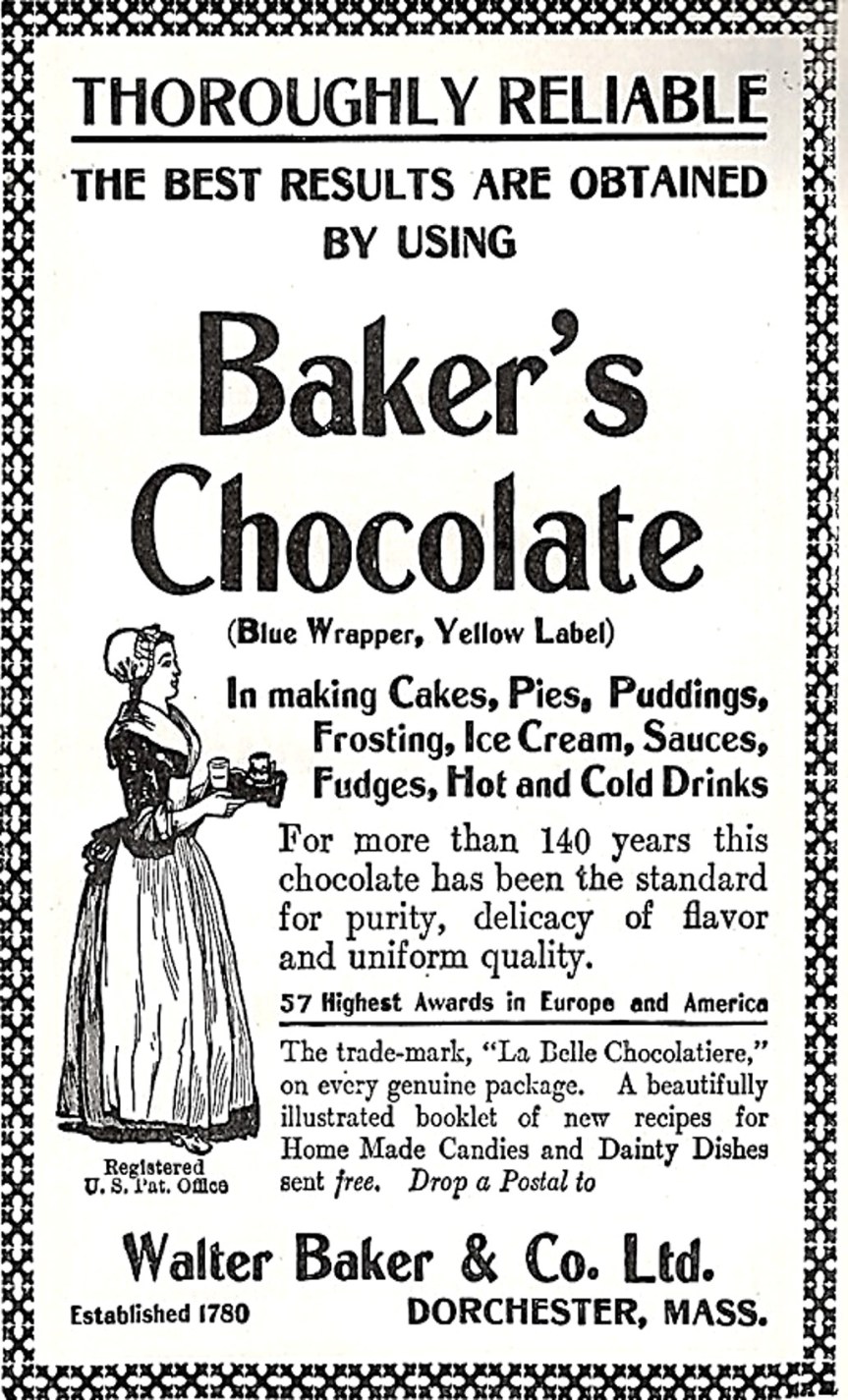
Wow! Based on the information in this hundred-year-old advertisement in the 1923 edition of the Boston Cooking-School Cook Book, Baker’s Chocolate has been around for 243 holiday baking seasons.
I’m intrigued by this advertisement because, I posted a very similar advertisement in 2021 from the 1921 edition of the Boston Cooking-School Cook Book. Here’s the image I used from the 1921 cookbook:
Source: Boston Cooking-School Cook Book (1921 edition)
It’s fascinating how there are many tiny formatting differences there are across the two years. For example, “Registered U.S. Pat. Office” is two lines in the 1921 advertisement but has morphed into one line that says, “Reg. U.S. Pat. Off.” by 1923. The border frame is also slightly different on the two ads, and, most intriguing of all, the woman’s face and hair have been tweaked. Why did a graphic designer decide that these changes were needed?
Put cider and sugar in a large saucepan. Add cinnamon stick and cloves tied into a cheesecloth bag. Bring to a boil using medium heat; reduce heat to low. Remove cinnamon and cloves before serving. Serve hot.
It’s always hard to know how much to spend on gifts. Here’s what it says in a hundred-year-old home economics textbook:
Gifts
At the end of the year many persons who do not keep accounts would be very much surprised if they could see the total sum of money that has been devoted to gifts. Some would be impressed by the smallness of the total sum, and others would be astonished at the disproportionately large amount used. This represents money used for others, but it cannot be taken as a very valuable index of generosity toward others. The money devoted to church and benevolence is a better indication of generosity.
Gifts are given very frequently to persons from whom gifts are received and it very often happens that they are chosen with the idea of equaling in value a gift received. Very frequently gifts represent a money value entirely out of proportion to the income. This class of expenditures may well receive a more careful consideration by many persons. One’s real regard and generosity to friends never can be measured in money and it is unfortunate to put such emphasis upon gifts.
Economics of the Family by C.W. Taber and Ruth A Wardall (1923)
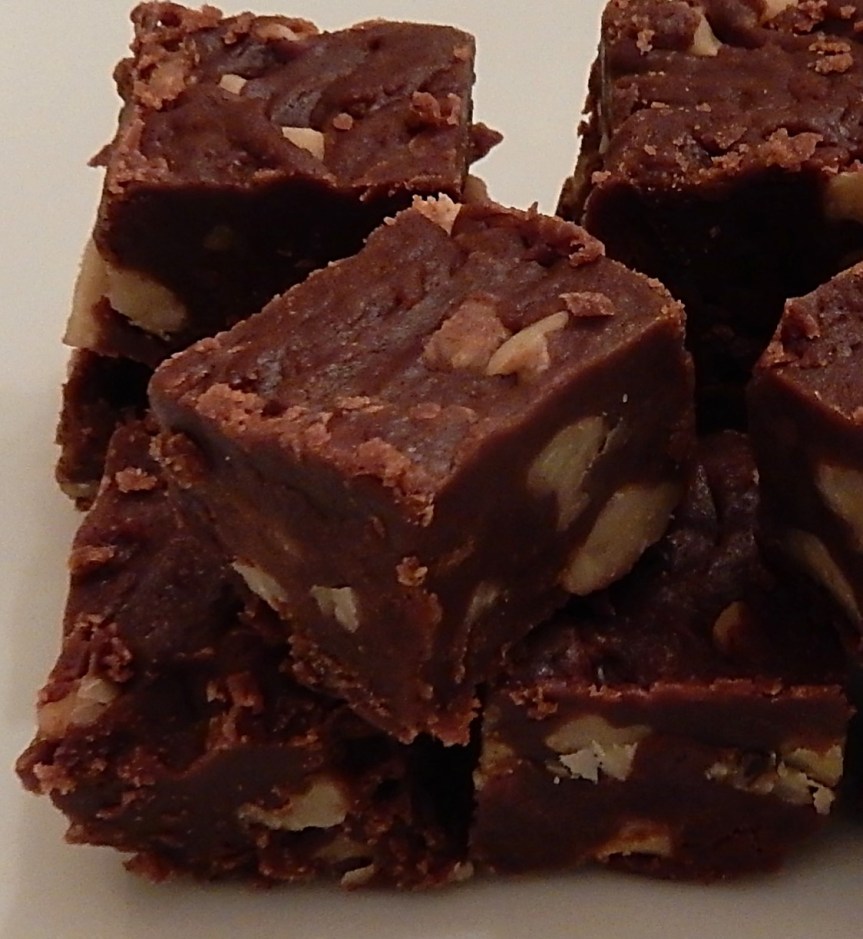
I make a “new” hundred-year-old candy recipe each December. This year I flipped through several 1923 cookbooks trying to decide which sweet confection to make – and ended up going with a recipe called Smith College Fudge that I found in a hospital auxiliary cookbook from western Pennsylvania.
The name intrigued me. Was this fudge commonly made by Smith College students? And, how did a fudge named after a college in Massachusetts end up in a western Pennsylvania cookbook?
This recipe was a winner. This classic fudge was rich and melted in my mouth. It contained a small amount of molasses which is not typically included in modern fudge recipes. The molasses made the fudge more flavorful in a delightful, nuanced way.
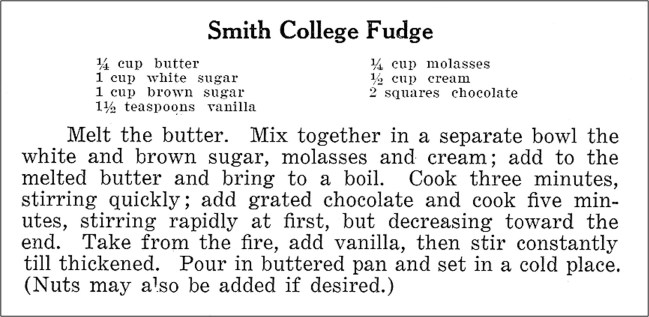
Here’s the original recipe:
Source: General Welfare Guild Cook Book (Beaver Valley General Hospital, New Brighton, PA, 1923)
Chocolate squares are smaller now than they used to be. A square once was 1 ounce; today the squares for many brands are only 1/2 ounce. When I made this recipe, I assumed that the author was referring to the larger chocolate squares of yesteryear, so used 4 squares (2 ounces) instead of the two that the recipe called for. I melted the chocolate prior to mixing with the other ingredients rather than grating it. I also added walnuts when I made this recipe.
2 ounces unsweetened chocolate (4 squares of many brands), melted
1 1/2 teaspoons vanilla
1 cup walnuts (optional)
Put white sugar, brown sugar, molasses, and cream in a bowl; stir to combine. Set aside.
In the meantime, melt butter in a saucepan. Stir in the sugar and cream mixture. Using medium heat, bring to a boil. Reduce heat, but continue to boil while stirring rapidly for three minutes. Then add the melted chocolate and boil gently for an additional five minutes; stir rapidly at first, and then stir less towards the end. Remove from heat and stir in the vanilla. Continue stirring until the mixture thickens. If desired, stir in walnuts. Pour into an 8″ X 8″ buttered pan and set in the refrigerator until cool. Then cut into pieces.
Until I saw this hundred-year-old advertisement, I had never heard of Skinner’s Macaroni – though it may be a regional food that still exists. When I googled “Skinner’s Macaroni,” I came across an Albertson’s webpage for Skinner Macaroni Twirls. I also came across an “Our Story” page for J. Skinner Baking in Omaha, Nebraska which said that “The Skinner family has been in the food business since the late 1800s, so there’s a good chance your grandparents grew up on Skinner Macaroni and other Skinner family products.” It looked like the company now makes pastries.
It’s the time of year to make cookies, so I was excited to try a hundred-year-old recipe for Nut Cookies. The cookies are made using egg whites that are stiffly beaten, which results in crispy, light cookies. They have a delightful texture and taste, however, I found them a bit challenging to make. When I made this recipe I used nonstick baking sheets, and had trouble with the cookies sticking to them. I am not sure why.
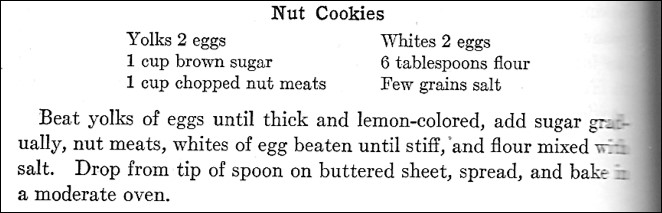
Here’s the original recipe:
Source: The Boston Cooking-School Cook Book (1923)
Preheat oven to 325° F. Put beat egg whites until stiff. Set aside.
Beat egg yolks until thick and lemon colored. Gradually add sugar, beaten egg whites, and flour mixed with salt. Gently stir in the nut meats. Drop from the tip of teaspoon onto a greased baking sheet to make circles about 3/4 inch in diameter. Bake 8-10 minutes or until the cookies are set and lightly browned.
Note: These cookies may have a tendency to stick to baking sheet.


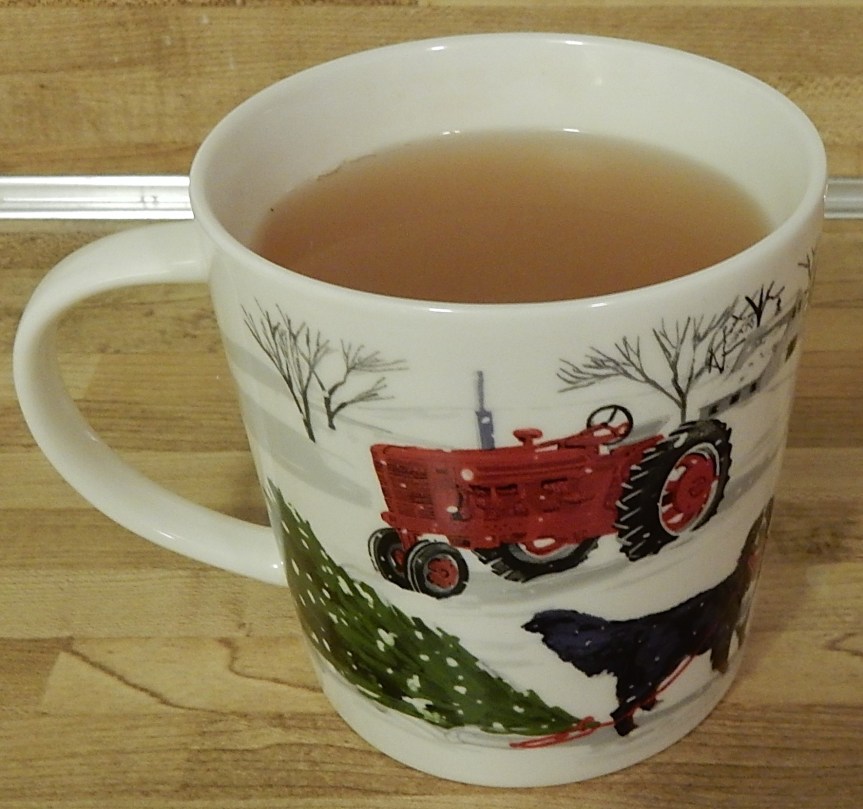 Hot mulled cider makes a delightful holiday drink. I found an easy and tasty mulled cider recipe in a hundred-year-old cookbook.
 It’s always hard to know how much to spend on gifts. Here’s what it says in a hundred-year-old home economics textbook: