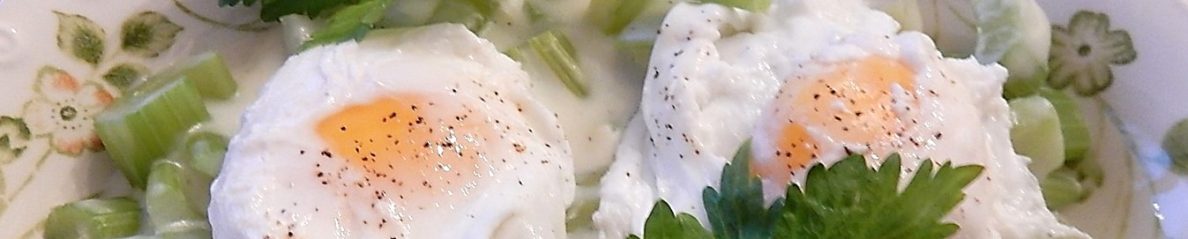
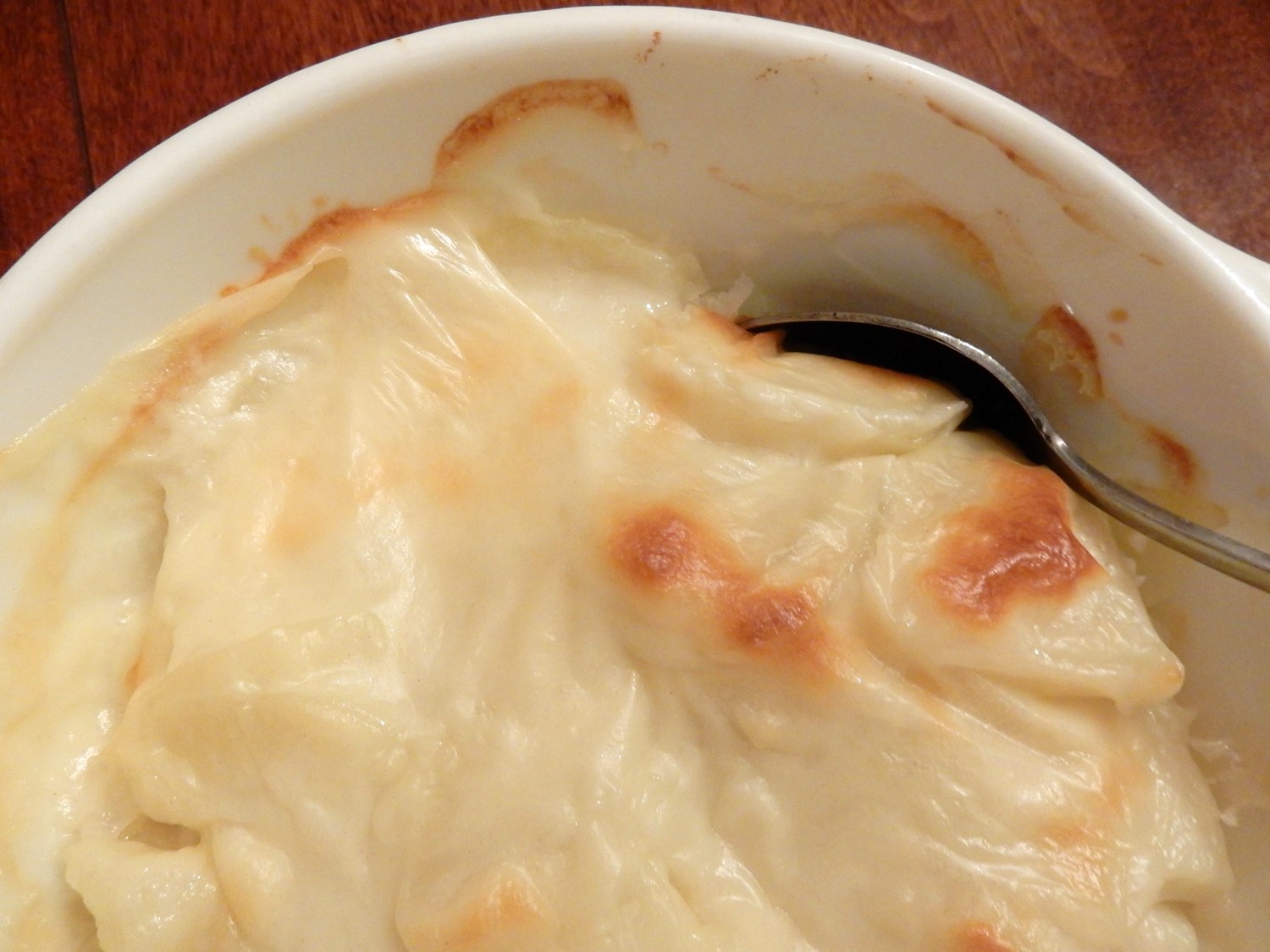
Scotch Potatoes (Scalloped Potatoes and Onions) Recipe

Scotch Potatoes

Brrr, it’s cold outside and I’m ready for some comfort foods. When I saw a recipe for Scotch Potatoes in the January, 1916 issue of Ladies Home Journal, I just had to try it.

Scotch Potatoes are very similar to Scalloped Potatoes, but they contain a lot more onions. The recipe calls for a 1:1 ratio of potatoes and onions (2 cups potatoes and 2 cups onions).

This recipe was a winner, and I may never make regular scalloped potatoes again. Scotch Potatoes wonderfully pairs the creamy potatoes with the sweet, bright, complex flavor and texture of the onions to create a lovely taste sensation.

The recipe I typically use for Scalloped Potatoes just has me put the raw potato slices into the casserole dish and then pour white sauce over it. When I bake that casserole I often struggle to get the potatoes tender before the top gets overly brown. One of my favorite things about the Scotch Potatoes recipe is that I had no issues with a burned top and under-cooked potatoes.

This recipe called for boiling the potatoes and onions for a few minutes before putting them into the baking dish. This worked perfectly—and I now wonder why I never thought of doing this before.

Scotch Potatoes (Scalloped Potatoes and Onions)

  • Servings: 6 servings
  • Difficulty: moderate
  • Print

4 medium potatoes, peeled and sliced (approx. 2 cups)

4 medium onions, sliced (approx. 2 cups)

water

1 teaspoon salt

2 tablespoons butter

2 tablespoons flour

1/2 teaspoon salt

1/8 teaspoon pepper

1 cup milk

Preheat oven to 400° F. Put the sliced potatoes and onions into a saucepan, and cover with water. Add 1 teaspoon salt. Bring to a boil, then reduce heat, and simmer until the potatoes are just barely tender (about 12 minutes). Remove from heat and drain.

In the meantime, make a white sauce by melting the butter in another saucepan. Stir in the flour, 1/2 teaspoon salt, and pepper. While stirring constantly, slowly add the milk. Continue stirring until the mixture is hot and begins to thicken.

Place the cooked potatoes and onions in a baking dish. Pour the white sauce over them, and put into the oven. Bake for 25 minutes, or until hot and bubbly, and the top begins to brown. Remove from oven and serve.

Here’s the original recipe:
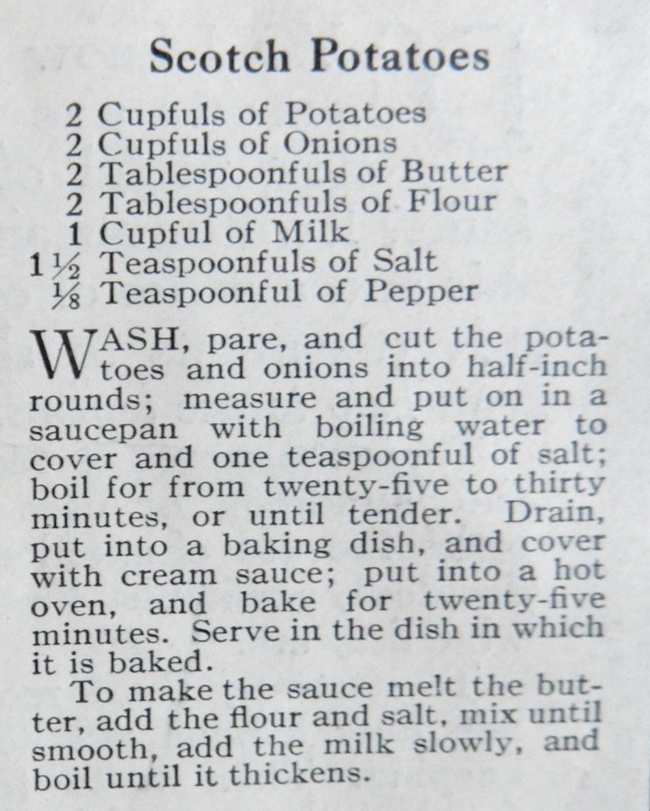
Source: Ladies Home Journal (January, 1916)

I didn’t make my potato and onion slices as thick as the slices called for in the original recipe. Mine were about 1/4 inch thick, and they worked beautifully in the updated recipe.
Hundred-Year-Old Cranberry Slush (Yuletide Punch) Recipe

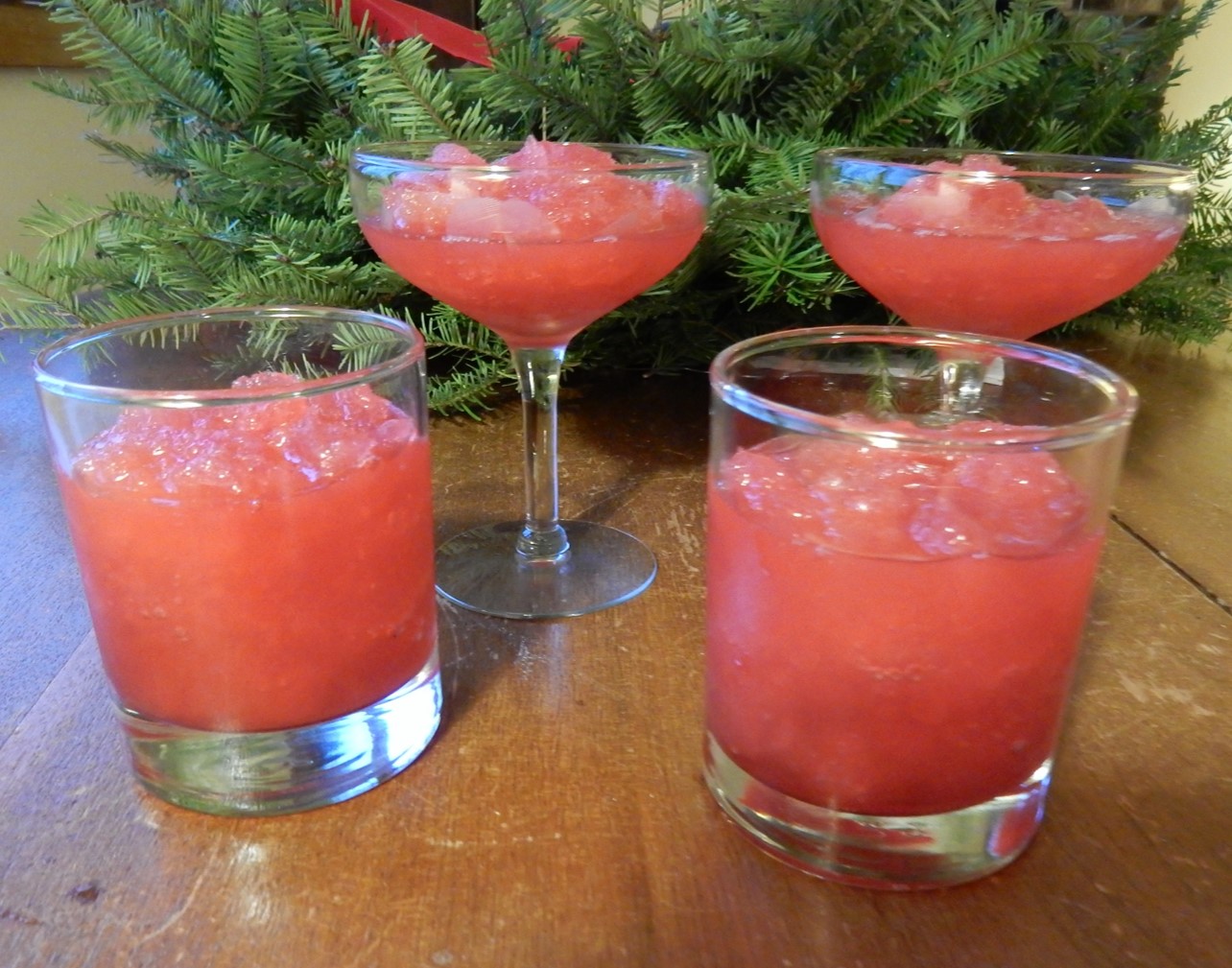
cranberry slush

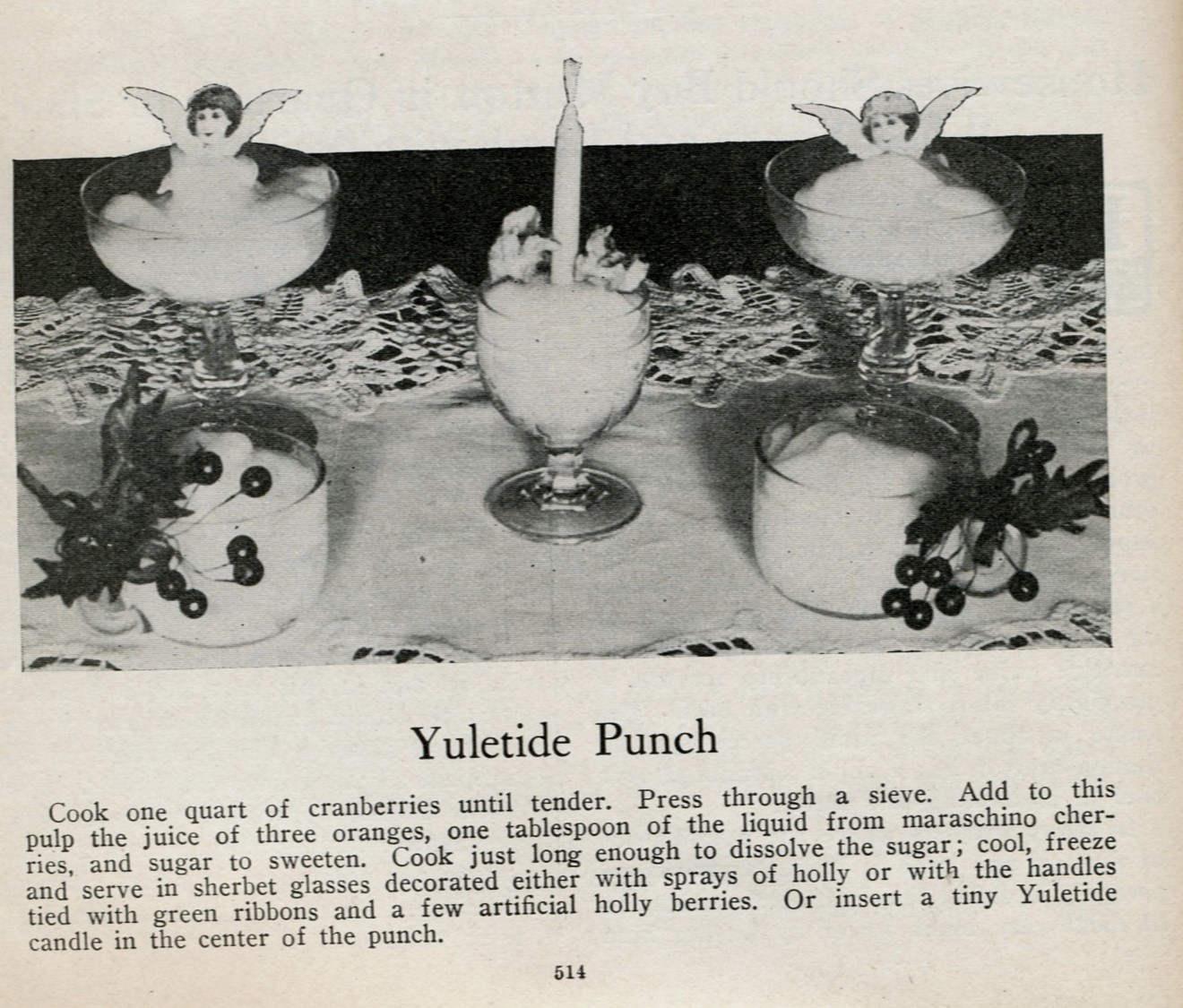
When browsing through a hundred-year-old National Food Magazine, I was amazed to see a recipe for Yuletide Punch that looked like a cranberry slush recipe to me.

Of course, I had to try it. The slush contained freshly made cranberry juice (not the over-filtered store-bought stuff) and orange juice as well as a little maraschino cherry juice. The icy, dusky pink slush was refreshing and had just the right amount of tartness.

This recipe is a keeper. The slush was easy to make, beautiful, and tasted awesome. I’ll definitely make it again.

Here’s my adaptation of the original recipe:

Cranberry Slush (Yuletide Punch)

  • Servings: 4 servings
  • Difficulty: easy
  • Print

3 cups fresh cranberries (1 12-ounce bag)

1 cup sugar

1 cup water

2 medium oranges

1 tablespoon liquid from maraschino cherries

Combine the cranberries, sugar, and water in a large sauce pan. Bring to a boil, then reduce heat and simmer until the cranberries burst and are soft. Remove from heat. Use a strainer to separate the juice from the berries.* Squeeze the oranges, and strain the orange juice. Combine cranberry juice, orange juice, and maraschino cherry liquid. Put the juice mixture in a freezer container and freeze.

To serve: Remove container from freezer 1/2 – 1 hr. prior to serving and allow the mixture to soften for easy serving. Spoon the slush into glasses, and serve immediately.

*Note: The cooked cranberries are not used in this recipe, but can be cooled and served separately.

Adapted from recipe in National Food Magazine (December, 1914)

Here is the original recipe.

Source: National Food Recipe (December, 1914)

Something doesn’t seem quite right with the old photo. The slush in the picture looks white. My slush was a dark pink.

Coconut Cream Cookies

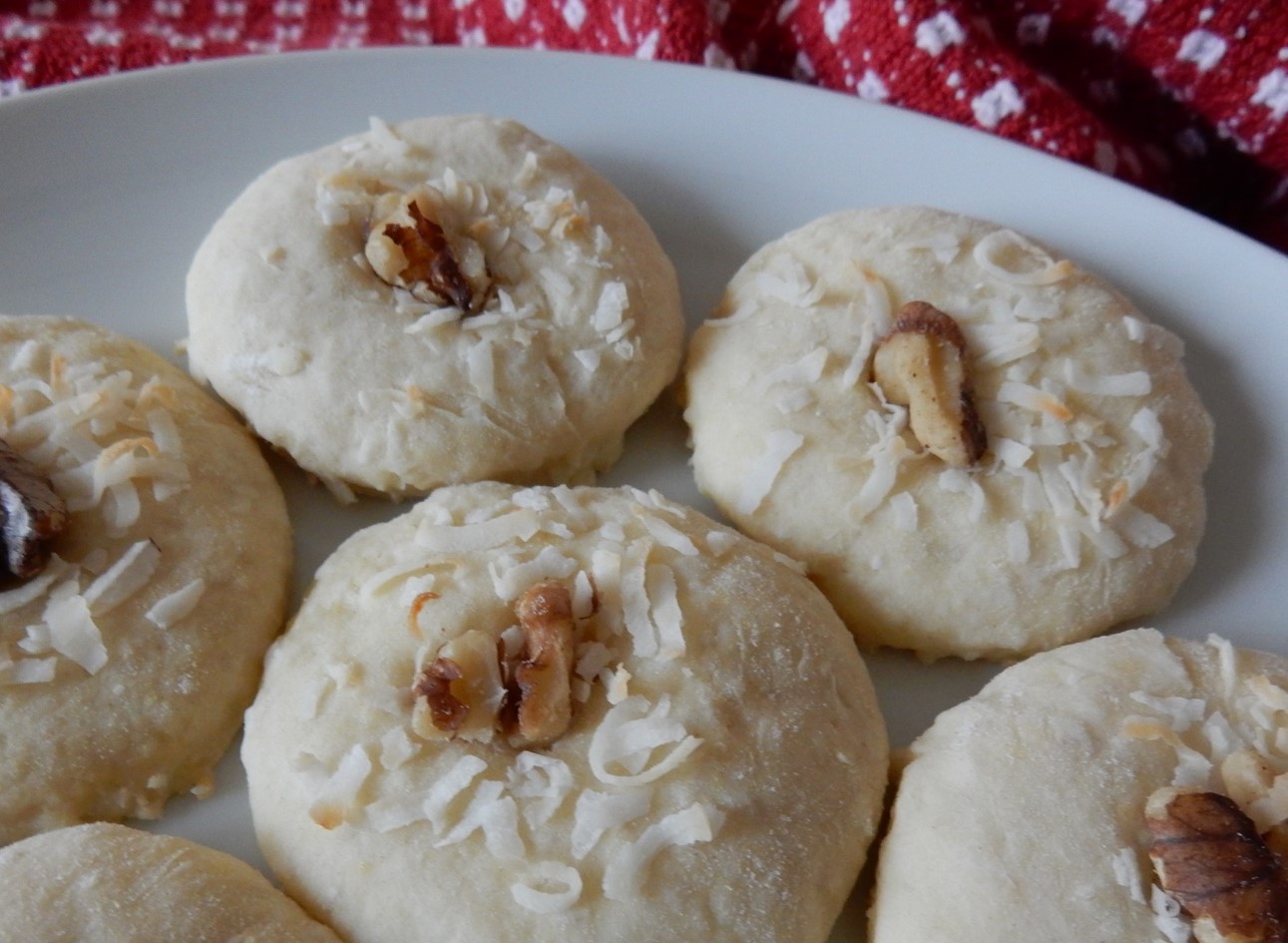
coconut cream cookies 3Cookie season is here, and it’s time to start baking for the holidays. Of course, I just had to try a “new” hundred-year-old recipe.

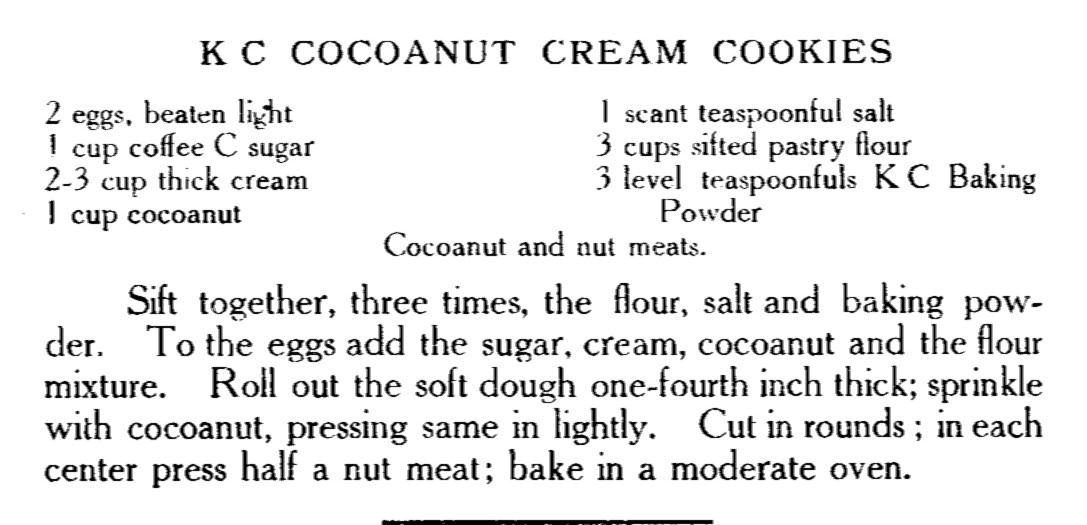
I selected a recipe for Coconut Cream Cookies that was in a small promotional cookbook published in 1911 for KC Baking Powder.

The cookies are an old-fashioned soft, chewy cookie, with a very delicate creamy coconut taste. Their mild flavor makes them perfect for nibbling while sipping a cup of coffee.

The recipe didn’t call or any butter or shortening–and I was surprised that it was possible to make cookies without it. The cream in the recipe apparently provided adequate fat to create a nice cookie texture—however, the cookies weren’t as flavorful as many modern cookies.

Here’s my updated version of the recipe:

Coconut Cream Cookies

  • Servings: approximately 25 pieces
  • Difficulty: moderate
  • Print

2 eggs

3/4 cup sugar

1 cup whipping cream

3 cups all-purpose flour

3/4 teaspoon salt

3 teaspoons baking powder

water

1 cup shredded coconut

shredded coconut for garnish

walnuts, pecans, or other nuts for garnish

Preheat oven to 350° F. Combine eggs, sugar, and cream. Add flour, salt, and baking powder; stir to combine. If the mixture is too dry, add water until a soft dough of rolling consistency forms. Stir in the coconut.

Roll out the dough one-fourth inch thick. Sprinkle with coconut, pressing in lightly. Cut into rounds; press a nut meat into the center of each cookie. Place on lightly greased baking sheet. Bake 8 – 10 minutes, or just until set and the coconut garnish is just beginning to toast.

Note: I used a 2-inch diameter cookie cutter. The coconut in the cookie dough makes this dough a little more difficult to handle than many modern doughs. A spatula can be used to transfer the cut cookies to the baking sheet.

Yield: Approximately 42 cookies

Here is the original recipe.

Source: The Cook's Book (1911)
Source: The Cook’s Book (KC Baking Powder Cook Book) (1911)

I had to make some adaptations to the recipe. I guessed that “1 coffee C sugar” was about 3/4 cup of sugar.

When I followed the recipe, the dough was extremely dry. I added additional cream, as well as water, to achieve a dough that could be rolled. Perhaps a hundred years ago, eggs were larger than the typical “large egg” of today. Also, I used all-purpose flour rather than pastry flour–and  I didn’t sift it; that might have affected the amount of liquid needed.

I also changed the spelling of coconut from “cocoanut” to “coconut” when I revised the recipe. I never see it spelled with an “a” in modern cookbooks, so I’m guessing that it’s an archaic spelling.

Nutmeg Fudge Recipe

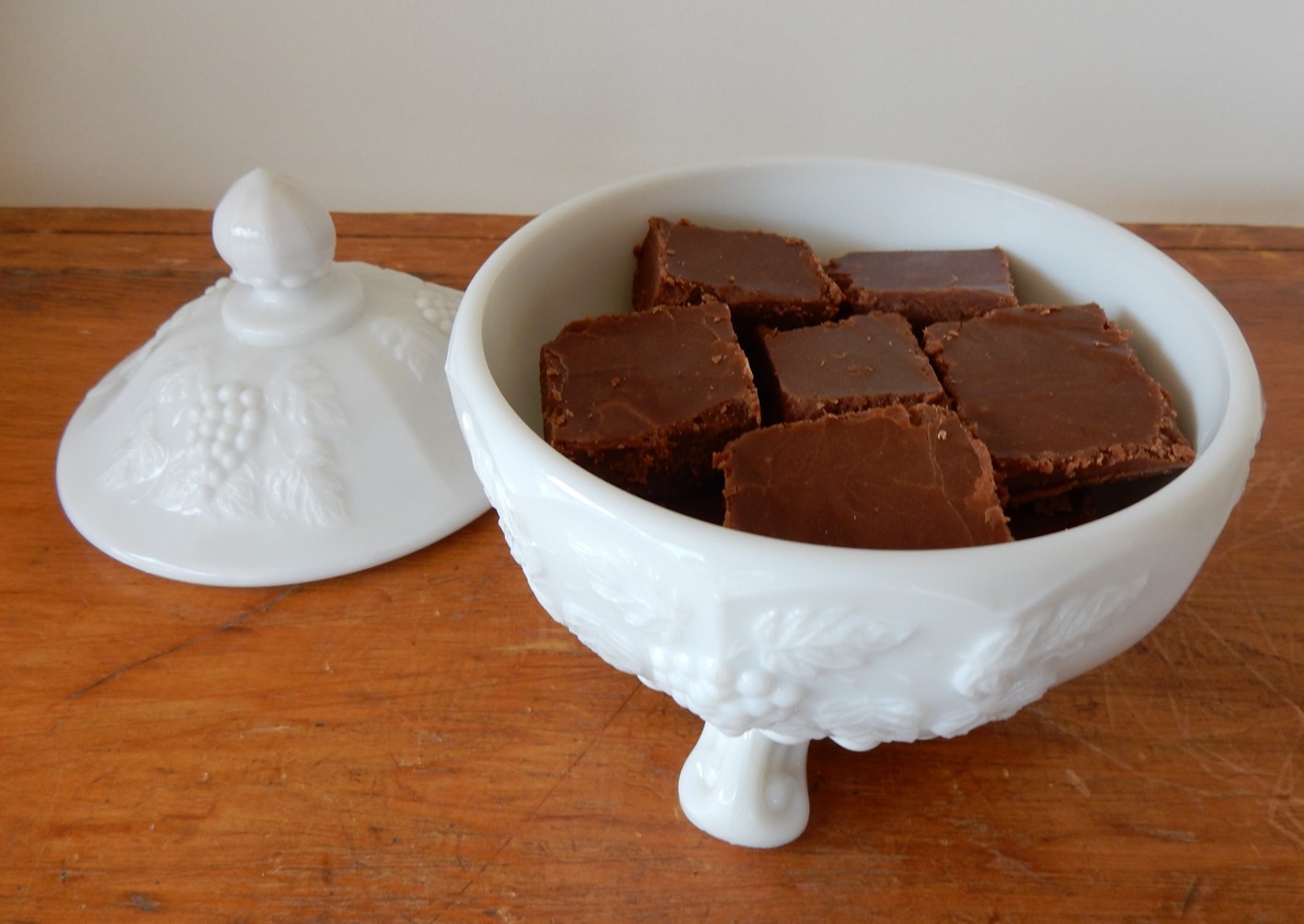
Nutmeg fudge picture

I love fudge, and when I saw a recipe for Nutmeg Fudge in a hundred-year-old magazine I just had to try to try it.

The verdict—The fudge was wonderfully smooth and creamy. I noticed unexpected nutmeg undertones when taking the first nibble, but then the warm, spicy hint of nutmeg balanced nicely with the sugar to create a fudge that was less sweet than many fudges.

Nutmeg Fudge

  • Servings: approximately 25 pieces
  • Difficulty: moderate
  • Print

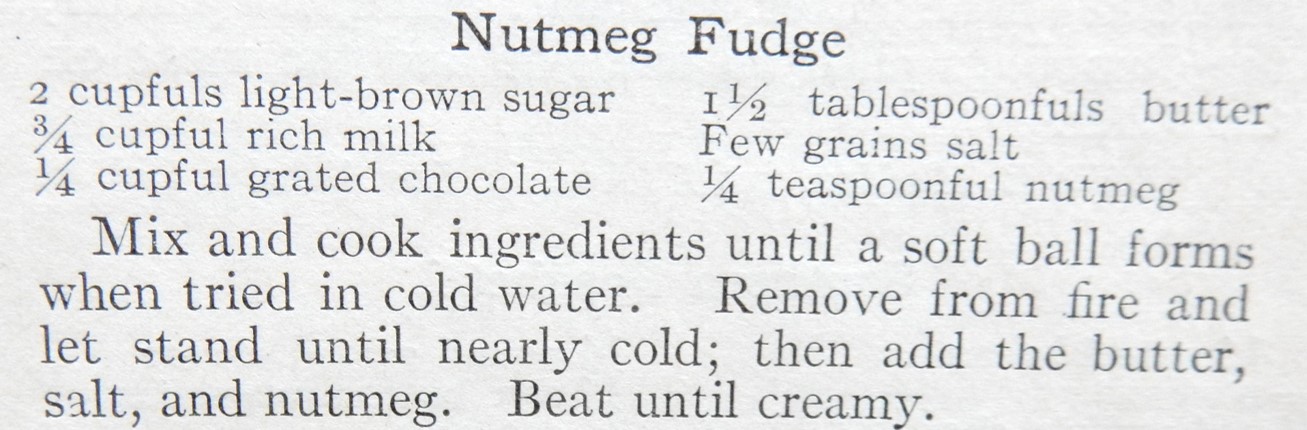
2 cups light-brown sugar

1/2 cup milk

1/4 cup whipping cream

1 ounce unsweetened chocolate, melted

1 1/2 tablespoons butter

1/8 teaspoon salt

1/4 teaspoonful nutmeg

Combine brown sugar, milk, cream, and melted chocolate in a heavy saucepan. Using medium heat, heat until the mixture just begins to boil. Reduce heat to low and continue cooking without stirring until the mixture reaches the soft ball stage (235° F.). Remove from heat; then stir in butter, salt, and nutmeg.

Cool until lukewarm; then stir vigorously until the mixture becomes creamy and begins to thicken. Pour into a small buttered pan (6” X 6”). When firm cut into squares.

Adapted from recipe in Good Housekeeping (December, 1915)

Here’s the original recipe:

Source: Good Housekeeping (December, 1915)