Sharpless Bread Maker

Sharpless bread maker 2

A hundred-years-ago, Good Housekeeping had a monthly feature on “Tested Helps for Housekeepers” which showcased new kitchen gadgets and appliances that had received the Good Housekeeping seal of approval.

One item that got the seal of approval was the Sharpless Bread-Mixer:

This machine will make bread of uniformly excellent quality in inexperienced hands. The principle of operation is radically different from other machines or from that used in making bread by hand. The liquid ingredients and softened yeast are placed in the lower section and the flour above, separated by a sifting-screen. Turning the crank sifts through just as much flour at one stroke as the beating paddles can thoroughly mix with the liquid.

Thus, as soon as all the flour is sifted through the bread is “mixed” and ready for its first raising. The whole process requires less than a minute for five pounds of bread, and when raised the can be immediately molded into loaves for baking.

Many housekeepers ask if machine-made bread is better than that made by hand. It is invariably better when compared with that made by inexperienced cooks. . . It is therefore safe to say that home-made machine bread will be an improvement over the hand-made variety in ninety percent of homes. . .

The price is $8.00 delivered.

Good Housekeeping (March, 1916)
Old-fashioned Beet Relish Recipe

beet relish

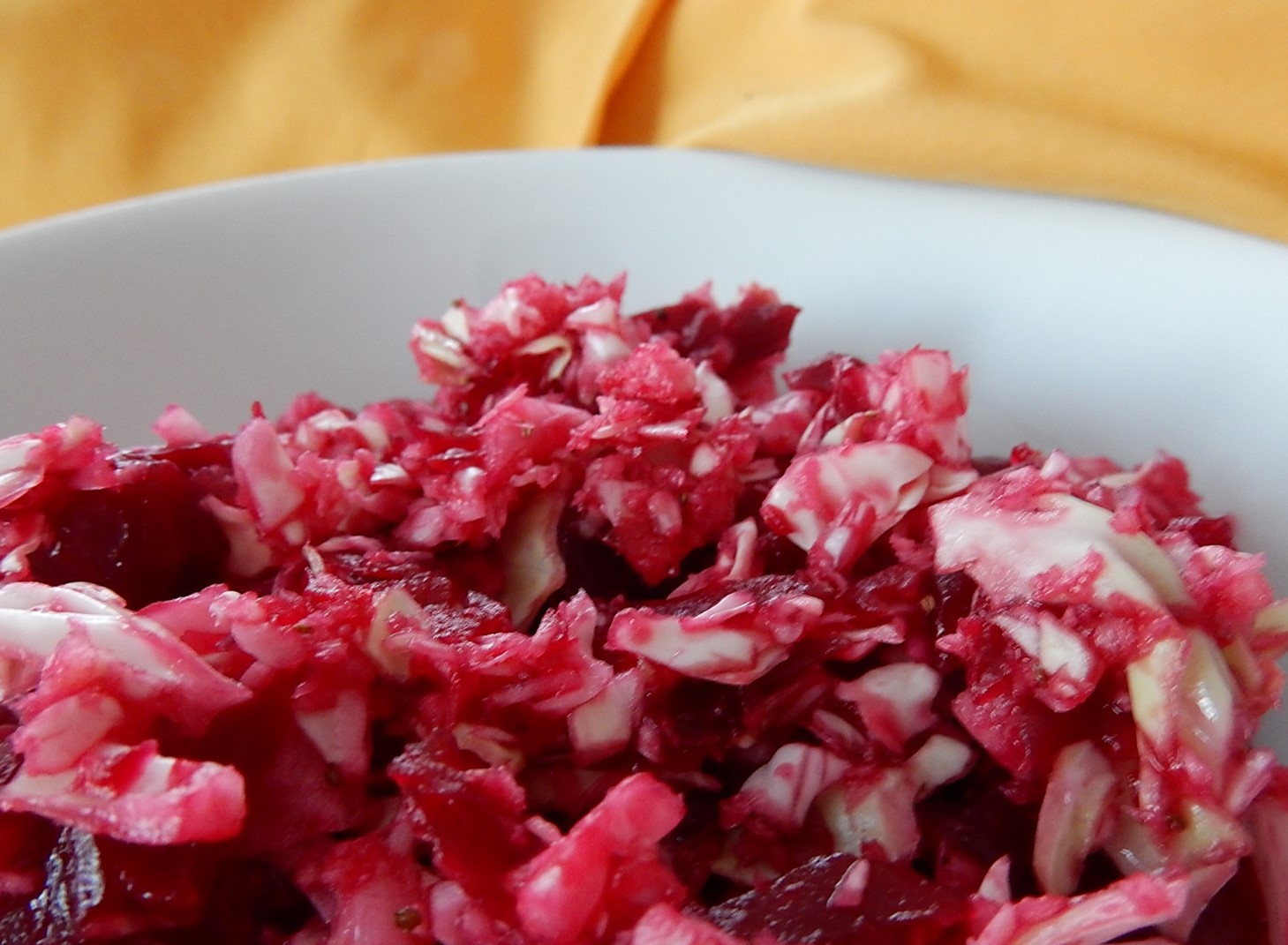
I’m always on the outlook for salads and relishes that use seasonal ingredients. When browsing through the January, 1916 issue of Good Housekeeping, I came across an intriguing recipe for Beet Relish. Of course, I had to try it.

The Beet Relish contains chopped beets and cabbage in a tangy vinegar dressing that has a fun horseradish kick. This recipe makes an absolutely beautiful, slightly flashy, sweet- sour side dish.

Beet Relish

  • Servings: 5 - 7
  • Difficulty: easy
  • Print

1  cups sugar

1 cups vinegar

1 tablespoon salt

1 tablespoon dry mustard

1 tablespoons celery seed

2 cups cooked beets, chopped

1/2 small head of cabbage, chopped

1/8 cup to 1/2 cup horseradish, grated

Combine sugar, vinegar, salt, dry mustard, and celery seed in a bowl. Add chopped beets and chopped cabbage; stir to combine. Add horseradish to taste. Refrigerate for at least 24 hours before serving. Will keep in the refrigerator for several weeks.

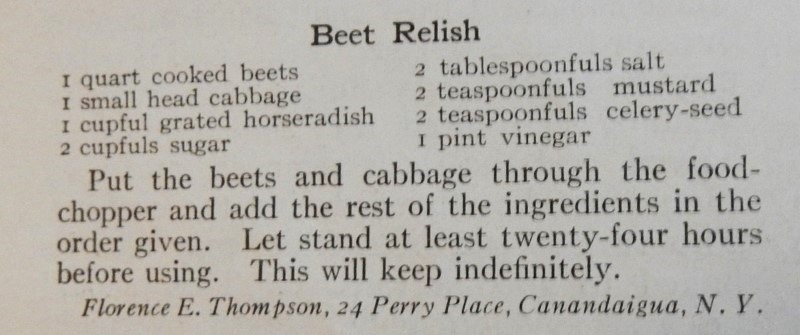
Here is the original recipe:

Good Housekeeping (January, 1913)

I halved the recipe when I made it. I also used much less horseradish than called for in the original recipe. A little horseradish adds a nice peppery flavor to this dish–but too much can easily overwhelm the other flavors.

Let’s Eat Oranges

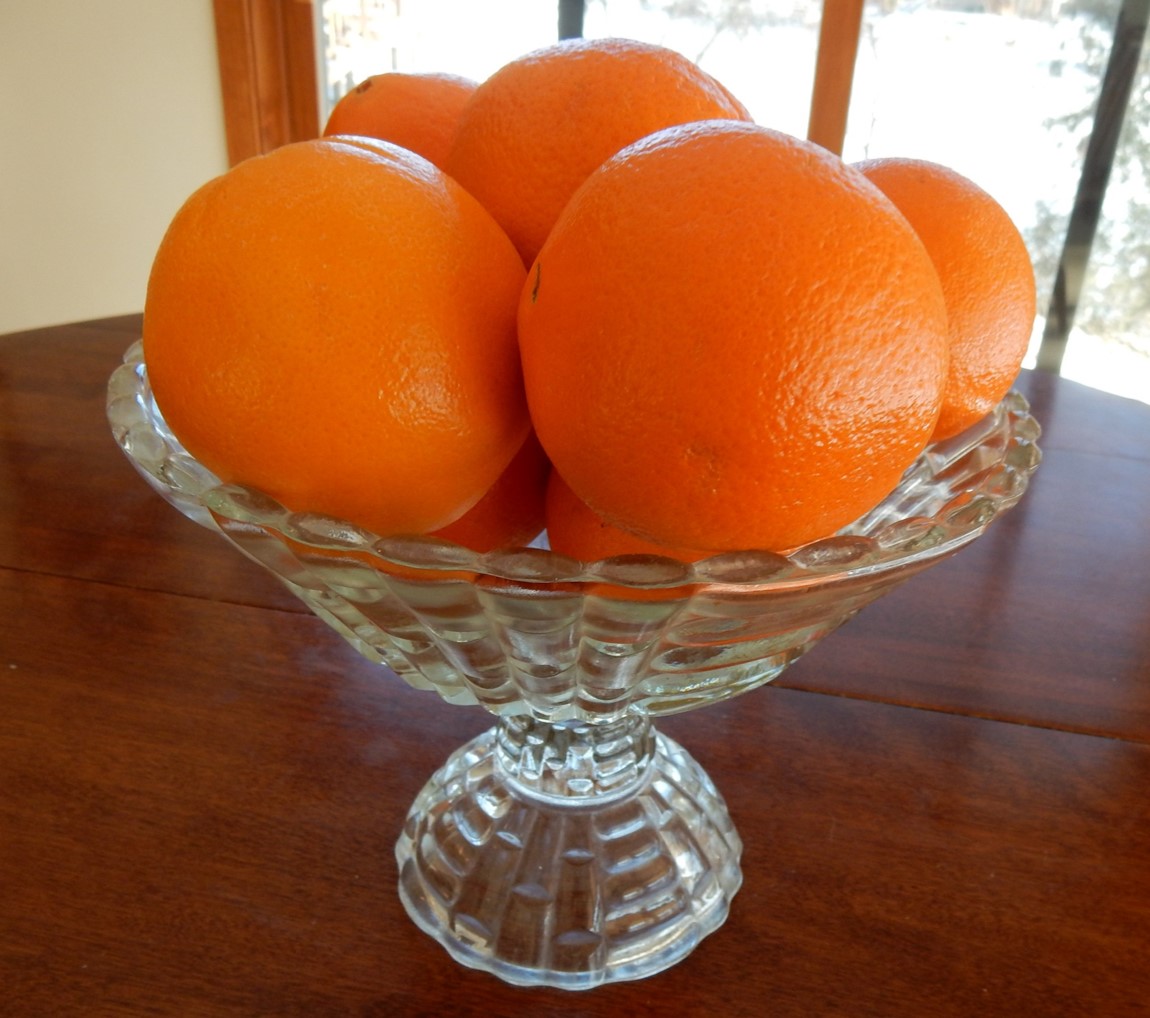
orangesThe rail system in the United States was in largely in place by the 1910’s, but I’m still surprised sometimes about how readily (and inexpensively) fresh produce was transported across the country a hundred years ago.

Here’s part of a 1916 magazine article about oranges:

Let’s Eat Oranges

Probably the reason many of us consider the orange a luxury rather than an every-day food is because we still cherish memories of the time when the fruit was high-priced and not widely distributed, and an occasional orange was a surprise often reserved for the toe of the Christmas stocking.

Many of us are more or less slaves of our habits of thought, and in face of the fact that oranges can be purchased from December to April at almost any price, and the rest of the year at prices which are moderate when the value received is considered , we do not take advantage of their wonderful dietetic properties because we consider them too expensive.

It is generally known that the orange contains citric acid, which s a liver stimulant, and that it is a gentle laxative. But its wonderful supply of phosphates, a direct nerve-food, is usually overlooked, and the fact the oranges therefore have a most beneficial effect in cases of insomnia is practically unknown. In short, the importance of the orange as an every-day food the year round cannot be too greatly emphasized.

Good Housekeeping (March, 1916)

Steamed Chocolate Nut Pudding with Hard Sauce Recipe

steamed chocolate nut pudding

Hundred-year-old cookbooks have oodles of steamed pudding recipes. These slow-cooking molded desserts were easy to make back in the days when people had a fire constantly burning in a wood stove. I have vague warm fuzzy memories of steamed puddings made by an elderly neighbor when I was a child, and I’ve wanted a pudding mold for some time–so I was thrilled to get one for Christmas.

A few day ago I flipped through my old cookbooks, and tried to decide which pudding recipe to make. I finally decided to try the recipe for Chocolate Nut Steamed Pudding because it sounded delicious – and didn’t require steaming for as long as many other puddings. (It only needed to be steamed for 1 1/2 hours.)

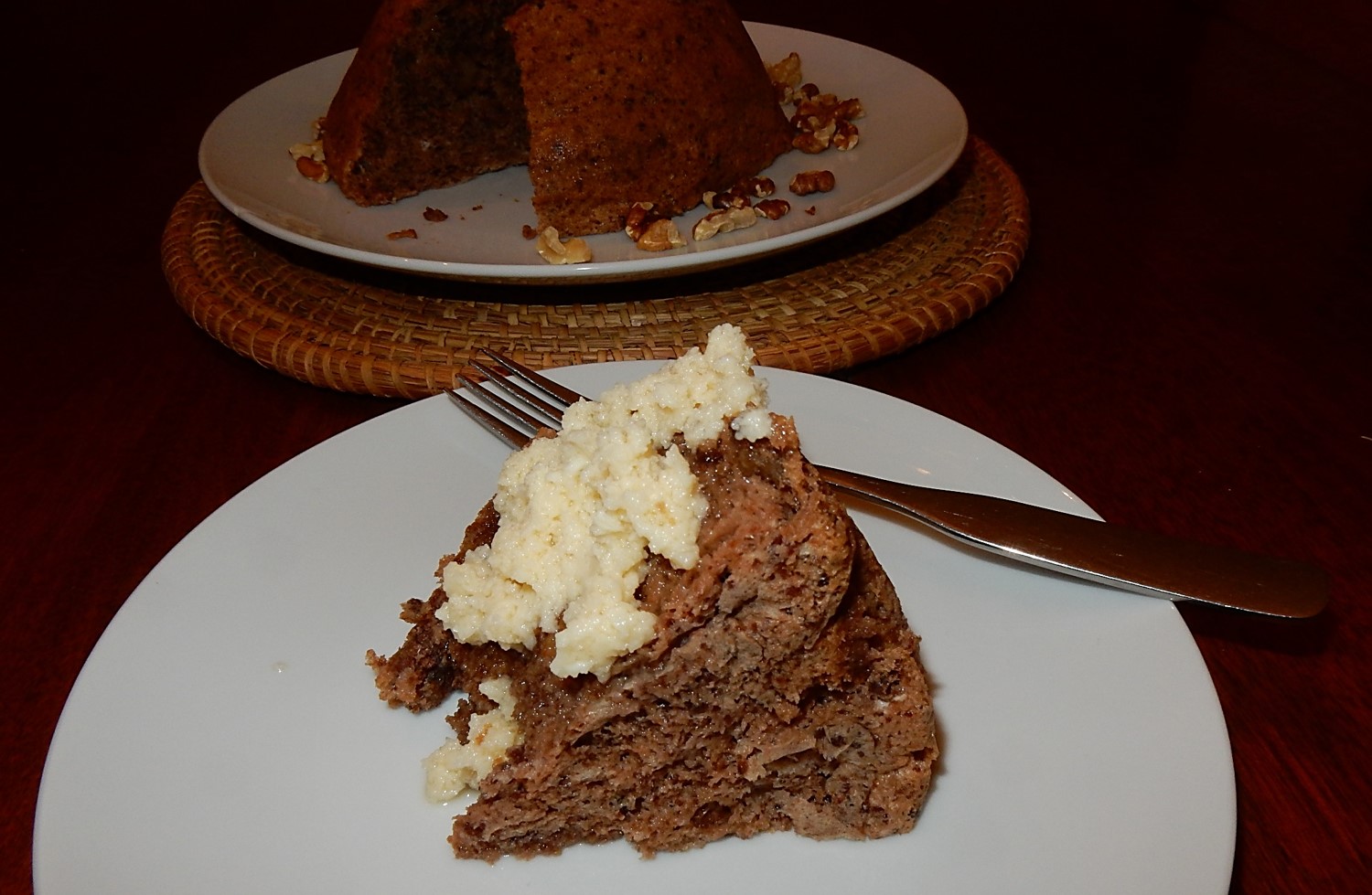
This recipe was worth the time and effort. The pudding was incredible.  I expected the pudding to be heavy and rich–and was thrilled that it actually was moist, yet light, with a hint of chocolate that enhanced the taste of the walnuts. The recipe called for beating 5 egg whites (and only 1/2 cup of flour) which resulted in a very light cake-like dessert.

I served it with Hard Sauce (which is actually a brandy butter). The Hard Sauce partially melted on the warm pudding surface releasing a luscious buttery brandy essence .

Here’s my updated version of the recipe for modern cooks:

Steamed Chocolate Nut Pudding

  • Servings: 5 - 7
  • Difficulty: difficult
  • Print

Steamed Pudding

2 tablespoons sugar

1/2 cup flour

1/4 teaspoon salt

1 ounce unsweetened baking chocolate, grated

1/2 cup milk

5 eggs, separated

1/2 cup sugar

1 cup walnuts, chopped

In a saucepan, combine the 2 tablespoons sugar, flour, salt, and grated chocolate. Gradually stir in the milk to make a smooth mixture; and put on a stove burner at medium heat. Cook until the mixture thickens while constantly stirring. (This mixture become quite thick, so use care not to scorch.) Remove from heat and set aside.

Put the egg whites in a bowl, and beat vigorously until stiff peaks form.

Working quickly (so the egg whites remain beaten), put the egg yolks and sugar in another bowl; and combine. Add the chocolate mixture, and beat until smooth. Stir in the walnuts, and then gently fold in the beaten egg whites.

Put the mixture in a greased mold, and steam for 1 1/2 hours.* Remove from mold and serve warm with Hard Sauce. (This pudding is also excellent cold without the Hard Sauce.)

*Notes: I used a 2 liter mold, but had some extra space at the top. A 1 1/2 quart mold would be large enough. Historically coffee cans were often used as molds. BBC Good Food has an excellent video that succinctly describes how to steam a pudding (or follow the directions that come with the mold).

Hard Sauce

1/2 cup butter

1 cup powdered sugar

1 teaspoon water

2 tablespoons brandy

Cream the butter, then slowly add the powdered sugar while stirring constantly. While continuing to stir, add the water, and then the brandy.

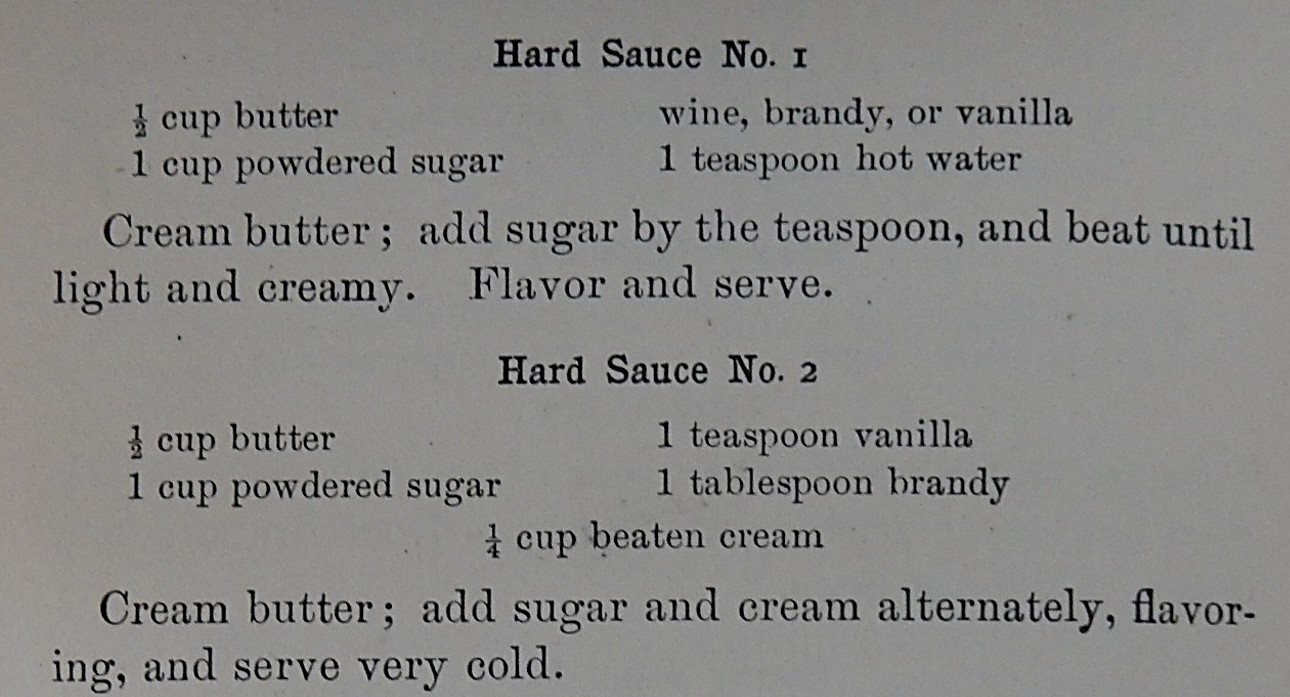
Here are the original recipes:

Source: Lowney's Cook Book (1912)
Source: Lowney’s Cook Book (1912)

There were two Hard Sauce recipes in the cookbook. I adapted the first one.

Source: Lowney's Cook Book (1912)
Source: Lowney’s Cook Book (1912)

Whirling Lettuce

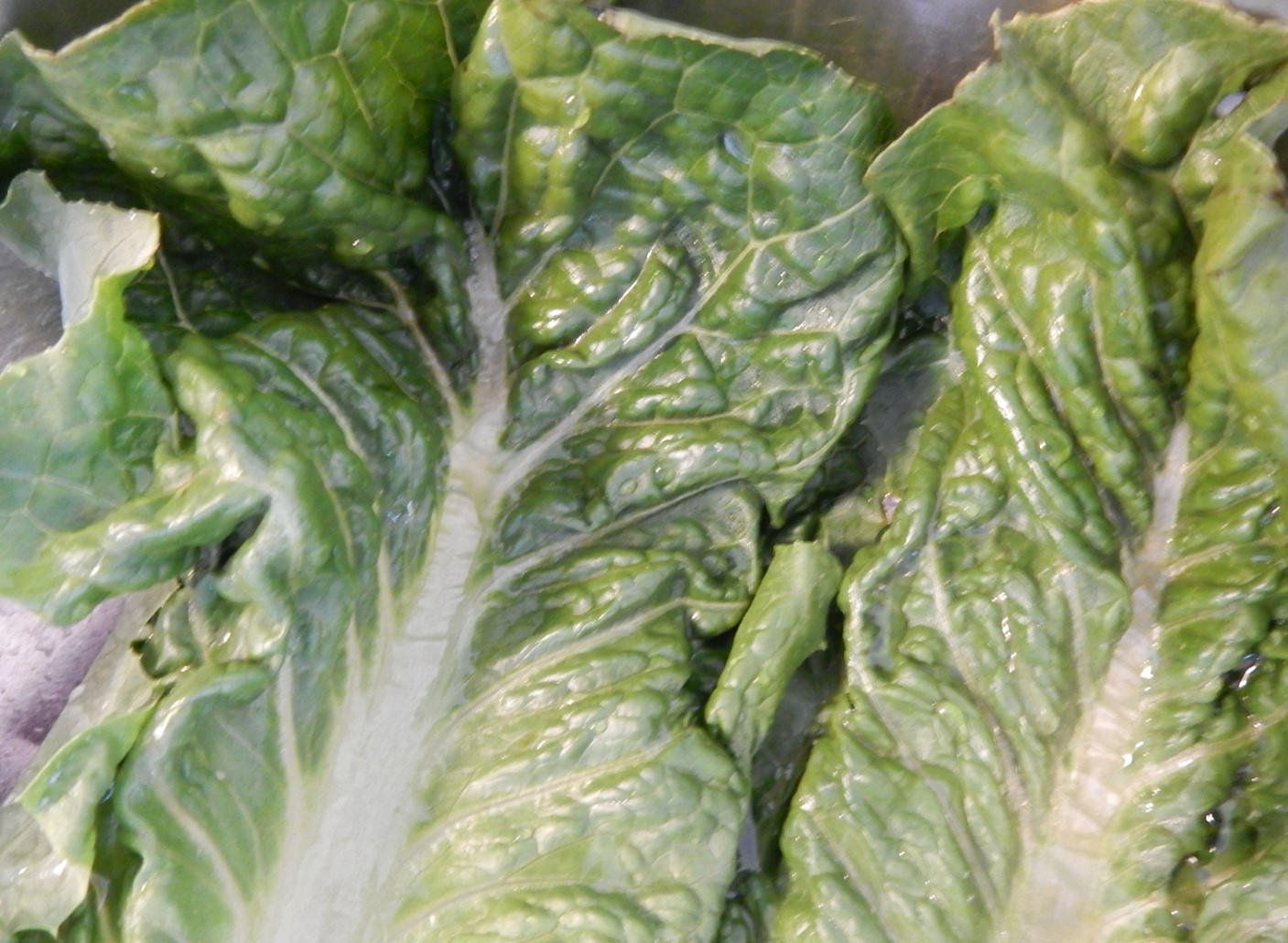
lettuce leaves

A hundred-years-ago Good Housekeeping magazine had a column that contained household tips submitted by readers.

Source: Good Housekeeping (January, 1916)

When I wash lettuce, it’s always a little tricky to get it dry before making a salad, so I was very excited when I saw a tip for drying lettuce in the magazine:

To Dry Lettuce for a Salad

The most effective way of drying lettuce, I have found, is to place it in a clean dish towel after washing, gather the sides and corners in the hand so as to form a bag, step to the kitchen door, and whirl the bag at arm’s length three or four times. This drives out almost every particle of water from the lettuce.

Mrs. C. H. C., Colo.

Good Housekeeping (January, 1916)

Of course, I had to give it a whirl.

lettuce whirling

Do I recommend whirling lettuce to dry it?

Naw—I just about froze. It’s way too cold to whirl lettuce in January.

Old-fashioned Silky Cauliflower Soup Recipe

Silky Cauliflower Soup

One of my New Year’s resolutions is to lose a few pounds. I’m trying to eat healthy (and January is the perfect time for soup), so I looked through my hundred year-old cookbooks for a soup that was light yet rich and tasty. I wasn’t sure it was possible to find a soup that met my criteria, but I think that I came up with a soup that fits the bill.

I found a recipe for Cauliflower Soup in Lowney’s Cook Book (1912). This milk-based soup is a very smooth, strained soup—and not very thick; so I think that today it would be considered a “silky” soup.

This Silky Cauliflower Soup is lovely, and has a surprisingly subtle cauliflower taste. The soup will warm you up on a cold winter day–plus, it’s light enough that you don’t need to feel guilty.

Here’s my updated version of the recipe for modern cooks:

Silky Cauliflower Soup

  • Servings: 5
  • Difficulty: moderate
  • Print

1 medium head cauliflower, coarsely chopped

water

4 tablespoons butter

1/3 cup chopped onion

4 tablespoons flour

4 cups water

1 egg yolk, beaten

2 teaspoons salt

1/8 teaspoon ground pepper

2 cups milk

2 tablespoons Parmesan cheese, grated

Put chopped cauliflower in a saucepan and cover with water, bring to a boil and cook until tender. Drain cooked cauliflower and puree in a blender or food processor.

In the meantime, melt butter in a large saucepan; then add the chopped onions and saute until tender. Stir in the flour, and slowly add 3 cups water while stirring constantly. Stir the egg yolk into the remaining 1 cup water; and then add the egg and water mixture to contents of the large sauce pan while continuing to stir constantly. Add the pureed cauliflower, salt, and pepper to the mixture and bring to a boil. Remove from heat and strain. Return the liquid to the pan and stir in the milk. Heat until hot, then stir in the Parmesan cheese and serve.

Here’s the original recipe:

Source: Lowney's Cook Book (1912)
Source: Lowney’s Cook Book (1912)

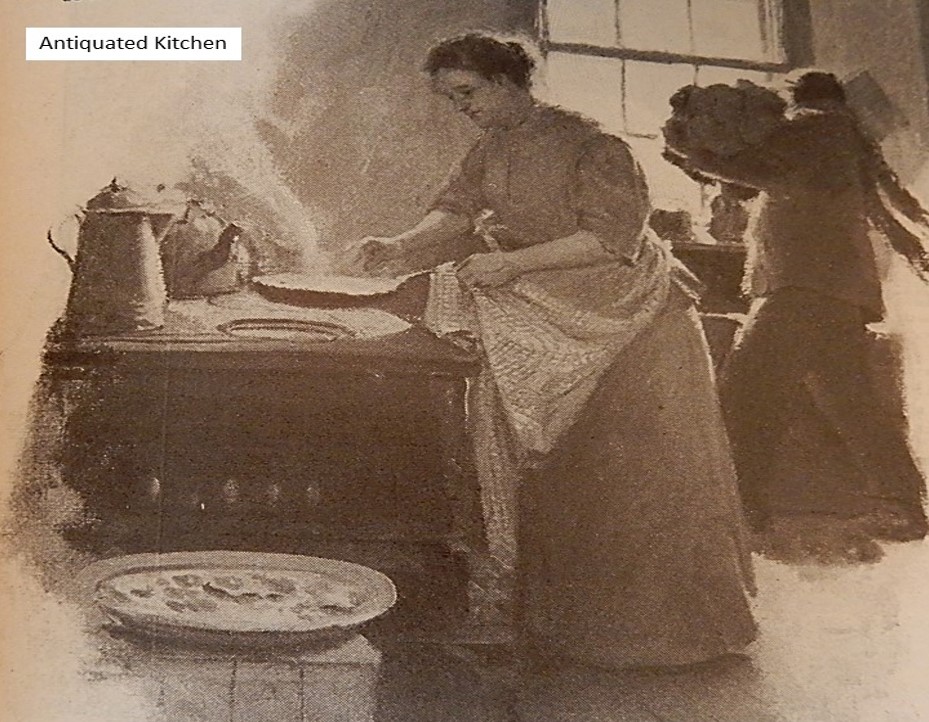
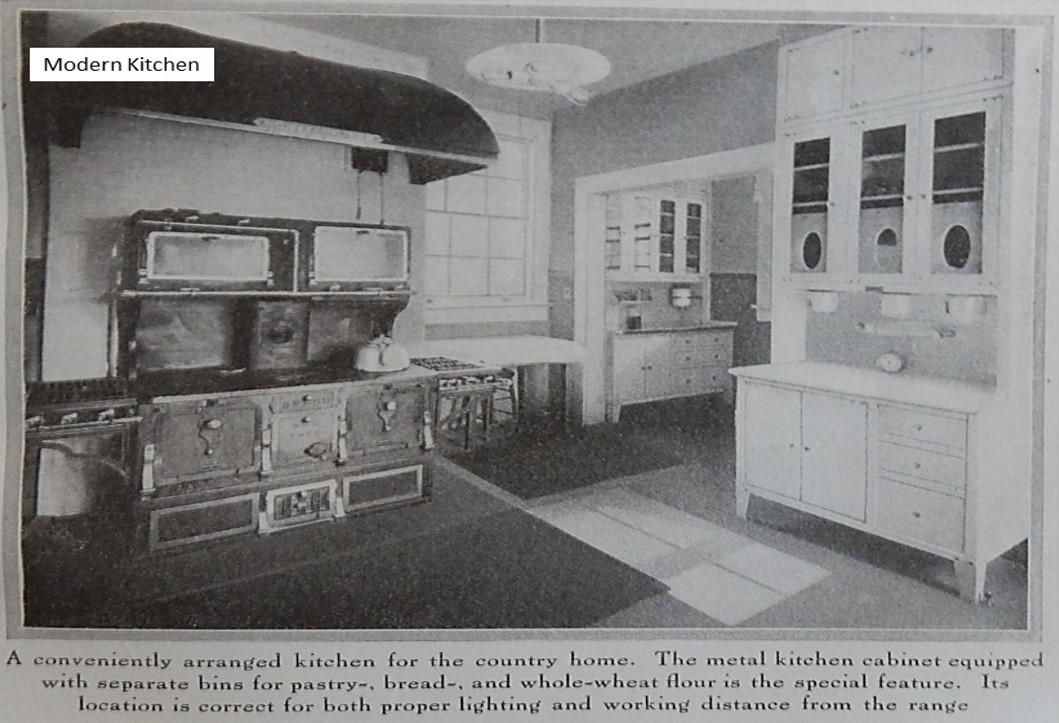
Get Rid of that Antiquated Kitchen – Modernize

Source: Good Housekeeping (November, 1915)

The holidays are winding down and many of us have spent long hours in the kitchen preparing for large family gatherings. Perhaps now is a good time to consider what it was like to prepare meals in kitchens a hundred years ago.

This April, 1915 article in Farm Journal implored farmers to consider how difficult it could be for their wives to cook in antiquated kitchens—and to make sure that modern conveniences were equitably distributed across the farm and the house.

With families averaging 5.2 members in number, the housewife preparing three meals a day, provides in the course of a year 5,694 meals, a discouraging proposition under the best conditions, but cooked in the average kitchen, it becomes deadly monotonous.

The lack of running water, a poor stove, the empty wood box, the heavy teakettle and iron pots, insufficient towels, antiquated woodenware, rusty and battered tin ware, the lack of a pantry, the cold in winter and heat in summer, the lack of screens, –I wonder how many meals the men folks would cook under these conditions.

In these days, when efficiency is required along every line of work. I wonder how our women work against such heavy odds. If the men had to cook and keep the kitchen clean, they would want linoleum on the floor, they would have running water, the stove would not smoke and the wood box would never be empty. There would be good, handy and substantial tools to work with, the teakettle would be easy to lift and easy to clean, the knives would be sharp—oh, I am sure of that!

There would be towels galore, and they would be good ones; a pantry would be built to save running to the cellar, the kitchen would be protected in winter and shaded in summer, doors and windows would be screened, there would be a stool to sit on while doing some kinds of work, and a low, comfortable chair for other work, and a few minutes’ rest, now and then. There would be some good way to prop the ironing-board (no makeshift here) and irons enough to allow time for thorough heating.

As the work is almost entirely done by women, they get along with things as they are, renewing and replacing the old as they have the opportunity.

The farmer and his wife (or daughter, or sister, whoever does the work) should constitute a partnership, and for every convenience secured for his part of the work, there should be one for hers. It need not always represent an outlay of money, but it will represent love, appreciation, the desire to protect and willingness to cooperate, which is the foundation for family happiness and prosperity.

Source: Good Housekeeping (May, 1916)