Raisins were used in many holiday recipes a hundred years ago. They were popular because “modern” technology enabled them to be produced inexpensively. And, once produced, they were easy to transport to even the most remote locales.
People had more raisin choices back then: seeded (seeds extracted), seedless (made from seedless grapes), and cluster (on stems, not seeded). Why would anyone would want the cluster variety? Did people remove the seeds and stem them after they purchased the package? It must have been a real pain to get them into a form where they could actually be used.
The older I get, the more I enjoy foraged foods. They bring back powerful memories of foods my ancestors loved. Last September my husband and I were thrilled to find a hickory nut tree in a fence row. We gathered and hulled the fallen nuts, then brought them home and spread them out on newspapers to dry.
Last week-end we cracked the hickory nuts and then used nut picks to remove the tiny nut meats. The process was incredibly tedious—and the pile of shelled hickory nuts grew with agonizing slowness.
I knew that I had to find the perfect recipe to use the precious nuts. When I saw a recipe for Hickory Nut Macaroons in the Lycoming Valley Cook Book, I just had to try it. The cookbook is a 1907 church cookbook compiled by the Ladies of the Trout Run M.E. Church, Trout Run, Pa.
Preheat oven to 350° F. Put the egg whites into a mixing bowl and beat with an electric beater until stiff peaks form. Slowly add sugar, one tablespoon at a time, while continuing to beat. Add flour, and beat just enough to blend it into the mixture. Then gently fold the hickory nuts into the egg white mixture. Drop by rounded teaspoons two inches apart on greased baking sheets. Bake for 12-14 minutes or until the macaroons are just starting to turn light brown.
Makes approximately 36 macaroons.
The verdict—The macaroons were incredible. They were light and airy with a chewy texture on the inside and crispy on the outside, and the complex buttery taste of the hickory nuts took me back to long-forgotten flavor sensations from my childhood.
Here’s the original recipe. Would you interpret it the same way that I did?
Source: Lycoming Valley Cook Book, Compiled by the Ladies of the Trout Run, Pa. M.E. Church (1907)
Grandma bastes her turkey
With gravy in a pan.
I watch her when she does it,
And help her when I can.
But why she calls it basting
Is somewhat hard to guess;
For mother bastes with needles
When she makes me a dress.
Author: Helen M. Richardson
Source: Farm Journal (December, 1915)
Sweet potatoes are part of my family’s Thanksgiving traditions, but frankly I’m tired of candied sweet potatoes and sweet potatoes with marshmallow topping, so I dug through hundred-year-old recipe books looking for something “new.”
I found Sweet Potato Pone, and just had to give it a try.
The pone looked plainer than many sweet potato dishes; but it was lovely, with a sweet, ginger flavor and citrus undertones. It had an almost pudding-like quality.
4 cups hot mashed sweet potato (6-7 medium sweet potatoes)
1 cup milk, heated until hot
2 tablespoons ground ginger
1/4 teaspoon salt
Wash the orange. Using a grater, grate the orange rind. Set the grated rind aside. Cut the orange in half and squeeze the juice; set the juice aside.
Preheat oven to 350° F. Combine the butter and sugar in a mixing bowl. Beat until creamy, and then add the remaining ingredients and beat until the mixture is smooth. Put into a casserole dish, and place in the oven. Bake for 1 hour.
Adapted from Lowney’s Cook Book (1912)
I’m not sure why this recipe is called a pone. According to the dictionary pone is a type of cornbread, but this recipe doesn’t call for any cornmeal.
Here’s a picture of the original recipe. Would you have interpreted the recipe the same way I did?
As we approach the holiday season, we sometimes forget to treat our stomachs kindly. Here are four hundred-year-old questions that I need to remember to regularly ask myself:
Have I eaten too much? Most digestive troubles are brought about by a systematic habit of overeating.
Do I eat hurriedly? Don’t eat with your eyes of the clock. Chew your food thoroughly and eat slowly. Lay aside the worries of business and pressure of social engagements at meal time. Take time, and plenty of it.
Do I take proper exercise? Physical activity increases the digestive powers and stimulates all the organs of the body, while sedentary habits favor a slow digestion and a sluggish condition of the system.
Do I eat improper food? Eat only food that agrees with you. If you find a certain food always produces ill results, let it alone. Why suffer innumerable torments for a fleeting pleasure of tasting something good?
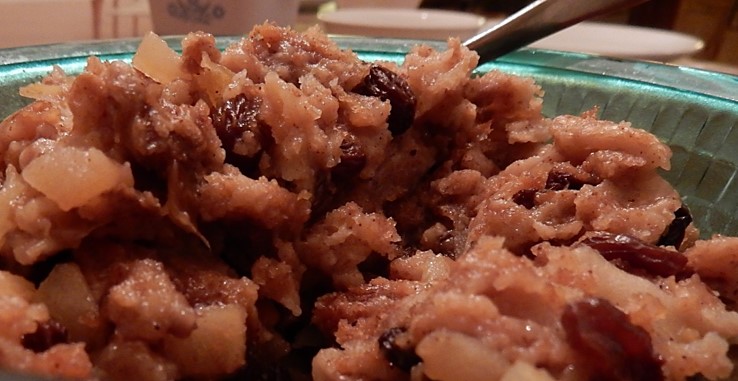
Thanksgiving is rapidly approaching and I’m trying out old recipes to see which ones I want to serve on the big day. The stuffing I usually make contains celery, onions, and sage, and seems a bit boring, so I pulled out an old recipe for Apple Raisin Stuffing.
Apple Raisin Stuffing is wonderfully different from my old standby. It has a lovely, sweet cinnamon taste that reminds me of warm cinnamon bread. This recipe is a keeper. My children never have been fans of stuffing—but I actually think they might like this rendition, and plan to serve it over the holidays.
For my practice run, I divided the recipe in half and stuffed a chicken. I think that the full recipe would make about the right amount to stuff a small turkey.
1 large apple, pared and diced (about 1 cup diced apple)
1 cup raisins
10 cups bread cubes
1 teaspoon cinnamon
1/8 teaspoon nutmeg
2 teaspoons salt
1/2 cup sugar
1 cup water
Combine diced apples, raisins, and bread cubes in a large bowl. In a separate bowl stir together the cinnamon, nutmeg, salt, sugar, and water; then pour over the bread mixture. Stir gently to combine. If too dry, add additional water. Use stuffing with poultry or pork.
When I wrote this post, I was uncertain whether to call this dish stuffing. . . or dressing. . . or filling. My family often calls it filling—but I think that might be a regional term.
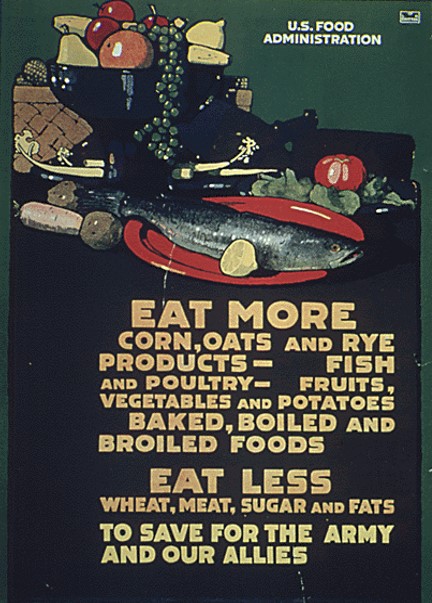
A hundred years ago meat was expensive, and in short supply, because much of it was needed to feed the soldiers fighting in World War I. Here’s what a magazine article said:
With meat at war prices, every housewife should learn to make tasty and nourishing meals with wholesome substitutes to be had at half the price of meat. One of the best substitutes for meat is cheese, and there are so many ways of preparing dishes of cheese that the housewife should learn to make use of this very wholesome food.
Another wholesome substitute is baked beans.
Roast beef— An average helping or portion, weighing 3 1/2 ounces, contains 360 food units, supplies 4/5 ounces protein, and costs 8 cents.
American pale cheese—An average helping weighing 2 3/4 ounces, contains 360 food units, supplies 4/5 ounce protein, and costs 4 cents.
Baked beans (as purchased in can)– An average portion, about 9 ounces, contains 360 food units, supplies 5/6 ounces protein, and costs 5 cents.
Other inexpensive foods rich in protein and therefore capable for building up the body are fish, eggs, oatmeal, lentils, dried peas and peanuts. Vary your diet and cut down your butcher bill!