18-year-old Helena Muffly wrote exactly 100 years ago today:
Sunday, January 4, 1914:Our minister is going to leave soon. He preached his farewell sermon today. I am so sorry to see him go. There were some misty eyes in church this afternoon.
The old McEwensville Baptist Church probably was located somewhere on the lot that contains this yard and house. (An aside: This picture is obviously the wrong season, but it’s on only one I have of this lot.)
Her middle-aged granddaughter’s comments 100 years later:
Why was the minister leaving? It sounds like church members really liked him.
Maybe the McEwensville Baptist Church wasn’t able to pay the minister very much and he found a better position. I think that the church was disbanded sometime during the 1920s—and it may have already been struggling when Grandma wrote the diary.
Agnes Beard wrote in 1939 in her History of McEwensville:
The Baptist Church, a brick edifice, has fallen into ruins, there being no members in or near the place to keep it in repair.
18-year-old Helena Muffly wrote exactly 100 years ago today:
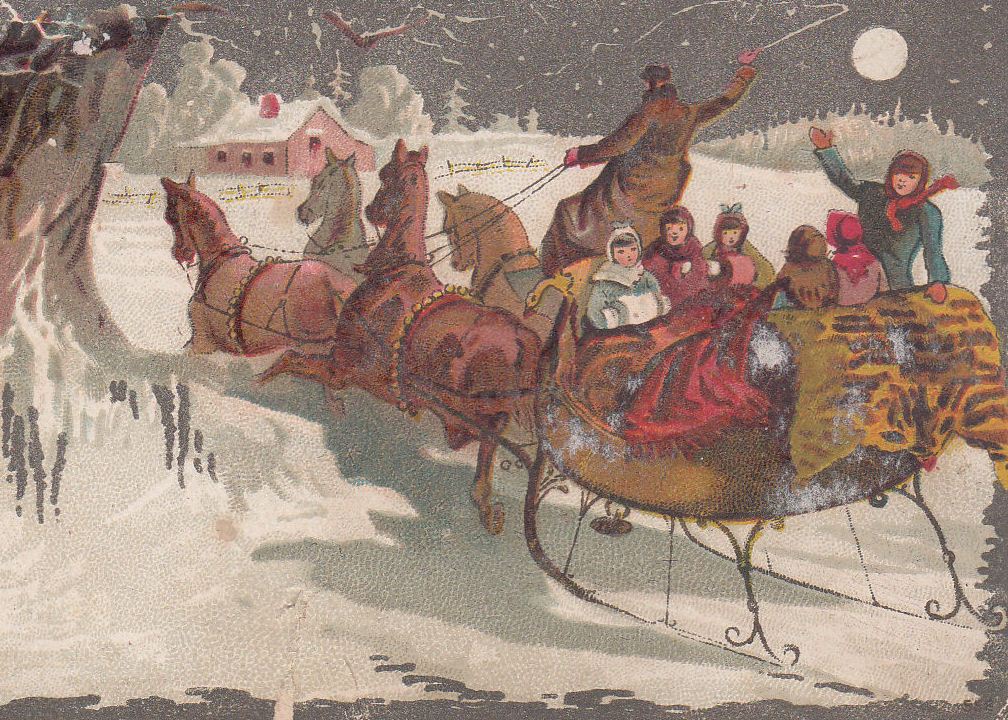
Saturday, January 3, 1914:Made a call this afternoon, so that the time wouldn’t be so tedious. I’m wishing and longing for a sleigh ride, now that there is sleighing.
Ruth and I went up to Wesner’s this evening. There were some other girls there too. Renewed my acquaintance with a former school mate whom I hadn’t seen for over three years I guess, until I saw her on Christmas eve. Had a good time.
(Picture is from vintage Christmas card)
Her middle-aged granddaughter’s comments 100 years later:
Yeah! It sounds like a fun evening (though I’d long to go sleighing, too—especially if I had to walk to and from town in the cold and dark).
Helen “Tweet” Wesner was about the same age as Grandma and her sister Ruth. She lived on a farm at the edge of McEwensville—and often was part of enjoyable activities and events.
I’m not positive, but I think that Tweet Wesner lived in this house when the diary entry was written.
18-year-old Helena Muffly wrote exactly 100 years ago today:
Friday, January 2, 1914:Have a hard piece of music on hand now, which will mean some work for me if ever I am to get it in some kind of a creditable condition.
Her middle-aged granddaughter’s comments 100 years later:
Grandma’s lesson must have gone well since her teacher decided she was able to handle a harder piece of music.
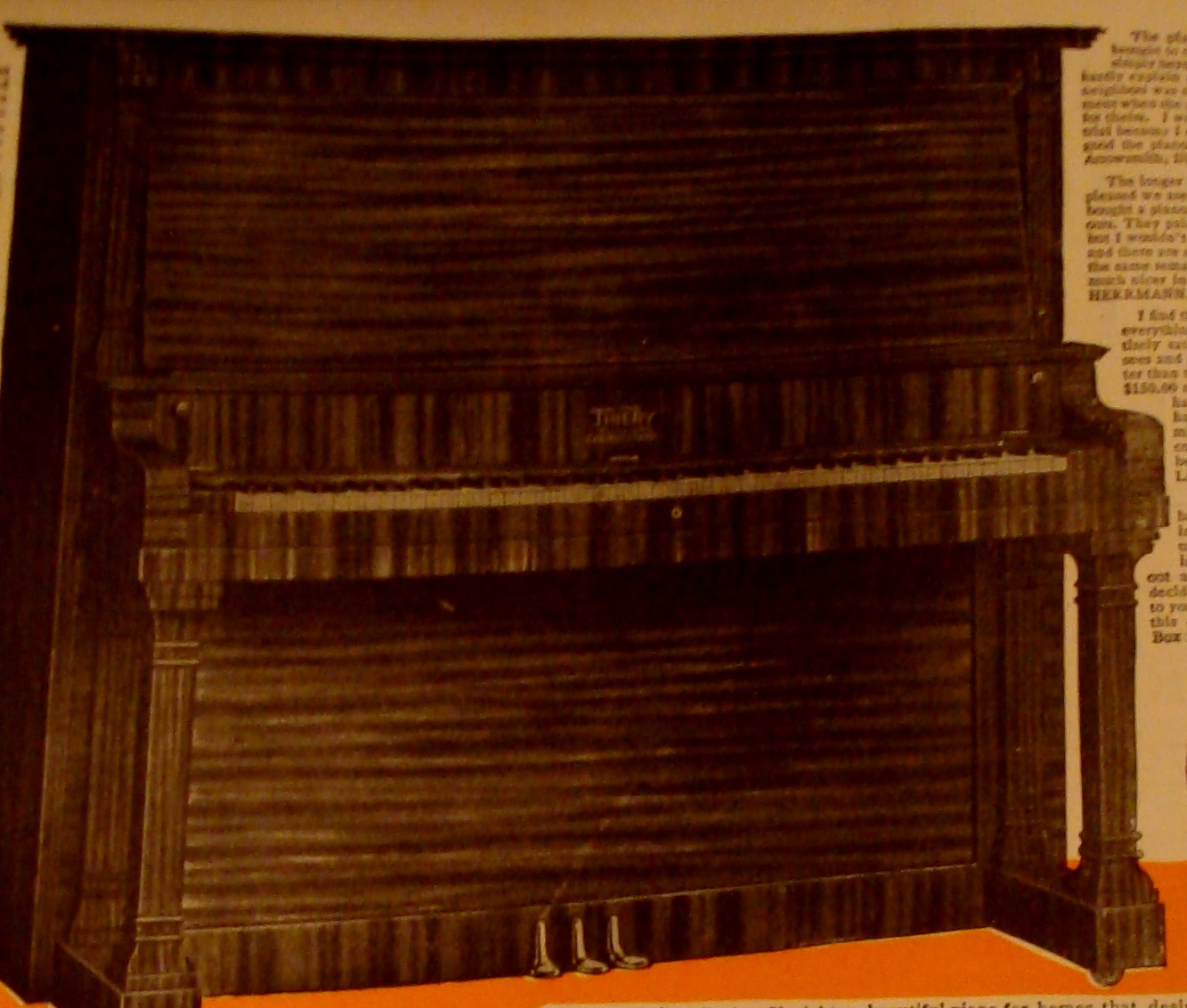
Grandma’s mother bought the piano the previous spring—and Grandma began lesson shortly thereafter. Did her mother buy the piano to in an attempt to make Grandma feel more content on the farm?
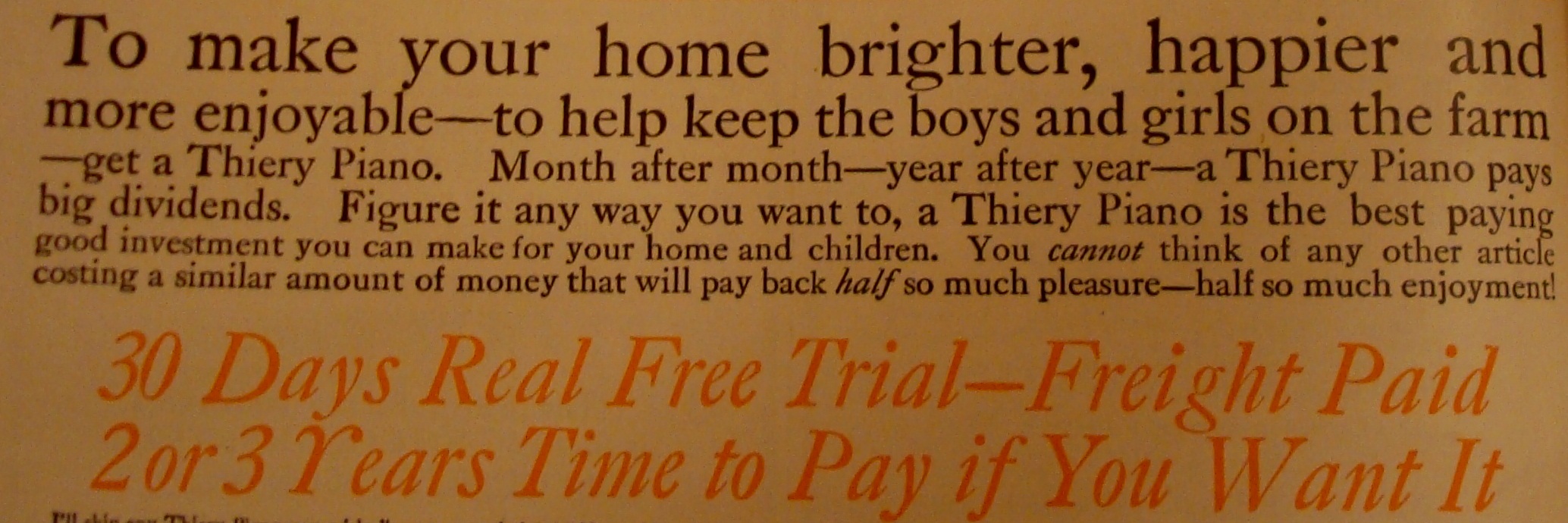
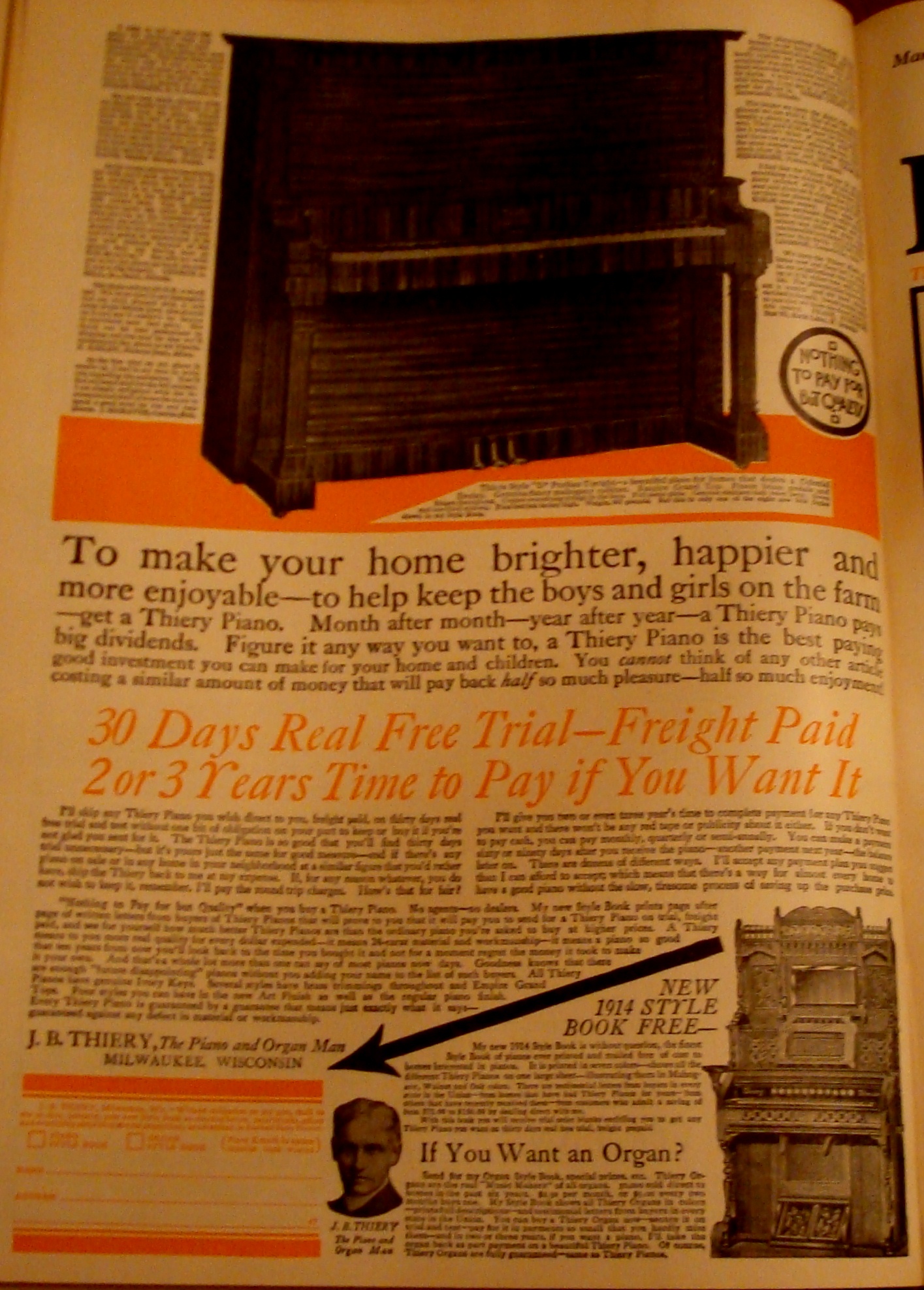
A very wordy advertisement for Tiery pianos in the March 1, 1914 issue of Kimball’s Dairy Farmer Magazine encouraged parents to buy a piano to help keep their boys and girls on the farm.
A hundred years ago farmers worried a lot about their children leaving the farm for more urban areas. Advertisers often picked up on that fear to market a product. A previous post contained an ad for Harley Davison Motorcycles that also promised to keep the kids on the farm.
18-year-old Helena Muffly wrote exactly 100 years ago today:
Thursday, January 1, 1914:
Ring out the old, ring in the new.
Ring merry bells across the snow
The year is dying, let it go.
Ring out the false, ring in the true.
The days and weeks go marching by,
Another year is here once more.
And thus speeds on the wheel of time.
Giving to this year a mighty four.
Time flies, even here at home, where there is nothing much doing, the days quickly pass. My new year was spent at home in the usual manner.
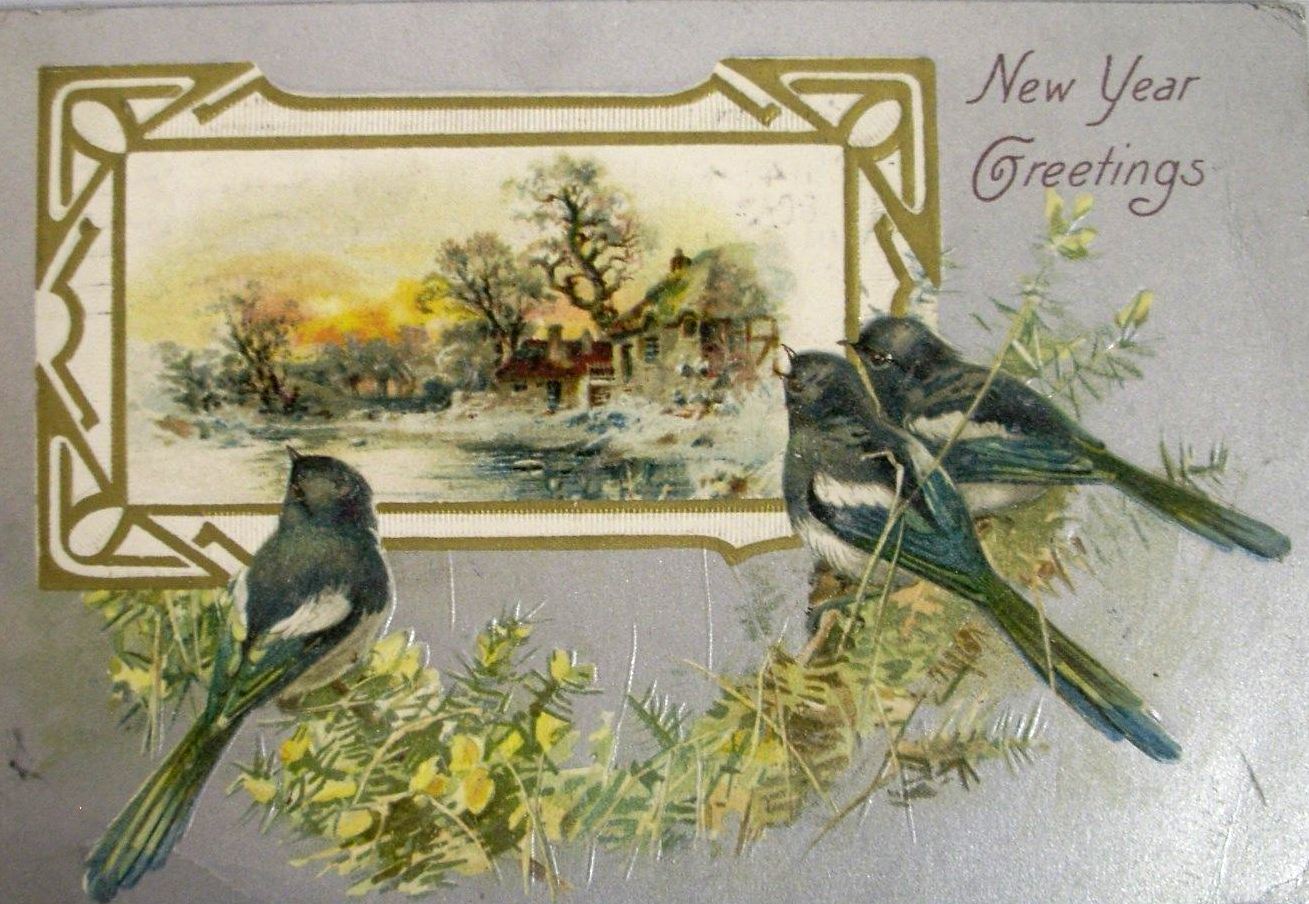
Vintage New Year’s Postcard from the 1910s
Her middle-aged granddaughter’s comments 100 years later:
I agree with Grandma–Time flies!
New Year’s Day is a good time for reflection.
We are now three-quarters of the way through the diary. Grandma kept her diary for exactly four years—she began it in January, 1911 and the last entry was in December, 1914.
I’ve enjoyed getting to know Grandma better via this blog. And, it’s been wonderful re-connecting with relatives and making many wonderful new friends.
When I began posting these entries on January 1, 2011, I doubted that I’d ever get to this point. Now I’m starting to feel a little sad that the end of the diary is only a year away—and I’m beginning to think about what I want to do next:
Use the information I’ve compiled for this blog to write a book about Grandma?. . .or maybe a cookbook of hundred-year-old recipes updated for today?
Continue the blog, but without the diary, and instead focus on hundred-year-old magazine pictures, stories, and ads?
Select a different relative. . .and a different time period, and then tell their story on a blog over the course of a year or two? . . maybe using a handwritten cookbook as a jumping off point?
. . . or maybe doing something entirely different?
It’s been a wonderful three years. Thank you! I look forward to sharing the final diary entries this year, as well as occasionally brainstorming ideas for my next project.
18-year-old Helena Muffly wrote exactly 100 years ago today:
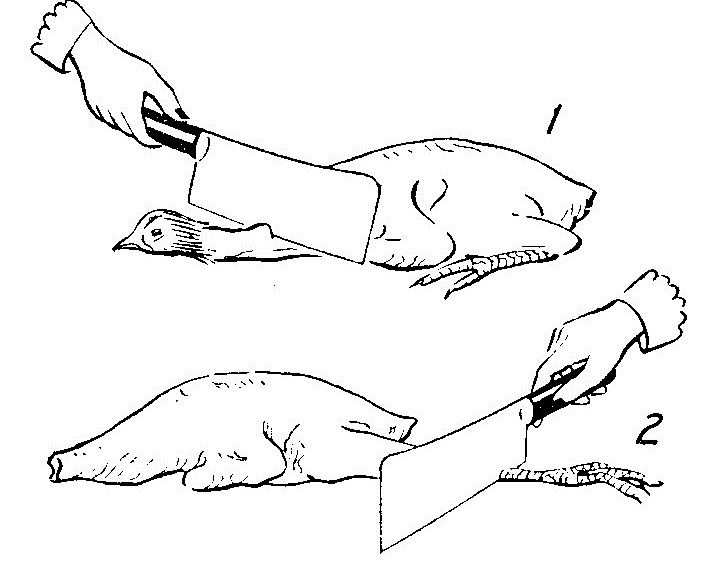
Wednesday, December 31, 1913:Cut up chicken no. 2 and got a breast bone in with the back. That’s one in many of the many failures I’ve committed this year. Wonder how many will occur next year. Hope it will be some different any way.
Photo Source: The Wise Encyclopedia of Cookery
Her middle-aged granddaughter’s comments 100 years later:
Good Grief Grandma—
Don’t measure the success or failure of the year based on how well you dress chickens!
In the big scheme of things, how well you cut-up a chicken doesn’t matter much.
—
I’ve occasionally bought whole chickens and then tried to cut them into pieces—and it’s always been a disaster with mangled parts (such as the breast bone in with the back).
Here are the directions in The American Woman’s Cookbook for cutting up a chicken. (The directions start with a more whole chicken than what you’d find at the store today. 🙂 )
Remove head, tendons, and oil sac. Cut off the legs at thigh joint and separate drumsticks from thigh. Cut the wings from the body, removing tips.
Separate the breast from back by cutting down both sides of bird below ribs. Remove heart, liver, gizzard, entrails and fat together. Remove windpipe, crop and lungs.
Cut back and breast crossswise. The back may be further divided by cutting lengthwise. Remove the wishbone by inserting knife under the tip and cut downward, following the bone.
18-year-old Helena Muffly wrote exactly 100 years ago today:
Tuesday, December 30, 1913:There’s nothing much to write about for today. Am interested in reading a book that I once tried several years ago and though it too dry.
Her middle-aged granddaughter’s comments 100 years later:
Curling up with a good book is the perfect way to spend a cold winter day.
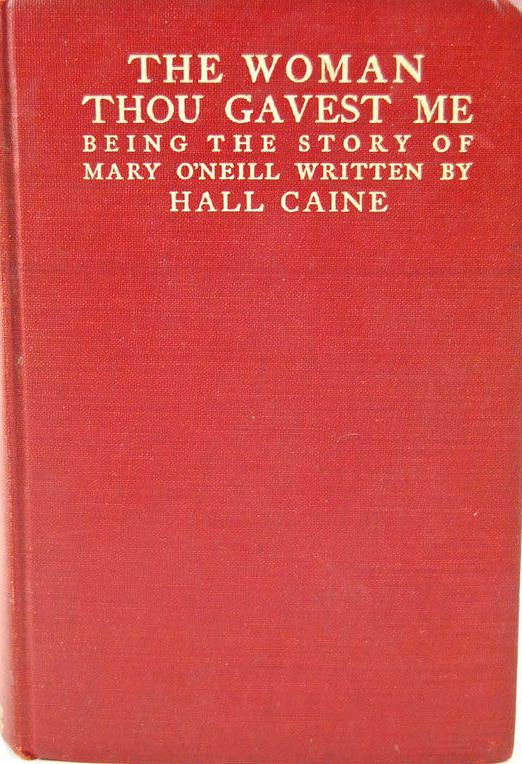
It’s obviously not what Grandma was considering reading because it was published in 1913, but I just finished reading The Woman Thou Gavest Me by Hall Caine. It was #7 on the Publisher’s Weekly bestseller list for 1913.
This book tells the story of a young woman, Mary O’Neill, who loved an Antarctica explorer, but was forced by her father to marry another man. Her wealthy father wanted to get control of some land, so he insisted that she marry a financially-struggling nobleman who owned an estate.
(Tip to the wise: If you’ve never consummated your marriage, but instead decide to have an affair with an Antarctica explorer, be sure to use birth control if you sleep with him the night before he leaves for Antarctica.)
The Woman Thou Gavest Me touched on a lot of complex social and moral issues that people were grappling with in 1913—
Should marriages be based upon family and business relationships, or should they be based on love?
Should women be allowed to divorce? . . . and if they are allowed to divorce should they be allowed to remarry?
What role should the Catholic church have in determining what is acceptable in regards to marriage and divorce?
Is it sometimes acceptable to have an affair?
How should illegitimate children (and their mothers) be treated by society?
This book is worthwhile reading from a historical perspective. The themes addressed by this book reminded me of the themes that Edith Wharton, another author from this era, often explored. The Woman Thou Gavest Me was a slow read—and felt very dated; but there was something about it that kept pulling me back to it over the course of several months.
18-year-old Helena Muffly wrote exactly 100 years ago today:
Monday, December 29, 1913:Earned ten cents this morning a-doing darling sister’s milking. She doesn’t always pay me, but that was the bargain this morning.
Her middle-aged granddaughter’s comments 100 years later:
10 cents!?!?!? I don’t think that I would have agreed to milk the cows for only 10 cents. I guess that it’s better to be paid than not paid, but even by 1913 standards, 10 cents wasn’t much.
According to an online inflation calculator a dollar in 1913 is now worth $23.81—so a dime in 1913 is now worth $2.38.
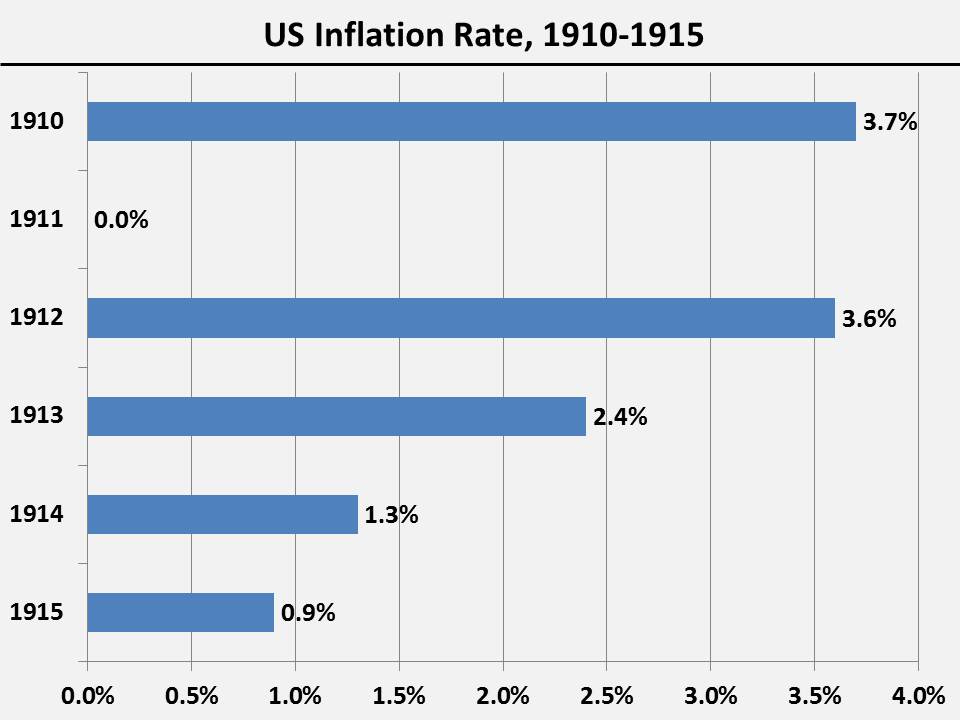
There’s been a lot of inflation over the years—though the inflation rate was only 2.4 % in 1913.