
It can be expensive to feed a family – both a hundred years ago and now. This 1920 advertisement suggests one way to save money.

It can be expensive to feed a family – both a hundred years ago and now. This 1920 advertisement suggests one way to save money.
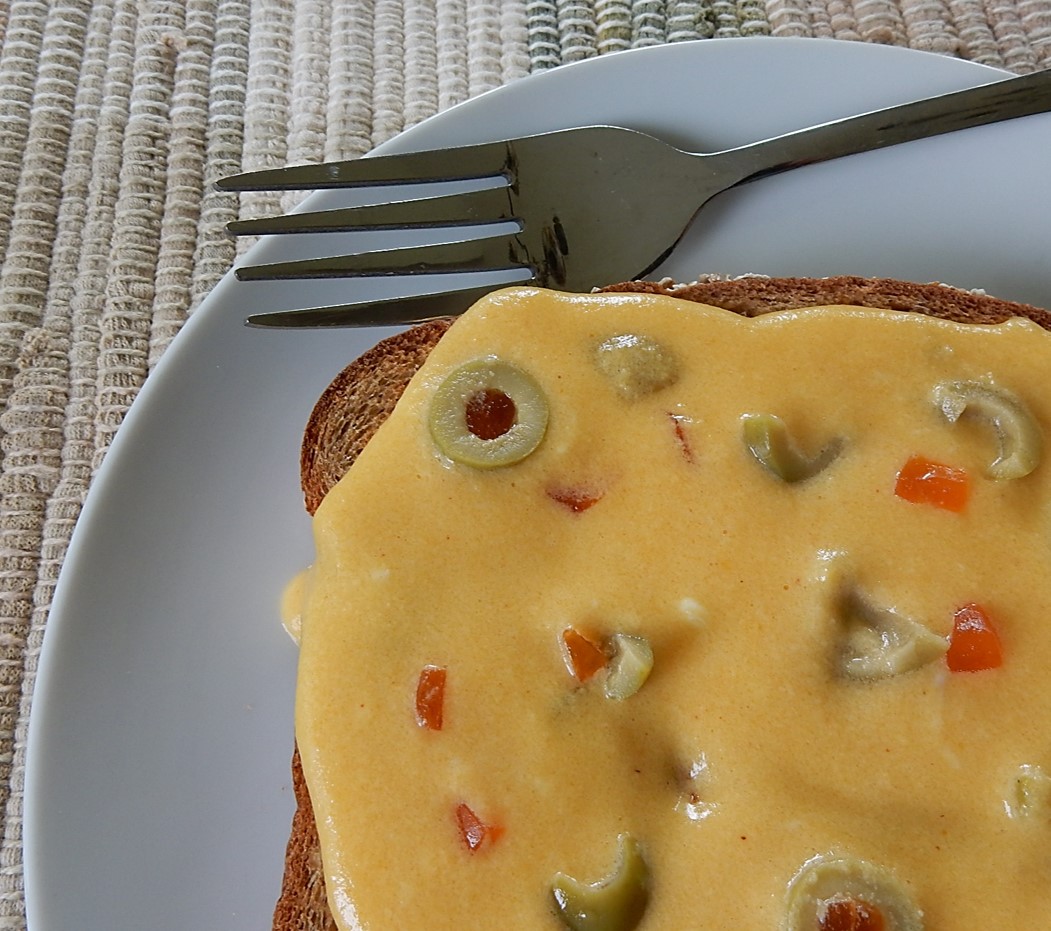
Welsh Rarebit over toast is one of my comfort foods, so I was intrigued when I came across a hundred-year-old recipe for Olive Rarebit. This recipe is nice variation on the classic. It contains chopped olives embedded in a savory cheese sauce.
Here’s the original recipe:
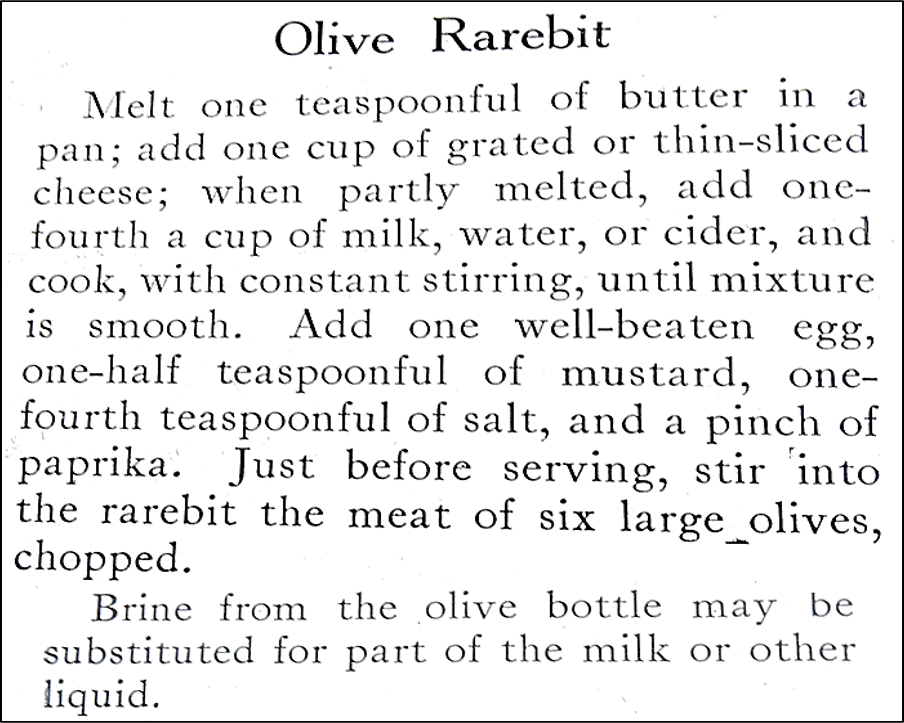
And, here’s the recipe updated for modern cooks:
1 teaspoon butter
1 cup cheddar cheese, grated
1/4 cup milk, water, or apple cider – If desired, olive brine from the jar may be substituted for part of the liquid (I used milk – and no olive brine.)
1 egg, beaten
1/2 teaspoon ground mustard
1/4 teaspoon salt
dash paprika
6 olives, coarsely chopped (I used pimento stuffed green olives.)
Put butter in a saucepan; melt using medium-low heat. Stir in the cheddar cheese; continue stirring until the cheese is partially melted. Then add the milk and continue stirring until the mixture is smooth. While continuing to stir, add the egg, mustard, salt, and paprika. Heat until hot, then stir in olives. Remove from heat. Serve over toast, English muffins, or other bread.

Nutrition is important, so I try to prepare foods that contain lots of vitamins: spinach – yes; sugary pastries – no (at least most of the time).
A hundred years ago people were aware of vitamins (though they spelled the word differently), and, like now, they tried to prepare nutritious meals.

Omelets are a wonderful way to turn the lowly egg into a really special dish, so I was thrilled when I came across a hundred-year-old recipe for Puffy Green Pea Omelet.
This omelet is as light as a cloud. It gets its fluffiness from beaten egg whites. And, creamed green peas make a tasty and healthy filling.
Here is the original recipe:
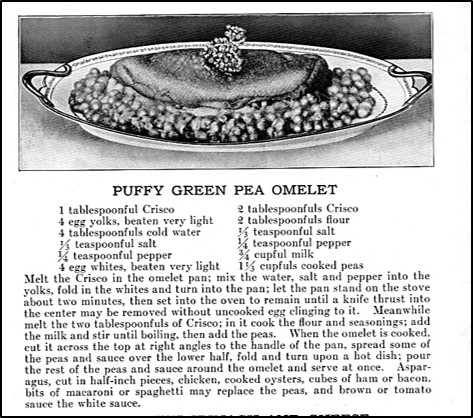
I used butter instead of Crisco shortening in this recipe. And, I put all the creamed green peas in the omelet rather than reserving some to put around the edge of the omelet.
Here’s the recipe updated for modern cooks:
Omelet
4 eggs, separated
4 tablespoons water
1/3 teaspoon salt
1/4 teaspoon pepper
Preheat oven to 350° F. Place egg whites in a bowl, and beat the egg whites until they form stiff peaks. Set aside.
In another bowl, whisk the egg yolks, then stir in the water, salt, and pepper. Fold in the beaten egg whites.
Heat a large oven-proof skillet on the top of the stove using medium-low heat. (If needed to prevent sticking, liberally grease the skillet before heating.) Pour the egg mixture into skillet, and gently cook for 1 minute. Move the skillet to the oven, and bake for about 10 minutes or until the egg mixture is set. Remove from oven, and loosen the edges of the omelet from the skillet with a knife or spatula, then turn onto a plate. Spoon the creamed green peas onto one half of the omelet, and fold in half. Serve immediately.
Creamed Green Peas
2 tablespoons butter
2 tablespoons flour
1/3 teaspoon salt
1/4 teaspoon pepper
3/4 cup milk
1 1/3 cups green peas, cooked
In a saucepan, melt butter. Stir the flour, salt, and pepper into the butter. While stirring constantly, slowly pour in milk and bring to a boil over medium heat. Gently stir in the peas and bring back to a boil; remove from heat.
Shortening is made by hydrogenating soybean, canola, or other oils to make them solid and shelf-stable. Today there is a debate about whether shortening is good or bad. A hundred-years-ago Crisco, which is a shortening, was the “new kid on the block,” and its manafacturer had to convince cooks that it was better than lard and other animal fats.
Back then lard and other animal fats were generally produced by local farmers – so there were variations in the characteristics and quality. To convince cooks to switch to Crisco, advertisements focused on its wholesoness and purity. Here is what a 1920 promotional cookbook for Crisco said:
Why Crisco with a Balanced Diet
Solomon was one of the keenest observers in all history. Referring to the good woman he said: “She looketh well to the ways of her household.”
Certainly good cookery is one of the most important of the things worthwhile in life and Crisco has been a contributing factor to the comfort and gratification of countless housewives and chefs who seek for delicacy and wholesomeness of their own cooking. Undoubtedly many lives are shortened by unwise choice of foods. Many others suffer handicaps in depleted energy through indigestion and malnutrition resulting from ill-prepared or badly-balanced foods.
Crisco is so wholesome in itself it may be used with perfect assurance that it will aid in the preparation of a chosen diet that will not only be well balanced but possess those qualities of tastiness and daintiness for which every good cook has striven from the days of Epicurus at his luxurious feasts.
The stomach is the human laboratory in which all chemical changes in food take place, either for weal or woe. Crisco is so clean and pure it always blends nicely with the right food combinations likely to remove causes of so many internal digestive troubles and consequent misery. To the American housewife we say try Crisco in your own cooking.
You will find how delicious and dainty the natural flavors of many foods can readily be when prepared with Crisco and thus tasted at their very best. And you will have the satisfaction of knowing that you are using the kind of cooking fat necessary for wholesome, well-balanced meals.
If there is any question, you may desire to ask on dietary problems or cooking, feel perfectly free to write us and ask us. Our Bureau of Household Service will gladly advise you, for it is maintained in the interests of better cooking and happier homes.
Yours very sincerely,
The Procter & Gamble Company
Source: Balance Daily Diet (1920) by Janet McKenzie Hill
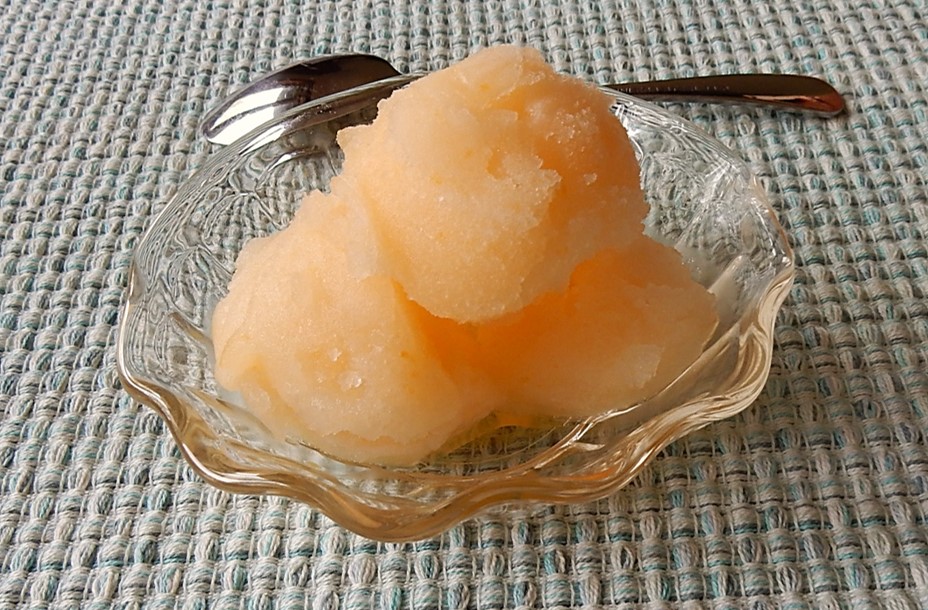 The store where I shop recently expanded its selection of canned fruits. Several weeks ago I noticed that there were canned apricots on the shelf and decided to buy a can. I put the can in a kitchen cupboard and figured that I’d eat the apricots “someday,” so I was pleasantly surprised when I came across a recipe for Canned Apricot Sherbet just a few days later.
The sherbet was easy to make with just three ingredients – canned apricots, sugar, and water. It was light and refreshing, and makes a delightful summer treat.
Here is the original recipe:
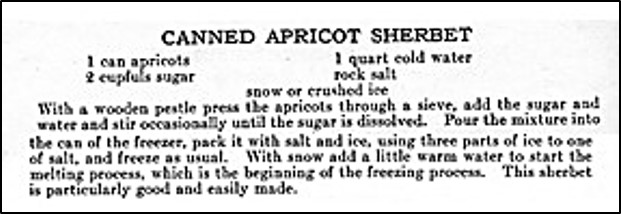
Today sherbet is often a summer dessert, but a hundred years ago sherbet and ice cream were often winter treats. Many people did not have ready access to ice in the summer, but could easily use ice or snow to make frozen desserts during the winter.
The directions in the old recipe about using snow to make the sherbet reminded me of when I used to post my grandmother’s diary entries. As some of you may remember, I originally started this blog as a place to post my grandmother’s diary entries a hundred-years to the day after she wrote them. She kept the diary when she was a teen living on a farm in central Pennsylvania. On Sunday, February 12, 1911 she wrote about making ice cream:
Pa and Ma went away today and we had the house to ourselves while they were gone. Of course we had a fine dinner for my sister is an excellent cook, or rather she thinks she is. Any way we had dinner. Ice cream consisted of part of it. I had to turn the freezer, which I soon tired of. (I usually tire of anything I don’t like.) Any how I froze that cream so hard that it all crumbled up in big chunks . . .
Where did Grandma get the snow or ice that she used to make the ice cream? Did she gather snow from a snow bank? . . . or did she find some large ice cycles that had fallen off the roof? . . . or maybe she went down to the nearby creek to gather ice. . . or . . .
Then, two weeks later on Sunday February 26, 1911, she wrote:
I went to Sunday school this afternoon and staid for church and catechize. The walking was extremely bad, but still I went. We had chocolate ice cream for supper. We all rather like it, so we have it occasionally which is about once in a week.
Here’s the recipe updated for modern cooks:
1 can apricots (regular size can – approximately 1 pound)
2 cups sugar
1 cups cold water
Drain apricots and press through a sieve. (I used a Foley mill. The apricots could also be pureed using a food processor or blender.) Set aside.
Put sugar and water in a mixing bowl; stir until the sugar is dissolved. Stir in apricot pulp.
Chill the mixture in the refrigerator for several hours, then place in ice cream maker and freeze. (I used a 1 1/2 quart automatic electric maker.)

Sometimes I see advertisements in hundred-year-old magazines that make me appreciate some of the little conveniences that I seldom think about. This advertisement made me realize that I am fortunate to have an electric strove (and that I am fortunate to have an air conditioner that I can turn on whenever I want to use it.)
