1920 Advice for Preparing a Meal Tray for a Sick Person

Source: Household Arts for Home and School (Vol. 2) 1920 by Anna M. Cooley and Wilhelmina H. Spohr

Serving food on a tray is a nice way to show love and caring when a family member is sick.  A hundred-year-old home economics textbook had the following advice:

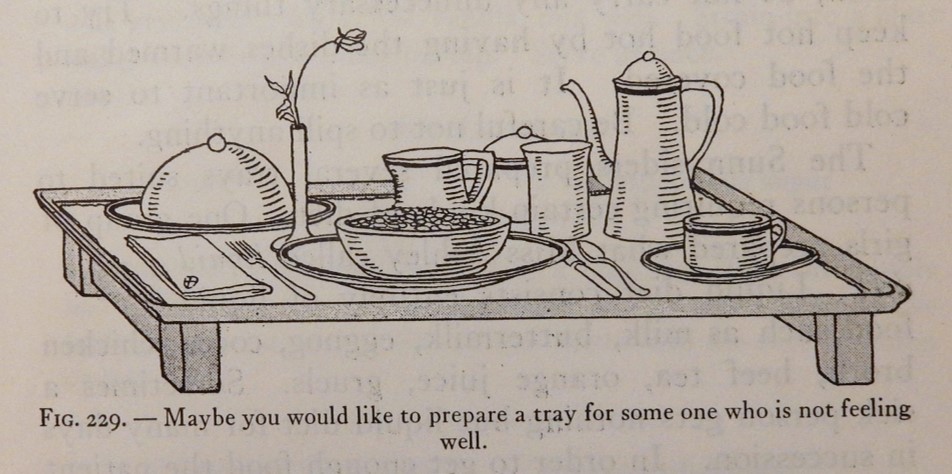
There is one thing that you can do and no doubt will enjoy doing, – preparing an attractive tray to carry to a person who is not well enough to come to the table. Of course, if the person is very ill, the doctor must tell you what to prepare, but there are many times when a person who does not “feel like eating” will be tempted to eat if some easily digested food, daintily prepared, is served. 

The tray should be made attractive with a clean cloth or doilies, and dishes that look well together. Nicked or cracked dishes should not be used if there are others to be had. Try to think of all of the utensils that are needed to eat what is served so that the person will not have to ask for anything. Butter, sugar, and salt should not be forgotten if they are to be used, and a glass of cold water is nearly always desired. On the other hand, do not carry any unnecessary things. Try to keep hot food hot by having dishes warmed and the food covered. It is just as important to serve cold food cold. Be careful not to spill anything. 

Household Arts for Home and School (Vol. 2) (1920) by Anna M. Cooley and Wilhelmina H. Spohr
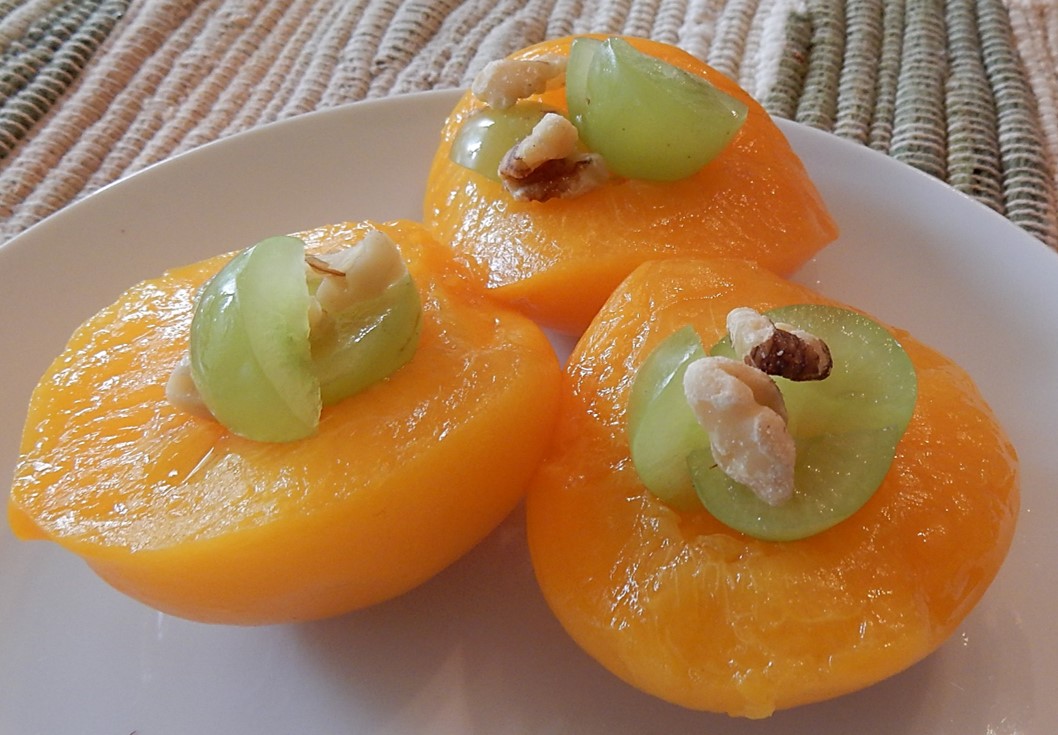
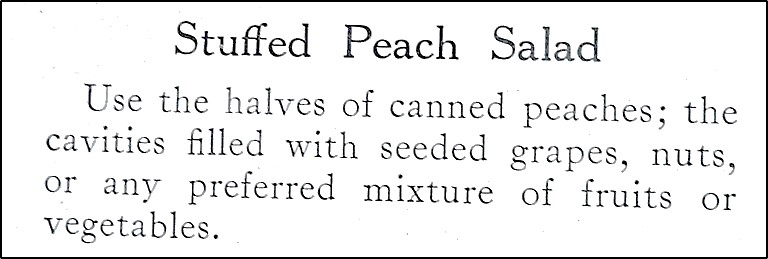
Old-fashioned Stuffed Peach Salad

4 Stuffed Peach Halves

I eat lots of fresh fruit; canned fruit not so much. But a hundred-year-old recipe reminded me that canned fruits are delicious. Stuffed Peach Salad was easy to make, attractive, and most importantly, tasty.

Recipe for Stuffed Peach Salad
Source: American Cookery (January, 1920)

Here’s the recipe updated for modern cooks:

Stuffed Peach Salad

  • Servings: approximately 5
  • Difficulty: easy
  • Print

1 15-ounce can peach halves

grapes, quartered

chopped walnuts

Drain peaches and arrange on plate. Fill the cavity of each peach with grapes and walnuts.

http://www.ahundredyearsago.com

1920 Lea & Perrins Sauce Advertisement

Advertisement for ea & Perrins Sauce
Source: Good Housekeeping (June, 1920)

I have a bottle of Lea & Perrins Worcestershire Sauce in my refrigerator. I use Worcestershire Sauce to give Sloppy Joes their tangy taste – but apparently I’ve never really appreciated its ability to make foods more gourmet. According to this 1920 advertisement for Lea & Perrins Sauce, it gives canned meat, soup, fish, and vegetables a real “chef” taste.

I wonder when the word “Worchestershire” was added to the name. Back in 1920, Lea & Perrins was just called a sauce.

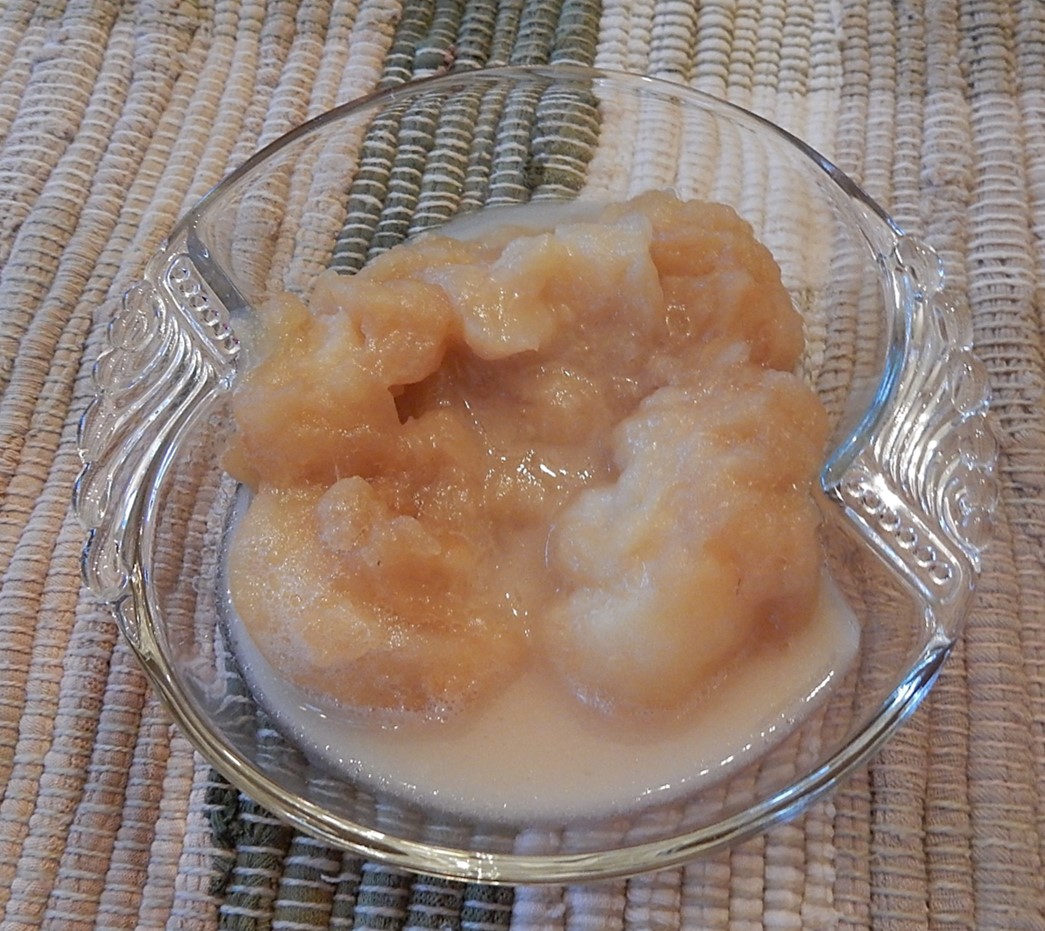
Old-fashioned Butterscotch Apples

dessert bowl with butterscotch apples

Fall is in the air! Evenings are a bit nippy, and the trees are starting to turn color. And, it’s the season for apples, so browsed through old magazines and books for an apple recipe. And, I think I found a winner.

I found a delightful hundred-year-old recipe for Butterscotch Apples. Stewed apples are served in a creamy brown sugar sauce.

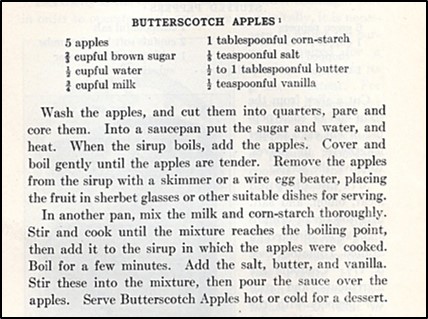
Here is the original recipe:

recipe for butterscotch apples
Source: School and Home Cooking (1920) by Carlotta C. Greer

Here’s the recipe updated for modern cooks:

Butterscotch Apples

  • Servings: 2 - 3
  • Difficulty: moderate
  • Print

5 large apples

2/3 cup brown sugar

1/2 cup water

3/4 cup milk

1 tablespoon cornstarch

1/8 teaspoon salt

1/2 to 1 tablespoon butter (I used 1 tablespoon.)

1/2 teaspoon vanilla

Peel, core, and quarter the apples.

In the meantime, put the brown sugar and water in a large saucepan. Using medium heat, bring to  boil while stirring occasionally. Add the quartered apples. Cover and bring back to a boil. Reduce heat and boil gently until the apples are tender (5-10 minutes) while stirring occasionally. (The apples can boil over, so watch carefully and reduce heat further if boiling too vigorously.) Remove the apples from the syrup using a slotted spoon; set both the apples and the syrup aside.

Put the cornstarch in another saucepan. Gradually stir in milk, and stir until smooth. Using medium heat, bring to a boil while stirring constantly. Add the syrup that the apples were cooked in.  Bring back to a boil, and cook for an additional 2 minutes. Remove from heat, and stir in the salt, butter, and vanilla.

To serve: May be served hot or cold. (I served it hot.) Put in the cooked apples in serving dishes, and spoon sauce over them.

http://www.ahundredyearsago.com

1920 Sunkist Lemon Advertisement

Advertisement for Sunkist Lemons
Source: Good Housekeeping (June, 1920)

By 1920, lemons were readily available across the U.S. Trains quickly transported them across the country.  And, the California Fruit Growers Exchange had even branded lemons produced by its growers as Sunkist Lemons.

I enjoy eating old-fashioned foods. Many others prefer trendy foods. Apparently people have wanted to eat “modern” foods for a long time. According to this advertisement, the modern way to serve tea is with lemon instead of cream – which suggests that the ad copy writer believed that promoting modern food combinations was a winning strategy for an ad campaign.

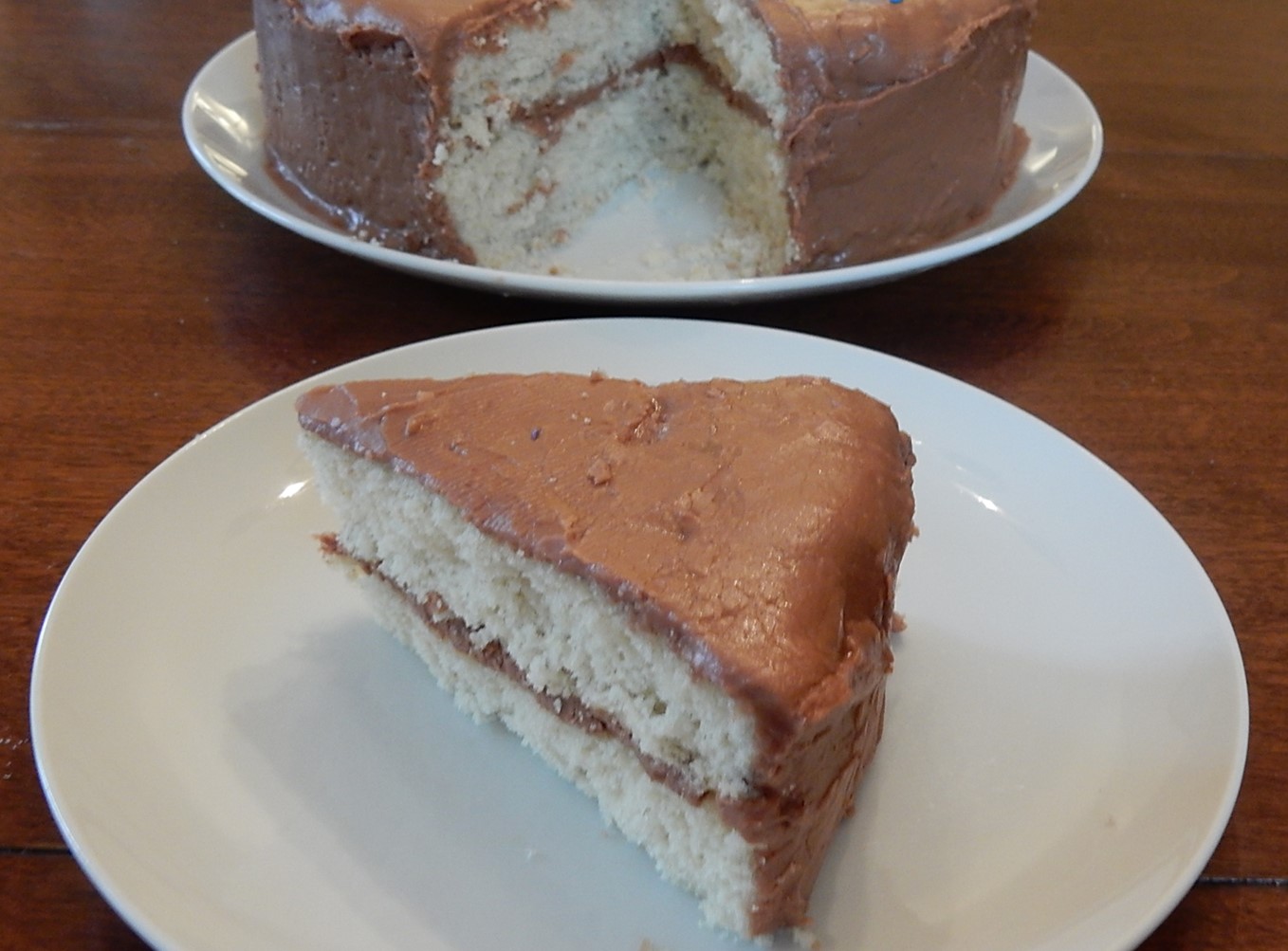
Emily’s White Cake with Confectioner’s Chocolate Frosting

slice of cake on plate
Source: Balanced Daily Diet (1920) by Janet McKenzie Hill

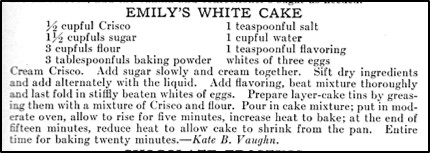
I recently came across a recipe in a hundred-year-old cookbook for Emily’s White Cake, and decided to give it a try. I was intrigued by the recipe’s name. Who was Emily? – The recipe’s author? . . her daughter? . . . a neighbor who shared the recipe? . . .

I also wondered: Are recipes that are named after someone more likely to be good than more generically named ones? . . . or vice versa?

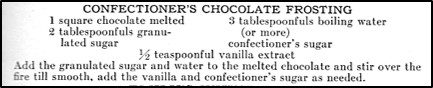
To make the frosting, I used a recipe in the same cookbook.

Here are the original recipes:

cake recipe
Source: Balanced Daily Diet (1920) by Janet McKenzie Hill
Frosting Recipe
Source: Balanced Daily Diet (1920) by Janet McKenzie Hill

The old recipe referred to moderate heat and high heat (and probably assumed that the cook was using a wood or coal stove). Many cakes are baked at 350° F, so I just used that temperature. It took a little longer to bake the cake than indicated in the old recipe.

The old cake recipe called for 3 tablespoons of baking powder – which seemed like a lot. I wondered if it was a typo – and really supposed to be 3 teaspoons. But in the end, I went with what the recipe said and used 3 tablespoons. The frosted cake tasted fine – though I  think that  it might have been better if I’d used less baking powder. (I ate a few cake crumbs, and they may have been a bit bitter, but it was not noticeable once the cake was frosted.)

[9/14/20 Note: Based on the research and comments of readers about other sources for this recipe – e.g., old Crisco advertisement that contained the recipe, other editions of the cookbook – I’ve determined that 3 tablespoons of baking powder was a typo and that it should be 3 teaspoons. I now include this information in the updated recipe.]

I doubled the recipe for Confectioner’s Chocolate Frosting to make enough to ice the cake layers. When I made the Confectioner’s Chocolate Frosting, the consistency and spreadability seemed a bit off, so I added 3 tablespoons of melted butter. This greatly improved the texture of the frosting, so when I updated the recipe I included butter as an ingredient.

Here’s the recipe updated for modern cooks:

Emily's White Cake with Confectioner's Chocolate Frosting

  • Servings: 8 - 10
  • Difficulty: moderate
  • Print

Emily’s White Cake

1/2 cup shortening

1 1/2 cups sugar

3 cups flour

3 tablespoons baking powder (I used 3 tablespoons which is what the old recipe called for, but other sources for this recipe state that 3 teaspoons should be used. The larger amount worked, but if I made the recipe again I’d use 3 teaspoons of baking powder. See note in blog post for details.)

1 teaspoon salt

1 cup water

1 teaspoon vanilla or other flavoring

3 egg (whites only)

Preheat oven to 350° F. Grease and flour two 9-inch baking pans.

Put egg whites in a medium mixing bowl; beat until stiff. Set aside.

In a mixing bowl, cream together the shortening and sugar. Add flour, baking powder, salt, water, flour, and vanilla. Beat until smooth. Fold in the beaten egg whites. Bake about 25 to 30 minutes or until wooden pick inserted in center comes out clean. Cool, then assemble layers and frost.

Confectioner’s Chocolate Frosting

2 squares chocolate, melted

3 tablespoons butter melted

1/4 cup granulated sugar

6 tablespoons boiling water (more water may be needed)

1 teaspoon vanilla

4 cups confectioner’s sugar

Put the melted chocolate and butter in sauce pan, add the granulated sugar and water. Heat using medium heat, while stirring until smooth. Remove from heat add the vanilla and confectioner’s sugar. Stir until smooth. Add additional water, if needed.

http://www.ahundredyearsago.com

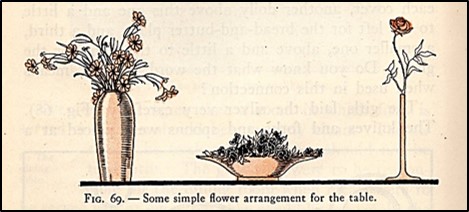
Flower Arrangements for the Table

3 vases with flowers
Source: Household Arts for Home and School (Vol. 2) (1920)

Sometimes little things – like putting a vase with a few cut flowers on the table where I eat – energize me, and make an okay day seem like a great day. People a hundred years ago also appreciated cut flowers. According to a 1920 home economics cookbook, in a chapter titled Serving Luncheons:

Fresh flowers give a lovely touch to the dining table, but they must not obstruct the view of persons sitting opposite each other (Fig. 69). Flowers may be kept fresh for several days if the water is changed daily. 

Household Arts for Home and School (Vol. 2) (1920) by Anna M. Cooley and Wilhelmina H. Spohr