Old-time Vanilla Ice Cream Recipes

15-year-old Helena wrote a hundred years ago today:

Sunday, February 12, 1911. Pa and Ma went away today and we had the house to ourselves while they were gone. Of course we had a fine dinner for my sister is an excellent cook, or rather she thinks she is. Any way we had dinner. Ice cream consisted of part of it. I had to turn the freezer, which I soon tired of. (I usually tire of anything I don’t like.) Any how I froze that cream so hard that it all crumbled up in big chunks. That surely was a result of labor. Rachel Oakes was a guest for dinner. I went to Sunday school church and catechize this afternoon. By the time I got home, the afternoon was almost over.

 Her middle-aged granddaughter’s comments 100 years later:

 I found directions for making ice cream in an old cookbook that was published in 1911.

 Vanilla Ice Cream, No. 1—Sweeten one quart of thin cream with three-fourths cup of sugar, flavor with one and one-half tablespoons of vanilla extract and freeze.

Vanilla Ice Cream, No. 2—Add to one egg slightly beaten, one cup of sugar, one tablespoon of flour, and a speck of salt. Pour on one pint of scalding milk and cook for twenty-five minutes in a double boiler. When cool, add vanilla and one pint of thin cream.

In freezing cream and ices, good general rules to be observed are: Be lavish with the salt and have the ice pounded quite fine, thereby involving less labor in turning the freezer and securing a smooth velvety cream. The quickest and best way to pound the ice is to put it in a stout burlap bag, tie up the mouth, and pound it vigorously with a flat-headed hammer or mallet. Snow may be used instead of ice; if this does not freeze steadily, add one cup of water to it. Have the ice and salt already packed around the can before the mixture is put in. Be sure that the latter is quite cold before it is placed in the can and do not begin freezing by turning rapidly and lagging toward the end of the process. Instead turn slowly at the beginning and increase the speed as the mixture thickens. Be very careful that there is no possible chance of the salt or water getting into the can, but do not pour off the water unless it gets too high; when a little may be turned off.

Allow three measures of ice to one measure of salt; if a larger proportionate quantity of salt be used the freezing will take place in a shorter time, but the mixture will have a granular texture.

Never fill a freezer more than three-fourths full, as the mixture gains in bulk as it freezes.

When it is desired to have the cream in blocks or cakes a special mold will be needed. The mold should be set in ice and salt while the cream is being frozen, and when the beater or mixer is removed, the cream should be packed into the mold as quickly as possible. It should be pressed down firmly and smoothly and a piece of stout muslin or buttered paper laid over it before the mold cover is put on. The mold is then packed in ice and salt and kept for a few hours until the cream is ready for use.

The Butterick Cook Book (1911)

Based upon the directions above, it appears that Grandma probably started turning the handle quickly at the beginning and then much slower as it thickened—which is exactly the opposite from what she should have done.

(An old-fashioned ice cream freezer is shown in the January 22 posting.)
A Rotten Apple Spoils the Barrel

15-year-old Helena wrote a hundred years ago today:

Saturday, February 11, 1911. Got up about eight o’clock this morning. Did quite a lot of work this forenoon. Carrie Stout was over a while this afternoon. Nearly all my Saturdays are alike.  

 Her middle-aged granddaughter’s comments 100 years later:

As I read this diary I want to constantly remind the 15-year-old who wrote it to write about day-to-day activities and routines. For example, I wonder what my future grandmother and her family did on Saturday mornings in the middle of the winter.

Maybe the family sorted through the bins of apples stored in the basement and discarded apples that were starting to spoil. If there were only small bad spots on some of the apples, they probably were put into a pan and brought up to the kitchen for immediate use. 

Or maybe the family sorted potatoes—and selected the damaged or spouted ones to eat first. If there were lots of spouting potatoes the sprouts would have been broken off and then put back into storage. Back then carefully curing, storing, and spouting extended the storage life–whereas today potatoes are often treated with chemicals to minimize sprouting.

Today we talk about local foods being freshest—but in the old days there was also a competing notion that the food that would spoil first should be used first. This particularly played out during the winter months. The practice of saving the most desirable specimens helped ensure that there would be sufficient food for the entire winter.

For example, let’s say that there were 10 winter squash put into storage. A month later someone went to get a squash and noticed that one had a small bad spot on it—whereas the one sitting next to it still looked as perfect as the day it was harvested. The one with the imperfections would be selected—and the bad spot would be cut out of it before using—because that one won’t last as long into the winter as the perfect one.

That said, a hundred years ago people also weren’t afraid to throw out food if it did spoil. More food would be put into storage than could possibly be eaten and it was anticipated that a certain percentage of it would spoil.

I have a friend who won’t shop at farmers’ markets because the bunches, trays, and baskets of produce sold at them provide more produce than her family can eat before it spoils. I always tell her to enjoy the fresh food—and not to worry if she ends up throwing some away—but the waste bothers her and she’d prefer to buy processed foods  and supermarket produce that are less likely to decay.

That said— in Grandma’s day meals were planned to use available foods and whenever possible food was used—or given to a neighbor who could use it.

No Show: Important School Visitor

15-year-old Helena Muffly wrote exactly 100 years ago today:

Friday, February 10, 1911: We were expecting an important visitor at school today, so some of us swept the school room and washed the black boards, but it was all in vain. He didn’t come. I don’t suppose the teacher cared. He wouldn’t have to do any sweeping this time.

Her middle-aged granddaughter’s comments 100 years later:

It is unclear from Grandma’s diary entry who the anticipated important visitor was. My guess is that it was the Northumberland Country Superintendent of Schools.

There was a movement to improve the quality of rural schools in the early 1900s. And many counties installed a county superintendent who was charged with monitoring, evaluating, and improving schools. The county superintendent—and in this era the superintendent would have always been a he—made regular rounds of the schools, and was given the role of inspecting schools and evaluating teachers.

Another possibility is that the anticipated important visitor might have been a school board member. Then, as now, elected boards governed the schools. Amazingly in 1911 there were more school board members in the United States than there were teachers. Across the country many rural schools employed only one or two teachers—yet the typical school board contained 4-6 members. For better or worse the level of community involvement in schools was truly amazing a hundred years ago. (As a strong proponent of parental involvement in schools, I tend to believe it was for the better).

Are Tests Too Hard?

15-year-old Helena wrote a hundred years ago today:

Thursday, February 9, 1911. I’m glad our examinations are over for this month, gee whiz, some of the marks I got weren’t very encouraging, but I suppose it’s my fault. If I were to be made over again I would like to be made a little bit smarter than I am at present.

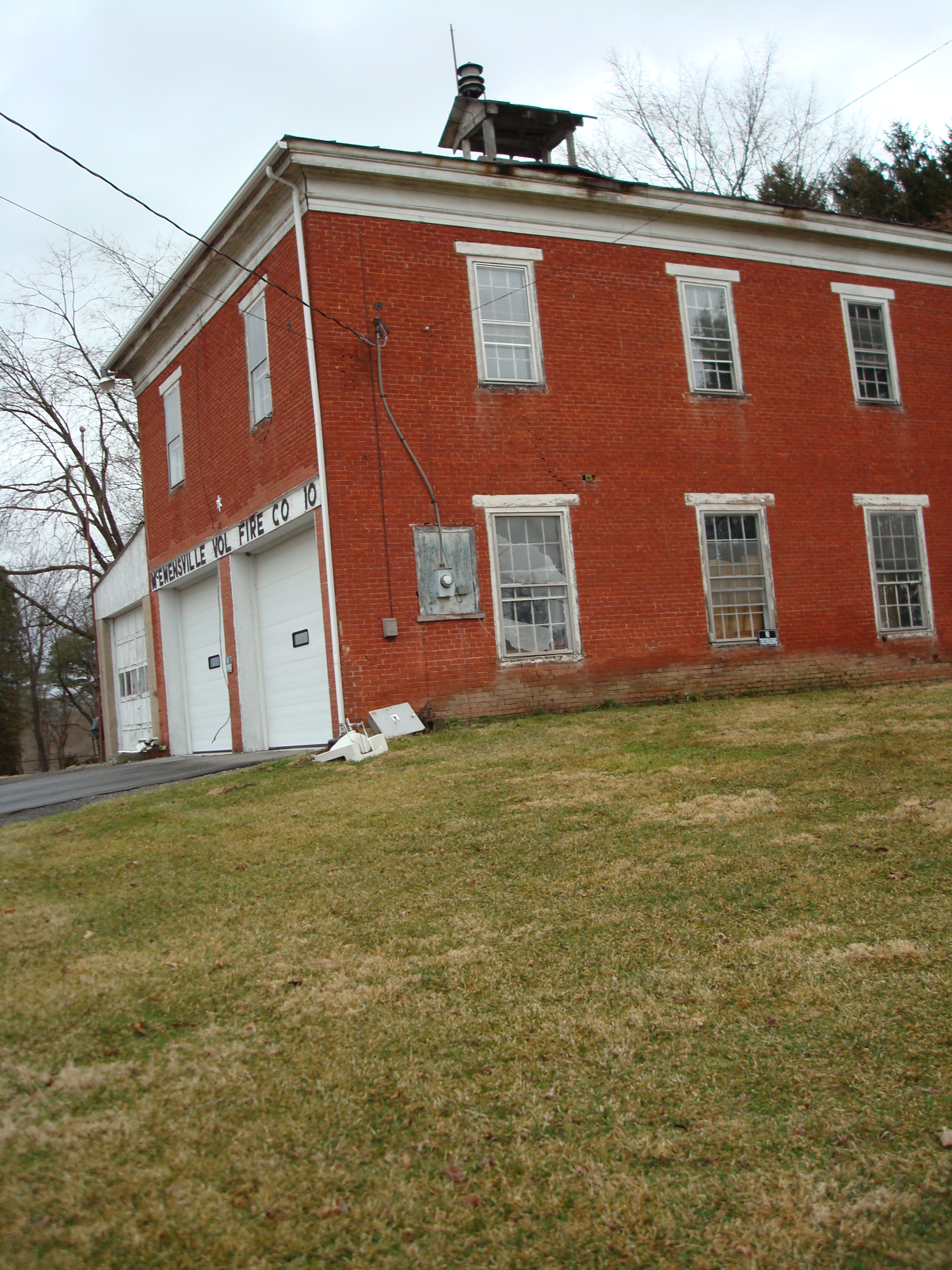
Recent photo of McEwensville High School

Her middle-aged granddaughter’s comments 100 years later:

Grandma probably got the grades she deserved–actually she probably did better than what was justified (see the diary entries on February 7th and  8th). I know that I’m overthinking this entry and that she should have just studied more–but I somehow want to try to put it into some sort of bigger context.

Grandma is frustrated over her grades—and she probably was not alone. The early 1900s was a period when the nation was grappling with issues such as –What do students need to know? How can students successfully show what they know? And, how should that learning be measured?

In 1911 many students dropped out of school—often because the curriculum seem irrelevant or because of poor grades. There was an ongoing debate about how to measure learning and how tough the grading system should be. I don’t have specific information about McEwensville High School but based on this diary I assume that exams were an important part of the grading system. But nearby schools faced political pressure to rely less on exams.  Jack Williams’ A Historical Study of Education in Milton, Pennsylvania provides hints about how parents and students felt about examinations.  In the early 1900s schools, “strived for a lessening of the importance of examination. . . for removing non-essentials from the curriculum, for a greater flexibility in the grading system and for economizing of time.” 

In Milton there a huge uproar over inflexible exams in the early 1900s and many of the quarterly examinations were eliminated. According to Williams in 1905 the Milton School Board instituted a reward system for good students. “Under this system, a pupil in the grammar or high school could be excused from these examinations provided they had attained a standing of 90 percent of their daily work and that their conduct had been satisfactory.”

Sometimes Cheats Aren’t Fooled

15-year-old Helena wrote a hundred years ago today:

Wednesday, February 8, 1911. Had some of our exams today. Came out all right in Latin. Our arithmetic wasn’t so easy though. My fingers feel rather tired. Had banana ice cream for supper. Yum, yum, yum.

Her middle-aged granddaughter’s comments 100 years later:

Be sure to see yesterday’s post if you missed it.  Otherwise, no comment . . .

“I might Be fooled as some cheats are”

15-year-old Helena wrote a hundred years ago today:

Tuesday, February 7, 1911. Some of the boys at school found the teacher’s Latin questions in examination, and we all expect to make a good mark. I do at least, but I might be fooled as some cheats are.

Her middle-aged granddaughter’s comments 100 years later:

Hmm—Today’s news media makes cheating sound like a new phenomena . . .

Horsing Around

15-year-old Helena wrote a hundred years ago today:

Monday, February 6, 1911. It snowed today. Hope it will stay for a while at least. Was rather cold today. Got too close to the stove pipe at school today and burned my hand. Didn’t feel very good. Put some black on a kid’s face, and then he put some on mine. I tried to prevent him. Got my arm scratched and tore my waist. Got a ride home from school today. (It was in a sleigh.)

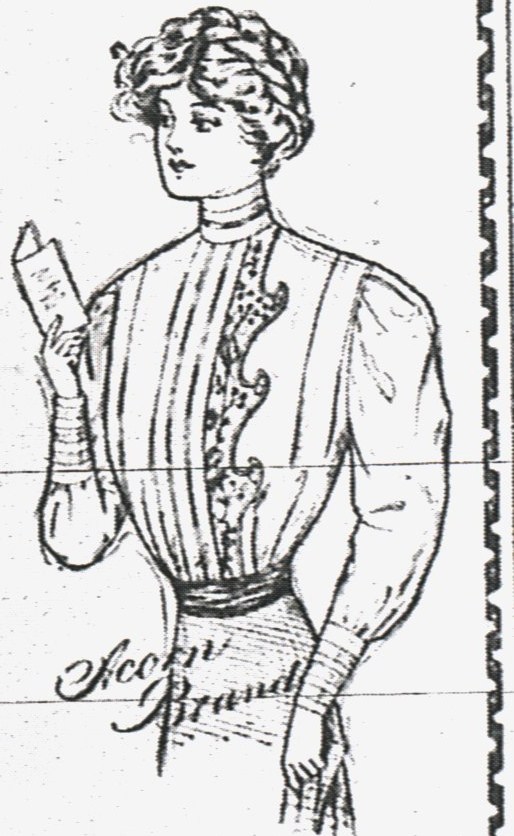
Waist
Her middle-aged granddaughter’s comments 100 years later:
Whew, a lot happened today. Was a guy chasing Grandma around the coal stove that heated the room?—And did she end up burning her hand and tearing her waist (today we’d call it a shirt)?  Was the guy her classmate Raymond—whom she would later marry— or was it some other student she thought was cute (or annoying)?

I want to ask, “What in the world were you thinking?” Then I remember that it’s a hundred years later, that I can’t talk to the 15-year-old diary author, and that I’m looking at it through my “parent” lens. So I guess if I could talk to the teen-ager in the diary I’d just say, “It’s too bad you burned your hand, but it sure sounds like fun. Hope your mother wasn’t too mad about the waist.”