Storm Coming: Brother Missing

16-year-old Helena Muffly wrote exactly 100 years ago today: 

Thursday, June 27, 1911: We had a thrilling search for Jimmie this afternoon who had hid himself in a chicken coop just before a rainstorm to escape getting wet.

Storm Clouds (Source: C. Johnson, Wikepedia Commons)

Her middle-aged granddaughter’s comments 100 years later:

Grandma’s brother Jimmie would have been 5-years-old.

This entry make me think of Aunt Em searching for Dorothy right before the storm at the beginning of the Wizard of Oz. A lot of things have changed over the last 100 years—but some things never change. A missing child then and now sets off so many emotions and fears—and then there is the utter sense of relief, mixed with anger at the child for hiding or wandering off,  when he or she is found.

Old-fashioned Cherry Pudding Recipe

16-year-old Helena Muffly wrote exactly 100 years ago today: 

Monday, June 26, 1911:  Felt so terrible this morning, so did Ruth. Picked cherries nearly all afternoon! There were sour ones, so there was no danger of spoiling my hands to any considerable extent.

Her middle-aged granddaughter’s comments 100 years later:

How did the Muffly family use the sour cherries? In pies? . . . jam?. . . fruit compote? . . . cherry pudding?

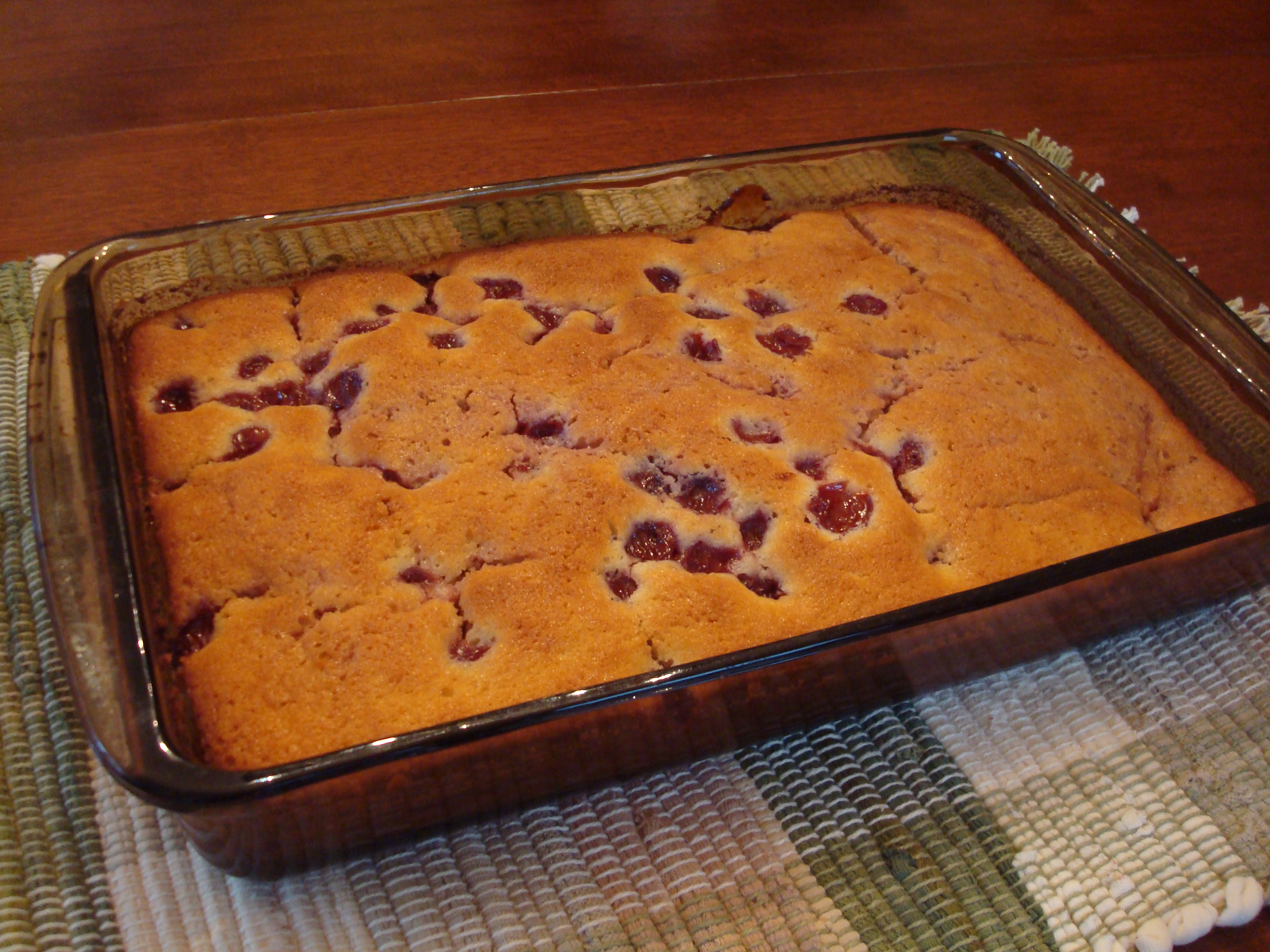
I can remember cherry pudding tasting awesome on hot summer evenings after a hard day of making hay.  Here’s the old family recipe that I use to  make Cherry Pudding.

Cherry Pudding

1/2 cup butter, melted

1 cup sugar

1 1/2 teaspoon baking powder

1/4 teaspoon salt

1 egg

1 cup milk

1 1/2 cups all-purpose flour

1 teaspoon vanilla

3/4 cup sugar

2 1/2 cups pitted sour cherries*

1/2 cup water

Preheat oven to 350 degrees. Put into a mixing bowl: butter, sugar, baking powder, salt, egg, milk, flour, and vanilla; beat until smooth. Pour into a 7 1/2  X  12  X  2 inch rectangular casserole dish, or similarly sized dish.

Make sauce by heating the 3/4 cup of sugar, cherries (including any juice), and water. Bring to a boil; then spoon the cherry sauce over the batter to distribute the cherries and the liquid across the top of the batter.  Place in oven and bake for 35 to 45 minutes, or until pudding just begins to shrink from sides of dish, and the top is golden brown. When baked, cherries and sauce will be on the bottom. Serve warm. If desired, may be served with milk.

*Frozen or canned cherries may be used. Do not drain frozen or canned cherries; and include juice when measuring cherries. It works okay to use a 1 pound can of cherries—there just will be somewhat fewer cherries in the dish than if fresh or frozen cherries were used. Reduce amount of sugar, if using cherries canned or frozen in sugar syrup.

1911 Magazines

16-year-old Helena Muffly wrote exactly 100 years ago today: 

Sunday, June 25, 1911: Went to Sunday school this morning. Didn’t go any place this afternoon. Had to entertain myself.

Her middle-aged granddaughter’s comments 100 years later:

Hmm—I wonder what Grandma did on this quiet Sunday afternoon a hundred years ago. Did she go for a walk, play solitaire, read . . or . . .?

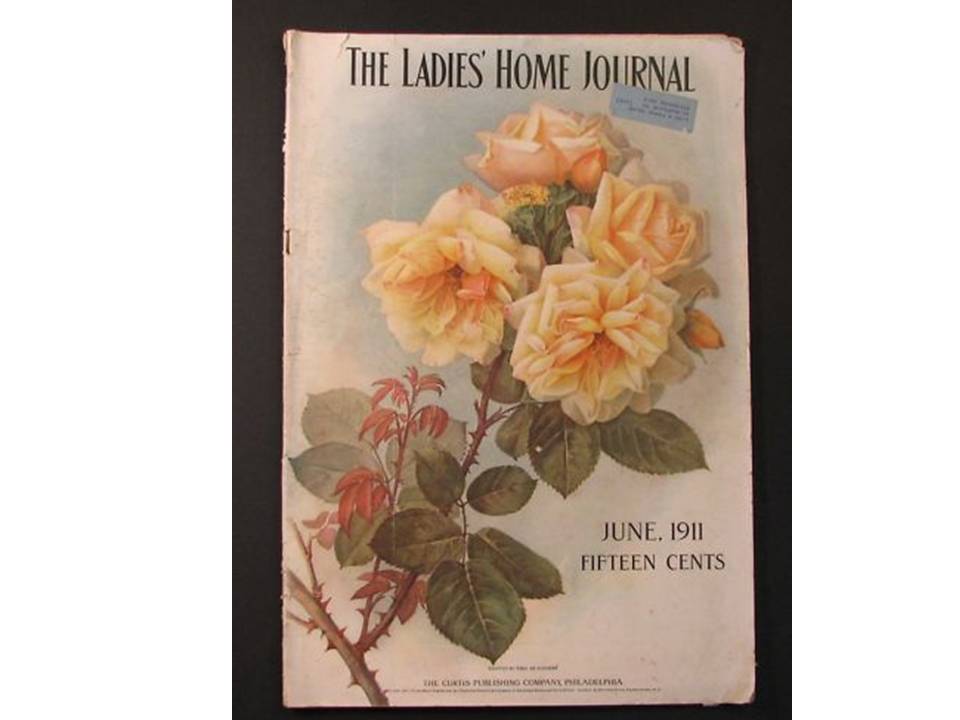
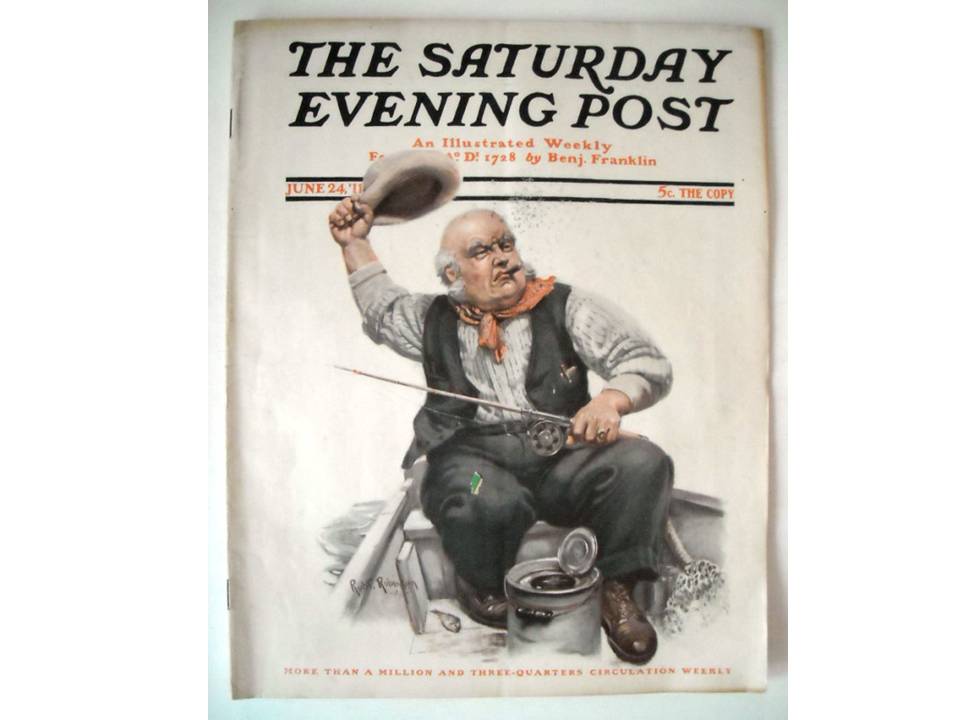
Maybe she read a popular magazine. As transportation improved and consumer culture began to grow and develop in the early years of the 20th century, magazines became very popular. For example, the circulation of the Saturday Evening Post grew from 200,000 in 1900 to 1.75 million in 1911. And during the same period the circulation of the Ladies Home Journal went from 800,000 to 1.4 million.

Ladies Home Journal was aimed at working class women—Saturday Evening Post at the working class of both genders. Curtis Publishing, the publisher of both magazines, was an early user of market research; and in 1911 the company created a Market Research Department  to get information about their customers. They then provided the information to their advertisers to help them target goods to specific demographics and successfully gauge public opinion.

These magazines reflected the predominate culture of the time while simultaneously creating a more commercialized consumer culture than had previously existed.

Hay Pulleys and Ropes

16-year-old Helena Muffly wrote exactly 100 years ago today: 

Saturday, June 24, 1911:  Mother cut my lawn dress out this afternoon. Am going to see how long it takes her to finish it. I give her till next Sat. evening. Have to carry the hay rope now. Such fun.
Her middle-aged granddaughter’s comments 100 years later:

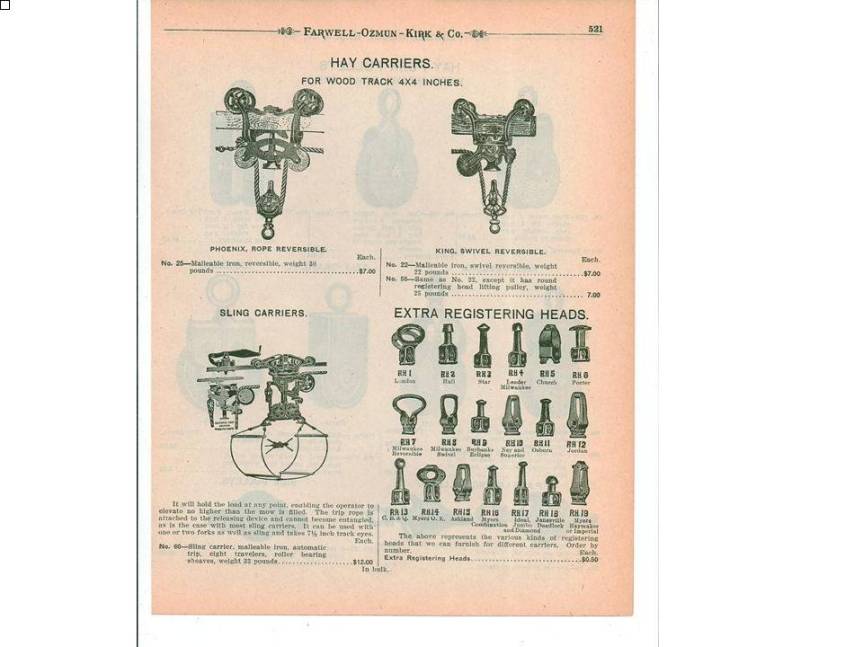
The Muffly family must have been making hay—always a hot, difficult job. A hundred years ago hay was not baled. Instead dried loose hay was brought into the barn on a wagon and then hoisted into the mow using a rope and pulley system.

I called my father to get help figuring out what “carry the hay rope” meant.  My father guesses that Grandma was half carrying and half dragging the hay rope to keep the horse from inadvertently stepping on it. Let me explain how they used to get hay from the wagon into the haymows.

(Some of you probably know much more about how hay was made in the old days—and please feel free to jump in if I’m not explaining it quite right.)

Dad said that when he was young there were pulleys on a track that ran down the center of the inside of the barn roof. Depending upon where the farmer wanted to pile the hay the pulleys would be moved along the track.  A young man with excellent balance would climb up onto a beam in the barn rafters and move the pulleys along the track as needed.

One end of the rope was attached to a large clamp (hay hook) that was used to pick up a large bunch of loose hay from the wagon.

The rope went then went through the pulley system—and the other end of the rope was attached to a horse. On command the horse walked forward and the pulleys lifted the hay into the mow.

The hay was then released and the rope went limp and a portion of it would fall to the barn floor. The horse would then be walked back to the original position and the process would be repeated.

My father says that when he was a child, the adult men did the heavy work, and the children did the easier jobs. His older sister Marjorie would lead the  horse as it pulled the hay upward—and then circle it back to the original position after the hay was released.

And my father would pick up the rope when it fell to the floor after the hay was released and keep it away from the horse’s feet. Dad says that if a horse stepped on the rope it would damage it by breaking some of the strands. Then there would be the risk of the damaged rope breaking, which might result in a dangerous accident if it broke while the hay was being lifted.


Strawberry Season Over

16-year-old Helena Muffly wrote exactly 100 years ago today: 

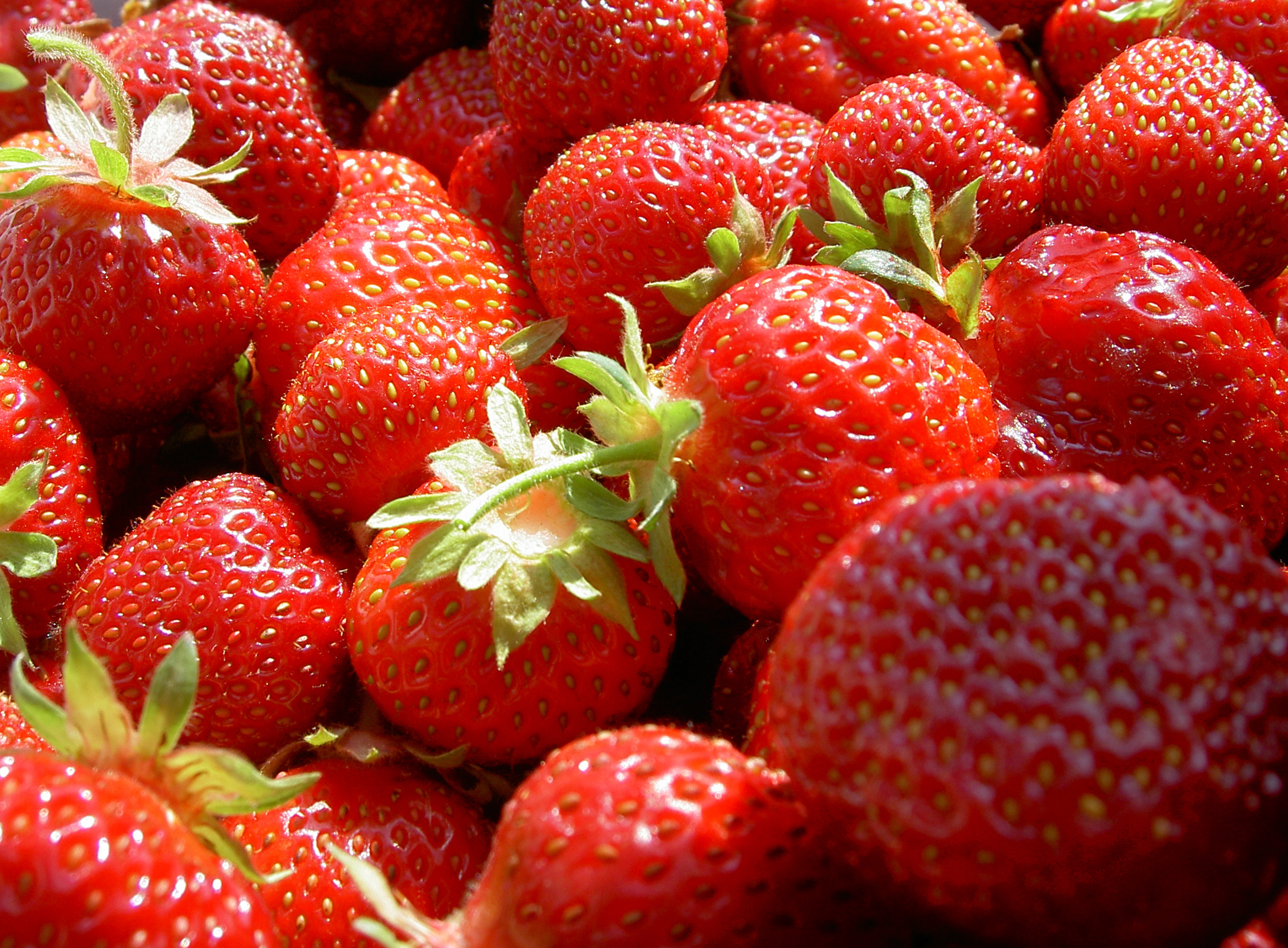
Friday, June 23, 1911: Was to pick strawberries this afternoon, but decided that it would be too hot. I’m going to stop now, as the season is over, having earned a snug sum of $2.65.

Her middle-aged granddaughter’s comments 100 years later:

Grandma had begun picking strawberries on June 12. $2.65 in 1911 would be worth about $75 today.

When I was young we ate strawberries day in and day out during June—and ate black raspberries day in and day out during early July, and corn on the cob later in July and August. For each fruit or vegetable there was a season, and it tasted so wonderful the first time it was served each year—and we were so tired of it that we thought we never wanted to see it again by the time the season ended. But we were always thrilled when strawberries (or raspberries or corn) was again available the following year.

(Photo source: Wikepedia Commons)

Went Shopping in Milton

16-year-old Helena Muffly wrote exactly 100 years ago today: 

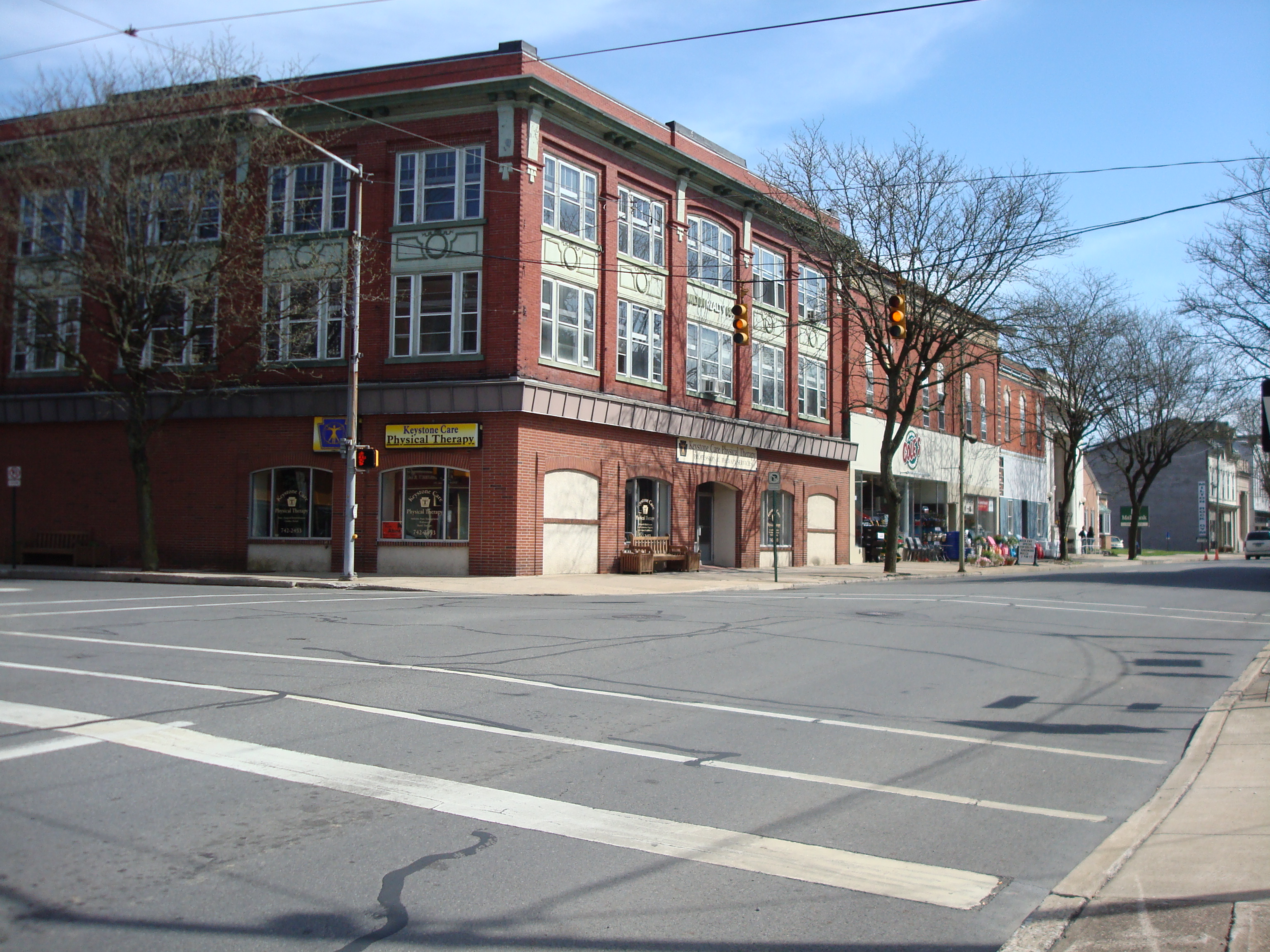
Thursday, June 22, 1911: Mother and I went to Milton this morning. I got a dress and a pair of shoes and some other accessories. Mother was so fatigued when we got home, but I was far from that.

Old postcard showing corner of Broadway and Front Street, Milton (Source: Milton Historical Society)
Recent photo of the corner of Broadway and Front Street, Milton

Her middle-aged granddaughter’s comments 100 years later:

See the May 2 entry for a 1911 advertisement and photo from a shoe store in Milton.

Home Remedy: Bee Stings

16-year-old Helena Muffly wrote exactly 100 years ago today: 

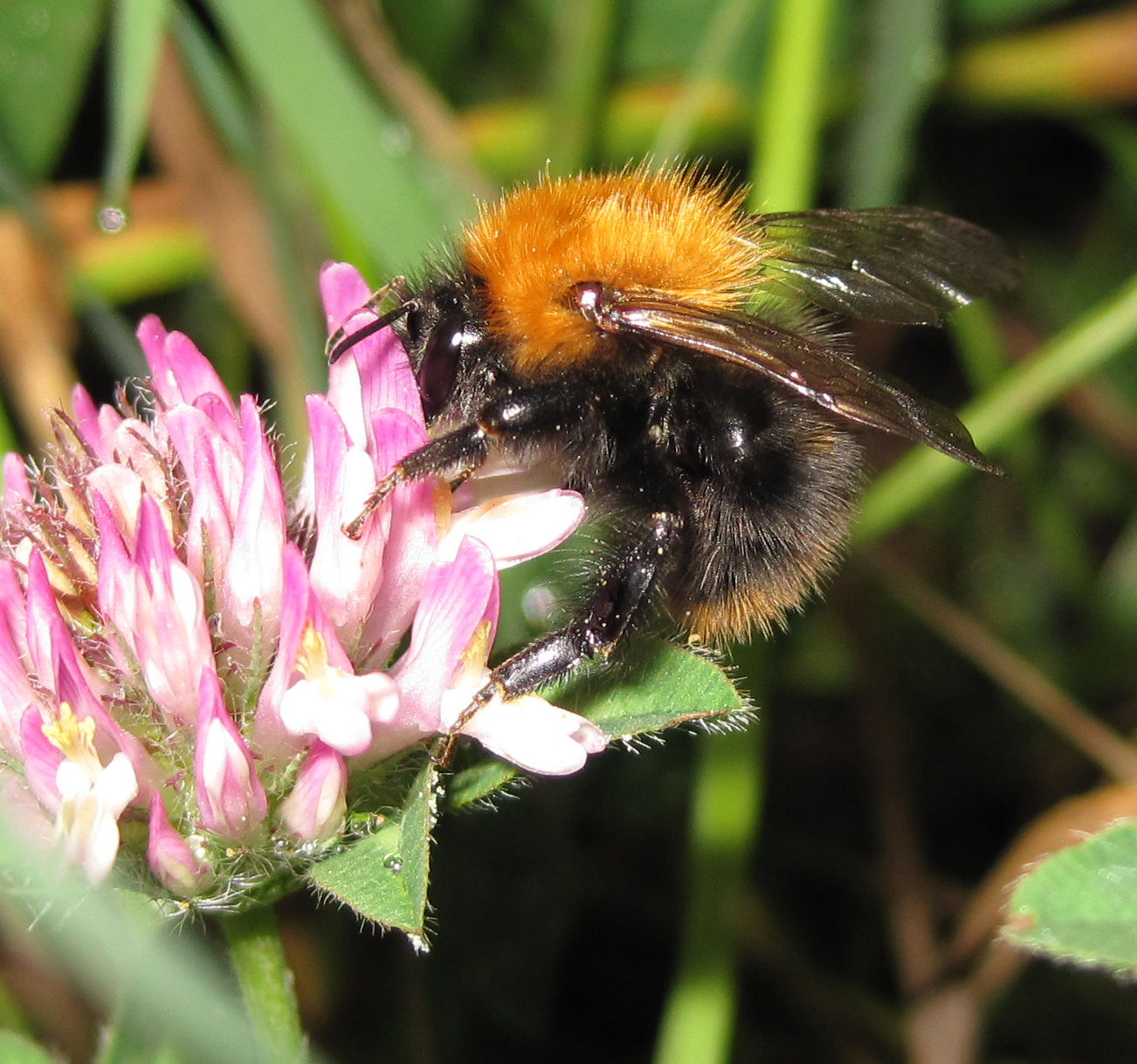
Wednesday, June 21, 1911: Got stung twice by a bumble bee this afternoon. I didn’t feel too well.

Bumble Bee (Photo source: Wikepedia)

Her middle-aged granddaughter’s comments 100 years later:

I wonder if Grandma used baking soda to reduce the pain and swelling caused by the sting. When I was a child my parents always treated bee stings by first gently pulling the stinger out if it had broken off and was embedded in the skin. Then they’d mix together a couple tablespoons of baking soda and a little water to make a paste.  The paste was then thickly spread over the sting site.

The baking soda home remedy has always worked well—and when my children were growing up I continued to use it to treat bee stings.