Truck: Archaic Definition

16-year-old Helena Muffly wrote exactly 100 years ago today: 

Saturday, July 22, 1911: I put away some of my truck that adorned the sideboard and stand. Rufus went to Dewart this afternoon. Carrie and I went up to McEwensville this evening.

Recent photo of McEwensville at dusk.

Her middle-aged granddaughter’s comments 100 years later:

Truck: Worthless Stuff or Rubbish

The handwritten diary entry clearly said that Grandma put some of her “truck” away. At first I thought that I’d transcribed something incorrectly, but then I decided to check an online dictionary and discovered that an archaic meaning of truck is worthless stuff or rubbish.

Saturday Happenings

I wonder what Grandma and her friend Carrie Stout did in McEwesnville on a Saturday evening in July. My sense is that Saturday’s are pretty sedate in McEwensville today, but maybe it was livelier a hundred years ago.

In this entry (and in many others) Grandma refers to her sister Ruth as Rufus.

Dewart is a small town a few miles north of Watsontown. It is the first time it has been mentioned in the diary. I wonder why Grandma’s sister Ruth went there and how she got there. Did someone give her a ride in a buggy? . . .did she ride the train. . . or did she walk? (It would have been a long walk— about 4 or 5 miles in each direction).
Helping in the Fields

16-year-old Helena Muffly wrote exactly 100 years ago today: 

Friday, July 21, 1911: I was out in the field with my Daddy helping him with his everlasting work!

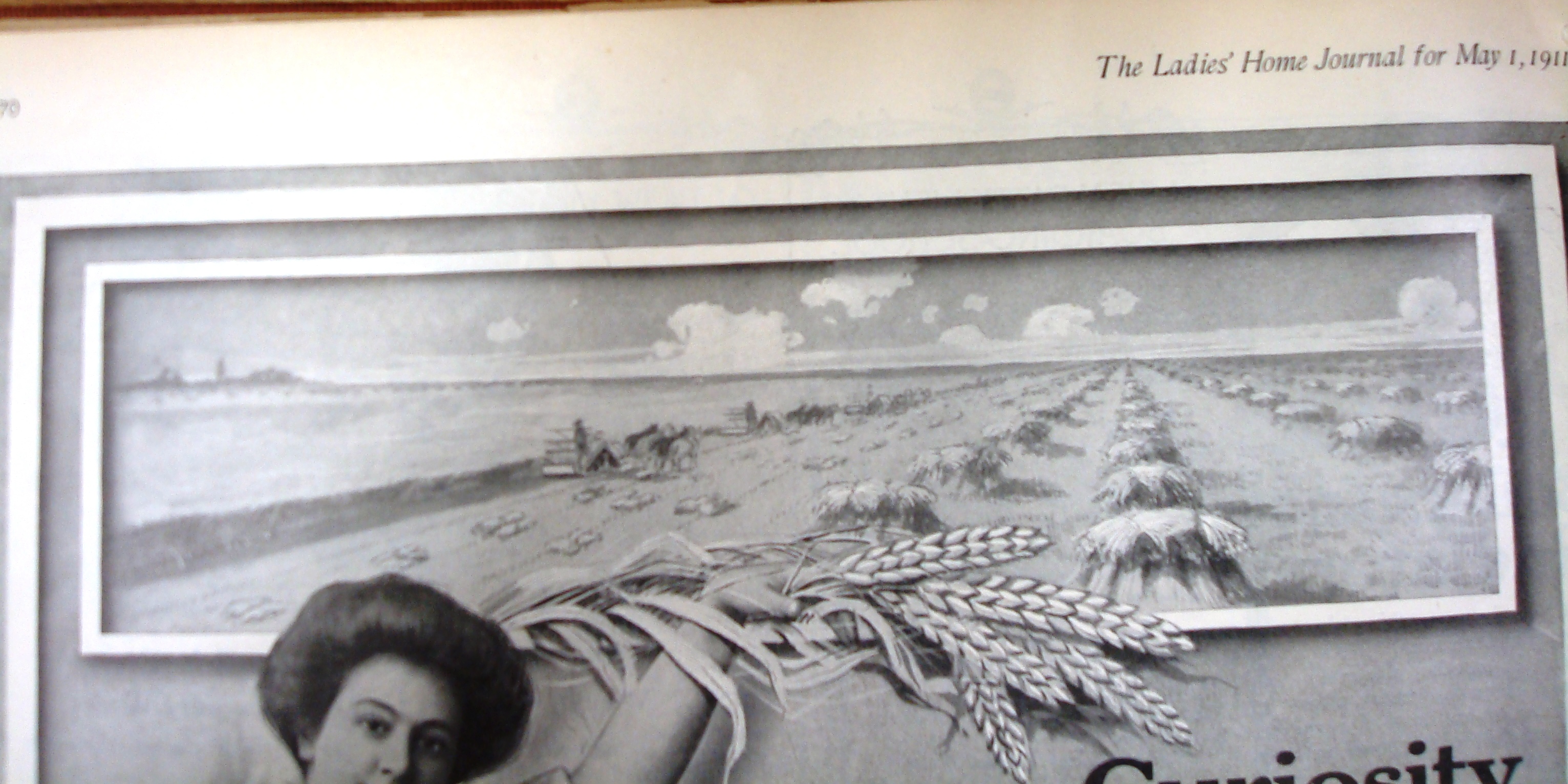
Drawing of grain being harvested in 1911 ad. (Click on photo to get a better view of the harvesting process.)

Her middle-aged granddaughter’s comments 100 years later:

I love this entry–and as someone who grew up on a farm, I can relate to Grandma’s feelings regarding everlasting work.

The small grains are harvested in July.  So Grandma probably was helping her father with some task related to the harvesting of wheat or oats. The grain would have been cut, and then put into sheaves for additional drying. At a later date, neighbors would help each other thresh the grain (separate the grain from the straw).

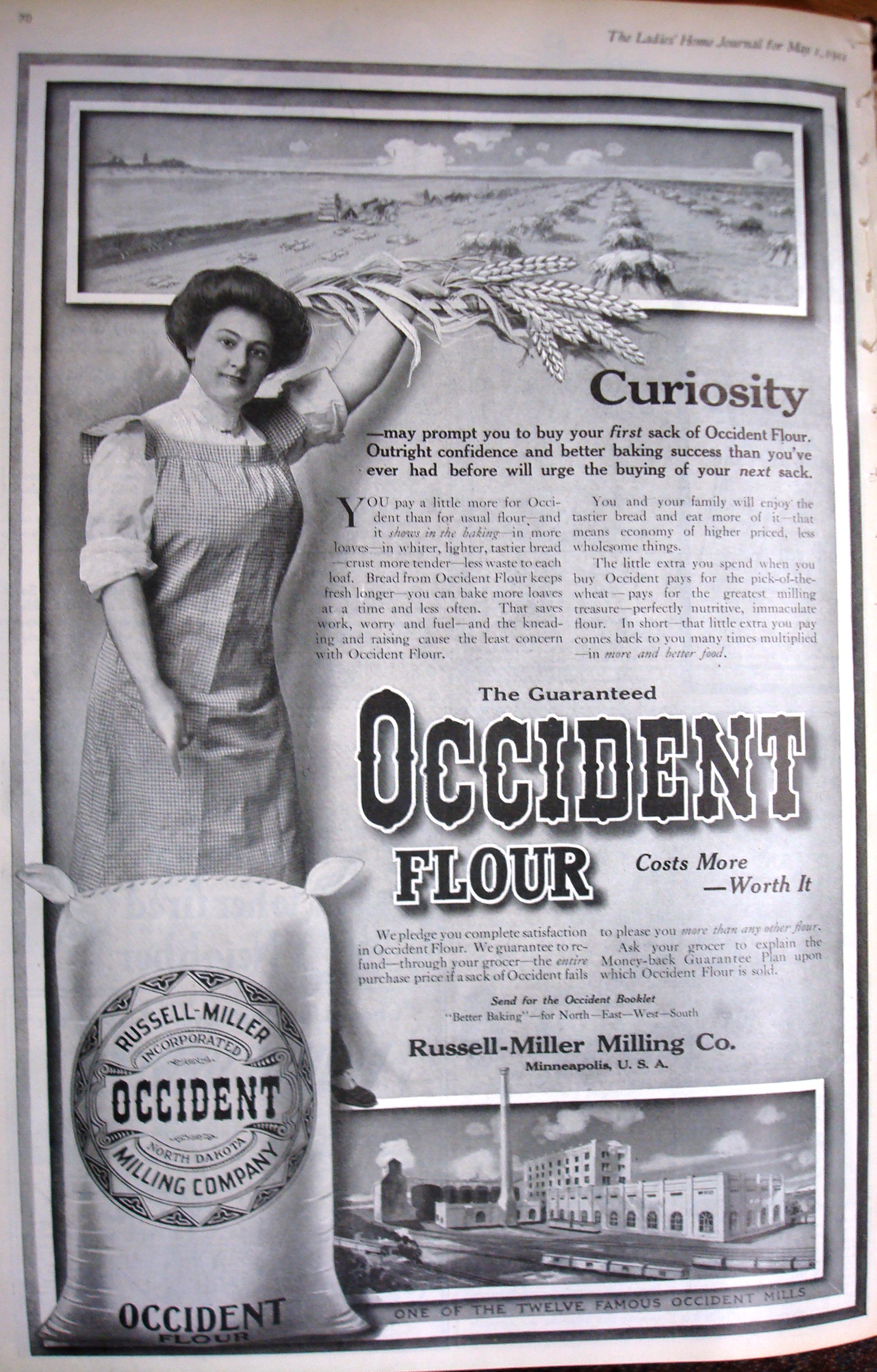
Here's the complete ad for Occident Flour. It appeared in the May 1, 1911 issue of Ladies Home Journal.

Saccharin Banned

16-year-old Helena Muffly wrote exactly 100 years ago today: 

Thursday, July 20, 1911: Everything is becoming so usual, nothing out of the ordinary at all.

Her middle-aged granddaughter’s comments 100 years later:

Since Grandma didn’t write much today, I going to go off on a tangent–

I was amazed to discover that the use of saccharin was banned in July 1911 by the Pure Food Referee Board in the U.S. Department of Agriculture. According to an article in National Food Magazine called “The Passing of Saccharin”:

 After July 1 when you partake of sweets you may know they are sweetened with sugar or syrup and not with a chemical. Saccharin, a poisonous derivative of coal tar and a near relative of benzoate, has been the popular sweetening agent employed by food adulterators, and heretofore, the government has permitted them to use it, despite the evidence of its harmfulness given by experts in Europe and America.. . .

It has a preservative power and is very cheap. But the Referee Board, which has been investigating Saccharin, has found it guilty of causing indigestion and otherwise injuring the system. Therefore, the government has issued a ruling entirely prohibiting its use after July 1.

National Food Magazine (June, 1911)

In 1912, the government reversed the decision and again allowed the use of saccharin, but it has remained very controversial. Studies in the 1960s and 70s suggested that it caused bladder cancer—and the government again attempted to ban its use in 1972. Diabetics, opposed the ban, and it continued to be allowed (during the 1970s through the 1990s products containing saccharin were required to include a warning label that it was a suspected carcinogen).

Fast forward to today—the nation is worried about obesity—and obsessed with low-calorie foods. Foods containing saccharin are now promoted as “healthy foods.”  For example, Pepsi and Coke promote the use of reduced calorie drinks in schools; and school vending machines are filled with these products as part of lucrative contracts.

Hmm—To frame it from a 1911 perspective: Are we talking about healthy drinks in the schools versus unhealthy drinks, or are we really talking about adulterated drinks versus sugar and corn syrup-laden drinks? (Personally I want to think that there is a third option that includes neither of the above. Somehow schools managed without vending machines filled with drinks in 1911.)

Law on the Farm

16-year-old Helena Muffly wrote exactly 100 years ago today: 

Wednesday, July 19, 1911: Nothing doing.

Her middle-aged granddaughter’s comments 100 years later:

I guess that it was a slow day on the farm a hundred years ago today, so I’ll tell you about an interesting question and answer column call Law on the Farm that I found in the July 1911 issue of Farm Journal. Here are two questions submitted by Pennsylvania subscribers and the answers:

Will of a Married Woman

Where a married woman dies, leaving her husband, but no children surviving, can she give all of her property by will to her niece to the entire exclusion of her husband?

Pennsylvania Subscriber

No; under the Pennsylvania Act of 1893, a married woman is given full power to make a will, provided, however, that nothing in the act shall affect the husband’s right of courtesy nor his right to take against the will as provided by existing laws.

I wonder if the answer would have been the same if a married man died, leaving a wife, but no children.

Here’s another question that was in the column:

Rights in Running Stream

Has the owner of land through in which a stream runs the right to empty slops and wash water into it or to dam the water up? If he does the latter, has the lower proprietor the right to go on the land and turn the water loose?

Pennsylvania Subscriber

Every one who owns land along a running stream owes to lower proprietors the duty not to pollute the stream, nor to dam up or divert the water so as to cause damage to the lower owners. The proper remedies of the latter, however are by an action for damages or an injunction, and the aggrieved parties are not entitled to come on the land of the upper proprietor and turn the water loose unless such action is urgently necessary to prevent serious injury.

Little Brother Playing with Friend

16-year-old Helena Muffly wrote exactly 100 years ago today: 

Tuesday, July 18, 1911: Besse and her little nephew were out this afternoon.  Jimmie had quite a romp with said fellow. I can’t write very much about myself these days.

Recent photo of the Muffly farm. If I use my imagination I can almost see 5-year-old Jimmie chasing a friend around the yard.

Her middle-aged granddaughter’s comments 100 years later:

Grandma’s  brother Jimmie was 5-years-old, and her sister Besse was married to Curt Hester. One of Curt’s sisters or brothers must have had a son.

Old Tomato Rarebit Recipe

16-year-old Helena Muffly wrote exactly 100 years ago today: 

Monday, July 17, 1911: It rained real hard this morning. I don’t know whether that kept me from doing anything of any account or something else—any way it isn’t here to read.Her middle-aged granddaughter’s comments 100 years later:

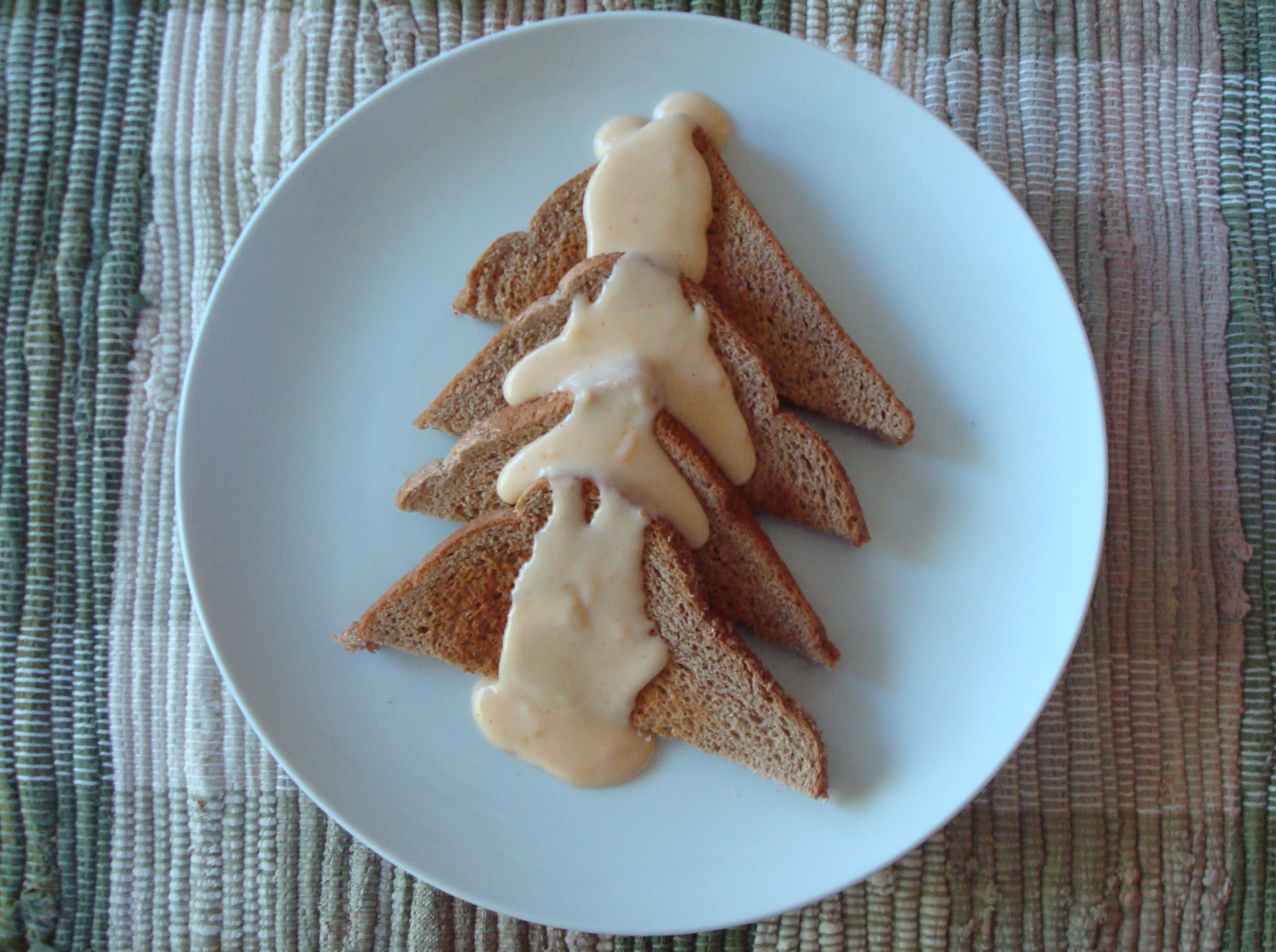
Since Grandma didn’t have much to say a hundred years ago today, I flipped through the July 1911 issue of Good Housekeeping magazine. It contained a recipe for Tomato Rarebit.  A rarebit is a cheese sauce that is served over toast or other similar foods.  I like Welsh Rarebit so thought that I’d give this recipe a try.

Tomato Rarebit

Cook one tablespoon chopped onion in one tablespoon butter five minutes. Add one cup tomatoes, cook two minutes, and strain. In a saucepan, or the blazer of the chafing dish, melt two tablespoons butter, add two tablespoons flour, and three-fourths of a cup of thin cream. Cook until thickened, then add two cups cheese cut in dice or thinly shaved, the tomato, and one-half teaspoon each mustard and salt, and one-fourth teaspoon paprika. Stir until cheese is melted and the mixture is smooth. Serve on toast or heated crackers.

The Tomato Rarebit had a zestier taste than Welsh Rarebit, and was excellent.  The recipe is a keeper.

1911 Dresses

16-year-old Helena Muffly wrote exactly 100 years ago today: 

Sunday, July 16, 1911: Went to Sunday school this afternoon. I was the only one in our class. I initiated my new dress for the first time. Wouldn’t it be nice to have as many dresses as you wanted, and wear them whenever you pleased.

Photo in June, 1911 issue of Ladies Home Journal

Her middle-aged granddaughter’s comments 100 years later:

Grandma’s mother finished the new dress earlier in the week. Grandma probably wished that she had some dresses that looked similar to the ones in Ladies Home Journal.

Photo in the July, 1911 issue of Ladies Home Journal