Had Quite a Good Time

16-year-old Helena Muffly wrote exactly 100 years ago today: 

Saturday, July 29, 1911: Carrie and I went to a festival up at McEwensville this evening. I had quite a good time. He was there. B.

Her middle-aged granddaughter’s comments 100 years later:

I especially enjoy posting the diary entries when there are parallels between events a hundred years ago and now.

Grandma and her friend Carrie Stout had quite a good time at the festival in McEwensville a hundred years ago. Last Friday I had quite a good time at the annual McEwensville community picnic.
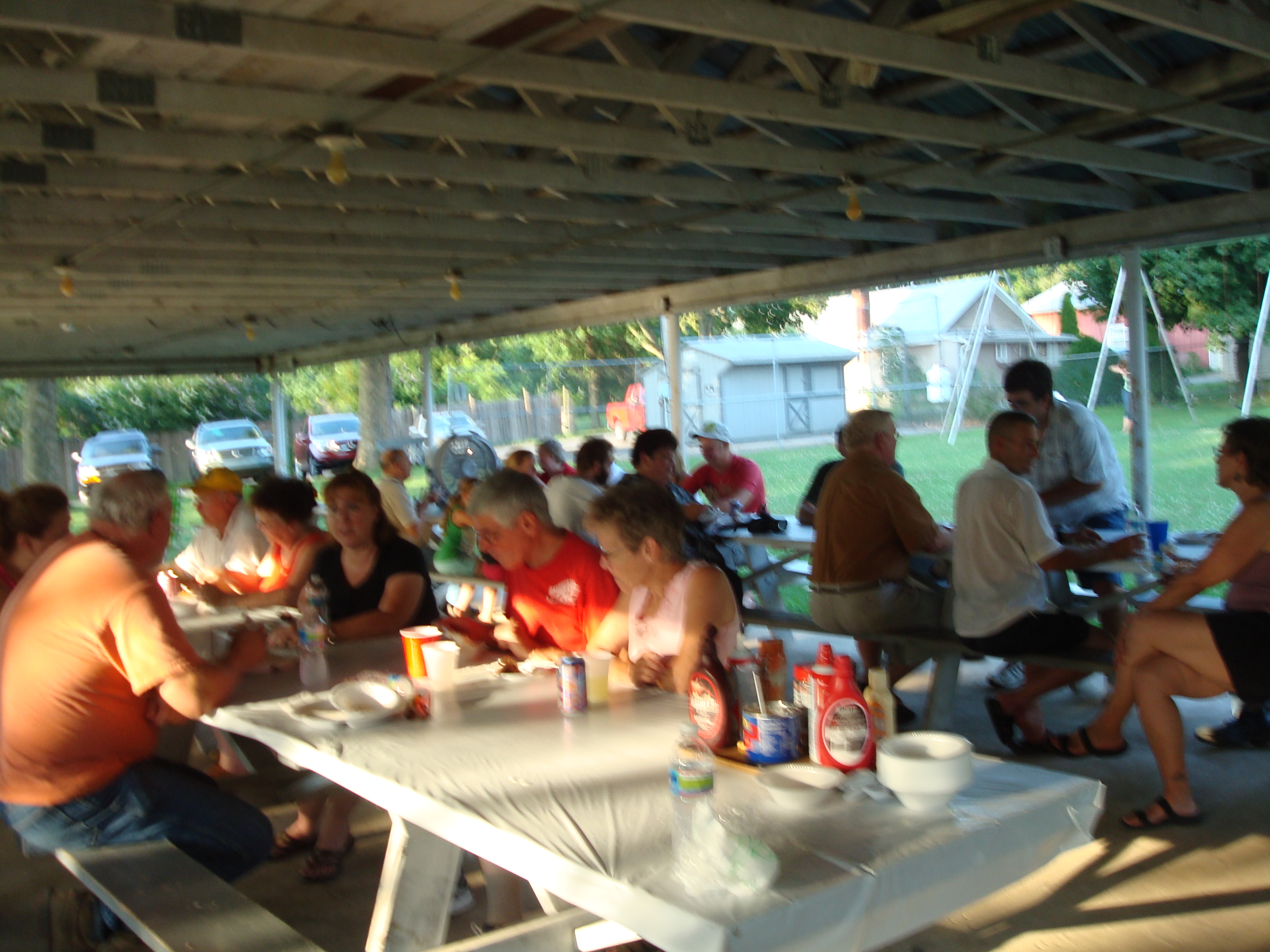
2011 McEwensville Annual Picnic

I was in central Pennsylvania and my husband and I went to McEwensville to take photos to illustrate this blog. The car thermometer said it was 102. When I got out of the car, I immediately wilted and was soaked in sweat.

A woman I’d never met came out of a house and invited me to the annual community picnic later in the day. (Until she invited me I had no clue that McEwensville had an annual picnic–let alone that it was on a day when I was in town.)

My husband and I went and had a great time. Electric fans dissipated  some of the heat–and there was great food and lots of wonderful conversation.  We met many wonderful new people and renewed old connections. 

I think that Grandma and I would have agreed on at least one thing—McEwensville is a fun place!!
Too Sick to Go to Picnic

16-year-old Helena Muffly wrote exactly 100 years ago today: 

Friday, July 28, 1911:I woke up this morning with a very sick feeling, and do not feel very extra now. I do not experience such feelings very often being such a good and healthy girl. Anyway it was a good thing I guess that I hadn’t intended to go to that picnic. I ate a pinch for breakfast and nothing for supper.

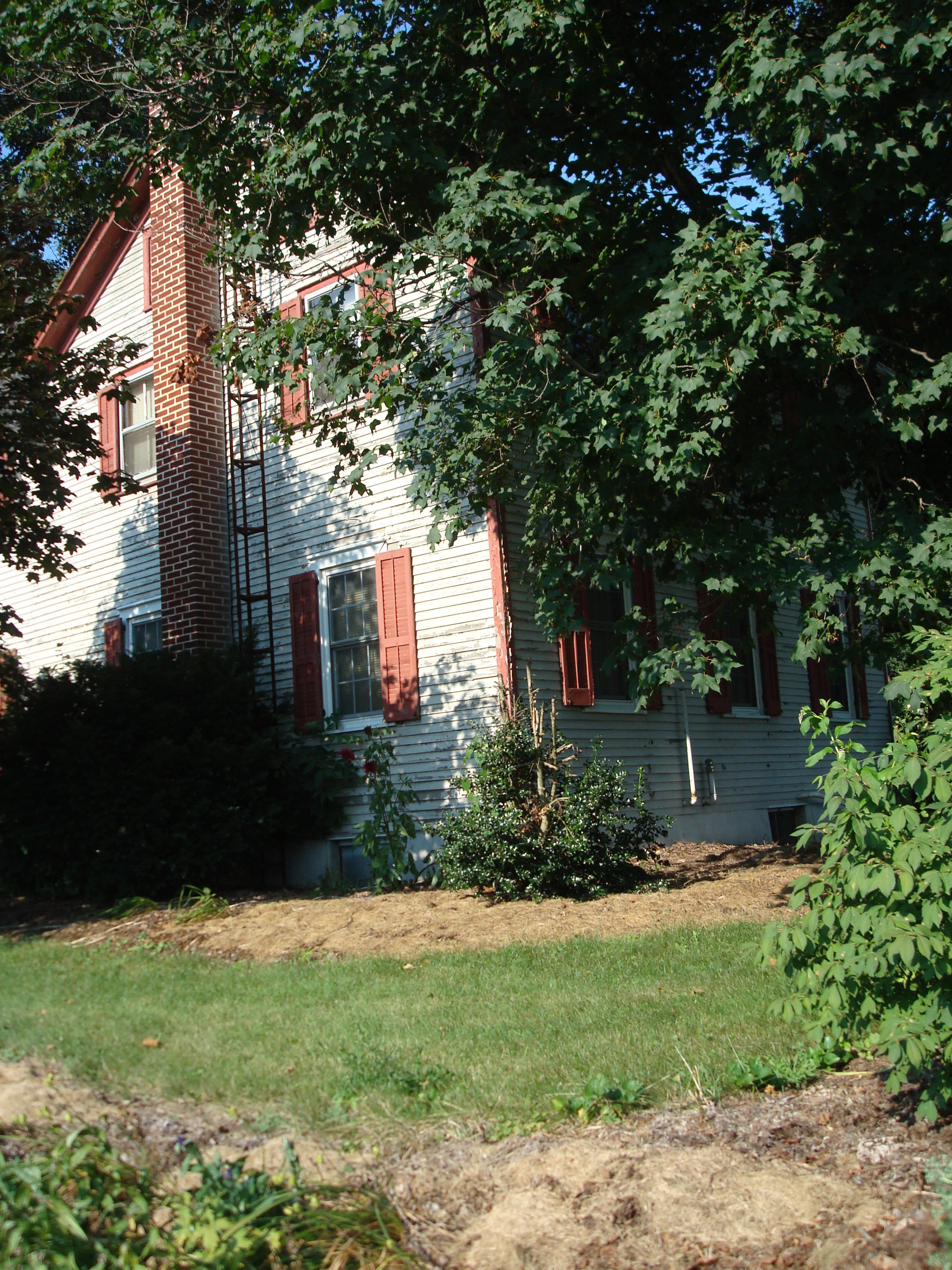
A hundred years ago today Grandma sat in this house while her sister was at a picnic.

Her middle-aged granddaughter’s comments 100 years later:

It seems like the picnic was a major social event—yet Grandma didn’t go. On the 26th she wrote that she wasn’t going because something had intervened; and on the 27th she again mentioned that she didn’t think that she’d go to the picnic, but that her sister Ruth was going.

On the previous two days I’ve pondered various possible reasons why she decided not to go—maybe she was grounded . . . or maybe she was jealous that a guy she liked was going with another girl . . . or . . .

We’ll never know why Grandma decided not to go—but the bottom line was that she didn’t feel well on the day of the picnic.

I wonder if Grandma was really sick a hundred years ago today—or if she just made herself ill because she somehow managed to get herself very upset about the picnic.

So Many Things to Do

16-year-old Helena Muffly wrote exactly 100 years ago today: 

Thursday, July 27, 1911: Went with Ruthie up to Oakes. Ruth and Rachel are having such an awful time a planning to go so many places almost at once. Ruth expects to go to the picnic, but I don’t think I will.

Her middle-aged granddaughter’s comments 100 years later:

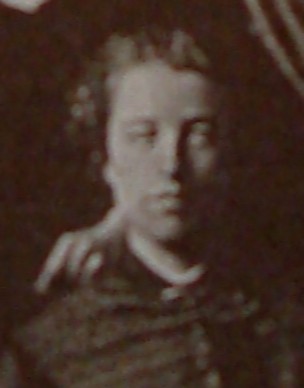
Ruth Muffly

Grandma also mentioned the upcoming picnic in the previous day’s diary entry and that she probably won’t go because “something unforeseen intervened.”

This entry suggests that Grandma could go if she chose to do so. Yesterday I’d thought that perhaps she’d been grounded by her parents.

Now I think that she is upset about something and just doesn’t want to go.   Did she discover that some guy that she thought was cute was going with another girl? . . .or . . .

Rachel Oakes

It sounds like Grandma’s sister Ruth and her friend Rachel Oakes are involved in lots of things. I wonder what the dilemmas were—Were several events occurring at the same time? . . .Were they trying to figure out who would (and who would not) be at various events . ..Or guessing which events the cool guys would be at? . . . Or were they trying to figure out what to wear or which foods to take? . . . Or maybe Ruth and Rachel didn’t want a younger sister tagging along to the picnic—Grandma was 16; Ruth was 18 or 19— and said something nasty.

Whew, there can be so many considerations when one is a teen. . . (In other words, some things never change.)

Painting the Barn Red

16-year-old Helena Muffly wrote exactly 100 years ago today: 

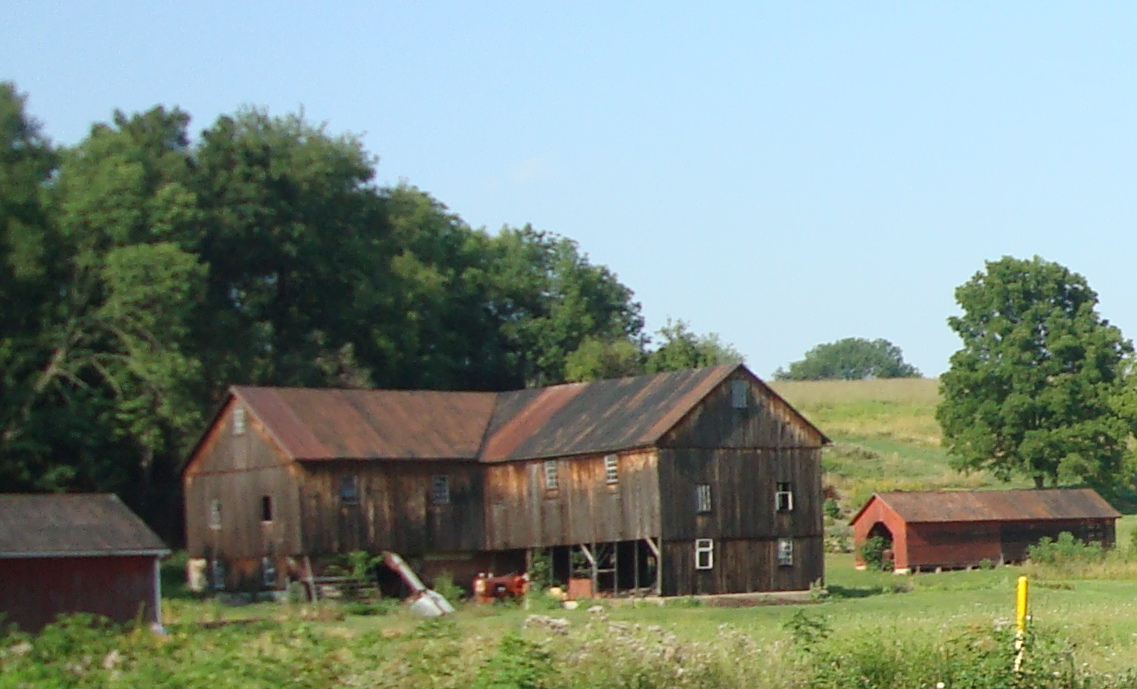
Wednesday, July 26, 1911: The barn is gradually turning to a deeper shade of red under the swift strokes of the painter’s brush. Carrie and I had intended to go to a picnic next Friday, but something unforeseen intervened, and I for my part have given up going entirely.

Recent photo of the barn

Her middle-aged granddaughter’s comments 100 years later:

When I look at the weathered gray barn that sits on the farm where Grandma grew up, it’s hard to envision how majestic it must have looked in  its heyday.

The family had built an addition on the barn in the Spring and now were apparently painting the entire barn red so that the two sections matched.

Picnic Plans

I wonder why Grandma no longer plans to attend the picnic. What does “something unforeseen intervened” refer to? Does she need to help on the farm? . . Might she possibly have been grounded for some reason? . . though it seems like she would have mentioned the reason if she had been grounded.  . . or . . .

Bucolic Cows or Poor Water Quality?

16-year-old Helena Muffly wrote exactly 100 years ago today: 

Tuesday, July 25, 1911:  Cows got in the corn again, and as I am the cowboy I had to get them out. Tweetkins was here awhile this afternoon to converse with her dear Ruthie.

Advertisement in June 30, 1911 Issue of Farm Implement Magazine

Her middle-aged granddaughter’s comments 100 years later:

This is the second time during July that the cows got into the corn.

Tweetkins refers to Helen Wesner, who often went by the nickname of Tweet. She was a friend of Grandma and her sister Ruth—though it sounds like she came to visit Ruth (rather than both of the Muffly girls) a hundred years ago today—and that Grandma was unhappy about being excluded from the conversation.

I really like the drawing in the 1911 advertisement that I used to illustrate today’s entry. A stream flows through the farm that Grandma grew up on so the cows probably were pastured in a field that looked similar to the field in the drawing.

Recent photo of the stream that flows through the farm Grandma grew up on (though obviously it is a different time of the year). The old Muffly barn is in the background--and the cows were probably pastured in this field.

I especially like the juxtaposition of the old (bucolic cows) and the new (airplane and sign for a De Laval Cream Separator).

However, when I showed the picture to my daughter she said, “Those cows are in the stream. That’s bad.” She spent a year as an AmeriCorps volunteer with a water quality organization—and spent part of that year encouraging farmers to build fences (or plant natural barriers) to keep cows out of streams.

It’s interesting how an illustration can evoke different feelings in different people. (Personally I still think it shows a peaceful scene with bucolic cows.)

“Free Booklet– Farming with Dynamite, No. 32”

16-year-old Helena Muffly wrote exactly 100 years ago today: 

Monday, July 24, 1911: If I could go elsewhere sometime, I might be able to write something in this diary that would be interesting, and not have every entry fill of stale doings. I’ve expressed my feelings fully for tonight, so good-night.

Her middle-aged granddaughter’s comments 100 years later:

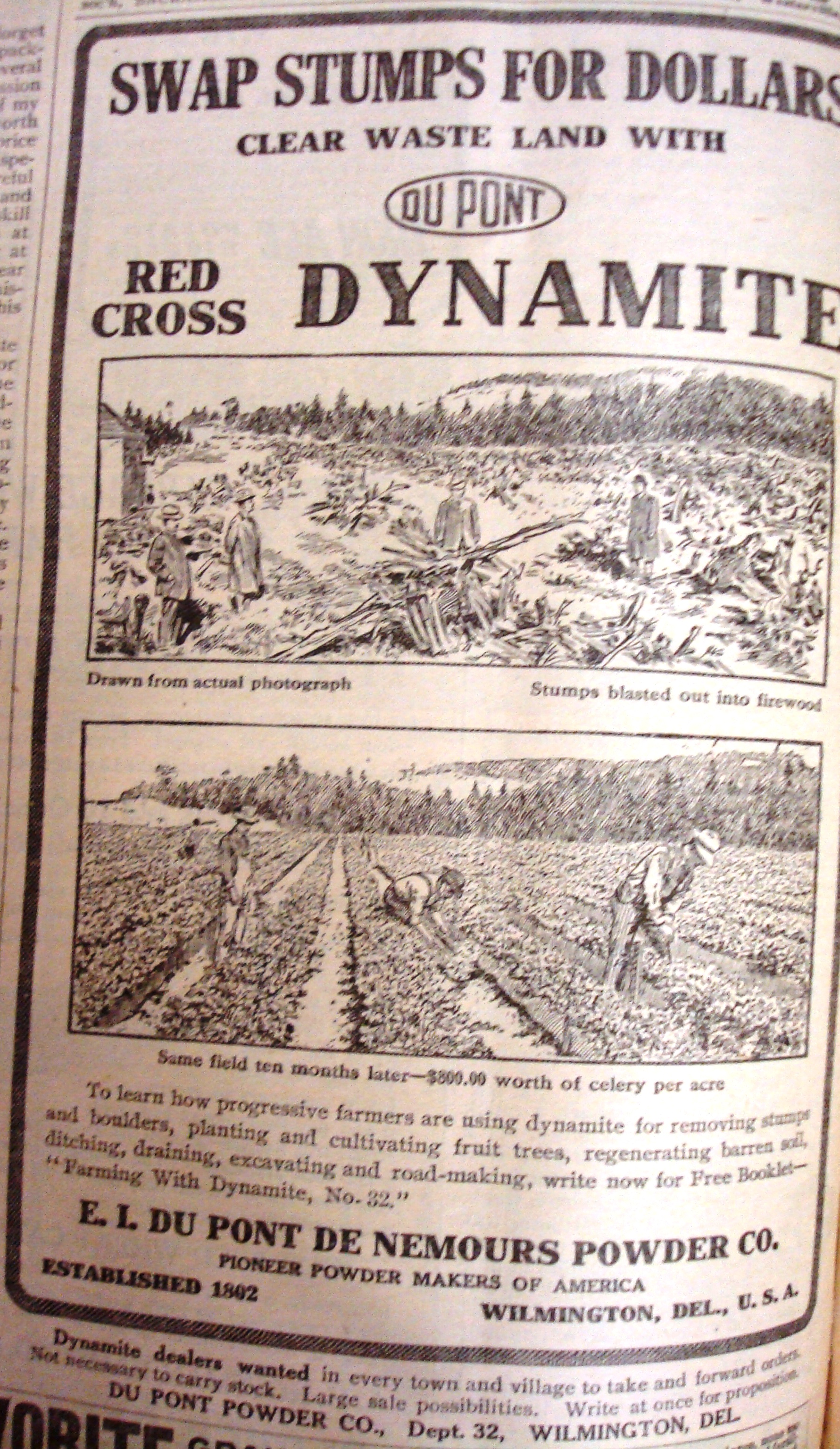
Sometimes I’m amazed at how much times have changed in the last one hundred years. Since Grandma didn’t write much today, I’ll show you an advertisement for dynamite that I found in the August 1911 issue of Farm Journal

The text in the paragraph says:

To learn how progressive farmers are using dynamite for removing stumps and boulders, planting and cultivating fruit trees, regenerating barren soil, ditching, draining, excavating and road-making, write now for Free Booklet–“Farming With Dynamite, No. 32.”

I guess that in some sections of the US, virgin forests were still being cleared and people were blasting out the stumps. Farmers may have also wanted to remove fencerows that contained trees to enlarge fields. Amazingly farmers apparently could just walk into a store and buy dynamite back then.  Whew, it’s scary to think about all of the environmental and safety issues.

No Beaus: So Jealous . . .

16-year-old Helena Muffly wrote exactly 100 years ago today: 

Sunday, July 23, 1911:  Ruth and I were alone here part of today, the rest of the family having gone a visiting. I went to Sunday school this morning. Miss Carrie came over this afternoon. She was telling us about some of her beaus. I’m so sorry for myself, and so very jealous.

Recent photo of house Grandma lived in when she was a teen.

Her middle-aged granddaughter’s comments 100 years later:

Some things never change–I can almost feel Grandma’s pain and jealousy that her friend Carrie has boyfriends and she doesn’t.

I’ve wondered what people did on dates a hundred years ago. A report by published by the City of Chicago in 1911 gave me a few clues about the youth in that city. I know that central Pennsylvania was very different from Chicago, but I still found the worries of the 1911 Chicago commission interesting:

Public Parks. During the summer time young girls frequent these places and sit around on the grass with boys, or go with them in the dark corners and among the shrubbery at night. . . The Commission recommends the removal of seats from the deep shadows.

Recent photo of the park in nearby Watsontown.

Amusement Parks. Incidents have come to their notice showing a laxity of supervision and of the moral dangers surrounding young girls who frequent these places for amusement.

Confectionary and Ice Cream Parlors. A city ordinance declares that it shall be unlawful for any person owning, conducting or managing candy and fruit stores or ice cream parlors to allow any male under the age of twenty-one years or any female under the age of eighteen to remain in such places between the hours of 10:00 p.m. and 7:00 a.m. unless accompanied by one or both parents.  . . The following typical instances came under the observation of investigators of the Commission during its study:

  •  October 10th. Ice cream soda and confectionary. Several girls and boys were seen in this place at 10:35 p.m. Two of the girls appeared to be 16, and 3, 18 years of age; the boys 14 to 20. One of the younger boys asked a girl to hurry up, and they would go to the hallway where they could talk by themselves.
  •  October 11th. Ice cream parlor. Eight girls and 5 boys were seen in this place at 10:50 p.m. The youngest of the girls appeared to be 16 and the youngest boy 17. Three girls who appeared to be 16 were acting very giddy.

The Social Evils in Chicago (1911)