17-year-old Helena Muffly wrote exactly 100 years ago today:
Sunday, July 21, 1912:Went to Sunday School this morning. Had to go through the mud coming homeward. Hence it rained today. Went over to see Miss Caroline May, though it rained, for it won’t hurt me.
Source: Wikipedia
Her middle-aged granddaughter’s comments 100 years later:
Grandma saw rain and mud. . . Did her father give a sigh of relief and see more corn? (Somehow this brings to mind that crazy country song about rain making corn.)
Farmers worry about the weather–too much rain (not good) . . . too little rain (not good).
This year so many farmers are worried about a drought and the possible failure of their corn crop. Did Grandma’s father have similar worries a hundred years ago?
To get lots of corn in the fall it is vital that the corn plants get enough water in July when the corn is tasseling, and the ears are beginning to form.
—-
Miss Caroline refers to Grandma’s friend Carrie Stout. Carrie lived on a nearby farm.
17-year-old Helena Muffly wrote exactly 100 years ago today:
Saturday, July 20, 1912:Today seem oh so lonesome and sad. Ma and Pa went to attend a funeral. The deceased was my aunt. We kiddies kept house and did the little duties that were left to us.
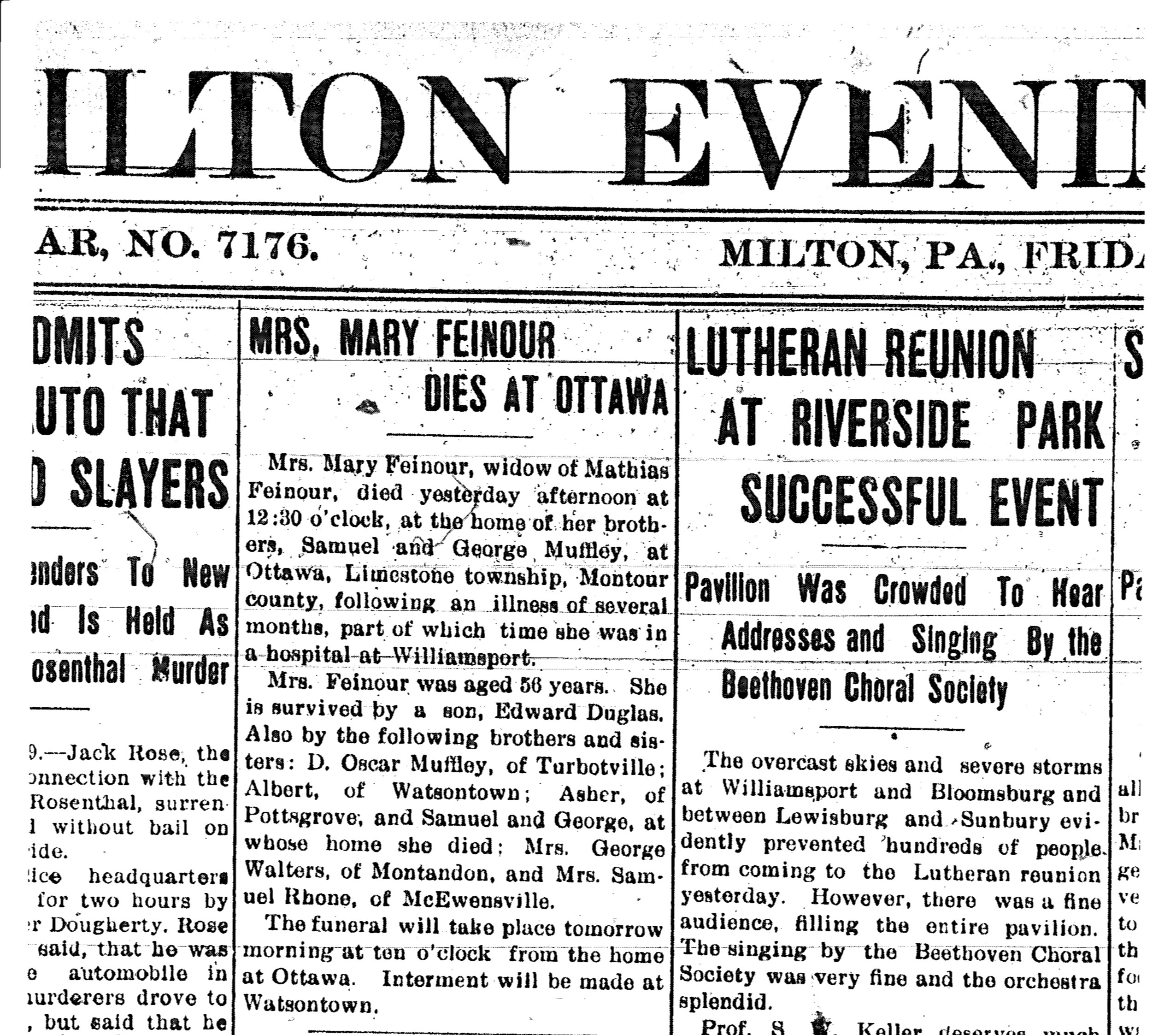
Mary Feinour Obituary. Source: Milton Evening Standard (July 19, 1912). Click to enlarge.
MRS. MARY FEINOUR
DIES AT OTTAWA
Mrs. Mary Feinour, widow of Mathias Feinour, died yesterday afternoon at 12:30 o’clock, at the home of her brothers, Samuel and George Muffley, at Ottawa, Limestone township Montour county, following an illness of several months, part of which time she was in a hospital at Williamsport.
Mrs. Feinour was aged 56 years. She is survived by a son, Edward Duglas. Also by the following brothers and sisters: Dr.Oscar Muffley, of Turbotville; Albert, of Watsontow; Asher, of Pottsgrove; and Samuel and George, at whose home she died; Mrs. George Walters, of Montandon, and Mrs. Samuel Rhone, of McEwensville.
The funeral will take place tomorrow morning at ten o’clock from the home at Ottawa. Interment will be made at Watontown.
Her middle-aged granddaughter’s comments 100 years later:
The aunt who died was Mary Feinour. She was a sister of Grandma’s father Albert.
She must have been reasonably prominent because her obituary was at the top center of the front page of the Milton Evening Standard—yet I feel like she’d had a difficult life.
Mary was a widow who lived with her two bachelor brothers. According to the 1910 census her two children, 19-year-old S. Kathryn and 14-year-old John, were also part of the household. But the obituary only mentions one child–Edward. (Something seems inconsistent between the census and the obituary, but nonetheless I wonder if she had a daughter who died.)
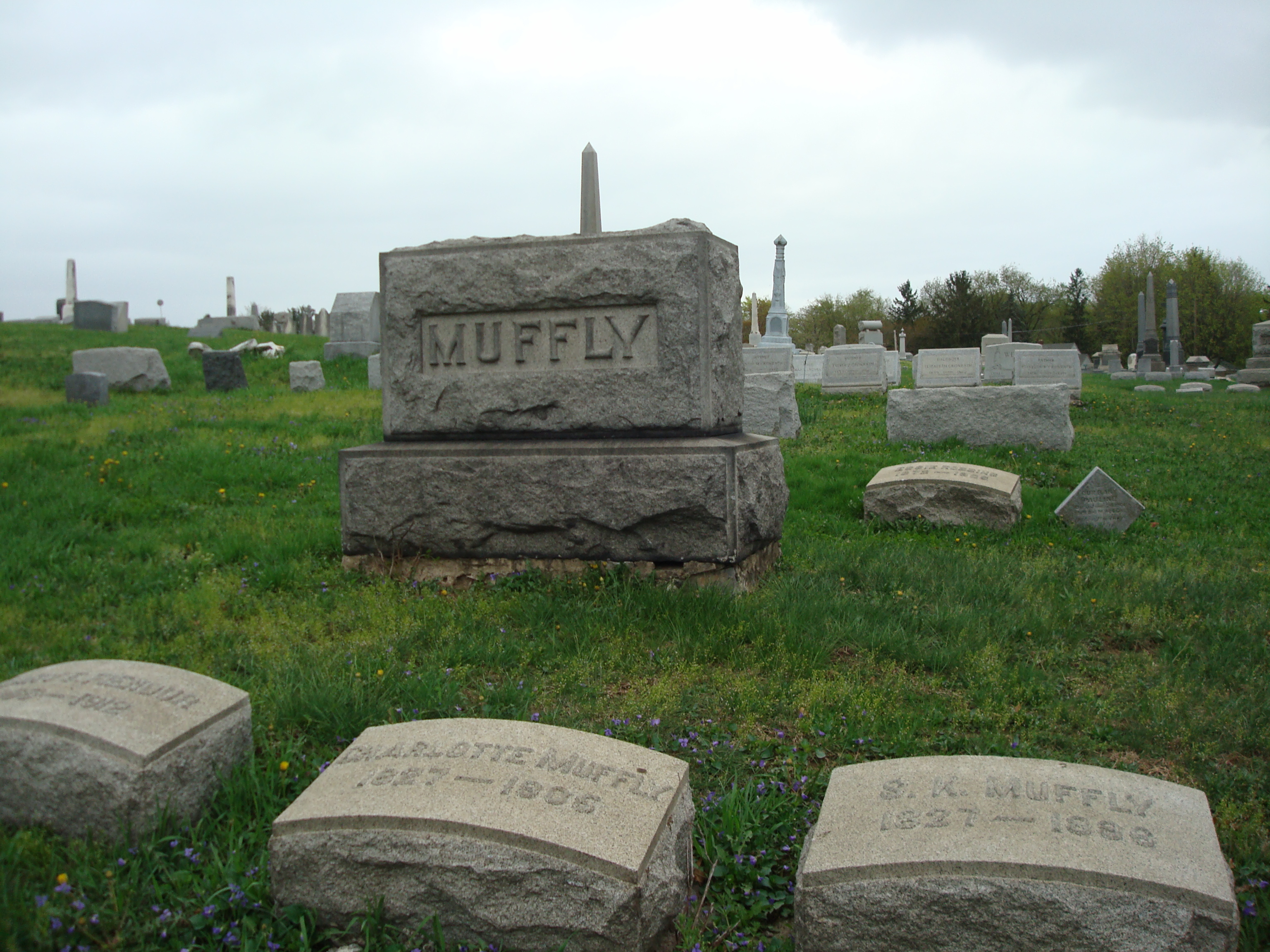
Mary is buried next to her parents in the Watsontown Cemetery. I do not know where her husband is buried.
(I’m not even sure how her name is spelled, it’s Feinour in the obituary and Fienour on the gravestone.)
I’ve been fascinated by Mary for awhile–though Grandma’s diary entries always focused on her unmarried uncles and not on Mary. I’ve mentioned Mary in two previous posts:
I asked my father if he knew anything about Mary or her children. He didn’t.
Mary is very tangential to my genealogical research. Yet, ever since I first saw her tombstone—and realized that she wasn’t buried next to her husband–I’ve wanted to know more about her.
I know it’s a rabbit hole and I don’t have the time to do extensive research on Mary—but maybe, just maybe, someday I’ll learn more of her story. If I ever do, I’ll share it with you.
17-year-old Helena Muffly wrote exactly 100 years ago today:
Friday, July 19, 1912:My brain must be getting full of rubbish, that I cannot even remember the happenings from one day to the next.
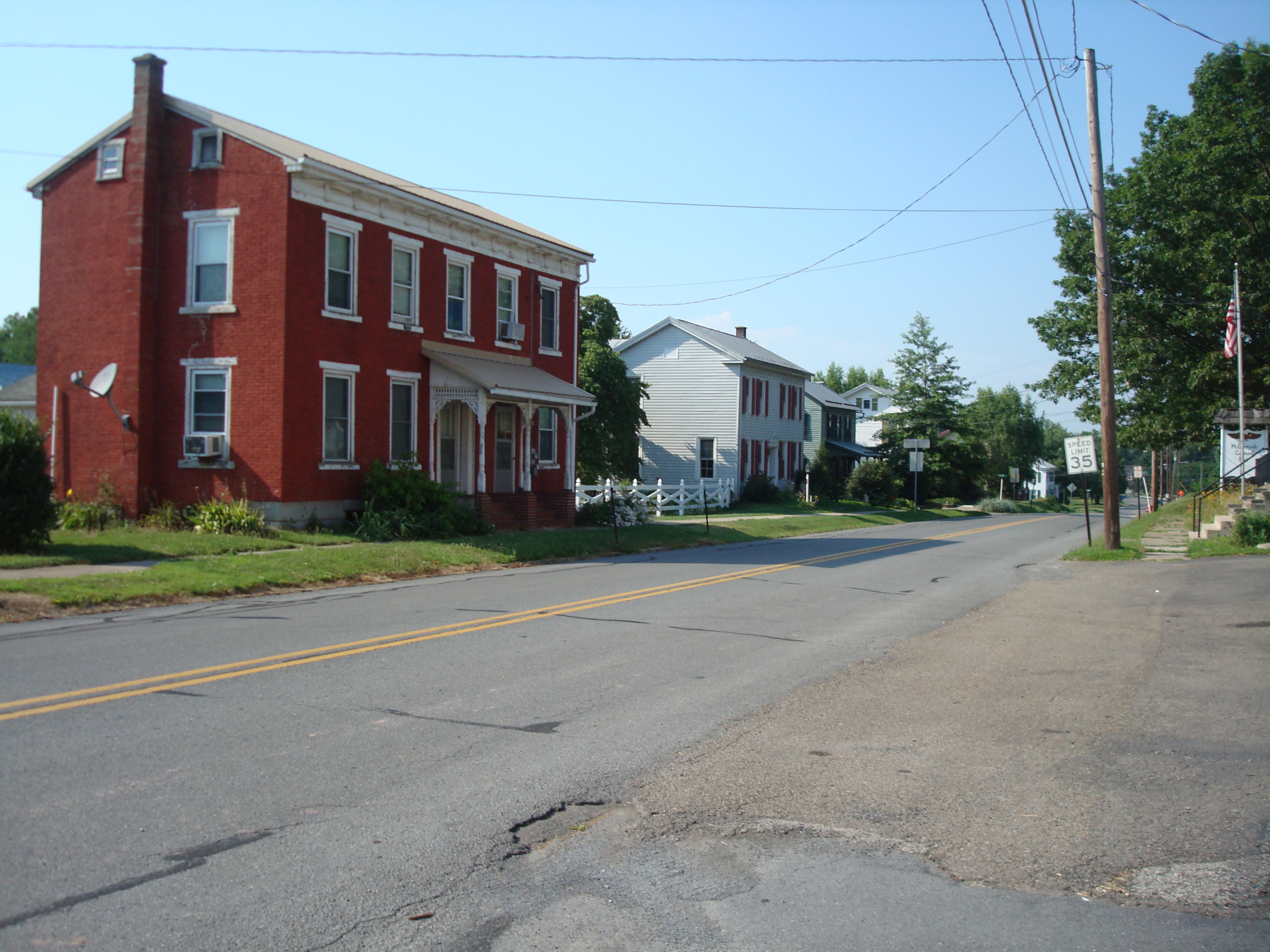
Recent photo of McEwensville.
Her middle-aged granddaughter’s comments 100 years later:
The way this diary entry is written almost makes it seem like Grandma forgot to write anything in the diary a hundred years ago today–and then tried to remember what had happened the following day.
Once before Grandma wrote that she sometimes did two entries at the same time:
By jingo if I haven’t forgotten what I did today. Just what I did several days ago. You see, sometimes it happens that I don’t always feel like writing in this diary every evening, so I wait until the next evening and make two entries at one time.
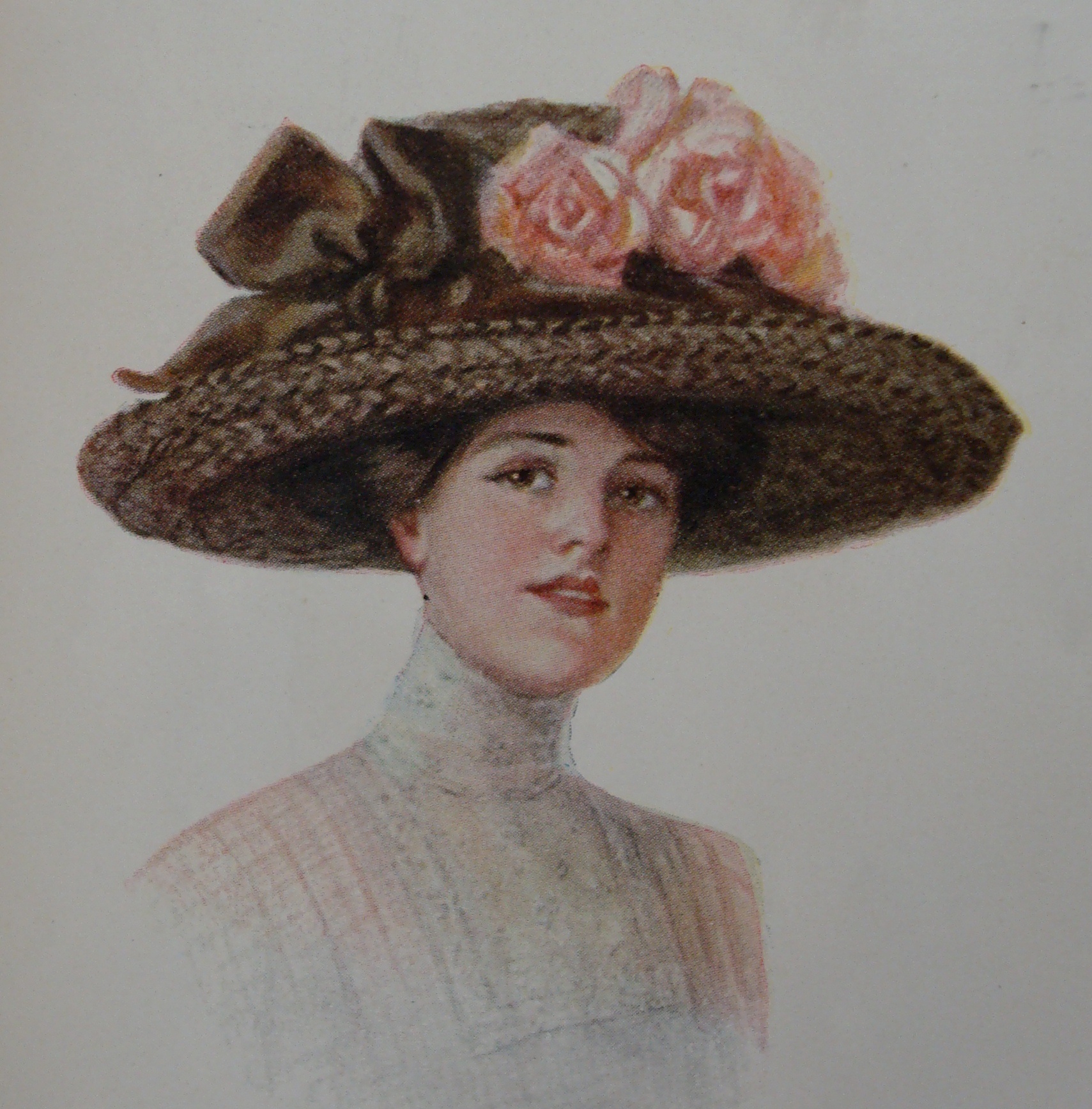
I assume that wasn’t the hat she was refurbishing—but maybe a hat could become an “old hat” in only three months.
A hundred years ago 5 & 10 cent stores sold ribbon, artificial flowers, feathers from ostriches and other less exotic birds, and other types of millinery supplies so that people could easily change the look of their hats.
Does anyone refurbish old hats anymore? . . . or old clothes (or anything else) for that matter?
I just move things to the back of my walk-in closet or give them away when they go out of style.
17-year-old Helena Muffly wrote exactly 100 years ago today:
Wednesday, July 17, 1912:About the same as yesterday.
Her middle-aged granddaughter’s comments 100 years later
Sounds like another boring summer day. I’ve been posting Grandma’s diary entries for more than a year and a half now. In that time period she’s never gone more than a few miles from her home.
Grandma went to Milton (which was about 5 miles from her home); to Turbotville (which was about 4 miles); to Montandon (which was about 8 miles); to Ottawa –Limestone Township, Montour County (about 8 miles). She also regularly went to McEwensville and Watsontown—both of which were about a mile from the Muffly farm.
Did Grandma ever dream of seeing the world?
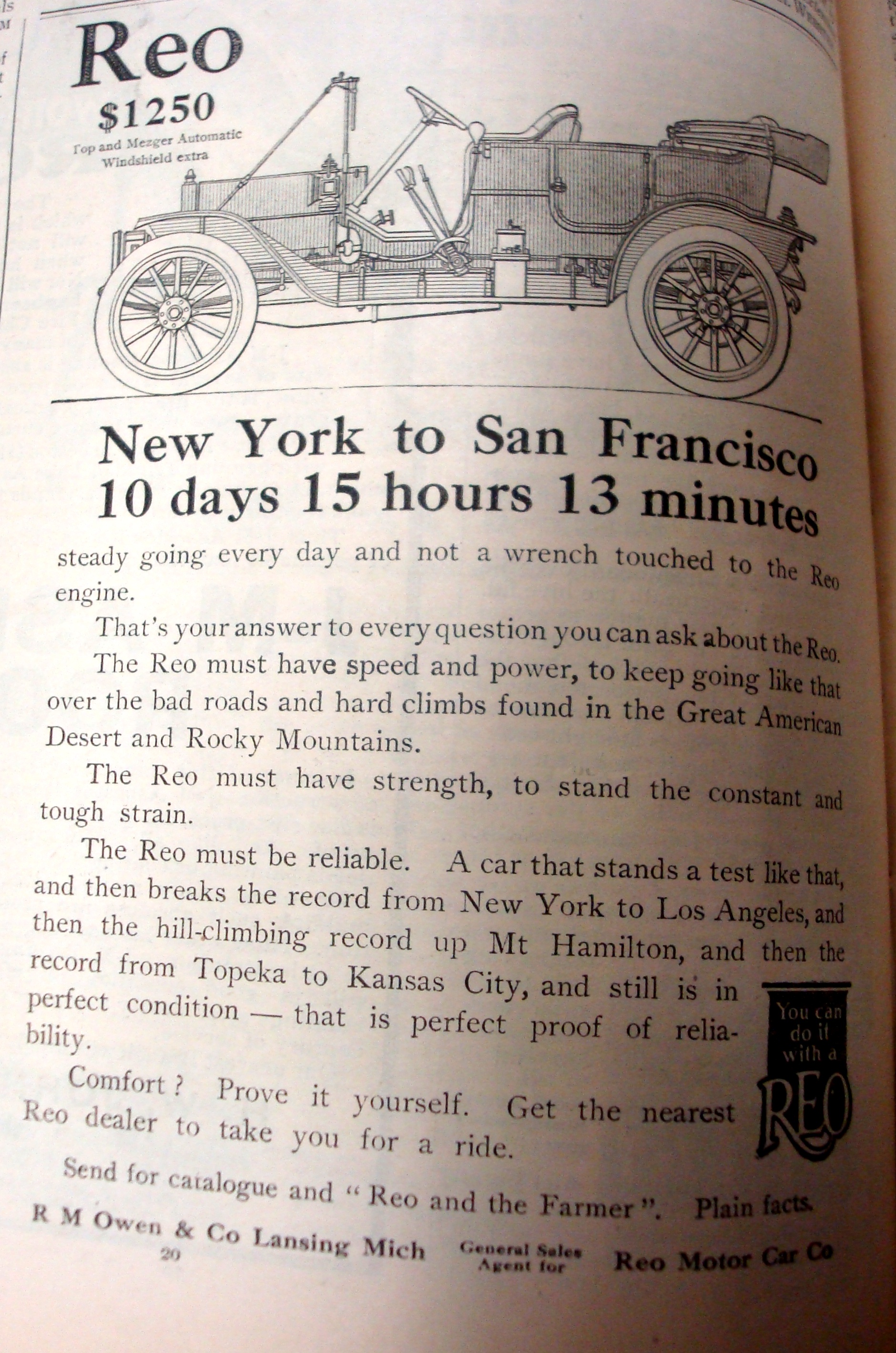
Source: Farm Journal (April 1911)
Reo
$1250
Top and Merger Automatic Windshield extra
New York to San Francisco
10 days 15 hours 13 minutes
steady going and not a wrench touched to the Reo engine.
That’s your answer to every question you can ask about the Reo.
The Reo must have speed and power, to keep going like that over bad roads and hard climbs found in the Great American Desert and the Rocky Mountains.
The Reo must have strength, to stand the constant and tough strain.
The Reo must be reliable. A car that stands a test like that, and then breaks the record from New York to Los Angeles, and then hill-climbing record up Mount Hamilton, and then the record from Topeka to Kansas City, and still is in perfect condition—that is the perfect proof of reliability.
Comfort? Prove it yourself. Get the nearest Reo dealer to take you for a ride.
Send for the catalogue and “Reo and the Farmer.” Plain facts.
R M Owen & Co. General Sales Agent for Reo Motor Company.
You can do it with a Reo.
Whew—10 days 15 hours 13 minutes sounds brutal.
According to Mapquest, today you can get on Interstate Route 80 in New York City and end up in San Francisco 1 day 19 hours and 48 minutes later (assuming you drive straight through).
17-year-old Helena Muffly wrote exactly 100 years ago today:
Tuesday, July 16, 1912:I don’t just exactly remember what I really did today.
Jell-O with black raspberries
Her middle-aged granddaughter’s comments 100 years later:
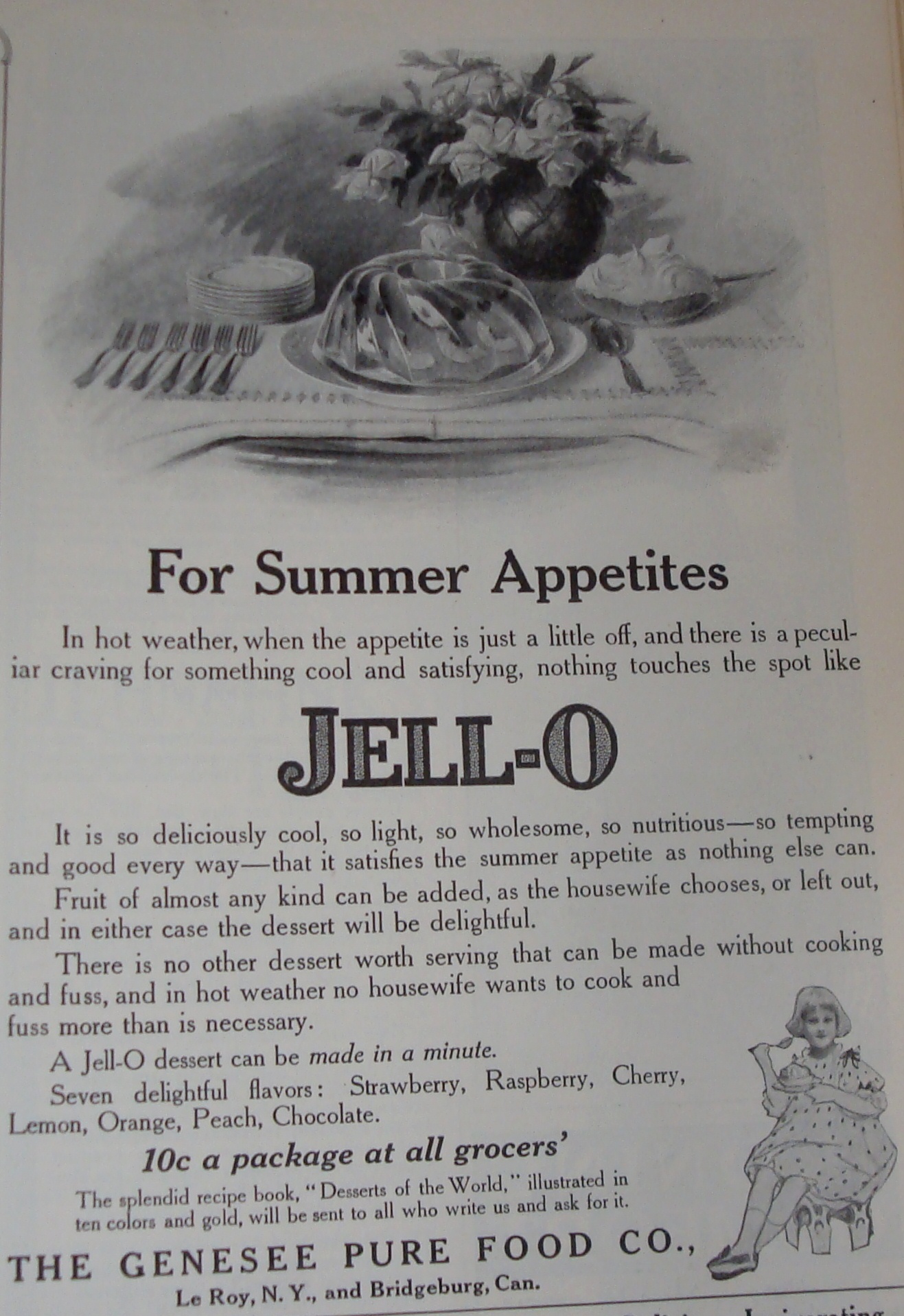
Since Grandma didn’t write much a hundred years ago today, I was thinking about what to write, and remembered that a reader commented several weeks ago that many people were getting ice boxes in the early 1900s—and that Jell-O was becoming popular.
I recalled that I had seen an advertisement for Jell-O and flipped through a couple magazines hunting it.
I found this advertisement in the July, 1912 issue of Ladies Home Journal.
For Summer Appetites
In hot weather when the appetite is just a little off, and there is a peculiar craving for something cool and satisfying, nothing touches the spot like
JELL-O
It is so deliciously cool, so light, so wholesome, so nutritious—so tempting and good every way—that it satisfies the summer appetite as nothing else can.
Fruit of almost any kind can be added, as the housewife chooses, or left out, and in either case the dessert will be delightful.
There is no other dessert worth serving that can be made without cooking, and in hot weather no housewife wants to cook and fuss more than is necessary.
17-year-old Helena Muffly wrote exactly 100 years ago today:
Monday, July 15, 1912:We went up to Oakes’ this evening. I played crouquet with the other players, but such playing as I did was rather shocking. If I didn’t get a game I did get a sore eye, which resulted from tossing a mallet in the air and trying to catch it with my hands. Needless to say it first came in contact with my eye and second with my hand.
Croquet by Homer Winslow
Her middle-aged granddaughter’s comments 100 years later:
Ouch! Sounds like Grandma was showing off or fooling around. Was she bored while she waited for her turn?
I bet the embarrassment when the mallet hit her eye was worse than the pain. I can almost imagine what her sister Ruth might have said. 🙂