Grandma is Baptized

18-year-old Helena Muffly wrote exactly 100 years ago today: 

Sunday, July 6, 1913:  I went through a solemn duty this morning. I jointed the church and was baptized. I must strive to keep the promises.

McEwensville
Recent photo of the site where the McEwensville Baptist Church once stood.

Her middle-aged granddaughter’s comments 100 years later:

In the past I’ve wondered which church Grandma attended as a teen—and finally decided that it probably was the Baptist one. This entry provides further confirmation that Grandma was Baptist when she was young.

In 1913 there were three churches in McEwensville—Lutheran, Reformed (United Church of Christ) and Baptist.  After Grandma married Raymond Swartz she attended the Lutheran church.

In the diary Grandma mentioned the Lutheran and Reformed churches by name when she visited them for a special event—but she provided no church name when she attended her regular church. This suggests that she didn’t attend either the Lutheran or Reformed church–but rather that she went to the Baptist one.

I’ve been a little uncomfortable with that conclusion since the Baptist Church closed in the late 1910s or early 1920s—and the building was torn down many years ago. In the diary, Grandma seemed to really enjoy attending Sunday School almost every week which suggests that the church was still very active in 1913—but I’m now almost certain that she attended the Baptist Church.

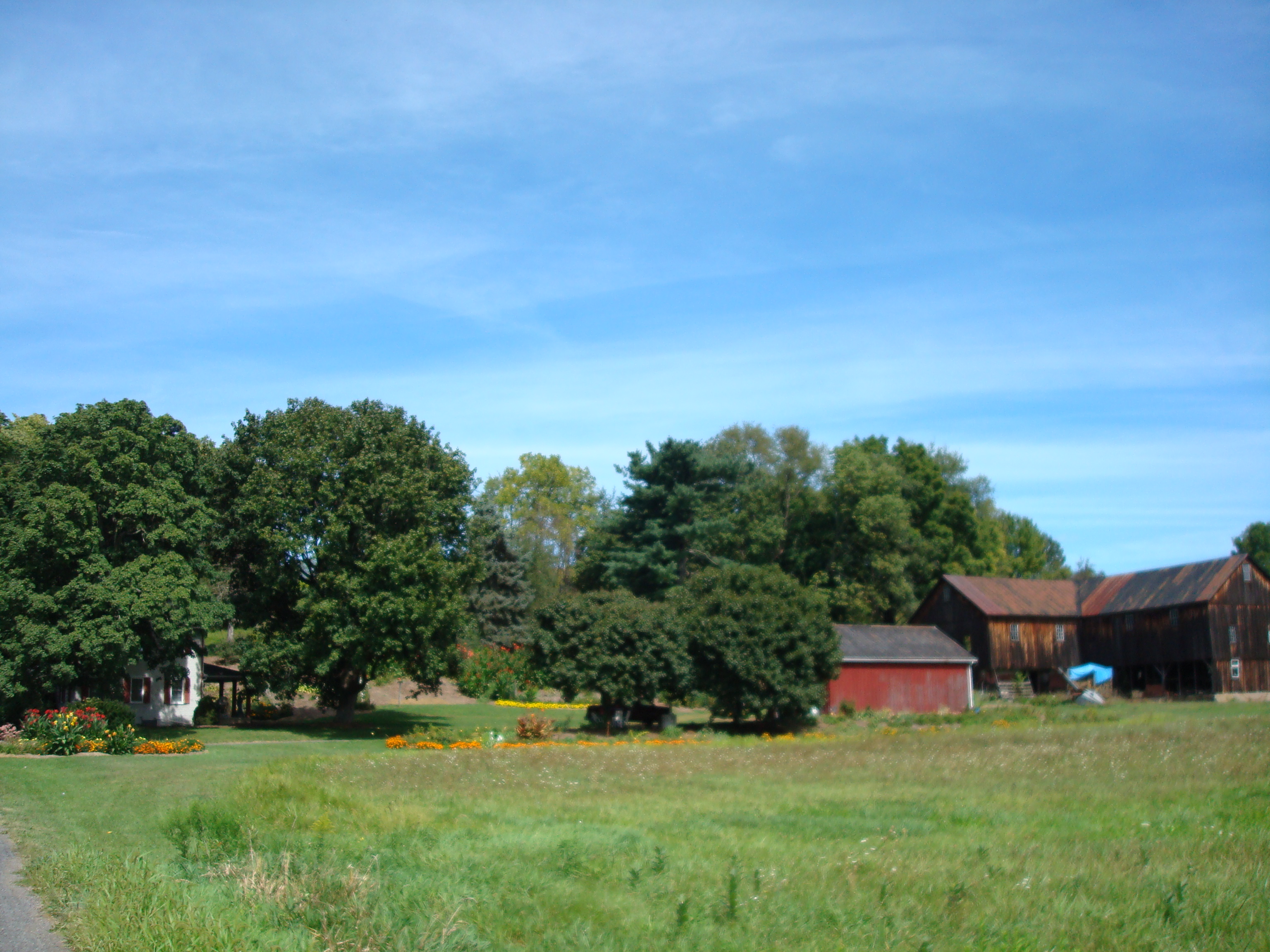
I wonder if Grandma was baptized in Warrior Run Creek. It flows through McEwensville (as well as along the edge of the Muffly Farm).

Warrior Run Creek near the Muffly farm

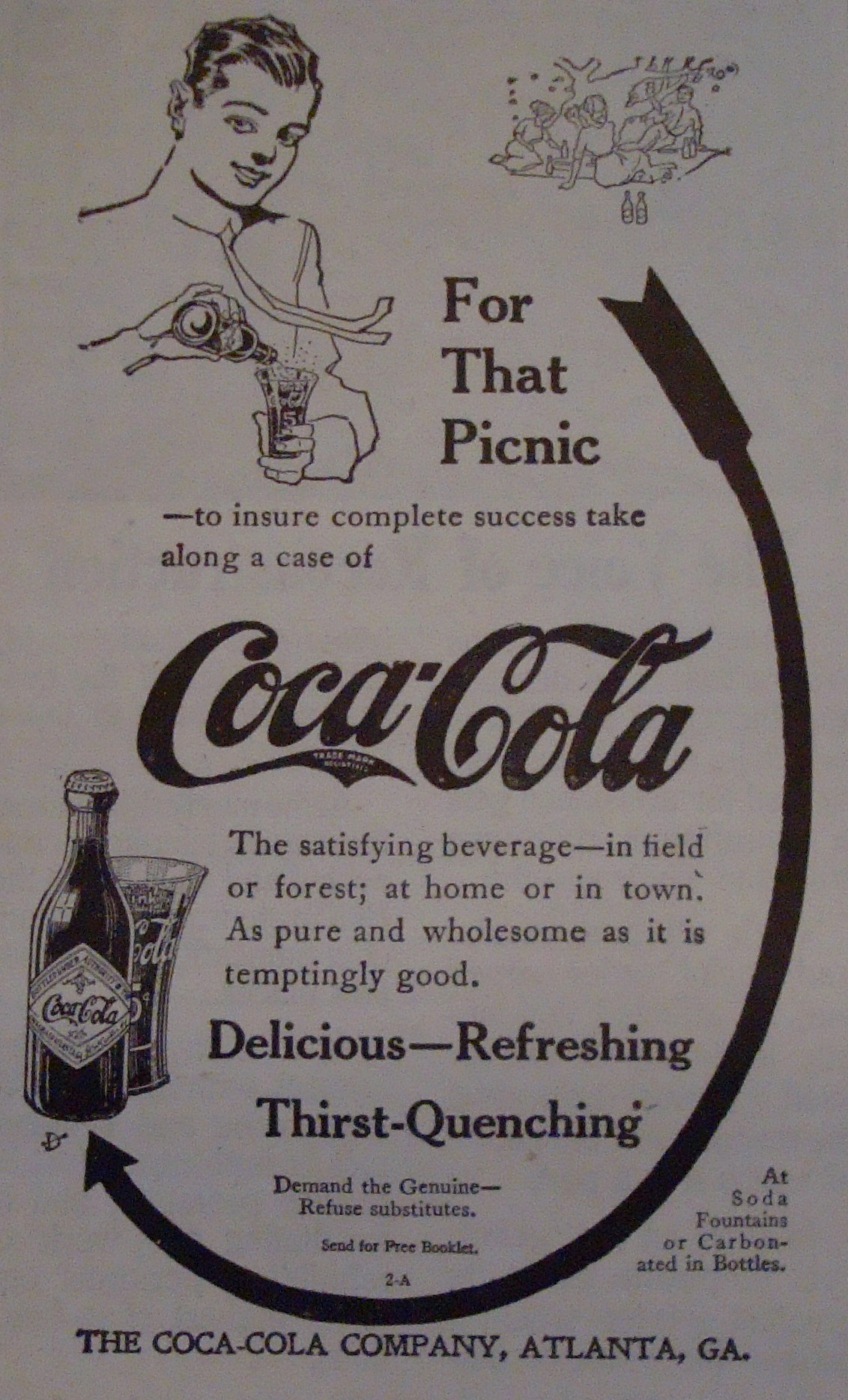
1913 Coca-Cola Advertisement

18-year-old Helena Muffly wrote exactly 100 years ago today: 

Saturday, July 5, 1913:  Ruth and I went up to McEwensville this evening. I wanted to go up to church. There was a festival, so I went there for awhile, but didn’t have a very good time.

Source; Kimball's Dairy Farmer Magazine (June 1, 1913)
Source; Kimball’s Dairy Farmer Magazine (June 1, 1913)

For That Picnic

–to insure complete success take along a case of

Coca-Cola

The satisfying beverage—in field or forest; at home or in town. As pure and wholesome as it is temptingly good .

Delicious—Refreshing

Thirst—Quenching

Demand the Genuine—

Refuse substitutes.

Send for Free Booklet.

2-A

At Soda Fountains or Carbonated in Bottles.

THE COCA-COLA COMPANY, ATLANTA, GA.

Her middle-aged granddaughter’s comments 100 years later:

It sounds like fun to go to a festival on a Saturday evening after a hard week of work. Why didn’t Grandma have a very good time?. . . Did her sister Ruth enjoy herself?

What foods did they eat at the festival? Was Coca Cola sold?

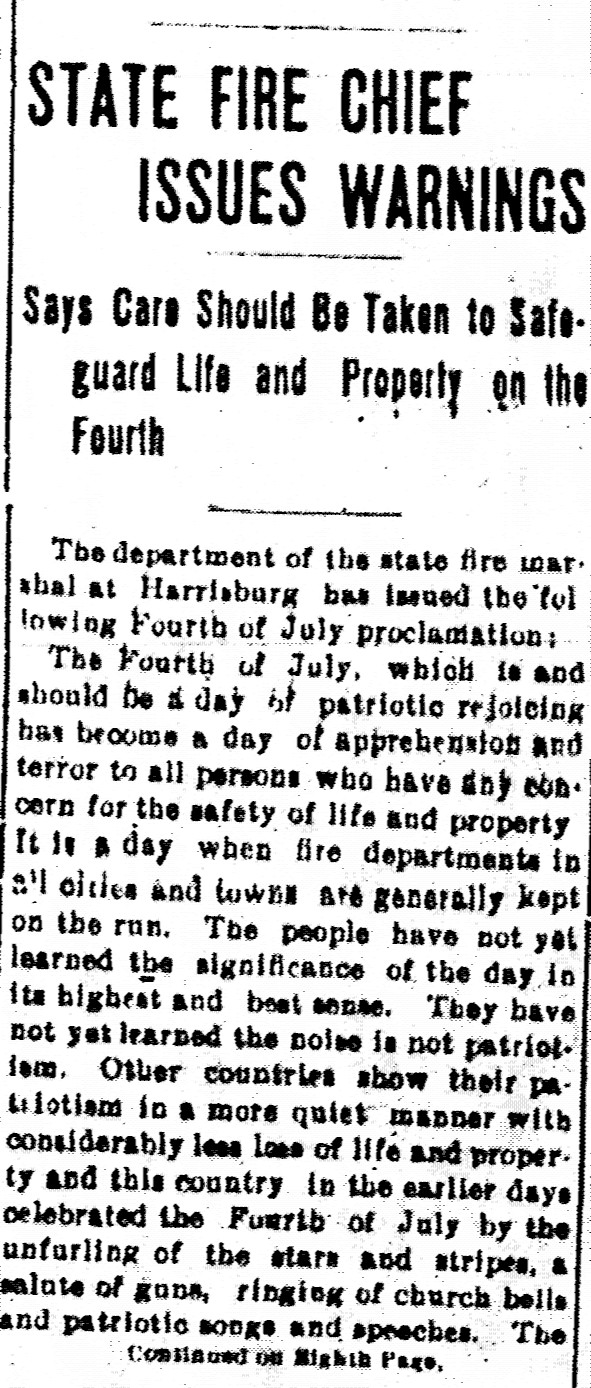
Fireworks Dangerous According to State Fire Chief

18-year-old Helena Muffly wrote exactly 100 years ago today: 

Friday, July 4, 1913: Wasn’t much celebrating done at this house today. I saw a balloon go up or rather I saw it after it had gone up. Saw a few fireworks this evening, but that was at a distance.

Source: Milton Evening Standard (July 2, 1913(
Source: Milton Evening Standard (July 2, 1913)

STATE FIRE CHIEF ISSUES WARNINGS

Says Care Should Be Taken to Safeguard Life and Property on the Fourth

The department of the state fire marshal at Harrisburg has issued the following Fourth of July proclamation:

The Fourth of July, which is and should be a day of patriotic rejoicing has become a day of apprehension and terror to all persons who have any concern for the safety of life and property. It is a day when fire departments in all cities and towns are generally kept on the run. The people have not yet learned the significance of the day in its highest and best sense. They have not yet learned the noise is not patriotism. Other countries show their patriotism in a more quiet manner with considerably less loss of life and property and this country in the earlier days celebrated the Fourth of July by the unfurling of the stars and stripes, a salute of guns, ringing of church bells and patriotic songs and speeches. . .

Her middle-aged granddaughter’s comments 100 years later:

Sounds like Grandma had a pleasant and safe 4th.

A hundred years ago many leaders thought that electric light displays could be a modern replacement for fireworks. You might enjoy reading this post I did last year:

Are Fireworks  Old-Fashioned?

Chasing a Pig

18-year-old Helena Muffly wrote exactly 100 years ago today: 

Thursday, July 3, 1913: I and a pig ran a race this evening. It led me up and down the road three or four times. I wonder how much speck I lost.

Source: Kimball's Dairy Farmer Magazine (July 1, 1913)
Source: Kimball’s Dairy Farmer Magazine (July 1, 1913)

Her middle-aged granddaughter’s comments 100 years later:

Speck is an old-fashioned term for weight. I think that the way it is used in this sentence has Pennsylvania Dutch or German origins.

I bet Grandma lost a pound or two. I’ve chased pigs a few times in my life and they are darn hard to catch.

I’m not talking about greased pigs that are sometimes seen in competitions at fairs. I’m referring to chasing a run of the mill farm pig that has escaped from a field or pen. You’d think that it would be easy to chase back into the field or pen. Wrong!!

When chasing a cow, all you need to do to get it to turn is to stand in front of it—and the cow will immediately turn and can be directed back into the pen or field. Pigs, however, are very smart (and surprisingly fast), and they know where you want them to go. No matter what you do, a pig will refuse to head in the direction you want it to go. If you stand in front of a pig to try to make it turn, it will almost run you over as it continues going wherever it feels like going.

Old-fashioned Cherry Bread

18-year-old Helena Muffly wrote exactly 100 years ago today: 

Wednesday, July 2, 1913:  It’s most too hot to do anything important so I need to write about the weather. Oh yes, I recollect, I did pick some cherries this afternoon for one thing.

DSC07897

Her middle-aged granddaughter’s comments 100 years later:

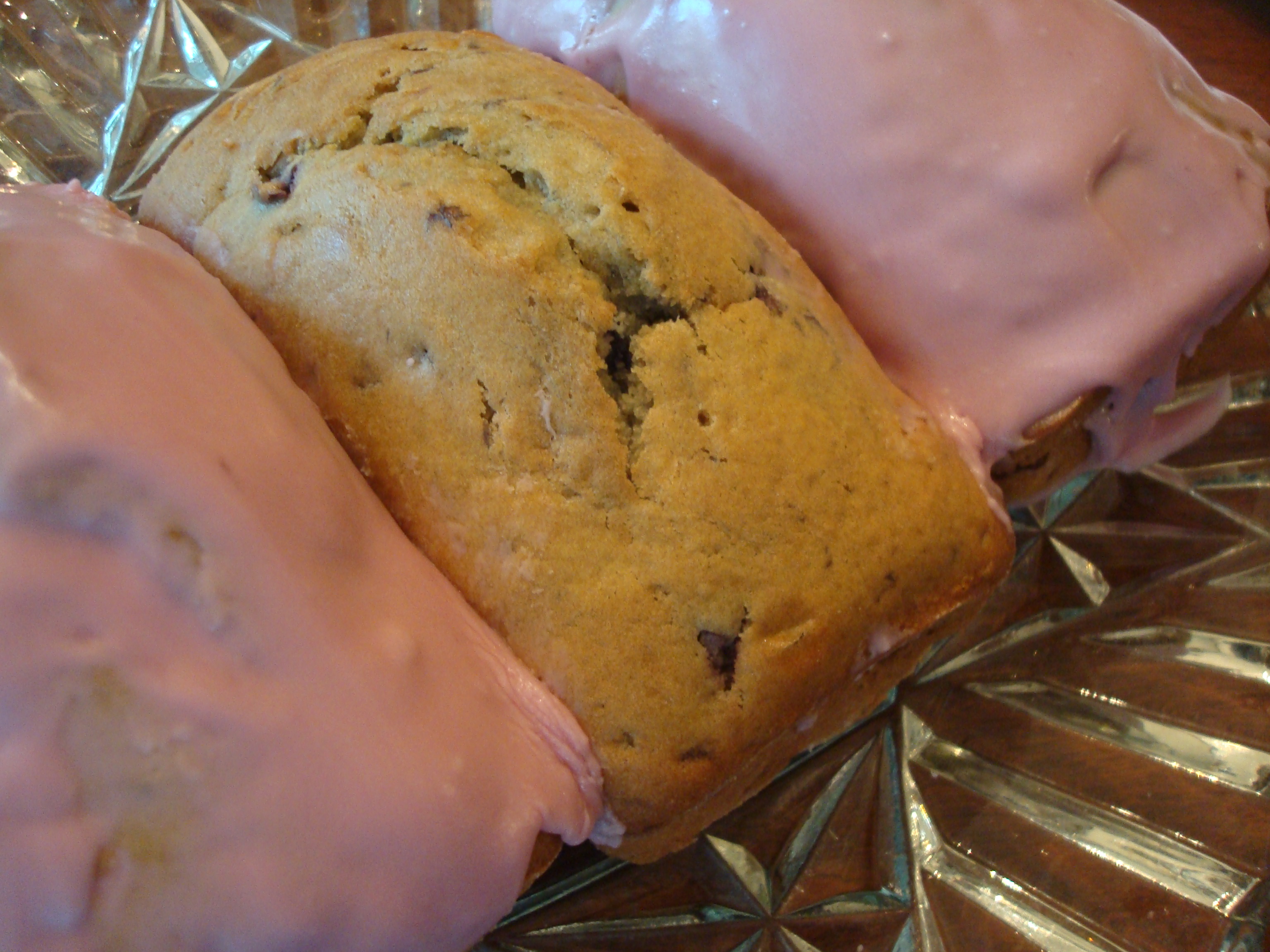
Mmm—cherries! What were Grandma’s favorite cherry foods? . . .maybe she made old-fashioned cherry bread.  (This recipe is a favorite of one of my sons—and he always wants me to make it when he visits. Either sweet or sour cherries may be used.)

Old-Fashioned Cherry Bread

Bread

2/3 cup shortening

1 1/4 cup sugar

4 eggs

4 cups flour

1/2 teaspoon salt

1 teaspoon baking soda

2 teaspoons baking powder

1 1/2 cups milk

2 teaspoons almond extract

1 cup pitted fresh cherries (or 1 pound can cherries), drained (reserve juice)

Glaze (optional)

1 tablespoon butter, melted

1 cup confectioners’ sugar

1 teaspoon almond extract

approximately 2 tablespoons reserved cherry juice

Bread:  Preheat oven to 350 degrees. Grease and flour two 9 X 5 X 3 inch loaf pans or three 8 1/2 X 4 1/2 X 2 1/2 inch loaf pans.* **   Beat together shortening and sugar; add eggs and beat. Add flour, salt, baking soda, baking powder, milk, and almond extract; then beat until mixed. Finely chop cherries and gently fold into batter. Pour batter into prepared pans. Bake full-size loaf pans 1 to 1 1/4 hours or until wooden pick inserted in center comes out clean. (Smaller pans will take less time.) Partially cool and then remove from pans.

Glaze:  Beat together until smooth: butter, confectioners’ sugar, almond extract, and cherry juice. Use more or less cherry juice to get desired consistency. Spread over loaves. Let the glaze drip down the sides.

*I usually use one 9 X 5 X 3 inch loaf pan and three “personal” loaf pans (approximately 5 1/2 X 3 X 2 inches).

**If planning to remove bread from the pans, cut a piece of wax paper to fit the bottom of each pan. Grease pan, then put wax paper into pan. Grease wax paper, and then flour pan.

DSC07904

Previous posts with cherry recipes that you may enjoy include:

Old-fashioned Cherry Pudding

Old-fashioned Cherry Pie

Grandma’s July Poems, 1911 – 1913

18-year-old Helena Muffly wrote exactly 100 years ago today: 

Monday, July 1, 1913:

The hottest month of the whole year ‘round.

We may surely call July

When the sun shines down and makes us brown.

Then, oh then we often sigh.

(For a day in winter.)

The beginning of this month finds me at the same things I was doing yesterday.

DSC02857

Her middle-aged granddaughter’s comments 100 years later:

In the diary Grandma began each month with a poem. I’ve periodically pondered whether she wrote the poems herself—or got them from some other source.

Over time, I’ve gradually (with the help of some blog readers) come to the conclusion that she wrote them herself. This poem provides even stronger evidence that she wrote them herself.

The previous day she complained about getting a tan and this poem continues along the same vein.

 I’m getting a liberal covering of tan on my arms. As for my hands they experienced that some time ago.

Diary entry on June 30, 1913

I decided to see how Grandma’s  poems have changed across the years. Surprisingly (at least to me) the poems she wrote in July, 1911 and July, 1912 had similar themes to this one.

July 1, 1911 Poem

A whole half year has just leaped by,

And all can now witness the approach of July.

With all its plenty of frolic and fuss,

But beware and be cautious of the sun.

July 1, 1912 Poem

In the shadow of a shade tree,

There the weary often be,

After they have been well roasted,

In the hot sun of July.

Getting a Tan (Back in the Days Before Tans Were Popular)

18-year-old Helena Muffly wrote exactly 100 years ago today: 

Monday, June 30, 1913: I’m getting a liberal covering of tan on my arms. As for my hands they experienced that some time ago.

1913 Hay Field
Source: Kimball’s Dairy Farmer Magazine (April 1, 1913)

Her middle-aged granddaughter’s comments 100 years later:

Two days ago Grandma wrote that she had to help make hay. They probably were still making hay.  I picture Grandma leading horses, or using a pitchfork to sling hay onto the wagon, with the hot sun beating down on her.

An aside: I’m intrigued by the picture that I found to illustrate this post. Is it my imagination or is there a huge bridge in the background of this 1913 photo? There couldn’t have been many bridges like that a hundred years ago in agricultural areas. Does anyone have any idea where the photo may have been taken?