18-year-old Helena Muffly wrote exactly 100 years ago today:
Sunday, June 29, 1913: Went to Sunday School this afternoon. Tweet came down this evening.
Source: Milton Evening Standard (June 26, 1913)
Her middle-aged granddaughter’s comments 100 years later:
Tweet was a nickname of Helen Wesner. She was a friend of Grandma’s .
Did Grandma and Tweet gossip about the latest news in McEwensville a hundred years ago tonight?
An aside–All of the pieces don’t quite fit together in this post, so feel free to take the information with a grain of salt, but here goes—
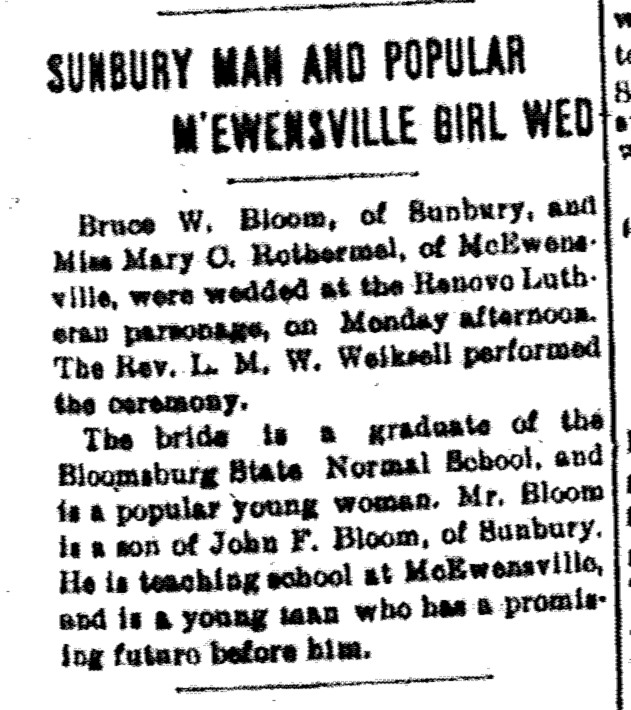
Grandma’s former teacher at McEwensville got married. . .to a former student!
On August 26, 1912 Grandma described Bruce Bloom, her teacher during her senior year:
. . . He is rather wide, wears a pair of pinchers, and has yellow hair. Not so very cross, but I believe he could be.
The newspaper clipping says that Bruce married Mary C. Rothermel of McEwensville on the previous Monday (June 23, 1913).
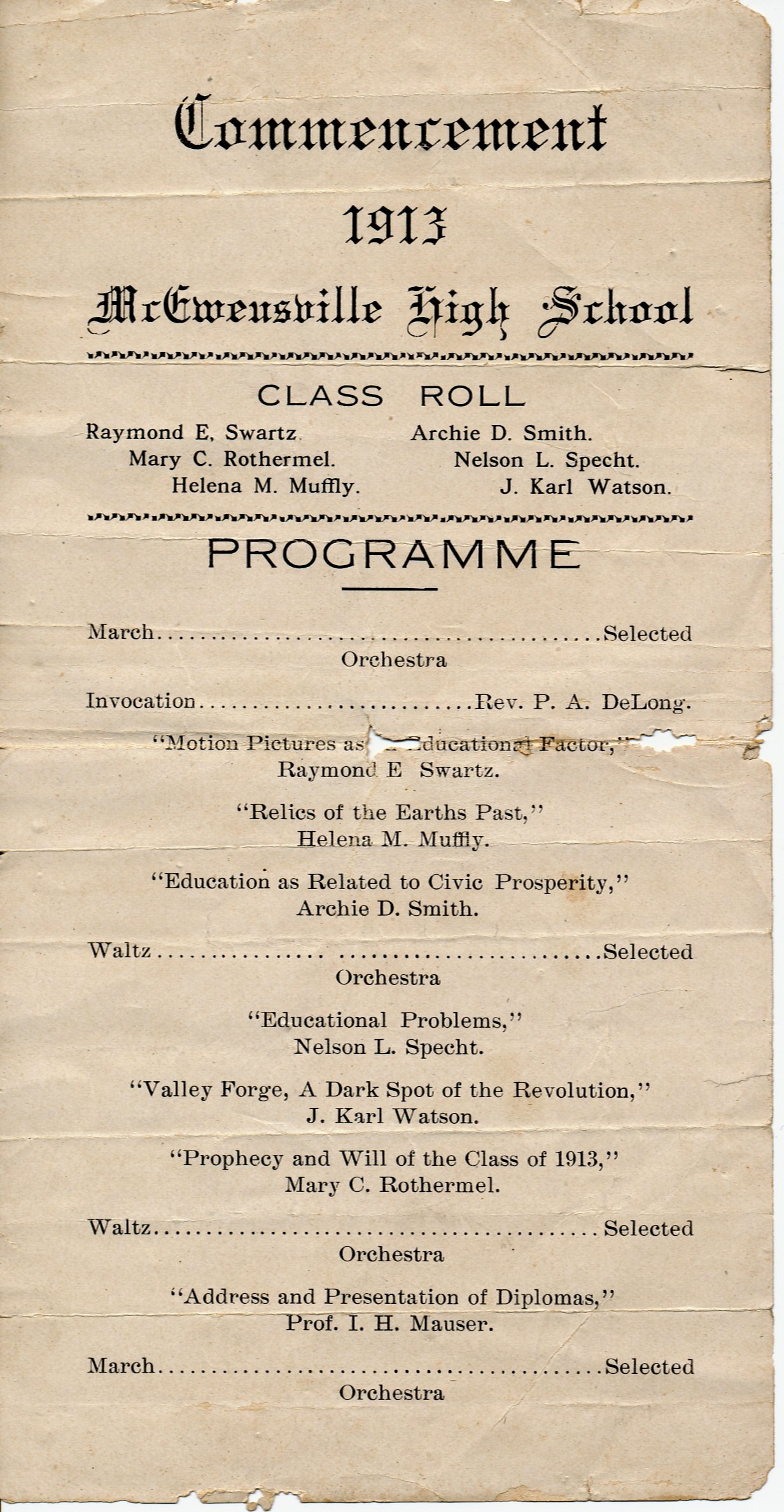
I have the 1913 commencement program for McEwensville High School and it indicates that Mary C. Rothermel (as well as Grandma) were members of the class of 1913.
Now to the part about all of the pieces not quite fitting together—the newspaper article indicates that Mary C. Rothermel was a graduate of Bloomsburg State Normal School which suggests that she was a little older and not a recent graduate of the high school. . . But in a tiny village like McEwensville how could there have possibly been two Mary C. Rothermels?
I’m probably way off base—and trying to create something to gossip about a hundred years later when there really is nothing of particular interest—but I almost want to argue that the newspaper made a typo and that the groom rather than the bride was the graduate of Bloomsburg State Normal School.
And, while I’m worrying about the details, there’s another little thing that bothers me–Why did Bruce and Mary get married in Renovo on a Monday at the church parsonage? Mary was from McEwensville; Bruce was from Sunbury which is about 20 miles south of McEwensville. Renovo is a very remote town way up in the mountains about 75 miles northwest of McEwensville. Did they elope?
Whoa! I need to rein myself in. . . Improbable as it seems, there probably were two Mary C. Rothermels in McEwensville . . . and the boring newspaper clipping probably accurately tells the entire story.
18-year-old Helena Muffly wrote exactly 100 years ago today:
Saturday, June 28, 1913: Got initiated into the hay field this afternoon, and I can say that I didn’t stay there very long either.
Source: Ladies Home Journal (July, 1913)
Her middle-aged granddaughter’s comments 100 years later:
How did Grandma manage to convince her father that she didn’t need to help for very long? It takes a lot of labor to make hay, and I’m surprised that he allowed her to be a slacker.
First the grass needed to be cut, and periodically turned as it dried.
After the grass had dried into hay, it was loaded onto wagons. Horses needed to be held and led as the hay was gathered, and workers needed to fork it onto the wagon.
And, of course, this all needed to be done very quickly—with eyes always looking towards the sky for any clouds that might suggest an impending storm. As the old saying says—Make hay while the sun shines.
You may also enjoy a previous post about how hay was unloaded from wagons a hundred years ago and moved into the haymows in the barn:
18-year-old Helena Muffly wrote exactly 100 years ago today:
Friday, June 27, 1913:I forget what I did today.
Postcard of General Warren’s Statue on Little Round Top, Gettysburg, Pa. (circa 1913)
Her middle-aged granddaughter’s comments 100 years later:
Since Grandma again didn’t write much a hundred years ago today—and I find the story of the 50th Anniversary celebration of the Battle of Gettysburg fascinating, I’ll share some more excerpts from 1913 newspapers:
Gray Praises the Blue for the Great Reunion
Los Angeles Times (July 2, 1913)
In the pitiless glare of a sun that sent the mercury bubbling over the hundred mark the armies of the North and the South began today the formal exercises to mark the semi-centennial of Gettysburg.
Every seat under the canvas was taken long before Secretary of War Garrison and Gov. Tener, the orators of the day, came chugging up in their automobiles. Although the men in gray were far outnumbered by those in blue, there were possibly 2000 southerners in the amphitheater and what they lacked in numbers they made up in lung power.
Before the morning exercises began, the reunions of regiments and companies and squadrons began. Confederates who were in Pickett’s charge took keen delight in marching with fife and drum to Spangler’s wood, where the columns of Pickett formed on July 3, ’63, to begin the charge that marked the high tide of the lost cause.
On the edge of the Union side of the camp, the veterans of Meredith’s Iron Brigade and of Pettigrew’s brigade of North Carolina got together to go over the story of the fight of the first of July.
Veteran Resents Slur on Lincoln: Seven Wounded
Chicago Daily Tribune (July 3, 1913)
Seven men were stabbed tonight in the dining room of the Gettysburg Hotel as a result of a fight which started when several men aroused the anger of a veteran in blue by abusing Lincoln. . . .
. . . the flight started suddenly and was over in a few minutes. It began when the dining room was full and caused a panic among the scores of guests.
The veteran heard the slighting remarks about Lincoln. He jumped to his feet and began to defend the martyred president and berated the detractors. . .
A romance developed in camp today when John Goodwin of New York, a veteran, and Margaret Murphy of Chicago were united in marriage by Squire Harnish. Forty-six years ago the two were engaged, but they subsequently married others. They became widower and widow, the old flame was rekindled, and they agreed to come to Gettysburg on the fiftieth anniversary of the battle and marry. The happy pair will go on a wedding tour from here and will reside in New York.
Gen. “Tom” Steward of Pennsylvania is telling an amusing story of a “runaway vet” he came across in the big camp. The veteran is 85 years old and his son at home announced decisively that under no circumstances should his aged parent go to Gettysburg. The desire to be here and meet his former comrades was so strong in the heart of the old gentleman that he climbed out of a window of this home and ran away, turning up here in good shape. He is now happy and well cared for.
Veterans as Good Story Tellers as They Formerly Were Solders
New York Times (July 3, 1913)
Last night the veterans were really able to enjoy themselves for the first time since their arrival. ..
A roaring storm swept down out of the Blue Ridge over the plateau of Gettysburg yesterday morning, bringing needed relief to the thousands of veterans in blue and gray, who had sweltered for four days in an atmosphere that was dangerous in the city of 50,000 old and weary men.
For more than a half hour the rain came pouring down upon the sun-cracked and wind-swept encampment grounds. It charged with violent thundering over the ground that Pickett covered in ’63. Its salvos of thunder were like the booming guns of Meade and Lee, but the thermometer dropped with wonderful ability and the lightning cleared the air of its humidity. . .
So many cases have been reported of veterans losing their return railroad tickets and the consequent distress because of the inability to purchase transportation that Governor Tener yesterday notified General Liggett, the United Sates army officer in charge of the camp, that the state of Pennsylvania would pay the return fare of all veterans who had lost their tickets.
Gettysburg Cold to Wilson’s Speech
New York Times (July 5, 1913)
Mr. Wilson came to Gettysburg at 11 o’clock by train from Baltimore. His appearance at the station of Gettysburg was the signal for a cheer and from down in the Gettysburg College grounds came a twenty-one gun salute. . .
The President spoke slowly and carefully, but the breeze played under the side of the tent and the restless feet of those who hastened in made it difficult for the old men to hear and understand. He was interrupted only once or twice with cheering and that seemed perfunctory. . .
At high tide the camp cared for 65,000 men, about 85 percent of whom were old warriors, not put under the discipline of fighting men, and susceptible to all the ill-effects that climate and camp hardships can have on men. The youngest was scarcely less than 65 years old, and most of them were 70 or more. In view of the average fatalities in the best conducted military camps of the world, allowance had been made for ten deaths a day in the camp. Yet there were only eight deaths for the four days of the encampment, and one of the victims was killed by an automobile.
If you missed yesterday’s post you might also enjoy:
18-year-old Helena Muffly wrote exactly 100 years ago today:
Thursday, June 26, 1913: A busy bee, I cannot be by the looks of this entry.
Source: Milton Evening Standard (June 26, 1913)
Her middle-aged granddaughter’s comments 100 years later:
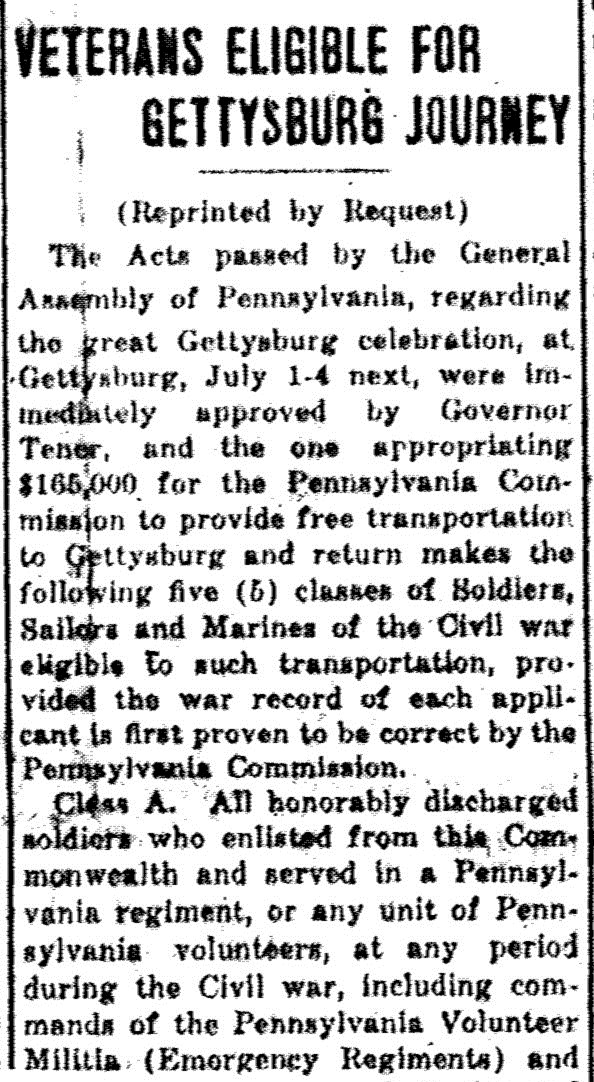
Another quiet day for Grandma—but others felt a sense of excitement. Civil War veterans who lived in central Pennsylvania were preparing to head to Gettysburg to celebrate the 50th anniversary of the Battle of Gettysburg.
A hundred years ago today, the local newspaper, The Milton Evening Standard, had a front page article about how veterans were to pick up their vouchers to travel to Gettysburg (see article above).
A month earlier there was another article about how the state of Pennsylvania would pay for the transportation costs of Civil War veterans who wanted to attend the huge anniversary celebration at Gettysburg.
18-year-old Helena Muffly wrote exactly 100 years ago today:
Wednesday, June 25, 1913: Went up to McEwensville this afternoon to transact some very important business, or rather so it seemed to me.
Now what could it be? Nothing less than that I sent off for a camera. I’ve wanted one for a long time, but thought I could hardly afford it. I was reminded that I really wanted it only by finding a camera catalog up in the garret yesterday. And as I had earned almost five dollars during the last two weeks, I carried the project through.
Source: Ladies Home Journal (May, 1913)
If it isn’t an Eastman, it isn’t a Kodak.
It’s springtime. Every field and park and woodland—every walk and ride, every joyous outing, invites your KODAK.
Eastman Kodak Co.,
Rochester, N.Y., The Kodak City.
Catalogue free at your dealers or by mail.
Her middle-aged granddaughter’s comments 100 years later:
A camera sounds like a lot of fun. What a great thing for Grandma to spend her money on!
Grandma made quite a bit picking strawberries—and, of course, she had money that she received earlier in the spring as graduation presents.
18-year-old Helena Muffly wrote exactly 100 years ago today:
Tuesday, June 24, 1913:Can’t say I have much for today either. These June days seem to have very little to do with me.
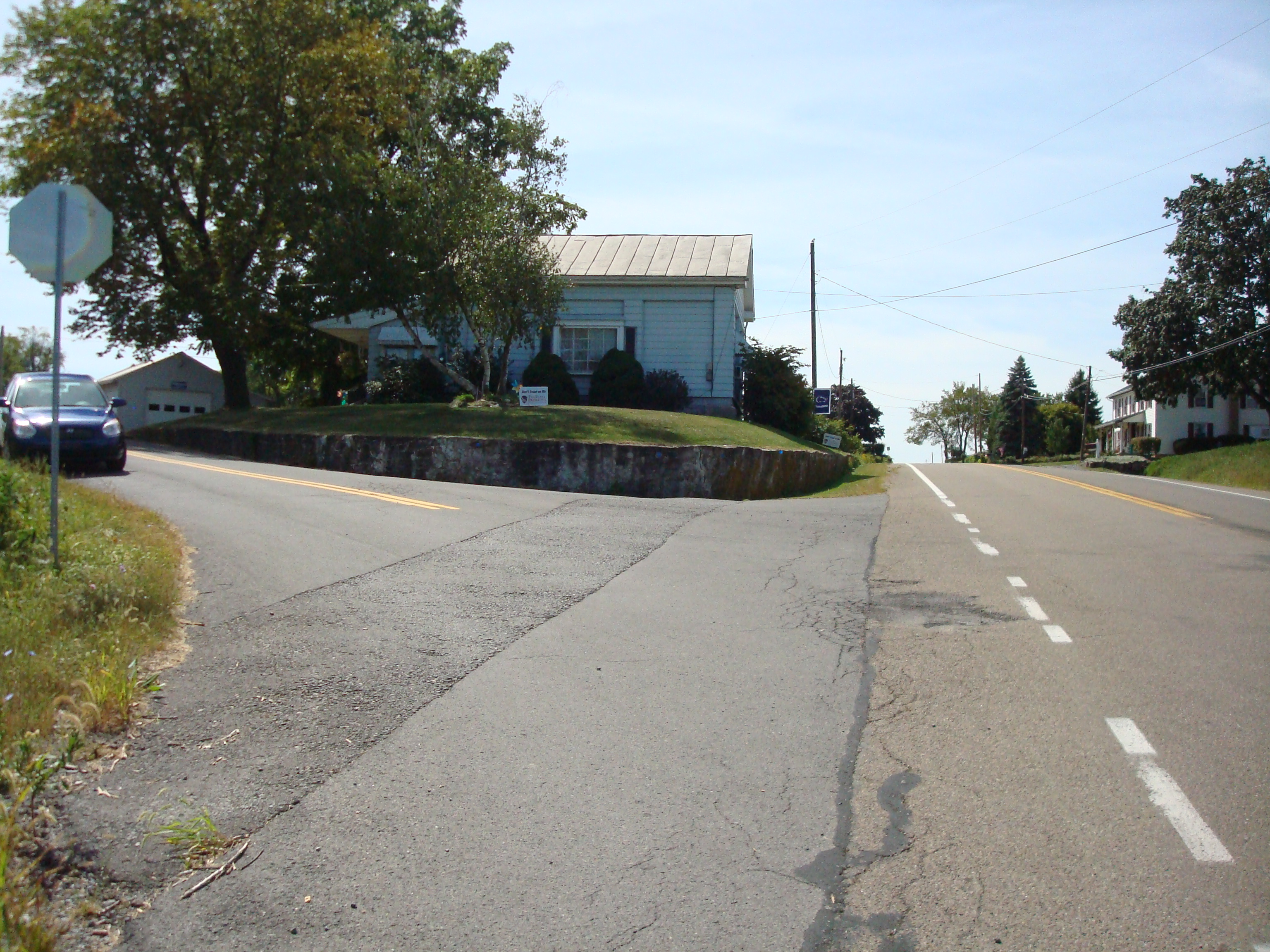
Recent photo of building at the south end of McEwensville that once housed the Red Hill School where her sister Besse had taught
Her middle-aged granddaughter’s comments 100 years later:
I can sense a bit of sadness or depression. What did Grandma mean when she wrote that these June days seem to have very little to do with her?
It may be a huge stretch on my part, but this entry makes me wonder if Grandma was hoping to hear that she’d gotten position as a teacher at a one-room school house. . . and that she was very worried that she won’t get one.
But, on the other hand, Grandma never wrote anything about seeking a teaching job. . . so maybe I’m letting my imagination run wild. . . .
However, both of Grandma’s older sisters, as well as several friends, taught at nearby one-room school houses after they graduated from high school, so it seems like she may have wanted a similar job.
Her sister Ruth (often call Rufus in the diary) graduated from high school in 1911. On June 30, 1911 Grandma wrote in the diary:
Rufus is going to teach school next winter, as she has just been elected to that office. Am glad.
And, according to The History of the McEwensville Schools by Thomas Kramm, Grandma’s oldest sister Besse taught at the Red Hill School at the south end of McEwensville from 1906 to 1909.
18-year-old Helena Muffly wrote exactly 100 years ago today:
Monday, June 23, 1913:Nothing much doing.
Her middle-aged granddaughter’s comments 100 years later:
Since Grandma didn’t write much a hundred years ago today I’m going to go back to a post I did almost two years ago on August 13, 1911. That post was about the difficulty of interpreting old cake recipes using modern techniques, ingredients, and stoves.
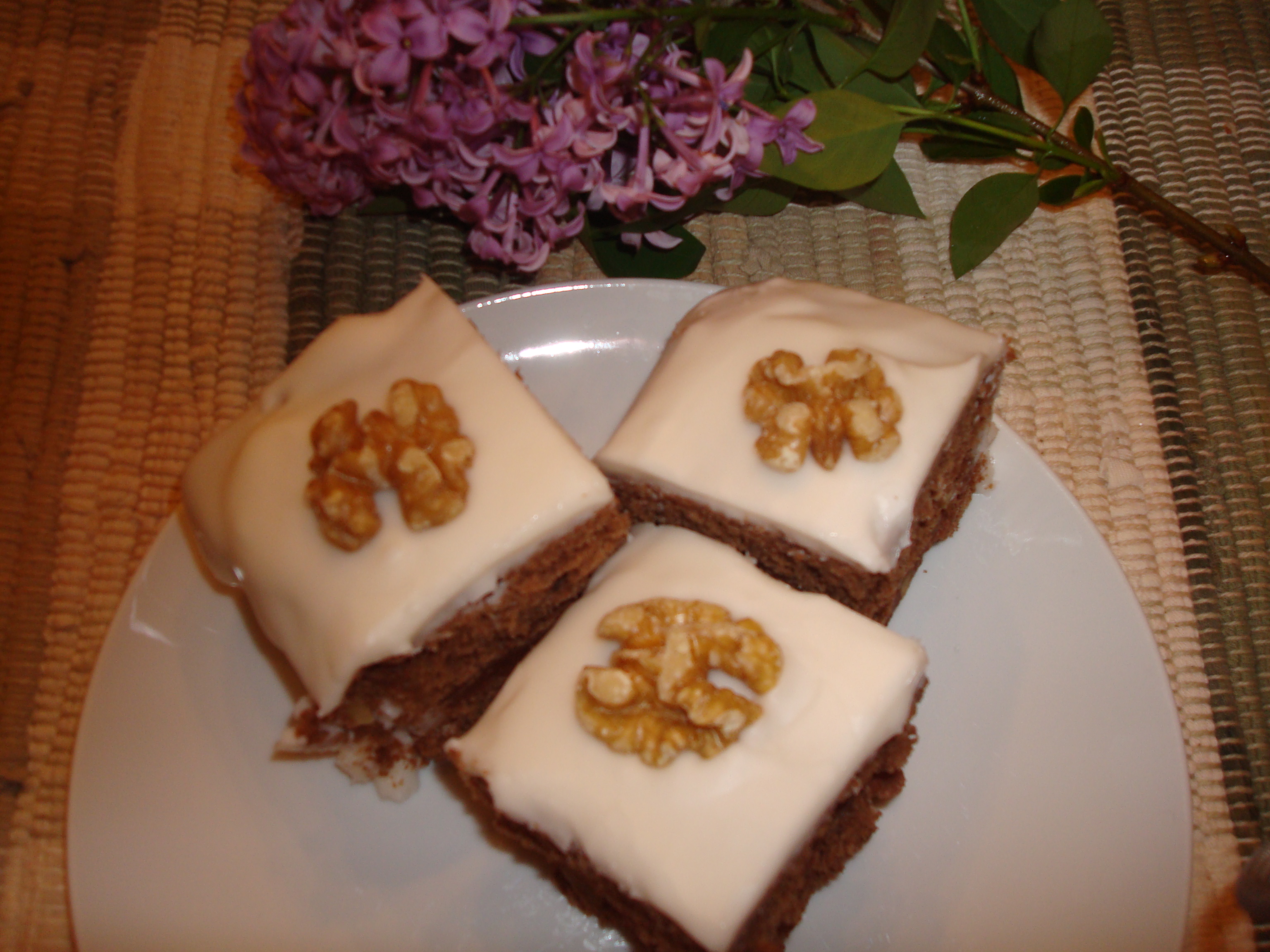
The post included a lovely picture of Walnut Chocolate Cake from Lowney’s Cookbook (1907)—but I didn’t actually make the cake.
Somehow every time I flipped through the Lowney’s Cookbook that picture kept pulling me back. It felt like I’d wimped out—and that I still had some unfinished business with that recipe.
So I finally gave in—took a deep breath and made a stab at interpreting the Walnut Chocolate Cake recipe for modern cooks. Here are the results of my efforts:
Walnut Chocolate Cake
1/4 cup cocoa
1/2 cup butter, softened
1 1/2 cups flour
2/3 cup milk
1 cup sugar
2 egg yolks
2 1/2 teaspoons baking powder
1 teaspoon salt
1 cup walnuts, chopped (+ whole walnuts to decorate top of cake)
Chocolate buttercream frosting
Vanilla buttercream frosting
Preheat oven to 350 degrees. Grease and flour two 8 X 8 inch cake pans. If desired, line with waxed paper to make it easier to get the cakes out of the pans.
Combine all ingredients except walnuts and icings, and beat with electric mixer until smooth. Stir in 1/2 cup chopped walnuts (reserve remaining walnuts).
Evenly divide the batter between the two pans. Bake until done (approximately 30 minutes).
Remove cakes from pans while still warm (approximately 15 minutes after removing from oven). After the cakes are cooled put one cake on a plate and thinly spread with chocolate frosting. Sprinkle the remaining ½ cup of chopped walnuts on top of the chocolate frosting.
Top with the second cake layer. Ice with the vanilla frosting. Decorate with whole walnuts.
The bottom line: The cake was heavier than the typical modern cake—but delicious, and well worth the effort of trying to interpret the old recipe.