Flagged Train Down with Lantern

18-year-old Helena Muffly wrote exactly 100 years ago today: 

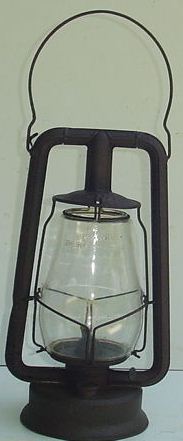
Saturday, March 7, 1914:  Nothing doing. Saw Mistress Ruth off on the train tonight. It was late, so I took the lantern down to act for a signal.

lantern

Her middle-aged granddaughter’s comments 100 years later:

Where was Grandma’s sister Ruth going?

Tracks for the Susquehanna, Bloomsburg, and Berwick Railroad  crossed the Muffly farm. There was a flag stop at a feed mill called Truckenmiller’s Mill which bordered the farm. The route went from Watsontown to McEwensville and Turbotville and then continued east to Washingtonville, Bloomsburg, and Berwick.

DSC02372
Recent photo of the railroad tracks that crossed the Muffly farm.

Sometimes the diary entries give me powerful visual images. In my mind,  I see two young women, standing beside a dark mill on a cold, cloudy moonless night waiting for the train.

And, then the train lights appear in the distance.  As the train approaches, Grandma wildly swings the lantern, while Ruth frets that the train might not stop. . . .but it slowly rolls to a stop and Ruth vanishes into the train. . . . and Grandma slowly walks home with the lantern lighting the way.

DSC02318

How to Decide if You Need Some New Spring Outfits

18-year-old Helena Muffly wrote exactly 100 years ago today: 

Thursday, March 6, 1914:  Same as ever.

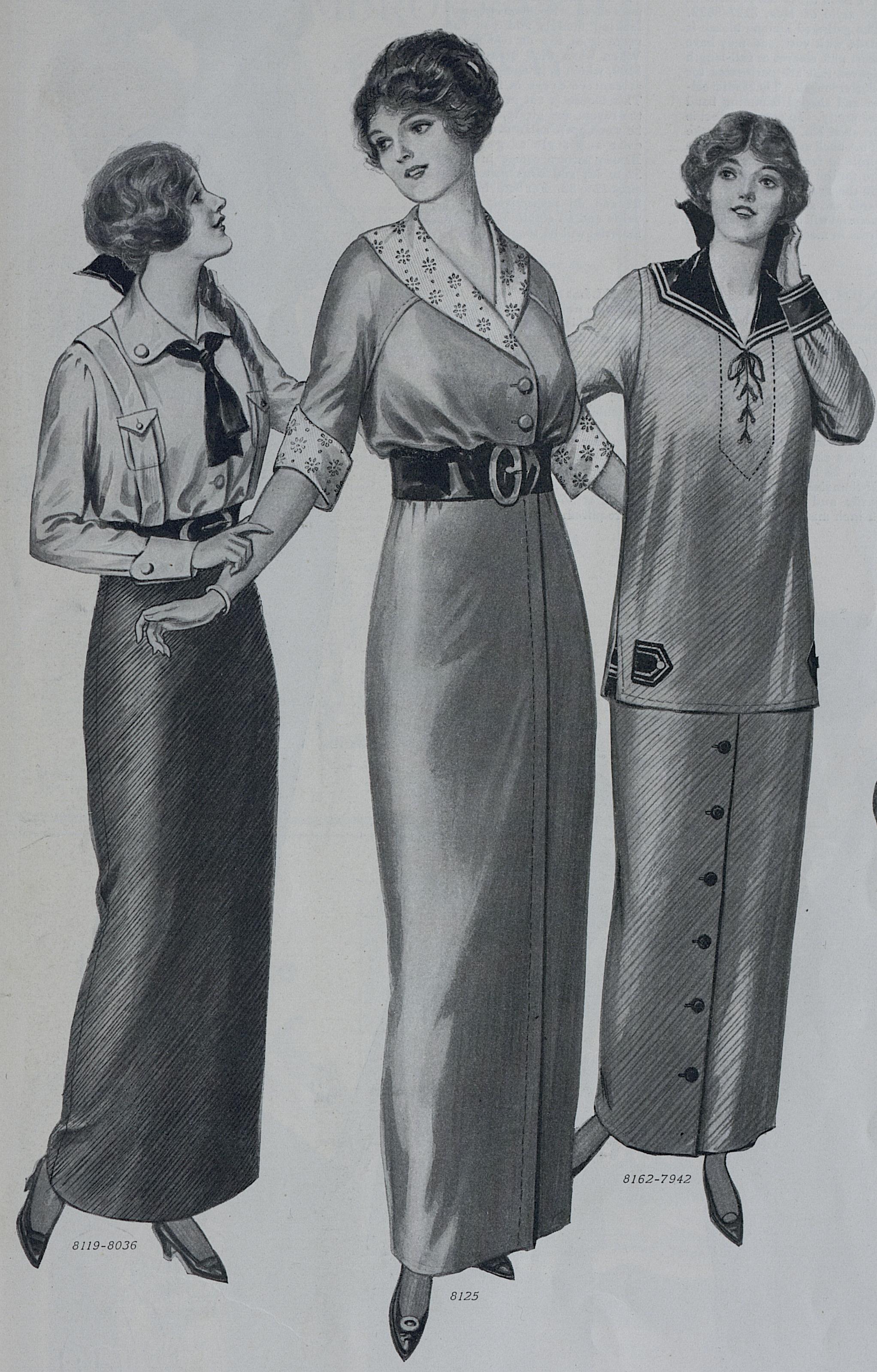
Source: Ladies Home Journal (February, 1914)

Her middle-aged granddaughter’s comments 100 years later:

I think that Grandma had cabin fever. From her perspective, a hundred years ago today was just another boring day in a string of boring days.

Going shopping for new spring clothes always give me hope that warmer weather will be here soon. Was Grandma also taking stock of her wardrobe—and considering whether she needed any new outfits?

Here’s some advice from Mrs. Ralston—no first name is provided– in the April, 1914 issue of Ladies Home Journal:

Personally I shall always believe that a sense of economy is necessary for a true appreciation of fashion. No credit is due the woman who is not obliged to consider ways and means of meeting ends in the selection of her clothes.

I do not believe that the latest fashion should count a cent. In choosing her clothes a woman should only be influenced by the answer to these questions:

  • Are they becoming to me?
  • Can I afford them?

If pressed, one might even omit the second question.

1914 Chalmers “Light Six” Automobile

18-year-old Helena Muffly wrote exactly 100 years ago today: 

Wednesday, March 5, 1914:  Same as ever.

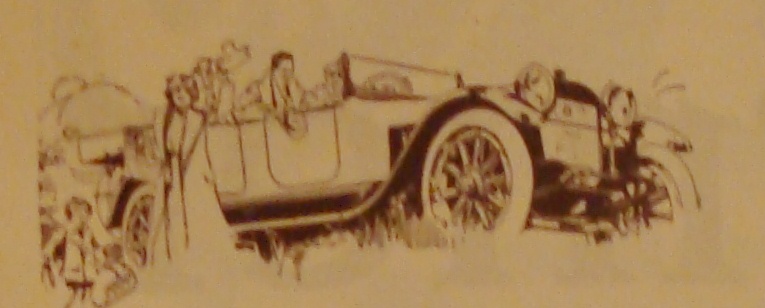
The master “Light Six” is a car for the whole family. It means clean, healthful recreation that you cannot get in any other way. It means days spent in the crisp, clear air of the country; cool refreshing rides in the evenings, and health-giving outings for the children that are impossible without a car. The “Light Six” will pay for itself in better health and greater happiness.

Her middle-aged granddaughter’s comments 100 years later:

This is the fourth day in a row that Grandma wrote “Same as ever.” What was happening (or not happening) in her life? She sure wasn’t putting much effort into her diary.

Yesterday I shared some pictures of 1914 garage designs. Today I’m sharing some pictures of automobiles that provide a sense of how people thought about cars back then. Amazingly, health and happiness were major selling points back then.

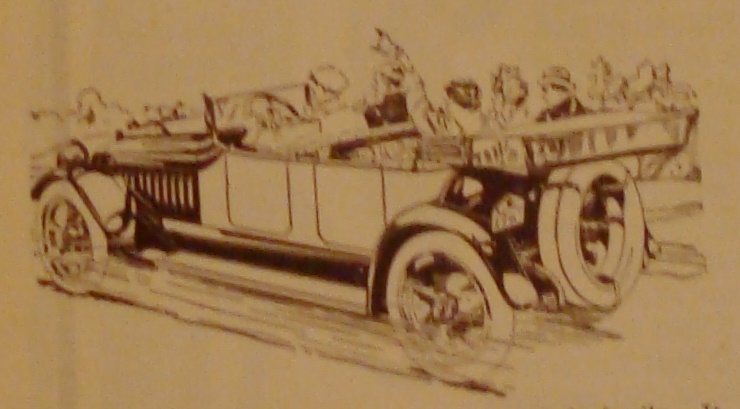
The pictures and captions from  an advertisement for Chalmers “Light Six” automobiles in the June 1, 1914 issue of Kimball’s Dairy Farmer Magazine.

Now is the time you want a car most. All of the outdoors welcomes and offers health and happiness to the man with a motor car. You are planning now for vacation time. Nothing will make your vacation so much worthwhile as the possession of a Chalmers “Light Six”.

1914 Chalmers carChalmers “Light Six” will go through any sand or mud and climb any hill that any car can climb. The six-cylinder motor develops up to 50 horsepower.

DSC08674.crop-aIn addition to the touring car, the Chalmers “Light Six” is built as a two-passenger Coupelet. This is an entirely new body type. The Coupelet gives the luxury and the seclusion of the closed car in bad weather, and it is readily convertible to a handsome roadster for business or for touring during the summer months.

Garages a Hundred Years Ago

18-year-old Helena Muffly wrote exactly 100 years ago today: 

Wednesday, March 4, 1914:  Same as ever.

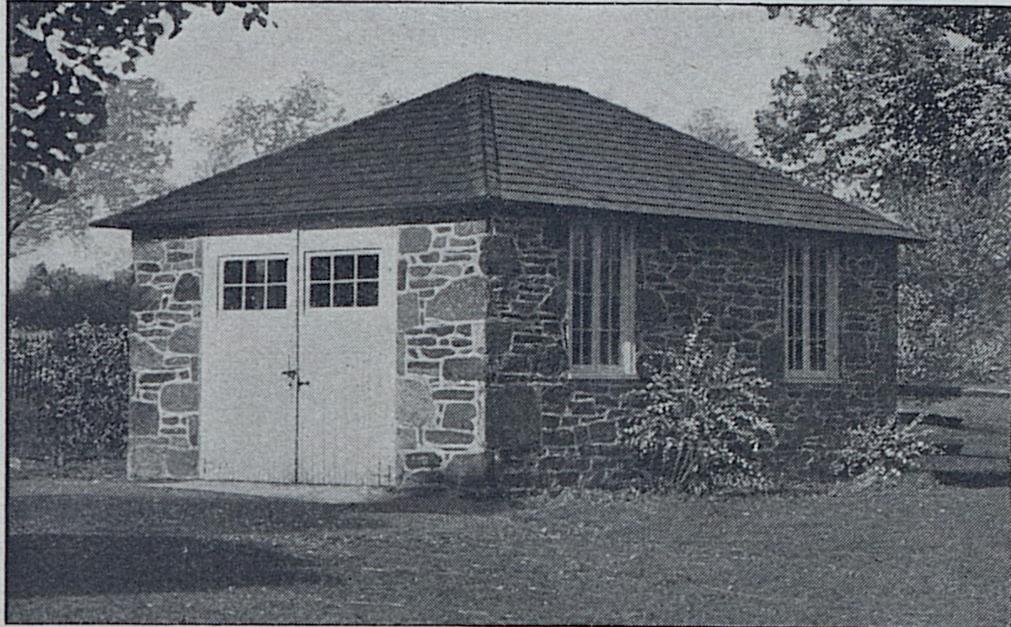
1914-04-107-cHere is a garage which, though simple in design, has been made attractive by careful consideration of details. The stonework gives the impression of strength and durability, and the use of long double casements is unusual.

Her middle-aged granddaughter’s comments 100 years later:

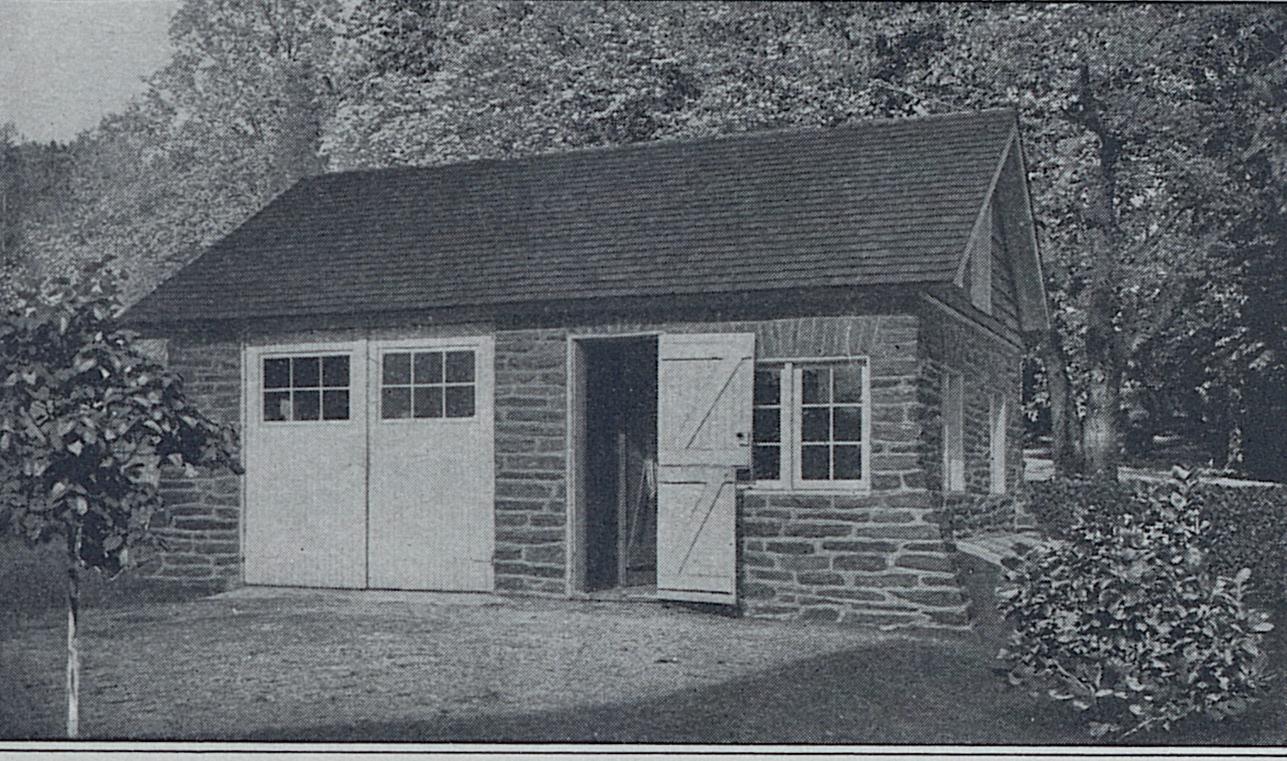
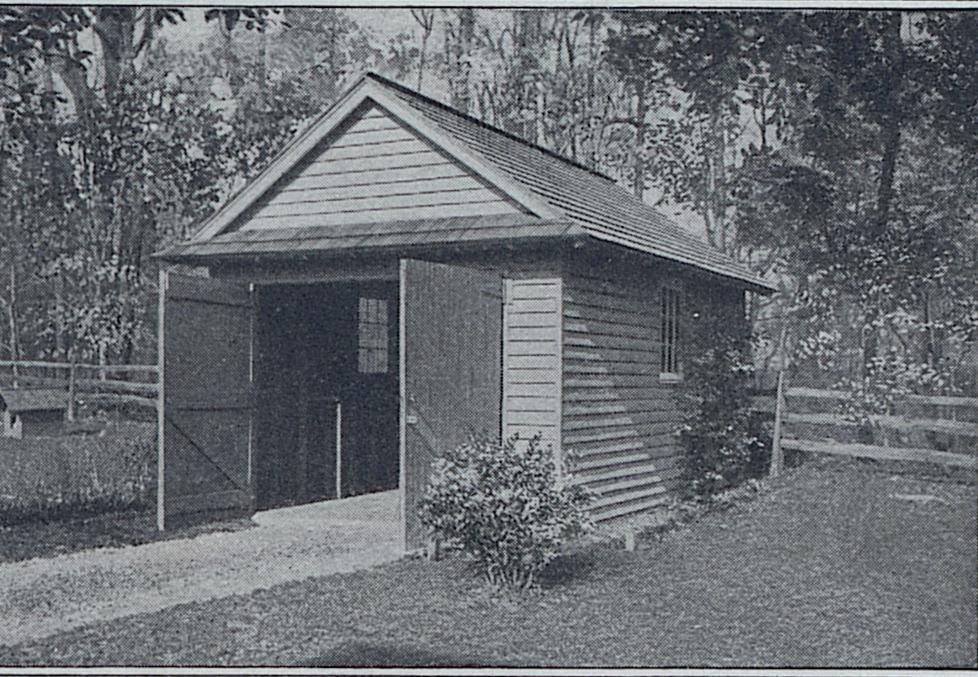
Since Grandma still was in a rut when it came to writing diary entries, I’m going to share some fun drawings of garages that I found in the April 1914 issue of Ladies Home Journal.

I was absolutely amazed that enough people apparently had cars a hundred years ago that the magazine decided to do an article garage design ideas.

1914-04-107-aThe exterior of this garage, with the rough plaster base, shingled walls, and the broad low roof, harmonizes with the bungalow to which it belongs.

1914-04-107-dThis garage was planned for the motor enthusiast who also loves gardening. At one end is a spacious tool and work shed.

1914-04-107-eThis garage is well-designed and inexpensive. The pent roof is not necessary, but keeps it from being commonplace.

1914-04-107-gExcellent judgment was used in the selection of the site, the choice of materials, and in the general design of this garage, which opens directly on the street.

March Chores in Hundred-Year-Old Gardening Calendar

18-year-old Helena Muffly wrote exactly 100 years ago today:

Tuesday, March 3, 1914:  Same as ever.

Source: Vegetable Gardening (1914)

Her middle-aged granddaughter’s comments 100 years later:

Since Grandma didn’t write much a hundred years ago today—and since I’m still thinking about spring and gardening—I checked a hundred-year-old book called Vegetable Gardening by Samuel B. Green to see what you’re supposed to do in March.

March

Make up hotbed and sow in them tomatoes, peppers, cabbage, lettuce, radishes, cress, onions for transplanting, carrots, beets, celery, etc. In the latter part of the month cold frames may be used for the hardy vegetables.

If the ground is fit to work, onion sets may be planted and spinach, hardy peas, and other plants which are generally not sown until April may be sown at this time. Harden off the early cabbage and cauliflower plants.

1914 Burpee Seed Catalog Advertisement

18-year-old Helena Muffly wrote exactly 100 years ago today: 

Monday, March 2, 1914:  Same as ever.

Source: Kimball's Dairy Farmer Magazine (March 15, 1914)
Source: Kimball’s Dairy Farmer Magazine (March 15, 1914)

The Name Burpee is known the world over as synonymous with the Best Seed that Grow! Are You willing to pay a fair price for selected seeds of the choicest vegetables and most beautiful flowers? If so, it may prove of mutual interest if you write today (a postal card will do) for The New Burpee Annual. This is a bright book of 182 pages that is intensely interesting for every one who gardens either for pleasure or profit. Shall we mail you a copy? If so what is your address? Our address is W. Altee Burpee & CO., Philadelphia

Her middle-aged granddaughter’s comments 100 years later:

It’s the same as ever here, too. . .

March came in like a lion yesterday, and there’s still snow on the ground. Browsing through my Burpee Seed catalog gives me hope that spring will come someday.

Maybe Grandma browsed through the 182-page 1914 Burpee catalog a hundred years ago today, and also dreamed of spring.

(It’s amazing that you could just write W. Altee Burpee and the word Philadelphia on a card, and that it would somehow find it’s way to the company. . . Somehow I think that in today’s more computerized world that a much more detailed address would be required.)

Old-fashioned Black Walnut Ice Cream Recipe

18-year-old Helena Muffly wrote exactly 100 years ago today: 

Sunday, March 1, 1914:

March comes in like a howling lion,

How it goes out, I do not know.

This month at least is a howler,

Or the beginning is for the winds do blow (fiercely).

Went to Sunday School this morning. This afternoon it began to get pretty breezy and by now the winds are howling to beat the band. We had ice cream. Whether attracted by the scent or not, Besse and Curt came out. Besse usually manages to get out when we have ice cream.
DSC08776

Her middle-aged granddaughter’s comments 100 years later:

Besse and Curt Hester were Grandma’s married sister and her husband. They lived in nearby Watsontown.

Throughout the diary, the Muffly’s made ice cream once or twice each winter. Today we think of ice cream as a warm weather food—but I guess in the days before refrigeration that maybe it was a cold weather food. It would have been easier to get the ice needed to make ice cream during the winter months.

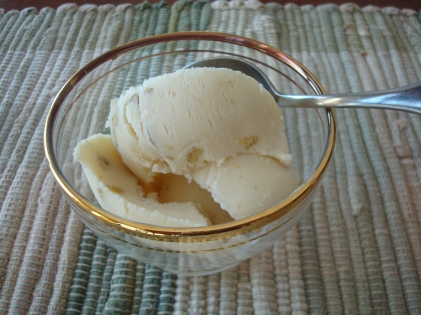
What kind of ice cream did they make? Maybe they made Black Walnut Ice Cream. The previous fall Grandma gathered nuts after they fell from the trees—and Black Walnut is an awesome old-fashioned ice cream flavor.

Black Walnut Ice Cream

3/4 cup sugar

2 tablespoons flour

1/4 teaspoon salt

4 cups half and half

2 eggs, slightly beaten

1 1/2 tablespoons vanilla

1 cup chopped black walnuts

In a saucepan combine sugar, flour and salt. Stir in 1/2 of the half and half (2 cups). Stir and cook over moderate heat until thickened. Cook 2 minutes more. Stir a small amount of the hot mixture into the eggs, and then add the egg mixture to the pan. Cook 1 additional minute. Remove from heat; add vanilla and additional half and half. Strain to remove any lumps. Chill for several hours. Stir in black walnuts before putting into ice cream freezer.

Follow freezer directions to make ice cream.

Makes approximately 1 1/2 quarts. Recipe may be doubled or tripled for larger freezers.

This ice cream turned out wonderfully—and my husband says that I should have doubled the recipe because it didn’t last long enough.

This is one of my favorite uses of black walnuts. The coldness of the ice cream and the robust flavor of the walnuts combine to create a wonderful taste treat.

Monthly Poem

The first day of each month Grandma included a poem in the diary. For more information see, the following post:

Monthly Poem in Diary