 The rail system in the United States was in largely in place by the 1910’s, but I’m still surprised sometimes about how readily (and inexpensively) fresh produce was transported across the country a hundred years ago.
Here’s part of a 1916 magazine article about oranges:
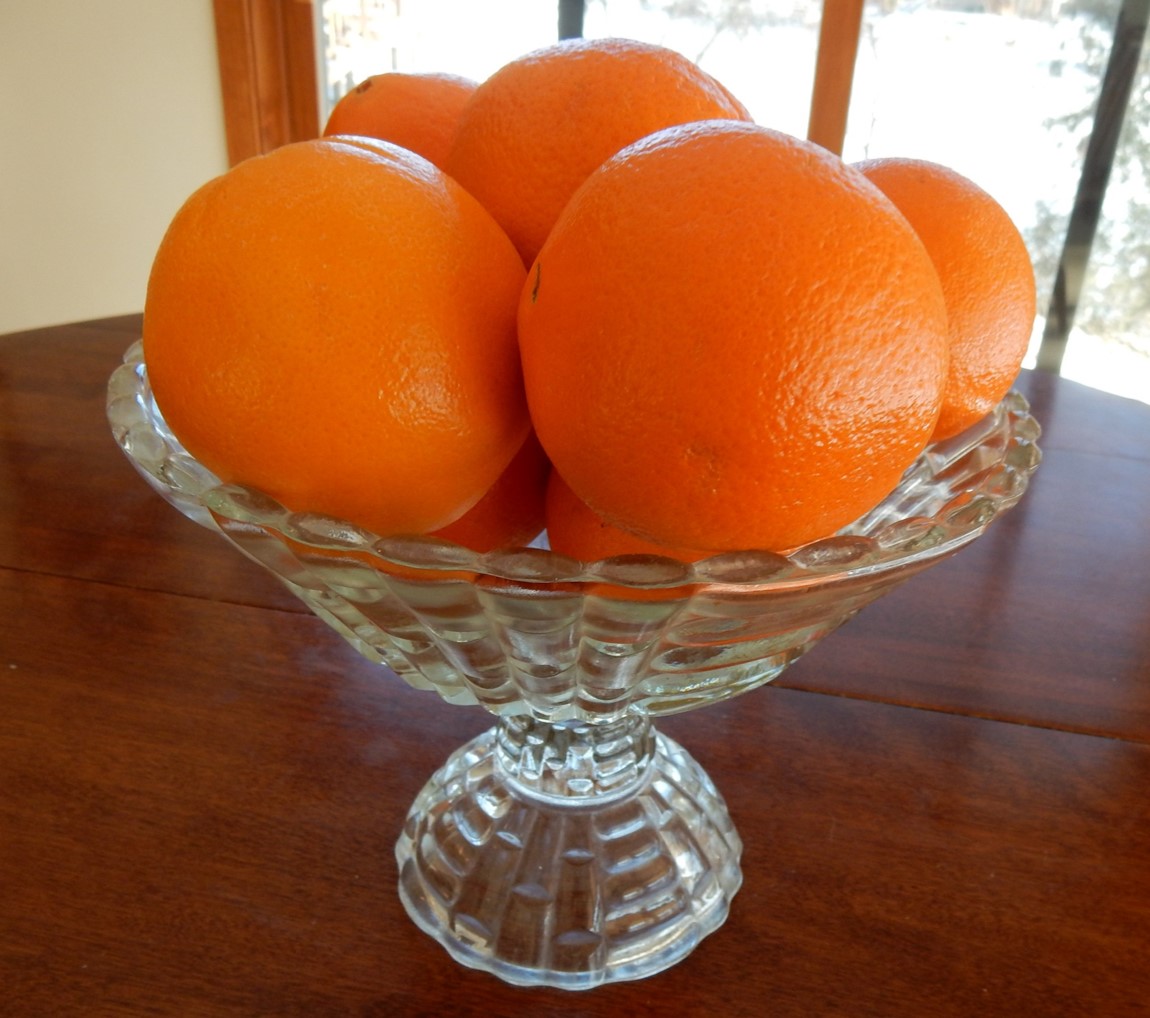
Let’s Eat Oranges
Probably the reason many of us consider the orange a luxury rather than an every-day food is because we still cherish memories of the time when the fruit was high-priced and not widely distributed, and an occasional orange was a surprise often reserved for the toe of the Christmas stocking.
Many of us are more or less slaves of our habits of thought, and in face of the fact that oranges can be purchased from December to April at almost any price, and the rest of the year at prices which are moderate when the value received is considered , we do not take advantage of their wonderful dietetic properties because we consider them too expensive.
It is generally known that the orange contains citric acid, which s a liver stimulant, and that it is a gentle laxative. But its wonderful supply of phosphates, a direct nerve-food, is usually overlooked, and the fact the oranges therefore have a most beneficial effect in cases of insomnia is practically unknown. In short, the importance of the orange as an every-day food the year round cannot be too greatly emphasized.
Good Housekeeping (March, 1916)