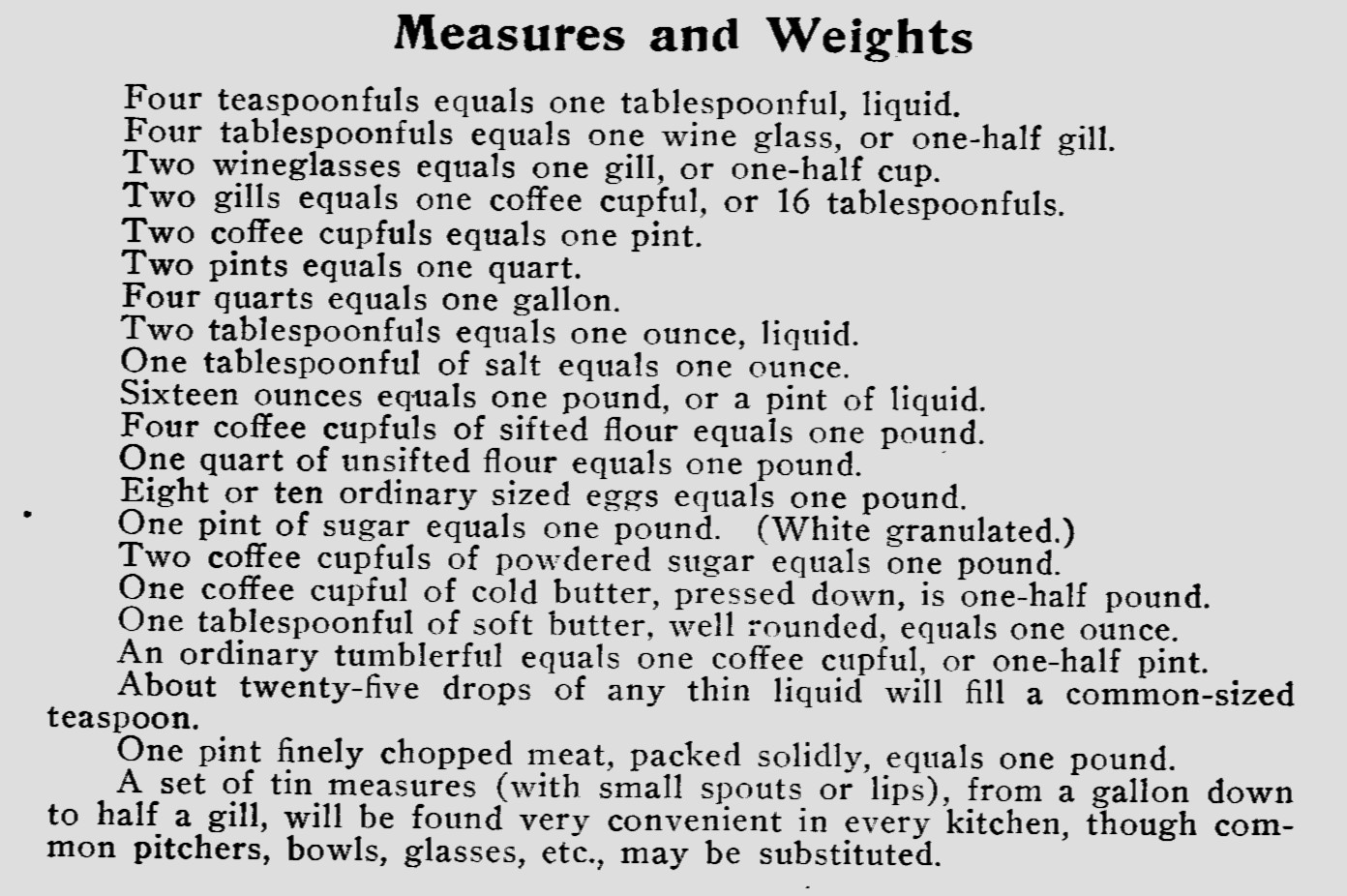
Cookbooks, then like now, often contained measurement equivalents – but the information in the old cookbooks sometimes leaves me scratching my head. What the heck is a gill?
Cookbooks, then like now, often contained measurement equivalents – but the information in the old cookbooks sometimes leaves me scratching my head. What the heck is a gill?
 I’ve eaten Fried Asparagus several times in the past year as an appetizer. I was surprised when I saw a recipe in a hundred-year-old church cookbook for Fried Asparagus. It apparently has been around for a long time.
The crisp lightly-browned breading on the asparagus creates an enchanting appetizer or side dish.
The original recipe says, “This is nice and easy to prepare.” I concur. This is a fun and easy recipe.
Here’s the recipe updated for modern cooks:
1 pound asparagus
1/2 cup flour
1/2 teaspoon salt
2 eggs
1/4 cup milk
shortening or oil
Bring water to a boil in a large saucepan. Meanwhile wash and trim the asparagus spears, then blanch them by adding to the boiling water. Cook for 2-3 minutes or until al dente. Remove the asparagus from the water and immediately put the spears in ice water to stop the cooking.
Prepare a batter by combining the flour, salt, eggs, and milk in a mixing bowl. Beat until combined. Roll the blanched asparagus in the breading batter.
Heat 1/2 inch of shortening or oil in a large frying pan. Carefully place the breaded asparagus spears in the pan in a single layer. Depending upon pan size, the spears may need to be cooked in several batches. Fry for about a minute or until the bottom side of the asparagus is lightly browned, then gently turn and fry until the other side is browned. Remove from pan and drain the asparagus on paper towels. Serve immediately.
And, here is the original recipe:

The original recipe is lacking in details. It tells the cook to dip the asparagus in batter, but fails to tell them how to prepare the batter. Apparently the recipe author assumed that every cook already knew how to prepare batter. Since I didn’t know how off the top of my head, I decided to adapt an old recipe that I’d previously used to make fritters to make a batter that would work with the asparagus.

I’m often fascinated by even the simplest hundred-year-old advertisements. For example, this advertisement for Heinz Spaghetti is so basic –yet it provides many insights into the use of commercially prepared foods, ‘international cuisine’, and cooking methods back then.
 Can I let you in on a secret? March is one of the most difficult months to eat local seasonal foods. Winter staples like squash, onions, cabbage. . . even apples are starting to seen humdrum. And, it will be at least a few weeks until local fresh produce is available. Usually, I cheat a little and buy strawberries and asparagus at the supermarket, and justify it by saying they are March fruits and vegetables. . . somewhere.
But, when I browse through hundred-year-old magazines, I’m keenly aware that people actually ate local foods that had been stored all winter during March back then.
I decided to that today I was going to make an authentic March food and began flipping through the March, 1916 issue of Good Housekeeping. I came across an old recipe for Apple Johnny Cake that intrigued me.
This corn bread contains no sugar and feels healthier than modern sugared corn bread. The apples (I used Braeburn apples) embedded in the Johnny Cake are the sole source of sweetness, and work perfectly in this recipe.
The Apple Johnny Cake was good–though I must admit that I can hardly wait for the local spring fruits and vegetables to arrive on the scene (or I might cheat and buy some more Mexico, California, or Florida produce when I go to the supermarket tomorrow).
Here’s my updated version of the hundred-year-old recipe for modern cooks:
2 cups corn meal
1 cup all-purpose flour
2 teaspoons baking powder
1 teaspoon salt
1 1/2 cups milk
3 apples, pared and thinly sliced
Preheat oven to 375 degrees F. Put corn meal, flour, baking powder, salt, and milk into a mixing bowl; beat until smooth. Stir in apple slices, and then put the batter into a well-greased 9 inch X 9 inch baking pan. Place in oven. Bake 40 to 45 minutes, or until a toothpick comes out clean.
And, here is the original recipe:

The Apple Johnny Cake was an interesting corn bread, but I wanted to also try eating it crumbled and served with milk as described in the recipe.
I broke a piece of Apple Johnny Cake into a bowl (and sprinkled it with a little sugar), then poured milk on it. It was surprisingly tasty. I can see why children enjoyed this dish a hundred years ago.

This blog addresses mostly food-related topics, but the subtitle of A Hundred Years Ago says Food and More, so today I’m focusing on the More.
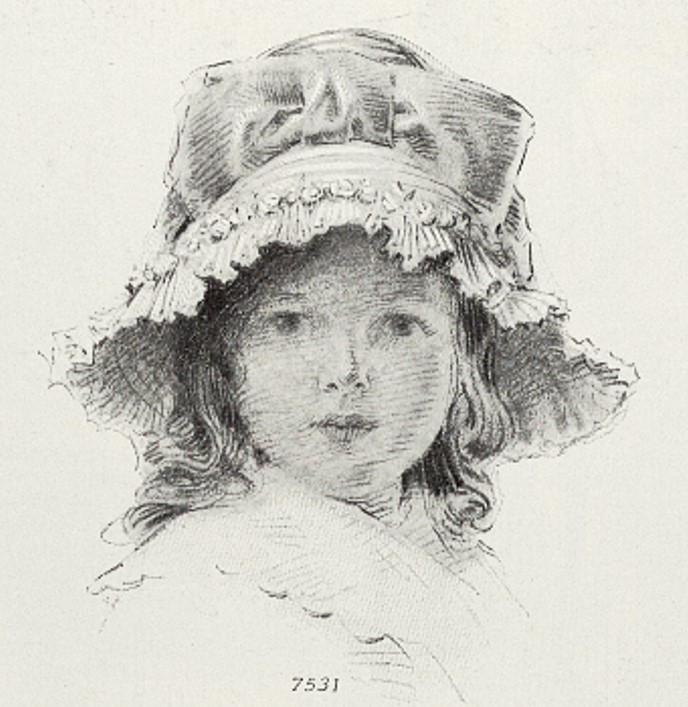
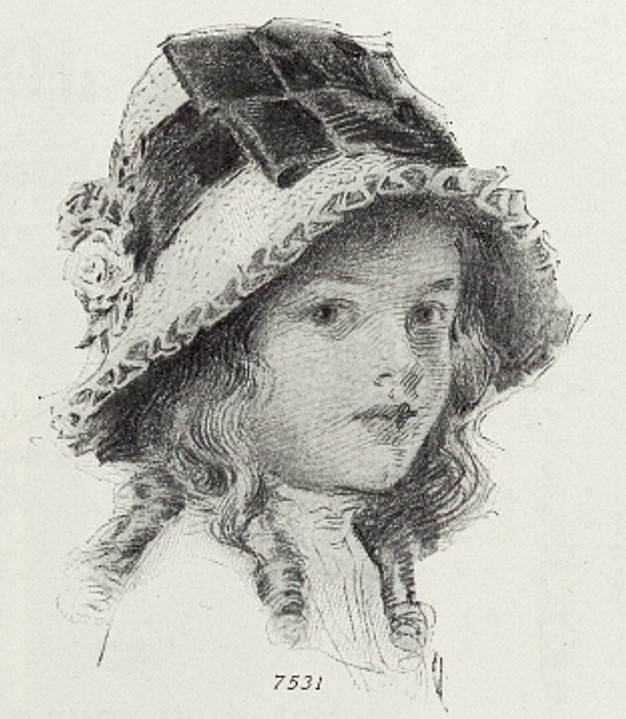
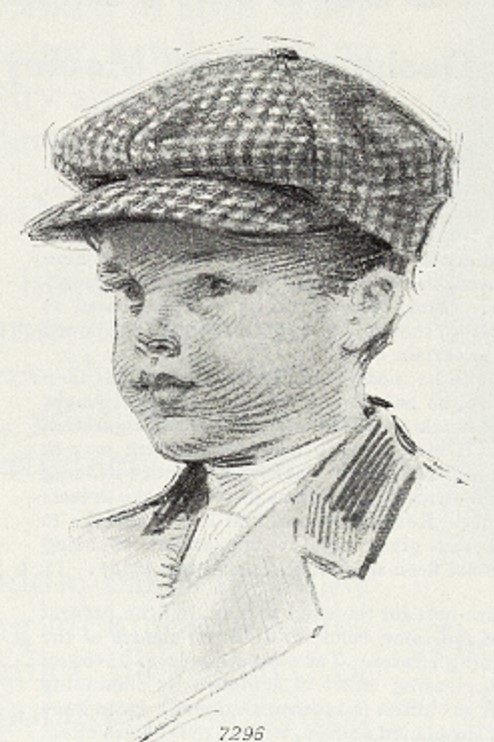
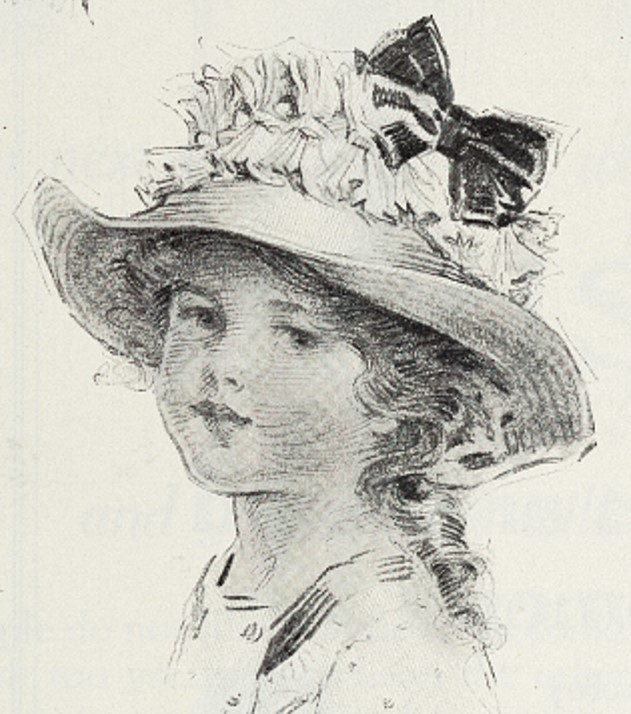
I found some awesome pictures of children’s Easter hats from a hundred years ago that I just needed to share. Amazingly, readers of Ladies Home Journal were encouraged to order patterns from the magazine so they could replicate these hats. Enjoy!
A pretty feature of the hat is the plaited lace joined with tiny flowers at the brim edge.
Fine Tuscan straw was used for the pretty poke bonnet trimmed with flowers and bows of velvet ribbon.
This cap shades the eyes, fits snugly and only needs one good tug to put it on in the most secure manner. Then it has the additional attraction of being soft and small enough to slip into a boy’s pocket when necessary, all of which endears this peaked cap to the little man of the family. Lightweight cloth is the best material to use, with or without a thin sateen or silesia lining.
Ladies Home Journal (March, 1913)

As the seasons transition from winter to spring, the foods are ever evolving. Spinach, green onions, and eggs are wonderful quintessential Spring foods. I was thrilled to find a recipe for German Spinach in the April, 1916 issue of Good Housekeeping that calls for all three. The spinach and green onions, combined with bacon and a lovely chopped egg garnish, creates a stunning seasonal dish.
Here’s the recipe updated for modern cooks:
2 quarts baby spinach (1 10-ounce package)
2 bunches (approximately 20) green onions (scallions)
4 slices bacon, chopped
1 tablespoon flour
1 tablespoon fine breadcrumbs
dash of nutmeg
1 hard-boiled egg, chopped
Wash spinach, then put into a large saucepan with just the water that is clinging to the leaves. Using medium heat, cook spinach until wilted while stirring occasionally.
In the meantime, chop the white and green parts of the green onions. Put the bacon in a skillet and using medium heat, cook the bacon for several minutes. Add green onions, and continue frying until the green onions are wilted. Stir in the flour, bread crumbs, and nutmeg; then add the cooked spinach.
Put into serving dish and garnish with the egg. If desired, sprinkle a little nutmeg on top.
Here’s the original recipe:

The old recipe called for adding water to the spinach and bacon mixture, then cooking until the water is “boiled up.” When I made this recipoe, I didn’t add any additional water since it didn’t seem needed. Without the added water, the dish was ready to put in a serving bowl as soon as the bacon mixture and the spinach were combined.

How do you use a cookbook? I tend to use it as the starting point when making a recipe–the inspiration, the essence–and then adapt and adjust as needed. Some of my friends feel that a recipe describes what should be done to successfully make a dish, and won’t think about making changes on the fly.
Standardized recipes and measurements were a fairly new concept a hundred years ago, and a home economics textbook addressed how to use a cookbook to ensure consistent results. Here are some quotes:
To get all the help even the best cookbook can give, one must know how to carry out the directions given. For instance, what is meant by a cupful or a spoonful. Modern cookbooks all use level measurements. This mean for dry materials, a spoonful or cupful over which the edge of a knife is passed; for wet materials, as much as the cup or spoon will hold.
The manufacturers of kitchen supplies are at last realizing that women are serious in the demand for uniform-sized cups and spoons to use for measuring.
If exactly the same materials are put together under exactly the same conditions the result will be the same–as it is in all other industries.
Of course, changes can be made in certain things, and here she will show her judgment. Spices and flavorings can be substituted one for another, or left out altogether, or added to the recipe that lacks them.
A trained laboratory worker with a fine eye and exact mind proves a capable cook, unless he or she is without a sense for flavoring.
As the housekeepers grow more exact and accurate the cookbooks will improve to meet their demands, until cooking is a much more exact operation than is now possible.
How to Cook and Why by Elizabeth Condit and Jessie A. Long (1914)