Good Cooks Are Composers

Quote by Henry Finck
Source: The New Cookery (1921) by Lenna Frances Cooper

The foreword to a 1921 cookbook begins with this quote. Nice quote – but I was curious about who Henry T. Finck was and why I should care about what he thought.

A quick google search turned up information about Henry Finck. He was both the music editor and the epicurean editor at the New York Evening Post. According to Oregon Encyclopedia:

Music critic Henry T. Finck spent his childhood on an apple orchard near the Christian agricultural colony of Aurora in the lower Willamette Valley. The first Oregonian to graduate from Harvard, Finck was a prolific writer and critic of contemporary music. He also wrote about horticulture, romantic love, travel, food, and his Oregon boyhood.

1921 Table Etiquette

set table on porch or patioPhoto source: Ladies Home Journal (July, 1911)

Here’s a few table etiquette rules that appeared in a 1921 home economics textbook: 

Table Manners

  • Never go to the table unless hands and face are clean and hair is in order. 
  • Stand behind your chair until the hostess takes her seat. 
  • The napkins should be laid across the lap without being entirely opened out. Never stick the corner inside the collar. If the napkin is to be used again, fold it neatly before leaving the table. 
  • Always sit erect in the chair while eating. Keep the arms and elbows off the table. 
  • Never eat hurriedly. 
  • Do not talk when the mouth is full of food. 
  • Ask politely for dishes to be passed, rather than reach across the table. 
  • Never complain about the food. If it is not the kind desired, it need not be eaten. 
  • If it is necessary to leave the table before the others are ready, ask to be excused by the hostess. 
  • Do not talk about disagreeable things during the meal. 

Source: Elementary Home Economics (1921) by Mary Lockwood Matthews

1921 Description of Vegetables

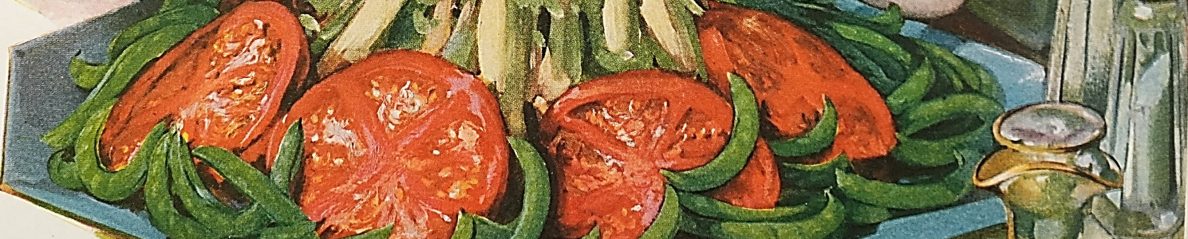
drawing of farmer with vegetablesA hundred years ago people thought about the nutritional value of vegetables differently than they do today.
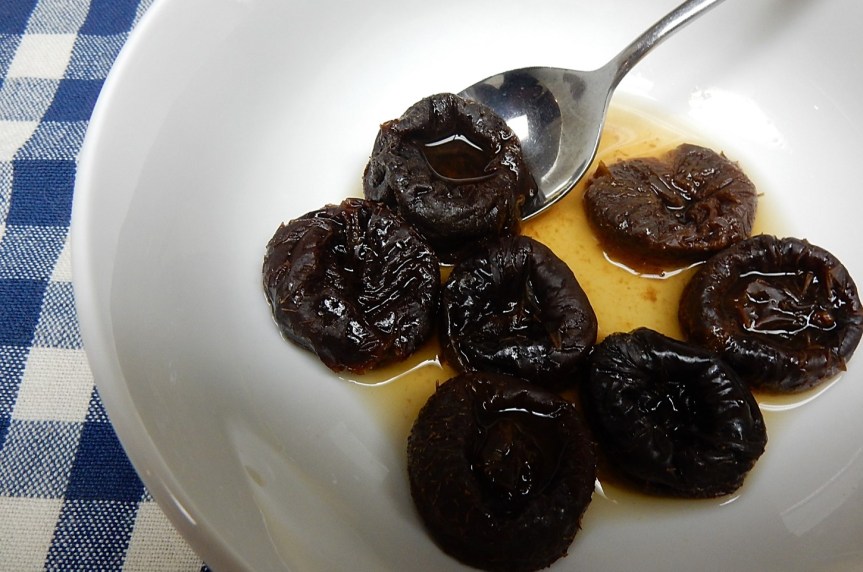
Vegetables

Vegetables may be divided into two great classes:

  1. Coarse or fibrous vegetables, comprising roots, tubers, stems, bulbs, and leaves.
  2. The finer or fruity vegetables, as tomato, squash, pumpkin, green peas, corn, immature beans (shelled), cucumbers, melons, etc.

Vegetables are characterized by their large amount of cellulose; and as water enters largely into their composition, they are by no means the most nutritious diet. Food, however, in order to supply perfectly the needs of the vital economy, must contain water, and indigestible as well as nutritive elements. vegetables are therefore dietetically of great value, as they furnish large quantities of organic fluids, and are rich in those mineral elements which are necessary for maintaining the alkalinity of the blood, and for the repair of the bony structures.

Perhaps no food is more generally used by rich and poor alike in making up their daily fill of fare; yet how often the vegetable is spoiled in cooking! In the first place, the portion of the vegetable next to the skin contains the greater quantity of mineral matter and flavoring substances. Hence all thin-skinned vegetables such as carrots, oyster plant, etc. should be scraped. Others should be pared as thinly as possible.

Vegetables, like all starchy foods, should be put to cook in boiling water, as by the application of hot water, the starch grains are caused to swell and burst, and this give the starch an opportunity to escape through the cellulose.

Whenever possible, vegetables should be cooked the same day they are gathered. If necessary to keep green vegetables for any length of time, do not put them in water, as that will dissolve and destroy some of their juices. Lay them in a cool, dark place. A stone floor is best. Old vegetables should be immersed in cold water for an hour or more just before cooking, to make them more tender.

Young, tender vegetables, as lettuce, tomatoes, water cress, etc., served in the uncooked state, are valuable for the water and the potash salts they contain also for the stimulating effect they have on the appetite.

The Science of Food and Cookery (1921) by H.S. Anderson

Types of Ice Cream a Hundred Years Ago

Here’s how a 1921 magazine article described the different types of ice cream:
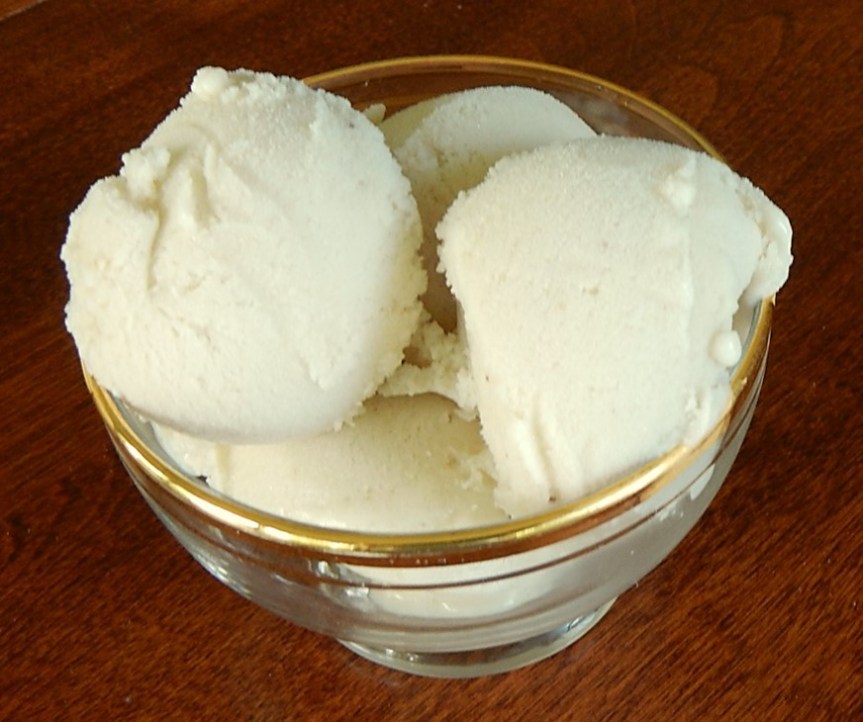
Classes of Ice Cream

There are three distinct classes of Ice Cream: The Philadelphia, which is supposed to be made of heavy cream; the French, which is made with eggs on a soft custard foundation; and the so-called American, which is made on the foundation of a thin white sauce. All three classes are made in New York, and in every other large city, but we have never heard that any special recipe for ice cream is peculiar to New York. The less expensive form of cream, in that and every other city, are those based on a thin white sauce, sweetened sauce, sweetened, flavored, and frozen.

American Cookery (November, 1921)

1921 Step-by-Step Guide to Washing Dishes

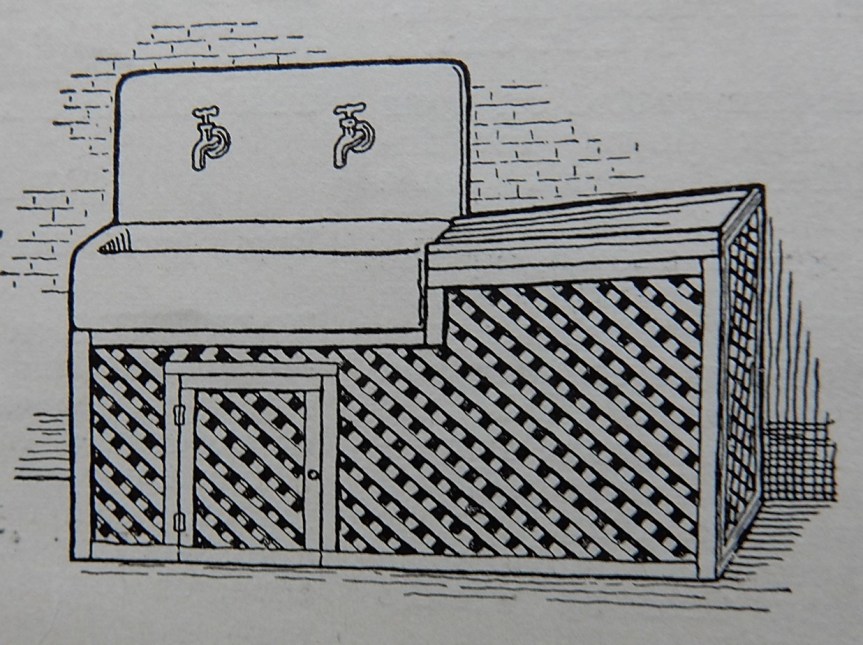
Sink
Source: Women’s Home Companion (March, 1916)

A hundred-year-old home economics textbook included a 9-step guide for washing dishes:

The steps for washing dishes correctly are: 

  1. Remove the dishes from the table. Remove the bits of food from the plates with the rubber plate-scraper or a piece of paper. Rinse off very dirty dishes. Pile together dishes that are alike. 

  2. Put to soak all cooking utensils. Hot water should be put in those which have contained sugar or syrup, and cold water in those which have been used with milk, eggs, cereal, starch or flour. 

  3. Pour hot water in the dishpan, make a good suds with the soap, use a clean dishcloth (not a “rag”) or mop, and wash every dish carefully. Do not have the dishpan full of dirty dishes while washing. Always wash the cleanest dishes first. 

  4. Place the washed dishes in a drain-pan or dish-drier, being careful not to crowd them. Crowding dishes in a pan is apt to chip them and makes it hard to scald them thoroughly. This pan or drier should be placed at the left of the pan in which the dishes are washed because this will save unnecessary motions in putting the dishes from one into the other. 

  5. Rinse dishes thoroughly with boiling water, being sure that each dish has been rinsed inside and out. If the dishes have been scalded in a dish-drier, it may be set on the drain-board and the dishes allowed to dry without wiping. The silver and glass should be washed first. They will look best when wiped and polished dry with a towel. Some persons like to dry all the dishes with a towel. This is a good method, but it takes more time than drying them in a rack or drier. 

  6. Scape out and rinse off the cooking utensils. Use plenty of hot soapy water for washing them; wash thoroughly, both inside and out, scouring if necessary. Rinse with boiling water and wipe dry. Steel knives may be scoured with scouring-powder applied with a cork. 

  7. Wash off the drain-boards and tables, and scour them with the powder and a brush if necessary. Use clean water for this. Wash out the sink and sour it with a brush and scouring-powder when the soapy water will not remove the stains. 

  8. Wash the dish-towels in clean soapy water, removing all spots. Rinse in clean water, shake out and pull into shape. Hang to dry on a rack for this purpose in the kitchen, or better still, hang outdoors in the sun. Wash and rinse the dishcloth or dish-mop. 

  9. Clean out the dishpan thoroughly, wipe it dry and put it away. 

    Elementary Home Economics (1921) by Mary Lockwook Matthews

Was Dinner at Noon or in the Evening a Hundred Years Ago?

Eating at a Table
Source: A Text-book of Cooking

Our family calls the noon meal “lunch” and the evening meal “supper” – but I often feel out-of-step with my friends and neighbors who all eat “dinner” in the evening. So I was fascinated to read what it said in a 1921 home economics textbook about which meal was which:

In some families the meal served at noon is called luncheon and is followed by dinner in the evening; in others, dinner is the meal served at noon, followed by supper in the evening. Luncheon and supper are simpler meals than dinner.

Elementary Home Economics (1921)  by Mary Lockwood Matthews