Wow, I never would have guessed that Oreos were a hundred years old. Part of me thinks it’s awesome that this cookie has been around so long—and that Grandma probably enjoyed them as a teen.
However, another part of me is sad that processed foods like Oreos were available a hundred years ago. I want to believe that people ate wholesome, homemade, locally produced foods a hundred years ago—when the reality is that by 1912 the world was rapidly industrializing and “modern” foods were readily available.
16-year-old Helena Muffly wrote exactly 100 years ago today:
Tuesday, February 27, 1912: Quite uneventful. Ruth went up to Oakes this evening, but I staid at home and studied my lessons.
Devil's Food Cake (Hundred-Year-Old Recipe)
Her middle-aged granddaughter’s comments 100 years later:
Since this diary entry is self-explanatory, I’m going to go off on a tangent.
I recently bought a 1912 cookbook off EBay. My daughter glanced through it and noticed that the devils food cake recipe seemed very different from today’s recipes.
So we decided to compare a devils food cake made with a modern recipe with one made using a hundred year old recipe.
In the early 1900s angel food cakes and devils food cakes were seen as the polar opposites—one was white and light; the other dark and heavy.
The cake made with the hundred year old recipe was a dense chocolate spice cake. The recipe called for mashed potatoes (mashed potatoes ?!?!), cinnamon, nutmeg and nuts. It reminded us of gingerbread–though ginger was not an ingredient. I’ve never eaten anything exactly like it—but the cake was very good and I’d make it again.
100 Year-Old-Recipe
Calumet Devil’s Food Cake (Chocolate Spice Cake)
2 cups flour
2 level teaspoons Calumet (or any other brand) baking powder
2 level teaspoons cinnamon
1/2 teaspoon nutmeg
1 3/4 cups granulated sugar
1/2 cup milk
3/4 cup butter
2 eggs
1 cup warm mashed potatoes
2 squares unsweetened chocolate
1 cup chopped nuts
Preheat oven to 350 degrees. Grease and flour baking pan, 13 X 9 X 2 inches. Melt butter and chocolate. Combine with all of the other ingredients except nuts. Beat until well-blended. Stir in nuts.
Pour into pan. Bake approximately 45-50 minutes or until pick comes out clean.
Adapted from the recipe in Calumet Baking Powder Reliable Recipes (1912)
The modern devils food cake recipe that my daughter made was from my Betty Crocker Cookbook. The recipe called for red food coloring—but otherwise seemed similar to other modern chocolate cake recipes. The cake was awesome.
Devils Food Cake
1 3/4 cups all-purpose flour
1 cup granulated sugar
1/2 cup brown sugar (packed)
1 1/2 teaspoons soda
3/4 teaspoon salt
1 1/4 cups buttermilk
1/2 cup shortening
2 eggs
2 ounces melted unsweetened chocolate (cool)
1 teaspoon vanilla
1/2 teaspoon red food color
Heat oven to 350 degrees. Grease and flour baking pan, 13x9x2 inches, or two 9-inch or three 8-inch round layer pans. Measure all ingredients into large mixer bowl. Blend 1/2 minute on low-speed, scraping bowl constantly. Beat 3 minutes high-speed, scraping bowl occasionally. Pour into pan(s).
Bake oblong about 40 minutes, layers 30-35 minutes or until wooden pick inserted in center comes out clean. Cool.
(Recipe suggests using chocolate or cream cheese frosting.)
16-year-old Helena Muffly wrote exactly 100 years ago today:
Thursday, February 15, 1912: I believe I have forgotten what I did today. Nothing unusual any way.Her middle-aged granddaughter’s comments 100 years later:
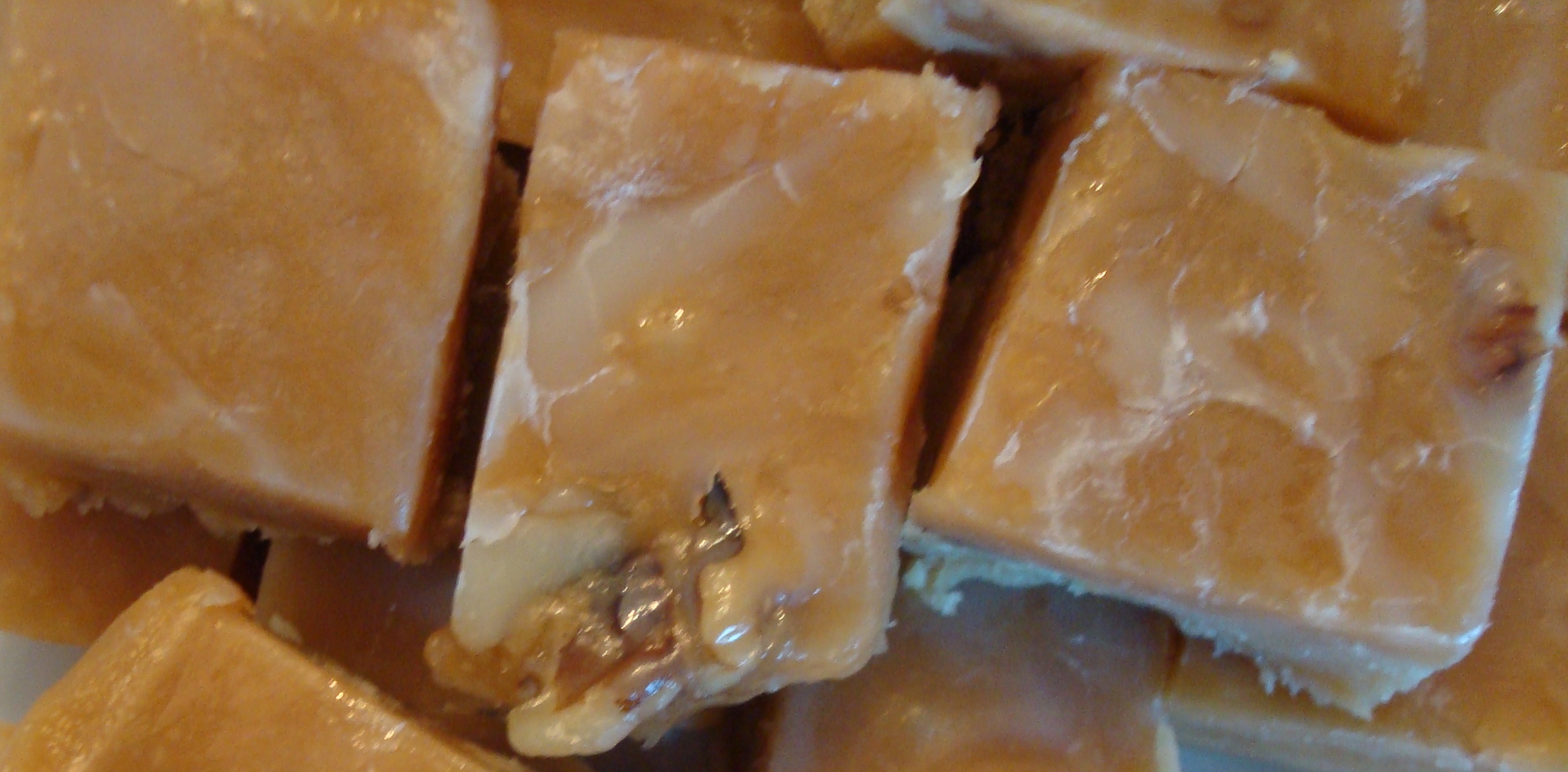
Since Grandma didn’t write much today, I’ll give you an old-time candy recipe for Sour Cream Fudge.
Sour Cream Fudge
1 cup sugar
1 cup brown sugar
3/4 cup sour cream
1 1/4 cups butter
1 teaspoon vanilla
1 cup chopped walnuts
Combine sugar and sour cream. Stir while heating over a low temperature until the sugar is dissolved. Add butter and continue stirring until it is melted. Quit stirring and bring to a slow boil. Continue boiling until candy reaches the soft ball stage (235-240 degrees F.). Remove from heat, beating it while it cools. Add vanilla and nuts. Pour into greased pan.
Sour Cream Fudge has a rich, buttery flavor.
Patience is key to successfully making Sour Cream Fudge. I was surprised how long I needed to cook this candy. It takes a long time to reach the soft ball stage—I think that it took more than an hour.
16-year-old Helena Muffly wrote exactly 100 years ago today:
Monday, January 29, 1912: It is hard to study when you don’t feel like it. Don’t know what will become of myself if I don’t get aroused pretty soon.
Her middle-aged granddaughter’s comments 100 years later:
Perhaps Grandma made a snack while she was trying to motivate herself to study.
Popcorn was a very popular winter snack a hundred years ago. A few weeks ago I made old-fashioned Caramel Popcorn. I enjoyed it so much, that I decided to make another old-time popcorn snack—Honey Popcorn Balls.
Honey Popcorn Balls
approximately 1 1/2 quarts popped popcorn
1/2 cup honey
1/2 cup sugar
1/3 cup water
2 tablespoons butter
1/4 teaspoon salt
Put popped corn in a large bowl and set aside. Cook honey, sugar, water, and butter to a medium-crack stage (280 degrees). Remove from heat and stir in salt; pour over the corn and stir with a spoon to coat the kernels.
Grease hands with butter. Firmly press coated popcorn into balls. Lay balls on waxed paper until cool. If the balls will be stored, wrap in waxed paper.
These popcorn balls have an awesome rich honey flavor. (They are nothing like the horrid, stale popcorn balls that I occasionally see in stores.)
I used some alfalfa honey that I got at an Amish market to make these balls—but any honey will work. I love the flavor of the light alfalfa honey, but think it would also be fun to experiment and make them again with a darker honey. Maybe next week. . . .
16-year-old Helena Muffly wrote exactly 100 years ago today:
Thursday, January 18, 1912: To write something when you have nothing to write is an impossible task.
Her middle-aged granddaughter’s comments 100 years later:
Since Grandma didn’t write much a hundred years ago today, I’m going to go off on a tangent.
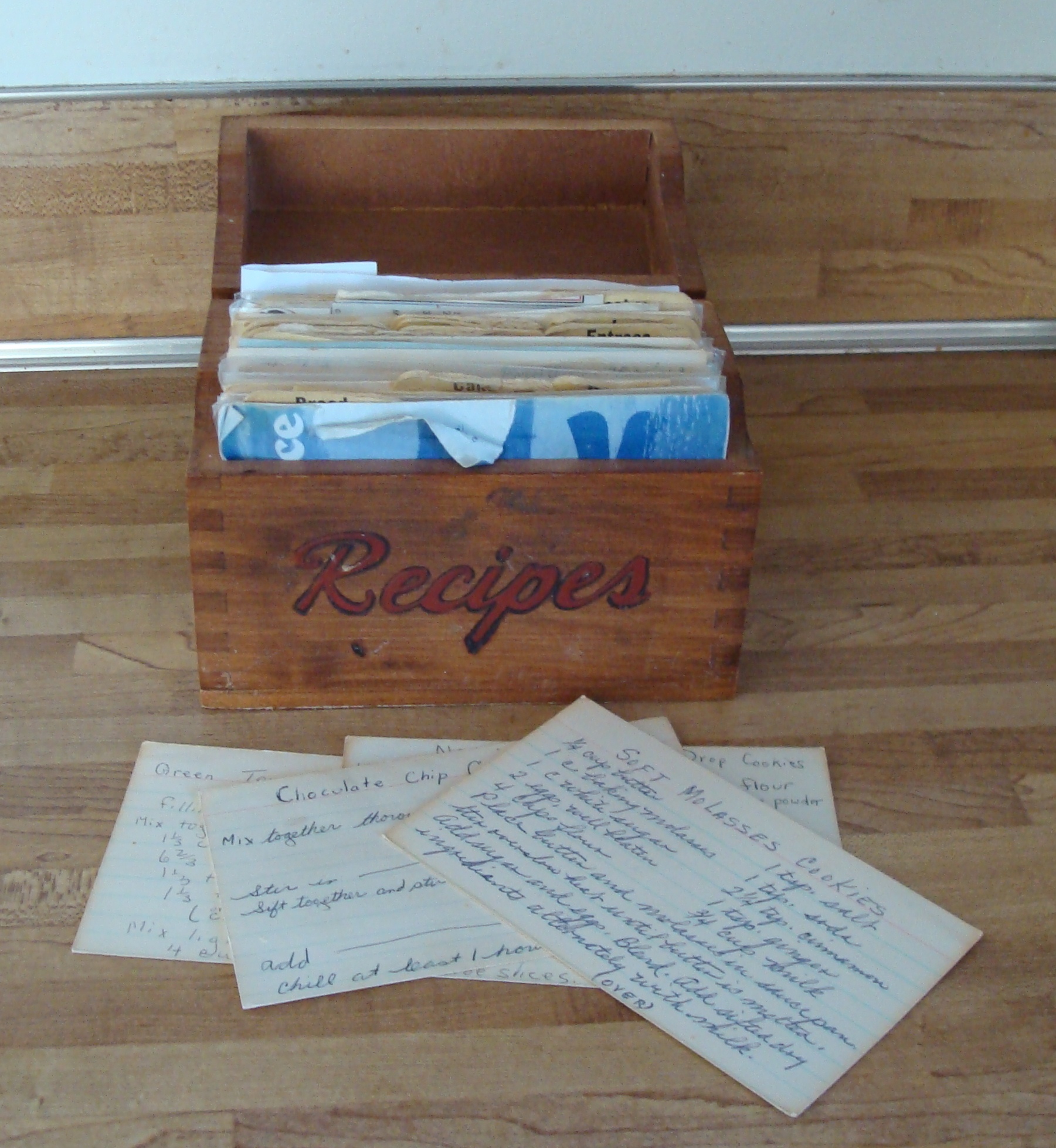
When I began working on this blog I knew that cars, airplanes, and telephones were all relatively new technology in 1912–I was amazed to discover that recipe boxes and cards were also a new idea.
I got my recipe box when I got married many years ago--and many of the recipes in it are old family recipes that were copied at that time. Who would have guessed that I was compiling the recipes in the modern way?
Here are some excerpts from an article called “A Housekeeper’s Filing Cook Book A Novel Way to Save Recipes and Household Hints in a Systemic and Convenient Form,” that was in the March 1912 issue of National Food Magazine:
Every year housekeeping becomes more of a science. Shiftless methods and poor tools give place to system and efficient utensils, so that housekeeping is taking the rightful place by the side of other well-managed businesses.
One of the greatest aids to system in business offices is the filing drawer, or cabinet. A clever housewife has adapted the filing idea to her own needs and developed a filing cook book which she and several others have been using successfully for some time past.
Cards measuring 5×8 were bought at a stationer’s and fitted into a pasteboard drawer such as can be bought to fit the cards. The drawer holds over two hundred cards. Any size card may be used but the above has been found the most convenient.
The cards are grouped under sub-heads is alphabetical order, as Bread, Cake, Desserts, Meats, Pastry, Oysters, Salads, Specials, Vegetables, etc.
On these cards are written or typed, under their proper sub-head, choice recipes from friends, the favorite dishes of the hostess or more particularly, recipes taken from culinary magazines such as the National Food Magazine.
The “old way,” to save a recipe was to paste it anywhere on any page in an old note-book which became covered with flour and mayonnaise whenever used. Or the recipe was just “tucked away” among the leaves of the real cook book—and never found.
Here instead of writing down your friend’s recipe for her best sponge cake or pasting some of the fine recipes you have read in the National Food Magazine into a messy book, in a disorderly fashion—you write the recipe on a card, or paste the clipping on a card and slip it into its proper place . . .
16-year-old Helena Muffly wrote exactly 100 years ago today:
Tuesday, January 16, 1912: There is nothing much to write about for today. Things go on as usual.
Her middle-aged granddaughter’s comments 100 years later:
Since Grandma wrote little a hundred years ago today, I’m going to give you the recipe for an old winter staple–fried potatoes. Potatoes and other locally-grown vegetables that could be stored for many months were an important part of the winter diet.
Old-fashioned Fried Potatoes
1/4 cup lard
approximately 6 medium potatoes, peeled and sliced
salt
Melt lard in large heavy skillet (preferably cast iron) using medium heat. When the lard is hot add the sliced potatoes. Generously sprinkle with salt. Turn potatoes with a spatula and again sprinkle with salt. Continue cooking (and occasionally turning) until potatoes are tender, with a crisped, lightly browned coating.
Old-fashioned fried potatoes cooked in a cast iron skillet are one of my favorite foods. They brown beautifully and are very crisp. And, the lard really enhances the subtle flavor of the potatoes.
16-year-old Helena Muffly wrote exactly 100 years ago today:
Sunday, January 7, 1912: Walked to Sunday School this morning though the new fallen snow. I wore my old hat because I didn’t want to get snow on my new one. Miss Carrie was over this afternoon, and we had popcorn by the way of refreshments. By so doing I broke the third commandment for I was the one who did the popping.
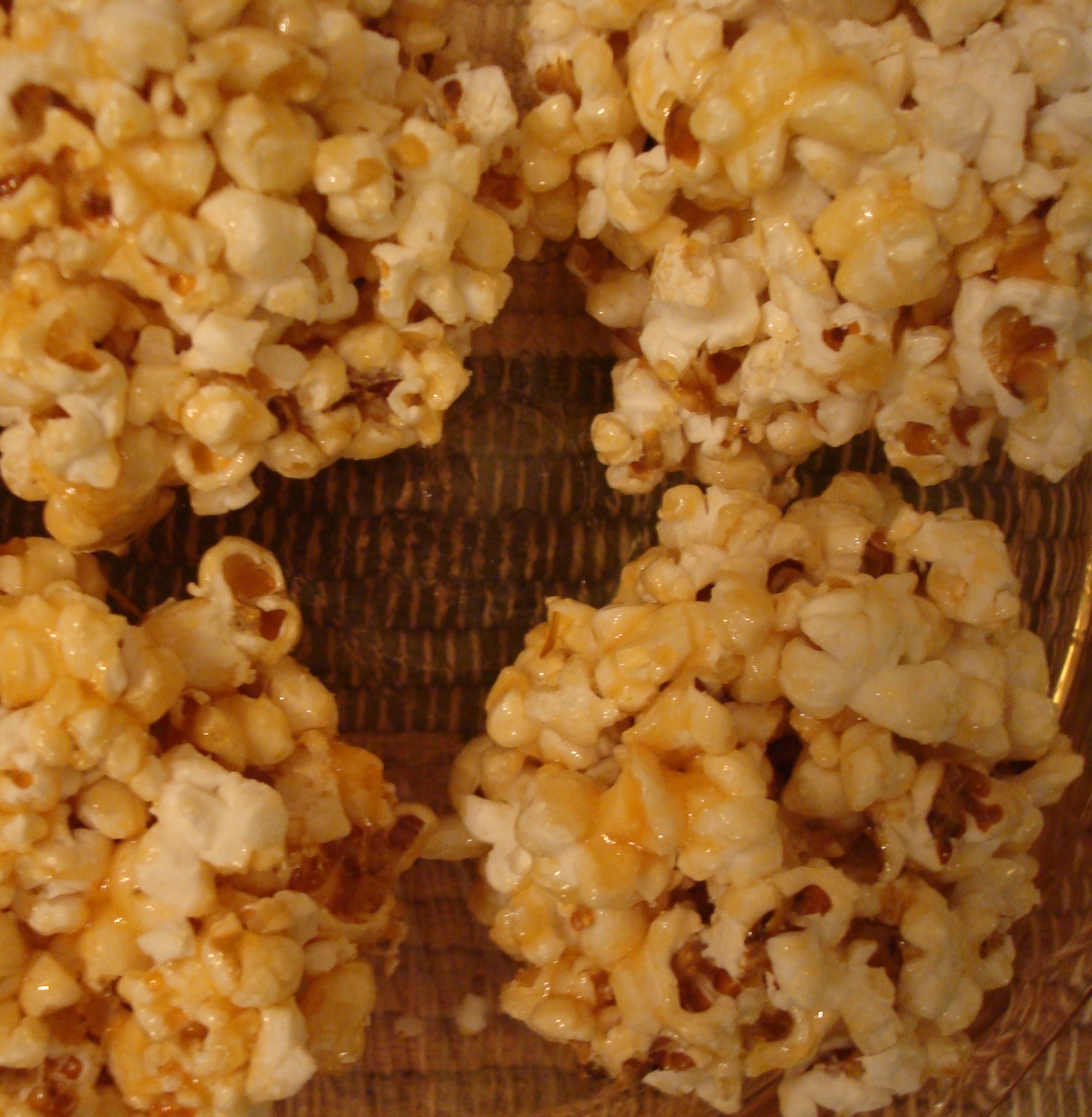
Caramel Corn (Sugared Popcorn)
Her middle-aged granddaughter’s comments 100 years later:
Miss Carrie was Grandmas’ friend Carrie Stout. She lived on a nearby farm. I believe that the third commandment refers to “Remember the Sabbath day to keep it holy.” Today that is generally the fourth commandment, but I believe that some denominations number the commandments differently.
The popcorn that Grandma popped was raised on the Muffly farm. In May 1911 she wrote about planting popcorn. In the fall it would have been harvested and hung to dry. When the corn had just the right amount of moisture for popping, the family would have shelled it and stored it in a glass jar until they were ready to pop it.
Here’s a great hundred-year-old recipe for Caramel Corn that was in the 1912 Boston Cooking School Cook Book by Fannie Farmer. (It is called Sugared Popcorn in the book.)
Sugared Popcorn (Caramel Corn)
2 quarts popped corn
2 tablespoons butter
2 cups brown sugar
1/2 cup water
Put butter in saucepan, and when melted add sugar and water. Bring to boiling point, and let boil for sixteen minutes. Pour over corn, and stir until every kernel is well coated with sugar.
I salted the popped corn before mixing with the syrup. This recipe is a keeper. The Caramel Corn turned out perfectly.