Old-fashioned Combination Cabbage Salad (Cabbage and Celery Gelatin)

Combination Cabbage Salad in bowl

I can remember eating gelatin salads that contained vegetables when I was a child, so was intrigued when I came across a hundred-year-old recipe for Combination Cabbage Salad. The salad actually is a gelatin salad that contains shredded cabbage, chopped celery, and chipped pimento. It is made using unflavored gelatin. The recipe only called for 1/2 cup of sugar, while calling for 1 cup vinegar and the juice of a lemon. The result was a salad that was very tart and tangy.

The recipe suggests serving the salad with whipped cream that has a little salad dressing stirred into it. I used Ceasar dressing. This added to the overall tartness of the salad.Combination Cabbage Salad on plate

This salad is very old-fashioned–and definitely very different from modern sweet, fruit-flavored, gelatin salads, but I enjoyed it. The salad was refreshingly tart on a hot summer day – though if I made it again I think that I’d skip the whipped cream topping. The whipped cream and salad dressing mixture amplified the sourness of this dish, and overwhelmed the other ingredients.

Here’s the original recipe:

Recipe for Combination Cabbage Salad
Source: Larkin Housewives’ Cook Book (1923)

I skipped the suggestion to mold this gelatin salad in teacups, and went right to the suggestion to put it in a pan – though I actually used a square, flat baking dish.

This recipe required lots of interpretation on my part. I have no idea how much  one-half package of Larkin Gelatin would be, so I added up all the liquids and estimated that this recipe calls for approximately 5 2/3 cups of liquid. My rule of thumb is to use one packet of unflavored gelatin for each 2 cups of liquid, so I used 3 packets. That worked well.

I don’t know how much 1/4 can of pimientos would be. I used 2 tablespoons of chopped pimento.

I put a little salad dressing in the whipped cream. I’m curious about what type of dressing the recipe author used. I used Ceasar dressing because I had it on hand – though that’s probably not very authentic when making a hundred-year-old recipe.  If I made this recipe again, I skip the salad dressing (and probably would also skip the whipped cream).

Here’s the recipe updated for modern cooks:

Combination Cabbage Salad (Cabbage and Celery Gelatin)

  • Servings: 7 - 9
  • Difficulty: moderate
  • Print

3  packets (0.25 ounce) unflavored gelatin

1/2 cup water + 4 cups water

1/2 cup sugar

1 teaspoon salt

1 cup vinegar

juice of 1 lemon

2 cups cabbage, shredded

1 1/2 cups celery, chopped

2 tablespoons pimento, chopped

1/2 cup heavy whipping cream (if desired)

2 teaspoons salad dressing (if desired) – I used Ceasar salad dressing, though think that a sweeter dressing might be better.)

Put 1/2 cup cold water in a bowl. Sprinkle the gelatin on top of the water, and let soak for 5 minutes.

Put 4 cups water, the sugar, and salt in a saucepan. Bring to a boil.  Add the gelatin that has been soaked in water. Bring back to a boil while stirring constantly until the gelatin is dissolved. Remove from heat and stir in the vinegar and  lemon juice. If needed, strain. Cool slightly, then stir in the cabbage, celery, and pimento. Mold or pour into a dish or bowl. (Use a fairly flat dish, if you plan to cut the gelatin into squares to serve. A 9″ X 9″ baking dish would work well.)  Refrigerate until firm.

If desired, serve with whipped cream. Whip the cream until peaks form, then stir the salad dressing into the whipped cream. Put a dollop of the whipped cream on top of each serving.

http://www.ahundredyearsago.com

“We Eat What We Can. . . “

Quote about canning
General Welfare Guild Cook Book (Compiled by The Beaver Valley General Hospital, New Brighton, Pennsylvania, 1923)

I have an early apple tree that is just loaded with apples this year. There’s no way my husband and I can eat all the apples, so last week-end I canned 14 quarts of apples. When I was flipping through a hundred-year-old cookbook for ideas for this post, this quote at the beginning of the chapter with jelly and preserves recipes really resonated with me. Maybe I’m the exception, but when it comes to canning for me, some things haven’t changed over the last hundred years.

Hundred-Year-Old String Bean Recipe


string beans

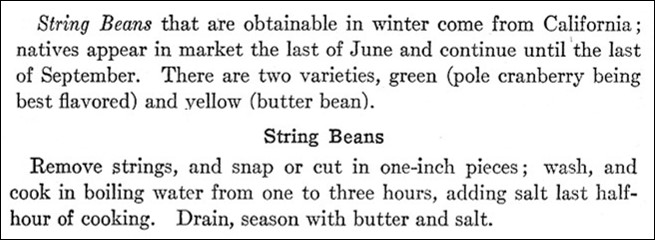
Sometimes the most basic ways of preparing a simple food changes over the course of a hundred years. String beans are a good example. Here’s what it says in a hundred-year-old cookbook:

Recipe for string beans
Source: Boston Cooking-School Cook Book (1923)

The old recipe calls for boiling the string beans 1-3 hours!! And, for breaking or cutting them into 1-inch pieces. Today, many people leave them whole. (I normally break string beans into 2 -3 inch pieces, but if preparing a meal for my children or grandchildren I would definitely leave them whole.) The old recipe also calls for removing the strings from the beans – which many string beans no longer have. (I guess that technically they may not be string beans.)

When I made the recipe I did cut the string beans into 1-inch pieces, but I couldn’t bring myself to cook the beans for 1-3 hours, and in the updated recipe say to boil them for 10-15 minutes – though I did provide information about cooking longer, if desired.

Here’s the recipe updated for modern cooks:

String Beans

  • Servings: 2 - 3
  • Difficulty: easy
  • Print

1 pound string beans

water

1 teaspoon salt

1 tablespoon butter

Trim the ends of the beans, and then cut or break the beans into one-inch pieces. Wash and put in a saucepan. Cover with water; add salt.  Bring to a boil using high heat; then reduce heat and cook 10-15 minutes. Drain, then add butter. Let the butter melt, stir gently, then serve. (If desired, cook longer for a softer consistency.  This will result in string beans that are prepared more similarly to how it was done a hundred years ago. A 1923 cookbook calls for cooking the beans 1-3 hours.)

http://www.ahundredyearsago.com

Lettuce with Cucumber Sauce

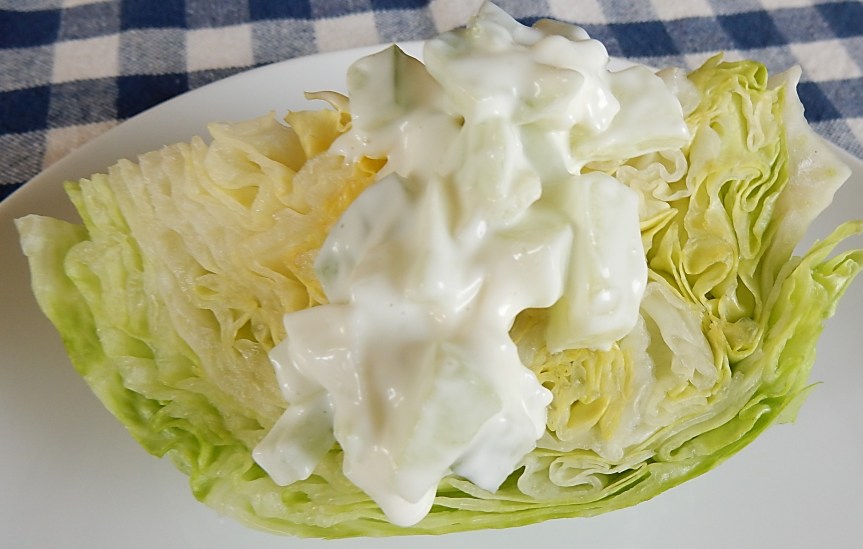
Lettuce with Cucumber Sauce on plate

I recently came across a recipe in a hundred-year-old cookbook for Lettuce with Cucumber Sauce. It is a tasty Wedge Salad recipe with a mayonnaise dressing that contains chopped cucumber, onion, and green pepper.

Lettuce with Cucumber Sauce is an intriguing combination of new and old. Wedge Salad is currently a somewhat trendy way of serving lettuce (and I actually was surprised to see a Wedge Salad-type recipe  in the old cookbook), while the mayonnaise with chopped vegetables dressing seemed old-fashioned.

Here’s the original recipe:

Recipe for Lettuce with Cucumber Sauce
Source: The Calorie Cook Book by Mary Dickerson Dohahey (1923)

Here’s the recipe updated for modern cooks:

Lettuce with Cucumber Sauce

  • Servings: 6 servings
  • Difficulty: easy
  • Print

2 small heads iceberg lettuce or 1 large head iceberg lettuce

1 slice onion, finely chopped

1/2 large cucumber, peeled and then finely chopped

1/3 green pepper, finely chopped

3 tablespoons mayonnaise

Cut lettuce into wedges. If the head is small cut into thirds; if large into sixths. Set aside.

In the meantime, put the onion, cucumber, pepper, and mayonnaise into a small bowl. Mix until the vegetables are evenly distributed in the mayonnaise.

To serve: Put each wedge on serving plate. Spoon 1/6th of the mayonnaise and vegetable sauce over each wedge.

http://www.ahundredyearsago.com

Hundred-Year-Old Tips on the Care of Vegetables

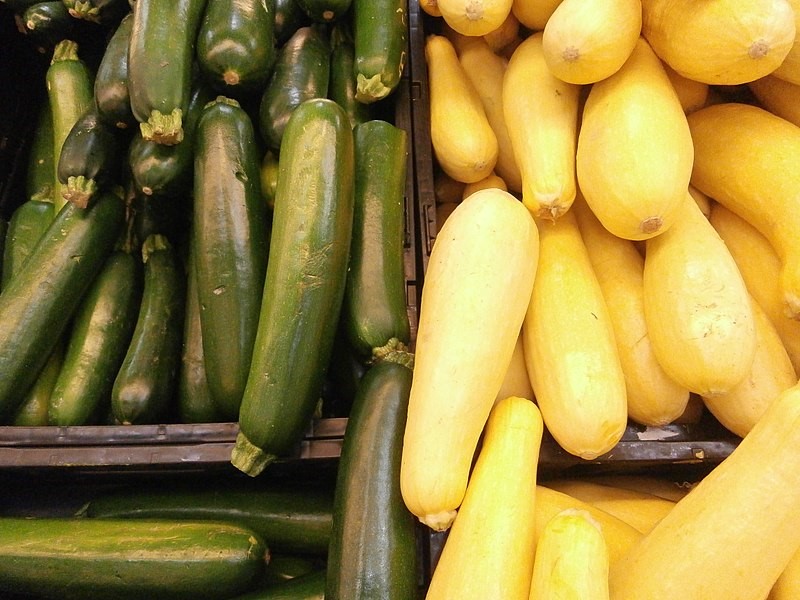
summer squashHere’s advice in a hundred-year-old cookbook on the care of vegetables:
Care of Vegetables

Summer vegetables should be cooked as soon after gathering as possible; in case they must be kept, spread on bottom of cool, dry, well-ventilated cellar, or place in ice-box. Lettuce may be best kept by sprinkling with cold water and placing in a tin pan closely covered. Wilted vegetables may be freshened by allowing to stand in cold water. Vegetables which contain sugar lose some of their sweetness by standing; corn and peas are more quickly affected than others.

Winter vegetables should be kept in a cold, dry place. Beets, carrots, turnips, potatoes, etc., should be put in barrels or piled in bins, to exclude as much air as possible. Squash should be spread, and needs careful watching; when dark spots appear, cook at once. . .

A few years ago native vegetables were alone sold; but now our markets are largely supplied from the Southern States and California, thus allowing us fresh vegetables throughout the year.

The Boston Cooking-School Cook Book (1923)

Wow – it’s amazing that already a hundred years ago that the transportation system in the U.S. was good enough to allow vegetables to routinely be shipped across the country.

Old-fashioned Pineapple and Lemonade

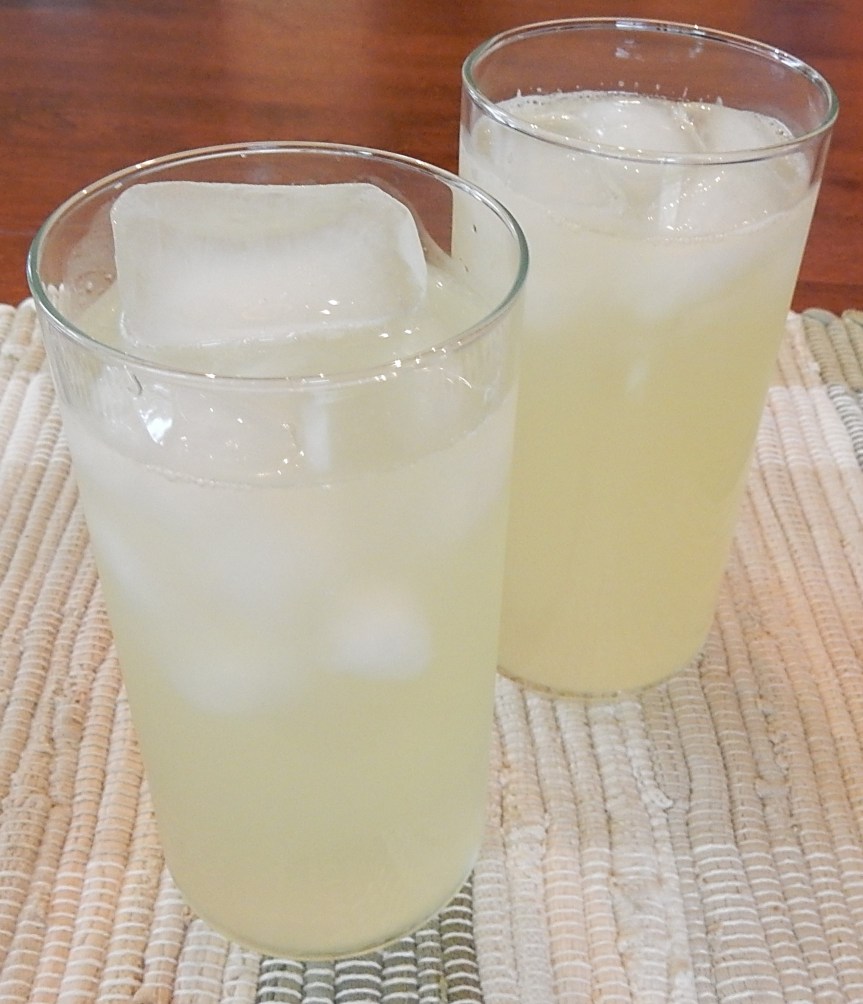
2 glasses Pineapple & Lemonade

Old-fashioned lemonade is refreshing on a hot summer day, but it can get a little boring, so when I saw a recipe in a hundred-year-old cookbook for Pineapple and Lemonade, I decided to give it a try. The Pineapple and Lemonade was a little sweeter than the typical lemonade, and the pineapple flavor predominated over the lemon, but it was tasty.

Here’s the original recipe:

Recipe for Pineapple and Lemonade
Source: Order of the Eastern Star Relief Fund Cook Book compiled by the Michigan Grand Chapter (1923)

This recipe was in an Order of the Eastern Star organizational cookbook. The Order of the Eastern Star is affiliated with the masons. The recipe author was John Hamill. I think this is the first male recipe author that I’ve seen in a hundred-year-old cookbook. The initials after his name (R.W.G.T.) mean that he was the Right Worthy Grand Templar or Right Worthy Grand Treasurer.

Here’s the recipe updated for modern cooks:

Pineapple and Lemonade

  • Servings: 3-4
  • Difficulty: easy
  • Print

2 cups water

1 cup sugar

1 20-ounce can of crushed pineapple

juice of 3 lemons

4 cups mixture of ice and water

Put water and sugar in a saucepan; bring to a boil using medium heat while stirring occasionally. Remove from heat. Stir in the contents of the can of pineapple and the lemon juice, then strain. Add the ice and water mixture, and serve.

http://www.ahundredyearsago.com