Hundred-Year-Old Tips for Frying Crullers, Doughnuts, and Fritters

Frying Doughnuts

Time to make doughnuts. It will be Fasnacht Day next week. Here’s what I wrote back in 2022:

When I was a child growing up in Pennsylvania, Fasnacht Day (the day before Ash Wednesday) was always a day when we ate doughnuts. Fasnacht Day was supposed to be a day to eat indulgent foods before the beginning of Lent – and doughnuts with their sugar and fat were considered the ultimate in indulgent foods. It is also known as Fat Tuesday or Shrove Tuesday.

A Hundred Years Ago, February 27, 2022

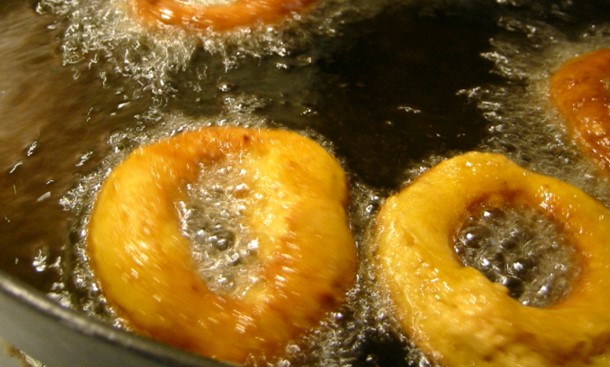
Sometimes it’s tricky to make good doughnuts. Here are a few tips in a hundred-year-old cookbook for frying crullers, doughnuts, and fritters:

CRULLERS, DOUGHNUTS, AND FRITTERS

Facts to Remember

The products of deep fat frying have a reputation for indigestibility which is deserved only when there is something wrong with the procedure. One difficulty is that under certain conditions food absorb more fat in frying than can be easily taken care of by the digestion, and another, that at a certain temperature, differing with each kind of fat, a change takes place which develops an indigestible product called acreolin. This is recognizable by its acrid odor. Fat should never if used after it has reach this point.

The temperature of the fat is of upmost importance in frying. If it is not hot enough the food absorbs fat; if too hot the outside browns before the inner part is thoroughly cooked. A thermometer is essential for the inexperienced cook in controlling the temperature, and it is advisable in any case.

Next to the frying temperature, experience in handling the dough is the most important part of doughnut making.

Dough which has been chilled can be more easily handled and absorbs less fat than the same dough at room temperature. In putting doughnuts into the fat, have the part which has been next to the moulding board uppermost.

Only a few doughnuts or fritters should be fried at one time, because the cold dough cools the fat rapidly.

Fried foods should be drained on absorbent paper.

There is no marked difference in the amount of absorption power for the various fats and oils in common use.

Modern Priscilla Cook Book: One Thousand Home Tested Recipes (1924)
Old-Fashioned Canned Peach Pudding

Canned Peach Pudding

I was recently browsing through a hundred-year-old magazine, and came across a recipe for Canned Peach Pudding. Back then fresh fruit was scarce during the winter and early spring, so canned fruit was very popular. At the time, canned fruit (either home or commercially canned) was considered a modern option.

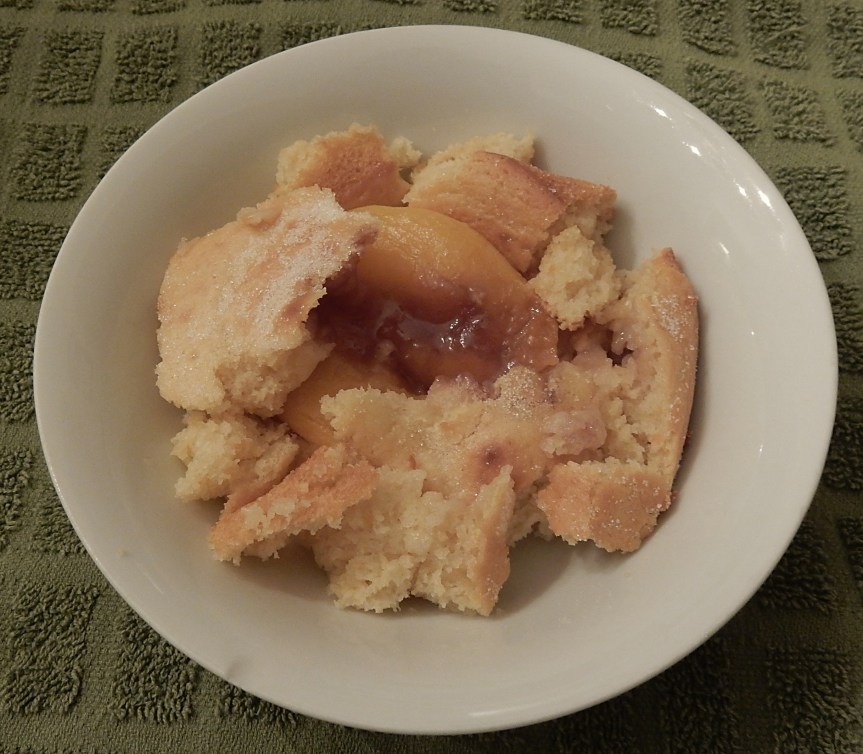
The Canned Peach Pudding was delightful. The pudding batter included pureed peaches, and whole peach halves (filled with a red jelly or strawberry jam) are placed in the batter and then additional batter is poured on top.

Here’s the original recipe:

Recipe for Canned Peach Pudding
Source: American Cookery (April, 1924)

When I put the baked pudding with the sugar on top under the broiler, the sugar did not brown, but the top of the pudding did begin to brown.

Here’s the recipe updated for modern cooks:

Canned Peach Pudding

  • Servings: 6
  • Difficulty: moderate
  • Print

12 canned peach halves (approximately 1 29 oz. can + 1 15 oz. can or 1 quart home canned peaches)

1 egg

1/2 cup milk

1/2 cup sugar

1 1/2 cups flour

3 teaspoons baking powder

1/4 teaspoons salt

2 tablespoons butter, melted

6 teaspoons red jelly or strawberry jam (I used current jelly.)

granulated sugar

Preheat oven to 350° F. Puree 6 of the peach halves. In a mixing bowl combine the peach puree, milk, sugar, flour, baking powder, salt, and melted butter. Put half of the batter into an 8″ X 8″ baking dish. Arrange 6 peach halves, hollow side up, on top of the batter. Fill the center of each peach half with 1 teaspoon of red jelly or strawberry jam. Pour the remaining better on top. Bake for 40-50 minutes or until a wooden pick inserted into the center comes out clean. Remove from oven and lightly sprinkle with granulated sugar. Put under the broiler until the top of the baked pudding is lightly browned. Remove from oven.

http://www.ahundredyearsago.com

Old-Fashioned Chocolate Waffles

Chocolate Waffles

Week-end mornings are the perfect time to make breakfast foods that are just a little special, so when I saw a recipe for Chocolate Waffles in a hundred-year-old cookbook, I decided to give them a try.

The Chocolate Waffles were crispy on the outside and tender in the middle. They contained just the right amount of chocolate. The waffles were not very sweet, but when syrup or other sweet topping is added it was just right.

Here’s the original recipe:

Recipe for Chocolate Waffles
Source: Modern Priscilla Cook Book: One Thousand Home Tested Recipes (1924)

I gradually added the hot water to the cocoa, and stirred until smooth. This resulted in a very thick paste. I could not figure out why the old recipe called for then heating this thick cocoa and water mixture to boiling, so I skipped that step.

Chocolate Waffles probably are lovely when served with chocolate sauce, marshmallow cream, or vanilla ice cream, but I just served them with maple syrup and they were delightful.

Here’s the recipe updated for modern cooks:

Chocolate Waffles

  • Servings: 4-6
  • Difficulty: moderate
  • Print

1/2 cup cocoa

1/2 cup water

1 cup milk

2 eggs

2 cups flour

4 teaspoons baking powder

1/2 teaspoon salt

1/4 cup sugar

2 tablespoons shortening, melted

1/2 teaspoon vanilla

Put the cocoa in a mixing bowl, and gradually add the hot water while stirring constantly. Stir until smooth. Add remaining ingredients. Beat until smooth. Ladle batter onto a hot waffle iron and cook, following the waffle iron directions.

http://www.ahundredyearsago.com

Old-Fashioned Potato Biscuits

Potato Biscuits

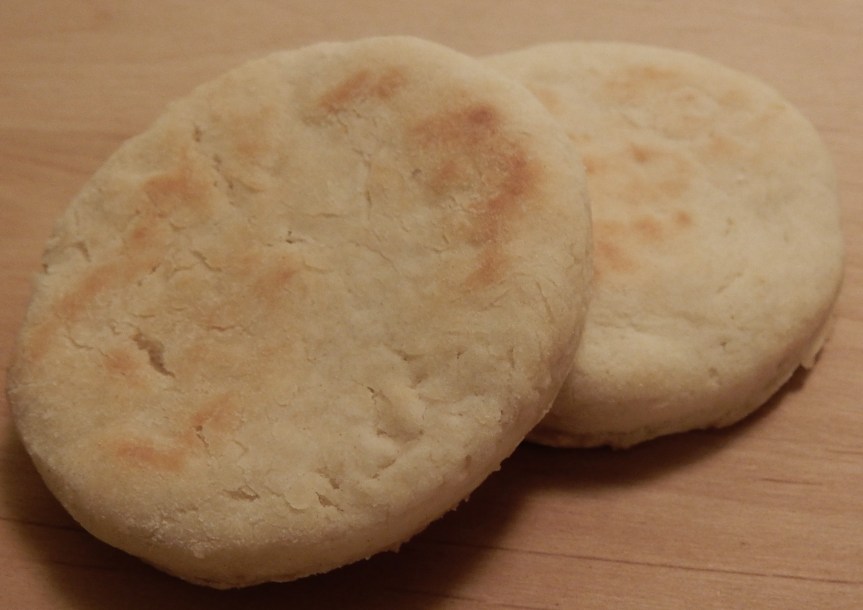
I recently came across a hundred-year-old recipe for Potato Biscuits, and decided to give it a try. The biscuits were soft and tender. This recipe is a great way to use up leftover mashed potatoes.

Here’s the original recipe:

Recipe for Potato Biscuits
Source: The Whys of Cooking by Janet McKenzie Hill (1924)

This recipe calls for using the Crisco brand of shortening. That’s because the recipe was published in a 1924 promotional cookbook for Crisco.  When I updated the recipe, I changed it to just “shortening” since any brand would work. I used all-purpose flour rather than pastry flour when I made this recipe, and it worked fine.

Here’s the recipe updated for modern cooks:

Potato Biscuits

  • Servings: approximately 10 biscuits
  • Difficulty: moderate
  • Print

1 1/2 cups all-purpose flour

3 teaspoons baking powder

1/2 teaspoon salt

1 cup mashed potatoes

1/4 cup  shortening

approximately 1/3 cup milk, as needed

Preheat oven to 450° F. Mix the flour, baking powder, and salt together; stir in the mashed potatoes. Then cut (work) in the shortening and butter using fingers, pastry blender, or food processor.  Gradually add the milk while mixing with a knife or spoon.  Continue adding liquid until there is a soft dough. The amount of milk needed varies depending upon the type of flour. On a floured board, pat or roll the dough until 1/2 -inch thick. Cut with a round biscuit cutter. (I used a drinking glass as the cutter.) Place on a baking sheet, and bake for 15 – 20 minutes, or until lightly browned. Serve warm.

http://www.ahundredyearsago.com

1924 Perspectives on Gluten

bread
Source: The Whys of Cooking by Janet McKenzie Hill (1924)

Today we tend to think of gluten in a negative way. But here is what it said about gluten in a 1924 cookbook:

BREADS

. . . The protein in flour is in the form of gluten, and while elasticity is a property of all proteins, the gluten of wheat possesses this property in marked degree. This strong elastic gluten makes a good framework to retain the air and carbon dioxide, and renders wheat the ideal grain for bread making. The protein in oats and corn are deficient in this property and when used in bread making are combined with wheat.

Wheat and flour vary greatly in the quantity of gluten present; even the same variety of wheat will vary from season to season. Also, in connection with the kind of wheat, the time of planting affects the quantity and quality of the gluten. Spring wheat sown in the spring and harvested the same season contains more protein and, consequently, more gluten than winter wheat sown in the fall and harvested in the early part of the summer. Flour from spring wheat, rich in gluten, is well adapted to bread making and is known as bread flour. It is creamy in color, granular to the touch and passes through a sieve easily; a slight jar sends it through. Flour from winter wheat is whiter in color and soft to the touch; if a quantity be crushed in the hand it will retain the impress of the lines in the hand. It tastes sweet. It is adapted to the making of starch. It is adapted to the making of cake and pastry articles; foods in which delicacy rather than strength is sought. Such flour is known as pastry flour.

Source: The Whys of Cooking by Janet McKenzie Hill (1924)