Worry and Mental Attitude

19-year-old Helena Muffly wrote exactly 100 years ago today: 

Wednesday, November 11, 1914: <<no entry>>

A recent rainy day in McEwensville

Her middle-aged granddaughter’s comments 100 years later:

Grandma –

Are you okay? You were so sad three days ago when your “third romance ended in tragedy.” I’m concerned about you now. How are you dealing with your heartache?

A hundred years ago, people thought about emotions a little differently than we do now. Here some quotes from a hundred-year-old book:

Worry is a type of fear. It is a futile regret over past mistakes and the miserable forecasting of the future.

As no one’s future can be clear throughout, there is never wanting the matter of anxiety to a mind susceptible of this state.

And, not only the imagination, but the intellect, the emotions, and the will have or may have a powerful influence over the sensations and organic functions.

Mental attitude refers not to the will or the emotions, but to the mind in its entirety. The trend of a woman’s thoughts, the use she makes of her intellect, the strength of the volition, the sense of responsibility, and the objects of her life are all questions that have a distinct bearing upon the bodily functions and the health of the individual.

Personal Hygiene and Physical Training for Women (1911) by Anna Galbraith

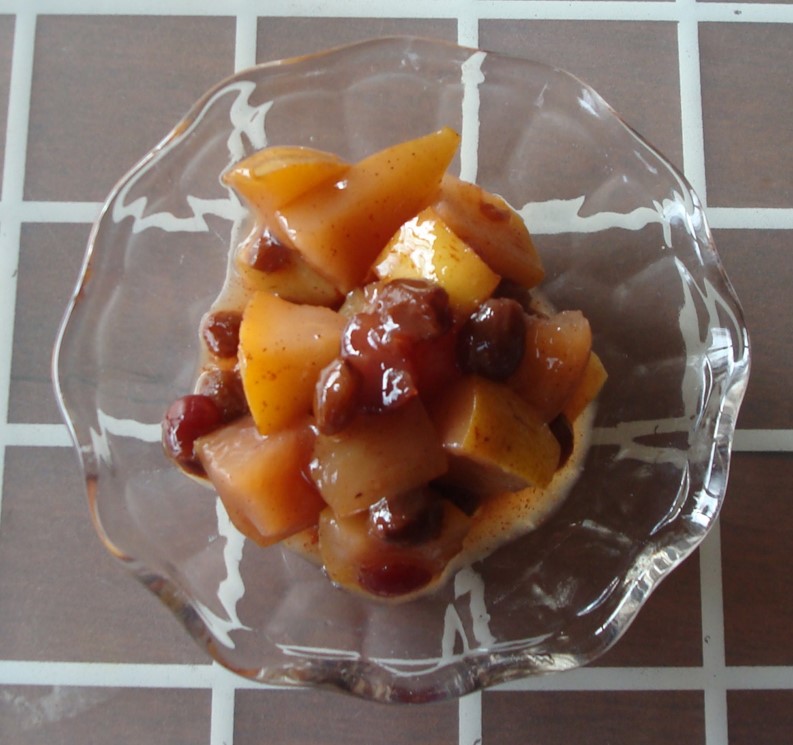
Old-fashioned Fall Fruit Compote Recipe

19-year-old Helena Muffly wrote exactly 100 years ago today: 

Tuesday, November 10, 1914:  <<no entry>>Fall fuirt compote 2

Her middle-aged granddaughter’s comments 100 years later:

Since Grandma didn’t write anything a hundred years ago today, I t thought you might enjoy an old compote recipe that uses Fall fruits.

Old-Fashioned Fall Fruit Compote

3 pears

3 apples

3/4 cup raisins

1 1/2 cup cider

1/2 cup water

1/3 cup sugar

1 teaspoon cinnamon

1/4 teaspoon nutmeg

2 tablespoons cornstarch

Core pears and apples (but do not peel); then cut into 1-inch cubes. Combine cubed pears and apples, raisins, cider, water,  cinnamon, nutmeg, and sugar in large saucepan. Bring to a boil using medium heat. Reduce heat and cook for another 10-12 minutes. Remove from heat; drain using a colander, saving save the liquid. Combine the reserved liquid with the cornstarch; and return to saucepan. Using medium heat, reheat while stirring constantly until the liquid thickens. Remove from heat, and combine with the cooked fruit. Cool and serve.

Makes 4-5 servings

The Old Cow Died

19-year-old Helena Muffly wrote exactly 100 years ago today: 

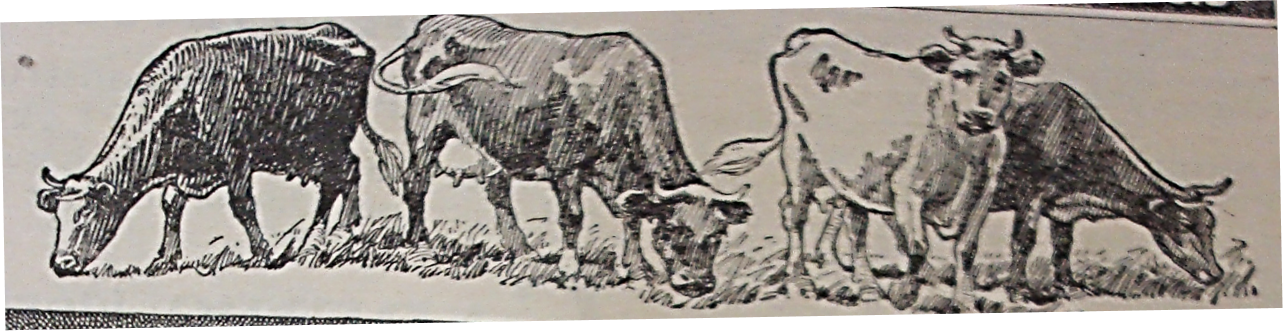
Monday, November 9, 1914:  The same old tune, the old cow died. That reminds me of Pa’s increase, namely cows. They arrived today.

Source: Kimball's Dairy Farmer Magazine (1911)
Source: Kimball’s Dairy Farmer Magazine (1911)

Her middle-aged granddaughter’s comments 100 years later:

Hmm. . . what did Grandma mean by the old cow died?

My first thought: Did a cow on the farm die? . . .Or was Grandma thinking about the end of her romance, and the phrase was an idiom that meant something else?

So I googled it, and discovered that there actually is a song called The Old Cow Died. According to Information Please, the words are:

The Old Cow Died

There was an old man,

and he had an old cow,

But he had no fodder to give her.

So he took up his fiddle and played her the tune:

`Consider, good cow, consider.

This isn’t the time for the grass to grow.

Consider, good cow, consider.’

You can also listen to it (with slightly different words) at: Smithsonian Folkways (click on “play sample”).

I’m still left wondering why the song popped into Grandma’s head. Maybe it was because her father bought some new cows. . . or maybe a somewhat melancholy song was just the right song to hum as she worked her way through the ending of a relationship.

Third Romance Ended in Tragedy

19-year-old Helena Muffly wrote exactly 100 years ago today: 

Sunday, November 8, 1914:  My thoughts are in some kinds of a tangled maze, for it is now November the eighth, and I have decided to begin on a new month at last. Perhaps this may be accounted for in the fact that my third romance has ended in a tragedy to me any way. I have given up all hope for none is left for poor me. No one knows, no one suspects that deep down in my heart there lies something which I would dare tell no one.

Blanche and Margaret B. were down this afternoon. Took their picture. Wonder how it will be for it was raining at the time.

DSC06502

Her middle-aged granddaughter’s comments 100 years later:

Oh Grandma, I’m so sorry. What happened?

I want to ask why you didn’t tell us about your romance via diary entries during the past few months. But, I know you’re feeling too bad to answer. I’m sure you had your reasons.

Blanche and Margaret Bryson were friends of Grandma’s. For more about them see these previous posts:

Blanche and Margaret Bryson

My Memories of Blanche Bryson Kramm

Milford, Margaret, Bertlet, and Blanche Bryson
Milford, Margaret, Bertlet, and Blanche Bryson (Source of Photo: Jane Shuman)

Staying Healthy to 80

19-year-old Helena Muffly wrote exactly 100 years ago today: 

Saturday, November 7, 1914:  <<no entry>>

DSC06509

Her middle-aged granddaughter’s comments 100 years later:

Another silent day for the dairy, but I came across an article in the March, 1914 issue of Ladies Home Journal by Charles Eliot, the retired president, of Harvard that I thought you might enjoy. He had lots of advice about how to stay healthy. Here’s a few quotes:


How I Have Kept My Health and Working Power Till 80

My experience does not furnish short, explicit prescription for keeping health and working power til eighty years of age, probably because many and various causes have contributed to the result; but I feel safe in affirming that anyone who desires to have a like experience will do well to eat moderately, to sleep at least seven hours a night with windows open, to take regular exercise in the open air every day, to use no stimulants, to enjoy all the natural delights without excess in any, and to keep under all circumstances as serene a spirit as his nature permits. This is the way to win from life the maximum of real joy and satisfaction.

From the time I became a tutor, at the age of twenty onward, I think that I have done per day an unusual amount of mental work, much of which, however, has had a routine or repetitive character, as in all teaching and administration.

That I have borne much labor and responsibility without ever suffering even a temporary breakdown seems to be to be due—after the inheritance of a sound constitution—to my possessing a good muscular and nervous system, preserved by open-air exercise and the habit of moderate eating.

One result of the balance between my bodily and mental powers has been that I have always been able to sleep well at night, and since I was seventy, briefly in the daytime also.

I am aware of two mental or moral conditions which have contributed to my safe endurance of physical and mental strains. The first is the result of a combination of this temperament with a deliberate practices of avoiding alike anticipation of disappointment and vain regrets. When necessarily involved in contests or critical undertakings I tied first to do my best in the actual struggle, and then not to concern myself too much about the issue.

When blocked or defeated in an enterprise I had much at heart I always turned immediately to another field of work where progress looked possible, biding my time for a change to resume the obstructed road. An administrator can thus avoid waste of energy and a chronic state of disappointment and worry.

My own experience has led me to think that strenuous work, done with interest and zeal, usually promotes health and vigor, and is seldom injurious if kept within the limits set by bodily fatigue.

News Reel with War Scenes Shown at Theater

19-year-old Helena Muffly wrote exactly 100 years ago today: 

Friday, November 6, 1914:  <<no entry>>

Source: Milton Evening Standard (September 23, 1914)

Her middle-aged granddaughter’s comments 100 years later:

Since Grandma didn’t write anything a hundred years ago today, I thought that you might enjoy an article in Grandma’s local paper, the Milton Evening Standard, about the showing of a news reel about the War at the local theater.

(I should have posted this back in September. Somehow I lost track of it then, but decided that is still worth posting—even if it is a little late.)

Wait Two Days Before Complaining About a Late Magazine

19-year-old Helena Muffly wrote exactly 100 years ago today: 

Thursday, November 5, 1914:  <<no entry>>

Railroad tracks at Watsontown, PA
Railroad tracks at Watsontown

Her middle-aged granddaughter’s comments 100 years later:

Sigh—another day with no diary entry., but (smile) another day to go off on a tangent.

Are you indignant when a magazine doesn’t arrive in your mailbox on the anticipated date? . . . or is it par for the course?

Well, apparently the mail was so dependable a hundred years ago that people wrote to Ladies Home Journal to complain if their magazine was even one day late in arriving:

Concerning Late Delivery

There is a large part of the edition of The Ladies Home Journal that is not carried on regular mail trains but is shipped by the Government on freight trains. These copies are subject to the delays incident to that method of transportation.

Every copy sent to a subscriber is mailed by us at a time which should insure delivery on the twentieth of the month. Any delay in transportation is beyond our power to control as the Government selects its own methods of shipment regardless of the wishes of the publisher.

So if at any time your copy does not reach you on the twentieth of the month as it should do not write to us immediately, for the delay is probably not due to any fault of ours. Please wait for at least two days before complaining. The copy will probably be in your hands by that time.

Source: Ladies Home Journal (January, 1914)