Cows Escaped and Went to Neighbor’s Farm

19-year-old Helena Muffly wrote exactly 100 years ago today: 

Wednesday, November 18, 1914:  Today passed as other days. A few flakes flew this morning. Wish the snow would get down to business, for then I wouldn’t have to look after the cows. Today they went off to a neighbors and I had to walk after them.

Source: Kimball’s Dairy Farmer Magazine (August 1, 1911)

Her middle-aged granddaughter’s comments 100 years later:

Hmm—apparently the cows were still out in the pasture, but after it snows they will be confined to the barn. During past summers Grandma mentioned several times that she needed to watch the cows. For example, on August 26, 1911, she wrote:

Everything seemed to have gone wrong today. Hard to tell what the cause really is. I have to watch the cows, and I don’t like it but school will soon start and then that task will be ended.

And, on May 18, 1912 she wrote:

What a doleful calamity. I had to watch the cows this morning, I mean this afternoon. I’m afraid that this is only the beginning. They got into the wheat for me.

This is the first time Grandma mentioned watching cows in the Fall in the diary—and I think that it’s the first time that she mentioned it in 1914.

I remain clueless as to why the cows needed to be watched. It still seems like they should have been securely contained in a field fenced with barbed wire, but obviously they weren’t (or if there was a fence it wasn’t strong enough).

Went to an Entertainment with Sister

19-year-old Helena Muffly wrote exactly 100 years ago today: 

Tuesday, November 17, 1914:  Ruth and I went to Watsontown this evening to attend the second of the course of entertainments. Didn’t want to go very bad, but since she was willing to pay my way I went.

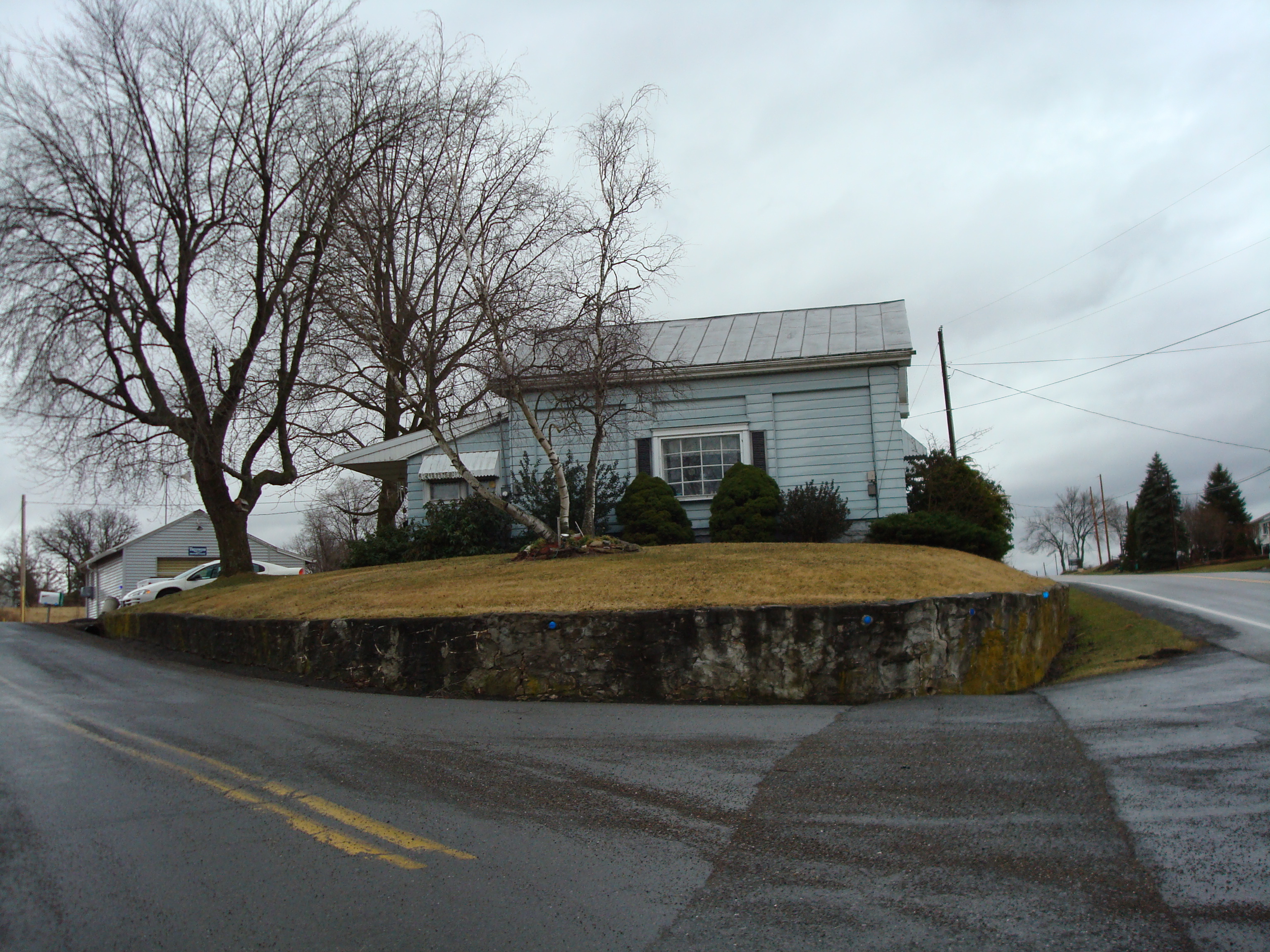
Recent photo of downtown Watsontown

Her middle-aged granddaughter’s comments 100 years later:

Grandma-

Wow! Ruth paid your admission fee!

I love it! Sometimes your sister was annoying, but she sure came through when you were feeling down about the end of your third romance.

What was the entertainment? . . . a play? . . . a speaker? . . a musical program?

Teaching Spelling a Hundred Years Ago

19-year-old Helena Muffly wrote exactly 100 years ago today: 

Sunday, November 15, 1914: <<no entry>>

School where Ruth taught. (The building is now a house.)

Her middle-aged granddaughter’s comments 100 years later:

Sometimes I try to imagine what the various members of the Muffly family were doing on a typical evening. Since Grandma’s sister Ruth was a teacher at a one-room school house, I picture her sitting at the kitchen table grading schoolwork and planning lessons.

Ruth Muffly
Ruth Muffly

Since Grandma didn’t write anything a hundred years ago today, I thought you might enjoy these 1914 suggestions about how to teach spelling.

Selection of Words

The words selected for spelling are words chosen from the children’s experience in school and out. They are words in his spoken vocabulary. Such words are the names of common things, as table, chair, stool, window, etc.; they are everyday words, as which, what, when, where, etc.; they are the words found in other lessons; they are the words having a common element, as lake, make, etc.

Motive is given to the spelling lesson when the child wants to tell something in written form but cannot until he first learns how to spell and write the words.

The Prepared Spelling Lesson

There are different types of children in every school. Some are eye-minded, some are ear-minded, some are muscular-minded, and still others are vocal-minded. The more factors called into play in the mastery of a word the more quickly will that word be learned.

Following is a form of assignment for the study and preparation for the hard words of a lesson, keeping mind the different types of children.

  1. One of the difficult words is written slowly on the board by the teacher and pronounced distinctly.
  2. It is then put in a sentence so as to make clear its meaning.
  3. The attention of the children is directed to the difficult part of the word, as in the word “receive” the “ei,” whether “e” or “i” follows the “c.”.
  4. The children then write the word slowly and pronounce it clearly.
  5. Then the children close their eyes and see the words with eyes closed.
  6. After this the word is spelled orally several times.
  7. The whole list of words is now gone over after the careful study of one or two hard ones.
  8. Period of silent study: Each child is directed to spend time and attention up the words difficult for him.
  9. Time is then given to written spelling.

At least twice a week the teacher examines at first hand the papers of children. On the other days children examine their own papers or the papers of other children.

Ladies Home Journal (February, 1914)

Stylish Furs a Hundred Years Ago

19-year-old Helena Muffly wrote exactly 100 years ago today: 

Saturday, November 14, 1914: <<no entry>>

Ladies Home Journal (October, 1914)

Her middle-aged granddaughter’s comments 100 years later:

What was Grandma doing on this Saturday a hundred years ago today? Maybe she went out with friends and wore her new blue and black boucle coat.

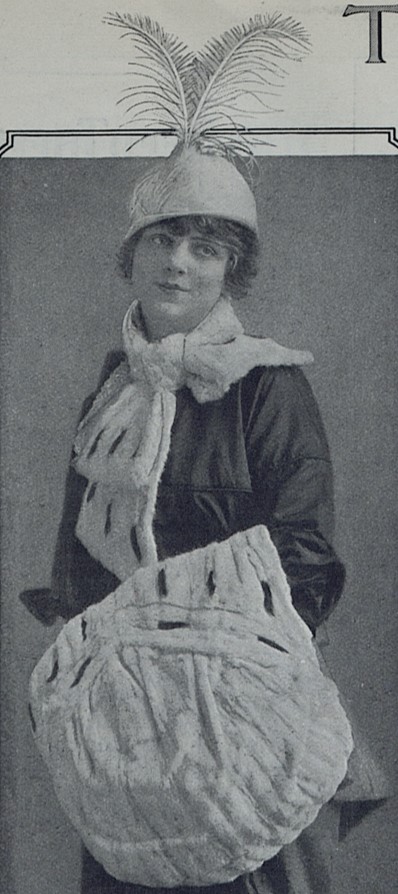
Did Grandma ever wish that she had some furs? They were really popular in 1914.

It is interesting to see the new furs, soft scarfs, muffs, and coats of unbelievable lightness, with hats that harmonize and strike the right note.

Ladies Home Journal (October, 1914)

LHJ 10 1914 36 a.jpg

LHJ 10 1914 36d

LHJ 10 1914 36 b jjpg

A Sound Sleep is Dreamless

19-year-old Helena Muffly wrote exactly 100 years ago today: 

Friday, November 13, 1914:  Am awfully sleepy at present, so good-night.

moonlight
Source: Wikipedia

Her middle-aged granddaughter’s comments 100 years later:

Goodnight Grandma—

Have a sweet and dreamless sleep.

According to a hundred-year-old book:

A sound sleep is dreamless. Dreams require a certain expenditure of nerve force and mental energy, so that dreamless sleep is the most restful. Disagreeable dreams and nightmares are generally associated with indigestion and biliousness, which also occasion a general restlessness.

Personal Hygiene and Physical Training for Women (1911) by Anna M. Galbraith

Went Shopping and Got a Boucle Coat (and More)

19-year-old Helena Muffly wrote exactly 100 years ago today: 

Thursday, November 12, 1914:  Mother and I went shopping. She’s doing more than I did of course. I got a coat, which is a blue and black boucle, a dress, gloves, and other things of lesser importance. I had a suit case full of stuff and then some more. Ma had her share, too. Fortunately we got a ride part way home.

Her middle-aged granddaughter’s comments 100 years later:

boucle coatI found this purple and black boucle coat on ebay. The era’s wrong (this is a 1950’s coat), and the color isn’t quite blue; but it can give you an idea of what Grandma’s coat looked like. I bet she looked awesome.

Grandma–

What a fun day! Nothing cheers a woman up like clothes shopping—especially when her mother pays for the clothes.