Old-fashioned Beef Balls with Spaghetti

There are some foods where the recipes were just plain different a century ago than what they are now. Spaghetti is one of those foods. Modern marinara sauce recipes often call for basil and oregano, but those spices are seldom seen in old recipes.

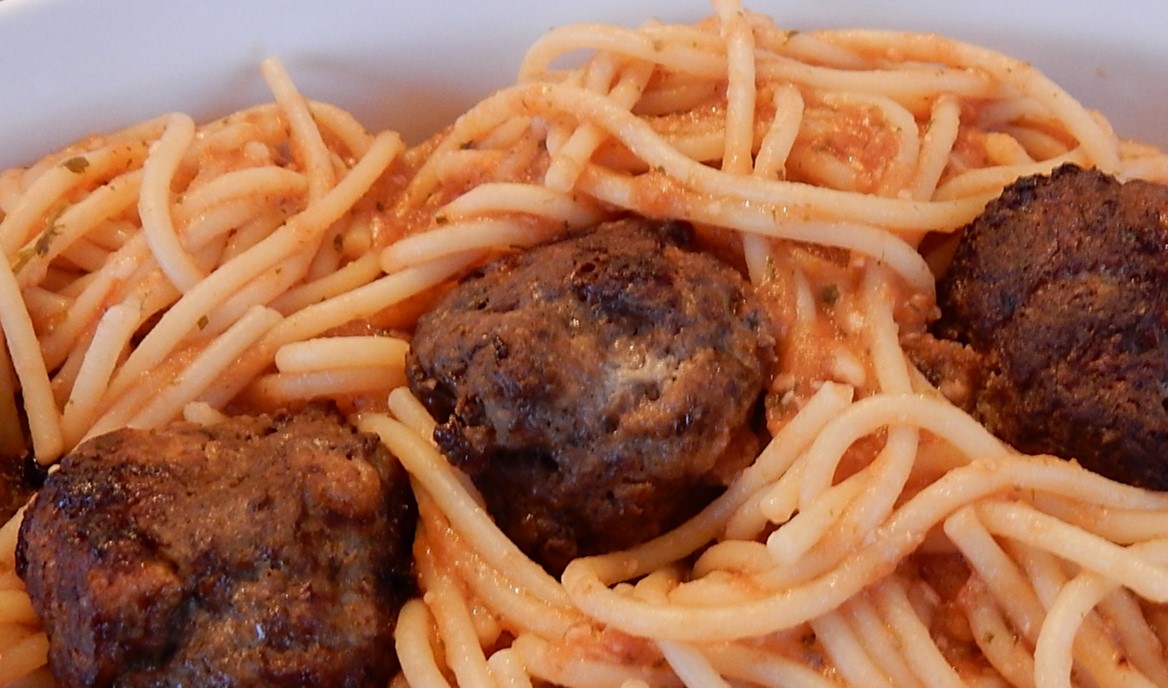
I decided to make a hundred-year-old recipe for Beef Balls with Spaghetti. The recipe for the sauce called only for tomatoes, green pepper, onion, parsley, water, and salt. I had my doubts about the recipe, and worried that it won’t be spicy enough.

I worried needlessly. This recipe was a hit.

My husband said, “This spaghetti is great. It reminds me of the spaghetti they served when I was in elementary school. Mom never made spaghetti, and this was my favorite meal at school.”

Here’s the original recipe:
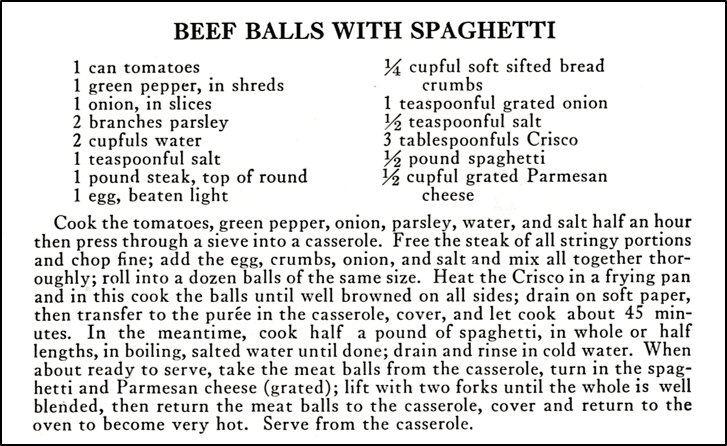
Source: Cooking for Everyday by Janet McKenzie Hill (1919)

And, here’s the recipe updated for modern cooks. (I made this recipe entirely on top of the stove. I couldn’t figure out why the 1919 recipe calls for doing part of the cooking in the oven.)

Beef Balls with Spaghetti

  • Servings: 8 - 10
  • Difficulty: moderate
  • Print

1 28-ounce can tomatoes (or use a 1 quart jar of tomatoes)

1 green pepper, chopped

1 onion, chopped + 1 teaspoon onion, grated

2 bunches parsley, chopped

2 cups water

1 teaspoon salt + 1/2 teaspoon salt

1 pound ground beef

1 egg

1/4 cup bread crumbs

3 tablespoons shortening or cooking oil

1/2 pound spaghetti

1/2 cup parmesan cheese, grated

Preheat oven to 350° F. To make sauce, put tomatoes, green pepper, 1 chopped onion, parsley, water, and 1 teaspoon salt in a large saucepan; stir to combine. Bring to a boil, then reduce heat and simmer for 1/2 hour. Remove from heat, cool slightly, then puree.

While the vegetables are cooking, combine ground beef, egg, bread crumbs, 1 teaspoon grated onion, and 1/2 teaspoon salt in a mixing bowl, then shape into 12 balls each approximately 1-inch in diameter. Put shortening or oil into a skillet, and heat. Add the beef balls, and cook for 3-5 minutes, then gently roll over. Roll several times until browned on all sides.

Put spaghetti sauce back in sauce pan, add beef balls. Using medium heat bring to a boil; reduce heat and gently simmer for 45 minutes while stirring occasionally.

Beginning about 15 minutes before the sauce will be finished, cook spaghetti according to package instructions.

To serve, remove sauce from heat, and take beef balls out of the sauce.  Add spaghetti and parmasen cheese to the sauce, and lift with a fork until well blended. Add meatballs. Serve immediately

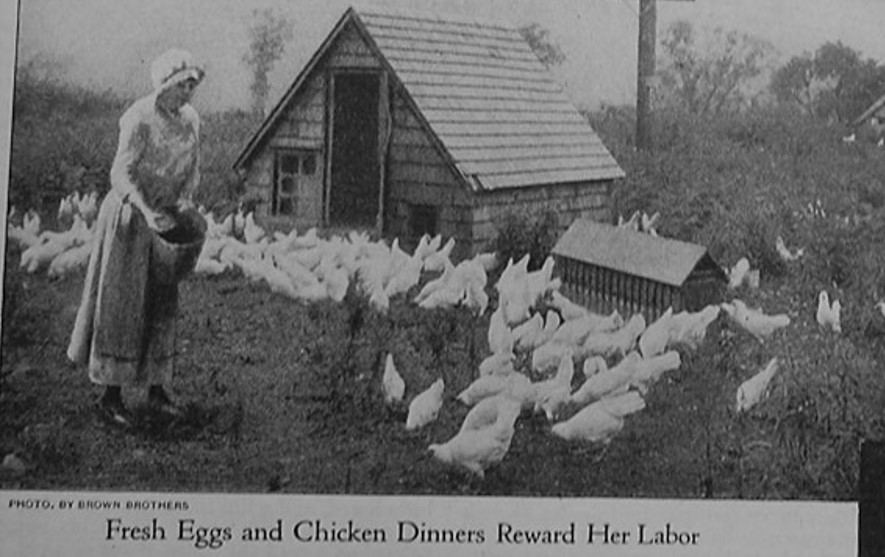
Raising Chickens in the Yard a Hundred Years Ago

Source: Ladies Home Journal (March, 1919)

I have friends who raise a few chickens in the suburbs. A hundred years ago, people also raised chickens to get fresh eggs and meat. Here are some excerpts from the March, 1919 issue of Ladies Home Journal:

Did You Ever Think of A Meat Garden?

Why not raise meat in the garden as well as vegetables?

There is no reason why chickens cannot be kept successfully in a town or village lot, provided they are kept in the sanitary condition that is just as essential to the health of the fowls as to the health of the community. Many a family could keep a few chickens, not to make a fortune on selling eggs, but to raise this quick meat for table use or to supply the table with eggs.

The objects attained in keeping chickens for the use of the home table are fourfold: Fresh eggs daily for the children year round; increasing the food supply; raising meat in a short time for the table; saving money on the meat bill.

Runkel’s Fudge Roll

People often say to me, “You make all those hundred-year-old recipes . . . Don’t you ever have cooking disasters?”

And, I usually reply, “I seldom have a disaster. Most recipes turn out fine, but I make them only once; some are very good and I make them a couple of times; and, a few I absolutely love and they have become part of my regular cooking repertoire.”

But, I do occasionally have cooking disasters. This is one of those times.

I found a recipe for Runkel’s Fudge Roll in an advertisement for Runkel’s Cocoa in a hundred-year-old issue of Good Housekeeping, and thought to myself, “I bet this will be a good recipe. Usually recipes in advertisements were carefully tested.”

Wrong – The fudge filling hardened very quickly, and was difficult to spread; AND, the cake base broke into pieces when I tried to roll it.

The one good thing about this recipe is that it was very tasty – even though it didn’t look very nice.

Here’s the original recipe:

Source: Good Housekeeping (March, 1919)

Runkel's Fudge Roll

  • Servings: 7 - 9
  • Difficulty: difficult
  • Print

2 tablespoons butter, softened

1 cup sugar

3 eggs

2 tablespoons milk

1 teaspoon vanilla

1 cup flour

1 teaspoon baking powder

1/2 teaspoon salt

Preheat oven to 375° F.  Put butter, sugar, eggs, milk, and vanilla in a mixing bowl, and stir together. Add flour, baking powder and salt; beat until smooth. Put batter on a 15x10x1 -inch baking sheet that is lined with parchment paper. Make sure that the batter goes to the edges and corners of the pan, and that it is spread evenly. Bake 12-15 minutes, or until toothpick comes out clean. Remove from oven and turn upside down on a piece of parchment paper that has been covered with sugar. Peel off the parchment paper that was used when baking. Immediately spread with the fudge filling, and roll as for a jelly roll.

Fudge Filling

1 1/2 tablespoons butter

1/4 cup cocoa

1 1/2 cups sugar

1/4 teaspoon salt

1/4 cup milk

1/2 teaspoon vanilla

Melt butter using medium low heat in a saucepan, add cocoa and stir until smooth. Stir in sugar, salt, and milk. Increase heat to medium, and bring to a boil while stirring occasionally. Immediately remove from heat, and add vanilla. Beat until smooth, and spread on cake base. Note: This icing hardens quickly. Immediately spread as soon as it reaches a spreadable consistency.

1919 “Cooking for Profit” Correspondence Course

Source: Cooking for Profit (January, 1919)

Did you ever want to start your own food-related business?

People had similar desires a hundred years ago. The January, 1918 issue of American Cookery magazine had an advertisement for a correspondence course on “Cooking for Profit.”

Today lots of rules and regulations affect the operation of businesses serving or selling food. A hundred years ago there were few regulations.  But people in both 1919 and 2019 had many similar questions when  considering  whether to start a small food-related business – How do you cook foods that people want to buy? What is needed to ensure that the business will be successful? , etc.

Old-fashioned Corned Beef Hash

Happy St. Patrick’s Day!

Some things just go together like St. Patrick’s Day and corned beef – and, of course, for me it was only a small leap until I was asking, “Are there hundred-year-old recipes for corned beef?

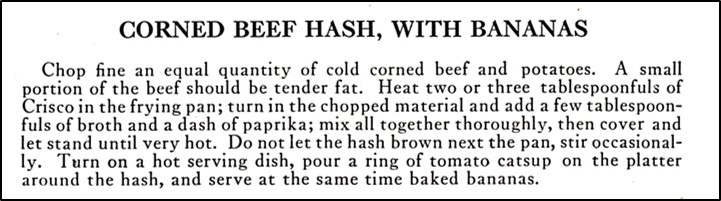
I’m happy to report that I found an excellent hundred-year-old Corned Beef Hash recipe that was simple to make and a great way to use any corned beef left over from St. Patrick’s Day.  However, there was one little glitch. I couldn’t bring myself to try the serving suggestion.

Here’s the original recipe:

Source: Recipes for Everyday by Janet McKenzie Hill (1919)

Pour a ring of ketchup around the Corned Beef Hash? It might make a lovely presentation (though I tend to think not), but I’ll never know for sure.

And, I didn’t serve the Corned Beef Hash with baked bananas. Baked bananas may be tasty, but the 1919 cookbook didn’t include a recipe for them, and I don’t know how to make them. I must be lacking a bit of common cooking knowledge that most cooks had back then . . .sigh.

Here’s the recipe updated for modern cooks:

Corned Beef Hash

  • Servings: 2 - 3
  • Difficulty: easy
  • Print

1 cup cold cooked corn beef, chopped

1 cup cold boiled potatoes, chopped

2 1/2 tablespoons shortening

3 tablespoons broth that the corned beef was cooked in or water (I used water.)

paprika

Melt shortening in a skillet that has a lid; add corned beef, potatoes, and broth or water. Sprinkle with paprika. Gently stir to combine. Cover pan and cook using medium low heat until hot and steamy (and until most of the broth has been absorbed or evaporated). Stir occasionally. Do not allow the potatoes to brown. Remove from heat and serve.

Hundred-Year-Old Advice on How to Save Money by Substituting Fats

Today we worry about whether fats are good fats or bad fats. Is a fat saturated or unsaturated? Does it contain trans fats? Does it contain mono- or polyunsaturated fats? Will it increase or decrease cholesterol levels?

A hundred years ago people had different questions about fats. They asked questions like:

  •  How can I get the most calories for the least cost? (Amazingly more calories were seen as better back then.)
  • Does the fat provide sufficient vitamin A? (Fats with more vitamin A were considered better.)

Here’s what a woman wrote in a 1919 magazine article about how she selected fats to serve her family:

When it became necessary to pay two cents for every tablespoon of butter we used in our family, and I knew that we were paying that sum just to satisfy our palates with that specific flavor, I then and there decided that something must be done. I knew that a calorie of energy is as valuable from one source as another and that, measure for measure, other fats than butter would give the same energy.

In choosing a butter substitute, I found that oleomargarine, made largely from beef-oil, contains some, at least of this Fat Soluble A, and if I increased the family milk supply so that the children were getting nearly a quart each day, oleomargarine could replace some butter. I then I could give the family butter only where its flavor was most desirable and expected, and realize that it matters little whether we use lard, cottonseed oil, suet, or the most expensive imported olive oils, from the standpoint of fuel obtained, I could use any clean and wholesome fat in cooking with a perfectly clear conscience.

I found it economic and patriotic, too, to clarify every bit of fat, mixing hard and soft kinds together to get a degree of hardness satisfactory to use in bread, cakes and pastry and in all my cooking. Of course, it costs in time and labor, but save in food and money, and just now there is less food than time or labor.

from “How My Family Saved Fats” by Jessamine Chapman Williams (American Cookery, February, 1919)

The article said that oleomargarine was made from beef oil (tallow?). Today oleomargarine is just called margarine, and is generally vegetable oil product.

Old-fashioned Flemish Carrots

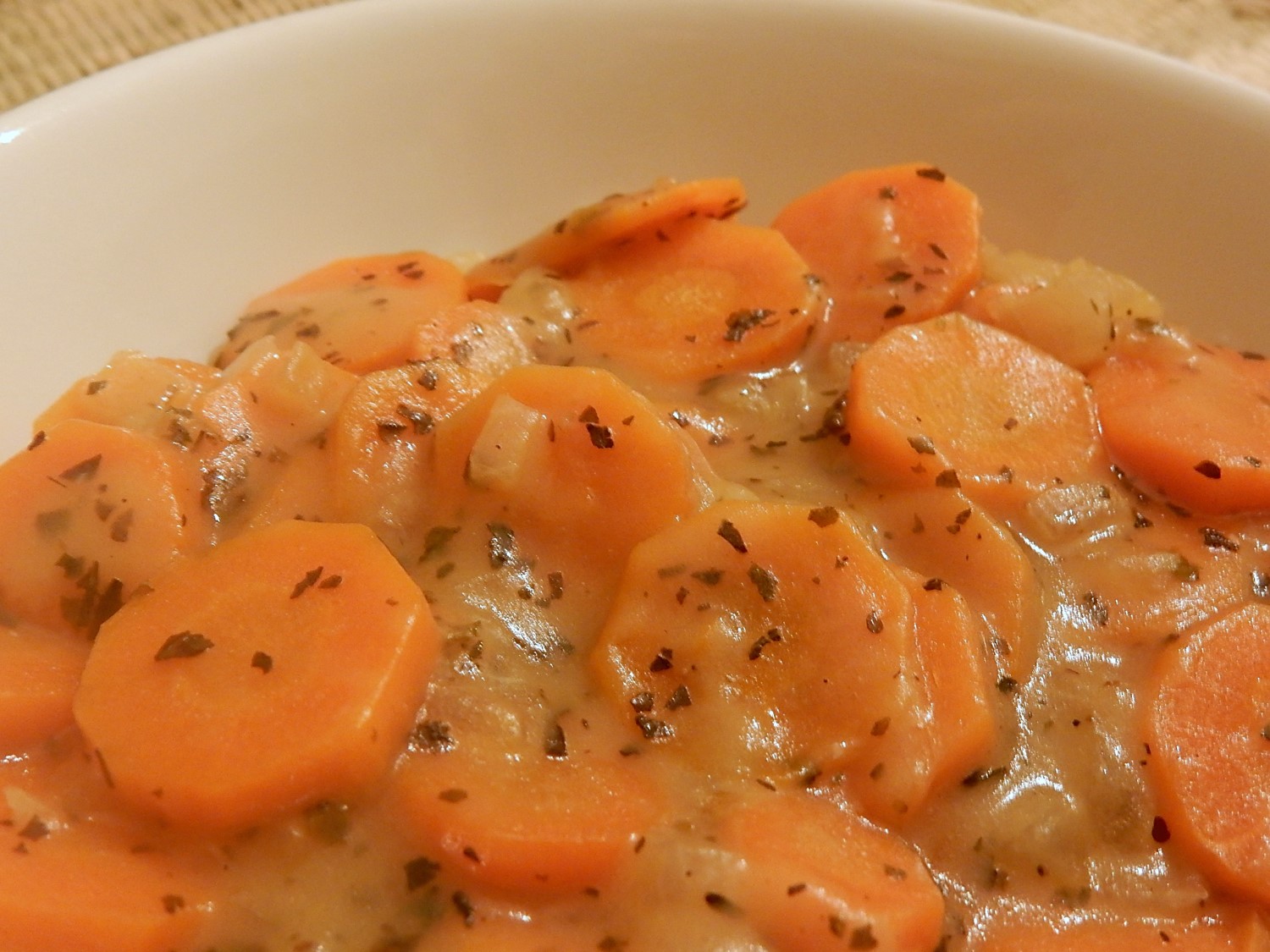
Carrots are one of the most nutrient-packed vegetables. They contain lots of vitamins A, K, and B6, as well as potassium and other minerals, so I was thrilled to find a hundred-year-old recipe for Flemish Carrots. This dish contains a mixture of carrots and onions that is served in a lovely beef-broth sauce which brought out the natural sweetness of the carrots.

I always find March to be a difficult month for cooking. I like to serve locally-grown, seasonally-appropriate food – yet I’m tiring of the same-old, same-old winter vegetable dishes. This recipe is a nice twist on sautéed carrots.

Here is the original recipe:

Source: Recipes for Everyday by Janet McKenzie Hill (1919)

Here’s the recipe updated for modern cooks:

Flemish Carrots

  • Servings: 3 - 4
  • Difficulty: easy
  • Print

2 cups carrots, sliced

2 tablespoons butter

1/4 cup onion, chopped

1 tablespoon parsley

2 tablespoons flour

1/2 teaspoon salt

1/2 teaspoon sugar

1/4 teaspoon pepper

1 cup beef broth

Using medium-low heat, melt butter in a skillet that has a lid. Add carrots, onion, and parsley; cover skillet. Stir occasionally and cook until tender (about 20 minutes). Add flour, salt, sugar, and pepper; stir gently until blended. Increase heat to medium. Gradually add beef broth while stirring constantly; heat until hot and bubbly. Remove from heat and serve immediately.

When I made this dish,  I substituted butter for the Crisco shortening that was listed in the original recipe.