Old-Fashioned Rice Pudding and Berries

Rice Pudding with Berries

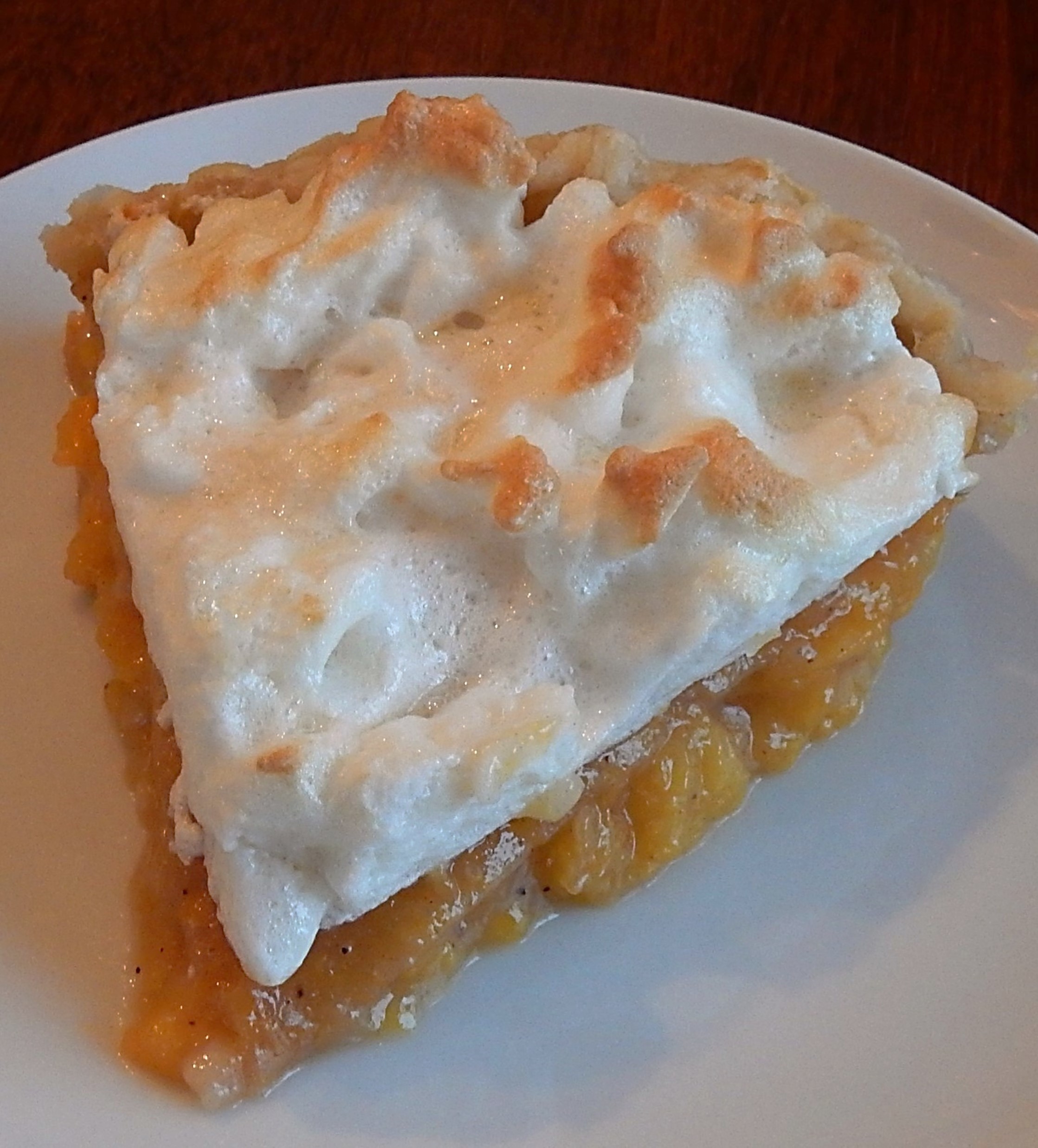
It’s berry season, so when I saw a recipe in a hundred-year-old cookbook for Rice Pudding with Berries, I decided to give it a try. The Rice Pudding is molded, and served with a berry sauce. I used strawberries, though the recipe says that raspberries (or a mixture of strawberries and raspberries) could also be used.

The Rice Pudding with Berries turned out well, made a nice presentation, and was very tasty.

Here’s the original recipe:

Recipe for Rice Pudding with Berries
Source: The New Butterick Cook Book (1924)

The recipe directions indicate that sugar is needed for both the Rice Pudding and the Berry Sauce, yet the ingredients list only has “powdered sugar” and does not list an amount. It appears that an ingredient (or at least amounts) is missing for this recipe. I decided to use 1/2 cup of granulated sugar in the Rice Pudding, and 1/4 cup of powdered sugar in the sauce. The sauce I made was a bit tart – but I thought that it was lovely. If a sweeter sauce is desired, use more sugar.

Some of the liquid evaporates while cooking the rice, so the cooked Rice Pudding mixture has less volume than the sum of volume of the ingredients. I used a 2 1/2 cup mold.  When the mold was filled, I still had a little extra Rice Pudding which I put into custard cup. A 3 or 3 1/2 cup mold would work better.

Here’s the recipe updated for modern cooks:

Rice Pudding and Berries

  • Servings: 6 - 8
  • Difficulty: moderate
  • Print

4 cups milk

1/2 cup granulated sugar

1/2 teaspoon salt

3/4 cup rice

1/2 teaspoon vanilla

butter or cooking oil

1 pint strawberries or raspberries (or a mixture of both strawberries and raspberries) (I used strawberries.)

1/4 cup powdered sugar

1 1/2 teaspoons cornstarch

1/4 cup water

Put the granulated sugar, milk, and salt in a large heavy saucepan. Stir to combine, then heat using medium heat until the mixture just begins to simmer. Stir in the rice, reduce heat to low and cover. Cook until the liquid is absorbed and the rice mixture is thick (approximately 35-45 minutes). Remove from heat and then stir in the vanilla.

Grease a mold with butter or cooking oil (a 3 – 3 1/2 cup mold works well), then firmly press the rice pudding into the mold. Refrigerate until cold (at least 3 hours).

In the meantime, make a berry sauce by slicing the berries (raspberries can be left whole) and then putting them into a saucepan. (Reserve several berries to use as a garnish.) Stir in the powdered sugar, cornstarch and water. Bring to a boil using medium heat while stirring. Reduce heat; continue cooking and stirring until the strawberry pieces are very soft and the sauce has thickened. (Add a little more water if the sauce it too thick.) Remove from heat and strain. Keep the liquid and discard the cooked berry pieces.

To serve: Losen the edges of the Rice Pudding with a knife or other cooking tool. Dip the mold in hot water, then unmold onto serving plate. Pour the sauce over the Rice Pudding, and garnish with berries.

http://www.ahundredyearsago.com

Old-Fashioned Rice and Peas

Rice and Peas in bowl

When browsing through a hundred-year-old cookbook, I came across a recipe for Rice and Peas, and decided to give it a try. This recipe is easy to make, and was very tasty. I served it as a side dish, though it would also work well as a meatless entree.

Here’s the original recipe:

Rice and Peas recipe
The New Butterick Cook Book (1924)

Here’s the recipe updated for modern cooks:

Rice and Peas

  • Servings: 4 - 6
  • Difficulty: easy
  • Print

1 cup rice

2 cups green peas

2 onions, finely chopped

1 tablespoon butter or cooking oil

Prepare rice following the directions on the package.

In the meantime, cook the peas.

Also, heat the butter or oil in a skillet, then add the chopped onions and sauté until the onions are tender and translucent. Add the cooked rice and peas; gently stir.

http://www.ahundredyearsago.com

Old-Fashioned Prune Souffle

Prune Souffle

There are lots of food trends and fads. Some foods become more popular over time; other decrease in popularity. Prunes are a food that were much more popular a hundred years ago than what they are now – though personally, I like them. So when I saw a recipe for Prune Souffle in a 1924 cookbook, I decided to give it a try while recognizing that prunes are not trendy.

The Prune Souffle didn’t puff up like the typical souffle. It was very rich, and contained chopped walnuts which added a nice crunch. The dominant flavor was the prunes, though there was a hint of cinnamon. I’m not sure exactly how I’d rate this dessert. It’s definitely different than what I expected, and it’s richer than I’d like; but in an old-fashioned way, it was tasty.

Here’s the original recipe:

Recipe for Prune Souffle
Source: The Metropolitan Cook Book (Published by Metropolitan Life Insurance Company, 1924)

I’m not sure why the souffle did not puff up. It called for several fairly heavy ingredients – the chopped nuts and prune puree which may have weighted it down. Also, since the old recipe calls for a “slow oven,” I baked the souffle at 325° F.  but maybe it would have worked better if it had been baked at a higher temperature.

When I made this recipe I wasn’t sure how many prunes were needed to get 1 cup of pulp, but I estimated that I’d need about 1/2 pound of prunes.  I cooked the prunes for about 30 minutes get them nice and soft, and then put them through a Foley Mill. (Another option would be to puree them.) I ended up with a little less than 1 cup of pulp, but went with it.

Here is the recipe updated for modern cooks:

Prune Souffle

  • Servings: 4 - 6
  • Difficulty: moderate
  • Print

1/2 pound prunes

water

2 eggs, separated

1/2 cup chopped nuts (I used walnuts.)

1/2 cup grated bread crumbs (I grated 1 slice of bread.)

2 tablespoons sugar

1/4 teaspoon salt

1/6 teaspoon cinnamon

1 tablespoon lemon juice

grated rind of 1 lemon

Preheat oven to 325° F. Put prunes in a saucepan and cover with water; bring to a boil then reduce heat and gently simmer until soft. Remove from heat and drain; reserve 1/2 cup of the prune juice. (If there is less than 1/2 cup of prune juice, add water to make 1/2 cup.) Puree the prunes or use a Foley Mill to press through a sieve. Set aside.

Beat egg whites until fluffy and stiff. Set aside.

Put the chopped nuts, bread crumbs, sugar, salt, cinnamon, lemon juice, grated lemon rind, pureed prunes, 1/2 cup of prune juice, and egg yolks in a mixing bowl; stir to combine. Fold in the beaten egg whites. Put in a 1-quart baking dish, and bake until the top is lightly browned and starting to crack (30-40 minutes). Can be served warm or cold.

http://www.ahundredyearsago.com

Old-Fashioned Variety Marble Cake (Marble Cocoa Cake)

Marble Cocoa Cake

Marble Cake has always been one of my favorite types of cake, so when I saw a hundred-year-old recipe for Variety Marble Cake, I decided to give it a try. The old recipe had lots of options, including options for Marble Cocoa Cake and Marble Spice Cake. I went with the Marble Cocoa Cake option.

The cake was easy to make and tasty. This recipe makes a small 8″ X 8″ cake, which is perfect for a small family.

Here’s the original recipe:

Recipes for Variety Marble Cake
Modern Priscilla Cook Book (1924)

When I made this recipe, I needed to add about 2 tablespoons of melted butter to the eggs to get 1/2 cup. I used vanilla for the flavoring.

The recipe says to alternate putting spoonfuls of light and dark batter into the pan. I followed this direction – though if I made the cake again, I’d also lightly swirl the batters using a knife to get a more even marbleing.

The recipe says to bake the cake for 45 minutes. When I made this cake, it took significantly less time (more like 35 minutes).

Here’s the recipe updated for modern cooks:

Marble Cocoa Cake

  • Servings: 6 - 8
  • Difficulty: moderate
  • Print

1 1/4 cups flour

1 cup sugar

1 1/4 teaspoon baking powder

1/2 teaspoon salt

2 eggs

2 tablespoons butter, melted

1/2 cup milk

1 teaspoon vanilla

2 tablespoons cocoa

Preheat oven to 350° F. Grease and flour an 8-inch square baking pan. Put all ingredients (except for the cocoa) in a mixing bowl. Beat until well blended.

Put 1/3 of the batter into another bowl; then add the cocoa to this batter. Beat until well-blended. Alternate putting the light and dark batters into the prepared pan, then lightly swirl with a knife.

Bake 30 to 40 minutes, or until wooden pick inserted in center comes out clean. Frost, if desired.

http://www.ahundredyearsago.com

Old-Fashioned Baked Eggs (Eggs in a Hole)

two baked eggs on plate

When my children were young they used to enjoy making Eggs in a Hole where a hole is cut out of a slice of toast and an egg is dropped into the hole. So when I saw a recipe in a hundred-year-old cookbook for Baked Eggs that looked similar to Eggs in a Hole, but with a twist, I had to give it a try. Instead of just cutting one circle in the toast, two circles are cut to create a ring of toast. The egg is then dropped into the ring. It gave an old classic a new twist -though that’s not quite right. Maybe I should say that I found an old twist for a classic recipe.

I enjoyed making this recipe, and anticipate making it again when children or grandchildren visit.

recipe for Baked Eggs
Source: The Metrolpolitan Cook Book (published by the Metropolitan Life Insurance Company, 1924)

The old recipe says that the hole the egg is put into is created by removing a little of the center. I interpreted this to mean that a small circle should be cut out of the center of the toast.

Here’s the recipe updated for modern cooks:

Baked Eggs (Eggs in a Hole)

  • Servings: 1 egg
  • Difficulty: moderate
  • Print

For each egg:

1 slice toast

1 egg

butter

salt and pepper

1 teaspoon milk or cream (I used milk.)

Preheat oven to 350° F. Lightly grease an oven-proof skillet with butter. Cut a large round circle out of the toast. (I used an inverted champagne glass to cut the circle). Then cut a smaller circle out of the center of the circle. (I used a round cookie cutter to cut the small circle. A small inverted juice glass would also work.) Put the resulting toast ring in the skillet, then gently break the egg and put the contents in the hole. Sprinkle with salt and pepper, and dot with a few small pieces of butter. Spoon the milk over the egg. Put in oven and bake until the egg is cooked (about 10-15 minutes).

http://www.ahundredyearsago.com

Old-Fashioned Bread and Rhubarb Pudding


Bread and Rhubarb Pudding

Sometimes I know that I want to make a recipe for a particular seasonal food. This week is one of those times. I had some rhubarb, so began going through my hundred-year-old cookbooks and magazines looking for a rhubarb recipe. I found two that looked like possibilities Rhubarb and Figs and Bread and Rhubarb Pudding. I leaned towards making the Rhubarb and Figs. The Bread and Rhubarb Pudding recipe seemed complicated and I couldn’t quite picture what it would be like.  However, my husband said that he didn’t like figs, and my daughter said that she thought the Bread and Rhubarb Pudding sounded awesome, so I decided to give it a try.

I’m glad that my family talked me into making Bread and Rhubarb Pudding. This recipe is a winner. Rhubarb and slices of bread are layered in a baking dish, then a milk, egg, and nutmeg mixture is poured over it. The dish is baked in the oven, and then jelly is spread over it. (I used current jelly – though the old recipe suggested using grape jelly.) I served the Bread and Rhubarb Pudding with whipped cream.  The dish definitely was a hit with my family. My daughter said that it had just the right amount of sweetness, and my husband said that I should make it again.

One thing that I’d do differently if I made it again is to try to work a bit more on the presentation. My baking dish and the bread slices that I used when making this recipe didn’t exactly align in size and I had to cut some of the bread slices. If I made it again, I might either use another dish, bread slices that were a different size, or cut every slice of bread (and not just the ones that didn’t fit when whole).

Bread and Rhubarb Pudding

Here’s the original recipe:

Recipe for Bread and Rhubarb Pudding
Source: American Cookery (March, 1924)

I cut the rhubarb into 1-inch pieces; 2 inches seemed a bit long to me. I decided that the egg and milk mixture that is poured over this dish made about enough to cover 8 slices of bread and 4 cups of diced rhubarb.

The recipe called for using sugar in the amount of “half the bulk” of the rhubarb (plus 4 additional tablespoons for the milk mixture). I decided to go with 1 1/2 cups of sugar, which may be a little less than half the bulk, but the Bread and Rhubarb pudding had just the right amount of sweetness so that’s the amount I put in the updated recipe.

I don’t have whole nutmeg, so I used 3/4 teaspoon of ground nutmeg.

I decided to serve with whipped cream rather than going the meringue route.

Here’s the recipe updated for modern cooks:

Bread and Rhubarb Pudding

  • Servings: 6 - 8
  • Difficulty: moderate
  • Print

4 cups rhubarb, cut into 1-inch pieces

1 1/2 cups sugar + 4 tablespoons sugar

8 slices bread (I used white bread.)

butter

1 egg

3/4 teaspoon ground nutmeg

2 cups milk

grape or other flavor of jelly (I used current jelly.)

whipped cream

Preheat oven to 400° F.  Put the rhubarb and 1 1/2 cups sugar in a bowl; stir to coat the rhubarb with sugar. Then put half of the rhubarb mixture in a 7 1/2 ” X 12″ X 2″ (or similar sized) baking dish. (The dish I used was about the right size as far as volume goes, but I had to cut some of the bread slices, so if I made it again, I may use a different dish.)

Spread butter on 4 of the bread slices. Arrange the slices (buttered side down) on top of the rhubarb. Then put the remaining rhubarb over the bread slices. Spread butter on the other 4 bread slices, and place buttered side up on top of the rhubarb. Set aside.

Put the egg, 4 tablespoons sugar, and nutmeg in a mixing bowl; beat until smooth. Add milk and beat until combined. Pour the milk mixture over the rhubarb and bread. Cover (I used aluminum foil to cover), and then put in the oven. Bake for approximately 30 minutes or until the rhubarb is tender, and hot and bubbly. (Periodically check on how the baking is coming along. When I made this dish, liquid boiled over and onto my oven while I had the dish covered.)

Once the rhubarb is hot and bubbly remove cover, and continue baking until the bread is lightly browned (about another 10-15 minutes). Remove from oven and spread with jelly. Serve with whipped cream. I served this warm, though it could also be served cold.

http://www.ahundredyearsago.com

Old-Fashioned Hot Slaw with Sour Cream Sauce

Hot slaw with sour cream dressing

When browsing through a hundred-year-old magazine, I came across a recipe for Hot Slaw with Sour Cream Sauce, and decided to give it a try.

The Hot Slaw was mild,  rich, and creamy. The recipe called for only 1 tablespoon of vinegar (and no sugar), so the flavors were much more nuanced than many modern slaws.

Here’s the original recipe:

Recipe for Hot Slaw with Sour Cream Dressing
Source: American Cookery (October, 1924)

Here’s the recipe updated for modern cooks:

Hot Slaw with Sour Cream Sauce

  • Servings: 5 - 7
  • Difficulty: moderate
  • Print

1 head of cabbage (approximately 2 pounds; The cabbage should be firm and white.)

2 teaspoons salt

4 tablespoons butter

1 tablespoon flour

1 tablespoon water

1 cup sour cream

1 tablespoon tarragon vinegar or apple cider vinegar (I used apple cider vinegar.)

Grate or finely shred the cabbage. Stir the salt into the cabbage. Let sit for 30 minutes, then drain and rinse. Press to squeeze out excess water.

In a skillet or large saucepan, melt the butter. Stir in the cabbage. (Do not add water.) Cover and cook over low heat for 10 minutes. Several times remove lid and stir to keep the cabbage from scorching, then replace lid. (The idea is to stir enough to prevent scorching, but to keep the steam in as much as possible as the cabbage cooks.) Cook for 10 minutes.

In the meantime, stir water into the flour to make a thick paste. Then stir in the sour cream. Stir the sour cream mixture into the hot cabbage, and cook for 1-2  additional minutes while stirring. Stir in the vinegar and serve.

http://www.ahundredyearsago.com