Grandma’s Parents 28th Wedding Anniversary

17-year-old Helena Muffly wrote exactly 100 years ago today:

Wednesday, May 29, 1912: We teased her about her anniversary, as it was just twenty eight years ago that she was wed. Miss Carrie was over this evening and we did some planning.

Her middle-aged granddaughter’s comments 100 years later:

May 29 was Grandma’s mother’s 28th wedding anniversary.  The previous year, Grandma had written in the diary on May 29, 1911:

My mother’s wedding anniversary. 27 years ago. . .

I recently found an old newspaper clipping  from the Watsontown Star and Record for 1909 that included a mention of the wedding in its 25 Years Ago column. It was one of the clippings in the small group of photos and clippings that were found in Grandma’s house after she died. It’s kind of cool that the clipping has survived all of these years.

Miss Carrie referred to Grandma’s friend Carrie Stout.

Planted Red Geraniums for Memorial Day

17-year-old Helena Muffly wrote exactly 100 years ago today: 

Tuesday, May 28, 1912:  Had to stay out in the rain this afternoon and therefore got a little wet. Ruth and I went up to Oakes’ this evening.

Her middle-aged granddaughter’s comments 100 years later:

Yesterday I was in the McEwensville area for reasons unrelated to the diary.  On my way into town I passed the Watsontown Flea Market; and, on a whim, decided to stop to see if I could find any hundred-year-old issues of Ladies Home Journal.

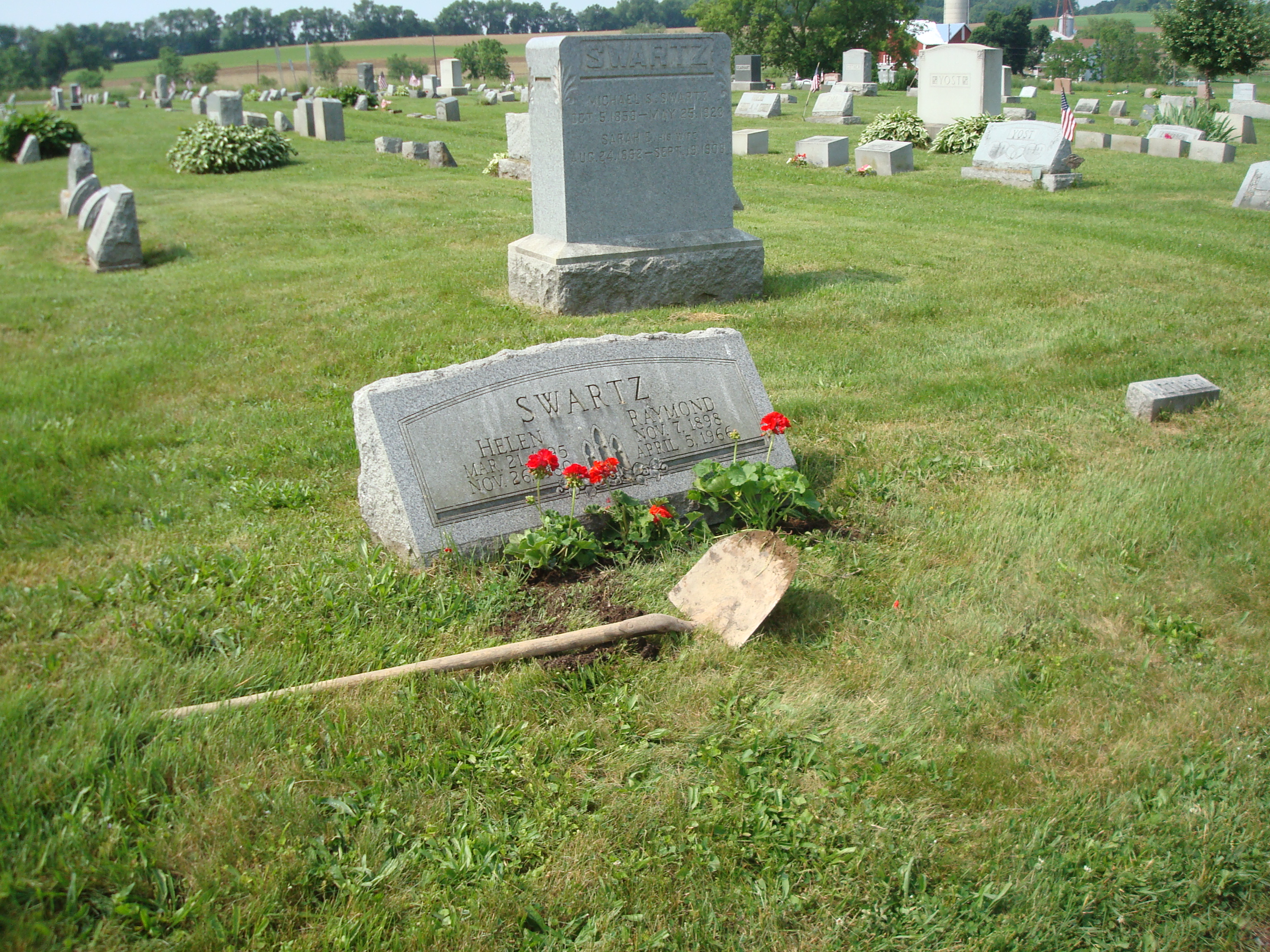
No luck with the magazines, but a vender was selling red geraniums.

The geraniums reminded me of how my mother and I used to put red geraniums on the graves of deceased relatives for Memorial Day.

I haven’t put flowers on graves since I was a child; but–before I’d really thought things through–I’d purchased nine red geraniums.

I made a short detour to locate a shovel. I could only found a rusty old shovel, but I  decided that it would work. It probably was the same one I’d once used with my mother to plant geraniums.

I then headed to the McEwensville  Cemetery.

When I got to the cemetery I discovered that an uncle, aunt, or cousin had already planted a red geranium. (It’s interesting that we all decided to plant red geraniums. I guess it’s a family tradition.)

I began to plant flowers on the graves of my paternal grandparents (Helen–she’d dropped the “a” long before she died– and Raymond Swartz), maternal grandparents, and other relatives.

The old rusty shovel wobbled as I planted the flowers, but it didn’t break.

I rushed because I only had a few minutes before I was supposed to be elsewhere for lunch. But somehow it felt right.

It was humid and the temperatures were in the 80’s.  I started to sweat—but thought—I can’t be late, I’ve got to get this done quickly.

The last grave I got to was my mother’s. I rapidly planted the last two geraniums as the sweat beaded up on my forehead. I thought,  “I’m going to only be a couple minutes late.”

At that moment the sweat rolled off my forehead and into my eyes—and stinging tears caused by the sweat started flowing. I couldn’t see and I knew that I couldn’t drive.

I was going to be very late getting to lunch, but suddenly was grateful.

It was good to remember all of my ancestors who’d gone before me—my paternal and maternal grandparents, my mother  . . .

Paper Cow Directions

17-year-old Helena Muffly wrote exactly 100 years ago today: 

Monday, May 27, 1912:I hope this week won’t be as monotonous as last week was. I have to watch cows more days and then I think I’ll make a dash for liberty.

Her middle-aged granddaughter’s comments 100 years later:

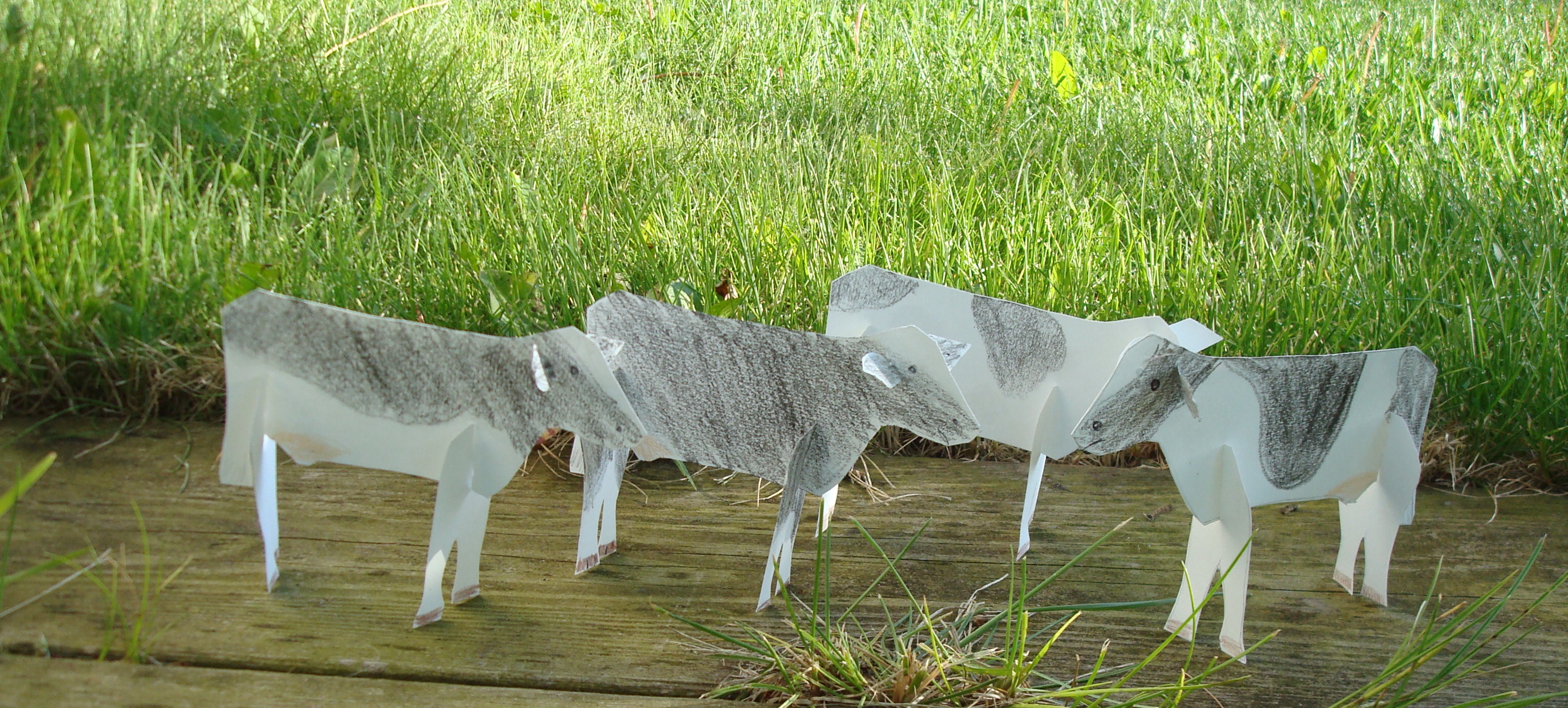
This is the third time in two weeks that Grandma mentioned watching the cows. I agree with Grandma that it’s getting monotonous, so decided to have a little fun today and make some paper cows.

(My husband thinks that I’ve gone a bit over the edge–especially when I posed the cows for the photo–but making the cows was relaxing and we all need to play sometimes. 🙂 )

The June, 1913 issue of The School-Arts Magazine had a pattern for a paper cow.

If you’d like to make some cows, here is the pattern and the directions:

Click here for paper cow pattern.

Cut out the pattern pieces. On heavy cardstock trace around the pattern pieces. Cut out and decorate as desired.

Dovetail the legs and body together at the slits. The slits for the ears (see small black line between eyes and neck) can be made by an adult  using a small sharp knife or very small sharp scissors.

Note: I used crayons to put the black spots on the cows. If I did it again, I might cut back spots out of construction paper.

P.S.—Previous posts with old-time paper crafts have been very popular. If you haven’t already seen them you may want to check them out:

Paper Doll Girl and Her Swimming Ducks

Paper Birds

Swimming Frog

School Girl Paper Doll

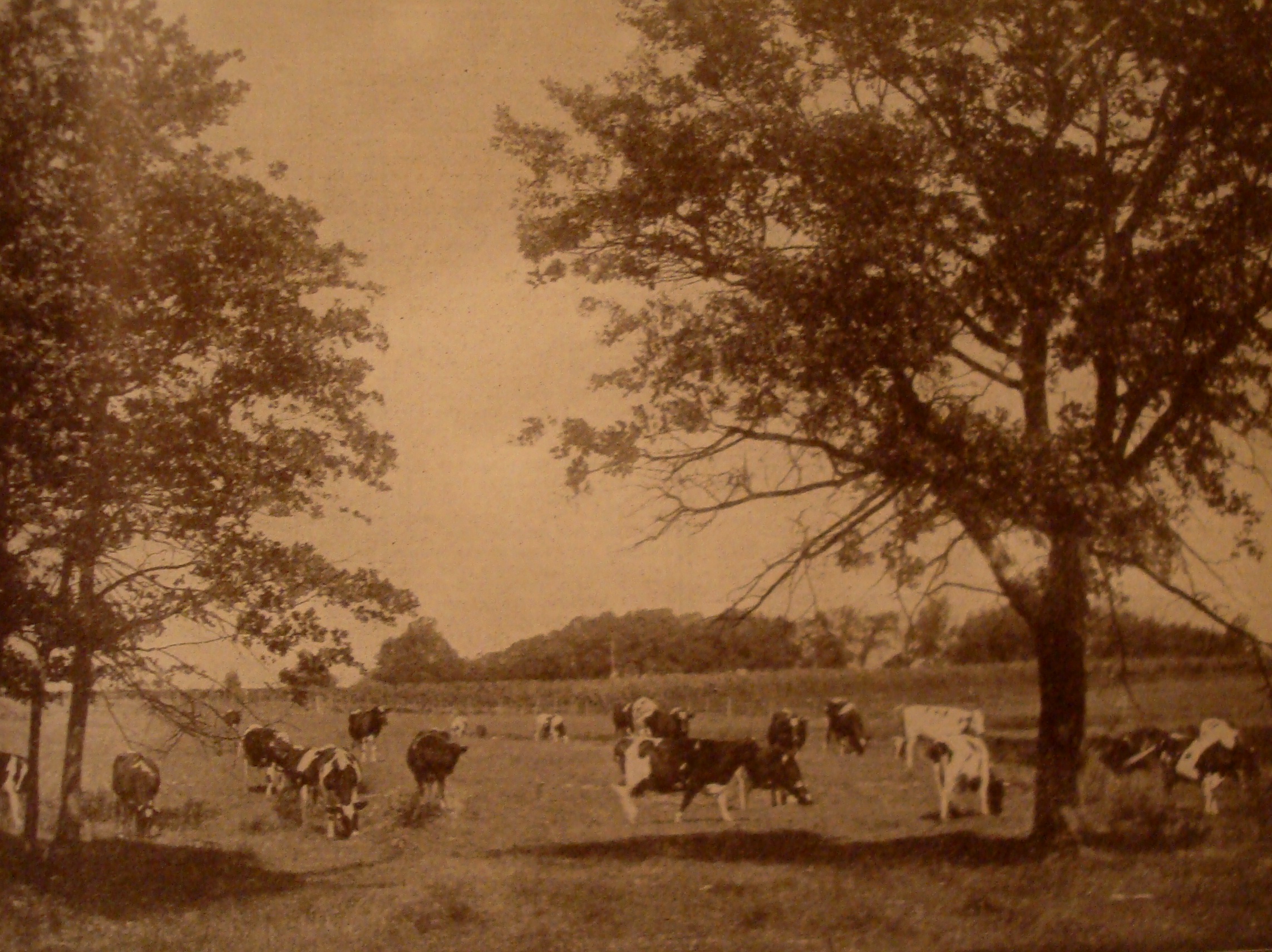
I’m reprinting this 1912 photo that I posted several days ago. I had fun trying to reproduce the look of cows in a field when I took the picture of the paper cows and thought you might enjoy seeing this photo again. Photo source: Kimball’s Dairy Farmer Magazine (June 1, 1912)

Memorized 700+ Bible Verses

17-year-old Helena Muffly wrote exactly 100 years ago today: 

Sunday, May 26, 1912: Went to Sunday School this morning. I’ve finished learning verses for my Bible which means I have learned the required number. I expect to get it next Sunday. Went up to Brysons this afternoon as I thought no visitors would come anyway. Ruth and I went to church this evening. I’m rather tired after all my walking.

Her middle-aged granddaughter’s comments 100 years later:

Wow! Grandma did it! She memorized 700+ verses, and was going to get a Bible.  I was sure that she’d give up.

On September 17, 1911 she’d written:

Went to Sunday School this morning. I usually get there every Sunday. In fact I haven’t missed going since in January. One reason for my regular attendance is that if you learn a number of verses from the Bible (over 700 it is) you will in the course of time receive a Bible.

And, on September 24, 1911 she wrote:

. . . Only learned seven verses for today, usually have twenty-seven. . .

Grandma mentioned memorizing verses several additional times during Fall, 1911 but the last time she wrote about it was on December 23. I’d felt certain that she’d never reach her goal—but I was wrong. Grandma persisted, but apparently didn’t think it was worth mentioning each week in the diary.

What Did Girls Do After High School a Hundred Years Ago?

17-year-old Helena Muffly wrote exactly 100 years ago today: 

Friday, May 24, 1912:  Ma says I’m getting my face tanned. How am I going to remedy that when I have to sit out and watch the pesky things? Well to make me feel better I guess she gave me fifty cents. Now I won’t be expected to grumble so much. Some day the trouble will end.

Did Grandma sit in this field a hundred years ago watching cows? This field is right next to the creek on the Muffly farm and seems like it might have once been the pasture.

Her middle-aged granddaughter’s comments 100 years later:

Hmm—apparently a tan wasn’t considered a good thing a hundred years ago. I guess times changed between 1912, and the 1960s and 70s.  When I was a teen we were all trying to get dark tans.

As Grandma watched cows on those very long days, did she ever dream of a great career after she graduated from high school?

There was an article on jobs for women in the April, 1912 issue of Ladies Home Journal. Here are some excerpts:

What Shall I Do After High School?

The average High School girl has a feeling of bewilderment as the day of her graduation approaches. She asks: “What is there that I can do?” This vocation of teaching, being the line of least resistance has gathered in many who do not care for it and are not happy at it. . .

It is not the purpose of this article to tell girls of some easy way to support themselves, but rather to deal with some of the interesting avenues of service open to women.

Nurse

The girl who goes into nursing should have a sound constitution, cheerful disposition, common-sense, capacity for prompt decision and quick action, and above all, the ability to put herself under discipline. The nurse receives her training in the classes of the city hospitals. It is well to be prepared with at least a High School education, although a number of hospitals will admit on one years’ High School work, provided the applicant fulfills the age requirement, usually eighteen years, and is “good material.”

What can a girl do with this training? She can engage in private nursing at $25 a week. This is, of course, not steady work. She may also go into Army or Navy service, into hospitals, sanatoriums, city institutions as head nurse or assistant. The best opening in all of these places is that of superintendent. The demand is far beyond the supply for superior women for these positions. The school nurse and district nurse are positions open to the young woman who is attracted to the field of preventive social work. The nurse is needed in the forward movements of the day.

Library Work

Every girl who has gone into library work is enthusiastic about it. The great criticism about the work is that while it demands a great deal of general proficiency, education and training, it nevertheless pays but small salaries in proportion to its requirements. To enter this work a girl should have a love for books, current events and general information. Library schools for the most part accept High School graduates and give courses of from one to two years, but college graduation as well as library training is demanded for the higher positions in this work.

Kindergartner

A girl who goes into this work should have good health, should be full of the play spirit, have keen insight, a sympathy for little children and ability to sing, play, and draw. Her training covers a four-year High school course, and a two-year course in a kindergarten training school.

The knowledge and personality of the kindergartner count for much. The home-visiting which is an important part of the kindergartner’s work calls for tact and judgment.

Graduate kindergartners may find positions in the public schools, in the free or mission kindergartens, in private kindergartens or in private homes. They may open kindergartens of their own. The regular kindergartner receives in the city public service from $600 to $1500. The salaries in private schools are somewhat less.

Jewelry and Silversmithing

For the girl who has artistic appreciation and who can use her hands with skill in execution, very interesting work can be found in the jewelry and silversmith trades.

Costume Designing and Illustrating

This work calls for a considerable amount of native ability. Originality counts for much. A good practical course in design and pattern drafting is recommended.

At present the women’s magazines, fashion magazines, newspapers and advertising sheets employ scores of women at this work. The remuneration varies from two to three dollars a drawing to fifty dollars.  A fair artist out be make anywhere from $20 to $75 a week.

Artistic Photography

One is amazed at the rapid strides that the women are making in the field of art photography. There are at present more than fifteen hundred professional woman photographers in America. It is especially in the field of home portraiture that they are “making good.” Chemistry and physics and art work in her High School course will be of great help to her later.

There are a number of young women who are making a specialty of photographing babies and young children.

Dietitian

Only girls who have strong, practical tendencies and enjoy work of a scientific character should think of going into the field of domestic science known as “dietetics.” The scientific care and distribution of food is fast coming into the hands of trained dietitian.

Some colleges have established definite courses along these line, of three or four years in length and leading to a degree.

So much value has become attached the last few years to the subject of nutrition that a new importance has been given to the work of dining-room supervisor and there is a large opportunity for practical women to work in our college dormitories.

The hospital and institutional dietician has to take entire charge and supervision of the food question for the institution.

Interior Decorators

For girls who have a good color sense, ability in getting artistic effects, and some business enterprise there are large opportunities in the profession of interior decorating.

The field is not only that of the home, but has also extended to work in college halls and dormitories, hotels, and public buildings. Architects are now employing interior decorators.

Secretary

A secretary has been a young woman who can offer her services merely as a stenographer and typewriter; but the demand for young women of great intelligences and training, along with faculty and speed in dictation and typewriting, has developed a higher value for such services. A bright girl can get a position at $8 to $10 to start on; but few get beyond this wage.

The positions open vary from those in the average commercial or publishing house and school office to that of private secretary to a scientific investigator who demands an understanding of the details of his subject.

Ladies Home Journal, April 1912

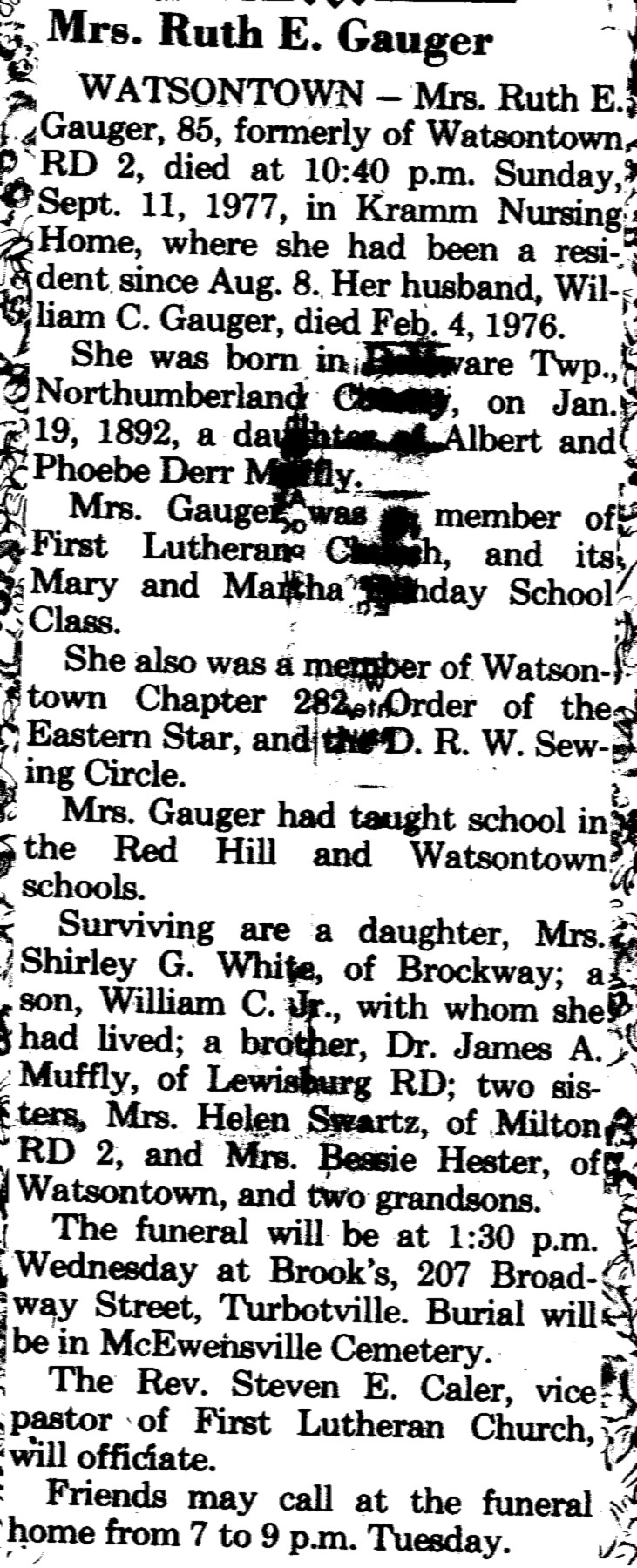
Ruth and Bill’s Obituaries

17-year-old Helena Muffly wrote exactly 100 years ago today: 

Thursday, May 23, 1912:  Miss Carrie was over this afternoon. I was on duty when she came—namely watching cows. Gee, but I don’t like it.

Ruth and I went down to one of our neighbors this evening.

Her middle-aged granddaughter’s comments 100 years later:

Whew, another post about watching the cows. Sounds like a boring job—especially when a friend comes to visit.  Miss Carrie referred to Grandma’s friend Carrie Stout.

Since this post is fairly self-explanatory, I’m going to finish the series of photos and documents that I’ve been posting on Grandma’s sister Ruth and her husband Bill Gauger.

The small  group of photos and clippings that were found after Grandma died included Ruth  and Bill’s obituaries. Grandma was in her 80’s when they died and not in particularly good health herself. I’m a little surprised that she saved them, but very glad she did.

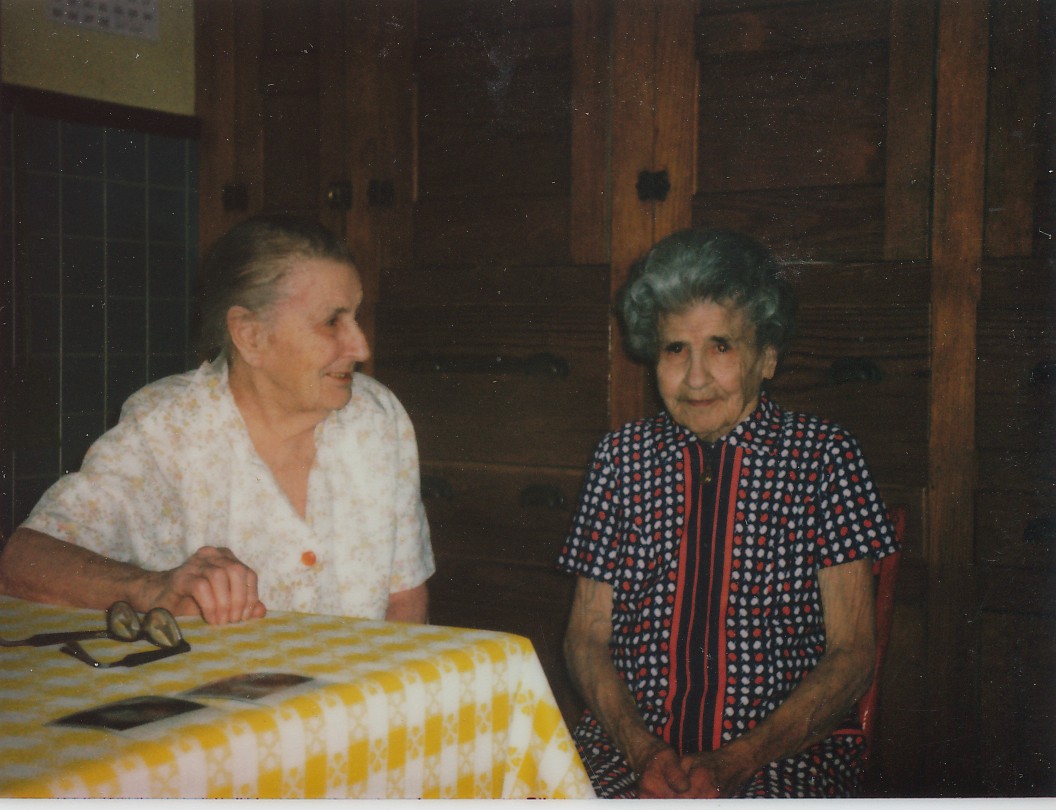
Two Elderly Sisters Remembering

17-year-old Helena Muffly wrote exactly 100 years ago today:

Wednesday, May 22, 1912: And leave it blank.

Left to right: Ruth (Muffly) Gauger, Helen(a) (Muffly) Swartz, circa 1975

Her middle-aged granddaughter’s comments 100 years later:

Since Grandma wrote next to nothing a hundred years ago today—though she obviously felt compelled to write something—I’m going continue sharing pictures.

This is a photo of Grandma and her sister Ruth that was taken very late in their lives. Ruth died in 1977 and Grandma in 1980, so I’m guessing that it was taken in the mid-1970s.

In some odd way I think this photo is one of my favorites.

After a lifetime of good times and difficult times, it’s fun to see the two elderly sisters sharing stories and reminiscing.  Regardless of age, life is good!