Clothes for School: 1911 Styles for Young Women

16-year-old Helena Muffly wrote exactly 100 years ago today: 

Tuesday, August 29, 1911: Did some fixing at one of my school dresses. I will soon need them for school starts next week. I’m so glad. I intend to be very studious and see if I can’t make a better record this coming year than I did last. Last year’s average was poor enough. I know.

Source: Ladies Home Journal (August, 1911)

Her middle-aged granddaughter’s comments 100 years later:

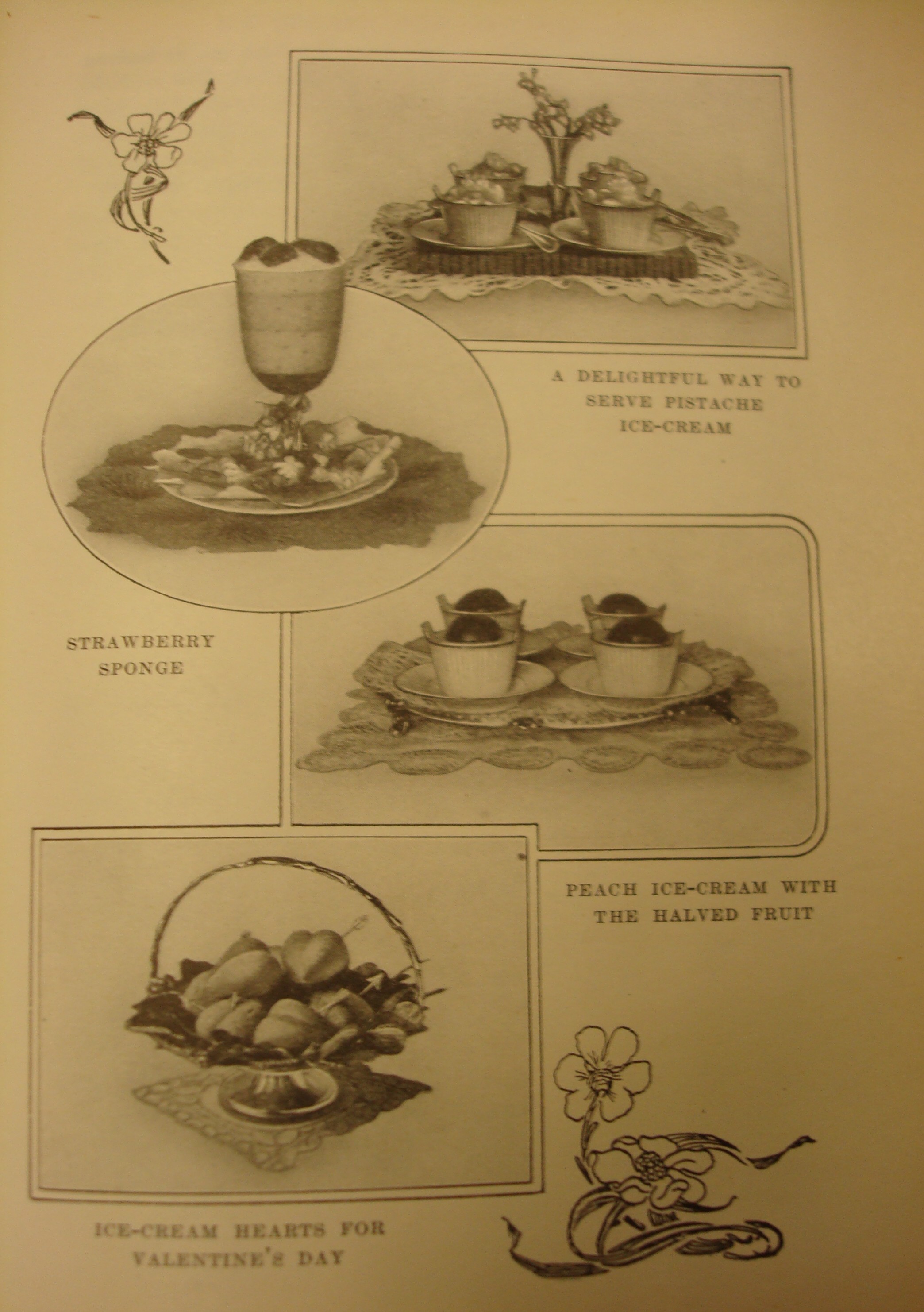
I wonder what repairs Grandma needed to make to one of her old school dresses. I bet that she wished that she had some stylish new clothes. The August 1911 issue of Ladies Home Journal showed the latest school clothes styles for young women.

For more pictures of 1911 clothes, see 1911 Dresses.

1911 Dresses

16-year-old Helena Muffly wrote exactly 100 years ago today: 

Sunday, July 16, 1911: Went to Sunday school this afternoon. I was the only one in our class. I initiated my new dress for the first time. Wouldn’t it be nice to have as many dresses as you wanted, and wear them whenever you pleased.

Photo in June, 1911 issue of Ladies Home Journal

Her middle-aged granddaughter’s comments 100 years later:

Grandma’s mother finished the new dress earlier in the week. Grandma probably wished that she had some dresses that looked similar to the ones in Ladies Home Journal.

Photo in the July, 1911 issue of Ladies Home Journal

Old-time Chocolate and Fruit Ice Cream Recipes

15-year-old Helena Muffly wrote exactly 100 years ago today: 

Sunday, February 26, 1911: I went to Sunday school this afternoon and staid for church and catechize. The walking was extremely bad, but still I went. We had chocolate ice cream for supper. We all rather like it, so we have it occasionally which is about once in a week.

Her middle-aged granddaughter’s comments 100 years later:

I’m amazing how often the Muffly family had ice cream. This is the fifth time they’ve made it since the diary began on January 1–ice cream was previously mentioned on January 22, February 8 (and it was banana ice cream on the 8th! I’m amazed that bananas were available in rural Pennsylvania), February 12, and  February 23.

A century ago ice cream freezers were the new-fangled thing—and with the ready availability of ice during the winter months, ice cream made the perfect dainty winter dessert. (A hundred years ago, young people preferred lighter foods which they called dainty foods.)

I found directions for making ice cream in an old cookbook that was published in 1911.

Chocolate Ice Cream—Use the vanilla recipe, adding four ounces of grated chocolate to the milk before scalding and using a couple ounces more sugar than for the vanilla cream.

Vanilla Ice Cream—Add to one egg slightly beaten one sup of sugar, one tablespoon of flour, and a speck of salt. Pour on one pint of scalding milk and cook for twenty-five minutes in a double boiler. When cool, add vanilla and one pint of thin cream.

Fresh Fruit Ice Creams—Prepare fruit by sprinkling sugar. Let it stand one hour, press through a sieve, and stir into ice cream when the cream is frozen to a mush. All fruit ice creams are made in substantially the same way, but where seed fruits, such as currants, are used, the carefully strained juice only must be added. This can be put in the freezer with the cream and not reserved until later, as in the case of the mashed fruits. Grated pineapple, with the addition of a little lemon juice, makes a particularly fine fruit cream.

The Butterick Cook Book (1911)

For detailed directions from the 1911 cookbook see the Vanilla Ice Cream posting.

Old-time Vanilla Ice Cream Recipes

15-year-old Helena wrote a hundred years ago today:

Sunday, February 12, 1911. Pa and Ma went away today and we had the house to ourselves while they were gone. Of course we had a fine dinner for my sister is an excellent cook, or rather she thinks she is. Any way we had dinner. Ice cream consisted of part of it. I had to turn the freezer, which I soon tired of. (I usually tire of anything I don’t like.) Any how I froze that cream so hard that it all crumbled up in big chunks. That surely was a result of labor. Rachel Oakes was a guest for dinner. I went to Sunday school church and catechize this afternoon. By the time I got home, the afternoon was almost over.

 Her middle-aged granddaughter’s comments 100 years later:

 I found directions for making ice cream in an old cookbook that was published in 1911.

 Vanilla Ice Cream, No. 1—Sweeten one quart of thin cream with three-fourths cup of sugar, flavor with one and one-half tablespoons of vanilla extract and freeze.

Vanilla Ice Cream, No. 2—Add to one egg slightly beaten, one cup of sugar, one tablespoon of flour, and a speck of salt. Pour on one pint of scalding milk and cook for twenty-five minutes in a double boiler. When cool, add vanilla and one pint of thin cream.

In freezing cream and ices, good general rules to be observed are: Be lavish with the salt and have the ice pounded quite fine, thereby involving less labor in turning the freezer and securing a smooth velvety cream. The quickest and best way to pound the ice is to put it in a stout burlap bag, tie up the mouth, and pound it vigorously with a flat-headed hammer or mallet. Snow may be used instead of ice; if this does not freeze steadily, add one cup of water to it. Have the ice and salt already packed around the can before the mixture is put in. Be sure that the latter is quite cold before it is placed in the can and do not begin freezing by turning rapidly and lagging toward the end of the process. Instead turn slowly at the beginning and increase the speed as the mixture thickens. Be very careful that there is no possible chance of the salt or water getting into the can, but do not pour off the water unless it gets too high; when a little may be turned off.

Allow three measures of ice to one measure of salt; if a larger proportionate quantity of salt be used the freezing will take place in a shorter time, but the mixture will have a granular texture.

Never fill a freezer more than three-fourths full, as the mixture gains in bulk as it freezes.

When it is desired to have the cream in blocks or cakes a special mold will be needed. The mold should be set in ice and salt while the cream is being frozen, and when the beater or mixer is removed, the cream should be packed into the mold as quickly as possible. It should be pressed down firmly and smoothly and a piece of stout muslin or buttered paper laid over it before the mold cover is put on. The mold is then packed in ice and salt and kept for a few hours until the cream is ready for use.

The Butterick Cook Book (1911)

Based upon the directions above, it appears that Grandma probably started turning the handle quickly at the beginning and then much slower as it thickened—which is exactly the opposite from what she should have done.

(An old-fashioned ice cream freezer is shown in the January 22 posting.)

How Do You Spell ‘Man’?

15-year-old Helena wrote a hundred years ago today:

Friday, January 20, 1911: Brought home some maps I drew at school last year. They were very excellent specimen’s of drawing, so I thought it would be worthwhile to save them and exhibit them to my friends if I ever have an reason to. Perhaps I shall not. Missed the word (man) in spelling. Now looked surprised, anyone else might have missed it too under the same circumstances.

Her middle-aged grand-daughter’s comments 100 years later:

Recent Photo of McEwensville High School

It was just one of those days with a high point and a low spot. Today’s five sentence diary entry gives lots of hints about Grandma:

  • She’s proud of her drawing ability (or at least her map-making skills).
  • She wants to share her successes with friends, but seems to hold back and feel uncertain about how they’ll react. Grandma so wants affirmation that the maps are good but fears that maybe her friends wouldn’t think the maps were as cool as she thinks they are—and then she’d feel bad.
  •  And, I guess she wasn’t much of a speller. (That trait seems to have carried down to my generation–though I can definitely spell man.)  Was there a spelling bee?—Maybe it was supposed to be a fun way to end the week on Friday afternoon.  Did Grandma really mean that she misspelled the word “man”? What were the circumstances? Was she horsing around with friends instead of paying attention? . . . Daydreaming? Did she feel humiliated when the class laughed? . . . or did she enjoy the attention? 

1911 Books That Have Stood the Test of Time

15-year-old Helena wrote a hundred years ago today:

Wednesday, January 18, 1911: Got a book out of the library at school today, which I’ll have to manage to read pretty soon, as soon as I get time.

Her middle-aged grand-daughter’s comments 100 years later:

Tuesday, January 18, 2010:  Goodreads lists 180 books published in 1911 that are still in print. These probably were not the most popular books at the time, but rather they are the books that have endured –and whose message apparently continues to resonate a hundred years later.

Fourteen books on the list that I recognized the title or author of are listed below.

1. Peter Pan by J.M. Barrie (Barrie published the children’s story in 1911–he’d written the play a few years earlier.)

All children, except one, grow up.

First line of Peter Pan

2. Ethan Frome by Edith Wharton

3.  Riders of the Purple Sage by Zane Grey

4. My First Summer in the Sierra by John Muir

5. The Door in the Wall by H.G. Wells

6. The Scarlet Plague by Jack London

7. Under Western Eyes by Joseph Conrad          

8. Jennie Gerhardt by Theodore Dreiser

9. The Quest of the Golden Fleece by W.E.B. DuBois

10. The Sea Fairies by L. Frank Baum

11.The Montessori Method by Marie Montessori

12. Roget International Thesaurus by Peter Mark Roget

13. The Principles of Scientific Management by Frederick Taylor

14. The Official Handbook for Boys by The Boys Scouts of America

The books cover the gamut, but they give an indication of some of the key issues of 1911–social norms (Wharton), civil rights (Dubois), good management (Taylor’s famous–or perhaps infamous–time-motion studies measured how long it took factory workers to complete various tasks with the goal of increasing efficiency), early childhood education (Montessori), revolutionary movements (Conrad), and the environment (Muir).  It’s amazing how some of the issues haven’t really changed much in 100 years–while in other cases the whole paradigm has shifted.

Cold, Dark, January Nights

15-year-old Helena Muffly wrote exactly 100 years ago today:

Sunday, January 15, 1911: Hardly remember what I did today. This evening I accompanied my lofty sister up to Oakes.

Her middle-aged granddaughter’s comments 100 years later: 

Grandma had two sisters. Besse  and Ruth.  Besse was the oldest and already married by the time Grandma began keeping this diary. Ruth was 3 years older than Grandma and still lived at home—so this entry must be referring to Ruth. I wonder why Grandma refers to Ruth as lofty?

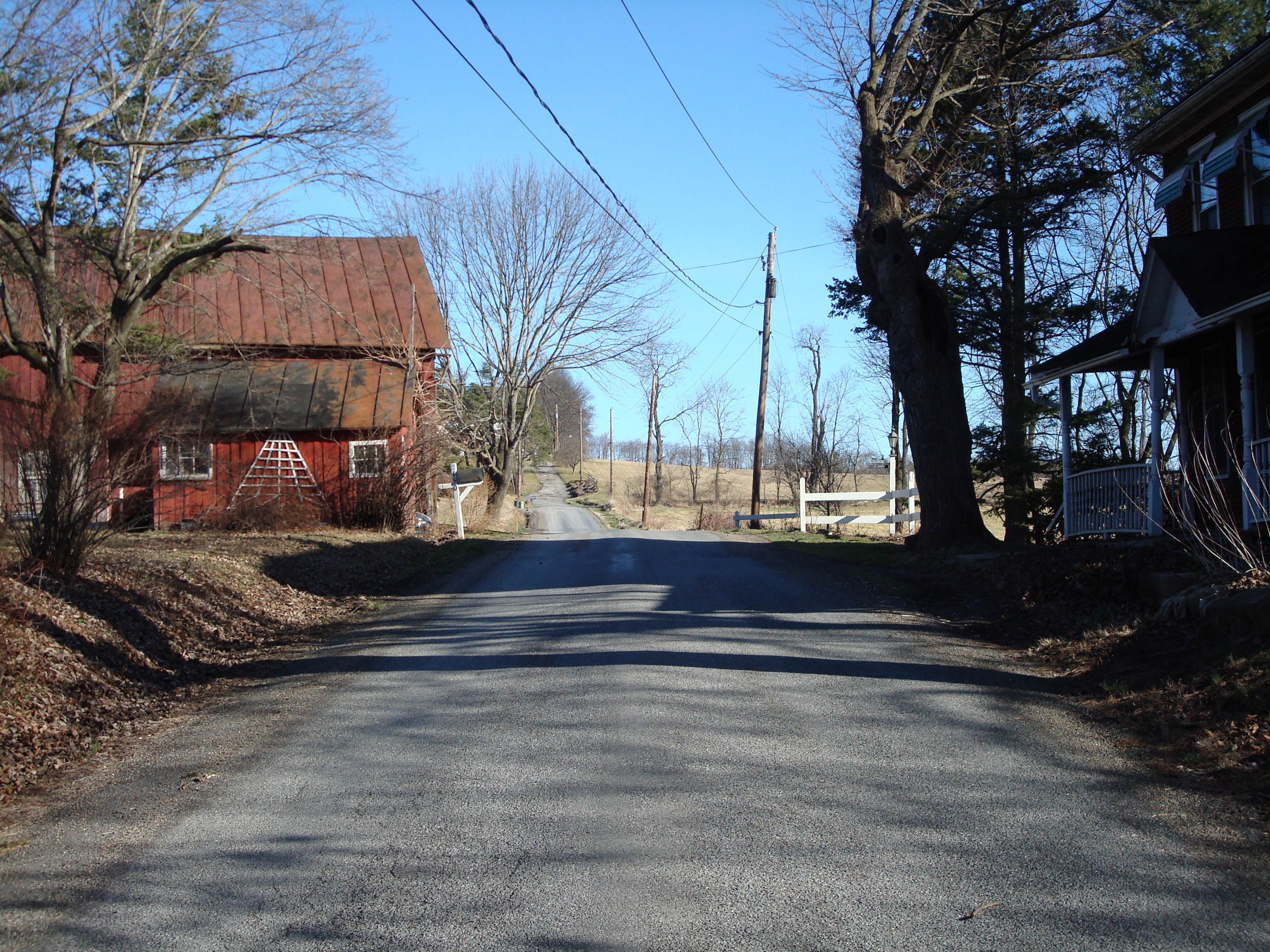
Grandma would have walked down this road past another neighbor's farm to get to Oakes--except imagine that it is dark and very cold.

The Oakes family lived on a farm that was located about a mile from where Grandma lived.  Grandma and Ruth would have gone down the road that went past their farm in the opposite direction from the way they headed when going to McEwensville.

I don’t like to go out after dark on cold, dark January nights.  Grandma and Ruth would have gone up a hill and then turned into a lane to get to the Oakes home.  Did they walk to Oakes—or did they ride in a carriage or wagon? Was there a full moon? Did they take a lantern?