

A 1921 home economics textbook offered these recommendations for a well-designed kitchen:
The Kitchen
The kitchen is a workshop where food is cared for, prepared, cooked and served.
The most convenient kitchen has windows or doors on two sides of the room, so that when these are open, a cross draft of air clears the room of smoke and odors.
The kitchen should be the cleanest room in the house. The most sanitary kitchen has walls finished in materials that can be washed, such as oil paint or tile. Walls and woodwork should be light in color, because this makes the room seem more cheerful and also makes it easy to “see the dirt”, which then may be removed.
Hard-wood floors may be oiled or waxed and used without covering. Soft-wood floors may be covered with linoleum or cork carpet, or they may be painted.
The kitchen should have built-in cupboards with plenty of space for utensils.
The sink, with a drain board at each end, should be set where there is plenty of light, and it should be open underneath to avoid the dampness often found in sink cupboards.
The kitchen may have a built-in ice-box arranged to be iced from the outside of the house. Some kitchens have a dumb waiter to the basement.
If an ironing-board is used in the kitchen, it may be built into a space in the wall, being let down when needed and folded back when not in use.
Other devices sometimes found in the kitchen are: a closet for cleaning implements, such as broom, bucket and brushes; a cupboard for the leaves of the dining-table, and a built-in kitchen cabinet. There may also be a pantry.
Each housekeeper decides for herself how to make the kitchen a well arranged and equipped workshop. In a well arranged kitchen the equipment is so placed the housekeeper can use it without losing time or wasting strength in walking.
Elementary Home Economics (1921) by Mary Lockwood Matthews

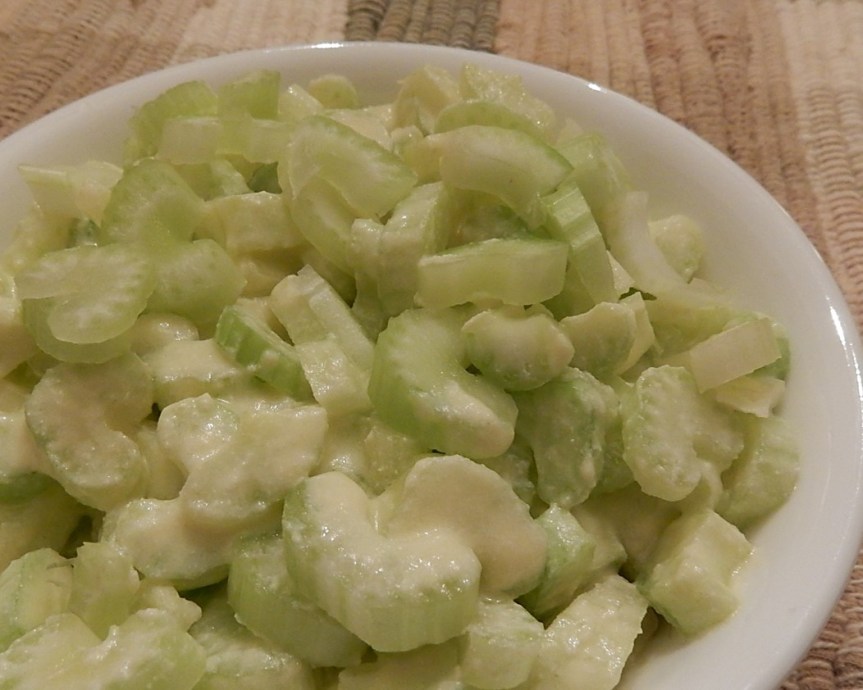 Some vegetables are often featured in salads and side dishes – others, such as celery, not so much. A hundred years ago celery was more popular than it is today, and I see old recipes for celery dishes from time to time.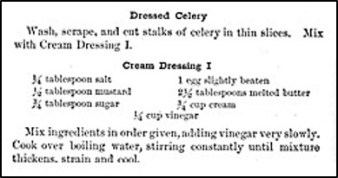




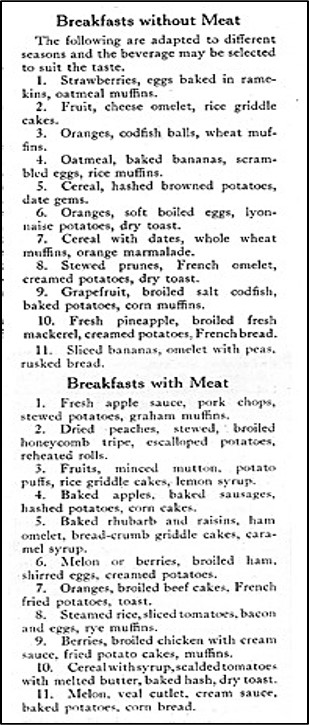
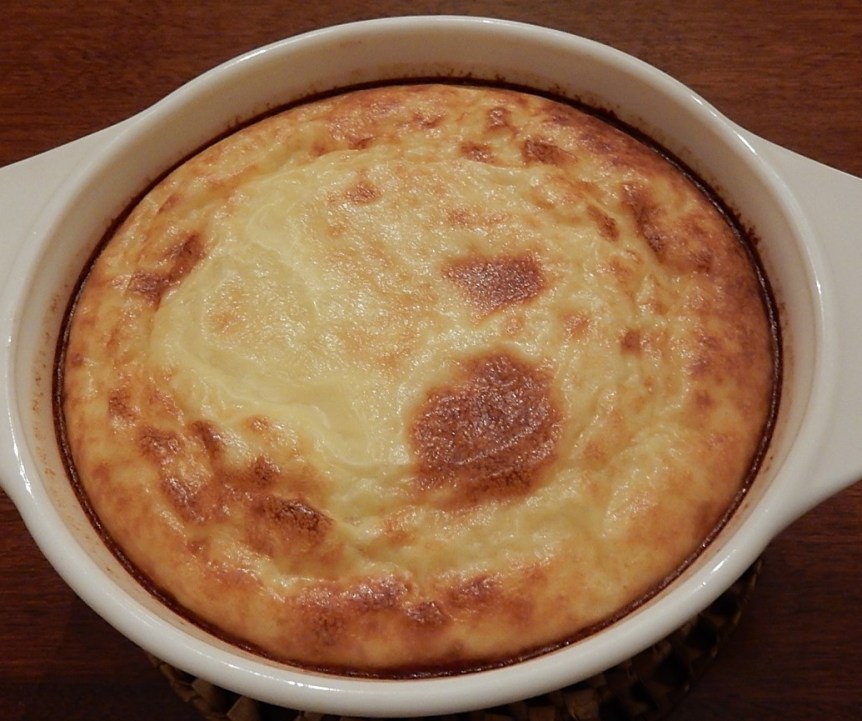 It fascinating how much variation there can be from one recipe to the next. Three years ago I
 I never thought much about how many vegetables to serve at a meal until I read recommendations in a hundred-year-old home economics textbook, but my first thought was “the more the better.” That’s not exactly what the old book said: