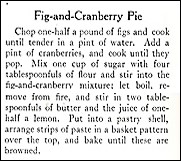

Here’s how a 1921 home economics textbook describes a high-quality pie:
A pie should have a light, flaky, tender crust that is thoroughly baked. Pie crust must be chewed thoroughly, since even the best is hard to digest. It is easier to make tender pie crust from pastry flour because that contains less gluten and more starch than bread flour. Bread flour may be used, however. Many kinds of fat are used in pie crust, such as lard, butter, vegetable fats and oils. Fat make the crust “short” and flaky, and is often called “shortening.” The crust is made tender by careful handling, and by folding and rolling several times so that air is folded into the dough. This air, and the steam formed from the water used in the mixture, expand the dough during baking and make the pie crust light.
Elementary Home Economics (1921) by Mary Lockwood Matthews