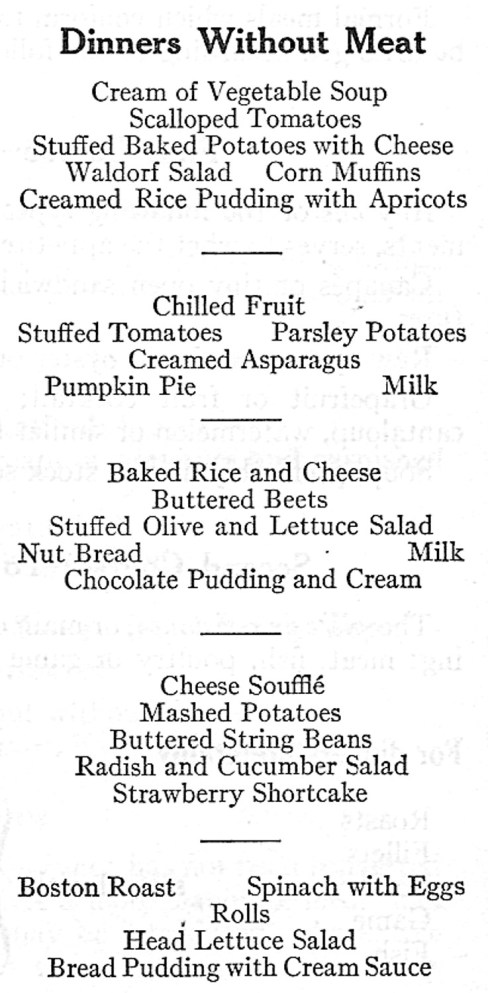
Today people often eat meatless meals for health, environmental, ethical, cost, or religious reasons. A hundred years ago people also sometimes ate meatless meals. Some of the reasons were probably the same – others different.
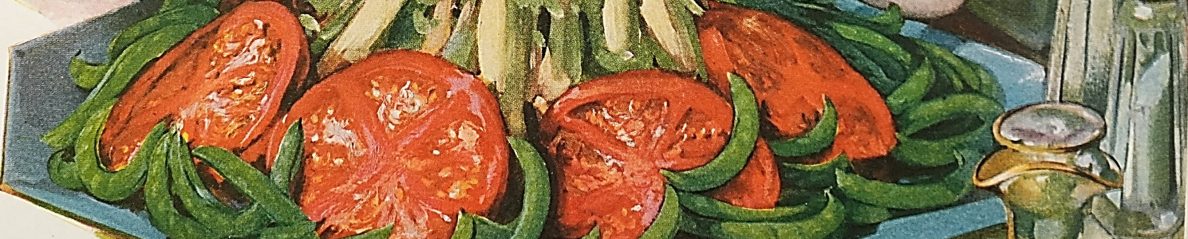
Today people often eat meatless meals for health, environmental, ethical, cost, or religious reasons. A hundred years ago people also sometimes ate meatless meals. Some of the reasons were probably the same – others different.

Week-end mornings are the perfect time to make breakfast foods that are just a little special, so when I saw a recipe for Chocolate Waffles in a hundred-year-old cookbook, I decided to give them a try.
The Chocolate Waffles were crispy on the outside and tender in the middle. They contained just the right amount of chocolate. The waffles were not very sweet, but when syrup or other sweet topping is added it was just right.
Here’s the original recipe:

I gradually added the hot water to the cocoa, and stirred until smooth. This resulted in a very thick paste. I could not figure out why the old recipe called for then heating this thick cocoa and water mixture to boiling, so I skipped that step.
Chocolate Waffles probably are lovely when served with chocolate sauce, marshmallow cream, or vanilla ice cream, but I just served them with maple syrup and they were delightful.
Here’s the recipe updated for modern cooks:
1/2 cup cocoa
1/2 cup water
1 cup milk
2 eggs
2 cups flour
4 teaspoons baking powder
1/2 teaspoon salt
1/4 cup sugar
2 tablespoons shortening, melted
1/2 teaspoon vanilla
Put the cocoa in a mixing bowl, and gradually add the hot water while stirring constantly. Stir until smooth. Add remaining ingredients. Beat until smooth. Ladle batter onto a hot waffle iron and cook, following the waffle iron directions.
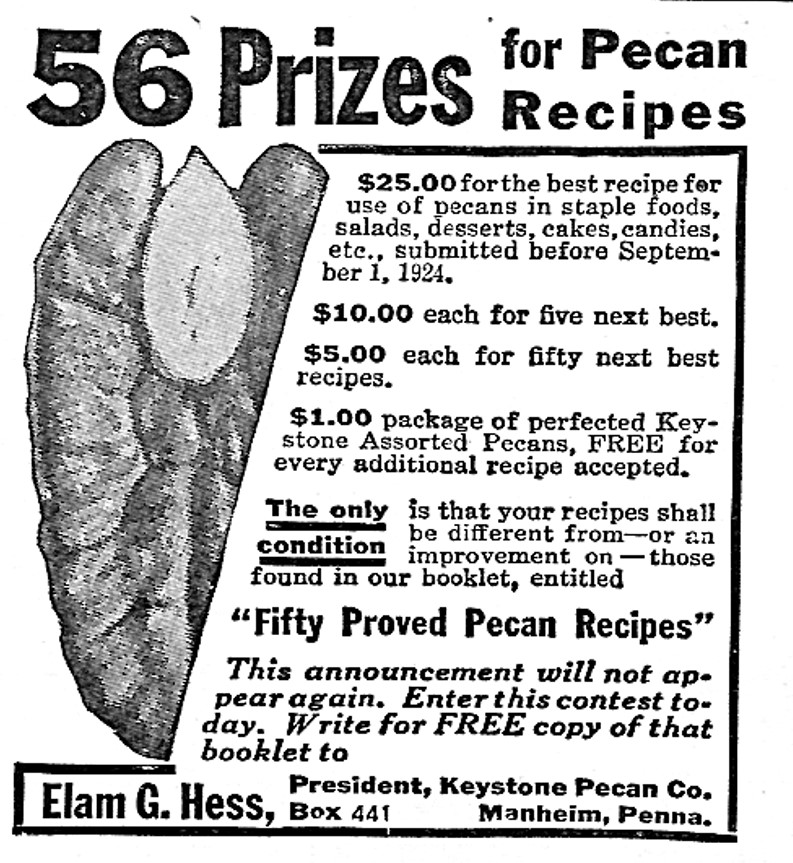
I love recipe contests – and have some great pecan recipes. Unfortunately, this pecan recipe contest ended a hundred years ago.
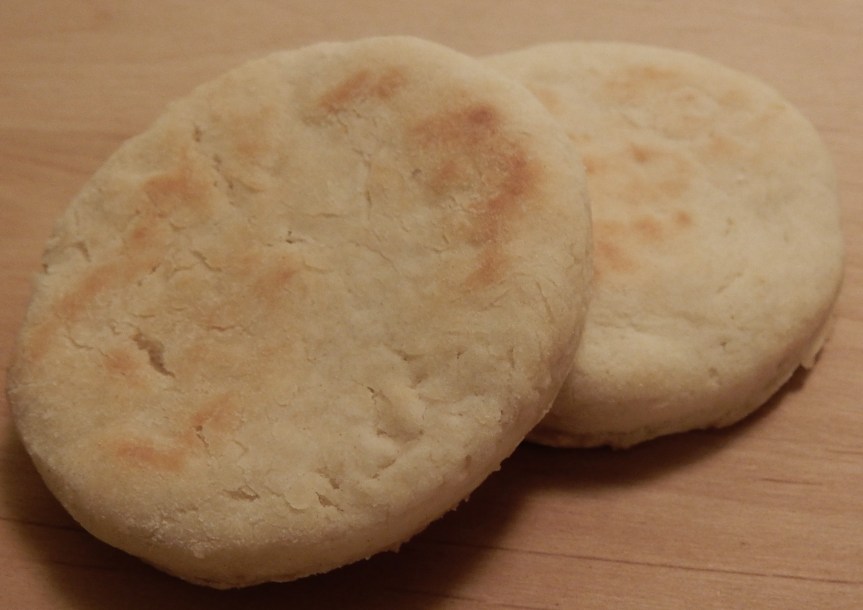
I recently came across a hundred-year-old recipe for Potato Biscuits, and decided to give it a try. The biscuits were soft and tender. This recipe is a great way to use up leftover mashed potatoes.
Here’s the original recipe:

This recipe calls for using the Crisco brand of shortening. That’s because the recipe was published in a 1924 promotional cookbook for Crisco. When I updated the recipe, I changed it to just “shortening” since any brand would work. I used all-purpose flour rather than pastry flour when I made this recipe, and it worked fine.
Here’s the recipe updated for modern cooks:
1 1/2 cups all-purpose flour
3 teaspoons baking powder
1/2 teaspoon salt
1 cup mashed potatoes
1/4 cup shortening
approximately 1/3 cup milk, as needed
Preheat oven to 450° F. Mix the flour, baking powder, and salt together; stir in the mashed potatoes. Then cut (work) in the shortening and butter using fingers, pastry blender, or food processor. Gradually add the milk while mixing with a knife or spoon. Continue adding liquid until there is a soft dough. The amount of milk needed varies depending upon the type of flour. On a floured board, pat or roll the dough until 1/2 -inch thick. Cut with a round biscuit cutter. (I used a drinking glass as the cutter.) Place on a baking sheet, and bake for 15 – 20 minutes, or until lightly browned. Serve warm.
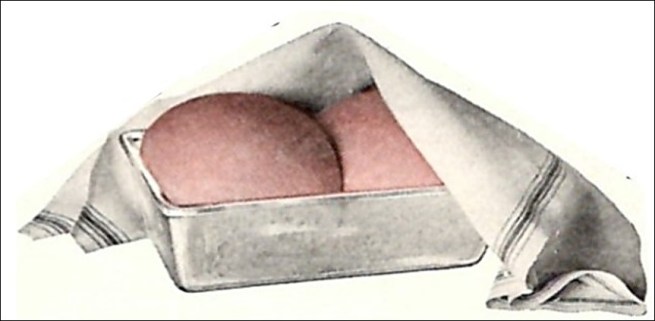
Today we tend to think of gluten in a negative way. But here is what it said about gluten in a 1924 cookbook:
BREADS
. . . The protein in flour is in the form of gluten, and while elasticity is a property of all proteins, the gluten of wheat possesses this property in marked degree. This strong elastic gluten makes a good framework to retain the air and carbon dioxide, and renders wheat the ideal grain for bread making. The protein in oats and corn are deficient in this property and when used in bread making are combined with wheat.
Wheat and flour vary greatly in the quantity of gluten present; even the same variety of wheat will vary from season to season. Also, in connection with the kind of wheat, the time of planting affects the quantity and quality of the gluten. Spring wheat sown in the spring and harvested the same season contains more protein and, consequently, more gluten than winter wheat sown in the fall and harvested in the early part of the summer. Flour from spring wheat, rich in gluten, is well adapted to bread making and is known as bread flour. It is creamy in color, granular to the touch and passes through a sieve easily; a slight jar sends it through. Flour from winter wheat is whiter in color and soft to the touch; if a quantity be crushed in the hand it will retain the impress of the lines in the hand. It tastes sweet. It is adapted to the making of starch. It is adapted to the making of cake and pastry articles; foods in which delicacy rather than strength is sought. Such flour is known as pastry flour.
Source: The Whys of Cooking by Janet McKenzie Hill (1924)
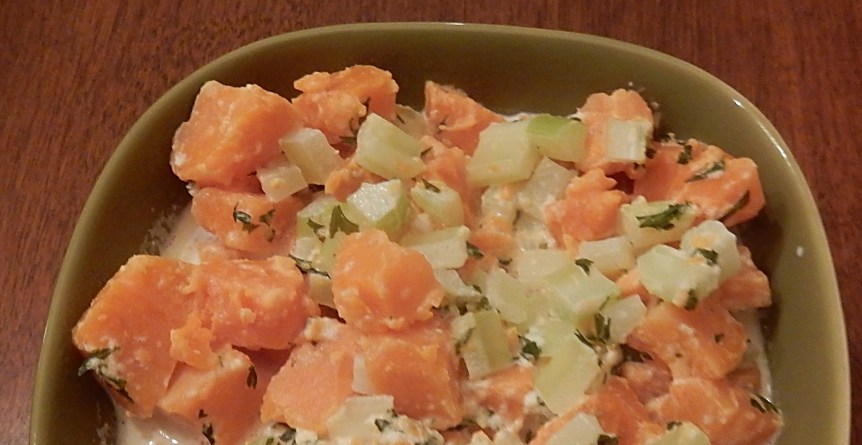
I’m always looking for new ways to serve vegetables, so was intrigued by a hundred-year-old recipe for Creamed Sweet Potatoes. The recipe actually called for both diced sweet potatoes and celery. The combination worked well together, and I was pleased with how the recipe turned out.
Here’s the original recipe:
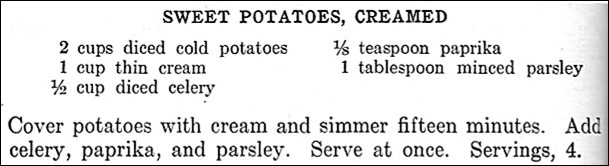
When I made this recipe, I was uncertain whether I was supposed to use left-over cold sweet potatoes that had previously been cooked, or if I was supposed to peel sweet potatoes and cut the uncooked sweet potatoes into cubes. I decided to go with the latter approach. The reason I used uncooked diced sweet potatoes is because they can easily be over-cooked and become very mushy. I wanted the sweet potatoes pieces to hold their shape.
Here’s the recipe updated for modern cooks:
1 cup half and half (light cream)
2 cups sweet potatoes, peeled and diced into 1-inch cubes
1/2 cup celery (about 1 stalk), diced
1/8 teaspoon paprika
1 tablespoon chopped parsley (or 1 tablespoon parsley flakes) – I used parsley flakes.
Put half and half in a saucepan; add diced sweet potatoes. Using medium heat, bring to a boil, then reduce heat and simmer for 15 minutes or until the sweet potatoes are tender. Genty stir occasionally while cooking, being sure to stir all the way to the bottom of the pan since the cream will easily scorch. Once the sweet potatoes are tender, gently stir in the paprika and parsley, then add the celery. Heat for another minute or two (until the mixture is hot and bubbly); remove from the heat and serve.

I know that if there is even a bit of yolk in egg whites that they won’t beat well, and that it is impossible to get stiff peaks. Over the years, I’ve often broken a yolk when separating the whites from the yolks and ended up discarding the egg white (or the whites from multiple eggs if I was being cavalier and had assumed that I wouldn’t have problems and directly separated eggs into a bowl that already had whites from other eggs). But I never knew why until I read a short article in a hundred-year-old magazine. (It’s amazing how many new things I’ve learned over the years from old books and magazines.)
Why Does Yolk of Egg Keep White from Beating Stiff?
If even a small portion of the yolk of the egg gets mixed with the white, this will keep the white from beating to the same kind of stiff froth that the white alone will beat into, because there is enough oil present, in the little portions of yolk, to keep down the froth. You know you cannot beat olive oil, for instances, into a froth. You know that “pouring oil on troubled waters” is a very real, rather than poetical expression of the smoothing-down effect of oil on a rough sea and angry breakers. Yet if only a very little of the yolk gets mixed with the white, and if you beat long and hard, you will get a fluffed up mass, though not of the same texture attainable by beating of the white alone.
American Cookery (December, 1924)
Okay, I guess this makes sense – but I’m still a little confused. Why can heavy cream (with lots of fat) be whipped into stiff peaks, while skim milk (with no fat) doesn’t whip at all?
