16-year-old Helena Muffly wrote exactly 100 years ago today:
Tuesday, April 18, 1911: I believe I have forgotten what I really did today. It was so much and yet so little. Toothache still continues.
Her middle-aged granddaughter’s comments 100 years later:
I want to yell at Grandma’s parents and tell them to get their daughter to a dentist. NOW! For the past week or so, Grandma has complained about her tooth (see April 11 and 15). Maybe people didn’t go to dentists as quickly a hundred years ago—
According to The Compendium of Everyday Wants (1908):
TOOTHACHE—The most complete and speedy cure for toothache is to pour a few drops of compound tincture of benzoin on cotton and press it into the cavity of the tooth.
16-year-old Helena Muffly wrote exactly 100 years ago today:
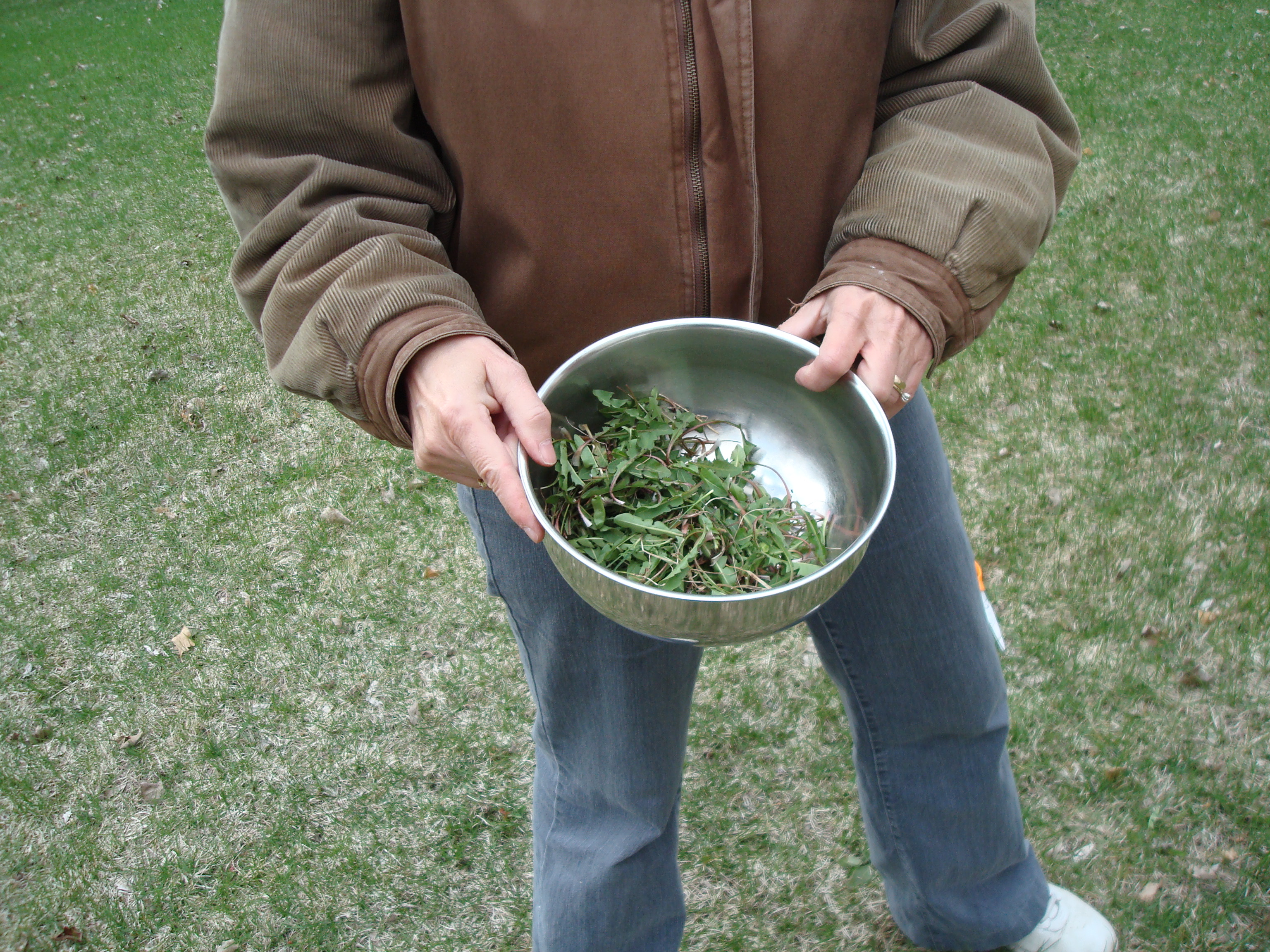
Sunday, April 17, 1911: I got a supply of novelettes this morning. Will have something to do now during my leisure hours. Ruth and I expected company this afternoon, but they didn’t come. Gathered some dandelions.
Her middle-aged granddaughter’s comments 100 years later:
This is the third time in less than 8 days that Grandma gathered dandelions (see the April 10 and 13 posts). In today’s world it is easy to get most any fresh fruit or vegetable we desire whenever we want them throughout the year, and it is difficult to imagine how excited people once were when dandelions and other bitter greens became available in the spring. Throughout the winter months the family would have been eating vegetable that had been stored since the previous fall (potatoes, squash, parsnips, etc.). These greens were the first new fresh vegetables since the previous fall.
—–
Husband Bill said that I’d been talking about how awesome dandelions were all week—and that I should make myself useful and help dig the dandelions out of the yard. We spent some quality time together, enjoyed a spring day, had dandelion for dinner, and the yard looks great!
16-year-old Helena Muffly wrote exactly 100 years ago today:
Sunday, April 16, 1911: Easter Sunday, no chocolate eggs were in evidence. I went to Sunday school this morning. Went over to Stout’s this afternoon. Miss Carrie wasn’t at home though, having gone away to spend Easter.
Her middle-aged granddaughter’s comments 100 years later:
It sounds like Grandma’s family didn’t celebrate Easter in 1911—though other families in the area apparently participated in extended family gatherings since Grandma’s friend Carrie had gone away to spend Easter.
Grandma’s maternal grandparents lived in Turbotville, and her mother, Phoebe Derr Muffly, had 7 siblings—many of whom lived within 15 miles of the Muffly farm. It is somewhat surprising that the extended family didn’t gather to celebrate Easter.
—–
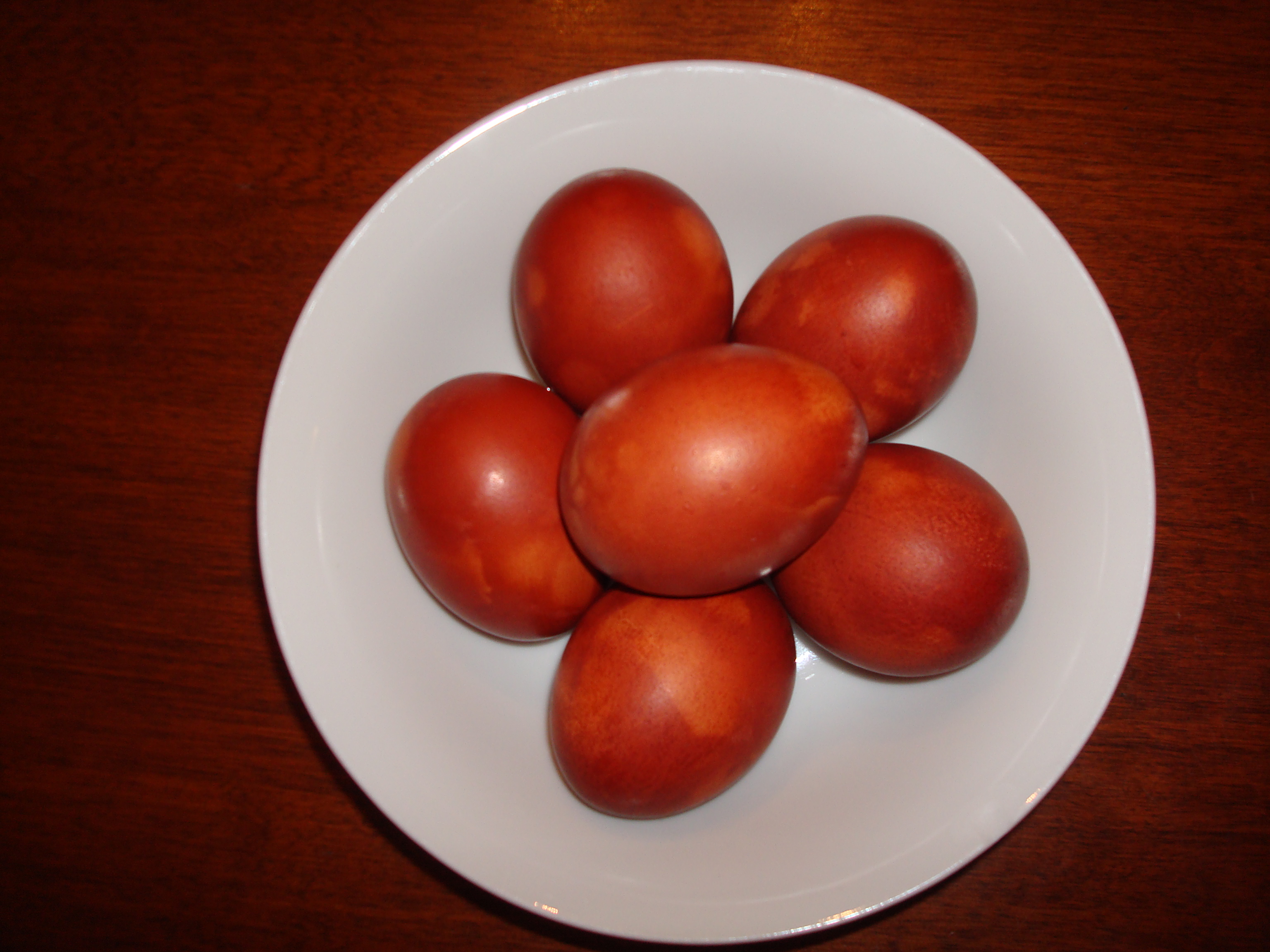
I had lots of fun experimenting with dying eggs using onion skins two days ago—now I have lots of hard-boiled eggs that need to be used.
Goldenrod Eggs are an old-fashioned traditional Easter food.
Goldenrod Eggs with Chopped Ham
Goldenrod Eggs
6 slices buttered toast
6 hard-cooked eggs
2 cups white sauce*
1/4 teaspoon salt
few grains cayenne
1/8 teaspoon pepper
Remove shells from eggs; chop whites finely; add to White Sauce. Press yolks through a sieve and add seasonings. Pour White Sauce over toast arranged on a platter, and garnish with yolks of eggs.
This dish may be very attractively arranged by placing spoonfuls of finely chopped ham around the toast.
*White Sauce
4 tablespoons butter
4 tablespoons flour
2 cups milk
1/4 teaspoon salt
few grains cayenne
1/4 teaspoon pepper
Melt butter, add flour, seasonings and liquid. Stir until the boiling point is reached. Boil two minutes, beating constantly.
16-year-old Helena Muffly wrote exactly 100 years ago today:
Saturday, April 15, 1911: Besse was out this afternoon. We three kids went for arbutus and I got some this time. Still have a toothache.
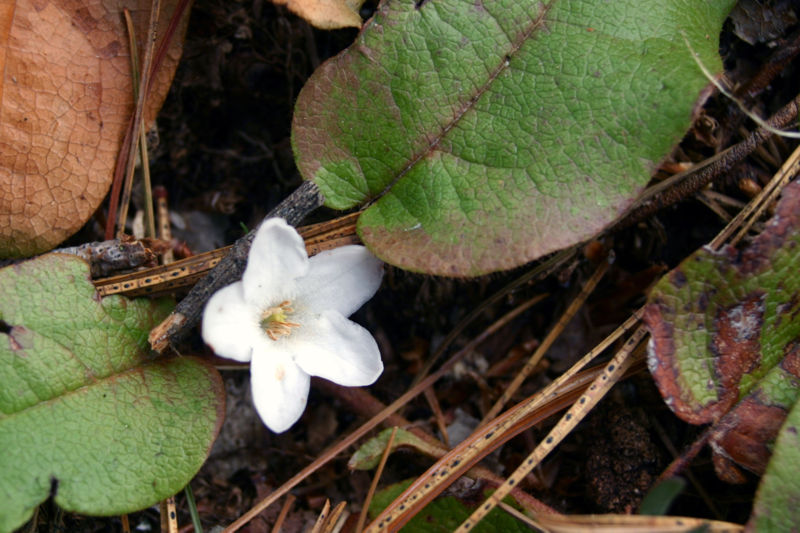
Trailing Arbutus (Mayflower)
Her middle-aged granddaughter’s comments 100 years later:
It sounds like a fun day for three sisters—Grandma, Ruth and their married sister Besse. The trailing arbutus must have just started blooming since Grandma had been unable to find any two days earlier.
Trailing arbutus are also called mayflowers. I found a description online about what it was like to pick them:
I have such crisp memories of picking wild mayflowers with my brother. Scrounging around on the sun-splashed forest floor, moving decaying leaves with our bare hands to find a delicately scented flower smaller than a dime.
Trailing arbutus are not easy to find; their flowers tend to hide under the leaves. It takes quite a few flowers to make even a small bunch, but they were worth it.
16-year-old Helena Muffly wrote exactly 100 years ago today:
Friday, April 14, 1911: I spent most of my time indoors today for the weather was decidedly dreary and ugly. Had a time hiding pop corn this afternoon from Jimmie and Mother.
Her middle-aged granddaughter’s comments 100 years later:
Grandma seems focused on hiding pop corn from her 6-year-old brother Jimmie and her mother. Why?? Was there a shortage of pop corn? Had Grandma popped it—and she wanted to enjoy it herself? . . . .
A hundred years ago on this date it would have been Good Friday. I wonder if the family was making any preparations for Easter. The April 1, 1911 issue of Ladies Home Journal provided suggestions for dyeing Easter eggs:
Easter Egg Dye
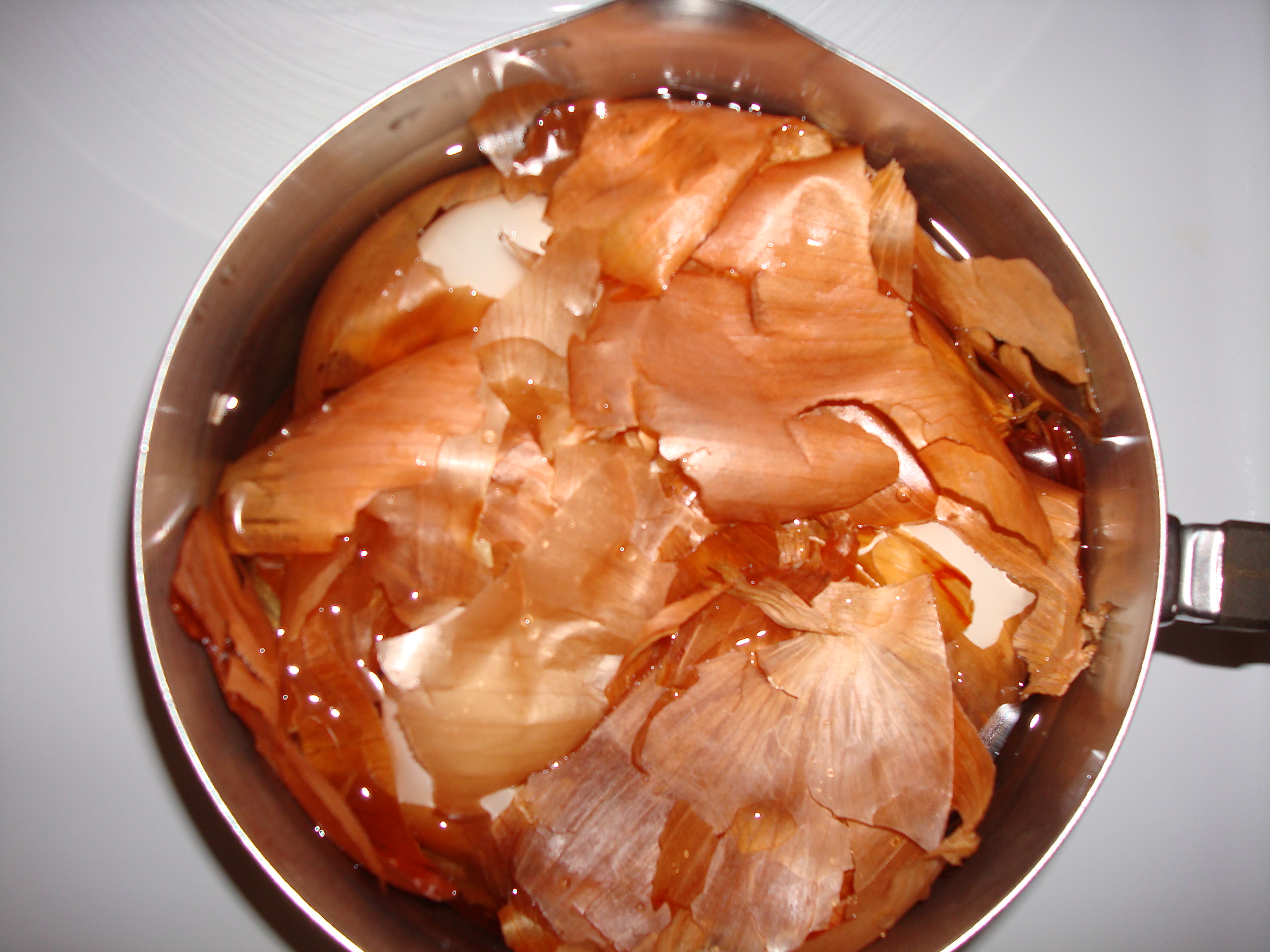
A harmless dye for Easter eggs is made by boiling the eggs with onion skins. Put the eggs on to boil in cold water, with enough onion skins to cover them. Boil till the eggs are hard. They will come out in pretty shades of brown and red. Polish them with a soft flannel cloth. Two cupfuls of onion skins will color eight or ten eggs.
I used white eggs and the outer skins from yellow onions to test these directions. The eggs were easy to color–and the dyed eggs are a pretty reddish-brown. I’m amazed how the skins of yellow onions produce a dye that is so red.
16-year-old Helena Muffly wrote exactly 100 years ago today:
Thursday, April 13, 1911: Carrie Stout was over this afternoon. We went to gather dandelions, and worked awhile, then went to hunt for trailing arbutus in the woods. We didn’t get any though for it was just beginning to come out. But we found some wintergreen and mountain pinks.
Her middle-aged granddaughter’s comments 100 years later:
It sounds like Grandma and her friend Carrie had a pleasant afternoon. I can remember often seeing trailing arbutus in the woods in the spring—but hadn’t realized that people apparently picked them years ago. The flowers seem so small.
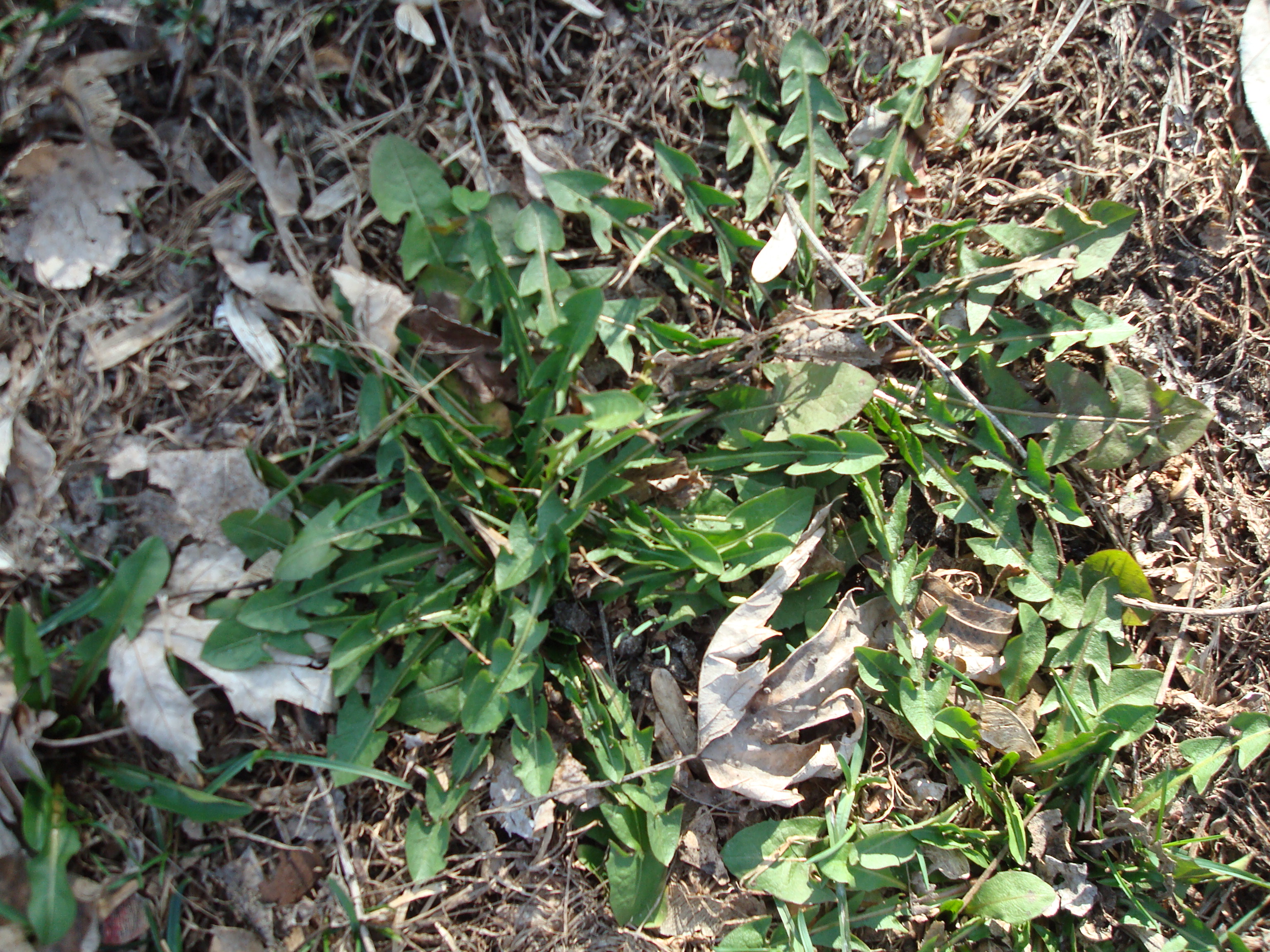
Dandelion plants
This is the second time this week that Grandma mentioned gathering dandelions in the diary. I can remember relatives gathering dandelions when I was a child. Dandelions are best for eating early in the spring before they bloom. The more mature the plants, the more bitter the taste.
There is a great Utube video by a 94-year-old woman named Clara about how to gather and clean dandelion. The video is awesome and very accurately shows how to gather and prepare dandelions for eating.
The dandelion video is part of a series of videos called Great Depression Cooking with Clara. The video is about a time period somewhat after this diary—but I doubt if the way dandelions are collected and cleaned has changed very much over the years.
16-year-old Helena Muffly wrote exactly 100 years ago today:
Wednesday, April 12, 1911: I went over to Stout’s this afternoon, for I want to escape the home atmosphere, Pa and Ma having just cleaned the kitchen stove.
Her middle-aged granddaughter’s comments 100 years later:
Grandma probably was referring to the smoky soot and ash which has been dispersed into the air as a result of cleaning the stove pipe.
Some of you know much more about wood and coal stoves than I do, but my understanding is that stove pipes need to be cleaned once a year to get rid of the build-up of soot and creosote. A hundred years ago today it probably was a nice warm spring day, so Grandma’s parents decided to let the fire go out and clean the stove—Sounds like the perfect time for Grandma to decide to go visit her friend Carrie Stout.