On hot summer days, when the heat is intense and blistering, I always remember making hay when I was a child growing up on a farm. It was hot, hard work to bale hay, and then unload it off wagons and stack in the barn. I can remember we thought that it was a good day if we made 1,000 40-pound bales in a day. To keep the hay from the scratching me, I’d wear long pants and a long-sleeved shirt that were quickly soaked with sweat. To stay hydrated, we took huge jugs of water or Kool-Aid out the fields and the barn.
A hundred-years-ago it was even more labor intensive to make hay. Most farmers used horses rather than tractors, and the hay wasn’t baled. Rather the loose hay was stacked on wagons, and then unloaded in the barn. I never thought about what they drank back then while working in the hot fields until I came across a recipe in a hundred-year-old cookbook published by a Springfield, Illinois newspaper for Harvest Drink.
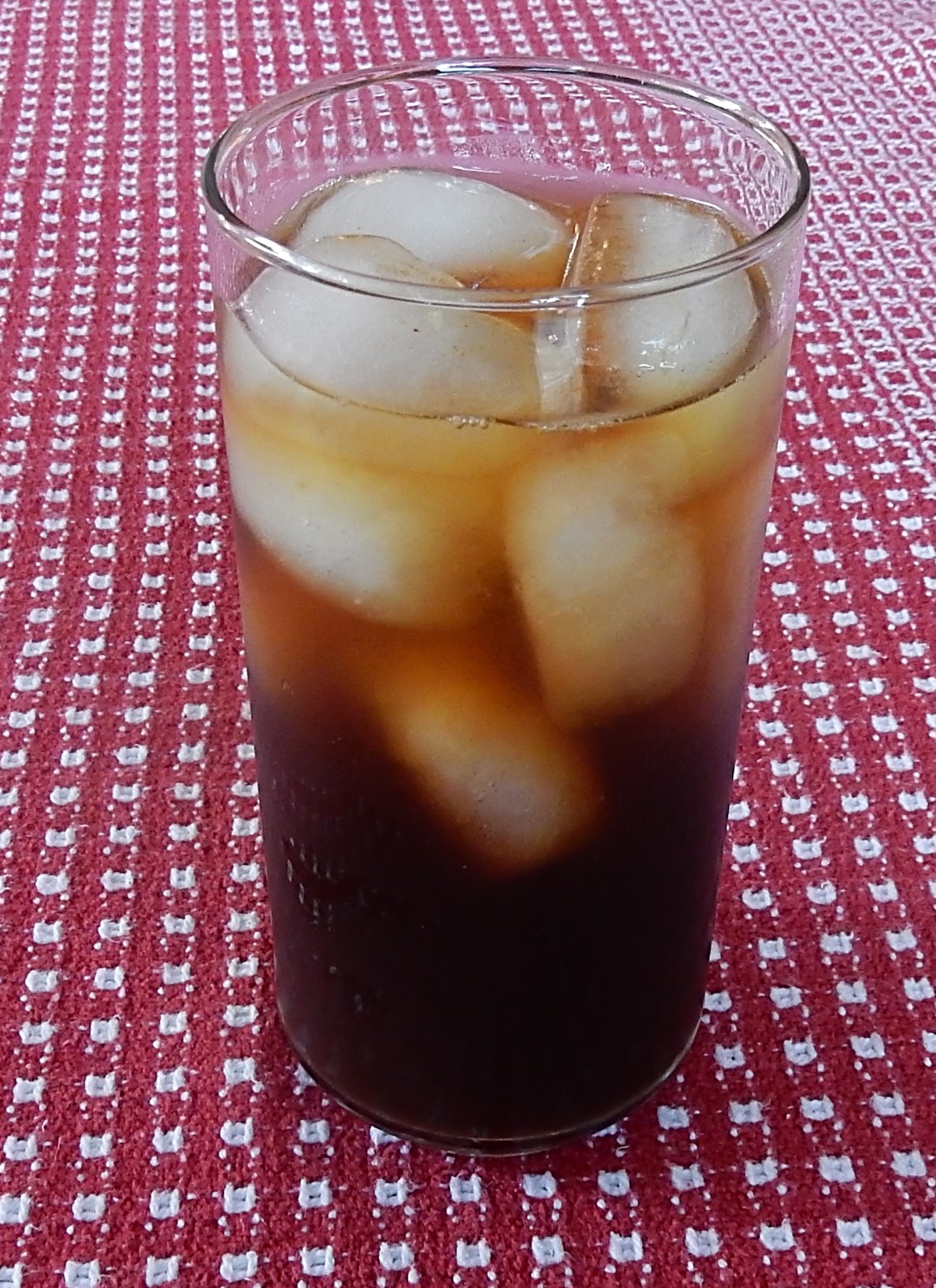
According to the recipe, Harvest Drink is “relished in the hay-field.” It is made using vinegar, molasses, water, and ground ginger. I decided to give it is try.
I can’t say that I liked Harvest Drink. It is slightly tart with a molasses flavor. Maybe if I was making hay, and was hot and dehydrated, I would find it refreshing – but can totally understand why this beverage has gone out of fashion. We have a lot of better options now that are much tastier.
Here’s the original recipe:
The New Home Cook Book, 1924 Edition (Published by Illinois State Register, Springfield, IL)
This is a large recipe. I actually divided the amounts by 10. However, many of the ingredient amounts were unusual fractions, so when I updated the recipe, I kept the original amounts.
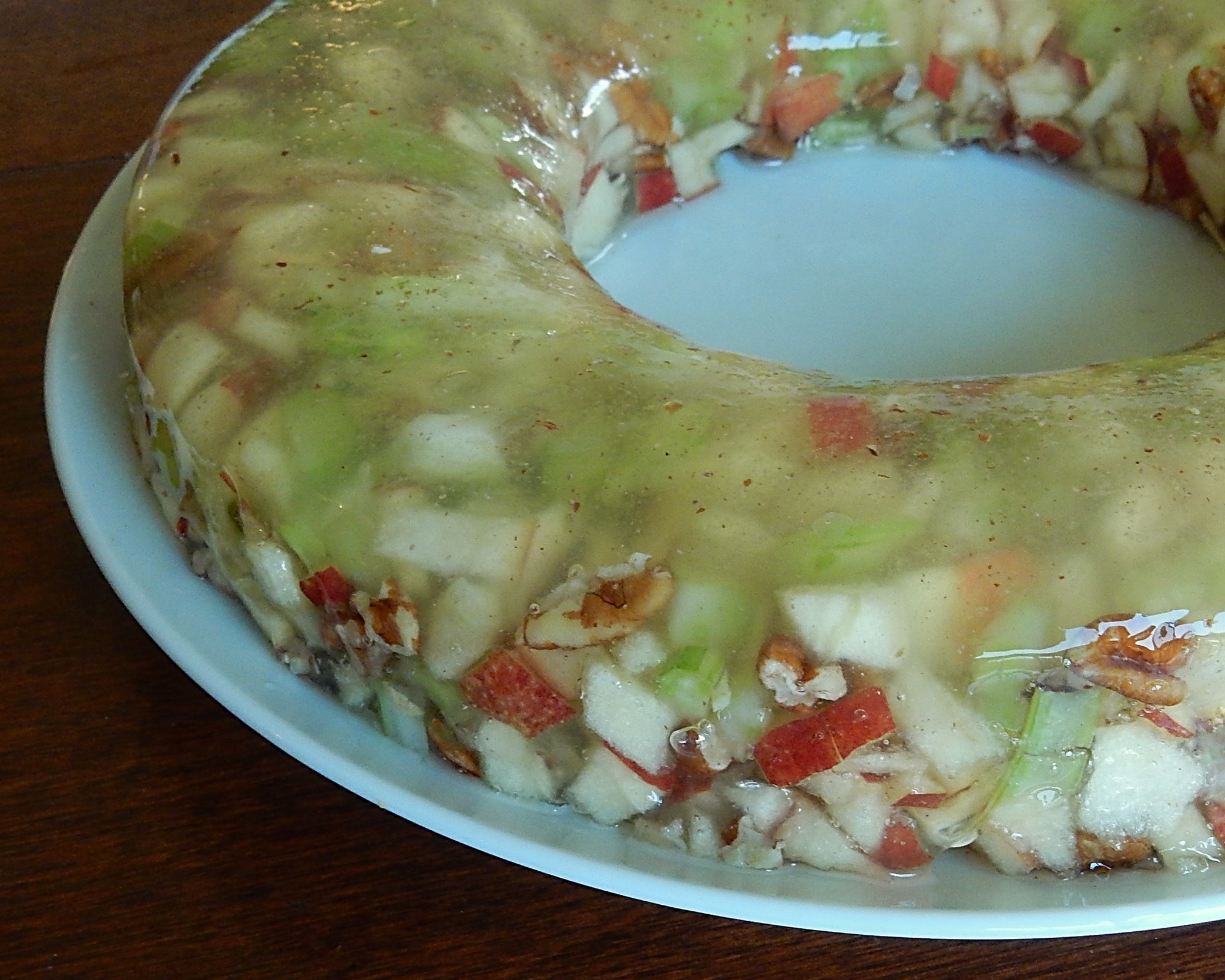
On hot summer days, cool and refreshing gelatin salads can hit the spot, so when I saw a recipe in a hundred-year-old cookbook for a gelatin salad called Luncheon Salad I decided to give it a try. Luncheon Salad is a delightful, bright, slightly tart lemon gelatin embedded with apple, celery, and pecan pieces. It is made using unflavored gelatin and lemon juice, which makes the gelatin much more flavorful than gelatin made from a box of “lemon” gelatin.
Sometimes recipes in old cookbooks have unusual names that doesn’t describe the food. This is one of those cases. Why was the recipe called Luncheon Salad? The recipe was in a cookbook published by Susquehanna Valley Country Club (Sunbury, PA). Did they serve this salad at country club luncheons?
Here’s the original recipe:
Source: Cook Book (Susquehanna Valley Country Club, Sunbury, PA, 1924)
I am not sure how large envelopes of unflavored gelatin were a hundred years ago, but the packets I had said they should be combined with 2 cups of liquid. Since this recipe calls for 3 cups of liquid, I used two packets of gelatin.
Put the cold water in a bowl. Sprinkle the gelatin on top of the water, and let soak for 5 minutes; then add to the boiling water and stir to dissolve. Stir in the sugar and lemon juice. Refrigerate until the mixture begins to stiffen, then stir in the apples, celery, and pecans. Wet a 5 – 6 cup mold with cold water, then pour the mixture into the mold and chill until firm (at least 4 hours).
To serve: Quickly dip the mold in hot water, then unmold onto serving plate.
Source: Cook Book of the Susquehanna Valley Country Club, Sunbury PA (1924)
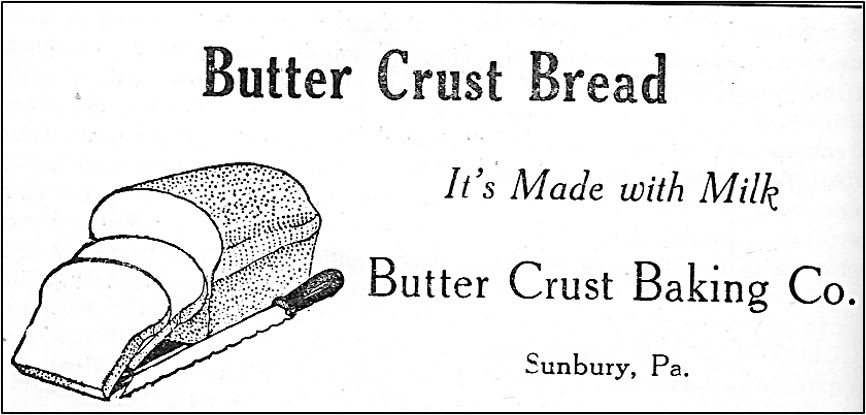
When I saw an advertisement for Butter Crust bread in a 1924 cookbook, it brought back very vague memories of bread my family sometimes bought when I was a child. Butter Crust was a soft white bread, and I can’t say whether I particularly liked it or not. I think that it was fairly nondescript and about like other white bread. But, as I worked on this post, I ended up being surprised that I found this bread and the company that made it more interesting now than back when I ate it.
Let me back up for a moment. I recently bought a hundred-year-old cookbook off eBay that was published by the Susquehanna Valley Country Club which was located in Sunbury, Pennsylvania. Sunbury is the county seat of Northumberland County. I was really excited to get this cookbook because I grew up on a farm in Northumberland County, and looked forward to getting a cookbook from my “home turf.” I’ll be making some recipes from the cookbook over the next few months, but I decided to first post this advertisement from the cookbook.
I googled “Butter Crust Bread” so I could add a little context to this post and was surprised when nothing came up with that exact spelling. Instead a bread company called Butter Krust Bread Company popped up. It also was located in Sunbury. I assume that it is the same company, but that the spelling was changed years ago. Is a “k” cooler than a “c” when spelling “crust”? In various articles that I found about the company Butter Krust is sometimes hyphenated; other times not. The name of this company sure seemed to have a lot of variations!
I found an article about a president of the Butter Krust Bread Company on the American Society of Baking website which said that Butter Krust was the first baker east of the Mississippi River to offer sliced bread and to wrap bread in cellophane. Who would have guessed that a very innovative baker was located in Sunbury?
The company was sold to Sara Lee in 2006 for $72 million. According to a 2010 article in the Sunbury Daily Item, Butter-Krust as well as other Sara Lee bakeries were then sold to Grupo Bimbo. At that time there were 200 employees at the Sunbury plant. A later Sunbury Daily Item article said that the plant was closed in 2017.
When our son recently visited, his flight arrived late at night – and I wanted to make a bedtime snack for him. I saw a recipe for Oatmeal Cookies in a hundred-year-old cookbook – and decided they might fit the bill.
These classic cookies were easy to make and very tasty. They have a hint of cinnamon, and are soft and chewy.
Here’s the original recipe:
Source: Modern Priscilla Cook Book (1924)
I used brown sugar when I made the recipe. It’s intriguing that the recipe specifies “sweet milk” which I think is just regular milk. A hundred-years-ago many families still lived on farms and drank milk that was not pasteurized; and, even in towns, much of the milk that was sold was not pasteurized. Back then, if the non-pasteurized milk was not used quickly, the “good” bacteria in the milk would turn it into a sour milk suitable for use in recipes. I would think that if a recipe just said “milk” that cooks would know that it was just calling for regular milk and not for sour milk, but apparently the cookbook author thought that it was important to clarify.
Preheat oven to 375° F. Cream the shortening and brown sugar. Stir in the milk and eggs, then add the salt, cinnamon, baking soda, baking powder, flour, and vanilla; stir until smooth. Still in oatmeal; stir until combined. Drop heaping teaspoons of the dough onto greased baking sheets; bake until set and lightly browned (about 10 minutes).
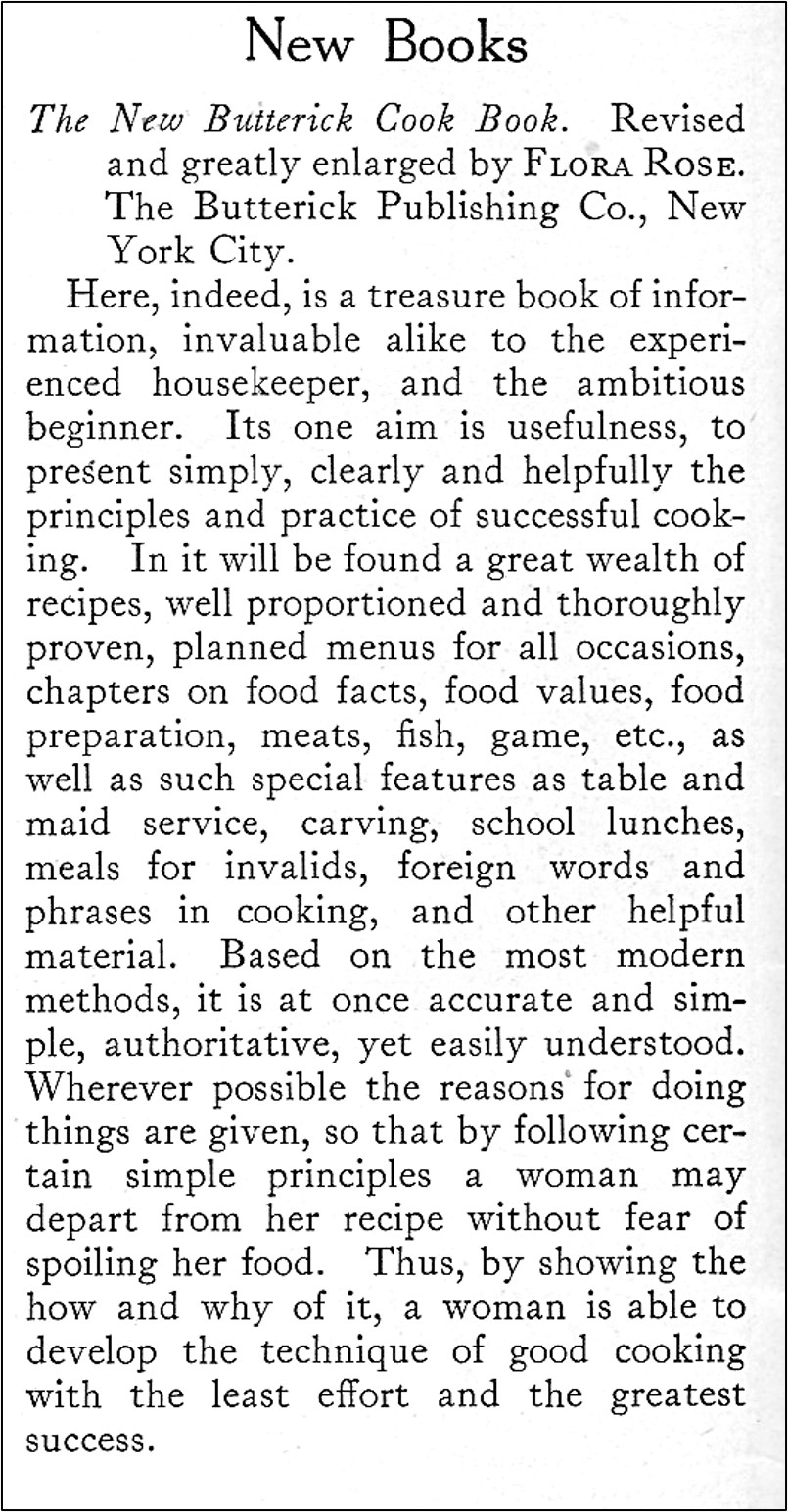
I recently flipped though the May, 1924 issue of American Cookery magazine and was surprised to discover a book review of a hundred-year-old cookbook that I’d purchased off eBay. It’s nice to know that the magazine liked The New Butterick Cook Book. I’ve enjoyed this cookbook, and have made several recipes that were in it.
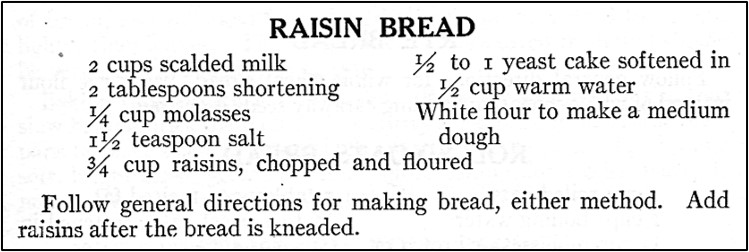
When browsing through hundred-year-old cookbooks, I often skip the yeast bread section while thinking that breadmaking is too much work and too time consuming. But I recently had a little spare time – and thought that it might be relaxing to make bread – so I looked at the old bread recipes. The one that piqued my interest was a recipe for Raisin Bread. It had been year since I’d eaten Raisin Bread – and suddenly I was very hungry for it. (I know that I can buy it at the store, but I never do.)
Here’s the original recipe:
Source: The New Butterick Cook Book, 1924
Sounds easy peasy. Right?
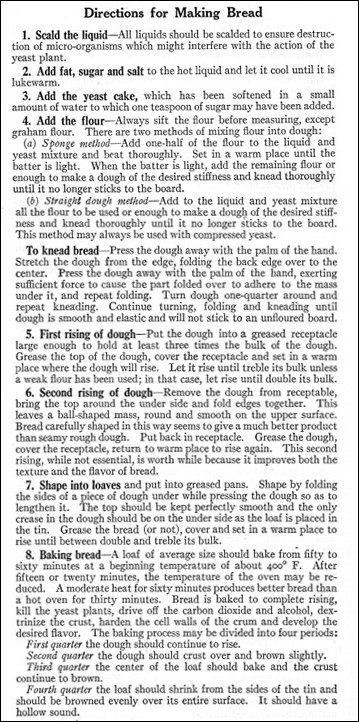
Next I found the general directions for making bread, as well as the directions for making white bread, and realized it was a little more complicated than I originally thought. Here are the general directions in the 1924 cookbook for making bread:
Source: The New Butterick Cookbook (1924)
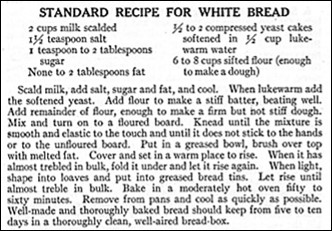
And, here is the “standard recipe for making white bread” that was in that cookbook:
Source: The New Butterick Cook Book, 1924
After reading all of these directions, I realized that this bread recipe is different from most other bread recipes that I’ve made. It called for allowing the bread to rise three times (rather than two times like I typically do), and instead of kneading the bread the second time, the directions called for folding the dough under. Also, the recipe indicated that the dough should be allowed to “almost treble” for the first and third times the dough was allowed to rise, while the second time, the dough should be allowed to rise until it was “light.”
My head was starting to spin, so I did several online searches, and discovered that bread dough can be allowed to rise three times (though there is a risk of the bread collapsing during baking if it is allowed to rise too much) – but that stretching and folding bread dough instead of kneading it the second time is gentler on the dough, so it reduces the risk of the bread collapsing. The online searches also indicated that folding the bread dough and allowing it to rise three times had the potential to improve the texture.
Since yeast cakes a hundred years ago, aren’t the same as modern dried yeast, I did another online search and determined that a yeast cake was about the same as a packet of dry active yeast. I used a packet of yeast when making this recipe.
As indicated in the old directions, I started baking the bread in a 400° F. oven. After 15 minutes, I reduced the heat to 350° F. After baking an additional 25 minutes (for a total of 40 minutes), the bread was nicely brown and sounded hollow when I tapped it, so I removed it from the oven. (I didn’t bake if for the 50 to 60 minutes called for in the old directions.)
Onward–
The verdict: This recipe was worth the effort. The Raisin Bread turned out great. It was tasty and had a lovely texture. It should be noted that most modern Raisin Breads contain cinnamon, but that this recipe didn’t call for any – so it tastes a little different than modern Raisin Breads. That said, this Raisin Bread is lovely warm, spread with butter, and sprinkled with cinnamon.
Scald the milk by heating to just below boiling (about 180 – 185° F.). Remove from heat and add shortening, molasses, and salt. Allow to cool until lukewarm.
In the meantime, chop the raisins (I cut each raisin into 3 – 4 pieces.). Then dredge the raisin pieces with approximately 1-2 tablespoons flour and gently stir to coat the pieces with flour. Set aside.
In the meantime, dissolve the yeast in the warm water. Combine the dissolved yeast, and lukewarm scalded milk mixture in a large bowl. Add half the flour; beat until smooth beat. Then add additional flour until the dough reaches a consistency where it can be handled. Turn onto a floured surface and knead until the dough is smooth and elastic (about 10 minutes). Flatten the dough and sprinkle about one-fourth of the chopped raisins on top; then fold over and knead a little more to incorporate the raisins. Repeat until all the raisins are embedded in the dough. Put in a large greased bowl, and grease the top of the dough. Cover and place in a warm spot that is free from drafts until it has almost tripled in size (about 1 1/2 hours).
Fold the dough by pulling each side of dough to stretch it, and then fold underneath the other dough. Cover and allow to rise until light (about 30 minutes). Divide dough into two equal parts and shape into loaves. Place in two greased loaf pans, and cover. Let rise until tripled in size (about 1 hour).
Bake loaves in 400° F. oven for 15 minutes, then reduce heat to 350° F and continue baking until lightly browned (about an additional 25 minutes for a total of about 40 minutes).

 On hot summer days, when the heat is intense and blistering, I always remember making hay when I was a child growing up on a farm. It was hot, hard work to bale hay, and then unload it off wagons and stack in the barn. I can remember we thought that it was a good day if we made 1,000 40-pound bales in a day. To keep the hay from the scratching me, I’d wear long pants and a long-sleeved shirt that were quickly soaked with sweat. To stay hydrated, we took huge jugs of water or Kool-Aid out the fields and the barn.


 When our son recently visited, his flight arrived late at night – and I wanted to make a bedtime snack for him. I saw a recipe for Oatmeal Cookies in a hundred-year-old cookbook – and decided they might fit the bill.